Bhagavad Gita - Chapter 1 - Shloka (Verse) 1
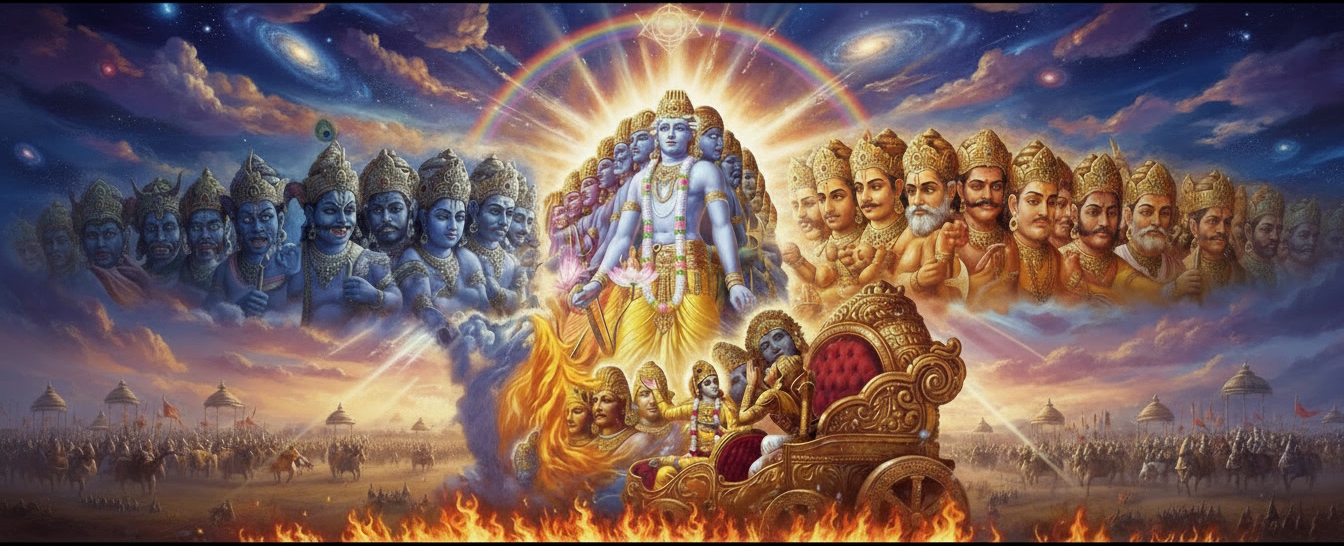
धृतराष्ट्र उवाच धर्मक्षेत्रे कुरुक्षेत्रे समवेता युयुत्सवः।
मामकाः पाण्डवाश्चैव किमकुर्वत सञ्जय।।1.1।।
dhṛtarāṣṭra uvāca
dharmakṣetre kurukṣetre samavetā yuyutsavaḥ|
māmakāḥ pāṇḍavāścaiva kimakurvata sañjaya||1.1||
Translation
Dhritarashtra said What did my people and the sons of Pandu do when they had assembled together eager for battle on the holy plain of Kurukshetra, O Sanjaya.
हिंदी अनुवाद
धृतराष्ट्र बोले - हे संजय! धर्मभूमि कुरुक्षेत्र में युद्ध की इच्छा से इकट्ठे हुए मेरे और पाण्डु के पुत्रों ने भी क्या किया?
Commentaries & Translations
Swami Ramsukhdas
व्याख्या-- 'धर्मक्षेत्रे' 'कुरुक्षेत्रे'-- कुरुक्षेत्र में देवताओं ने यज्ञ किया था। राजा कुरु ने भी यहाँ तपस्या की थी। यज्ञादि धर्ममय कार्य होने से तथा राजा कुरु की तपस्याभूमि होने से इसको धर्मभूमि कुरुक्षेत्र कहा गया है।
यहाँ ॓'धर्मक्षेत्रे' और 'कुरुक्षेत्रे' पदों में 'क्षेत्र' शब्द देने में धृतराष्ट्र का अभिप्राय है कि यह अपनी कुरुवंशियों की भूमि है। यह केवल लड़ाई की भूमि ही नहीं है, प्रत्युत तीर्थभूमि भी है, जिसमें प्राणी जीते-जी पवित्र कर्म करके अपना कल्याण कर सकते हैं। इस तरह लौकिक और पारलौकिक सब तरह का लाभ हो जाय-- ऐसा विचार करके एवं श्रेष्ठ पुरुषों की सम्मति लेकर ही युद्ध के लिये यह भूमि चुनी गयी है।
संसार में प्रायः तीन बातों को लेकर लड़ाई होती है-- भूमि, धन और स्त्री। इस तीनों में भी राजाओं का आपस में लड़ना मुख्यतः जमीन को लेकर होता है। यहाँ 'कुरुक्षेत्रे' पद देने का तात्पर्य भी जमीन को लेकर ल़ड़ने में है। कुरुवंश में धृतराष्ट्र और पाण्डु के पुत्र सब एक हो जाते हैं। कुरुवंशी होने से दोनों का कुरुक्षेत्र में अर्थात् राजा कुरु की जमीन पर समान हक लगता है। इसलिये (कौरवों द्वारा पाण्डवों को उनकी जमीन न देने के कारण) दोनों जमीन के लिये लड़ाई करने आये हुए हैं।
यद्यपि अपनी भूमि होने के कारण दोनों के लिये 'कुरुक्षेत्रे' पद देना युक्तिसंगत, न्यायसंगत है, तथापि हमारी सनातन वैदिक संस्कृति ऐसी विलक्षण है कि कोई भी कार्य करना होता है, तो वह धर्म को सामने रखकर ही होता है। युद्ध-जैसा कार्य भी धर्मभूमि-- तीर्थभूमि में ही करते हैं, जिससे युद्ध में मरने वालों का उद्धार हो जाय, कल्याण हो जाय। अतः यहाँ कुरुक्षेत्र के साथ 'धर्मक्षेत्रे' पद आया है।
यहाँ आरम्भ में 'धर्म' पद से एक और बात भी मालूम होती है। अगर आरम्भ के 'धर्म' पद में से 'धर्' लिया जाय और अठारहवें अध्याय के अन्तिम श्लोक के 'मम' पदों से 'म' लिया जाय, तो 'धर्म' शब्द बन जाता है। अतः सम्पूर्ण गीता धर्म के अन्तर्गत है अर्थात् धर्म का पालन करने से गीता के सिद्धान्तों का पालन हो जाता है और गीता के सिद्धान्तों के अनुसार कर्तव्य कर्म करने से धर्म का अनुष्ठान हो जाता है।
इन 'धर्मक्षेत्रे कुरुक्षेत्रे' पदों से सभी मनुष्यों को यह शिक्षा लेनी चाहिये कि कोई भी काम करना हो तो वह धर्म को सामने रखकर ही करना चाहिये। प्रत्येक कार्य सबके हित की दृष्टि से ही करना चाहिये, केवल अपने सुख-आराम-की दृष्टि से नहीं; और कर्तव्य-अकर्तव्य के विषय में शास्त्र को सामने रखना चाहिये (गीता 16। 24)।
'समवेता युयुत्सवः'-- राजाओं के द्वारा बारबार सन्धि का प्रस्ताव रखने पर भी दुर्योधन ने सन्धि करना स्वीकार नहीं किया। इतना ही नहीं, भगवान् श्रीकृष्ण के कहने पर भी मेरे पुत्र दुर्योधन ने स्पष्ट कह दिया कि बिना युद्ध के मैं तीखी सूई की नोक-जितनी जमीन भी पाण्डवों को नहीं दूँगा। (टिप्पणी प0 2.1) तब मजबूर होकर पाण्डवों ने भी युद्ध करना स्वीकार किया है। इस प्रकार मेरे पुत्र और पाण्डुपुत्र-- दोनों ही सेनाओं के सहित युद्ध की इच्छा से इकट्ठे हुए हैं।
दोनों सेनाओं में युद्ध की इच्छा रहने पर भी दुर्योधन में युद्ध की इच्छा विशेषरूप से थी। उसका मुख्य उद्देश्य राज्य-प्राप्ति का ही था। वह राज्य-प्राप्ति धर्म से हो चाहे अधर्म से, न्याय से हो चाहे अन्याय से, विहित रीति से हो चाहे निषिद्ध रीति से, किसी भी तरह से हमें राज्य मिलना चाहिये-- ऐसा उसका भाव था। इसलिये विशेषरूप से दुर्योधन का पक्ष ही युयुत्सु अर्थात् युद्ध की इच्छावाला था।
पाण्डवों में धर्म की मुख्यता थी। उनका ऐसा भाव था कि हम चाहे जैसा जीवन-निर्वाह कर लेंगे, पर अपने धर्म में बाधा नहीं आने देंगे, धर्म के विरुद्ध नहीं चलेंगे। इस बात को लेकर महाराज युधिष्ठिर युद्ध नहीं करना चाहते थे। परन्तु जिस माँ की आज्ञा से युधिष्ठिर ने चारों भाइयों सहित द्रौपदी से विवाह किया था, उस माँ की आज्ञा होने के कारण ही महाराज युधिष्ठिर की युद्ध में प्रवृत्ति हुई थी (टिप्पणी प0 2.2) अर्थात् केवल माँ के आज्ञा-पालनरूप धर्म से ही युधिष्ठिर युद्ध की इच्छावाले हुये हैं। तात्पर्य है कि दुर्योधन आदि तो राज्य को लेकर ही युयुत्सु थे, पर पाण्डव धर्म को लेकर ही युयुत्सु बने थे।
'मामकाः पाण्डवाश्चैव'-- पाण्डव धृतराष्ट्र को (अपने पिता के बड़े भाई होने से) पिता के समान समझते थे और उनकी आज्ञा का पालन करते थे। धृतराष्ट्र के द्वारा अनुचित आज्ञा देने पर भी पाण्डव उचित-अनुचित का विचार न करके उनकी आज्ञा का पालन करते थे। अतः यहाँ 'मामकाः' पद के अन्तर्गत कौरव (टिप्पणी प0 3.1) और पाण्डव दोनों आ जाते हैं। फिर भी 'पाण्डवाः' पद अलग देने का तात्पर्य है कि धृतराष्ट्र का अपने पुत्रों में तथा पाण्डुपुत्रों में समान भाव नहीं था। उनमें पक्षपात था,अपने पुत्रों के प्रति मोह था। वे दुर्योधन आदि को तो अपना मानते थे, पर पाण्डवों को अपना नहीं मानते थे। (टिप्पणी प0 3.2) इस कारण उन्होंने अपने पुत्रों के लिये 'मामकाः' और पाण्डुपुत्रों के लिये 'पाण्डवा' पद का प्रयोग किया है; क्योंकि जो भाव भीतर होते हैं, वे ही प्रायः वाणी से बाहर निकलते हैं। इस द्वैधीभाव के कारण ही धृतराष्ट्र को अपने कुल के संहार का दुःख भोगना पड़ा। इससे मनुष्यमात्र को यह शिक्षा लेनी चाहिये कि वह अपने घरों में, मुहल्लों में, गाँवों में, प्रान्तों में, देशों में, सम्प्रदायों में द्वैधीभाव अर्थात् ये अपने हैं, ये दूसरे हैं-- ऐसा भाव न रखे। कारण कि द्वैधीभाव से आपस में प्रेम, स्नेह नहीं होता, प्रत्युत कलह होती है।
यहाँ 'पाण्डवाः' पद के साथ 'एव' पद देने का तात्पर्य है कि पाण्डव तो बड़े धर्मात्मा हैं; अतः उन्हें युद्ध नहीं करना चाहिये था। परन्तु वे भी युद्ध के लिये रणभूमि में आ गये तो वहाँ आकर उन्होंने क्या किया?
'मामकाः' और 'पाण्डवाः' (टिप्पणी प0 3.3) इनमें से पहले 'मामकाः' पद का उत्तर सञ्जय आगे के (दूसरे) श्लोक से तेरहवें श्लोक तक देंगे कि आपके पुत्र दुर्योधन ने पाण्डवों की सेना को देखकर द्रोणाचार्य के मन में पाण्डवों के प्रति द्वेष पैदा करने के लिये उनके पास जाकर पाण्डवों के मुख्य-मुख्य सेनापतियों के नाम लिये। उसके बाद दुर्योधन ने अपनी सेना के मुख्य-मुख्य योद्धाओं के नाम लेकर उनके रण-कौशल आदि की प्रशंसा की। दुर्योधन को प्रसन्न करने के लिये भीष्मजी ने जोर से शंख बजाया। उसको सुनकर कौरव-सेना में शंख आदि बाजे बज उठे। फिर चौदहवें श्लोक से उन्नीसवें श्लोक तक 'पाण्डवाः' पद का उत्तर देंगे कि रथ में बैठे हुए पाण्डवपक्षीय श्रीकृष्ण ने शंख बजाया। उसके बाद अर्जुन, भीम, युधिष्ठिर, नकुल, सहदेव आदि ने अपने-अपने शंख बजाये, जिससे दुर्योधन की सेना का हृदय दहल गया। उसके बाद भी सञ्जय पाण्डवों की बात कहते-कहते बीसवें श्लोक से श्रीकृष्ण और अर्जुन के संवाद का प्रसङ्ग आरम्भ कर देंगे।
'किमकुर्वत'-- 'किम्' शब्द के तीन अर्थ होते हैं-- विकल्प, निन्दा (आक्षेप) और प्रश्न।
युद्ध हुआ कि नहीं? इस तरह का विकल्प तो यहाँ लिया नहीं जा सकता; क्योंकि दस दिन तक युद्ध हो चुका है और भीष्म जी को रथ से गिरा देने के बाद सञ्जय हस्तिनापुर आकर धृतराष्ट्र को वहाँ की घटना सुना रहे हैं।
'मेरे और पाण्डु के पुत्रों ने यह क्या किया, जो कि युद्ध कर बैठे! उनको युद्ध नहीं करना चाहिये था'-- ऐसी निन्दा या आक्षेप भी यहाँ नहीं लिया जा सकता; क्योंकि युद्ध तो चल ही रहा था और धृतराष्ट्र के भीतर भी आक्षेपपूर्वक पूछने का भाव नहीं था।
यहाँ 'किम्' शब्द का अर्थ प्रश्न लेना ही ठीक बैठता है। धृतराष्ट्र सञ्जय से भिन्न-भिन्न प्रकार की छोटी-बड़ी सब घटनाओं को अनुक्रम से विस्तारपूर्वक ठीक-ठीक जानने के लिये ही प्रश्न कर रहे हैं।
सम्बन्ध-- धृतराष्ट्र के प्रश्न का उत्तर सञ्जय आगे के श्लोक से देना आरम्भ करते हैं।
Sri Anandgiri
Thus, having established that the Gita Scripture has as its subject the two disciplines (Knowledge and Action), signifies the Supreme and Lower Brahman, and possesses a specific purpose (liberation), the commentator, desiring to explain, states the purport of a portion of the scripture—namely, the first chapter along with a part of the second chapter. Regarding "Here and...":
The implication is that the first verse of the first chapter of the Gita Scripture serves to demonstrate the context of the narrative. The arrangement of words there is as follows: "Dhritarashtra said." Since Dhritarashtra is strictly "seeing through the intellect" (blind), he is unable to perceive external objects due to the lack of physical eyes; therefore, he asks Sanjaya, his well-wishing advisor who is stationed nearby—"In the field of righteousness" (Dharmakshetre).
Kurukshetra is called the field of righteousness because it is the field (cause) for the increase of Dharma. Gathered there ("samavetah"), desiring to fight ("yuyutsavah"), are some who are my own people ("mamakah")—Duryodhana and others—and the others, the Pandavas—Yudhisthira and the rest. Having all gathered on the battleground, what did they do ("kim akurvata")?
Sri Dhanpati
इह खलु परमकारुणिकः परिपूर्णानन्दस्वभावः सकलैश्वर्यसंपन्नस्त्रिगुणात्मिकया स्ववशीकृतया निजमाययोपात्तकायो भगवान् वासुदेवः शोकमोहाभिभूतं जीवनिकायमुद्दिधीर्षुर्यद्गीताशास्त्रं सर्ववेदसारभूतं काण्डत्रयात्मकं तत्त्वम्पदाखण्डार्थप्रतिपादकं निजविग्रहायार्जुनाय ग्राहयामास।
तदेव क्रमप्राप्तं दयानिधिर्वेदव्यासो महाभारते निबध्नाति धृतराष्ट्र उवाचेत्यादि। तत्र धृतराष्ट्र उवाच केषां प्रहृष्टास्तत्राग्रे योधा युध्यन्ति संजय। उदग्रमनसः केऽत्र के वा दीना विचेतसः।।के पूर्वं प्राहरंस्तत्र युद्धे हृदयकम्पिनि। मामकाः पाण्डवानां वा तन्ममाचक्ष्व संजय।। इत्यादिना कृतं प्रश्नं वैशंपायनो जनमेजयंप्रति संक्षिप्योपोद्धातायानुवदति धृतराष्ट्र उवाचेति।
मामकाः मदीयाः दुर्योधनादयः पाण्डवाः पाण्डुपुत्राः युधिष्ठिरादयः युयुत्सवः योद्धुमिच्छवः। धर्मस्योपचयस्थानत्वात् धर्मक्षेत्रे कुरुक्षेत्रे श्रुतिस्मृतिलोकप्रसिद्धे समवेता मिलिताः सन्तः किमकुर्वत किं कृतवन्तः। स्वधर्मभूतं धर्मयुद्धं कृतवन्त उताधर्मयुद्धमिति धर्मक्षेत्रपदेन बोधितम्। युयुत्सया समवेता इति मया विस्तरेण श्रुतं तदनन्तरं यथा यत्कृतवन्तः तथा तद्विस्तरेण वदेत्याशयः।
भीष्मपतनेन कलहस्यानर्थबोधकानां भवदादिवाक्यानां सम्यग्जयो जात इति ध्वनयन्संबोधयति संजयेति। रागद्वेषादिदोषान्सभ्यग्जितवानसीति कृत्वा निर्व्याजेन त्वया कथनीयमिति सूचनार्थं संजयेति संबोधनमिति केचित्। किमा आक्षेपोऽपि ध्वनितः। अयोग्यं कृतवन्त इत्यर्थः। धर्मक्षेत्रे हिंसाप्रधानस्य युद्धस्यानुचितत्वात्। मामकानामधार्मिकत्वेन तत्संभवेऽपि परमधार्मिकत्वेन प्रसिद्धाः पाण्डवाः युधिष्ठिरादयो भीष्मादिपातनं किं कृतवन्त इति द्योतयन्नाह पाण्डवाश्चेति। पाण्डवेषु ममकाराभावप्रदर्शनेन तेषु द्रोहमभिव्यनक्तीति केचित्।
यत्तु पाण्डवानां जयकारणं बहुविधं पूर्वमाकर्ण्य स्वपुत्रराज्यभ्रंशाद्भीतो धृतराष्ट्रः पप्रच्छ स्वपुत्रजयकारणमाशंसन् धृतराष्ट्र इत्यादिना। किं कृतवन्तः किं पूर्वोक्तयुयुत्सानुसारेण युद्धमेव कृतवन्तः उत केनचिन्निमित्तेन युयुत्सानिवृत्त्याऽन्यदेव किंचित्कृतवन्तः। भीमार्जुनादिवीरपुरुषनिमित्तं दृष्टभयं युयुत्सानिवृत्तिकारणं प्रसिद्धमेव। अदृष्टभयमपि दर्शयितुमाह धर्मक्षेत्र इति। तस्मिन् गताः पाण्डवाः पूर्वमेव धार्मिकाः। यदि पक्षद्वयहिंसानिमित्तादधर्माद्भीता निवर्तेन् ततः प्राप्तराज्या एव मत्पुत्राः। अथवा धर्मक्षेत्रमाहात्म्येन पापिनामपि मत्पुत्राणां कदाचिच्चित्तप्रसादाः स्यात्तदा च तेऽनुतप्ताः कपटोपात्तं राज्यं पाण्डवेभ्यो यदि दद्युः तर्हि विनापि युद्धं हता एवेति स्वपुत्रराज्यलाभे पाण्डवराज्यालाभे च दृढतरमुपायमपश्यतो महानुद्वेग एव प्रश्नबीजमिति केचिद्वर्णयन्ति तदुपेक्ष्यम्।
अथ गावल्गणिर्धीमान्समरादेत्य संजयः। प्रत्यक्षदर्शी सर्वस्य भूतभव्यभविष्यतः।।ध्यायतो धृतराष्ट्रस्य सहसोपेत्य दुःखितः। आचष्ट निहतं भीष्म भारतानां पितामहम्। संजयोऽहं महाराज नमस्ते भरतर्षभ।।हतो भीष्मः शान्तनवो भारतानां पितामहः। यो ररक्ष समेतानां दशरात्रमनीकहा।।जगामास्तमिवादित्यः कृत्वा कर्म सुदुष्करम्। यः स शक्र इवाक्षोभ्यो वर्षन्बाणन्सहस्त्रशः।।जघान युधि योधानामर्बुदं दशभिर्दिनेः। स शेते निहतो भूमौ वातरुग्ण इव द्रुमः।। इत्यादिसंक्षेपोक्तिपरपूर्वग्रन्थविरोधात्।
ननु संक्षेपेण श्रुतमपि मोहाद्विस्मृत्य धृतराष्ट्रेण प्रश्नः कृत इतिचेन्न। प्रश्नस्य पूर्वग्रन्थानुरोधेनास्मदीयोक्तरीत्या सभ्यगुपपत्तेः। पूर्वोक्तविरुद्धप्रश्नव्याख्यानकर्तृ़णामेव मोहादिति दिक्। यत्त्वन्ये धर्मक्षेत्रपदं कुरुक्षेत्रपदादविमुक्तक्षेत्रप्रतिपत्तिर्माभूदित्येतदर्थमिति। तन्न। कुरुक्षेत्रादागतं संजयं किमविमुक्तक्षेत्रे समवेता इति संशयरहितंप्रति विशेषणानर्थक्यात्। अन्येषामपि लोकप्रसिद्य्धा पूर्वग्रन्थेन च निर्णयस्य सत्त्वात्।
Sri Neelkanth
Having heard about the preparations for war, and desiring to know the subsequent events out of curiosity, Dhritarashtra spoke—"Dharmakshetre," etc.
Regarding this, there is the Kurukshetra famous in the ritual section (Karma-kanda) of the Vedas as "Kurukshetra is the sacrificial ground of the gods." Distinct from this is another Kurukshetra described as "The Avimukta (unforsaken zone) is indeed Kurukshetra, the sacrificial ground of the gods and the abode of Brahman for all beings." This latter Kurukshetra, known as Avimukta, is a place of attaining Brahman. Its status as the "Abode of Brahman" is explained by the supplementary statement: "For here, when the life-force departs from the living being, Rudra expounds the Taraka Brahman (liberating mantra), by which the soul becomes immortal and attains liberation."
To exclude this (esoteric meaning), the adjective "Dharmakshetre" (Field of Dharma) is used here. The Kurukshetra located within the Kuru country is strictly a field of religious merit, not that specific Abode of Brahman (of the Avimukta), because in the Pravargya section of the Vedas, it is mentioned only as a field of Dharma.
"Samavetah" means assembled, and "yuyutsavah" means wishing to fight.
The separate mention of the Pandavas is to indicate Dhritarashtra's lack of attachment/ownership towards them.
Sri Ramanuja
Dhritarashtra spoke; Sanjaya replied. Duryodhana, having personally observed the army of the Pandavas protected by Bhima and his own army protected by Bhishma, communicated to the Teacher (Drona) the adequacy of that (Pandava) army for his own defeat and the inadequacy of his own army for victory, and thus became internally filled with despondency.
Seeing his despondency, Bhishma, wishing to generate joy in him, roared like a lion, blew his conch, and created a tumult indicative of victory using the sounds of conches and kettledrums.
Thereafter, hearing that tumult, the Lord of all Lords, Parthasarathi (Krishna), and the warrior son of Pandu (Arjuna)—seated on a magnificent chariot that served as an instrument for conquering the three worlds—blew their divine conches, the glorious 'Panchajanya' and 'Devadatta', causing the three worlds to tremble. Then, Yudhishthira, Vrikodara (Bhima), and others blew their respective conches separately.
That sound shattered the hearts of all your sons headed by Duryodhana. The sons of Dhritarashtra felt that the strength of the Kauravas was destroyed that very day. Thus, Sanjaya related this to Dhritarashtra, who was desirous of their victory.
Then, seeing the sons of Dhritarashtra—headed by Bhishma and Drona—positioned and eager to fight, the son of Pandu (Arjuna), bearing the flag of the monkey who burnt Lanka (Hanuman), addressed Hrishikesha (Krishna). Krishna is the repository of knowledge, power, strength, sovereignty, valor, and splendor, who enacts the play of the world's creation, sustenance, and dissolution by His mere will, and who resides as the controller of all internal and external faculties of all beings high and low, yet was situated as his charioteer, overcome by affection for one who had taken refuge in Him. Arjuna urged Him to position the chariot at a vantage point suitable for observing those eager to fight, so he could view them properly.
Sri Sridhara Swami
Here, indeed, is the supremely compassionate Lord, the son of Devaki, whose incarnation is for the welfare of all worlds and whose feet are worshipped by all. He rescued Arjuna—who was intent on abandoning his own duty (Dharma) and adopting another's duty, having lost his discrimination due to grief and delusion arising from ignorance of the Truth—from that ocean of grief and delusion by means of the boat of instruction on the secrets of Dharma and Knowledge.
The very meaning instructed by the Lord was compiled by Krishnadvaipayana (Vyasa) in seven hundred verses. Therein, he mostly recorded the very verses that emanated from the mouth of Sri Krishna, and composed some himself to provide continuity/context.
As stated in the Gita Mahatmya: "The Gita should be well-sung (studied); what is the need for other voluminous scriptures? For it has emerged directly from the lotus-mouth of Lord Padmanabha."
Therein, through the section of the text beginning with "Dharmakshetre" and ending with "vishidann-idam-abravit" (desponding, he spoke this), the narrative is presented as a prologue to the dialogue between Sri Krishna and Arjuna—"Dharmakshetre," etc.
(Dhritarashtra asks:) O Sanjaya! On the holy land of Kurukshetra, gathered together and desiring to fight, what did my sons and the sons of Pandu do?
Sri Vedantadeshikacharya Venkatanatha
"Dharmakshetre"—meaning, the place of Dharma, which is well-suited for the sacrifice (adhvara) in the form of war; this is the implied sense.
"Kurukshetre"—meaning, it is an object of great respect for the Pandavas and the sons of Dhritarashtra because it is marked by the name of their common ancestor (Kuru); this is the sentiment.
"Yuyutsavah samavetah"—meaning, gathered and arrayed against each other in the form of opposing armies.
"Cha" and "Eva"—these two particles (indeclinables) have no additional meaning, OR the intent of the emphatic "Eva" is that even though kings from the entire earth had gathered there, for that specific purpose, they effectively formed only two groups.
"Akurvata" (did they do)—the use of the Atmanepada (middle voice), which indicates that the fruit of the action accrues to the agent, is used to express self-interest (implying they acted for their own benefit).
Swami Chinmayananda
सम्पूर्ण गीता में यही एक मात्र श्लोक अन्ध वृद्ध राजा धृतराष्ट्र ने कहा है। शेष सभी श्लोक संजय के कहे हुए हैं जो धृतराष्ट्र को युद्ध के पूर्व की घटनाओं का वृत्तान्त सुना रहा था।
निश्चय ही अन्ध वृद्ध राजा धृतराष्ट्र को अपने भतीजे पाण्डवों के साथ किये गये घोर अन्याय का पूर्ण भान था। वह दोनों सेनाओं की तुलनात्मक शक्तियों से परिचित था। उसे अपने पुत्र की विशाल सेना की सार्मथ्य पर पूर्ण विश्वास था। यह सब कुछ होते हुये भी मन ही मन उसे अपने दुष्कर्मों के अपराध बोध से हृदय पर भार अनुभव हो रहा था और युद्ध के अन्तिम परिणाम के सम्बन्ध में भी उसे संदेह था। कुरुक्षेत्र में क्या हुआ इसके विषय में वह संजय से प्रश्न पूछता है। महर्षि वेदव्यास जी ने संजय को ऐसी दिव्य दृष्टि प्रदान की थी जिसके द्वारा वह सम्पूर्ण युद्धभूमि में हो रही घटनाओं को देख और सुन सकता था।
Sri Abhinavgupta
"Dharmakshetre" etc. Here, some offer an alternative interpretation:
'Kurus' mean the 'Karanas' (the senses or organs of action). That which is their field and their favorer (sustainer) [is Kurukshetra]. Therefore, it is the field of all worldly attributes (samsarika-dharmas) because it is the cause of their origin.
And regarding the text "This is the supreme Dharma, which is Self-realization through Yoga" (Yajnavalkya Smriti 1.8)—it is the field of this Dharma as well.
Because of the 'Kshaya' (destruction) of all [worldly] attributes and becoming a 'Trana' (protection) through the attainment of 'Apavarga' (liberation)—[the term Dharmakshetra/Kurukshetra] refers to that Body of the qualified aspirant (Adhikari-sharira).
[Regarding the gathering:] Of all 'Kshatras'—since the root kshad has the meaning of violence/killing—meaning those existing in a relationship of mutual slayer and slain, such as attachment (Raga) and detachment (Vairagya), anger (Krodha) and forgiveness (Kshama), etc.; where there is a gathering of these.
Situated therein [in that body]:
'Mamakah' (My people) refers to the resolves (Sankalpas) made of ignorance (Avidya), suitable for the man of ignorance.
'Pandavah' (The Pandavas) refers to those [resolves] of the nature of knowledge (Vidya), suitable for the man of Pure Knowledge.
"What did they do?" meaning: Indeed, who were conquered by whom?
(In this allegory,) 'Mamaka' (Dhritarashtra) is the person of ignorance; 'Pandu' is the Pure One.
Sri Madhusudan Saraswati
In this scripture (Gita), the Lord's teaching is universal: that one should attain the goal of human life (Purushartha) by performing one's own duty (Svadharma), having been taught the means to remove all demonic sins like grief and delusion through instructions such as "You grieve for those who should not be grieved for." This narrative in the form of a dialogue between the Lord and Arjuna is intended for the praise of Knowledge (Vidya-stuti), similar to the dialogues of Janaka and Yajnavalkya in the Upanishads.
It is praised thus: How did Arjuna, though a famous and great soul, become overwhelmed by grief and delusion caused by affection stemming from the notion "I am theirs, they are mine," and having his discriminative knowledge overpowered, desist from the battle which was his natural duty (Kshatriya-dharma) even after engaging in it? And how did he proceed to adopt the duty of another (Para-dharma), such as living by alms, which is prohibited for a Kshatriya? And thus, having sunk into great calamity, how did he, upon receiving this Knowledge through the Lord's instruction, cast off grief and delusion, re-engage in his own duty, and become fulfilled? This Knowledge, having such a great purpose, is thus extolled as most excellent.
Through the pretext of Arjuna, the qualification for receiving this instruction is shown. This will be explained further. Even after the inclination for Svadharma was present, the grief and delusion that caused a fall from it were demonstrated by Arjuna with words like "How can I fight Bhishma in battle?" The cause of Arjuna's engagement in the war (Svadharma) without proper discrimination, and the movements of the enemy army described by "Seeing the Pandava army," etc., are mentioned as the cause for that (reaction).
As a prologue to this, Dhritarashtra's question to Sanjaya is presented in the verse "Dharmakshetre," etc. Here, "Dhritarashtra said" is the statement of Vaisampayana to Janamejaya. Having previously heard of the manifold causes for the Pandavas' victory, Dhritarashtra, frightened by the prospect of his sons losing the kingdom, asked, hoping for the victory of his own sons.
"Previously desiring to fight ('yuyutsavah') and gathered ('samavetah') at Kurukshetra, what did my people ('mamakah' - Duryodhana, etc.) and the Pandavas (Yudhisthira, etc.) do?" Did they act according to their previously arisen desire to fight, or, due to some cause, did their desire to fight cease and they did something else? The "seen fear" (tangible fear) caused by heroic men like Bhishma and Arjuna is a well-known cause for the cessation of the desire to fight; but to indicate "unseen fear" (spiritual/religious influence), he says "Dharmakshetre" (Field of Dharma).
Just as a field is the cause for the crop, Kurukshetra is the cause (field) for the production of Dharma that did not exist before, and for the increase of that which exists; this is famous in all Sruti and Smriti texts. "Brihaspati said to Yajnavalkya: Kurukshetra is indeed the sacrificial ground of the gods and the abode of Brahman for all beings"—from this Jabala Sruti, and "Kurukshetra is indeed the sacrificial ground of the gods"—from the Satapatha Sruti, (its greatness is established). The Pandavas, who have gone there, are already righteous; if, out of fear of Adharma (unrighteousness) caused by the violence against both sides, they desist (from war), then my sons would retain the kingdom without a fight. Or, if by the greatness of the Holy Field (Dharmakshetra), a purification of mind (chitta-prasada) occurs even in my sinful sons, and they, feeling repentant, return the kingdom previously seized by deceit to the Pandavas, then even without a battle, they (my sons) are as good as dead (lost). Thus, seeing no firmer means in either the gain of the kingdom by his sons or by the Pandavas, the great anxiety arising from this uncertainty is the seed of the question.
The address "Sanjaya" implies: "You have completely conquered faults like attachment and aversion, so you must tell the truth without any guile." Although the question could have been sufficed by saying "What did my people do?" (Mamaka kim akurvata), the separate mention "and the Pandavas" (Pandavascha) exhibits his lack of 'mine-ness' (mamakara) towards the Pandavas, thereby expressing his hostility towards them.
Sri Purushottamji
Vaisampayana, in order to establish the continuity of the narrative for Janamejaya, first relates the dialogue of Dhritarashtra. In that dialogue, Dhritarashtra, having well understood that the Pandavas are indeed devoted to righteousness (Dharma), asks his question reflecting on how they could have committed the unrighteous act (Adharma) characterized by the killing of kinsmen. Here, the sequence of the narrative is thus: Sanjaya arrives and first reports the death of the commander (Bhishma); thereafter, once Dhritarashtra has lamented that event and his grief has subsided, Sanjaya narrates the entire story in detail.
In that context, desiring to know—"The Pandavas have a small army while mine is vast, and my side has many warriors; yet, while all of them were watching, Bhishma, whom they (the Kauravas) neglected, has fallen in battle, or was he forcibly killed by the Pandavas? And how did the Pandavas commit such unrighteousness, characterized by disrespect (violence) toward the Grandfather, in such a holy field?"—(Dhritarashtra asks:) O Sanjaya! In "Dharmakshetre," the land of the origin of Dharma, which is Kurukshetra, "mamakah" (my sons) and "pandavah" (the sons of Pandu), "yuyutsavah" (desiring to fight) and "samavetah" (assembled), "kim akurvata" (what did they do)?
Did my own sons, being intent on unrighteousness, commit only unrighteousness even in the Field of Dharma, or did they perform Dharma?—This is the question regarding his own people. And regarding the Pandavas, since they are devoted to Dharma, how did they kill their Gurus like Drona and others there in the Field of Dharma?—This is the question regarding them. This very aspect—their devotion to Dharma—is indicated by the particle "cha" (and). The meaning is: Even though the attainment of the kingdom by the other party was determined merely by the death of the one (Bhishma), what exactly did they do (in detail)? Observing that Sanjaya possessed omniscience received through a boon, Dhritarashtra addressed him.
Sri Vallabhacharya
The context beginning from "Dharmakshetre" up to "Sa ghosho dhartarashtranam" (Chapter 1, Verse 19) is connected.
Here, the commentary on this chapter should be understood as that composed by Sri Vitthalesha Prabhu.
Swami Sivananda
धर्मक्षेत्रे on the holy plain, कुरुक्षेत्रे in Kurukshetra, समवेताः assembled together, युयुत्सवः desirous to fight, मामकाः my people, पाण्डवाः the sons of Pandu, च and, एव also, किम् what, अकुर्वत did do, सञ्जय O Sanjaya.
Commentary Dharmakshetra -- that place which protects Dharma is Dharmakshetra. Because it was in the land of the Kurus, it was called Kurukshetra.
Sanjaya is one who has conquered likes and dislikes and who is impartial.
Swami Adidevananda
Dhrtarastra said - Sanjaya said Duryodhana, after viewing the forces of Pandavas protected by Bhima, and his own forces protected by Bhisma conveyed his views thus to Drona, his teacher, about the adeacy of Bhima's forces for conering the Kaurava forces and the inadeacy of his own forces for victory against the Pandava forces. He was grief-stricken within.
Observing his (Duryodhana's) despondecny, Bhisma, in order to cheer him, roared like a lion, and then blowing his conch, made his side sound their conchs and kettle-drums, which made an uproar as a sign of victory. Then, having heard that great tumult, Arjuna and Sri Krsna the Lord of all lords, who was acting as the charioteer of Arjuna, sitting in their great chariot which was powerful enough to coner the three worlds; blew their divine conchs Srimad Pancajanya and Devadatta. Then, both Yudhisthira and Bhima blew their respective conchs separately. That tumult rent asunder the hearts of your sons, led by Duryodhana. The sons of Dhrtarastra then thought, 'Our cause is almost lost now itself.' So said Sanjaya to Dhrtarastra who was longing for their victory.
Sanjaya said to Dhrtarastra: Then, seeing the Kauravas, who were ready for battle, Arjuna, who had Hanuman, noted for his exploit of burning Lanka, as the emblem on his flag on his chariot, directed his charioteer Sri Krsna, the Supreme Lord-who is overcome by parental love for those who take shelter in Him who is the treasure-house of knowledge, power, lordship, energy, potency and splendour, whose sportive delight brings about the origin, sustentation and dissolution of the entire cosmos at His will, who is the Lord of the senses, who controls in all ways the senses inner and outer of all, superior and inferior - by saying, 'Station my chariot in an appropriate place in order that I may see exactly my enemies who are eager for battle.'