Bhagavad Gita - Chapter 12 - Shloka (Verse) 17
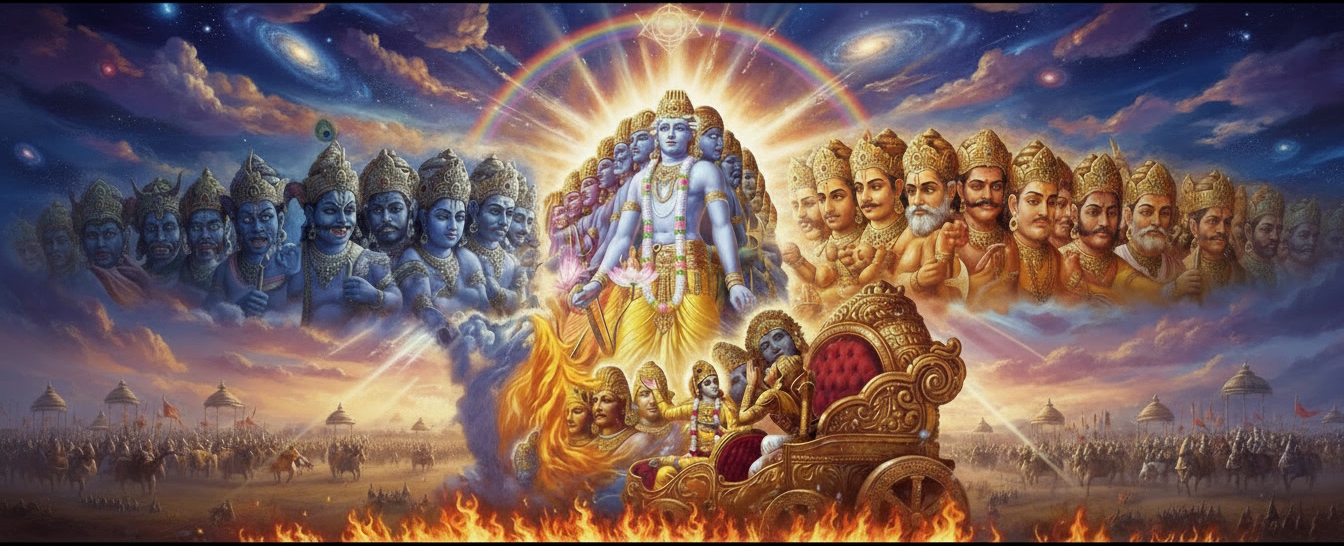
यो न हृष्यति न द्वेष्टि न शोचति न काङ्क्षति।
शुभाशुभपरित्यागी भक्ितमान्यः स मे प्रियः।।12.17।।
yo na hṛṣyati na dveṣṭi na śocati na kāṅkṣati|
śubhāśubhaparityāgī bhakitamānyaḥ sa me priyaḥ||12.17||
Translation
He who neither rejoices, nor hates, nor grieves, nor desires, renouncing good and evil, and who is full of devotion, is dear to Me.
हिंदी अनुवाद
जो न कभी हर्षित होता है, न द्वेष करता है, न शोक करता है, न कामना करता है और जो शुभ-अशुभ कर्मोंमें राग-द्वेषका त्यागी है, वह भक्तिमान् मनुष्य मुझे प्रिय है।
Commentaries & Translations
Swami Ramsukhdas
व्याख्या--'यो न हृष्यति न द्वेष्टि न शोचति न काङ्क्षति'--मुख्य विकार चार हैं -- (1) राग, (2) द्वेष, (3) हर्ष और (4) शोक (टिप्पणी प0 656.2)। सिद्ध भक्तमें ये चारों ही विकार नहीं होते। उसका यह अनुभव होता है कि संसारका प्रतिक्षण वियोग हो रहा है और भगवान्से कभी वियोग होता ही नहीं। संसारके साथ कभी संयोग था नहीं, है नहीं, रहेगा नहीं और रह सकता भी नहीं। अतः संसारकी कोई,स्वतन्त्र सत्ता नहीं है -- इस वास्तविकताका अनुभव कर लेनेके बाद (जडताका कोई सम्बन्ध न रहनेपर) भक्तका केवल भगवान्के साथ अपने नित्यसिद्ध सम्बन्धका अनुभव अटलरूपसे रहता है। इस कारण उसका अन्तःकरण राग-द्वेषादि विकारोंसे सर्वथा मुक्त होता है। भगवान्का साक्षात्कार होनेपर ये विकार सर्वथा मिट जाते हैं।
साधनावस्थामें भी साधक ज्यों-ज्यों साधनमें आगे बढ़ता है, त्यों-ही-त्यों उसमें राग-द्वेषादि कम होते चले जाते हैं। जो कम होनेवाला होता है, वह मिटनेवाला भी होता है। अतः जब साधनावस्थामें ही विकार कम होने लगते हैं, तब सहज ही यह अनुमान लगाया जा सकता है कि सिद्धावस्थामें भक्तमें ये विकार नहीं रहते, पूर्णतया मिट जाते हैं।
हर्ष और शोक -- दोनों राग-द्वेषके ही परिणाम हैं। जिसके प्रति राग होता है, उसके संयोगसे और जिसके प्रति द्वेष होता है, उसके वियोगसे 'हर्ष' होता है। इसके विपरीत जिसके प्रति राग होता है, उसके वियोग या वियोगकी आशङ्कासे और जिसके प्रति द्वेष होता है, उसके संयोग या संयोगकी आशङ्कासे 'शोक' होता है। सिद्ध भक्तमें राग-द्वेषका अत्यन्ताभाव होनेसे स्वतः एक साम्यावस्था निरन्तर रहती है। इसलिये वह विकारोंसे सर्वथा रहित होता है।
जैसे रात्रिके समय अन्धकारमें दीपक जलानेकी कामना होती है; दीपक जलानेसे हर्ष होता है, दीपक बुझानेवालेके प्रति द्वेष या क्रोध होता है और पुनः दीपक कैसे जले -- ऐसी चिन्ता होती है। रात्रि होनेसे ये चारों बातें होती हैं। परन्तु मध्याह्नका सूर्य तपता हो तो दीपक जलानेकी कामना नहीं होती, दीपक जलानेसे हर्ष नहीं होता, दीपक बुझानेवालेके प्रति द्वेष या क्रोध नहीं होता और (अँधेरा न होनेसे) प्रकाशके अभावकी चिन्ता भी नहीं होती। इसी प्रकार भगवान्से विमुख और संसारके सम्मुख होनेसे शरीरनिर्वाह और सुखके लिये अनुकूल पदार्थ, परिस्थिति आदिके मिलनेकी कामना होती है इनके मिलनेपर हर्ष होता है; इनकी प्राप्तिमें बाधा पहुँचानेवालेके प्रति द्वेष या क्रोध होता है; और इनके न मिलनेपर 'कैसे मिलें' ऐसी चिन्ता होती है। परन्तु जिसको (मध्याह्नके सूर्यकी तरह) भगवत्प्राप्ति हो गयी है, उसमें ये विकार कभी नहीं रहते। वह पूर्णकाम हो जाता है। अतः उसको संसारकी कोई आवश्यकता नहीं रहती।
'शुभाशुभपरित्यागी'--ममता, आसक्ति और फलेच्छासे रहित होकर ही शुभ कर्म करनेके कारण भक्तके कर्म 'अकर्म' हो जाते हैं। इसलिये भक्तको शुभ कर्मोंका भी त्यागी कहा गया है। राग-द्वेषका सर्वथा अभाव होनेके कारण उससे अशुभ कर्म होते ही नहीं। अशुभ कर्मोंके होनेमें कामना, ममता, आसक्ति ही प्रधान कारण हैं, और भक्तमें इनका सर्वथा अभाव होता है। इसलिये उसको अशुभ कर्मोंका भी त्यागी कहा गया है।भक्त शुभ-कर्मोंसे तो राग नहीं करता और अशुभ-कर्मोंसे द्वेष नहीं करता। उसके द्वारा स्वाभाविक शास्त्रविहित शुभ कर्मोंका आचरण और अशुभ (निषिद्ध एवं काम्य) कर्मोंका त्याग होता है, राग-द्वेषपूर्वक नहीं। राग-द्वेषका सर्वथा त्याग करनेवाला ही सच्चा त्यागी है।
मनुष्यको कर्म नहीं बाँधते, प्रत्युत कर्मोंमें राग-द्वेष ही बाँधते हैं। भक्तके सम्पूर्ण कर्म राग-द्वेषरहित होते हैं, इसलिये वह शुभाशुभ सम्पूर्ण कर्मोंका परित्यागी है।
'शुभाशुभपरित्यागी' पदका अर्थ शुभ और अशुभ कर्मोंके फलका त्यागी भी लिया जा सकता है। परन्तु इसी श्लोकके पूर्वार्धमें आये 'न हृष्यति न द्वेष्टि न शोचति न काङ्क्षति' पदोंका सम्बन्ध भी शुभ (अनुकूल) और अशुभ (प्रतिकूल) कर्मफलके त्यागसे ही है। अतः यहाँ 'शुभाशुभपरित्यागी' पदका अर्थ शुभाशुभ कर्मफलका त्यागी माननेसे पुनरुक्ति-दोष आता है। इसलिये इस पदका अर्थ शुभ एवं अशुभ कर्मोंमें राग-द्वेषका त्यागी ही मानना चाहिये।
'भक्तिमान्यः स मे प्रियः'-- भक्तकी भगवान्में अत्यधिक प्रियता रहती है। उसके द्वारा स्वतः-स्वाभाविक भगवान्का चिन्त, स्मरण, भजन होता रहता है। ऐसे भक्तको यहाँ 'भक्तिमान्' कहा गया है।भक्तका भगवान्में अनन्य प्रेम होता है? इसलिये वह भगवान्को प्रिय होता है।
सम्बन्ध--अब आगेके दो श्लोकोंमें सिद्ध भक्तके दस लक्षणोंवाला पाँचवाँ और अन्तिम प्रकरण कहते हैं।
Sri Harikrishnadas Goenka
तथा --, जो इष्ट वस्तुकी प्राप्तिमें हर्ष नहीं मानता? अनिष्टकी प्राप्तिमें द्वेष नहीं करता? प्रिय वस्तुका वियोग होनेपर शोक नहीं करता और अप्राप्त वस्तुकी आकाङ्क्षा नहीं करता? ऐसा जो शुभ और अशुभ कर्मोंका त्याग कर देनेवाला भक्तिमान् पुरुष है वह मेरा प्यारा है।
Sri Anandgiri
Absence of hatred, joy, etc. is also a mark of the man of knowledge, so He says -- "Kincha" etc.
Since by "Sarvarambhaparityagi" the renunciation of prescribed desire-prompted actions was stated, (thinking) "Let it not be restricted to other than the prescribed," He qualifies -- "Shubhashubha" etc.
Sri Dhanpati
Moreover, freedom from joy etc. is also an attribute of the knower of Truth; with this intention He says -- "Yah" (He who) etc.
As for the claim that He explains this very verse with three verses [beginning with] "Yah", that is to be disregarded. Because when non-repetition is possible in the manner stated in the Bhashya, assuming an explanation-explained relationship is unjustifiable.
"Yah" (He who) "Na hrishyati" (does not rejoice) -- does not obtain joy -- upon attaining the desired. "Na dveshti" (Does not hate) -- does not exercise hatred -- upon attaining the undesired.
In "Adveshta sarvabhutanam" (Non-hater of all beings), a general absence of hatred towards all beings was stated as natural; but here, it is the absence of specific hatred towards that (undesired object/person) upon the attainment of the undesired; thus there is non-repetition.
"Na shochati" (Does not grieve) -- does not accept grief, i.e., mental distress -- upon the separation from the dear. And "Na kankshati" (Does not desire) the unattained.
"Shubhashubhe" -- he whose nature is to renounce merit and sin actions. And lest by "Sarvarambhaparityagi" (Renouncer of all enterprises) there be a restriction of the word "all" to mean "renouncer of all enterprises other than the obligatory, occasional, and desire-prompted actions stated in the Vedas", therefore "Shubhashubhaparityagi" (Renouncer of good and evil) is said.
He who is "Bhaktiman" (Devoted), he is dear to Me.
Sri Neelkanth
He explains this very verse with three verses -- "Yo na" etc. He does not rejoice when there is gain of the desired. He does not hate upon the attainment of the undesired. He does not grieve when there is separation from the desired. He does not desire the union with the desired or the removal of the undesired; because of being desireless.
"Shubham" meaning auspicious, merit, and "Ashubham" meaning inauspicious, sin -- he whose nature is to renounce both of them is "Shubhashubhaparityagi". By this, "Shuchitva" (Purity) is explained.
"Bhaktiman" -- constantly engaged in devotion, meaning "Daksha" (Expert), this is the meaning.
Sri Ramanuja
"Yo na hrishyati" -- Upon attaining that collection of dear things which is the cause of joy for men, which Karma Yogi does not rejoice. And upon attaining that which is unpleasant, who does not hate.
And upon attaining that which is the cause of grief for men, such as the loss of wife, son, wealth, etc., does not grieve, and does not desire such things when unattained; and that which is the cause of joy for men, like wife, wealth, etc., he does not desire when unattained, this is the meaning.
"Shubhashubhaparityagi" (Renouncer of good and evil) -- Since merit (Punya), like sin (Papa), is indistinct in being a cause of bondage, he is the renouncer of both. He who is such a devotee is dear to Me.
Sri Sridhara Swami
Moreover -- "Yena" (Yo na) etc. Who does not rejoice upon obtaining the dear; who does not hate upon obtaining the undear; who does not grieve when the desired object is destroyed; does not desire the unattained object.
"Shubhashubhe" -- merit and sin -- he whose nature is to renounce; having become such, he who is possessed of My devotion, is dear to Me.
Sri Vedantadeshikacharya Venkatanatha
Now, the absence of grief, joy, etc. even in pleasant and unpleasant things arrived by chance; and the absence of desire even in things not yet arrived which are other than prohibited; and the renunciation of the cause thereof is stated -- by the verse "Yo na hrishyati".
Previously in "Harshamarsha" [12.15], joy etc. caused by specific persons were prohibited; but here it is caused by gain of objects etc., this is the distinction; with this intention he says "Yanmanushyanam" (What for men...). By "Karmayogi" in the form of an explanation of the word "Yat" (Who), the cause for the absence of joy is indicated. The idea is that he is indeed desireless regarding things other than the Self.
To make known the distinction from what was said in "Adveshta sarvabhutanam" [12.13], he says "Yachchapriyam tat prapya" (And attaining that which is unpleasant). Since the absence of joy, hatred, grief, etc. when the cause is absent is common to all people, his specific prescription is indeed changelessness when the cause of change exists; to make this known, the respective causes are mentioned.
"When Mithila is burning, nothing of mine burns" [MB]. Sin is indeed the means to the undesirable known through scripture. And the Sruti too -- having said "Neither good deed nor bad deed", by the conclusion "All sins turn away from this" [Chand. Up. 8.4.1], states that even good deed (Sukrita) is of the nature of sin.
Swami Chinmayananda
वह पुरुष परम भक्त कहलाता है जिसने मन और बुद्धि की अनात्म उपाधियों तथा जगत् से अपने तादात्म्य को त्याग कर आनन्दस्वरूप आत्मा में दृढ़ स्थिति प्राप्त कर ली है। अत यह स्वाभाविक ही है कि अनात्म जगत् से होने वाले सुखदुखादिक अनुभव उसे किसी भी प्रकार से न आकर्षित कर सकते हैं और न विचलित। इसे ही इस श्लोक में बताया गया है।सामान्य मनुष्य जगत् की सभी वस्तुओं को वे जैसी हैं? वैसी ही नहीं देखता। उसे कोई वस्तु प्रिय होती है? तो कोई अप्रिय। तत्पश्चात् वह प्रिय वस्तु की आकांक्षा या इच्छा करता है और अप्रिय से द्वेष। इसके पश्चात्? तीसरा द्वन्द्व उत्पन्न होता हैं प्रवृत्ति और निवृत्ति का? अर्थात् इच्छित वस्तु को प्राप्त करने के लिए और द्वेष्य वस्तु को त्यागने के लिए वह प्रयत्न करता है। इसके परिणामस्वरूप इष्ट की प्राप्ति होने पर वह हर्षित होता है? अन्यथा शोक करता है। ज्ञानी भक्त में इन समस्त विकारों और प्रतिक्रियाओं का यहाँ अभाव बताया गया है। इसका कारण यह है कि वह अपने परम आनन्दस्वरूप में स्थित होने के कारण बाह्य मिथ्या वस्तुओं में सुख और दुख की कल्पना करके उनसे राग या द्वेष नहीं करता। राग और द्वेष के द्वन्द्व के अभाव में हर्ष और शोक का स्वत अभाव हो जाता है। वह भक्त जगत् को अपनी कल्पना की दृष्टि से न देखकर यथार्थ रूप में देखता है।शभाशुभपरित्यागी जब मनुष्य अपने आनन्दस्वरूप को नहीं जानता है वह बाह्य जगत् में सुख और शान्ति की खोज करता रहता है। उस स्थिति में? अपने राग और द्वेष के कारण वस्तुओं की प्राप्ति के लिए शुभ और अशुभ (पुण्य और पाप) दोनों ही प्रकार के कर्म करता है। परन्तु? भक्त के मन में राग और द्वेष नहीं होने के कारण वह शुभ और अशुभ दोनों ही से मुक्त हो जाता है।इस प्रकार हम देखते हैं कि उपर्युक्त श्लोक में प्रयुक्त सभी शब्दों का एक विशेष गूढ़ अभिप्राय है? अन्यथा केवल वाच्यार्थ को ही स्वीकार करने पर ऐसा प्रतीत होगा कि ज्ञानी भक्त कोई शव अथवा पाषाण मात्र है? क्योंकि वह न इच्छा करता है और न द्वेष न हर्षित होता है और न दुखी अर्थात् वह मृत पड़ा रहता है यह श्लोक इस बात का अत्यन्त प्रभावी उदाहरण है कि धर्मशास्त्रों के शब्दों का वाच्यार्थ उसके मर्म या प्रयोजन को स्पष्ट नहीं करता है। अत उनके लक्ष्यार्थ पर विचार करना आवश्यक हो जाता है।इस श्लोक में वर्णित गुणें से युक्त भक्त भगवान् को प्रिय होता है। यह श्लोक प्रस्तुत प्रकरण का चतुर्थ भाग है? जिसमें ज्ञानी भक्त के और छ लक्षण बताये गये हैं। इस प्रकार अब तक छब्बीस गुणों को बताया गया है? जो भक्त के स्वाभाविक लक्षण होते हैं।
Sri Abhinavgupta
From 'Yasmat' etc. ending with 'Me priyah'.
'Aniketah' -- he who has no vow that 'This alone must be done by me.'
Enjoying pleasure, pain, etc. by the zeal as it comes naturally, with a heart absorbed in the object of the Supreme Lord, he attains supreme liberation with ease indeed.
... Auspiciousness.
Sri Madhusudan Saraswati
'Ya' etc. Moreover, He explains 'Sama-duhkha-sukha' (Equal in pain and pleasure) -- 'Who does not rejoice' upon attaining the desired? 'Does not hate' upon attaining the undesired? 'Does not grieve' upon separation from the attained desired? 'Does not desire' union with the unattained desired.
He explains 'Sarvarambhaparityagi' (Renouncer of all enterprises) -- 'Shubha' etc. 'Shubhashubhe' -- he whose nature is to renounce actions which are means to pleasure and means to pain is 'Shubhashubhaparityagi' (Renouncer of good and evil); who is 'Bhaktiman' (devoted), he is dear to Me.
Sri Purushottamji
Moreover -- 'Yo na' etc. He who does not rejoice by the attainment of worldly dear things? Similarly does not hate by the unpleasant etc.; and similarly does not grieve upon the destruction of an object meant for service? Does not desire that.
He renounces 'Shubhashubhe' -- of the form of heaven and hell etc. Knowing the Lord's will everywhere, he treats it as play -- this is the meaning.
He who is such, 'Bhaktiman' -- endowed with devotion -- is dear to Me.
Sri Shankaracharya
'He who does not rejoice' upon attaining the desired? 'Does not hate' upon attaining the undesired? 'Does not grieve' upon separation from the dear? And 'Does not desire' the unattained?
'Shubhashubhe' -- he whose nature is to renounce good and evil actions is 'Shubhashubhaparityagi' (Renouncer of good and evil); who is 'Bhaktiman' (devoted), he is dear to Me.
Sri Vallabhacharya
Moreover, 'Who does not rejoice and does not hate.'
Seeing another's pain or pleasure; like a common person, he 'does not grieve' even at the loss of wealth etc. And 'does not desire' that for his own enjoyment;
thinking 'The Lord alone is the Master, He ordains everything; He will do according to His own will,' he does not pray? Or does not worry.
He who is 'Shubhashubhaparityagi' (Renouncer of good and evil), he is 'Bhaktiman' (devoted) dear to Me.
Swami Sivananda
यः who? न not? हृष्यति rejoices? न not? द्वेष्टि hates? न not? शोचति grieves? न not? काङ्क्षति desires? शुभाशुभपरित्यागी renouncing good and evil? भक्तिमान् full of devotion? यः who? सः he? मे to Me? प्रियः dear.Commentary What is described in verse 13 is dealt with at length in this.He does not rejoice when he attains the desirable objects. He does not hate when he gets the undesirable objects. He does not grieve when he parts with his beloved objects. He does not desire the unattained.Subhasubhaparityagi Here is a further description of Sarvarambhaparityagi of verse 16. He who has renounced good and evil actions which produce pleasure and pain is a devotee of the Lord.Such a devotee or knower of Brahman? who is My own Self? is dear to Me. (Cf.VII.17IX.29)
Swami Gambirananda
Yah, he who; na hrsyati, does not rejoice on getting a coveted object; na dvesti, does not fret on getting an undesirable object; na socati, does not lament on the loss of a dear one; and na kanksati, does not hanker after an object not acired; subha-asubha-parityogi, who gives up good and bad, who is apt to give up good and bad actions; bhaktiman, who is full of devotion-he is dear to Me.
Swami Adidevananda
He who does not 'rejoice', i.e., that Karma Yogin, who, on obtaining things which cause joy to man, does not rejoice; who does not 'hate', does not hate on obtaining anything undesriable; who is not 'grieved' by common sorrows which cause grief among men, as the loss of wife, son, fortune etc.; who 'does not desire' anything like wife, son, fortune etc.; not already acired by him; who 'renounces good and evil,' i.e., who renounces both merit and demerit because, like demert, merit also causes bondage, there being no difference between them in this respect - he who is like this and devoted to Me is dear to Me.