Bhagavad Gita - Chapter 15 - Shloka (Verse) 10
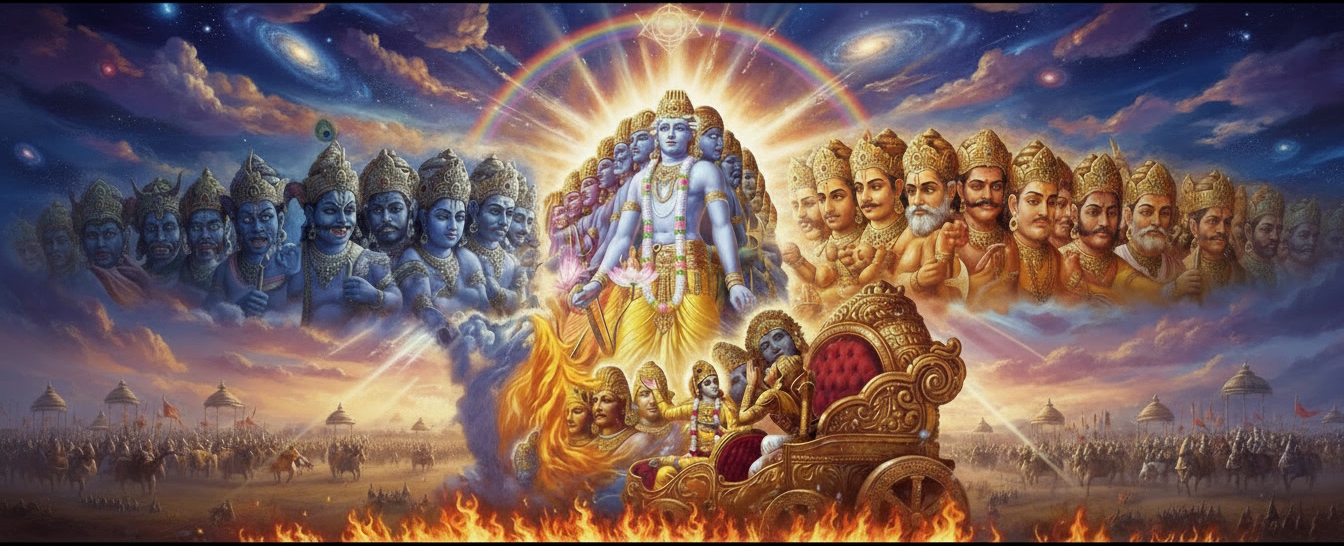
उत्क्रामन्तं स्थितं वापि भुञ्जानं वा गुणान्वितम्।
विमूढा नानुपश्यन्ति पश्यन्ति ज्ञानचक्षुषः।।15.10।।
utkrāmantaṃ sthitaṃ vāpi bhuñjānaṃ vā guṇānvitam|
vimūḍhā nānupaśyanti paśyanti jñānacakṣuṣaḥ||15.10||
Translation
The deluded do not see Him Who departs, stays and enjoys; but they who possess the eye of knowledge behold Him.
हिंदी अनुवाद
शरीरको छोड़कर जाते हुए या दूसरे शरीरमें स्थित हुए अथवा विषयोंको भोगते हुए भी गुणोंसे युक्त जीवात्माके स्वरूपको मूढ़ मनुष्य नहीं जानते, ज्ञानरूपी नेत्रोंवाले ज्ञानी मनुष्य ही जानते हैं।
Commentaries & Translations
Swami Ramsukhdas
व्याख्या -- उत्क्रामन्तम् -- स्थूलशरीरको छोड़ते समय जीव सूक्ष्म और कारणशरीरको साथ लेकर प्रस्थान करता है। इसी क्रियाको यहाँ उत्क्रामन्तम् पदसे कहा है। जबतक हृदयमें धड़कन रहती है? तबतक जीवका प्रस्थान नहीं माना जाता। हृदयकी धड़कन बंद हो जानेके बाद भी जीव कुछ समयतक रह सकता है। वास्तवमें अचल होनेसे शुद्ध चेतनतत्त्वका आवागमन नहीं होता। प्राणोंका ही आवागमन होता है। परन्तु सूक्ष्म और कारणशरीरसे सम्बन्ध रहनेके कारण जीवका आवागमन कहा जाता है।आठवें श्लोकमें ईश्वर बने जीवात्माके विषयमें आये उत्क्रामति पदको यहाँ उत्क्रामन्तम् पदसे कहा गया है।स्थितं वा -- जिस प्रकार कैमरेपर वस्तुका जैसा प्रतिबिम्ब पड़ता है? उसका वैसा ही चित्र अङ्कित हो जाता है। इसी प्रकार मृत्युके समय अन्तःकरणमें जिस भावका चिन्तन होता है? उसी आकारका सूक्ष्मशरीर बन जाता है। जैसे कैमरेपर पड़े प्रतिबिम्बके अनुसार चित्रके तैयार होनेमें समय लगता है? ऐसे ही अन्तकालीन चिन्तनके अनुसार भावी स्थूलशरीरके बननेमें (शरीरके अनुसार कम या अधिक) समय लगता है।आठवें श्लोकमें जिसका यदवाप्नोति पदसे वर्णन हुआ है? उसीको यहाँ स्थितम् पदसे कहा गया है।अपि भुञ्जानं वा -- मनुष्य जब विषयोंको भोगता है? तब अपनेको बड़ा सावधान मानता है और विषयसेवनमें सावधान रहता भी है। विषयी मनुष्य शब्द? स्पर्श? रूप? रस? और गन्ध -- इनमेंसे एकएक विषयको अच्छी तरह जानता है। अपनी जानकारीसे एकएक विषयको भी बड़ी स्पष्टतासे वर्णन करता है। इतनी सावधानी रखनेपर भी वह मूढ़ (अज्ञानी) ही है क्योंकि विषयोंके प्रति यह सावधानी किसी कामकी नहीं है? प्रत्युत मरनेपर नरकों और नीच योनियोमें ले जानेवाली है।परमात्मा? जीवात्मा और संसार -- इन तीनोंके विषयमें शास्त्रों और दार्शनिकोंके अनेक मतभेद हैं परन्तु जीवात्मा संसारके सम्बन्धसे महान् दुःख पाता है और परमात्माके सम्बन्धसे महान् सुख पाता है -- इसमें सभी शास्त्र और दार्शनिक एकमत हैं।संसार एक क्षण भी स्थिर नहीं रहता -- यह अकाट्य नियम है। संसार क्षणभङ्गुर है -- यह बात कहते? सुनते और पढ़ते हुए भी मूढ़ मनुष्य संसारको स्थिर मानते हैं। भोगसामग्री? भोक्ता और भोगरूप क्रिया -- इन सबको स्थायी माने बिना भोग हो ही नहीं सकता। भोगी मनुष्यकी बुद्धि इतनी मूढ़ हो जाती है कि वह इन भोगोंसे बढ़कर कुछ है ही नहीं -- ऐसा दृढ़ निश्चय कर लेता है (गीता 16। 11)। इसलिये ऐसे मनुष्योंके ज्ञाननेत्र बंद ही रहते हैं। वे मौतको निश्चित जानते हुए भी भोग भोगनेके लिये (मरनेवालोंके लोकमें रहते हुए भी) सदा जीते रहनेकी इच्छा रखते हैं।अपि पदका भाव है कि जीवात्मा जिस समय स्थूलशरीरसे निकलकर (सूक्ष्म और कारणशरीरसहित) जाता है? दूसरे शरीरको प्राप्त होता है तथा विषयोंका उपभोग करता है -- इन तीनों ही अवस्थाओंमें गुणोंमेंसे लिप्त दीखनेपर भी वास्तवमें वह स्वयं निर्लिप्त ही रहता है। वास्तविक स्वरूपमें न उत्क्रमण है? न, स्थिति है और न भोक्तापन ही है।पिछले श्लोकके विषयानुपसेवते पदको ही यहाँ भुञ्जानम् पदसे कहा गया है।गुणान्वितम् -- यहाँ गुणान्वितम् पदका तात्पर्य यह है कि गुणोंसे सम्बन्ध मानते रहनेके कारण ही जीवात्मामें उत्क्रमण? स्थिति और भोग -- ये तीनों क्रियाएँ प्रतीत होती हैं।वास्तवमें आत्माका गुणोंसे सम्बन्ध है ही नहीं। भूलसे ही इसने अपना सम्बन्ध गुणोंसे मान रखा है? जिसके कारण इसे बारम्बार ऊँचनीच योनियोंमें जाना पड़ता है। गुणोंसे सम्बन्ध जोड़कर जीवात्मा संसारसे सुख चाहता है -- यह उसकी भूल है। सुख लेनेके लिये शरीर भी अपना नहीं है? फिर अन्यकी तो बात ही क्या हैमनुष्य मानो किसीनकिसी प्रकारसे संसारमें ही फँसना चाहता है व्याख्यान देनेवाला व्यक्ति श्रोताओंको अपना मानने लग जाता है। किसीका भाईबहन न हो? तो वह धर्मका भाईबहन बना लेता है। किसीका पुत्र न हो? तो वह दूसरेका बालक गोद ले लेता है। इस तरह नयेनये सम्बन्ध जोड़कर मनुष्य चाहता तो सुख है? पर पाता दुःख ही है। इसी बातको भगवान् कह रहे हैं कि जीव स्वरूपसे गुणातीत होते हुए भी गुणों(देश? काल? व्यक्ति? वस्तु) से सम्बन्ध जोड़कर उनसे बँध जाता है।इसी अध्यायके सातवें श्लोकमें आये प्रकृतिस्थानि पदको ही यहाँ गुणान्वितम् पदसे कहा गया है।मार्मिक बातजबतक मनुष्यका प्रकृति अथवा उसके कार्य -- गुणोंसे किञ्चिन्मात्र भी सम्बन्ध रहता है? तबतक गुणोंके अधीन होकर उसे कर्म करनेके लिये बाध्य होना पड़ता है (गीता 3। 5)। चेतन होकर गुणोंके अधीन रहना अर्थात् जडकी परतन्त्रता स्वीकार करना व्यभिचारदोष है। प्रकृति अथवा गुणोंसे सर्वथ मुक्त होनेपर जो स्वाधीनताका अनुभव होता है? उसमें भी साधक जबतक (अहम्की गन्ध रहनेके कारण) रस लेता है? तबतक व्यभिचारदोष रहता ही है। रस न लेनेसे जब वह व्यभिचारदोष मिट जाता है? तब अपने प्रेमास्पद भगवान्के प्रति स्वतः प्रियता जाग्रत् होती है। फिर प्रेमहीप्रेम रह जाता है? जो उत्तरोत्तर वृद्धिको प्राप्त होता रहता है। इस प्रेमको प्राप्त करना ही जीवका अन्तिम लक्ष्य है। इस प्रेमकी प्राप्तिमें ही पूर्णता है। भगवान् भी भक्तको अपना अलौकिक प्रेम देकर ही राजी होते हैं और ऐसे प्रेमी भक्तको योगियोंमें सर्वश्रेष्ठ योगी मानते हैं (गीता 6। 47)।गुणातीत होनेमें तो (स्वयंका विवेक सहायक होनेके कारण) अपने साधनका सम्बन्ध रहता है? पर गुणातीत होनेके बाद प्रेमकी प्राप्ति होनेमें भगवान्की कृपाका ही सम्बन्ध रहता है।विमूढा नानुपश्यन्ति -- जैसे भिन्नभिन्न प्रकारके कार्य करनेपर भी हम वही रहते हैं? ऐसे ही गुणोंसे युक्त होकर शरीरको छोड़ते? अन्य शरीरको प्राप्त होते तथा भोग भोगते समय भी स्वयं (आत्मा) वही रहता है। तात्पर्य यह है कि परिवर्तन क्रियाओंमें होता है? स्वयं में नहीं। परन्तु जो भिन्नभिन्न क्रियाओंके साथ मिलकर स्वयं को भी भिन्नभिन्न देखने लगता है (3। 27)? ऐसे अज्ञानी (तत्त्वको न जाननेवाले) मनुष्यके लिये यहाँ विमूढा नानुपश्यन्ति पद दिये गये हैं।मूढ़लोग भोग और संग्रहमें इतने आसक्त रहते हैं कि शरीरादि पदार्थ नित्य रहनेवाले नहीं हैं -- यह बात सोचते ही नहीं। भोग भोगनेका क्या परिणाम होगा उस ओर वे देखते ही नहीं। भगवान्ने गीताके सत्रहवें अध्यायमें जहाँ सात्त्विक? राजस और तामस पुरुषोंको प्रिय लगनेवाले आहारोंका वर्णन किया है? वहाँ सात्त्विक आहारके परिणामका वर्णन पहले किया गया है राजस आहारके परिणामका वर्णन अन्तमें किया गया है और तामस आहारके परिणामका वर्णन ही नहीं किया गया है (गीता 17। 8 -- 10)। इसका कारण यह है कि सात्त्विक मनुष्य कर्म करनेसे पहले उसके परिणाम(फल) पर दृष्टि रखता है राजस मनुष्य पहले सहसा काम कर बैठता है? फिर परिणाम चाहे जैसा आये परन्तु तामस मनुष्य तो परिणामकी तरफ दृष्टि ही नहीं डालता। इसी प्रकार यहाँ भी विमूढा नानुपश्यन्ति पद देकर भगवान् मानो यह कहते हैं कि मोहग्रस्त मनुष्य तामस ही हैं क्योंकि मोह तमोगुणका कार्य है। वे विषयोंका सेवन करते समय परिणामपर विचार ही नहीं करते। केवल भोग भोगने और संग्रह करनेमें ही लगे रहते हैं। ऐसे मनुष्योंका ज्ञान तमोगुणसे ढका रहता है। इस कारण वे शरीर और आत्माके भेदको नहीं जान सकते।पश्यन्ति ज्ञानचक्षुषः -- प्राणी? पदार्थ? घटना? परिस्थिति -- कोई भी स्थिर नहीं है अर्थात् दृश्यमात्र निरन्तर अदर्शनमें जा रहा है -- ऐसा प्रत्यक्ष अनुभव होना ही ज्ञानरूप चक्षुओंसे देखना है। परिवर्तनकी ओर दृष्टि होनेसे अपरिवर्तनशील तत्त्वमें स्थिति स्वतः होती है क्योंकि नित्य परिवर्तनशील पदार्थका अनुभव अपरिवर्तनशील तत्त्वको ही होता है।यहाँ ऐसा नहीं समझना चाहिये कि ज्ञानी मनुष्यका भी स्थूलशऱीरसे निकलकर दूसरे शरीरको प्राप्त होना तथा भोग भोगना होता है। ज्ञानी मनुष्यका स्थूलशरीर तो छूटेगा ही? पर दूसरे शरीरको प्राप्त करना तथा रागबुद्धिसे विषयोंका सेवन करना उसके द्वारा नहीं होते। दूसरे अध्यायके तेरहवें श्लोकमें भगवान्ने कहा है कि जैसे जीवात्माकी इस देहमें बालकपन? जवानी और वृद्धावस्था होती है? ऐसे ही अन्य शरीरकी प्राप्ति होती है? परन्तु उस विषयमें ज्ञानी मनुष्य मोहित अथवा विकारको प्राप्त नहीं होता। कारण यह है कि वह ज्ञानी मनुष्य ज्ञानरूप नेत्रोंके द्वारा यह देखता है कि जन्ममृत्यु आदि सब क्रियाएँ या विकार परिवर्तनशील शरीरमें ही हैं? अपरिवर्तनशील स्वरूपमें नहीं। स्वरूप इन विकारोंसे सब समय सर्वथा निर्लिप्त रहता है। शरीरको अपना मानने तथा उससे सुख लेनेकी आशा रखनेसे ही विमूढ़ मनुष्योंको तादात्म्यके कारण ये विकार स्वयंमें होते प्रतीत होते हैं। विमूढ़ मनुष्य आत्माको गुणोंसे युक्त देखते हैं और ज्ञाननेत्रोंवाले मनुष्य आत्माको गुणोंसे रहित -- वास्तविक रूपसे देखते हैं। सम्बन्ध -- पूर्वश्लोकमें वर्णित तत्त्वको जो पुरुष यत्न करनेपर जानते हैं? उनमें क्या विशेषता है और जो यत्न करनेपर भी नहीं जानते? उनमें क्या कमी है -- इसको आगेके श्लोकमें बताते हैं।
Sri Harikrishnadas Goenka
इस प्रकार इस देहधारी ( जीवात्मा ) को शरीरसे --, उत्क्रमण करते हुएको अर्थात् पहले प्राप्त किये शरीरको छोड़कर जाते हुएको? अथवा शरीरमें स्थित रहते हुएको? या शब्दादि विषयोंका भोग करते हुएको? या सुखदुःखमोह आदि गुणोंसे युक्त हुएको भी? यानी इस प्रकार अत्यन्त दर्शनगोचर होते हुए भी इस आत्माको मूढ़ लोग? जो कि दृष्ट और अदृष्ट विषयभोगोंकी लालसाके बलसे चित्त आकृष्ट हो जानेके कारण अनेक प्रकारसे मोहित हो रहे हैं? नहीं देखते? अहो यह बड़े दुःखकी बात है? इस प्रकार भगवान् करुणा प्रकट करते हैं। परंतु जो प्रमाणजनित ज्ञाननेत्रोंसे युक्त हैं अर्थात् विवेकदृष्टिवाले हैं? वे इसे देखते हैं।
Sri Anandgiri
Having stated the distinction of the Self from the body in the verse "Shariram" etc., and having stated in "Shrotram chakshuh" etc. that the Self is distinct from the instruments (senses) as their impeller in their respective desired objects; then why does everyone not see him doing departure etc. since he is their own nature? Doubting this, He says—"Evam" (Thus/Such a one).
Though fit to be seen due to extreme proximity, everyone does not see the Self due to being overpowered by objects—thus he shows the Lord's compassion (regret?) with "Evambhutam" (Such a one).
Then for whom does the vision of the Self occur? He says—"Ye tu punah" (But those again).
Sri Dhanpati
Having stated the distinction of the Self from the body etc. by the verse 'Shariram' (15.8) etc.; and in 'Shrotram' (15.9) etc., having stated His difference as the impeller of the ear etc. is distinct from them; then 'Why does everyone not see his own true nature, which is distinct from the body etc., while performing departure etc.?' If this is asked, He says regarding that -- 'Utkramantam' (Departing).
Thus 'departing' from the body -- abandoning the previously assumed body; or 'staying' -- remaining in the body; or 'enjoying' -- experiencing sound etc.; 'united with the Gunas' -- followed by or conjoined with qualities named pleasure, pain, and delusion; even though being such; even though having thus attained the state of being extremely observable; the 'Vimudhas' -- those deluded in many ways, bewildered because their minds are dragged away by the force of enjoyment of seen and unseen objects -- 'do not see'; 'Oh, what a pity/hardship exists', thus the Lord laments.
Then who sees the Self and how? To that He says. Knowledge -- meaning the means of vision of the Self generated by scripture supported by logic -- is the eye of whom, they are those possessing the eye of knowledge generated by valid means; with a discriminating vision, they 'see', i.e., directly realize, Him who is distinct from all, the substratum of all, and the bestower of all existence and manifestation.
Sri Madhavacharya
Then why is he not seen? To this He says—"Utkramantam" etc.
Sri Neelkanth
Such a one—who "presiding over" the senses with mind as the sixth and the Prana, "departs" by their departure, "stays" by their staying, "enjoys" by their enjoyment, and is "endowed with Gunas" by their being endowed with Sattva, Rajas, and Tamas Gunas—like the sun in a pot or space in a pot appearing to have motion etc. by the motion etc. of the pot, though inherently devoid of departure etc.; the "deluded" do not see him in his true nature. But those with "the eye of knowledge" see him.
They indeed know that departure etc. belong only to the adjunct, not to the conditioned Self—this is the meaning.
Sri Ramanuja
Thus "Gunanvitam" (united with Gunas)—associated with the aggregate-body (Pinda) having the form of humanity etc., which is a specific modification of Prakriti consisting of Gunas like Sattva; "Utkramantam" (departing) from a specific body; or "Avasthitam" (staying) in a specific body; or "Bhunjanam" (enjoying) objects consisting of Gunas; "Vimudhah" (the deluded) do not see him "at any time" as distinct from the body of humanity etc. which is a specific modification of Prakriti, and as having a form of sole Knowledge.
"Vimudhah"—those identifying the Self with the body of humanity etc.
But those with "the eye of knowledge"—possessing knowledge regarding the discrimination between the body and the Self—see "Enam" (him) indeed as distinct in form in all states.
Sri Sridhara Swami
Objection: Even though the Self is distinct from the aggregate of effect and cause (body), why doesn't everyone see him as such? To this He says—"Utkramantam" etc.
"Utkramantam"—going from one body to another body. Or "Sthitam" (staying) in that very body; or "Bhunjanam" (enjoying) objects; "Gunanvitam"—the Jiva united with senses etc.; "Vimudhah"—the undiscriminating—"Na anupashyanti"—do not see.
Those whose eye is knowledge itself, the "Vivekinah" (discriminating ones), see.
Sri Vedantadeshikacharya Venkatanatha
For one shackled by the mass of Karma, the "staying" in the prison of the body; therein the affliction of departure and entry etc.; and for one staying there, the "enjoyment" of very petty objects like (mixed) poison and honey—have been stated.
Now, on top of that, introducing the "theft of stealing the Self" which is the root cause of those, He removes (explains) the non-perception [of the Self] even though it is fit [to be seen]—with the verse "Utkramantam".
With the intention that "being united with Gunas" is the cause for others (not seeing), that was explained first. With the intention that the mention of departure etc. implies all states, "Kadachit api" (at any time) was said.
When the Self is eternally perceived as "I" by everyone, and when enjoyership etc. are witnessed by one's own Self; how is it said that "some do not see"? To this he says—"Distinct from the body of humanity etc."
Meaning distinct from the body qualified by humanity etc., which is a specific modification of Prakriti. The mention of "having a form of sole knowledge" is to imply the modes of distinction.
"Vimudhah na anupashyanti" (The deluded do not see)—this is the Lord's statement with compassion. The delusion which is the root of (lack of) true Self-vision is regarding that (body identification)—so he says "Those identifying the Self with the body of humanity etc."
Because of being eternally self-luminous, the mention of "having a distinct form" is for the sake of differentiation.
Swami Chinmayananda
यह एक सर्वत्र अनुभव सत्य है कि सामान्य बुद्धि का पुरुष यद्यपि वस्तु को देखता है? तथापि उसे पूर्ण तथा यथार्थ रूप से समझ नहीं पाता है। वस्तु का वास्तविक ज्ञान केवल उस विषय के ज्ञानियों को ही उपलब्ध होता है।प्रत्येक व्यक्ति किसी साहित्यिक रचना को पढ़ सकता है? परन्तु एक भाषाविद् पुरुष ही उस रचनाकार की दृष्टि को यथार्थत समझकर उसका पूर्ण आनन्द अनुभव कर सकता है। एक जौहरी ही मणियों के गुणस्तर और वास्तविक मूल्य को आंक सकता है। अन्य लोग केवल देख ही सकते हैं। सभी लोग संगीत सुन सकते हैं? किन्तु एक कुशल संगीतज्ञ ही किसी सर्वोत्कृष्ट गायन की शास्त्रीय सूक्ष्मता एवं सुन्दरता का आनन्द उठा सकता है।इसी प्रकार? इसी चैतन्य आत्मा की उपस्थिति से ही हम विषय? भावनाओं और विचारों का अनुभव करते हैं? परन्तु केवल आत्मज्ञानी पुरुष ही इसे पहचानते हैं और स्वयं आत्मस्वरूप बनकर जीते हैं।आत्मा तो नित्य विद्यमान है। इसका अभाव कभी नहीं होता। देहत्याग के समय सूक्ष्म शरीर को चेतनता प्रदान करने वाला आत्मा ही होता है। एक देहविशेष के जीवन काल में आत्मा ही समस्त अनुभवों को प्रकाशित करता है। सुखदुखात्मक मानसिक अनुभवों तथा बुद्धि के निर्णयों का प्रकाशक भी आत्मा ही है। इसी प्रकार क्षणक्षण परिवर्तनशील हमारे मन के सात्त्विक (शांति)? राजसिक (विक्षेप) और तामसिक (मोहादि) भावों का ज्ञान भी चैतन्य के कारण ही संभव होता है फिर भी अविवेकी जन उसे पहचान नहीं पाते जिसकी उपस्थिति से ही कोई अनुभव संभव हो सकता है।सामान्य जन अपने अनुभवों तथा उनके विषयों के प्रति ही इतने अधिक आसक्त और व्यस्त हो जाते हैं कि उनका सम्पूर्ण ध्यान बाह्य विषयों और सुन्दर संरचनाओं की सुन्दरता में ही आकृष्ट रहता है। वे उस आत्मा की उपेक्षा करते हैं तथा उसे पहचान नहीं पाते? जिसकी उपस्थिति से ही कोई अनुभव संभव हो सकता है।इनके सर्वथा विपरीत वे ज्ञानीजन हैं? जो नाम और रूपों के विस्तार से विरक्त होकर इस विस्तार के सार तत्त्व उस ब्रह्म को देखते हैं? जो उनके हृदय में आत्मरूप से स्थित सभी को प्रकाशित करता है। इस आत्मतत्त्व का दर्शन वे ज्ञानचक्षु से करते हैं। ज्ञानचक्षु कोई अन्तरिन्द्रिय नहीं हैं। विवेक वैराग्य आदि गुणों से सम्पन्न साधक जब वेदान्त प्रमाण के द्वारा आत्मविचार करता है? तब उस विचार से प्राप्त आत्मबोध ही ज्ञानचक्षु है। श्री शंकराचार्य ने इस ज्ञानचक्षु का और कलात्मक वर्णन अपने आत्मबोध नामक ग्रन्थ में,किया है।आत्मदर्शन करने में अज्ञानी की विफलता और ज्ञानी की सफलता का कारण अगले श्लोक में वर्णन करते हैं
Sri Abhinavgupta
Thus, having stated its (the soul's) association with these (senses) in creation and dissolution, it is ascertained that even in the state of sustenance — which consists of standing, sitting, thinking, etc., and is of the nature of grasping objects — its activity is verily in association with them — (this is described from) 'Shrotram' etc. up to 'Achetasah' (15.11).
By 'Manas' (mind), the internal organ is implied. Therefore, the deluded do not see Him 'staying' due to connection with the bodily state, 'departing' to take up another body, or 'enjoying' the objects; due to being unawakened.
But the awakened ones, investigating the nature of pure consciousness everywhere, indeed know Him; thus their absorption is unbroken; due to their being intent on effort.
But for the unrefined souls, even effort does not lead to fruit; due to their impurities being unripe. For indeed, in autumn, even with the contact of causal conditions like water etc., grain seeds being sown are not sufficient for a wealth of fruit. Therefore, that collection of materials is not for this (fruit).
Indeed, the water impelled by the mass of clouds gathered in the spring month is something else entirely; and that earth is some specific one indeed; in which, having been rendered helpless by the winter, there is radiance merely by the touch of the sun's rays.
Similarly, the effort of the unrefined souls does not attain the state of completeness in all limbs. Therefore, even after obtaining the means like initiation into the Supreme Lord's path, those whose inner vision is enveloped by the context of knots of such anger, delusion, etc.; in them, the means itself does not attain completeness, thus it should be thought.
As it is said -- 'For when anger etc. are observed, even the initiated one does not partake of liberation.'
Sri Jayatritha
"Why is what has already been said being said again?"—to refute this dull doubt, he states the connection of the subsequent two verses—"Tarhi" (Then) etc.
If there were a controller in the body distinct from the Jiva—this is the remaining part.
By restating what was said, it is stated that "delusion" is the cause of non-perception; not the absence of That (controller)—this is the idea.
Sri Madhusudan Saraswati
Thus situated in the body, though fit to be seen; "Utkramantam"—departing from the body, going to another body; or "Sthitam"—staying from the previous one; or in that very body "Bhunjanam"—enjoying—objects, sound etc.; "Gunanvitam"—united with Gunas consisting of pleasure, pain, and delusion. Thus, though fit to be seen in all states, "Enam" (him); "Vimudhah"—those unfit for discrimination between Self and non-Self due to their minds being dragged by the Vasanas of enjoyment of seen (worldly) and unseen (other-worldly) objects—"Na anupashyanti"—do not see. "Oh, it is a pity"—thus the Lord expresses regret.
But those who possess the eye of knowledge born of evidence (Pramana), the discriminating ones, they alone see.
Sri Purushottamji
Why doesn't everyone see such a one? To this He says—"Utkramantam" etc.
"Utkramantam"—going from a body unfit for the taste of worship to one fit for it; or alternatively, "Sthitam" (staying) even there with the desire for such vision; or "Bhunjanam"—experiencing the taste of such objects; "Gunanvitam"—united with senses skilled in that enjoyment—the primary Jiva; "Vimudhah"—those whose vision is distracted due to being intent solely on their own enjoyment because of the absence of holy company—"Na anupashyanti"—do not see. Even seeing him, they do not see themselves.
"Jnanachakshushah"—those who have attained the true nature through holy company—see.
Sri Shankaracharya
'Utkramantam'—abandoning the body previously assumed; or 'Sthitam'—staying in the body; or 'Bhunjanam'—perceiving/enjoying sound etc.; 'Gunanvitam'—united with—followed by, conjoined with—qualities like pleasure, pain, delusion etc.—this is the meaning.
Even such 'Enam' (him)—though having come extremely within the range of vision; 'Vimudhah'—those deluded in many ways due to their minds being dragged by the force of enjoyment of seen and unseen objects—'Na anupashyanti' (do not see). 'Oh, it is a pity'—thus the Lord expresses regret.
But those who are 'Jnanachakshushah'—possessing the eye of knowledge born of evidence; they see 'Enam' (him). 'Jnanachakshushah'—meaning those of discriminating vision.
Sri Vallabhacharya
Objection: Then, due to difference from the aggregate, why do they not see such a Self? To this He says—"Utkramantam" etc.
"Vimudhah"—those identifying the Self with the body of humanity etc. consisting of Prakriti—"Na anupashyanti"—do not see; that "Enam" (him)—associated with the aggregate-body having the form of humanity etc., which is a specific modification of Prakriti consisting of Gunas like Sattva; "Utkramantam" (departing) from a specific body; or "Avasthitam" (staying) in a specific body; or "Bhunjanam" (enjoying) objects consisting of Gunas; or united with the essence of those Gunas.
But "Jnanachakshushah"—those with the vision of knowledge regarding the discrimination between the body and the Self; see "Enam" (him) indeed as distinct in form in all states.
Swami Sivananda
उत्क्रामन्तम् departing? स्थितम् staying? वा or? अपि also? भुञ्जानम् enjoying? वा or? गुणान्वितम् united with the Gunas? विमूढाः the deluded? न not? अनुपश्यन्ति do see (Him)? पश्यन्ति behold (Him)? ज्ञानचक्षुषः those who possess the eye of knowledge.Commentary Though the Self is nearest and comes most easily within their field of vision or consciousness? the ignorant and the deluded are not able to behold Him? because they are swayed by the alities of Nature their minds constantly run towards the sensual objects and are saturated with passion they identify the Self with the body their vision is engrossed in external forms. But those who are endowed with the inner eye of intuition do behold Him.Yama said to Nachiketas The selfexistent Brahma created the senses with outgoing tendencies therefore man beholds the external universe and not the internal Self. He aded But some wise men with their senses turned away from the objects? desirous of immortality? turn their gaze inwards and behold the Self within (seated in their heart). (Katha Upanishad IV.1)Those who possess the inner eye of knowledge behold that the Self is entirely distinct from the body. They realise the Selfs separate existence from the body and know that the body moves and acts on account of Its presence therein? just as the iron moves and acts in the presence of the magnet.
Swami Gambirananda
Thus, the embodied soul, utkarmantam, when it is leaving the body-the body that was assumed earlier; or sthitam, while residing in the (present) body; or bhunjanam, experiencing sound etc.; or guna-anvitam, in association with, i.e. identified with, the alities called happiness, sorrow and delusion-even when, under such conditions, this one comes very much within the range of cognition; vimudhah, the persons who are diversely deluded as a result of their hearts being forcibly attracted by the enjoyments of seen and unseen objects; na, do not; anu-pasyanti, see. And the Lord regrets this saying, 'Alas! How sorrowful this is!'
Those others, again, jnana-caksusah, who have the eye of knowledge, [Jnana-caksuh means the scriptures supported by reasoning, which are the means of knowledge.] who have the insight of under-standing which has arisen from the valid means of knowledge, i.e., those having a clear vision; pasyanti, see this one.
Swami Adidevananda
The deluded do not perceive the Atman (self) as a form of knowledge separate from Its human and other configurations which are particular transformations of Prakrti, with which the self is conjoined when It is in embodied condition, experiencing the objects of the senses. The self also departs from the body when the body dies and assumes another body. The deluded or those who misconceive the body as the self do not understand all this. However, those who possess the eye of knowledge, i.e., have the knowledge concerning the difference between the body and the self, perceive the self as having a form different from the body in all conditions.