Bhagavad Gita - Chapter 15 - Shloka (Verse) 15
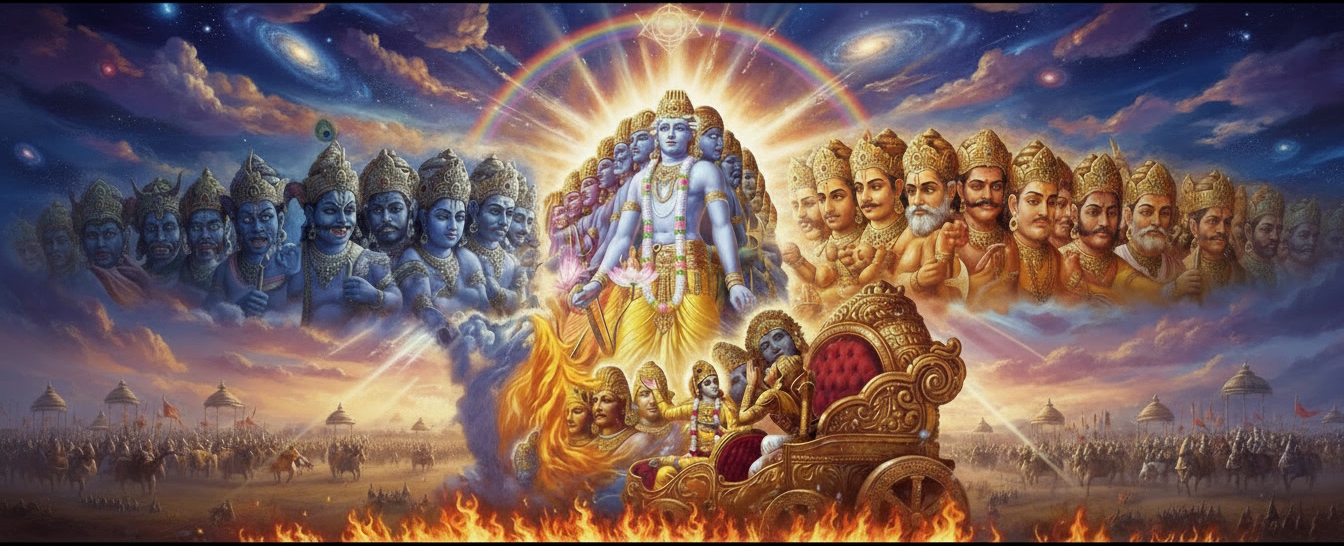
सर्वस्य चाहं हृदि सन्निविष्टो मत्तः स्मृतिर्ज्ञानमपोहनं च।
वेदैश्च सर्वैरहमेव वेद्यो वेदान्तकृद्वेदविदेव चाहम्।।15.15।।
sarvasya cāhaṃ hṛdi sanniviṣṭo mattaḥ smṛtirjñānamapohanaṃ ca|
vedaiśca sarvairahameva vedyo vedāntakṛdvedavideva cāham||15.15||
Translation
And I am seated in the hearts of all; from Me are memory and knowledge, as well as their absence. I am verily That which has to be known by all the Vedas; I am indeed the author of the Vedanta and the knower of the Vedas am I.
हिंदी अनुवाद
मैं सम्पूर्ण प्राणियोंके हृदयमें स्थित हूँ। मेरेसे ही स्मृति, ज्ञान और अपोहन (संशय आदि दोषोंका नाश) होता है। सम्पूर्ण वेदोंके द्वारा मैं ही जाननेयोग्य हूँ। वेदोंके तत्त्वका निर्णय करनेवाला और वेदोंको जाननेवाला भी मैं ही हूँ।
Commentaries & Translations
Swami Ramsukhdas
व्याख्या -- सर्वस्य चाहं हृदि संनिविष्टः (टिप्पणी प0 776) -- पीछेके श्लोकोंमें अपनी विभूतियोंका वर्णन करनेके बाद अब भगवान् यह रहस्य प्रकट करते हैं कि मैं स्वयं सब प्राणियोंके हृदयमें विद्यमान हूँ। यद्यपि शरीर? इन्द्रियाँ? मन? बुद्धि आदि सभी स्थानोंमें भगवान् विद्यमान हैं? तथापि हृदयमें वे विशेषरूपसे विद्यमान हैं।हृदय शरीरका प्रधान अङ्ग है। सब प्रकारके भाव हृदयमें ही होते हैं। समस्त कर्मोंमें भाव ही प्रधान होता है। भावकी शुद्धिसे समस्त पदार्थ? क्रिया आदिकी शुद्धि हो जाती है। अतः महत्त्व भावका ही है? वस्तु? व्यक्ति? कर्म आदिका नहीं। वह भाव हृदयमें होनेसे हृदयकी बहुत महत्ता है। हृदय सत्त्वगुणका कार्य है? इसलिये भी भगवान् हृदयमें विशेषरूपसे रहते हैं।भगवान् कहते हैं कि मैं प्रत्येक मनुष्यके अत्यन्त नजदीक उसके हृदयमें रहता हूँ अतः किसी भी साधकको (मेरेसे दूरी अथवा वियोगका अनुभव करते हुए भी) मेरी प्राप्तिसे निराश नहीं होना चाहिये। इसलिये पापीपुण्यात्मा? मूर्खपण्डित? निर्धनधनवान्? रोगीनिरोगी आदि कोई भी स्त्रीपुरुष किसी भी जाति? वर्ण? सम्प्रदाय? आश्रम? देश? काल? परिस्थिति आदिमें क्यों न हो? भगवत्प्राप्तिका वह पूरा अधिकारी है। आवश्यकता केवल भगवत्प्राप्तिकी ऐसी तीव्र अभिलाषा? लगन? व्याकुलताकी है? जिसमें भगवत्प्राप्तिके बिना रहा न जाय।परमात्मा सर्वव्यापी अर्थात् सब जगह समानरूपसे परिपूर्ण होनेपर भी हृदयमें प्राप्त होते हैं। जैसे गायके सम्पूर्ण शरीरमें दूध व्याप्त होनेपर भी वह उसके स्तनोंसे ही प्राप्त होता है अथवा पृथ्वीमें सर्वत्र जल रहनेपर भी वह कुएँ आदिसे ही प्राप्त होता है? ऐसे ही सूर्य? चन्द्र? अग्नि? पृथ्वी? वैश्वानर आदि सबमें व्याप्त होनेपर भी परमात्मा हृदय में प्राप्त होते हैं। (गीता 13। 17 18। 61)।परमात्मप्राप्तिसम्बन्धी विशेष बात हृदयमें निरन्तर स्थित रहनेके कारण परमात्मा वास्तवमें मनुष्यमात्रको प्राप्त हैं परन्तु जडता(संसार) से माने हुए सम्बन्धके कारण जडताकी तरफ ही दृष्टि रहनेसे नित्यप्राप्त परमात्मा अप्राप्त प्रतीत हो रहे हैं अर्थात् उनकी प्राप्तिका अनुभव नहीं हो रहा है। जडतासे सर्वथा सम्बन्धविच्छेद होते ही सर्वत्र विद्यमान (नित्यप्राप्त) परमात्मतत्त्व स्वतः अनुभवमें आ जाता है।परमात्मप्राप्तिके लिये जो सत्कर्म? सत्चर्चा और सत्चिन्तन किया जाता है? उसमें जडता(असत्) का आश्रय रहता ही है। कारण है कि जडता(स्थूल? सूक्ष्म और कारणशरीर) का आश्रय लिये बिना इनका होना सम्भव ही नहीं है। वास्तवमें इनकी सार्थकता जडतासे सम्बन्धविच्छेद करानेमें ही है। जडतासे,सम्बन्धविच्छेद तभी होगा? जब ये (सत्कर्म? सत्चर्चा और सत्चिन्तन) केवल संसारके हितके लिये ही किये जायँ? अपने लिये नहीं।किसी विशेष साधन? गुण? योग्यता? लक्षण आदिके बदलमें परमात्मप्राप्ति होगी -- यह बिलकुल गलत धारणा है। किसी मूल्यके बदलेमें जो वस्तु प्राप्त होती है? वह उस मूल्यसे कम मूल्यकी ही होती है -- यह सिद्धान्त है। अतः यदि किसी विशेष साधन? योग्यता आदिके द्वारा ही परमात्मप्राप्तिका होना माना जाय? तो परमात्मा उस साधन? योग्यता आदिसे कम मूल्यके (कमजोर) ही सिद्ध होते हैं? जबकि परमात्मा किसीसे कम मूल्यके नहीं हैं (गीता 11। 43)। इसलिये वे किसी साधन आदिसे खरीदे नहीं जा सकते। इसके सिवाय अगर किसी मूल्य(साधन? योग्यता आदि) के बदलेमें परमात्माकी प्राप्ति मानी जाय? तो उनसे हमें लाभ भी क्या होगा क्योंकि उनसे अधिक मूल्यकी वस्तु (साधन आदि) तो हमारे पास पहलेसे है हीजैसे सांसारिक पदार्थ कर्मोंसे मिलते हैं? ऐसे परमात्माकी प्राप्ति कर्मोंसे नहीं होती क्योंकि परमात्मप्राप्ति किसी कर्मका फल नहीं है। प्रत्येक कर्मकी उत्पत्ति अहंभावसे होती है और परमात्मप्राप्ति अहंभावके मिटनेपर होती है। कारण कि अहंभाव कृति (कर्म) है और परमात्मा कृतिरहित हैं। कृतिरहित तत्त्वको किसी कृतिसे कैसे प्राप्त किया जा सकता है -- नास्त्यकृतः कृतेन। तात्पर्य यह हुआ कि परमात्मतत्त्वकी प्राप्ति मन? बुद्धि? इन्द्रियाँ? शरीर आदि जडपदार्थोंके द्वारा नहीं? प्रत्युत जडताके त्यागसे होती है। जबतक मन? बुद्धि? इन्द्रियाँ? शरीर? देश? काल? वस्तु आदिका आश्रय है? तबतक एक परमात्माका आश्रय नहीं हो सकता। मन? बुद्धि आदिके आश्रयसे परमात्मप्राप्ति होगी -- यही साधककी मूल भूल है। अगर जडताका आश्रय और विश्वास छूट जाय तथा एकमात्र परमात्माका ही आश्रय और विश्वास हो जाय? तो परमात्मप्राप्तिमें देरी नहीं लग सकती।मत्तः स्मृतिर्ज्ञानमपोहनं च -- किसी बातकी भूली हुई जानकारीका (किसी कारणसे) पुनः प्राप्त होना,स्मृति कहलाती है। स्मृति और चिन्तन -- दोनोंमें फरक है। नयी बातका चिन्तन और पुरानी बातकी स्मृति होती है। अतः चिन्तन संसारका और स्मृति परमात्माकी होती है क्योंकि संसार पहले नहीं था और परमात्मा पहले(अनादिकाल) से हैं। स्मृतिमें जो शक्ति है? वह चिन्तनमें नहीं है। स्मृतिमें कर्तापनका भाव कम रहता है? जबकि चिन्तनमें कर्तापनका भाव अधिक रहता है।एक स्मृति की जाती है और एक स्मृति होती है। जो स्मृति की जाती है? वह बुद्धिमें और जो होती है? वह स्वयंमें होती है। होनेवाली स्मृति जडतासे तत्काल सम्बन्धविच्छेद करा देती है। भगवान् यहाँ कहते हैं कि यह (होनेवाली) स्मृति मेरेसे ही होती है।परमात्माका अंश होते हुए भी जीव भूलसे परमात्मासे विमुख हो जाता है और अपना सम्बन्ध संसारसे मानने लगता है। इस भूलका नाश होनेपर मैं भगवान्का ही हूँ? संसारका नहीं ऐसा साक्षात् अनुभव हो जाना ही स्मृति है (गीता 18। 73)। स्मृतिमें कोई नया ज्ञान या अनुभव नहीं होता? प्रत्युत केवल विस्मृति(मोह) का नाश होता है। भगवान्से हमारा वास्तविक सम्बन्ध है। इस वास्तविकताका प्रकट होना ही स्मृतिका प्राप्त होना है।जीवमें निष्कामभाव (कर्मयोग)? स्वरूपबोध (ज्ञानयोग) और भगवत्प्रेम (भक्तियोग) -- तीनों स्वतः विद्यमान हैं। जीवको (अनादिकालसे) इनकी विस्मृति हो गयी है। एक बार इनकी स्मृति हो जानेपर फिर विस्मृति नहीं होती। कारण कि यह स्मृति स्वयंमें जाग्रत् होती है। बुद्धिमें होनेवाली लौकिक स्मृति (बुद्धिके क्षीण होनेपर) नष्ट भी हो सकती है? पर स्वयं में होनेवाली स्मृति कभी नष्ट नहीं होती।किसी विषयकी जानकारीको ज्ञान कहते हैं। लौकिक और पारमार्थिक जितना भी ज्ञान है? वह सब,ज्ञानस्वरूप परमात्माका अभासमात्र है। अतः ज्ञानको भगवान् अपनेसे ही होनेवाला बताते हैं। वास्तवमें ज्ञान वही है? जो स्वयं से जाना जाय। अनन्त? पूर्ण और नित्य होनेके कारण इस ज्ञानमें कोई सन्देह या भ्रम नहीं होता। यद्यपि इन्द्रिय और बुद्धिजन्य ज्ञान भी ज्ञान कहलाता है? तथापि सीमित? अलग (अपूर्ण) तथा परिवर्तनशील होनेके कारण इस ज्ञानमें सन्देह या भ्रम रहता है जैसे -- नेत्रोंसे देखनेपर सूर्य अत्यन्त बड़ा होते हुए भी (आकाशमें) छोटासा दीखता है इत्यादि। बुद्धिसे जिस बातको पहले ठीक समझते थे? बुद्धिके विकसित अथवा शुद्ध होनेपर वही बात गलत दीखने लग जाती है। तात्पर्य यह है कि इन्द्रिय और बुद्धिजन्य ज्ञान करणसापेक्ष और अल्प होता है। अल्प ज्ञान ही अज्ञान कहलाता है। इसके विपरीत स्वयं का ज्ञान किसी करण(इन्द्रिय? बुद्धि आदि) की अपेक्षा नहीं रखता और वह सदा पूर्ण होता है। वास्तवमें इन्द्रिय और बुद्धिजन्य ज्ञान भी स्वयं के ज्ञानसे प्रकाशित होते हैं अर्थात् सत्ता पाते हैं।संशय? भ्रम? विपर्यय (विपरीत भाव)? तर्कवितर्क आदि दोषोंके दूर होनेका नाम अपोहन है। भगवान् कहते हैं कि ये (संशय आदि) दोष भी मेरी कृपासे ही दूर होते हैं।शास्त्रोंकी बातें सत्य हैं या असत्य भगवान्को किसने देखा है संसार ही सत्य है इत्यादि संशय और भ्रम भगवान्की कृपासे ही मिटते हैं। सांसारिक पदार्थोंमें अपना हित दीखना? उनकी प्राप्तिमें सुख दीखना? प्रतिक्षण नष्ट होनेवाले संसारकी सत्ता दीखना आदि विपरीत भाव भी भगवान्की कृपासे ही दूर होते हैं। गीतोपदेशके अन्तमें अर्जुन भी भगवान्की कृपासे ही अपने मोहका नाश? स्मृतिकी प्राप्ति और संशयका नाश होना स्वीकार करते हैं (18। 73)।वेदैश्च सर्वैरहमेव वेद्यः -- यहाँ सर्वैः पद वेद एवं वेदानुकूल सम्पूर्ण शास्त्रोंका वाचक है। सम्पूर्ण शास्त्रोंका एकमात्र तात्पर्य परमात्माका वास्तविक ज्ञान कराने अथवा उनकी प्राप्ति करानेमें ही है।यहाँ भगवान् यह बात स्पष्ट करते हैं कि वेदोंका वास्तविक तात्पर्य मेरी प्राप्ति करानेमें ही है? सांसारिक भोगोंकी प्राप्ति करानेमें नहीं। श्रुतियोंमें सकामभावका विशेष वर्णन आनेका यह कारण भी है कि संसारमें सकाम मनुष्योंकी संख्या अधिक रहती है। इसलिये श्रुति (सबकी माता होनेसे) उनका भी पालन करती है।जाननेयोग्य एकमात्र परमात्मा ही हैं? जिनको जान लेनेपर फिर कुछ भी जानना बाकी नहीं रहता। परमात्माको जाने बिना संसारको कितना ही क्यों न जान लें? जानकारी कभी पूरी नहीं होती? सदा अधूरी ही रहती है (टिप्पणी प0 778)। अर्जुनमें भगवान्को जाननेकी विशेष जिज्ञासा थी। इसीलिये भगवान् कहते हैं कि सम्पूर्ण वेदों और शास्त्रोंके द्वारा जाननेयोग्य मैं स्वयं तुम्हारे सामने बैठा हूँ।वेदान्तकृत् -- भगवान्से ही वेद प्रकट हुए हैं (गीता 3। 15 17। 23)। अतः वे ही वेदोंके अन्तिम सिद्धान्तको ठीकठीक बताकर वेदोंमें प्रतीत होनेवाले विरोधोंका अच्छी तरह समन्वय कर सकते हैं। इसलिये भगवान् कहते हैं कि (वेदोंका पूर्ण वास्तविक ज्ञाता होनेके कारण) मैं ही वेदोंके यथार्थ तात्पर्यका निर्णय करनेवाला हूँ।वेदविदेव चाहम् -- वेदोंके अर्थ? भाव आदिको भगवान् ही यथार्थरूपसे जानते हैं। वेदोंमें कौनसी बात किस भाव या उद्देश्यसे कही गयी है वेदोंका यथार्थ तात्पर्य क्या है इत्यादि बातें भगवान् ही पूर्णरूपसे जानते हैं क्योंकि भगवान्से ही वेद प्रकट हुए हैं।वेदोंमें भिन्नभिन्न विषय होनेके कारण अच्छेअच्छे विद्वान् भी एक निर्णय नहीं कर पाते (गीता 2। 53)। इसलिये वेदोंके यथार्थ ज्ञाता भगवान्का आश्रय लेनेसे ही वे वेदोंका तत्त्व जान सकते हैं और श्रुतिविप्रतिपत्ति से मुक्त हो सकते हैं।इस (पंद्रहवें) अध्यायके पहले श्लोकमें भगवान्ने संसारवृक्षको तत्त्वसे जाननेवाले मनुष्यको वेदवित् कहा था। अब इस श्लोकमें भगवान् स्वयंको वेदवित् कहते हैं। इसका तात्पर्य यह है कि संसारके यथार्थ तत्त्वको जान लेनेवाला महापुरुष भगवान्से अभिन्न हो जाता है। संसारके यथार्थ तत्त्वको जाननेका अभिप्राय है -- संसारकी स्वतन्त्र सत्ता नहीं है और परमात्माकी ही सत्ता है -- इस प्रकार जानते हुए संसारसे माने हुए सम्बन्धको छोड़कर अपना सम्बन्ध भगवान्से जोड़ना? संसारका आश्रय छोड़कर भगवान्के आश्रित हो जाना।प्रकरणसम्बन्धी विशेष बात भगवान्ने श्रीमद्भगवद्गीताके चार अध्यायोंमें भिन्नभिन्न रूपोंसे अपनी विभूतियोंका वर्णन किया है -- सातवें अध्यायमें आठवें श्लोकसे बारहवें श्लोकतक सृष्टिके प्रधानप्रधान पदार्थोंमें कारणरूपसे सत्रह विभूतियोंका वर्णन करके भगवान्ने अपनी सर्वव्यापकता और सर्वरूपता सिद्ध की है।नवें अध्यायमें सोलहवें श्लोकसे उन्नीसवें श्लोकतक क्रिया? भाव? पदार्थ आदिमें कार्यकारणरूपसे सैंतीस विभूतियोंका वर्णन करके भगवान्ने अपनेको सर्वव्यापक बताया है।दसवें अध्यायका तो नाम ही विभूतियोग है। इस अध्यायमें चौथे और पाँचवें श्लोकमें भगवान्ने प्राणियोंके भावोंके रूपमें बीस विभूतियोंका और छठे श्लोकमें व्यक्तियोंके रूपमें पचीस विभूतियोंका वर्णन किया है। फिर बीसवें श्लोकसे उन्तालीसवें श्लोकतक भगवान्ने बयासी प्रधान विभूतियोंका विशेषरूपसे वर्णन किया है।इस पन्द्रहवें अध्यायमें बारहवें श्लोकसे पन्द्रहवें श्लोकतक भगवान्ने अपना प्रभाव बतलानेके लिये तेरह विभूतियोंका वर्णन किया है (टिप्पणी प0 779)।उपर्युक्त चारों अध्यायोंमें भिन्नभिन्न रूपमें विभूतियोंका वर्णन करनेका तात्पर्य यह है कि साधकको वासुदेवः सर्वम् (गीता 7। 19) सब कुछ वासुदेव ही है इस तत्त्वका अनुभव हो जाय। इसीलिये अपनी विभूतियोंका वर्णन करते समय भगवान्ने अपनी सर्वव्यापकताको ही विशेषरूपसे सिद्ध किया है जैसे -- मत्तः परतरं नान्यत्किञ्चिदस्ति (7। 7)मेरेसे बढ़कर इस जगत्का दूसरा कोई भी महान् कारण नहीं है।,सदसच्चाहमर्जुन (9। 19)सत् और असत् -- सब कुछ मैं ही हूँ।,अहं सर्वस्य प्रभवो मत्तः सर्वं प्रवर्तते (10। 8)मैं ही सबकी उत्पत्तिका कारण हूँ और मेरेसे ही सब जगत् चेष्टा करता है।,न तदस्ति विना यत्स्यान्मया भूतं चराचरम्। (10। 39)चर और अचर कोई भी प्राणी ऐसा नहीं है? जो मेरेसे रहित हो अर्थात् चराचर सब प्राणी मेरे ही स्वरूप हैं।,इसी प्रकार इस पन्द्रहवें अध्यायमें भी अपनी विभूतियोंके वर्णनका उपसंहार करते हुए भगवान् कहते हैं -- सर्वस्य चाहं हृदि संनिविष्टः (15। 15)मैं सम्पूर्ण प्राणियोंके हृदयमें सम्यक् प्रकारसे स्थित हूँ। तात्पर्य यह हुआ कि सम्पूर्ण प्राणी? पदार्थ परमात्माकी सत्तासे ही सत्तावान् हो रहे हैं। परमात्मासे अलग किसीकी भी स्वतन्त्र सत्ता नहीं है।प्रकाशके अभाव(अन्धकार)में कोई वस्तु दिखायी नहीं देती। आँखोंसे किसी वस्तुको देखनेपर पहले प्रकाश दीखता है? उसके बाद वस्तु दीखती है अर्थात् हरेक वस्तु प्रकाशके अन्तर्गत ही दीखती है किन्तु हमारी दृष्टि प्रकाशपर न जाकर प्रकाशित होनेवाली वस्तुपर जाती है। इसी प्रकार यावन्मात्र वस्तु? क्रिया? भाव? आदिका ज्ञान एक विलक्षण और अलुप्त प्रकाश -- ज्ञानके अन्तर्गत होता है? जो सबका प्रकाशक और आधार है। प्रत्येक वस्तुसे पहले ज्ञान (स्वयंप्रकाश परमात्मतत्त्व) रहता है। अतः संसारमें परमात्माको व्याप्त कहनेपर भी वस्तुतः संसार बादमें है और उसका अधिष्ठान परमात्मतत्त्व पहले है अर्थात् पहले परमात्मतत्त्व दीखता है? बादमें संसार। परन्तु संसारमें राग होनेके के कारण मनुष्यकी दृष्टि उसके प्रकाशक(परमात्मतत्त्व) पर नहीं जाती।परमात्माकी सत्ताके बिना संसारकी कोई सत्ता नहीं है। परन्तु परमात्मसत्ताकी तरफ दृष्टि न रहने तथा सांसारिक प्राणीपदार्थोंमें राग या सुखासक्ति रहनेके कारण उन प्राणीपदार्थोंकी पृथक् (स्वतन्त्र) सत्ता प्रतीत होने लगती है और परमात्माकी वास्तविक सत्ता (जो तत्त्वसे है) नहीं दीखती। यदि संसारमें राग या सुखासक्तिका सर्वथा अभाव हो जाय? तो तत्त्वसे एक परमात्मसत्ता ही दीखने या अनुभवमें आने लगती है। अतः विभूतियोंके वर्णनका तात्पर्य यही है कि किसी भी प्राणीपदार्थकी तरफ दृष्टि जानेपर साधकको एकमात्र भगवान्की स्मृति होनी चाहिये अर्थात् उसे प्रत्येक प्राणीपदार्थमें भगवान्को ही देखना चाहिये। (गीता 10। 41)।वर्तमानमें समाजकी दशा बड़ी विचित्र है। प्रायः सब लोगोंके अन्तःकरणमें रुपयोंका बहुत ज्यादा महत्त्व हो गया है। रुपये खुद काममें नहीं आते? प्रत्युत उनसे खरीदी गयी वस्तुएँ ही काममें आती हैं परन्तु लोगोंने रुपयोंके उपयोगको खास महत्त्व न देकर उनकी संख्याकी वृद्धिको ही ज्यादा महत्त्व दे दिया इसलिये मनुष्यके पास जितने अधिक रुपये होते हैं? वह समाजमें अपनेको उतना ही अधिक बड़ा मान लेता है (टिप्पणी प0 780)। इस प्रकार रुपयोंको ही महत्त्व देनेवाला व्यक्ति परमात्माके महत्त्वको समझ ही नहीं सकता। फिर परमात्मप्राप्तिके बिना रहा न जाय -- ऐसी लगन उस मनुष्यके भीतर उत्पन्न हो ही कैसे सकती है जिसके भीतर यह बात बैठी हुई है कि रुपयोंके बिना रहा ही नहीं जा सकता अथवा रुपयोंके बिना काम ही नहीं चल सकता? उसकी परमात्मामें एक निश्चयवाली बुद्धि हो ही नहीं सकती। वह यह बात समझ ही नहीं सकता कि रुपयोंके बिना भी अच्छी तरह काम चल सकता है।जिस प्रकार व्यापारीको (एकमात्र धनप्राप्तिका उद्देश्य रहनेपर) माल लेने? माल देने आदि व्यापारसम्बन्धी प्रत्येक क्रियामें धन ही दीखता है? इसी प्रकार परमात्मतत्त्वके जिज्ञासुको (एकमात्र परमात्मप्राप्तिका उद्देश्य रहनेपर) प्रत्येक वस्तु? क्रिया आदिमें तत्त्वरूपसे परमात्मा ही दीखते हैं। उसको ऐसा अनुभव हो जाता है कि परमात्माके सिवाय दूसरा कोई तत्त्व है ही नहीं? हो सकता ही नहीं।मार्मिक बातअर्जुनने चौदहवें अध्यायमें गुणातीत होनेका उपाय पूछा था। गुणोंके सङ्गसे ही जीव संसारमें फँसता है। अतः गुणोंका सङ्ग मिटानेके लिये भगवान्ने यहाँ अपने प्रभावका वर्णन किया है। छोटे प्रभावको मिटानेके लिये बड़े प्रभावकी आवश्यकता होती है। अतः जबतक जीवपर गुणों(संसार) का प्रभाव है? तबतक भगवान्के प्रभावको जाननेकी बड़ी आवश्यकता है।अपने प्रभावका वर्णन करते हुए भगवान्ने (इस अध्यायके बारहवेंसे पंद्रहवें श्लोकतक) यह बताया कि मैं ही सम्पूर्ण जगत्को प्रकाशित करता हूँ मैं ही पृथ्वीमें प्रवेश करके सब प्राणियोंको धारण करता हूँ मैं ही पृथ्वीपर अन्न उत्पन्न करके उसको पुष्ट करता हूँ जब मनुष्य उस अन्नको खाता है? तब मैं ही वैश्वानररूपसे उस अन्नको पचाता हूँ और मनुष्यमें स्मृति? ज्ञान और अपोहन भी मैं ही करता हूँ। इस वर्णनसे सिद्ध होता है कि आदिसे अन्ततक? समष्टिसे व्यष्टितककी सम्पूर्ण क्रियाएँ भगवान्के अन्तर्गत? उन्हींकी शक्तिसे हो रही हैं। मनुष्य अहंकारवश अपनेको उन क्रियाओँका कर्ता मान लेता है अर्थात् उन क्रियाओंको व्यक्तिगत मान लेता है और बँध जाता है। सम्बन्ध -- भगवान्ने इसी अध्यायके पहले श्लोकसे पंद्रहवें श्लोकतक (तीन प्रकरणोंमें) क्रमशः संसार? जीवात्मा और परमात्माका विस्तारसे वर्णन किया। अब उस विषयका उपसंहार करते हुए आगेके दो श्लोकोंमें उन तीनोंका क्रमशः क्षर? अक्षर और पुरुषोत्तम नामसे स्पष्ट वर्णन करते हैं।
Sri Harikrishnadas Goenka
तथा --, मैं समस्त प्राणिमात्रका आत्मा होकर उनके अन्तःकरणमें स्थित हूँ। इसलिये समस्त प्राणियोंके स्मृति? ज्ञान और उनका लोप भी मुझ आत्मासे ही किया जाता है? अर्थात् जिन पुण्यकर्मा प्राणियोंको उनके पुण्यकर्मोंके अनुसार ज्ञान और स्मृति प्राप्त होते हैं तथा जिन पापाचारियोंके ज्ञान और स्मृतिका उनके पापकर्मानुसार लोप होता है ( वह मुझसे ही होता है )। समस्त वेदोंद्वारा मैं परमात्मा ही जाननेयोग्य हूँ। तथा वेदान्तका कर्ता? अर्थात् वेदान्तार्थके सम्प्रदायका कर्ता और वेदके अर्थको समझनेवाला भी मैं ही हूँ। यदादित्यगतं तेजः इत्यादि चार श्लोकोंद्वारा नारायण नामक भगवान् ईश्वरकी? विशेषउत्तम उपाधियोंसे,होनेवाली विभूतियाँ संक्षेपसे कही गयीं।
Sri Anandgiri
And for this reason too, the status of being the universal self and the locus of all transactions belongs to the Lord, He says—"Kincha" (Moreover). "Pranijatam"—(group of beings) from Brahma down to the smallest insect. "Sannivishtatvam"—being seated in the intellect as the Self—means being the seer of its qualities and defects without remainder. Therefore, because of being the seer of qualities and defects situated in the middle of the intellect—this is the point. "Mattah" (From Me)—from the Presider over all actions, the Holder of the thread of the world-machine; this is the meaning.
If memory and knowledge of beings and their means are dependent on the Lord, there would be partiality of the Lord?—doubting this, He says—"Yesham" (Of whom/For whom) etc. "Smriti"—recollection of what was experienced in other births etc. "Jnanam"—experience of even what is remote in space, time, and nature. The idea is that there is no partiality of the Lord who acts variously according to Dharma and Adharma.
He wards off the doubt that the Supreme Brahman knowable by the Vedas is different from the Bhagavan—"Vedaih" (By the Vedas) etc.
He removes the human authorship of the Vedantas—"Veda" (Vedantakrit) etc.
To establish the status of being the promulgator of the tradition of their meaning, He states the possession of the knowledge of their meaning as it is—"Vedartha" (Vedarthavit) etc.
Sri Dhanpati
Thus, wishing to speak of the universal selfhood and being the locus of all transactions of That Abode, concluding the description of manifestations, He abandons limitation (contracted description)—'Sarvasya' etc. 'Sarvasya'—of all beings from Brahma down to immobile things; 'Hridi'—in the heart; 'Sannivishtah'—I am seated/entered; as the individual self (Jivatma) and as the Inner Controller (Antaryami). Being seated in the Buddhi means attaining identity with the Buddhi and being the seer of its qualities and defects without remainder.
From Shrutis like 'Entering with this Jiva-self, I shall manifest name and form', 'Who dwelling in Vijnana (intellect) is within Vijnana' etc. Therefore, due to being situated in the Buddhi as the reflection of Consciousness (Chidabhasa), and due to being the seer of the qualities and defects situated therein.
'Mattah'—from Me, the Self—is 'Smritih'—memory, the recollection of what was experienced in other births etc.; and 'Jnanam'—knowledge, experience even of what is remote in space, time, and nature; and 'Tadapohanam'—their removal/loss. Just as for the performers of meritorious deeds, knowledge and memory occur in accordance with meritorious deeds; so for the performers of sinful deeds, 'Apohanam'—departure/loss—of memory and knowledge occurs in accordance with sinful deeds. It happens from Me alone, the Presider over actions—this is the meaning.
For this reason, 'Sarvaih Vedaih'—by all Vedas characterized by Karma-kanda etc.; by 'Cha' (and), by Smritis, Ithihasas, Puranas etc. also; 'Ahameva'—I alone—the Supreme Self, all-formed, am 'Vedyah'—to be known. 'Ahameva Vedantakrit'—I alone am the maker of the tradition of the meaning of Vedanta; and 'Sarvavedarthavit'—the knower of the meaning of all Vedas—am I alone.
Sri Madhavacharya
'Vedantas'—Mimamsa (enquiry) consisting of the determination of the Veda.
And so in the Samaveda, the Prachinashala Shruti says—'Sa vedantakrit sa kalakah'—He is the maker of Vedanta, He is the 'Kalaka' (driver/time-maker?); for He alone is the maker of the aphorisms of logic (Yukti-sutra), He is the 'Kalaka'.
Sri Neelkanth
Moreover, 'Sarvasya'—of all beings—'Hridi'—in the heart—'Sannivishtah'—entered, 'Aham'—I—am the Self—this is the meaning.
Therefore, 'Mattah'—from Me, the Self—their memory and knowledge occur for the virtuous. But for the sinners, 'Apohanam'—forgetfulness and ignorance of those two occurs.
'Tatha cha'—and similarly—'Sarvaih Vedaih'—by all Vedas consisting of Karma, Upasana, and Jnana Kandas—I alone, the Supreme Self, am 'Vedyah'—to be known. 'Vedantakrit'—the maker of the tradition of knowledge stated in Vedanta; and 'Vedavit'—knower of the meaning of Veda—am I alone.
By this, it is said that the knower of Vedanta and the knower of Veda are also His manifestations.
Sri Ramanuja
In the 'Hridi'—heart, the place of the rise of knowledge which is the root of all activity and cessation—of those two, Soma and Vaishvanara, and of all beings; controlling everything by My will, 'Aham'—I—am 'Sannivishtah'—seated/entered—as the Self.
So say the Shrutis—'Entered within, the Ruler of people, the Self of all' [Taittiriya Aranyaka 3.11]; 'He who dwelling in the Earth...' [Brihadaranyaka 3.7.3]; 'He who dwelling in the Self controls the Self within' [Brihadaranyaka 3.7.22]; 'The heart resembling a lotus bud and facing downwards' [Taittiriya Narayana 11]; 'Now, what is here in this city of Brahman, a small lotus abode' [Chandogya 8.1.1] etc. And Smritis—'The Ruler Vishnu of the entire world, who is immanent in the world' [Vishnu Purana 1.17.20]; 'The Ruler of all, subtler than the subtlest' [Manusmriti 12.122]; 'Yama Vaivasvata the King who is this one situated in your heart' [Manusmriti 8.92] etc.
'Atah'—From Me alone arises everyone's 'Smritih'; Smriti is knowledge born merely from the impression of the experience of a previously experienced object. 'Jnanam'—determination of an object born of sense, sign (inference), scripture, and Yoga; that too is from Me. 'Apohanam cha'—and Apohanam; Apohanam is the cessation of knowledge. Or 'Apohanam' means 'Uhanam'—Uha (conjecture/reasoning); Uha is—'This proof deserves to operate in this way'—knowledge regarding the fitness of the operation of proof, born of ascertaining the materials etc., supporting the proof, the conjecture called Uha; that too is from Me alone.
'Vedaih cha sarvaih ahameva vedyah'—And by all Vedas I alone am to be known. Therefore, since Agni, Vayu, Surya, Soma, Indra etc. are of My nature because of being indwelt by Me, even by all Vedas devoted to propounding them, I alone am the object of knowledge; just as the individual self is by words like 'god', 'man' etc.
'Vedantakrit'—Of the Vedas—like 'One should sacrifice to Indra' [Shatapatha Br. 5.1.6], 'One should sacrifice to Varuna' [Shatapatha Br. 2.3.37] etc.—the 'Anta'—fruit—(I make); for all those Vedas culminate in the fruit; 'Antakrit'—maker of fruit—meaning I alone am the giver of the fruit stated in the Veda.
That was said earlier indeed—'Whichever devotee desires to worship whichever form with faith...' [Gita 7.21] starting from there, 'And obtains from that those desires ordained by Me alone' [Gita 7.22]; and 'For I alone am the enjoyer and Lord of all sacrifices' [Gita 9.24].
'Vedavid eva cha aham'—And I alone am the knower of the Veda; thus I alone know the Veda that speaks of Me. He who speaks the meaning of the Veda otherwise than this, he is not a knower of the Veda—this is the intention. Therefore, listen to the essential meaning of all Vedas from Me alone—
Sri Sridhara Swami
Moreover—'Sarvasya' etc. In 'Hridi'—the heart—of 'Sarvasya'—all beings—I am properly entered as the Inner Controller. And therefore indeed 'Mattah'—from Me as the cause—'Smriti'—memory regarding previously experienced objects—occurs for every being. And 'Jnanam'—born of contact between object and sense—occurs. And 'Apohanam'—the loss/removal of those two—occurs.
And 'Sarvaih Vedaih'—by all Vedas—in the form of respective deities etc., 'Ahameva Vedyah'—I alone am to be known. 'Vedantakrit'—the promulgator of its tradition—and the Guru giving knowledge am I, this is the meaning. And 'Vedavit'—knower of the meaning of Veda—am I alone.
Sri Vedantadeshikacharya Venkatanatha
'Indeed, the single vital air in the body has many functions', thus 'The five-fold (Prana) is designated like the mind' [Brahma Sutra 2.4.12] -- by the commentary on this Sutra; and 'Prana, Apana, Vyana, Udana, Samana -- all this is Prana alone' [Brihadaranyaka Upanishad 1.5.3] -- by this Shruti it is explained.
To dispel the doubt of inconsistency of the verse 'Sarvasya caham' (And I am seated in the heart of all), he states the connection as establishing the cause of the aforementioned coordinate predication -- with 'Atra paramapurushavibhutibhutau' (Here, being the manifestations of the Supreme Person), etc.
Intending that the word 'ca' (and) is for the purpose of combining with what was said before, he states the stated meaning -- 'Tayoh somavaishvanarayoh' (Of those Soma and Vaishvanara).
Regarding 'Sarvasya' (Of all), he states the meaning obtained by the force of collocation with 'hridi' (in the heart) -- 'Sarvasya ca bhutajatasya' (And of all the multitude of beings).
To indicate the purpose of the specification 'hridi' (in the heart), he states His nature -- 'Sakalapravritti' (All activities...), etc.
To exclude the idea of being situated like space (akasha), he says -- 'Atmataya sannivishtah' (Well-entered as the Self).
To explain the state of being the Self, it is said -- 'Sarvam matsankalpena niyacchan' (Controlling everything by My will).
'Tathahuriti' (Thus they say...). The meaning is that they call this (heart the abode) because of His entering inside for controlling and because of His being the Self.
He states that the meaning stated in the first quarter is the cause for the meaning being stated in the second quarter -- 'Atah' (Therefore). 'Sarvesham jayate' (Is born for all) -- this is a statement of what is established by implication.
To dispel the error of (taking) 'Smriti' as the Dharma Shastra which is an elaboration of Shruti, he says -- 'Smritih'.
To dispel the view of lack of connection with external objects, it is said -- 'Purvanubhutavishayam' (Having objects experienced before).
The word 'matra' (only) is to exclude direct perception in the form of recognition (pratyabhijna).
Intending the maxim of 'Cattle and Bull' (Go-balivarda nyaya - general and specific), he explains the word 'jnana' -- 'Indriyalinga' (Sense and inference/mark...).
Following the usage 'Apodhadoshah' (He whose faults are removed), the word 'apohana' implies removal/cessation; intending that cessation requires a counter-positive (pratiyogi) and that it is the counter-positive of the knowledge in context, he says -- 'Apohanam jnananivrittih' (Apohana means the cessation of knowledge).
Previously, intending that 'apa' indicates exclusion/avoidance according to [Ashtadhyayi 1.4.88] 'apa pari varjane' (apa and pari in the sense of exclusion), it was explained. Now, not intending that, according to the lexicon 'Adhyaharastarka uhah' [Amara 1.5.3] (Supplying, reasoning, conjecture...), intending that it is appropriate to interpret it as 'reasoning' (tarka) which supports the valid knowledge mentioned by the word 'jnana', he explains -- 'Apohanamuham va' (Apohana or Uhana). Intending that the word 'uhana' ends with the Lyut suffix in the sense of the action state (bhava), he says -- 'Uhanamuhah' (Uhana means Uha/Conjecture).
'Ittham pravartitum arhati' (It deserves to proceed thus) -- meaning, regarding the subject of valid visual knowledge and the connection of the eye suitable for form and its sole substratum, it deserves to proceed; the meaning is the suitability for the operation of such valid means (is Uha).
He states that the previously mentioned status of being the Inner Self of all as 'And I am seated in the heart of all' is the cause even here in 'And by all Vedas I am indeed to be known' -- 'Atah' (Therefore).
'Sarvairvedairahameva vedyah' -- 'Narayana is the Great Knowable, the Supreme Referent of words' -- meaning 'I alone am the principal object to be known' as stated.
He gives an example for the Self alone being the principal object to be known by words denoting bodies -- 'Devamanushyadi' (Gods, men, etc.). 'Four fifteen-nights (sacrifices) attain godhood'; 'By verbal (sins) one attains the state of birds and beasts, by mental ones the state of lowest castes; by bodily defects of karma a man attains the state of immobility' [Manu 12.9] -- from such irrefutable Vedic and worldly usages, the meaning of words like man etc. extending up to the Self is indeed primary; this is the idea.
If the word 'Vedanta' referred to Upanishads, or if it meant the 'end/destruction of Vedas', there would be inconsistency due to lack of connection with the context; intending the word 'Anta' to denote 'culmination/fruit', he explains -- 'Vedanam' (Of the Vedas...).
'Indram yajeta' -- meaning sentences with the import 'Sacrifice to Indra', 'Sacrifice to Varuna'. 'Curd for Indra on Amavasya' [Yajurveda 2.5.4.1], 'Milk for Indra on Amavasya', 'One should offer that many cakes on four pots to Varuna' [Yajurveda 2.3.12.1] -- etc., is the import.
How does the word 'Anta' mean fruit? He explains that -- 'Phale hi' (For in the fruit...).
Like 'For I am the Enjoyer and the Lord of all sacrifices' [9.24]. 'And by all Vedas I am alone to be known' -- after this implies being worshipped by all actions, the statement of being the bestower of their fruit is consistent with those very (Vedas); indicating this, he states the implied meaning with corroboration -- with 'Vedoditaphalasya' (Of the fruit mentioned in Vedas), etc.
If the word 'Eva' (alone) were construed (with 'Aham') as heard (straightaway with 'Vedavit'), it would mean the exclusion of non-connection (Ayoga-vyavaccheda), and that is incorrect; because the absence of knower-ship of Veda in the Lord is impossible (as He is Omniscient); therefore he states the construction with the qualified (Visheshya) -- 'Vedaviccahameveti' (And I am the Knower of Veda alone/also).
'And the Brahmins who are knowers of Veda' [Mahabharata 3.66.26] -- thus knower-ship of Veda is perceived in others than the Lord also. (Then) how does 'Aham eva' (I alone) exclude connection with others (Anyayoga-vyavaccheda)? To this he states the intention -- 'Evam madabhidhayinam' (Thus, [the Veda] which speaks of Me...), etc.
Swami Chinmayananda
यदि परमात्मा ही सर्वत्र विविध वस्तुओं? प्राणियों और क्षमताओं के रूप में व्यक्त हो रहा है? तो साधक को उसका अनुभव किस प्रकार हो सकता है भगवान् श्रीकृष्ण कहते हैं कि वे चैतन्यरूप से समस्त प्राणियों के हृदय में निवास करते हैं। यहाँ हृदय शब्द से शारीरिक अगंरूप हृदय अभिप्रेत नहीं है। वह मन जो प्रेम? क्षमा? उदारता? करुणा जैसे सद्गुणों से सम्पन्न है? हृदय कहलाता है। दर्शनशास्त्र में हृदय का अर्थ शान्त? प्रसन्न? सजग और जागरूक मन है? जो सर्वोच्च आत्मतत्त्व का अनुभव करनें में सक्षम होता है। हृदय को परमात्मा का निवास स्थान कहने का अभिप्राय यह है कि यद्यपि वह सर्वत्र विद्यमान है? तथापि उस चैतन्य का आत्मरूप से साक्षात् अनुभव अपने हृदय में ही संभव है।मुझसे ही स्मृति? ज्ञान और उनका अपोहन होता है यह सर्वविदित तथ्य है कि जड़ वस्तुओं और मृत देह को किसी प्रकार का भी स्मरण? ज्ञान या विस्मरण नहीं होता है। इससे यह सिद्ध होता है कि मनबुद्धि रूप सूक्ष्म शरीर में जब चैतन्य व्यक्त होता है? तभी वह ज्ञान प्राप्त करने में समर्थ होता है? तथा वह चैतन्य समस्त वृत्तियों को प्रकाशित करता है। हम अपने जीवन में जो अनुभव प्राप्त करते हैं वे सभी हमारे मन में संस्कार के रूप में एकत्रित रहते हैं। जीवन में आवश्यकतानुसार हमें उनका स्मरण होता है? और इस प्रकार वे हमारे वर्तमान और भविष्य के कर्मों में सहायक होते हैं। हमारी समस्त वर्तमान शिक्षा और विद्या पूर्वानुभवों की स्मृति ही है। यदि हमें अपनी स्मृतियों का भान ही न हो तो वे हमारे उपयोग के लिये उपलब्ध ही नहीं होंगी। वर्तमान की परिस्थितियों के साथ उचित प्रकार से प्रतिक्रिया करना और इस प्रकार नये नये अनुभवों को प्राप्त करना ही अपने ज्ञान को विस्तृत बनाने की प्रक्रिया है। यह प्रक्रिया चैतन्य के प्रकाश में ही संभव है।नवीन ज्ञानार्जन की प्रक्रिया में पूर्व की मिथ्या धारणाओं को त्यागने की हमारी क्षमता सिद्ध हो जाती है। इसे ही इस श्लोक में अपोहनम् कहा गया है। मिथ्या ज्ञान की विस्मृति अथवा उसको त्यागे बिना नवीन ज्ञानोपार्जन संभव नहीं हो सकता। ज्ञान? स्मृति एवं विस्मरण की इन आन्तरिक मानसिक क्रियाओं को चैतन्य प्रकाशित करता है।मैं ही समस्त वेदों के द्वारा जानने योग्य तत्त्व हूँ विश्व के सभी धर्म ग्रन्थों में परमात्मा की ही स्तुति एवं पूजा की गई है। परमात्मा का साक्षात्कार ही जीवन का परम लक्ष्य है और उसकी प्राप्ति में ही कृत्कृत्यता भी है। समस्त प्राणियों के हृदय में रम रहा यह चैतन्य ही वह एकमेव अद्वितीय? परमार्थ सत्य है? जो सम्पूर्ण अनुभूयमान विश्व का एकमात्र अधिष्ठान है।मैं वेदान्तकृत् और वेदों का ज्ञाता भी हूँ चैतन्य ही वह सनातन सत्य है और शेष सब उस पर अध्यस्त है? वह चैतन्य ही सबका सारतत्त्व है? जिसमें वेद भी समाविष्ट हैं। वेदान्त का श्रवण करके जो साधक वेदनिर्दिष्ट आत्मस्वरूप का साक्षात् अनुभव करता है? वह किसी भी दशा में उस चैतन्य से भिन्न नहीं होता। इसलिये भगवान् कहते हैं? वेदवित् भी मैं ही हूँ।उपर्युक्त चार श्लोकों का सारांश यह है कि सच्चिदानन्दस्वरूप ब्रह्म ही सूर्य में प्रकाश? पृथ्वी में उर्वरा शक्ति? चन्द्रमा में अन्नपोषक प्रकाश? शरीर में वैश्वानर अग्नि? और प्राणिमात्र के हृदय में आत्मरूप से विराजमान है।यह ब्रह्म ही वेदों के द्वारा जानने योग्य सत्य वस्तु है? जो प्रकृति की विविध शक्तियों के रूप में व्यक्त होकर इस लोक में भूतमात्र का जीवन संभव बनाता है। इसे जानने का अर्थ ही अनन्त तत्त्व का अनुभव करना है।अब तक के इन श्लोकों में भगवान् नारायण की विभूतियों का अर्थात् उपाधियों के माध्यम से प्रकट होने वाले उनके वैभव का वर्णन किया गया है। अब? अगले प्रकरण में भगवान् श्रीकृष्ण अपने निरुपाधिक? सर्वगत और नित्य स्वरूप को दर्शाते हैं। यह पारमार्थिक अनन्त तत्त्व हमारी बुद्धि की समस्त कल्पनाओं? जैसे सान्त और अनन्त? क्षर और अक्षर के परे स्थित है।हमारे अनुभवों के आपेक्षिक जगत् को बताते हुये? भगवान् कहते हैं
Sri Abhinavgupta
Therefore, having stated the nature of being the object of knowledge (Bodhyarupata), to show His own 'Supreme Nature'—the nature of the Supreme Lord, independent in all knowledge, the Doer of all—which has the nature of independent Consciousness standing as the background of that object-nature, He says—'Sarvasya' etc.
Of 'Sarvasya'—of all objects of knowledge—that which is the 'Hrit' (Heart)—whose nature is Consciousness independent in grasping everything; there, the reflection/awareness 'I'; from that indeed is 'Jnanam'—knowledge consisting of the manifestation of the unprecedented, which is the form of the great creation of the universe; 'Apohanam'—consisting of conceptual knowledge like 'This is indeed a pot', whose essence is the breaking of the universal nature, suitable for the illusory knower (Pramata) in the form of the creaturely (Pashu) creation; and 'Smaranam'—recollection, consisting of the re-manifestation of what was withdrawn and reduced to a mere impression.
By this much, 'all knowledges are withdrawn/included'—thus, the agentship in the form of independence, preceded by omniscience, is stated.
'Sarvaih'—collectively indeed, the Supreme Lord-reality is the only subject to be described by all scriptures. Through the authorship of Veda and Vedanta, through means like actions, fruits and their connection etc., in the creation of infinite particulars; and by their uprooting, in the re-establishment of the essential nature; the independence belongs to the Lord alone—thus universal agentship is stated.
Others, however, interpret 'Apohanam' as the negative judgment—'By not doing this, this happens'. 'Vedantam karoti' (Makes Vedanta)—by making it His own. 'Evam'—(knows) the Veda.
Sri Jayatritha
To refute the incorrect understanding that 'Vedantakrit' means 'author of the Upanishads', he says—'Veda' etc.
Veda means the meaning of the Veda; 'Anta' means the decision/determination of that; that whose nature is that (decision). 'Naming the thing by what it is for'—(by this logic) Mimamsa Brahmi (Enquiry into Brahman); the author of that—is the remaining part.
How is this? To this he says—'Tatha cha' (And so) etc.
'Yuktisutrakrit'—the author of sentences (Sutras) indicating logic for the determination of the meaning of the Veda. 'Sa kalakah'—by this second (phrase), since the root 'Kal' is well known in the sense of knowledge etc., this is a clear explanation (Nigada-vyakhya)—he says thus.
Sri Madhusudan Saraswati
'Sarvasya cha' etc. Moreover, being the Self of all living beings from Brahma down to immobile things, I am seated in the 'Hridi'—intellect; from the Shruti 'That one entered here'; and 'Having entered with this Jiva-self, let me manifest name and form'.
Therefore 'Mattah'—from Me, the Self alone—as the cause—is the 'Smriti' of beings as appropriate—the mental modification regarding objects experienced previously in this birth; and for Yogis, regarding objects experienced in other births also. Similarly, from Me alone 'Jnanam'—knowledge born of contact between object and sense—occurs. And for Yogis, regarding objects remote in space and time also. Similarly, for those whose minds are agitated by desire, anger, grief etc., 'Apohanam cha'—and the loss of memory and knowledge—happens from Me alone.
Thus having stated His nature as Jiva, He states His nature as Brahman. 'Vedaih cha sarvaih'—and by all Vedas, even those illuminating deities like Indra etc.—'Ahameva Vedyah'—I alone am to be known, due to being the Self of all. From the Mantra-text 'They call him Indra, Mitra, Varuna, Agni, and he is the divine bird Garutman. To what is One, sages give many names; they call him Agni, Yama, Matarishvan' [Rig Veda 1.164.46]. And from the Shruti 'All these gods are He indeed'.
'Vedantakrit'—the promulgator of the tradition of the meaning of Vedanta, in the form of Vedavyasa etc. Not only this much, 'Vedavid eva cha aham'—I am indeed the knower of the meaning of all Vedas consisting of Karma-kanda, Upasana-kanda, and Jnana-kanda, in the form of Mantra and Brahmana. Therefore, 'For I am the basis of Brahman' etc. was rightly said.
Sri Purushottamji
Objection: Thus, when every living being is nourished by food cooked by the fire in the form of the Lord, why do some have remembrance of the Lord and others forgetfulness etc.? To this He says—'Sarvasya cha' etc. The letter 'Cha' is in the sense of the word 'Api' (also/even). In the 'Hridi'—heart—of everyone also, as the Impeller, in the form of the Lord, 'Pravishtah'—having entered—I stand; this is the meaning.
So what? Hence He says—'Mattah'—because of being the indwelling Self, by My diverse will, is 'Smriti'—for their upliftment through strengthening the remembrance of My nature experienced before. Similarly, 'Jnanam'—knowledge—by the desire to grant liberation. 'Cha'—again. By generating delusion, with the desire for torment in hell etc., is 'Apohanam'—loss, forgetfulness of memory and knowledge; this is the meaning. 'Bhavati' (happens) is the remaining part.
Objection: But Vedas are of the nature of words; why does knowledge not arise by their study, by Sutras, and by the method stated by the Guru? To this He says. 'Sarvaih'—by the Vedas consisting of the two Kandas—'Ahameva Vedyah'—I alone am to be known. Therefore, only by My will does the revelation of the meaning of Veda-words—which are forms of My speech and supernatural—occur; not otherwise, this is the meaning.
'Vedantakrit'—I alone am the Guru in the form of Vyasa etc., the promulgator of the tradition by showing the Sutras; this is the meaning. 'Cha'—again 'Ahameva Vedavit'—in that stated manner, situated in the heart of the disciple etc., I am the 'possessor of knowledge' through the light of knowledge; this is the meaning. Therefore, knowledge does not occur even by Vedas etc. (without My grace)—this is the idea.
Sri Shankaracharya
'Sarvasya cha'—And of all living beings, being the Self, I am seated in the 'Hridi'—intellect. Therefore 'Mattah'—from Me, the Self—is everyone's 'Smriti', 'Jnana', 'Tadapohanam cha'—and their removal; of whom (the virtuous), just as knowledge and memory occur in accordance with meritorious deeds; so of whom (the sinners), the 'Apohanam'—loss, removal—of memory and knowledge occurs in accordance with sinful deeds.
'Vedaih cha sarvaih'—and by all Vedas—'Ahameva'—the Supreme Self—am 'Vedyah'—to be known. 'Vedantakrit'—the maker of the tradition of the meaning of Vedanta—this is the meaning; 'Vedavit'—the knower of the meaning of Veda—am I indeed.
The summary of the manifestations of the Bhagavan Ishvara named Narayana has been stated, created by specific adjuncts—by 'Yadadityagatam tejah' [15.12] etc.
Now, intending to determine the unconditioned, absolute nature of that very One, as distinguished by the adjuncts of Kshara and Akshara, the subsequent verses are begun.
There, grouping the entire subject matter of the past, future, and immediate chapters into three heaps, He says—
Sri Vallabhacharya
He states the reason for the coordinate designation of those (Soma, Vaishvanara) and of the entire group of beings with the Supreme Person—'Sarvasya' etc. 'Of those and of the entire group of beings'—thus. In 'Hridi'—the heart, the place of the rise of knowledge which is the cause of all activity—of 'Sarvasya'—everyone—controlling everything by My own will, 'Aham'—I—am 'Sannivishtah'—entered within—as the Self; from Shrutis like 'Entered within, the Ruler of people, the Self of all' [Taittiriya Aranyaka 3.11], 'He who dwelling in the Earth...' [Brihadaranyaka 3.7.3], 'He who dwelling in the Self...' [Shatapatha Brahmana 14.6 / Brihadaranyaka 3.7.22] etc.
Therefore 'Mattah'—from Me—is everyone's 'Smritih'—knowledge born merely from the impression of a previously experienced object; 'Jnanam'—determination of an object born of sense, inference (Linga), scripture (Agama), and Yoga; that too is from Me; 'Apohanam'—the loss of those two—is also from Me; because in Brahmavada everything exists from Him naturally. Some say 'Apohanam' is the cessation of ignorance. Or 'Apakrishtam uhanam' (specific reasoning)—'This proof deserves to operate in this way'—knowledge augmenting the proof, born of ascertaining the materials etc. regarding the fitness of the operation of proof; that too is from Me alone.
'Yatah' (Because) by all Vedas too I alone am to be known as the Self of all. In Brahmavada, since Agni, Soma, Surya, Vayu, Indra etc. are My forms due to My being their Inner Controller, the Veda even while devoted to propounding them speaks of Me alone as everything. And it should not be said that 'By the Upanishads, which are Vedanta, only the One is propounded through the method of negating everything'; because propounding through the method of negating everything is imagined by the Jiva. For indeed, no one other than Me knows 'Vedanta'—the doctrine determining all Vedas? Meaning, the truth is determined by Me alone in the form of Krishna Dvaipayana (Vyasa), following Brahmavada, through the refutation of the theory of superimposition imagined by the Jiva.
Whether superimposition and negation are imagined by the Jiva or not is to be considered. In the latter case (if not Jiva-imagined), there is contradiction with Shruti? In the first case (if Jiva-imagined), it is acceptable; for if the world is created by the Lord, its falsity cannot be spoken of. And contrary imagination is created by the Jiva—this is the doctrine. However, regarding what is said 'by Maya alone', that should be resolved thus—in Brahmavada, Maya too is not a reality different from Him; because in the Sutra Bhashya, Maya is refuted as being separate. In 'Anumanikam apyekesham iti chet' [Brahma Sutra 1.4.1] etc. And there, the name 'Akshara' is stated for the Avyakta itself.
In Brahmavada, He Himself sports as Kshara, Akshara, and transcending that; and He alone, the Omnipotent, joins His own Maya—obedient to Him, separated from Himself, named Svabhava or Karma, or being the Sat-portion—with the Ksharas (Jivas) who are the Chit-portion, for the sake of sport? Then the Flow (Pravaha) is established; for the sake of sport through the rise of knowledge of the Akshara-nature and the power of its means is the Path (Maryada); but sporting eternally in the devotion-selves (Bhaktas) created for sport solely through the manifestation of the nature transcending Kshara and Akshara, who are His own reflections, He is the 'Atmarama' (rejoicing in Self)—this is Grace (Pushti). Thus saying 'I alone am the maker of Vedanta and knower of the meaning of Veda, none else', implying 'Listen to the essential meaning of all Vedantas from Me alone'—a 'Bhashya' (commentary) on all that was said before is being spoken by the Lord, because this hexad of chapters has the nature of a commentary.
Swami Sivananda
सर्वस्य of all? च and? अहम् I? हृदि in the heart? सन्निविष्टः seated? मत्तः from Me? स्मृतिः memory? ज्ञानम् knowledge? अपोहनम् (their) absence? च and? वेदैः by the Vedas? च and? सर्वैः (by) all? अहम् I? एव even? वेद्यः to be known? वेदान्तकृत् the author of the Vedanta? वेदवित् the knower of Vedas? एव even? च and? अहम् I.Commentary I am seated in the hearts of all sentient beings as their innermost Self. Therefore from Me? the Self of all beings? are memory? knowledge and their loss. Righteous persons have knowledge and memory as a result of virtuous deeds. Sinful persons have loss of memory and knowledge as a result of vicious deeds. Virtue promotes peace and hence intellectual powers.Apohanam Loss (destruction or absence) of memory and knowledge? as also of the reasoning faculty. The loss of memory and knowledge is due to lust? anger? grief and delusion.Smriti Memory. It is a special modification of the mind (Antahkarana Vritti) born of the Samskaras that causes the revival of the past experiences or enjoyments of sensual objects of this life in a worldy man who has not practised Yoga. A Yogi gets revival of experiences of his past lives and transcendental knowledge that is beyond time? space and causation and visible nature.I am the central topic of the Vedas. To understand the Vedas is to Know Me. I? the Supreme Being? am to be known in all the Vedas. It is I Who know the Vedic teaching or the meaning of the Vedas. I cause the teaching of the Vedanta to be handed down in regular succession. I am the author of what is beyond the Vedas? viz.? the Upanishads that constitute the Vedanta? that deal with the transcendental Supreme Being beyond all names and forms and devoid of all alities.A brief description of the glories of the Lord Narayana as manifested through special vehicles has been given in the above four verses. From the next verse a description of the form of Purushottama Who is free from any limiting adjunct is given. (Cf.X.20)
Swami Gambirananda
And aham, I, as the Self; san-nivistah, am seated; hrdi, in the hearts, in the intellects; sarvasya, of all creatures. Therefore, with regard to all the creatures, mattah, from Me, from the Self; are Smrtih, memory; jnanam, knowledge; and their apohanam, loss.
The knowledge and memory of these creatures who perform good deeds come from Me in accordance with the good deeds; similarly, the loss, deterioration, of memory and knowledge of those who perform evil deeds comes from Me in accordance with the evil deeds.
Aham eva, I alone, the supreme Self; am the vedyah, object to be known; sarvaih, through all; vedaih, the Vedas. I am also the vedanta-krt, the originator of the Vedanta, i.e., the source of the traditional school of the teachings of Vedanta; and aham eva, I Myself; am the veda-vit, knower of the Vedas, the knower of the teachings of the Vedas.
In the verses beginning with, 'That light in the sun which৷৷.' (12), etc. have been stated briefly the majesty of God, the Lord called Naravana, which arise from special limiting adjuncts. Now then, the succeeding verses are begun with a view to determining the real nature of that very Lord as the Unconditioned and Absolute, by distinguishing Him from the limiting adjuncts, (viz) the mutable and the immutable. In that connection, after dividing into three parts [The two limiting adjuncts-the mutable and the immutable-, and the supreme Self.] all the teachings of the preceding and the immediately succeeding chapters, the Lord says:
Swami Adidevananda
Controlling everything by My will, I exist as 'the self in their hearts', namely, in the place from which springs knowledge, the root of activity and inactivity of all beings as also of the Soma and digestive fire. So the Srutis declare in the following texts: 'Entering within, He is the ruler of all things and the Self of all' (Tai. A., 3.11), 'He who, dwelling in the earth ৷৷. He who, dwelling in the self, is within the self ৷৷. who controls the earth' (Br. U. Madh., 3.7. 3. 22); 'The heart which is comparable to an inverted lotus-bud' (Ma. Na., 11.7); and 'Now, here, in the city of brahman, is an abode, a small lotus-flower' (Cha. U., 8.1.1). The Smrtis also declare thus: 'Visnu is the ruler of the whole universe, who permeates the universe' (V. P., 1.17. 20), 'He is the ruler of all, who is minutely small among those who are minutely small (Manu., 12.122); and 'He is the controller, the judge, the King, who is seated in your heart' (Ibid., 8.92).
Therefore, the memory of all beings springs from Me alone. 'Memory' is knowledge springing from experience and its subtle impressions. They have for their contents past experiences. 'Knowledge' is determination of a thing through the senses, inference, the scriptures and intuitive meditation. This is also from Me. So does 'Apohana' too. 'Apohana' signifies the cessation of knowledge. 'Apohana' may also mean 'Uhana' (conjectural knowledge). Uhana is 'Uha' (conjecture). 'Uha' is that knowledge which is accessory to the actual means of knowledge (Pramana). It is done by determining whether that means of knowledge can be operative with reference to the particular subject-matter on hand, through the examination of the instruments of that means of knowledge (Pramana). This 'Uha' also comes from Me.
Indeed 'I am to be known from all the Vedas,' for I am the inner ruler of Agni, Surya, Soma, Vayu, Sun and Indra and other divinities as their self. The Vedas are intent on speaking of them (i.e., the divinities). 'I am to be known from all the Vedas; for, terms like gods, men etc., signify the individual selves in them. I bring about the fruition of the Veda. 'Vedanta', here means the end, namely, the fruition, of Vedic injunctions like 'Let sacrifice be made to Indra' and 'Let sacrifice be made to Varuna.' For, all Vedas find their consummation in fruition. 'Antakrt' means grantor of fruits. The meaning is: 'I alone am the grantor of the fruition described in the Vedas.' This has been already declared in the verses beginning from, 'Whichever devotee seeks to worship with faith whatever form' and ending with, 'From that faith he gets the objects of his desire, granted in reality by Me alone' (7.21 - 22); and also 'I am the enjoyer and the only Lord of all sacrifices' (9.24). I am the knower of the Vedas; I know the Veda that speaks about Me. The sense is that he who speaks of the meaning of the Vedas as otherwise than this import, is not the knower of the Vedas.
Therefore, listen from Me alone the meaning or the essene of the Vedas.