Bhagavad Gita - Chapter 15 - Shloka (Verse) 7
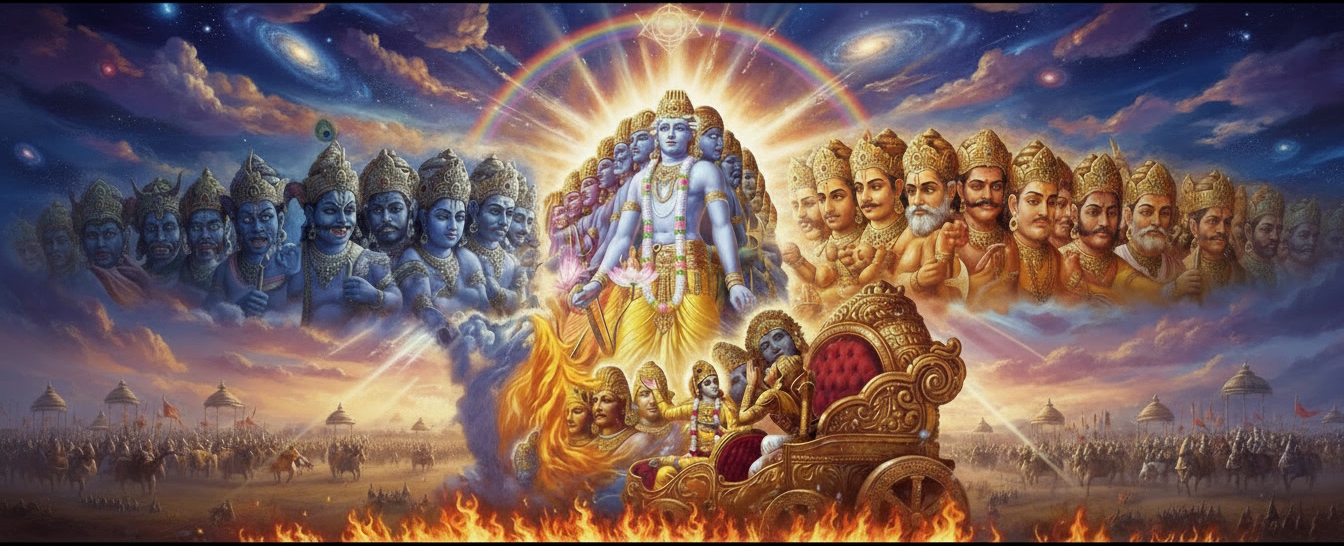
ममैवांशो जीवलोके जीवभूतः सनातनः।
मनःषष्ठानीन्द्रियाणि प्रकृतिस्थानि कर्षति।।15.7।।
mamaivāṃśo jīvaloke jīvabhūtaḥ sanātanaḥ|
manaḥṣaṣṭhānīndriyāṇi prakṛtisthāni karṣati||15.7||
Translation
An eternal portion of Myself having become a living soul in the world of life, draws to (itself) the (five) senses with the mind for the sixth, abiding in Nature.
हिंदी अनुवाद
इस संसारमें जीव बना हुआ आत्मा मेरा ही सनातन अंश है; परन्तु वह प्रकृतिमें स्थित मन और पाँचों इन्द्रियोंको आकर्षित करता है (अपना मान लेता है)।
Commentaries & Translations
Swami Ramsukhdas
व्याख्या -- ममैवांशो जीवलोके जीवभूतः सनातनः -- जिनके साथ जीवकी तात्त्विक अथवा स्वरूपकी एकता नहीं है? ऐसे प्रकृति और प्रकृतिके कार्यमात्रका नाम लोक है। तीन लोक? चौदह भुवनोंमें जीव जितनी योनियोंमें शरीर धारण करता है? उन सम्पूर्ण लोकों तथा योनियोंको जीवलोकेपदके अन्तर्गत समझना चाहिये।आत्मा परमात्माका अंश है परन्तु प्रकृतिके कार्य शरीर? इन्द्रियाँ? प्राण? मन आदिके साथ अपनी एकता मानकर वह जीव हो गया है -- जीवभूतः। उसका यह जीवपना बनावटी है? वास्तविक नहीं। नाटकमें कोई पात्र बननेकी तरह ही यह आत्मा जीवलोकमें जीव बनता है।सातवें अध्यायमें भगवान्ने कहा है कि इस सम्पूर्ण जगत्को मेरी जीवभूता परा प्रकृतिने धारण कर रखा है (7। 5) अर्थात् अपरा प्रकृति(संसार) से वास्तविक सम्बन्ध न होनेपर भी जीवने उससे अपना सम्बन्ध मान रखा है।भगवान् जीवके प्रति कितनी आत्मीयता रखते हैं कि उसको अपना ही मानते हैं -- ममैवांशः। मानते ही नहीं? प्रत्युत जानते भी हैं। उनकी यह आत्मीयता महान् हितकारी? अखण्ड रहनेवाली और स्वतःसिद्ध है।यहाँ भगवान् यह वास्तविकता प्रकट करते हैं कि जीव केवल मेरा ही अंश है इसमें प्रकृतिका किञ्चिन्मात्र भी अंश नहीं है। जैसे सिंहका बच्चा भेड़ोंमें मिलकर अपनेको भेड़ मान ले? ऐसे ही जीव शरीरादि जड,पदार्थोंके साथ मिलकर अपने असली चेतनस्वरूपको भूल जाता है। अतः इस भूलको मिटाकर उसे अपनेको सदा सर्वथा चेतनस्वरूप ही अनुभव करना चाहिये। सिंहका बच्चा भेड़ोंके साथ मिलकर भी भेड़ नहीं हो जाता। जैसे कोई दूसरा सिंह आकर उसे बोध करा दे कि देख तेरी और मेरी आकृति? स्वभाव? जाति? गर्जना आदि सब एक समान हैं अतः निश्चितरूपसे तू भेड़ नहीं? प्रत्युत मेरेजैसा ही सिंह है। ऐसे ही भगवान् यहाँ मम एव पदोंसे जीवको बोध कराते हैं कि हे जीव तू मेरा ही अंश है। प्रकृतिके साथ तेरा सम्बन्ध कभी हुआ नहीं? है नहीं? होगा नहीं और हो सकता भी नहीं।भगवत्प्राप्तिके सभी साधनोंमें अहंता (मैंपन) और ममता(मेरापन) का परिवर्तनरूप साधन बहुत सुगम और श्रेष्ठ है। अहंता और ममता -- दोनोंमें साधककी जैसी मान्यता होती है? उसके अनुसार? उसका भाव तथा क्रिया भी स्वतः होती है। साधककी अहंता यह होनी चाहिये कि मैं भगवान्का ही हूँ और,ममता यह होनी चाहिये कि भगवान् ही मेरे हैं। यह सबका अनुभव है कि हम अपनेको जिस वर्ण? आश्रम? सम्प्रदाय आदिका मानते हैं? उसीके अनुसार हमारा जीवन बनता है। पर यह मान्यता (जैसे -- मैं ब्राह्मण हूँ मैं साधु हूँ आदि) केवल (नाटकके स्वाँगकी तरह) कर्तव्यपालनके लिये है क्योंकि यह सदा रहनेवाली नहीं है। परन्तु मैं भगवान्का हूँ यह वास्तविकता सदा रहनेवाली है। मैं ब्राह्मण हूँ मैं साधु हूँ आदि भाव कभी हमसे ऐसा नहीं कहते कि तुम ब्राह्मण हो या तुम साधु हो। इसी प्रकार मन? बुद्धि? इन्द्रियाँ? शरीर? धन? जमीन? मकान आदि जिन पदार्थोंको हम भूलसे अपना मान रहे हैं? वे हमें कभी भी ऐसा नहीं कहते कि तुम हमारे हो? पर सम्पूर्ण सृष्टिके रचयिता परमात्मा स्पष्ट घोषणा करते हैं कि जीव मेरा ही हैविचार करना चाहिये कि शरीरादि पदार्थोंको हम अपने साथ लाये नहीं? इच्छानुसार उसमें परिवर्तन कर सकते नहीं? इच्छानुसार उनको अपने पास स्थिर रख सकते नहीं? हम भी उनके साथ सदा रह सकते नहीं? उनको अपने साथ ले जा सकते नहीं? फिर भी उनको अपना मानते हैं -- यह हमारी कितनी बड़ी भूल हैबचपनमें हमारे मन? बुद्धि? इन्द्रियाँ? शरीर जैसे थे? वैसे अब नहीं हैं? सबकेसब बदल गये हैं? फिर भी हम,मैं जो बचपनमें था? वही अब हूँ ऐसा मानते हैं। कारण यही है कि शरीरादिमें परिवर्तन होनेपर भी हमारेमें परिवर्तन नहीं हुआ। इस प्रकार शरीरादिमें हमें स्पष्ट परिवर्तन दीखता है। जिसको परिवर्तन दीखता है? वह स्वयं परिवर्तनरहित होता ही है। अतः संसारके पदार्थ? व्यक्ति हमारे साथी नहीं हैं।मैं भगवान्का हूँ -- ऐसा भाव रखना अपनेआपको भगवान्में लगाना है। साधकोंसे भूल यही होती है कि वे अपनेआपको भगवान्में न लगाकर मनबुद्धिको भगवान्में लगानेकी कोशिश करते हैं। मैं भगवान्का हूँ -- इस वास्तविकताको भूलकर मैं ब्राह्मण हूँ मैं साधु हूँ आदि भी मानते रहें और मनबुद्धिको भगवान्में लगाते रहें तो यह दुविधा कभी मिटेगी नहीं? और बहुत प्रयत्न करनेपर भी मनबुद्धि जैसे भगवान्में लगने चाहिये? वैसे लगेंगे नहीं। भगवान्ने भी इस अध्यायके चौथे श्लोकमें मैं उस परमात्माके शरण हूँ पदोंसे अपनेआपको परमात्मामें लगानेकी बात ही कही है। गोस्वामी तुलसीदासजी भी कहते हैं कि पहले भगवान्का होकर फिर नामजप आदि साधन करें तो अनेक जन्मोंकी बिगड़ी हुई स्थिति आज अभी सुधर सकती है -- बिगरी जनम अनेक की सुधरै अबहीं आजु। होहि राम को नाम जपु तुलसी तजि कुसमाजु।।(दोहावली 22) तात्पर्य यह है कि भगवान्में केवल मनबुद्धि लगानेकी अपेक्षा अपनेआपको भगवान्में लगाना श्रेष्ठ है।,अपनेआपको भगवान्में लगानेसे मनबुद्धि स्वतः सुगमतापूर्वक भगवान्में लग जाते हैं। नाटकका पात्र हजारों दर्शकोंके सामने यह कहता है कि मैं रावणका बेटा मेघनाद हूँ और मेघनादकी तरह ही वह बाहरी सब क्रियाएँ करता है। परन्तु उसके भीतर यह भाव हरदम रहता है कि यह तो स्वाँग है वास्तवमें मैं मेघनाद हूँ ही नहीं। इसी तरह साधकोंको भी नाटकके स्वाँगकी तरह इस संसाररूपी नाट्यशालामें अपनेअपने कर्तव्यका पालन करते हुए भीतरसे मैं तो भगवान्का हूँ ऐसा भाव हरदम जाग्रत् रखना चाहिये।जीव सदासे ही भगवान्का है -- सनातनः। भगवान्ने न तो कभी जीवका त्याग ही किया? न कभी उससे विमुख ही हुए। जीव भी भगवान्का त्याग नहीं कर सकता। भगवान्के द्वारा मिली हुई स्वतन्त्रताका दुरुपयोग करके वह भगवान्से विमुख हुआ है। जिस प्रकार सोनेका गहना तत्त्वतः सोनेसे अलग नहीं हो सकता? उसी प्रकार जीव भी तत्त्वतः परमात्मासे कभी अलग नहीं हो सकता।बुद्धिमान् कहलानेवाले मनुष्यकी यह बहुत बड़ी भूल है कि वह अपने अंशी भगवान्से विमुख हो रहा है। वह इधर खयाल ही नहीं करता कि भगवान् इतने सुहृद् (दयालु और प्रेमी) हैं कि हमारे न चाहनेपर भी हमें चाहते हैं? न जाननेपर भी हमें जानते हैं। वे कितने उदार? दयालु और प्रेमी हैं -- इसका वर्णन भाषा? भाव? बुद्धि आदिके द्वारा हो ही नहीं सकता। ऐसे सुहृद् भगवान्को छोड़कर अन्य नाशवान् जड पदार्थोंको अपना मानना बुद्धिमानी नहीं? प्रत्युत महान् मूर्खता है।जब मनुष्य भगवान्के आज्ञानुसार अपने कर्तव्यका पालन करता है? तब वे उसकी इतनी उन्नति कर देते हैं कि जीवन सफल हो जाता है और जन्ममरणरूप बन्धन सदाके लिये मिट जाता है। जब मनुष्य भूलसे कोई निषिद्ध आचरण (पाप) कर बैठता है? तब वे दुःखोंको भेजकर उसको चेताते हैं? पुराने पापोंको भुगताकर उसको शुद्ध करते हैं और नये पापोंमें प्रवृत्तिसे रोकते हैं।जीव कहीं भी क्यों न हो? नरकमें हो अथवा स्वर्गमें? मनुष्ययोनिमें हो अथवा पशुयोनिमें? भगवान् उसको अपना ही अंश मानते हैं। यह उनकी कितनी अहैतुकी कृपा? उदारता और महत्ता है जीवके पतनको देखकर भगवान् दुःखी होकर कहते हैं कि मेरे पास आनेका उसका पूरा अधिकार था? पर वह मेरेको प्राप्त किये बिना (माम् अप्राप्य) नरकोंमें जा रहा है (गीता 16। 20)।मनुष्य चाहे किसी भी स्थितिमें क्यों न हो? भगवान् उसे वहाँ स्थिर नहीं रहने देते उसे अपनी ओर खींचते ही रहते हैं। जब हमारी सामान्य स्थितिमें कुछ भी परिवर्तन (सुखदुःख? आदरनिरादर आदि) हो? तब यह मानना चाहिये कि भगवान् हमें विशेषरूपसे याद करके नयी परिस्थिति पैदा कर रहे हैं हमें अपनी ओर खींच रहे हैं। ऐसा मानकर साधक प्रत्येक परिस्थितिमें विशेष भगवत्कृपाको देखकर मस्त रहे और भगवान्को कभी भूले नहीं।अंशीको प्राप्त करनेमें अंशको कठिनाई और देरी नहीं लगती। कठिनाई और देरी इसलिये लगती है कि अंशने अपने अंशीसे विमुखता मानकर उन शरीरादिको अपना मान रखा है? जो अपने नहीं हैं। अतः भगवान्के सम्मुख होते ही उनकी प्राप्ति स्वतःसिद्ध है। सम्मुख होना जीवका काम है क्योंकि जीव ही भगवान्से विमुख हुआ है। भगवान् तो जीवको अपना मानते ही हैं जीव भगवान्को अपना मान ले -- यही सम्मुखता है।मनुष्यसे यह ब़ड़ी भूल हो रही है कि जो व्यक्ति? वस्तु? परिस्थिति अभी नहीं है अथवा जिसका मिलना निश्चित भी नहीं है और जो मिलनेपर भी सदा नहीं रहेगी -- उसकी प्राप्तिमें वह अपना पूर्ण पुरुषार्थ और उन्नति मानता है। यह मनुष्यका अपने साथ बड़ा भारी धोखा है वास्तवमें जो नित्यप्राप्त और अपना है? उस परमात्माको प्राप्त करना ही मनुष्यका परम पुरुषार्थ है? शूरवीरता है। हम धन? सम्पत्ति आदि सांसारिक पदार्थ,कितने ही क्यों न प्राप्त कर लें? पर अन्तमें या तो वे नहीं रहेंगे अथवा हम नहीं रहेंगे। अन्तमें नहीं ही शेष रहेगा। वास्तवमें जो सदा है? उस(अविनाशी परमात्मा)को प्राप्त कर लेनेमें ही शूरवीरता है। जो नहीं है? उसको प्राप्त करनेमें कोई शूरवीरता नहीं है।जीव जितना ही नाशवान् पदार्थोंको महत्त्व देता है? उतना ही वह पतनकी तरफ जाता है और जितना ही अविनाशी परमात्माको महत्त्व देता है? उतना ही वह ऊँचा उठता है। कारण कि जीव परमात्माका ही अंश है।नाशवान् सांसारिक पदार्थोंको प्राप्त करके मनुष्य कभी भी बड़ा नहीं हो सकता। केवल बड़े होनेका वहम या धोखा हो जाता है और वास्तवमें असली बड़प्पन(परमात्मप्राप्ति) से वञ्चित हो जाता है। नाशवान् पदार्थोंके कारण माना गया बड़प्पन कभी टिकता नहीं और परमात्माके कारण होनेवाला बड़प्पन कभी मिटता नहीं इसलिये जीव जिसका अंश है? उस सर्वोपरि परमात्माको प्राप्त करनेसे ही वह बड़ा होता है। इतना बड़ा होता है कि देवतालोग भी उसका आदर करते हैं और कामना करते हैं कि वह हमारे लोकमें आये। इतना ही नहीं? स्वयं भगवान् भी उसके अधीन हो जाते हैं मनःषष्ठानीन्द्रियाणि प्रकृतिस्थानि कर्षति -- भगवान्ने जिस प्रकार इसी श्लोकके पूर्वार्धमें जीवको अपनेमें स्थित न कहकर उसको अपना अंश बताया है? उसी प्रकार श्लोकके उत्तरार्धमें मन तथा इन्द्रियोंको प्रकृतिका अंश न कहकर उनको प्रकृतिमें स्थित बताया है। तात्पर्य है कि भगवान्का अंश जीव सदा भगवान्में ही स्थित है और प्रकृतिमें स्थित मन तथा इन्द्रियाँ प्रकृतिके ही अंश हैं। मन और इन्द्रियोंको अपना मानना? उनसे अपना सम्बन्ध मानना ही उनको आकर्षित करना है।यहाँ बुद्धिका अन्तर्भाव मन शब्दमें (जो अन्तःकरणका उपलक्षण है) और पाँच कर्मेन्द्रियों तथा पाँच प्राणोंका अन्तर्भाव इन्द्रिय शब्दमें मान लेना चाहिये। उपर्युक्त पदोंमें भगवान् कहते हैं कि मेरा अंश जीव मेरेमें स्थित रहता हुआ भी भूलसे अपनी स्थिति शरीर? इन्द्रियाँ? मन? बुद्धिमें मान लेता है। जैसे शरीर? इन्द्रियाँ? मन? बुद्धि प्रकृतिका अंश होनेसे कभी प्रकृतिसे पृथक् नहीं होते? ऐसे ही जीव भी मेरा अंश होनेसे कभी मेरेसे पृथक् होता नहीं? हो सकता नहीं। परन्तु यह जीव मेरेसे विमुख होकर मुझे भूल गया है।यहाँ मन और पाँच ज्ञानेन्द्रियोंका नाम लेनेका तात्पर्य यह है कि इन छहोंसे सम्बन्ध जोड़कर ही जीव बँधता है। अतः साधकको चाहिये कि वह शरीरइन्द्रियाँमनबुद्धिको संसारके अर्पण कर दे अर्थात् संसारकी सेवामें लगा दे और अपनेआपको भगवान्के अर्पण कर दे।विशेष बात(1) मनुष्य भूलसे शरीर? स्त्री? पुत्र? धन? मकान? मान? बड़ाई आदि नाशवान् वस्तुओंको अपनी और अपने लिये मानकर दुःखी होता है। इससे भी नीची बात यह है कि इस सामग्रीके भोग और संग्रहको लेकर वह अपनेको बड़ा मानने लगता है जबकि वास्तवमें इनको अपना मानते ही इनका गुलाम हो जाता है। हमें पता लगे या न लगे? हम जिन पदार्थोंकी आवश्यकता समझते हैं? जिनमें कोई विशेषता या महत्त्व देखते हैं या जिनकी हम गरज रखते हैं? वे (धन? विद्या आदि) पदार्थ हमसे बड़े और हम उनसे तुच्छ हो ही गये। पदार्थोंके मिलनेमें जो अपना महत्त्व समझता है? वह वास्तवमें तुच्छ ही है? चाहे उसे पदार्थ मिलें या न मिलें।भगवान्का दास होनेपर भगवान् कहते हैं -- मैं तो हूँ भगतनका दास? भगत मेरे मुकुटमणि परंतु जिनके हम दास बने हुए हैं? वे धनादि जड पदार्थ कभी नहीं कहते -- लोभी मेरे मुकुटमणि वे तो केवल हमें अपना दास ही बनाते हैं। वास्तवमें भगवान्को अपना जानकर उनके शरण हो जानेसे ही मनुष्य बड़ा बनता,है? ऊँचा उठता है। इतना ही नहीं भगवान् ऐसे भक्तको अपनेसे भी बड़ा मान लेते हैं और कहते हैं -- अहं भक्तपराधीनो ह्यस्वतन्त्र इव द्विज।साधुभिर्ग्रस्तहृदयो भक्तैर्भक्तजनप्रियः।।(श्रीमद्भा0 9। 4। 63)हे द्विज मैं भक्तोंके पराधीन हूँ? स्वतन्त्र नहीं। भक्तजन मेरेको अत्यन्त प्यारे हैं। मेरे हृदयपर उनका पूर्ण अधिकार है। कोई भी सांसारिक व्यक्ति? पदार्थ क्या हमें इतनी बड़ाई दे सकता हैयह जीव परमात्माका अंश होते हुए भी प्रकृतिके अंश शरीरादिको अपना मानकर स्वयं अपना अपमान करता है और अपनेको नीचे गिराता है। अगर मनुष्य इन शरीर? इन्द्रियाँ? मन आदि सांसारिक पदार्थोंका दास न बने? तो वह भगवान्का भी इष्ट हो जाय -- इष्टोऽसि मे दृढमिति (गीता 18। 64)। जिन्होंने भगवान्को प्राप्त कर लिया है? उनको भगवान् अपना प्रिय कहते हैं (गीता 12। 13 -- 19)। परंतु जिन्होंने भगवान्को प्राप्त नहीं किया है किंतु जो भगवान्को प्राप्त करना चाहते हैं? उन साधकोंको तो वे अपना अत्यन्त प्रिय कहते हैं -- भक्तास्तेऽतीव मे प्रियाः (गीता 12। 20)। ऐसे परम दयालु भगवान्को? जो साधकोंको अत्यन्त प्रिय और सिद्ध भक्तोंको केवल प्रिय कहते हैं? मनुष्य अपना नहीं मानता -- यह उसका कितना प्रमाद है(2) संसारका एक छोटासा अंश शरीर है और परमात्माका अंश स्वयं (जीवात्मा) है। भूल यह होती है कि परमात्माका अंश संसारके अंशके साथ मिलकर संसार और परमात्मा -- दोनोंको अपने अनुकूल बनाना चाहता है साधकका काम है -- इस भूलको मिटाना। इसके लिये वह शरीरको तो संसारके अनुकूल बना दे और स्वयं परमात्माके अनुकूल बन जाय। तात्पर्य है कि शरीरको संसारपर छोड़ दे कि जैसी संसारकी मरजी हो? वैसे रखे और अपनेको परमात्मापर छोड़ दे कि जैसी परमात्माकी मरजी हो? वैसे रखे।संसारकी चीज संसारको दे दे और परमात्माकी चीज परमात्माको दे दे -- यह ईमानदारी है। इस ईमानदारीका नाम ही मुक्ति है। जिसकी चीज है? उसको न दे संसारकी चीज भी ले ले और परमात्माकी चीज भी ले ले -- यह बेईमानी है। इस बेईमानीका नाम ही बन्धन है।संसारकी चीज संसारपर और परमात्माकी चीज परमात्मापर छोड़कर निश्चिन्त हो जाय। अपनी कोई कामना न रखे। न जीनेकी कामना रखे? न मरनेकी। भगवान् ऐसा कर देते तो ठीक रहता भगवान् वर्षा कर देते तो ठीक रहता गरमी ज्यादा पड़ रही है? थोड़ी कम कर देते तो अच्छा था बाढ़ आ गयी? वर्षा कम करते तो ठीक रहता -- इस तरह मनुष्य परमात्माको भी अपने अनुकूल बनाना चाहता है और संसारको भी। इस बातको छोड़कर अपनेआपको सर्वथा भगवान्के अर्पित कर दे और भगवान्से कह दे कि हे नाथ आप मेरेको पृथ्वीपर रखें या स्वर्गमें रखें अथवा नरकोंमें रखें बालक रखें या जवान रखें अथवा बूढ़ा रखें अपमानित रखें या सम्मानित रखें सुखी रखें या दुःखी रखें जैसी परिस्थितिमें रखना चाहें? वैसे रखें? पर मैं आपको भूलूँ नहीं।मनुष्य जिस घरको अपना मानता है? जिस कुटुम्बको अपना मानता है? जिन रुपयोंको अपना मानता है? उनकी ही चिन्ता उसको होती है। संसारमें लाखोंकरोड़ों घर हैं? अरबों आदमी हैं? अनगिनत रुपये हैं? पर उनकी चिन्ता नहीं होती क्योंकि उनको वह अपना नहीं मानता। जिनको अपना नहीं मानता? उनसे तो मुक्त है ही। अतः ज्यादा मुक्ति तो हो चुकी है? थोड़ीसी ही मुक्ति बाकी हैविचार करना चाहिये कि जिन थोड़ीसी चीजोंको हम अपनी मानते हैं? वे कौनसी सदा साथ रहनेवाली हैं चीजें तो रहेंगी नहीं? पर बन्धन (उनका सम्बन्ध) रह जायगा? जो जन्मजन्मान्तरतक साथ रहेगा। इसलिये साधकको चाहिये कि वह या तो शरीरको संसारके अर्पण कर दे? जो कर्मयोग है चाहे अपनेको शरीरसंसारसे सर्वथा अलग कर ले? जो ज्ञानयोग है और चाहे अपनेको भगवान्के अर्पण कर दे? जो भक्तियोग है। इन तीनोंमेंसे कोई भी साधन अपना ले? तीनोंका फल एक ही होगा। सम्बन्ध -- मनसहित इन्द्रियोंको अपना माननेके कारण जीव किस प्रकार उनको साथ लेकर अनेक योनियोंमें घूमता है -- इसका भगवान् दृष्टान्तसहित वर्णन करते हैं।
Sri Harikrishnadas Goenka
उ0 -- उसमें जो कारण है वह सुन --, जीवलोकमें अर्थात् संसारमें? जो जीवरूप शक्ति? भोक्ता? कर्ता इत्यादि नामोंसे प्रसिद्ध है? वह मुझ परमात्माका ही सनातन अंश है? अर्थात् अंग? भाग? एकदेश जो भी कुछ कहो? एक ही अभिप्राय है। जैसे जलमें प्रतीत होनेवाला सूर्यका अंश -- प्रतिबिम्ब? जलरूप निमित्तका नाश होनेपर? सूर्यको ही प्राप्त होकर फिर नहीं लौटता? वैसे ही उस परमात्माका यह अंश भी? उस परमात्मासे ही संयुक्त हो जाता है। फिर नहीं लौटता। अथवा जैसे घट आदि उपाधिसे परिच्छिन्न घटादिका आकाश? आकाशका ही अंश है और वह घट आदि निमित्तके नाश होनेपर? आकाशको ही प्राप्त होकर फिर नहीं लौटता? वैसे ही इसके विषयमें भी समझना चाहिये। सुतरां जहाँ जाकर नहीं लौटते यह कहना उचित ही है। पू0 -- अवयवरहित परमात्माका अवयव? एकदेश अथवा अंश? कैसे हो सकता है और यदि उसे अवयवयुक्त मानें? तो उन अवयवोंका विभाग होनेसे परमात्माके नाशका प्रसङ्ग आ जायगा। उ0 -- यह दोष नहीं है क्योंकि अविद्याकृत उपाधिसे परिच्छिन्न? एकदेश ही अंशकी भाँति माना गया है। यह बात क्षेत्राध्यायमें विस्तारपूर्वकर दिखलायी गयी है। वह मेरा अंशरूप माना हुआ जीव? संसारमें कैसे आता है और कैसे शरीर छोड़कर जाता है? सो बतलाते हैं -- ( यह जीवात्मा ) मन जिनमें छठा है? ऐसी कर्णछिद्रादि अपनेअपने गोलकरूप प्रकृतियोंमें स्थित हुई? श्रोत्रादि इन्द्रियोंको आकर्षित करता है।,
Sri Anandgiri
Restating what was said, he raises an objection—"Yad gatva" etc. He cites common knowledge as proof there—"Samyogah" (Unions) etc. Since it is well known that going ends in coming, "Having gone where" etc. is illogical—he concludes thus—"Katham" (How) etc.
He refutes the objection—"Shrunu" (Listen) etc. The absence of ending in return for the attainment of the Lord is the meaning of the Locative case.
Doubting "Even if the Jiva is a part of the Supreme, how is the said defect resolved?", taking up the Reflection Theory (Pratibimba Paksha), he answers with an example—"Yatha" (Just as) etc. Relying on the Limitation Theory (Avaccheda Paksha), he shows the resolution of the said defect with another example—"Yatha va" (Or just as) etc.
He concludes the resolution of the objection—"Atah" (Therefore) etc. Doubting that "Since the Supreme is partless, the Jiva being His part is illogical," he says—"Nanviti" (But/Objection) etc.
He establishes His partlessness—"Savayavatve cha" (And if possessed of parts) etc. He answers that "Even of the Supreme who is partless in reality, the Jiva will be a part through imagination"—"Naisha doshah" (This is not a fault) etc.
"But in reality, the Jiva is not a part, because its identity with the Supreme Self has been shown"—so he says—"Darshitashcha" (And shown) etc.
"If the Jiva, imagined as a part of the Supreme, is in reality That Self alone, then how is there transmigratory state or departure for it?"—he doubts—"Katham" (How) etc. He begins to explain the transmigration and departure of the Jiva—"Uchyate" (It is said) etc.
Sri Dhanpati
Objection: "Having gone where they do not return"—this is not logical, because motion ends in return. That has been stated—"All accumulations end in depletion, elevations end in fall, unions end in separation, and life ends in death"—doubting thus, He says—"Mamaiva" (My own) etc.
In the "Jivaloka"—Samsara—"Jivabhutah"—well-known as enjoyer and doer; is "Amshah"—portion or limb—"Mama"—of the Supreme Self alone, not of another. Therefore "Sanatanah"—ancient. And thus, just as the water-sun (reflected sun), being a portion of the sun, upon the removal of the cause (water), attains the sun and does not return; or just as the pot-space etc., limited by the adjunct of pot etc., being a portion of space, upon the removal of the cause (pot etc.), attains space and does not return; similarly, the Jiva also, being My portion, having attained Me, is devoid of return; therefore "Having gone where they do not return" is indeed logical.
And thus, limited by adjuncts created by Avidya, imagined like a portion in one place, upon the departure of Avidya through knowledge of Truth, due to the departure of the adjunct which was the cause, it remains in its own nature. It is not that a primary limb is possible for the Partless; and if it were possessed of parts, the contingency of destruction would be undesirable.
If the Jiva, imagined as a portion of the Supreme, is in reality the Supreme Self alone, then "How does it transmigrate or depart?"—upon this expectation, He says—"Manah" etc. The senses beginning with the ear, with the Mind as the sixth—"Prakritisthani"—situated in their respective material causes, in places like the ear-cavity etc.—He "Karshati"—draws/attracts; when he obtains another body from the previous body—this is the connection with the subsequent (verse).
But regarding the interpretation—"Even being such (Brahman), how does he return from deep sleep? To this He says. The five senses beginning with the ear, having Mind as the sixth; being 'Lingas' (signs) due to being instruments of object-perception for Indra (the Self); upon the exhaustion of Karma generating waking and dream enjoyment, being 'Prakritisthani'—situated in Prakriti, in Ignorance, in a subtle form; upon the rise of Karma generating waking enjoyment again, he 'Karshati'—draws them for enjoyment. Like a tortoise draws its limbs, he draws them from Prakriti (Ignorance). Meaning, he manifests them as fit for grasping objects. Therefore, non-return from knowledge (is logical), but non-return from ignorance (in sleep) is not logical—this is the idea"—this interpretation requires supplying many words, is not connected to the subsequent verse, is inconsistent with his own text when asked "At what time does he draw?", and therefore is indeed to be ignored. Similarly, the bad imaginations of others which are contrary to the Bhashya are not to be accepted.
Sri Neelkanth
Objection: If You are of the nature of Light not illuminable by sun etc., and You say "Know Me also as the Knower of the Field"—thus speaking of Your own self as the Knower of the Field—then being the Knower of the Field, why is the dependence on sun etc. seen for You in the illumination of pot etc.? For a self-luminous entity does not depend on another light for the illumination of its own object, as is not seen in lamps etc.—doubting thus, He says with three (verses)—"Mamaiva" etc.
"Mamaiva" etc. "Yadi"—since Ishvara, the creator of the world, obtains a body—from Shrutis like "This one entered here up to the tips of the nails," "Having created that, He entered into that very thing"—Ishvara alone is the bearer of the body; and "Yadi"—for which reason. The word "Api" is in the sense of emphasis. "Cha" is in the sense of conjunction. From the Shruti "Upon whose departure shall I depart, and upon whose establishment shall I be established?—thinking thus He created Prana," Ishvara alone departs through the adjunct of holding Prana. "Tatah"—from these two reasons, in "Jivaloka"—Samsara—he who is "Jivabhutah"—the living being—is "Sanatanah"—always of one form, "I myself"—thus it should have been said. (However,) "Just as tiny sparks issue forth from fire, so indeed from this Self all Selves issue forth"—by this logic of fire and sparks, "He is My portion indeed"—thus is the statement of part-whole relationship.
Although difference and dimension are not seen as inherent in fire, yet both belonging to the adjunct are metaphorically applied there too—"This fire is different from that fire," "This is a spark of this," "This is smaller than this." Similarly, in Brahman, devoid of fourfold dimensions by the Shruti "Not gross, not minute, not short, not long," the difference, smallness, and greatness by the part-whole relation "My own portion" are metaphorical—based on adjuncts—to be contemplated. And so the Shruti: "By the quality of Buddhi and indeed by the quality of the Self, he is seen as the size of the tip of an awl, and also inferior/small"; and "Equal to a flea, equal to a mosquito, equal to an elephant, equal to these three worlds."
And just as a spark is fire only, not a part of fire? So the Jiva also is Brahman only, not a part of Brahman—because of seeing the completion of Brahman-hood in each individual like fishermen etc., like cow-ness (Gotva), as per "Brahma are the fishermen, Brahma the slaves, Brahma these gamblers." And also because of the inappropriateness of imagining part and whole in the Partless. He, thus the Ishvara become Jiva, is My portion as if a portion—a difference in form. "Manahshashthani"—those having mind as the sixth, the six senses along with the mind; "Prakritisthani"—the nature (Prakriti) of senses is the inclination towards objects, situated there; He "Karshati"—contracts (them) during the times of sleep and dissolution.
Sri Ramanuja
Thus of the described nature, eternal, being My portion indeed, someone whose true nature is concealed by the wrapping of Avidya in the form of beginningless Karma, "Jivabhutah"—having become a Jiva, existing in the world of Jivas, "Karshati"—draws—the senses, "Manahshashthani"—with mind as the sixth—situated in the body which is a specific modification of Prakriti like god, human etc.
And someone, freed from this Avidya by the previously stated path, remains in his own form.
But the "Jivabhutah," having extremely contracted knowledge and lordship, is the lord of the senses—with mind as the sixth—situated in the body which is a specific form of modification of Prakriti obtained by Karma; he draws them here and there in accordance with Karma.
Sri Sridhara Swami
Objection: If 'having reached Your Abode, they do not return', then according to the Shruti 'Having merged in the Sat (Existence), they do not know that we have merged in the Sat', etc., since the attainment of You happens for everyone during deep sleep (Sushupti) and dissolution (Pralaya), then who indeed would be the transmigrator (Samsari)? Raising this doubt, He shows the transmigrator -- with 'Mama' (My), etc., in five (verses).
'Mama eva' (My own) 'Amsha' (part) which is this 'Jivabhutah' (become a Jiva) through Avidya, 'Sanatanah' (eternal), always famous as the transmigrator; he (asau), during deep sleep and dissolution, draws back the senses with mind as the sixth, which were situated merged in Prakriti, again into the world of the living (Jiva-loka), into Samsara, for the purpose of enjoyment. And this (mention of senses) is for the implied indication (upalakshana) of the organs of action and the vital force (Prana).
This is the idea -- It is true, even in deep sleep and dissolution, since everything is My part, due to the merger of every single Jiva in Me, there is indeed attainment of Me; nevertheless, for the one covered by Avidya and possessing latent impressions (sanushaya), the merger is in Me as associated with Prakriti (Saprakritika), but not in the Pure (Brahman). That has been stated -- by 'From the Unmanifest all manifestations originate' etc. And therefore, emerging again for Samsara, the ignorant one draws (attracts) the senses which are his limiting adjuncts and which were situated merged in Prakriti.
But for the wise, due to the attainment of the Pure Nature, there is no return.
Sri Vedantadeshikacharya Venkatanatha
If thus, due to being Your manifestation, he is Your portion only? Then why is there not the connection with the pure form for everyone without distinction, like the group of Nityasuris? Here, having restated the status of being His manifestation even for the bound, the arrangement of bound, liberated etc. is stated by "Mamaivamshah" etc.
—with this intention he says—"Itthamuktasvarupah" (Of the nature described thus).
Swami Chinmayananda
अनन्तवस्तु अवयव रहित होने के कारण अखण्ड और अविभाज्य है। तथापि उपाधियों के सम्बन्ध से उसमें खण्ड और विभाग होने का आभास निर्माण हो सकता है। जिस प्रकार सर्वगत आकाश का कोई आकार नहीं है? तथापि घट उपाधि से अवच्छिन्न होकर बना घटाकाश बाह्य महाकाश से भिन्न प्रतीत होता है।इसी प्रकार देहेन्द्रियादि से अवच्छिन्न (मर्यादित? सीमित) आत्मा जीव के रूप में आत्मा से भिन्न प्रतीत होता है। अथवा? जैसे आकाश में स्थित चन्द्रमा एक पात्र में स्थित जल में प्रतिबिम्बित होता है और वह प्रतिबिम्ब जल की स्थिति के अनुसार स्थिर या विच्छिन्न होता रहता है किन्तु प्रतिबिम्ब के छिन्नभिन्न होने का प्रभाव आकाशस्थ चन्द्रमा पर नहीं पड़ता। इसी प्रकार? मनबुद्धि रूप सूक्ष्म शरीर में व्यक्त चैतन्य जीव कहलाता है। अन्तकरण की वृत्तियों के अनुसार यह जीव स्वयं को सुखीदुखी? संसारी अनुभव करता है? किन्तु उसका शुद्ध चैतन्य स्वरूप सदा अविकारी ही रहता है? जो सनातन कहा गया है।उपर्युक्त विवेचन का तात्पर्य यह है कि आत्मा को प्राप्त हुआ जीवत्व अज्ञान के कारण है। अत वह जीवत्व आभासिक है? वास्तविक नहीं जैसे आकाश का एकदेशीयत्व और चन्द्रमा का प्रतिबिम्बित्व। अज्ञान का नाश हो जाने पर जीव स्वत आत्मस्वरूप बन जाता है। तत्पश्चात् ज्ञान की उपस्थिति में अज्ञान पुन नहीं लौटता? तब जीव का संसार में पुनरागमन होने का कारण ही नहीं रह जाता है। इसलिए? पूर्व श्लोक में कहा गया था कि भगवान् के परम धाम को प्राप्त हुये जीव पुन संसार को नहीं लौटते हैं। इसका पूर्व जन्म के सिद्धान्त से कोई विरोध नहीं है? क्योंकि जब तक अज्ञान बना रहता है? तब तक जीव का भी अस्तित्व बने रहने के कारण उसका पुनर्जन्म सद्ध हो सकता है।इस श्लोक की दूसरी पंक्ति का सम्बन्ध अगले श्लोक से है। इसमें देहत्याग के समय जीव का कार्य बताया गया है।यह स्थूल शरीर जड़ है और इसमें चैतन्य को व्यक्त करने की सार्मथ्य नहीं है। ज्ञानेन्द्रियाँ और अन्तकरण (मन और बुद्धि) सूक्ष्म शरीर कहलाते हैं। यद्यपि यह सूक्ष्म शरीर भी जड़ है? किन्तु इसमें चैतन्य व्यक्त हो सकता है। यह चेतन सूक्ष्म शरीर ही जीव है? जो किसी देह को धारण कर उसे चेतनता प्रदान करता है। यह जीव प्रकृतिस्थ इन्द्रियाँ तथा मन अर्थात् अन्तकरण को एकत्र कर लेता है। यहाँ प्रकृति का अर्थ है स्थूल शरीर में स्थित नेत्र? श्रोत्र आदि इन्द्रिय गोलक। यही कारण कि मृत देह में यह गोलक तो रह जाते हैं? परन्तु उनमें विषय ग्रहण की कोई सार्मथ्य नहीं होती।किस समय यह जीव इन इन्द्रियादि को अपने में समेट लेता है भगवान् कहते हैं
Sri Abhinavgupta
"Mama" (My) etc. "This is a part of Brahman indeed"—thus.
Because of the non-experience of the Perfect (Full) due to the quality of ignorance, and because of the non-cessation of sentience, "part-ness" is metaphorical; but "having parts" is not logical in reality.
For the Shruti says: "Even a part of Brahman has not transcended the omniform nature (Universality)."
And this very metaphorical nature should be applied as the occasion suits—one should not disagree on this.
Sri Madhusudan Saraswati
Objection: "Having gone where they do not return" is said. If they go, then they certainly return, like heaven; and if they do not return, then they do not go (attain); thus "having gone" and "do not return" are mutually contradictory. "All accumulations end in depletion, elevations end in fall, unions end in separation, and life ends in death"—this is well known in scripture and the world.
If you say: Attainment is of the non-Self, so it ends in return, but not Self-attainment? No. Because even in Self-attainment established by the Shruti "Then, my dear, he is merged with Existence" [Chhandogya 6.8.1] during deep sleep, it is seen to end in return; otherwise, if the sleeper were liberated, there would be no rising again. Therefore, in Self-attainment, "having gone" is not appropriate; and even if that is metaphorical, "non-return" is not appropriate—thus obtained, we say:
Since the goer Jiva is non-different from the destination Brahman, "having gone" is metaphorical. Because it is separated only by ignorance, its attainment is designated only by knowledge. If the Jiva is a reflection of Brahman, then—just as the water-reflected sun goes to the original sun when the water goes, and there is no return from there. And if the Jiva is a part of Brahman limited by Buddhi, then—just as pot-space goes to great-space when the pot goes, and there is no return from there; similarly for the Jiva too, upon the removal of the adjunct, going to the condition-less nature and no return from there—is said metaphorically. Because of being one nature, and the delusion of difference ceasing by the cessation of the adjunct.
In deep sleep, however, since the antahkarana (Jiva's adjunct), along with impressions, karma, and past knowledge, remains in a subtle form in Ignorance, its own cause; therefore, re-emergence is possible from that very Ignorance. But when Ignorance ceases by Knowledge, since the cause is absent, how can the effect arise? Because adjuncts like antahkarana are born of Ignorance.
Therefore, for the Jiva, "having gone" refers to the cessation of the Ignorance "I am not Brahman" through the realization "I am Brahman" generated by Vedanta sentences. And since the ceased beginningless Ignorance does not rise again, the absence of its effect Samsara is called "do not return"; so there is no contradiction whatsoever.
The Jiva's absolute nature is Brahman alone, this has been stated often. All this is propounded by the subsequent text. There, since the Jiva is of the form of Brahman, upon attaining that nature by the cessation of ignorance, there is no fall from it—this is propounded by the half-verse "Mamaivamshah". But in deep sleep, due to the existence of Ignorance along with the latent impressions of all effects, there is again Samsara for the Jiva—this is propounded by the half-verse "Manahshashthani". Then, the distinction from the body of him who is actually non-transmigrating but attained Samsara by Maya and is made identified with the body by the dull-witted—is propounded by the half-verse "Shariram" etc. By "Shrotram chakshuh" etc., his distinction from the senses as their impeller in their respective objects is propounded. Thus, being distinct from the body, senses etc., why doesn't everyone see him during departure etc. since he is their own Self?—upon this doubt, the answer "Those with minds distracted by objects do not see him though fit to be seen" is stated in the verse "Utkramantam" etc. "Those with the eye of knowledge see him"—this is explained by the half-verse "Yatanto yoginah". "The deluded do not see"—this is explained by the half-verse "Yatanto'pi"—this is the connection of the five verses.
Now we will explain the words. "Mamaivamshah"—My, the Supreme Self's, own "Amsha" (part); though partless, imagined by Maya; like the sun in water, or like space in a pot; having false difference, a part "like a part"; in "Jivaloka"—Samsara. And he, having become "Jivabhutah" through the adjunct of holding Prana—doer, enjoyer, transmigrator—has attained this false fame; "Sanatanah"—Eternal. Because even if limited by adjuncts, in reality he is of the nature of the Supreme Self. Therefore, attaining his own nature Brahman by the cessation of ignorance through knowledge, not returning from there is logical.
Even being such, how does he return from sleep? He says "Manah" etc. The five senses named ear, skin, eye, tongue, and nose, of which "Manah" (Mind) is the sixth; being "Lingas" (signs/instruments) for the Self (Indra) as instruments of object-perception; upon the exhaustion of karma generating waking and dream enjoyment, being "Prakritisthani"—situated in Prakriti, in Ignorance, in a subtle form; upon the rise of karma generating waking enjoyment again, he "Karshati"—draws (them) for enjoyment; like a tortoise draws its limbs, he draws them from Prakriti (Ignorance); meaning he manifests them as fit for grasping objects. Therefore, even if there is non-return from knowledge, return from ignorance (sleep) is not illogical—this is the idea.
Sri Purushottamji
"Nanu" (Objection/Query)—Previously, it was stated that the Field, Knower of the Field, Prakriti, Purusha, Inert, Moving etc. are His own parts, are useful for sport, and are produced for the sake of His own sport; and now "Having gone where they do not return" [15.6] is said; how is that possible? With this expectation, He says "Mamaiva" etc. in five (verses).
In the "Jivaloka"—manifested for the sake of My sport; "Jivabhutah"—characterized by Jiva-hood for the sake of experiencing the taste of service and for the sake of enjoying the taste of sport, through the concealment of the Bliss-portion and through the manifestation of non-lordship—is "Mamaiva Amshah" (My own portion) indeed; "Sanatanah"—always existing in Me. He "Karshati" (draws) the five senses—of which Mind is the sixth—situated in Prakriti which has manifested for the sake of sport, for the purpose of experiencing that enjoyment etc.
Here is the idea: The Jiva-state manifested directly for the experience of His own sport is the eternal portion of Purushottama alone directly; through that, the portion manifested for the experience of enjoyment produced by Prakriti is the transmigratory Jiva, the portion of the root Jiva; he leads his portion there where his desire is. Therefore indeed the Shruti "Prana departs after him departing" [Brihadaranyaka Upanishad 4.4.2] etc.
Sri Shankaracharya
"Mamaiva"—Of Me alone, of the Supreme Self, of Narayana; "Amshah"—part, limb, portion—these are not different in meaning; in "Jivaloka"—in the world of Jivas, in Samsara; "Jivabhutah"—well-known as doer and enjoyer; "Sanatanah"—ancient.
Just as the sun reflected in water, being a part of the sun, upon the removal of the cause (water), goes to the sun alone and does not return, and goes as that very Self; exactly so, just as the pot-space limited by the adjunct of pot etc., being a part of space, upon the removal of the cause like pot etc., attaining space, does not return. Therefore, "Having gone where they do not return" is logically stated.
Objection: How can there be a limb, a portion, a part of the Partless Supreme Self? And if possessed of parts, there is the contingency of destruction due to separation of parts. (Answer:) This is not a fault; because a portion limited by adjuncts created by Avidya is imagined like a part. And this meaning has been shown in the Chapter on the Field in detail.
And how does that Jiva, imagined as My part, transmigrate and depart? It is said—He "Karshati"—draws/attracts—"Manahshashthani Indriyani"—the senses, ear etc., with mind as the sixth; "Prakritisthani"—situated in their own place like the ear-cavity etc., in Prakriti. At what time—
Sri Vallabhacharya
This Purusha also is My Dhama (Abode); "My"—of the Purushottama consisting of Existence-Consciousness-Bliss—indeed is the "Amshah" (part), atomic (Anu); consisting of pure Consciousness; separated by My own will; "Sanatanah" (Eternal)—because in reality it is of eternal nature; (but) whose nature of Bliss is concealed by the wrapping of Avidya in the form of beginningless Karma; "Jivabhutah"—having become a Jiva; "Jivaloke vartamanah"—existing in the world of Jivas; he "Karshati" (draws) the senses—"Manahshashthani"—with mind as the sixth—situated in the body which is a specific modification of Prakriti like god, human etc.
Someone, freed from this Avidya by the previously stated path, remains in his own form. The transmigratory Jiva—he, however, having extremely contracted knowledge and lordship everywhere, performs the "Karshana" (drawing) of the senses—with mind as the sixth—situated in the body which is a specific form of modification of Prakriti obtained by Karma, in accordance with Karma. He also, here in the "Brahmavada" (Doctrine of Brahman), is said to be the Jiva, a part indeed of the omnipotent Purushottama.
And as in the Sutras—"Amsho nanavyapadeshad anyatha chapi dashakitavaditvam adhiyate eke" [Brahma Sutra 2.3.43]. This Self is a part of the Lord; among Sat-Chit-Ananda, it is of the form of Chit (Consciousness); there, due to the concealment of the other two (Sat and Ananda) by the Supreme Will, due to bondage and error, the desire for sport alone is the cause of being a part. In the Sutra, "Nana-vyapadeshat" (Because of the declaration of difference/manifoldness)—"All Selves (these Selves, all Pranas, all worlds, all gods, all beings) issue forth" [Brihad. Up. 2.1.20]; "Of pleasant conduct... of evil conduct" [Chandogya 5.10.7]—and so on.
And it should not be said "How can the Jiva be a part since Brahman is partless?" For is Brahman established as partless or having parts anywhere in the world? Since it is knowable only through the Veda, it must be accepted according to the meaning established by the view of the Sat (Good/Real) and the Acharyas; universal destruction (chaos) should not be created. This logic indeed holds good—"Like sparks from fire, the inert and Jivas have issued forth. From the One having hands and feet everywhere, eyes, head, and face everywhere. From the Sense-less One, they are similar in nature—this is the certainty. By message (?) the inert first, and others by the Chit-portion. Due to the concealment of other attributes and due to the Primal Will, they are not independent." This is indeed the Part-Theory (Amsha Paksha) in Brahmavada.
Objection: Being a part implies being of the same species (Sajatiya). In another Shruti again "Brahma are the fishermen, Brahma the slaves, Brahma these gamblers"—here, by propounding the knowledge of all through the knowledge of Brahman, the Brahma-hood of fishermen etc. also appears; it would only be 'being an effect of That'? (Answer:) No; because of "Anyatha chapi" (And otherwise also) etc. (in the Sutra). In another way also, some Shakhas study the fishermen, gamblers etc. (as Brahman); as the body and as the part. Even in the absence of being an effect in nature, there is being an effect by difference of mode. And such sameness of species is not there, because the Bliss-portion is concealed. Sameness of species by another attribute is indeed desired. Therefore, in the subsequent Sutra—"Mantravarnat" [Brahma Sutra 2.3.44]—having said "Purusha alone is all this" [Rig Veda 10.90.2], it says "A quarter of Him are all beings" [Rig Veda 10.90.3]—thus the quarter-ness of Jivas (is stated); due to being situated in the quarters, or being a part. Therefore, it is recalled later (in Smriti)—"Mamaivamsho jivaloke jivabhutah sanatanah" [15.7]—thus.
"Prakashadivannaivam parah" [Brahma Sutra 2.3.46]—Here, if you say "The Jiva's being a part is like a hand etc., so by its suffering, the Supreme also would then be suffering"? (Answer:) "Evam"—Thus the Supreme is not—thus is the difference of mode. Meaning the experience is as "Dvishtatva" (being an object of aversion/unfavorable), that is the point. Otherwise, because of being all-formed (He would suffer). Why so? To that he says—"Prakashadivat" (Like light etc.). "For the heat of fire is not (of fire?), nor that of snow would be"—therefore the mention of light is to indicate the status of an attribute, that pleasure, pain etc. are also attributes of Brahman. Therefore, by the intellect of duality, the suffering belongs to the part only, not to the Supreme.
Or, just as light is not defiled by the defect of the illuminated object; because heat is also His part. "Smaranti cha" [Brahma Sutra 2.3.47]—In this Sutra, the Rishis remember the Whole (Amshin), they do not remember the connection with suffering. There—"He who is the Supreme Self is remembered as eternal and quality-less. He is not stained by fruits, like a lotus leaf by water. But the other, the Karma-Self, is yoked with liberation and bondage. And the One, the Inner Self of all beings, is not stained by the suffering of the world, He is outside" [Katha Up. 5.11]—because of the word 'Cha'. From the Bhashya on "Of the two, one eats the Pippala with relish, the other looks on without eating" [Mundaka Up. 3.1.1].
Therefore, the entity called Jiva is a part of Brahman, but not Brahman itself. Why? "Nanavyapadeshat". In Shruti etc.—"This atomic Self is to be known by the mind" [Mundaka Up. 3.1.9]; "By the quality of Buddhi and indeed by the quality of the Self, he is seen as the size of the tip of an awl and also inferior/small" [Shvet. Up. 5.8]. Here it is explained that by the quality of Buddhi he is 'inferior', but by the Self-quality where Bliss is concealed, he is the size of an awl tip, 'pervasive' (?). For there is no atomic nature for the great Brahman; and where there is atomic nature, that is with the intention of the Inner Controller of the Jiva. Therefore, in "Of the hundredth part of the tip of a hair" [Shvet. Up. 5.9] etc., and in "Tat tvam asi Shvetaketo" [Chandogya 6.8.7], "Yo'sav aditye so'sav aham", "Yathagneh kshudra" [Brihad. Up. 2.1.20] etc., because of "Nanavyapadeshat"—to avoid contradiction of all sentences—it must be accepted that the Jiva is atomic and a part of Brahman alone.
Or "Nanavyapadeshat"—meaning because of the declaration of difference. "He who dwelling in the Self controls the Self within, whom the Self does not know, whose body is the Self" [Shatapatha Brahmana 14.5.30]—since in this Madhyandina Brahmana the Jiva and Paramatma are taught as different, the part of Brahman making effort only for holding Prana is expressed by the word 'Jiva'—this is the meaning. In the Kanva reading "He who dwelling in the Vijnana controls the Vijnana within" [Brihad. Up. 3.7.22], the meaning is the same. (If) in one place somewhere 'otherwise' (non-difference) is stated by the opponent? (Then) in manifold authoritative statements it is not 'so' (non-different). Therefore, the statement of non-difference in Shruti is due to its being a part. Being a part means—while being of the same species, being the locus of power somewhat less relative to That.
"Just as a great king, taking his subjects, moves about in his country as he pleases, so this Self, carrying the body by intelligence (Prana), departs... going upwards from there he attains immortality" [Katha/Brihad/Chandogya?]. "Just as a spider creates threads and also retracts (?); so in waking and dream the Jiva goes and comes again" [Brahmopanishad?]—the going and coming etc. stated in Shruti and Smriti are impossible without atomic nature; they awaken us to the Jiva's being a part of Brahman only; therefore, due to atomic nature, the Jiva is a part of Brahman alone.
Because of the absence of proof for the division of Jiva and Brahman being imagined by Avidya. From the sentence "Undivided yet possessing division". In the Shruti mantra "Vishvatas chakshuh" [Rig Veda 10.81.3], even in the absence of purpose, by hearing the word "Uta" (and/also), this division is natural to the Self and created by Brahman alone; not imagined by Avidya. If that were so (imagined by Avidya), since the Undivided (Brahman) at the beginning of creation would lack transmigratory nature, and since division is impossible without the imagination of Samsara, there would be the contingency of mutual dependence. Because if division is imagined by Avidya, the existence of that (Avidya) is unproved (without division); because existence without a support is impossible; because of the fear of duality since it (Avidya) is of the nature of illusion, its own substratum cannot be stated; and if Brahman is the substratum, there is the contingency of (Brahman) being transmigratory; upon the liberation of one there is the contingency of the liberation of all; and because absence (of this) is seen, there would be invalidity of scripture and the contingency of universal destruction. Therefore, by the authority of all Shrutis and Smritis, all Jivas are parts of the Lord Brahman, atomic, eternal, separated by His own will—thus everything is faultless. In the context—"He", this one "Jivabhutah" (become Jiva), is stated as representing all Jivas by that form. The singular is with the intention of the collective. And he is in "Jivaloke"—in the manifestation (Prapancha). For the manifestation is the world of Jivas, like Vaikuntha is of the Lord. Therefore, in the sport of manifestation, the Jiva-form has predominance; from the Shruti "By this Jiva, the Self" [Chandogya 6.3.2]. Even being such, he is not adventitious like the body etc.? But "Sanatanah"—he is always of this much Jiva-form, not later like the physical creation. He states the function of that part, become such, in the manifestation—"Manahshashthani" etc. The senses, sixth with the mind, completing the six, numbering six—knowledge senses—which are the subtle body consisting of Vasanas; for the sake of producing object-enjoyment—just as a farmer ploughs (scratches) the earth; here he makes them favorable for the production of object-enjoyment—this is the meaning. They are also "Prakritisthani"; not 'Atmasthani' (situated in the Self). Due to contact in Prakriti, they are called "Prakritisthani". Therefore it is said—"The Lord created Buddhi, senses, mind, and Pranas of the people; for the sake of Matra (objects), for Bhava (existence/samsara), and for the imagination for Himself" [Bhagavata 10.87.2]—from that alone is this Jiva.
Swami Sivananda
मम My? एव even? अंशः portion? जीवलोके in the world of life? जीवभूतः having become a soul? सनातनः eternal? मनःषष्ठानि with mind as the sixth? इन्द्रियाणि the (five) Indriyas? प्रकृतिस्थानि abiding in Prakriti? कर्षति draws (to itself).Commentary Now the Lord explains how the individual soul comes into being. The individual soul is a ray of the Lord. A ray of the Supreme Being enters Nature? draws to itself the five senses and the mind and becomes an embodied soul (Jiva) by assuming a body. Here is a description of how the subtle body or LingaSariria enters the gross body.Although the sun is reflected in water? it is not in any way tainted. When a crystal comes in,contact with a red cloth or red flower? it seems to be red but it is really not so. Even so the Supreme Beings is not in any way tainted by the actions of the individual soul.Ignorance is the limiting adjunct of the individual soul. On account of the limitation caused by this ignorance the soul experiences that it is the doer and the enjoyer. In essence the individual soul is identical with the Supreme Being or Brahman. When ignorance? the limiting adjunct or principle? is destroyed? the individual soul (Jiva) realises it identity with the Supreme Being (Brahman).Just as the ether in the pot becomes one with the universal ether when the limiting adjunct? the pot? is broken? so also the individual soul becomes one with Brahman when the limiting adjunct? ignorance? is annihilated. Just as there is no return of the potether after it has become one with the universal ether when the pot is destroyed? so also there is no return of the individual soul after the limiting adjunct (the Antahkarana? i.e.? mind and the other inner instruments) is destroyed. It becomes one with Brahman.Pratibimba (reflection) is only a portion of the Bimba (object). The reflected sun is only a portion of the real sun (the rays of the sun). When the water is removed the reflected sun goes back to the original sun? as it were. It does not return to the water again. Even so? when ignorance or the mind is annihilated? the Jiva (individual soul) which is a reflection of Brahman in ignorance is absorbed in the Bimba Brahman. It does not return to this world of birth and death.The individual soul is only an imaginary or fictitious portion of Brahman. It is not a real portion. For the Supreme Being is indivisible. It has no parts. If It has parts? It would be liable to destruction when the parts are disjointed or removed.The senses abide in Nature? in their respective seats such as ear? skin? tongue? eye and nose. A Sannyasi living in the caves of the Himalayas dreams that he is a married man and moves about hither and thither to get a job for his livelihood. Even so? the individual soul forgets its real divine nature? mistakes the impure? perishable body for the pure? immortal Self and imagines that it is the real actor and enjoyer by identifying itself with the body. It says? I am the Karta. I am the Bhokta. I am a soul bound by Samsara. I am happy. I am miserable. It becomes finite.In essence the Jiva is identical with Brahman. The difference is on account of delusion or imagination or superimposition. The illusion of difference is due to the limiting adjunct or principle (the mind) even as the illusion that the ether in the pot is different from the universal ether is caused by the limiting adjunct? viz.? the pot. Jivabrahmabhedabhranti (the delusion of the distinctior between the individual soul and the Supreme Being) is removed when the limiting adjunct (mind) is annihilated. In deep sleep the mind rests in a subtle state along with all the Samskaras (impressions) and Vasanas (tendencies) in its cause (primordial ignorance). Again it comes back from this state of ignorance when you return to the waking state. If the cause (ignorance) is destroyed by the knowledge of the Self? its effect (mind) is also annihilated.Just as the tortoise stretches out its head and feet which were in a state of Laya (absorption) in its body? so also the individual soul strecthces out its mind and senses which were in a state of absorption in primordial ignorance in deep sleep? to enjoy the sensual objects in the waking state.A ray of the Supreme Being enters Nature? draws to itself the five senses and the mind In this verse the formation of the astral body (LingaSarira or Sukshmasarira) is described.The Sruti declaresस एष इह प्रविष्टः आनखाग्रेभ्यः तत् सृष्ट्वा तदेवानुप्राविशत्।।That Supreme Being Itself? having created this aggregate of the body from the head to the toe? entered this body in the form of the Jiva.According to Vedanta there are nineteen principles? viz.? the five organs of knowledge? the five organs of action? the five vital airs (Prana? Apana? Vyana? Samana and Udana)? the mind? intellect? Chitta (the subconscious or the unconscious mind)? and egoism. We will have to conclude that the words the five senses and the mind point to the collection of the remaining thirteen principles also.Amsa This does not mean here a particle or portion which has been cut out. It is like the Amsar of the ether in the pot the ether is not cut out but still remains the whole ether. (Cf.XIV.3)
Swami Gambirananda
It is eva, verily amsah, a part, portion, limb, fragment-these are all synonymous; mama, of mine, of the supreme Self; [Here Ast. adds 'narayanasya, of Narayana':-Tr.] which, jiva-bhutah sanatanah, becoming the eternal individual soul, will known as the enjoyer and agent; jiva-loke, in the region of living beings, (i.e.) in the world-.
As the sun (reflected) in water is a part of the (actual) sun, and goes to the sun itself and does not return when the water, the cause of the reflection, is removed, so also even this part becomes similarly united with that very Self; or, as space enclosed in a pot etc., delimited by such adjuncts as the pot etc., being a part of Space does not return after being united with Space when the cause (of limitation), viz pot etc., is destroyed. This being so, it has been rightly stated, 'by reaching which they do not return.'
Objection: How can the partless supreme Self have any limb, fragment or part? If it has limbs, then there arises the contingency of Its becoming destroyed through the dismemberment of the limbs!
Reply: This fault does not arise, since Its fragment, which is delimited by an adjunct arising out of ignorance, is imagined to be a part, as it were. And this idea has been fully explained in the chapter (13) dealing with the 'field'.
How that individual soul, imagined as a part of Mine, enters into the world and leaves the body are being stated: Karsati, it draws to itself; indriyani, the (sense-) organs-ear etc.; manah-sasthani, which have the mind as their sixth; and prakrti-sthani, which abide in Nature, which are located in their respective spheres such as the orifice of the ear etc.
When (does it draw the organs)?
Swami Adidevananda
That self, whose nature has been described thus, though constituting an everlasting part of Myself, becomes the bound individual self in the world of life. Covered by ignorance in the form of beginningless Karma, It attracts to Itself the five senses and the mind, which are located in the bodies of gods, men etc., and which are particular transformations of Prakrti. Some parts of Myself (i.e., the selves), becoming free from ignorance (Avidya) in the aforesaid manner, remain in their own intrinsic nature. But the bound individual self is very much contracted in power and knowledge. The individual self is the lord of the senses and the mind in bodies, and forms a bound individual in combination with a particular transformation of the Prakrti through Karma. Thus Karma attracts the selves hither and thither according to its nature.