Bhagavad Gita - Chapter 18 - Shloka (Verse) 46
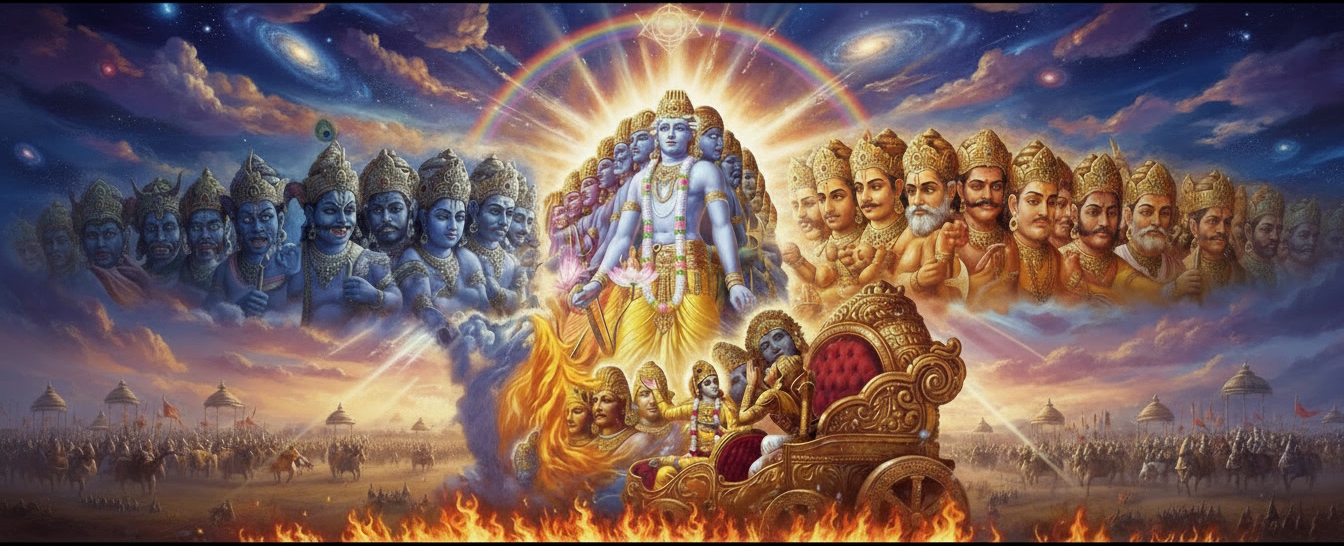
यतः प्रवृत्तिर्भूतानां येन सर्वमिदं ततम्।
स्वकर्मणा तमभ्यर्च्य सिद्धिं विन्दति मानवः।।18.46।।
yataḥ pravṛttirbhūtānāṃ yena sarvamidaṃ tatam|
svakarmaṇā tamabhyarcya siddhiṃ vindati mānavaḥ||18.46||
Translation
He from Whom all the beings have evolved and by Whom all this is pervaded worshipping Him with his own duty, man attains perfection.
हिंदी अनुवाद
जिस परमात्मासे सम्पूर्ण प्राणियोंकी उत्पत्ति होती है और जिससे यह सम्पूर्ण संसार व्याप्त है, उस परमात्माका अपने कर्मके द्वारा पूजन करके मनुष्य सिद्धिको प्राप्त हो जाता है।
Commentaries & Translations
Swami Ramsukhdas
यतः प्रवृत्तिर्भूतानां येन सर्वमिदं ततम् -- जिस परमात्मासे संसार पैदा हुआ है? जिससे सम्पूर्ण संसारका संचालन होता है? जो सबका उत्पादक? आधार और प्रकाशक है और जो सबमें परिपूर्ण है अर्थात् जो परमात्मा अनन्त ब्रह्माण्डोंकी उत्पत्तिसे पहले भी था? जो अनन्त ब्रह्माण्डोंके लीन होनेपर भी रहेगा और अनन्त ब्रह्माण्डोंके रहते हुए भी जो रहता है तथा जो अनन्त ब्रह्माण्डोंमें व्याप्त है? उसी परमात्माका अपनेअपने स्वभावज (वर्णोचित स्वाभाविक) कर्मोंके द्वारा पूजन करना चाहिये।स्वकर्मणा तमभ्यर्च्य -- मनुस्मृतिमें ब्राह्मणोंके लिये छः कर्म बताये गये हैं -- स्वयं पढ़ना और दूसरोंको पढ़ाना? स्वयं यज्ञ करना और दूसरोंसे यज्ञ कराना तथा स्वयं दान लेना और दूसरोंको दान देना (टिप्पणी प0 938.1) (इनमें पढ़ाना? यज्ञ कराना और दान लेना -- ये तीन कर्म जीविकाके हैं और पढ़ना? यज्ञ करना और दान देना -- ये तीन कर्तव्यकर्म हैं)। उपर्युक्त शास्त्रनियत छः कर्म और शमदम आदि नौ स्वभावज कर्म तथा इनके अतिरिक्त खानापीना? उठनाबैठना आदि जितने भी कर्म हैं? उन कर्मोंके द्वारा ब्राह्मण चारों वर्णोंमें व्याप्त परमात्माका पूजन करें। तात्पर्य है कि परमात्माकी आज्ञासे? उनकी प्रसन्नताके लिये ही भगवद्बुद्धिसे निष्कामभावपूर्वक सबकी सेवा करें।ऐसे ही क्षत्रियोंके लिये पाँच कर्म बताये गये हैं -- प्रजाकी रक्षा करना? दान देना? यज्ञ करना? अध्ययन करना और विषयोंमें आसक्त न होना (टिप्पणी प0 938.2)। इन पाँच कर्मों तथा शौर्य? तेज आदि सात स्वभावज कर्मोंके द्वारा और खानापीना आदि सभी कर्मोंके द्वारा क्षत्रिय सर्वत्र व्यापक परमात्माका पूजन करें।वैश्य यज्ञ करना? अध्ययन करना? दान देना और ब्याज लेना तथा कृषि? गौरक्ष्य और वाणिज्य (टिप्पणी प0 939.1) -- इन शास्त्रनियत और स्वभावज कर्मोंके द्वारा और शूद्र शास्त्रविहित तथा स्वभावज कर्म सेवा (टिप्पणी प0 939.2) के द्वारा सर्वत्र व्यापक परमात्माका पूजन करें अर्थात् अपने शास्त्रविहित? स्वभावज और खानापीना? सोनाजागना आदि सभी कर्मोंके द्वारा भगवान्की आज्ञासे? भगवान्की प्रसन्नताके लिये भगवद्बुद्धिसे निष्कामभावपूर्वक सबकी सेवा करें।शास्त्रोंमें मनुष्यके लिये अपने वर्ण और आश्रमके अनुसार जोजो कर्तव्यकर्म बताये गये हैं? वे सब संसाररूप परमात्माकी पूजाके लिये ही हैं। अगर साधक अपने कर्मोंके द्वारा भावसे उस परमात्माका पूजन करता है? तो उसकी मात्र क्रियाएँ परमात्माकी पूजा हो जाती है। जैसे? पितामह भीष्मने (अर्जुनके साथ युद्ध करते हुए) अर्जुनके सारथि बने हुए भगवान्की अपने युद्धरूप कर्मके द्वारा (बाणोंसे) पूजा की। भीष्मके बाणोंसे भगवान्का कवच टूट गया? जिससे भगवान्के शरीरमें घाव हो गये और हाथकी अंगुलियोंमें छोटेछोटे बाण लगनेसे अंगुलियोंसे लगाम पकड़ना कठिन हो गया। ऐसी पूजा करके अन्तसमयमें शरशय्यापर पड़े हुए पितामह भीष्म अपने बाणोंद्वारा पूजित भगवान्का ध्यान करते हैं -- युद्धमें मेरे तीखे बाणोंसे जिनका कवच टूट गया है? जिनकी त्वचा विच्छिन्न हो गयी है? परिश्रमके कारण जिनके मुखपर स्वेदकण सुशोभित हो रहे हैं? घोड़ोंकी टापोंसे उड़ी हुई रज जिनकी सुन्दर अलकावलिमें लगी हुई है? इस प्रकार बाणोंसे अलंकृत भगवान् कृष्णमें मेरे मनबुद्धि लग जायँ (टिप्पणी प0 939.3)।,लौकिक और पारमार्थिक कर्मोंके द्वारा उस परमात्माका पूजन तो करना चाहिये? पर उन कर्मोंमें और उनको करनेके करणोंउपकरणोंमें ममता नहीं रखनी चाहिये। कारण कि जिन वस्तुओं? क्रियाओँ आदिमें ममता हो जाती है? वे सभी चीजें अपवित्र हो जानेसे (टिप्पणी प0 939.4) पूजासामग्री नहीं रहतीं (अपवित्र फल? फूर आदि भगवान्पर नहीं चढ़ते)। इसलिये मेरे पास जो कुछ है? वह सब उस सर्वव्यापक परमात्माका ही है?,मुझे तो केवल निमित्त बनकर उनकी दी हुई शक्तिसे उनका पूजन करना है -- इस भावसे जो कुछ किया जाय? वह सबकासब परमात्माका पूजन हो जाता है। इसके विपरीत उन क्रियाओँ? वस्तुओँ आदिको मनुष्य जितनी अपनी मान लेता है? उतनी ही वे (अपनी मानी हुई) क्रियाएँ? वस्तुएँ (अपवित्र होनेसे) परमात्माके पूजनसे वञ्चित रह जाती हैं।सिद्धिं विन्दति मानवः -- सिद्धिको प्राप्त होनेका तात्पर्य है कि अपने कर्मोंसे परमात्माका पूजन करनेवाला मनुष्य प्रकृतिके सम्बन्धसे रहित होकर स्वतः अपने स्वरूपमें स्थित हो जाता है। स्वरूपमें स्थित होनेपर पहले जो परमात्माके समर्पण किया था? उस संस्कारके कारण उसका प्रभुमें अनन्यप्रेम जाग्रत् हो जाता है। फिर उसके लिये कुछ भी पाना बाकी नहीं रहता।यहाँ मानवः पदका तात्पर्य केवल ब्राह्मण? क्षत्रिय? वैश्य? शूद्र और ब्रह्मचारी? गृहस्थ? वानप्रस्थ? संन्यास -- इन वर्णों और आश्रमों आदिसे ही नहीं है? प्रत्युत हिन्दू? मुसलमान? ईसाई? बौद्ध? पारसी? यहूदी आदि सभी जातियों और सम्प्रदायोंसे है। किसी भी जाति? सम्प्रदाय आदिके कोई भी व्यक्ति क्यों न हों? सबकेसब ही परमात्माके पूजनके अधिकारी हैं क्योंकि सभी परमात्माके अपने हैं। जैसे घरमें स्वभाव आदिके भेदसे अनेक तरहके बालक होते हैं? पर उन सबकी माँ एक ही होती है और उन बालकोंकी तरहतरहकी जितनी भी क्रियाएँ होती हैं? उन सब क्रियाओंसे माँ प्रसन्न होती रहती है क्योंकि उन बालकोंमें माँका अपनापन होता है। ऐसे ही भगवान्के सम्मुख हुए मनुष्योंकी सभी क्रियाओँको भगवान् अपना पूजन मान लेते हैं और प्रसन्न होते हैं।इसी अध्यायके सत्तरवें श्लोकमें भगवान्ने अर्जुनसे कहा है कि कोई भी मनुष्य हम दोनोंके संवादका अध्ययन करेगा? उसके द्वारा मैं ज्ञानयज्ञसे पूजित हो जाऊँगा। इससे यह सिद्ध होता है कि कोई गीताका पाठ करे? अध्ययन करे तो उसको भगवान् अपना पूजन मान लेते हैं। ऐसे ही जो उत्पत्तिविनाशशील वस्तुओँसे विमुख होकर भगवान्के सम्मुख हो जाता है? उसकी क्रियाओँको भगवान् अपना पूजन मान लेते हैं।विशेष बातकर्मयोगमें कर्मोंके द्वारा जडतासे असङ्गता होती है और भक्तियोगमें संसारसे असङ्गतापूर्वक परमात्माके प्रति पूज्यभाव होनेसे परमात्माकी सम्मुखता रहती है।कर्मयोगी तो अपने पास शरीर? इन्द्रियाँ? मन? बुद्धि आदि जो कुछ संसारका जडअंश है? उसको स्वार्थ? अभिमान? कामनाका त्याग करके संसारकी सेवामें लगा देता है। इससे अपनी मानी हुई चीजोंसे अपनापन छूटकर उनसे सर्वथा सम्बन्धविच्छेद हो जाता है? और जो स्वतःस्वाभाविक असङ्गता है? वह प्रकट हो जाती है।भक्त अपने वर्णोचित स्वाभाविक कर्मों और समयसमयपर किये गये पारमार्थिक कर्मों(जप? ध्यान आदि) के द्वारा सम्पूर्ण संसारमें व्याप्त परमात्माका पूजन करता है।इन दोनोंमें भावकी भिन्नता होनेसे इतना ही अन्तर हुआ कि कर्मयोगीकी सम्पूर्ण क्रियाओंका प्रवाह सबको सुख पहुँचानेमें लग जाता है? तो क्रियाओँको करनेका वेग मिटकर स्वयंमें असङ्गता आ जाती है और भक्तकी सम्पूर्ण क्रियाएँ परमात्माकी पूजनसामग्री बन जानेसे जडतासे विमुखता होकर भगवान्की सम्मुखता आ जाती है और प्रेम बढ़ जाता है।भक्त तो पहलेसे ही भगवान्के सम्मुख होकर अपनेआपको भगवान्के अर्पित कर देता है। स्वयंके,अनन्यतापूर्वक भगवान्के समर्पित हो जानेसे खानापीना? कामधंधा आदि लौकिक और जप? ध्यान? सत्सङ्ग? स्वाध्याय आदि पारमार्थिक क्रियाएँ भी भगवान्के अर्पण हो जाती हैं। उसकी लौकिकपारमार्थिक क्रियाओंमें केवल बाहरसे भेद देखनेमें आता है परन्तु वास्तवमें कोई भेद नहीं रहता।कर्मयोगी और ज्ञानयोगी -- ये दोनों अन्तमें एक हो जाते हैं। जैसे? कर्मयोगी कर्मोंके द्वारा जडताका त्याग करता है अर्थात् सेवाके द्वारा उसकी सभी क्रियाएँ संसारके अर्पण हो जाती हैं और स्वयं असङ्ग हो जाता है और ज्ञानयोगी विचारके द्वारा जडताका त्याग करता है अर्थात् विचारके द्वारा उसकी सभी क्रियाएँ प्रकृतिके अर्पण हो जाती हैं और स्वयं असङ्ग हो जाता है। तात्पर्य है कि दोनोंके अर्पण करनेके प्रकारमें अन्तर है? पर असङ्गतामें दोनों एक हो जाते हैं (टिप्पणी प0 940)। इस असङ्गतामें कर्मयोगी और ज्ञानयोगी -- दोनों स्वतन्त्र हो जाते हैं। उनके लिये किञ्चिन्मात्र भी कर्मोंका बन्धन नहीं रहता। केवल कर्तव्यपालनके लिये ही कर्तव्यकर्म करनेसे कर्मयोगीके सम्पूर्ण कर्म लीन हो जाते हैं (गीता 4। 23)? और ज्ञानरूप अग्निसे ज्ञानयोगीके सम्पूर्ण कर्म भस्म हो जाते हैं (गीता 4। 37)। परन्तु इस स्वतन्त्रतामें भी जिसको संतोष नहीं होता अर्थात् स्वतन्त्रतासे जिसको उपरति हो जाती है? उसमें भगवत्कृपासे प्रेम प्रकट हो सकता है। , सम्बन्ध -- स्वभावज (सहज) कर्मोंको निष्कामभावपूर्वक और पूजाबुद्धिसे करते हुए उसमें कोई कमी रह भी जाय? तो भी उसमें साधकको हताश नहीं होना चाहिये -- इसको आगेके दो श्लोकोंमें बताते हैं।
Sri Harikrishnadas Goenka
जिस अन्तर्यामी ईश्वरसे समस्त प्राणियोंकी प्रवृत्ति यानी उत्पत्ति या चेष्टा होती है और जिस ईश्वरसे यह सारा जगत् व्याप्त है? उस ईश्वरको प्रत्येक वर्णके लिये पहले बतलाये हुए अपने कर्मोंद्वारा पूजकर -- उसकी आराधना करके मनुष्य केवल ज्ञाननिष्ठाकी योग्यतारूप सिद्धि प्राप्त कर लेता है।
Sri Anandgiri
He clarifies that very mode — by 'Yataḥ' etc. The meaning of the word 'Yataḥ' is said as 'Yasmāt' (from whom), he clarifies that — 'Yasmāt'.
From which Lord is the origin of beings and from which Inner Ruler is their activity also; and by whom all is pervaded, just as clay alone is [the pervader] of effects like pot etc., because the effect has no form distinct from the cause; worshipping Him by one's own duty, a human attains perfection, this is the connection.
For direct liberation is not obtained by Brahmanas etc. through devotion to duties as stated, because that is attainable by knowledge alone; but for those devoted to that, of pure intellect, not seeing good fruit in action, possessing discrimination and dispassion obtained by God's grace, Sannyasis, possessing fitness for establishment in knowledge, liberation is by attainment of knowledge — intending this He says — 'Kevalam'.
Sri Dhanpati
He shows that very mode — 'Yataḥ' — from whom, from the creator of the world, the Inner Ruler, the 'pravṛttiḥ' — origin or activity — of beings [occurs].
'Yena' — by which God all this entire [world] is pervaded; because the effect has no existence distinct from the existence of the cause.
'Tam' — that Supreme Self, by one's own duty — stated before for each Varna — 'abhyarcya' — worshipping well, propitiating; 'mānavaḥ' — the qualified man; 'siddhim' — [perfection] characterized by fitness for establishment in absolute knowledge — 'vindati' — obtains.
Sri Neelkanth
He states that very mode — 'Yataḥ'.
'Pravṛttiḥ' — activity performable by body, speech, and mind. 'Yataḥ' — from which cause, from the Inner Controller. From the Shruti 'By whom speech is spoken' etc.
'Yena' — by whom all this visible [world] is 'tatam' — pervaded, due to being the material cause.
'Svakarmaṇā' — by one's own duty, 'tam' — Him worshipping — satisfying — 'siddhim' — liberation — 'vindati' — obtains the man. Because the scripture qualifies humans.
Offering of obligatory duties to the Supreme Lord is indeed the door to liberation, this is the meaning.
Sri Ramanuja
'Yataḥ' — from whom is the 'pravṛttiḥ' — origin etc. of beings; 'yena ca' — and by whom all this is 'tatam' (pervaded); by one's own actions, 'tam' — Me, that One situated as the Inner Self in Indra etc. — worshipping, by My grace attains perfection of the nature of attaining Me, the man.
From Me alone everything originates, and by Me all this is pervaded — this has been said indeed before — 'I am the origin and dissolution of the entire world.. There is nothing else higher than Me, O Dhananjaya' [Gita 7.6-7], 'By Me all this world is pervaded by My unmanifest form' [Gita 9.4], 'By Me as supervisor Prakriti gives birth to moving and unmoving' [Gita 9.10], 'I am the source of all, from Me everything proceeds' [Gita 10.8] etc.
Sri Sridhara Swami
He states that very thing — 'Yataḥ'. 'Yataḥ' — from which Inner Controller Supreme Lord, the 'pravṛttiḥ' — activity — of 'bhūtānām' — beings — occurs.
'Yena ca' — and by which Causal Self all this universe is 'tatam' — pervaded; 'tam' — that Lord worshipping by one's own duty, man attains perfection.
Sri Vedantadeshikacharya Venkatanatha
The Supreme Self, the cause of all and Inner Ruler of all, is mentioned by words denoting Indra etc. which are His creatures and bodies; therefore, being worship of Him, the means-ness for perfection of Varna and Ashrama duties is justified, this is stated — by the verse 'Yataḥ pravṛttiḥ'.
To refute that the word 'Pravṛtti' here refers merely to activity, he says — 'Utpattyādikā' (Origin etc.). The word 'Pravṛtti' connected with the word 'Bhuta' denoting sentient and insentient, due to absence of a restrictor here, is inclusive of all kinds of operations, this is the idea.
The form useful for all kinds of causality is stated — 'Yena sarvamidaṃ tatam'. 'Tatam' — by rulership, this is the heart.
'Tam' — is indicated indirectly thus, 'how is it interpreted as Mām (Me)' — in this doubt, to obtain the restatement 'Yataḥ', he reminds of the earlier statement — 'Matta eva' (From Me alone).
Statements regarding causality, supremacy, all-pervasiveness, all-controllership etc. should be applied as appropriate.
Swami Chinmayananda
जब मनुष्य अपने स्वभाव (वर्ण) तथा स्वधर्म (आश्रम? जैसे ब्रह्मचर्य? गृहस्थ आदि) के अनुसार कर्म करता है तब उसकी पूर्वार्जित वासनाओं का क्षय होता जाता है। यह वासना निवृत्ति तथा इसके फलस्वरूप प्राप्त होने वाली चित्त की शुद्धि और शान्ति तभी संभव होती है? जब मनुष्य अपने अहंकार को त्यागकर ईश्वरार्पण की भावना से कर्म करना सीख लेता है।लौकिक कर्तव्यों में यह नियम देखा जाता है कि जिस स्रोत से हमें कार्य करने की शक्ति और फल प्राप्ति होती है? उसके प्रीत्यर्थ कर्म करना हमारा कर्तव्य समझा जाता है। उदाहरणार्थ? सरकारी नौकरी करने वालों का कर्तव्य होता है कि अपने पद का कार्यभार सम्भालते हुए सरकार के लिए कार्य करें? क्योंकि सरकार ही उन्हें कार्य करने का अधिकार और वेतन प्रदान करती है। यदि कोई मनुष्य उस सरकार की शक्ति को विस्मृत कर अपने अधिकार का उपयोग स्वार्थसिद्धि में करता है? तो वह कर्म उसके लिए बन्धन कारक बन जाता है। इसके विपरीत अर्पण की भावना से कार्य करने पर बन्धन तो होते ही नहीं? अपितु उनकी पदोन्नति भी होती है। इसी प्रकार? हमको उस परमेश्वर का स्मरण करते हुए अपने कर्म करने चाहिए? जिससे हमें इन्द्रियाँ? मन आदि उपाधियों तथा उनकी क्षमताओं का प्राप्ति हुई है। हमारा कर्तव्य पालन ही ईश्वर की पूजा हो। इस श्लोक में भगवान् श्रीकृष्ण का यही उपदेश है कि सभी वर्णाश्रमों के मनुष्यों को अपने कर्तव्यों के पालन द्वारा जगत्कारण परमात्मा का पूजन करना चाहिए।ईश्वरार्पण की भावना से कार्य करने में अहंकार सर्वथा लुप्त हो जाता है। अहंकार के अभाव में पूर्वार्जित वासनाओं का क्षय होता है और नवीन बन्धनकारक वासनाएं उत्पन्न नहीं होती। इस प्रकार? कर्म के नियमानुसार लौकिक फल की प्राप्ति तो होती ही है? किन्तु उसके अतिरिक्त चित्त की शुद्धि भी प्राप्त होती है। जिसका अन्तकरण शुद्ध होता है? वही पुरुष परमात्मस्वरूप की अनुभूति को प्राप्त हो सकता है। यही वास्तविक सिद्धि है।इस प्रकार हम देखते हैं कि अपने कर्म के पालन में पूजन की भावना आ जाने पर हमारा कार्यक्षेत्र ही मन्दिर या तीर्थस्थान बन सकता है।स्वकर्म पालन में ही सिद्धि प्राप्त हो सकती है इसलिए
Sri Abhinavgupta
'Na tadasti'. Thus, of agent, action, instruments, of intellect and fortitude, and of happiness, being distinct by difference of Sattva etc., due to combination of mutual relationship of principal and subsidiary and of sublater and sublated, due to connection (difference) of sequence and simultaneity of modifications etc., due to innumerable varieties, there is capacity to produce diverse fruits. By this, the depth of actions which was briefly stated before is determined in detail with reasons. And all these from gods down to immovable do not transcend the connection with the three Gunas. For it is said — 'From Brahma down to an insect, no one is happy in reality. Everyone desiring to live creates various modifications'. Thus, in reality happiness belongs to one whose mind has transcended Gunas, not to another, this is the intention. Thus by this much, the threefold nature of each of the six and of Dhriti etc. has been propounded. Being in the Sattvic heap among them, having obtained divine wealth, one is fit for knowledge here; and you are such, thus Arjuna was encouraged.
Now however this is said — If indeed with this wisdom of knowledge you engage in action, then by engagement in one's own duty and by being purified by special knowledge, there is no connection of action for you. But if you do not accept this? Then surely your engagement must indeed happen, because the caste itself is situated in that state. Since everyone is bound by nature, even if having that nature concealed by some defect for some time, upon the removal of that concealer, he indeed obtains the nature which has become manifest. For such is the nature of Varnas. Thus in the inevitable engagement, there would be sharing of fruit from that.
He states that — from 'Brāhmaṇa' etc. up to 'Avaśo'pi tat' (Even helplessly that). The nature of the description of division of actions of Brahmanas etc. surely does not transgress, thus for you of Kshatriya nature, even if unwilling, Prakriti — named Svabhava — resorts to the state of impeller without deviation. Only for one impelled by that there is connection with merit and sin. Therefore, placing the authority of special knowledge spoken by Me in front, perform actions. That being so, bondage will cease. This is the purport of preparing the equipment for this meaning of the Great Sentence. The meaning of intermediate sentences is clear.
'Samāsena' (briefly) [18.50]. Of knowledge, stated before. He states the consummation (Nishtha) as ascertained by avoiding the web of words. 'Buddhyā viśuddhayā' etc. all this is almost explained, so effort is not made again.
Sri Madhusudan Saraswati
'Yataḥ'. 'Yataḥ' — from the God who is mass of Consciousness and Bliss conditioned by Maya, Omniscient, Omnipotent, who is material and efficient cause, the Inner Ruler of all; 'pravṛttiḥ' — origin, illusory like dream chariot etc., of beings, of space etc. which have the nature of becoming (origination); and 'yena' — by which One of the nature of Existence and Illumination; 'sarvamidam' — all this group of visible things is 'tatam' — pervaded in all three times, included in His own Self alone, because the imagined is not distinct from the substratum.
And so the Shruti — 'From whom indeed these beings are born? By whom being born they live? Into whom they depart and enter? Desire to know That; That is Brahman'. Here 'Yataḥ' is ablative in the sense of Prakriti (source). By 'Yataḥ Yena', oneness is intended. 'He knew Bliss as Brahman? For from Bliss indeed these beings are born' and so on.
Its decisive sentence — 'Know Maya indeed as Prakriti and the Possessor of Maya as the Great Lord' — from this other Shruti the adjunct of Maya is obtained. 'He who is All-knower, All-wise' — from such other Shruti omniscience etc. is obtained. Thus this very Scriptural meaning has been revealed by the Lord.
'From whom is the activity of beings, by whom all this is pervaded' — 'tam' — that Inner Ruler Lord, 'svakarmaṇā' — by action enjoined for each Varna and Ashrama — 'abhyarcya' — having propitiated/pleased, by His grace attains 'siddhim' — purification of mind characterized by fitness for establishment in knowledge of oneness of Self — 'vindati' — obtains the human being? But gods etc. by worship alone, this is the idea.
Sri Purushottamji
He states that very mode — 'Yataḥ'. 'Yataḥ' — from which Lord; 'pravṛttiḥ' — origin — of beings — living entities — occurs? Or in all actions 'yataḥ' — from whom — 'pravṛttiḥ' — excellent functioning, following — occurs? 'Yena' — by which Causal Form; 'idaṃ sarvam' — all this universe is 'tatam' — pervaded?
'Tam' — that Lord; 'svakarmaṇā' — by one's own action; with devotion; 'abhyarcya' — worshipping well; 'mānavaḥ' — man born of Manu — of the form of true Dharma; 'siddhim vindati' — obtains perfection, this is the meaning.
Sri Shankaracharya
'Yataḥ' — from whom 'pravṛttiḥ' — origin, or activity; from which Inner Ruler God of beings — living entities — may be?
'Yena' — by which God 'sarvamidam' — all this Tatam — world is pervaded; 'svakarmaṇā' — by aforementioned [action] for each Varna; 'tam' — that God 'abhyarcya' — worshipping, propitiating; only 'siddhiṃ vindati mānavaḥ' — perfection characterized by fitness for establishment in knowledge — man [attains].
Since it is thus? Therefore —
Sri Vallabhacharya
He states the mode of that by one and a half [verses] — 'Svakarma'. It is clear.
'From whom ancient activity streamed forth' [15.4], by which Imperishable Brahman — the form of the Lord — this is pervaded, worshipping Him alone, not another god; then he attains perfection — liberation — by his own action, thus He confirms.
Swami Sivananda
यतः from whom? प्रवृत्तिः (is) the evolution? भूतानाम् of beings? येन by whom? सर्वम् all? इदम् this? ततम् is pervaded? स्वकर्मणा with his own duty? तम् Him? अभ्यर्च्य worshipping? सिद्धिम् perfection? विन्दति attains? मानवः man.Commentary The performance by a man of his own duty is simply carrying into effect the intention of the Supreme from Whom the whole of the creation emanates. When a man worships Him? the Supreme Being? with the flowers of his action? then He is immensely pleased and being thus gratified by such worship He confers on Him? as a boon? dispassion and discrimination.Pravritti Evolution or activity it proceeds from the Lord? the Antaryamin? the Inner Ruler.Bhutanam Beings living creatures.Svakarmana With his own duty each according to his caste as described above.Man attains perfection by worshipping the Lord by performing his own duty? i.e.? he becomes alified for the dawn of Selfknowledge (for Jnana Yoga).
Swami Gambirananda
Manavah, a human being; vindati, achieves; siddhim, success, merely in the form of the ability for steadfastness in Knowledge; abhyarcya, by adoring, worshipping; svakarmana, with his own duties stated above, as allotted to each caste; tam, Him, God; yatah, from whom, from which God; comes pravrttih, origin,-or, from which internal Ruler comes the activities; ;bhutanam, of creatures, of living beings; and yena, by whom, by which God; is tatam, pervaded; sarvam, all; idam, this world.
Since this is so, therefore,
Swami Adidevananda
He from whom arise all activities as origination of all beings and by whom all this is pervaded, by worshipping Him, i.e., Myself, who abide in Indra and other divinites as the Inner Ruler, man attains perfection, consisting in the attainment of Myself by My grace. It has been told before that everything originates from Me and all this is pervaded by Me, in texts like the following: 'I am the origin and dissolution of the whole universe' (7.6), 'There is nothing higher than Myself, O Arjuna' (7.7), 'This entire universe is pervaded by Me in an unmanifest form' (9.4), 'Under My supervision, the Prakrti gives birth to all mobile and immobile entities' (9.10) and 'I am the origin of all; from Me proceed everything' (10.8).