Bhagavad Gita - Chapter 3 - Shloka (Verse) 12
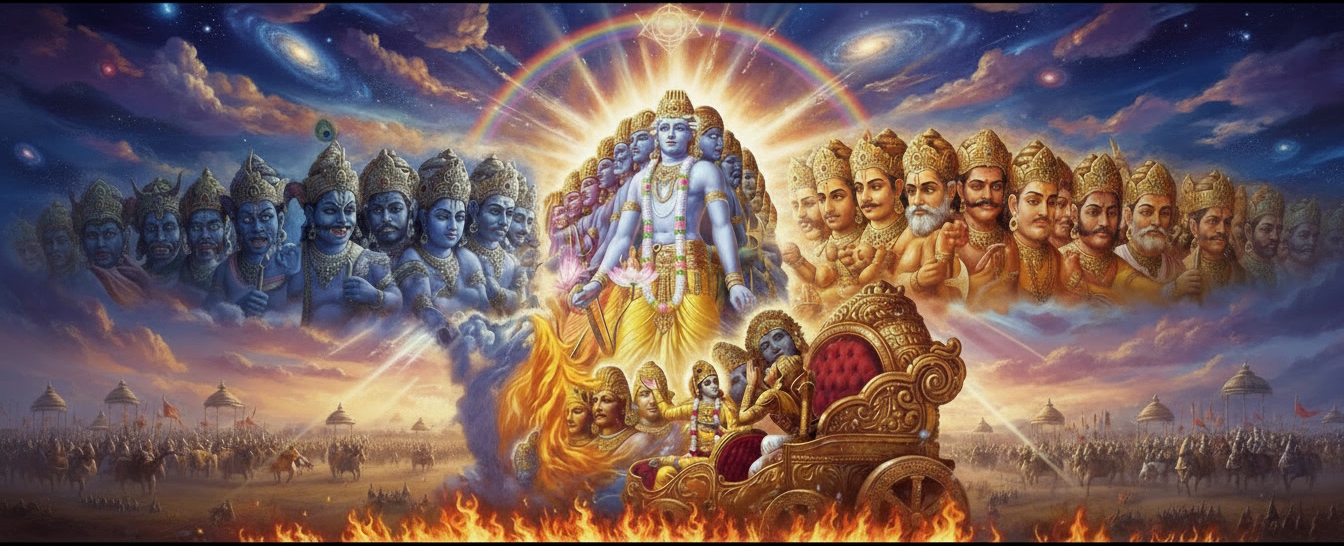
इष्टान्भोगान्हि वो देवा दास्यन्ते यज्ञभाविताः।
तैर्दत्तानप्रदायैभ्यो यो भुङ्क्ते स्तेन एव सः।।3.12।।
iṣṭānbhogānhi vo devā dāsyante yajñabhāvitāḥ|
tairdattānapradāyaibhyo yo bhuṅkte stena eva saḥ||3.12||
Translation
The gods, nourished by the sacrifice, will give you the desired objects. So, he who enjoys the objects given by the gods without offering (in return) to them, is verily a thief.
हिंदी अनुवाद
यज्ञसे भावित (पुष्ट) हुए देवता भी तुमलोगोंको (बिना माँगे ही) कर्तव्य-पालनकी आवश्यक सामग्री देते रहेंगे। इस प्रकार उन देवताओंसे प्राप्त हुई सामग्रीको दूसरोंकी सेवामें लगाये बिना जो मनुष्य स्वयं ही उसका उपभोग करता है, वह चोर ही है।
Commentaries & Translations
Swami Ramsukhdas
व्याख्या--'इष्टान्भोगान्हि वो देवा दास्यन्ते यज्ञभाविताः'--यहाँ भी 'इष्टभोग' शब्दका अर्थ इच्छित पदार्थ नहीं हो सकता। कारण कि पीछेके (ग्यारहवें) श्लोकमें परम कल्याणको प्राप्त होनेकी बात आयी है और उसके हेतुके लिये वह (बारहवाँ) श्लोक है। भोगोंकी इच्छा रहते परम कल्याण कभी हो ही नहीं सकता। अतः यहाँ 'इष्ट' शब्द यज् धातुसे निष्पन्न होनेसे तथा 'भोग' (टिप्पणी प0 132.1) शब्दका अर्थ आवश्यक सामग्री होनेसे उपर्युक्त पदोंका अर्थ होगा वे देवता तुमलोगोंको यज्ञ (कर्तव्यकर्म) करनेकी आवश्यक सामग्री देते रहेंगे।यहाँ 'यज्ञभाविताः देवाः' पदोंका तात्पर्य है कि देवता तो अपना अधिकार समझकर मनुष्योंको आवश्यक सामग्री प्रदान करते ही हैं केवल मनुष्योंको ही अपना कर्तव्य निभाना है।'तैर्दत्तानप्रदायैभ्यो यो भुङ्क्ते' ब्रह्माजीने देवताओंके लिये 'ते देवाः' पदोंका प्रयोग किया है क्योंकि उनके सामने मनुष्य थे देवता नहीं। परन्तु यहाँ 'एभ्यः'पद (जो इदम् शब्दसे बनता है) का प्रयोग हुआ है जो समीपताका द्योतक है। भगवान्के लिये सभी समीप ही हैं (गीता 7। 26)। इससे सिद्ध होता है कि अब यहाँसे भगवान्के वचन आरम्भ होते हैं।
यहाँ 'भुङ्क्ते' (टिप्पणी प0 132.2) पदका तात्पर्य केवल भोजन करनेसे ही नहीं है प्रत्युत शरीरनिर्वाहकी समस्त आवश्यक सामग्री (भोजन, वस्त्र, धन, मकान आदि) को अपने सुख के लिये काममें लानेसे है।
Sri Harikrishnadas Goenka
दूसरी बात यह भी है कि यज्ञद्वारा बढ़ाये हुए संतुष्ट किये हुए देवता लोग तुमलोगोंको स्त्री पशु पुत्र आदि इच्छित भोग देंगे। उन देवोंद्वारा दिये हुए भोगोंको उन्हें न देकर अर्थात् उनका ऋण न चुकाकर जो खाता है केवल अपने शरीर और इन्द्रियोंको ही तृप्त करता है वह देवताओंके स्वत्वको हरण करनेवाला चोर ही है।
Sri Anandgiri
With the word 'kiñca' (moreover), he states that for this reason also, action must be performed by the qualified person.
Addressing how the gods, having been cherished by us, will cherish us, he says "iṣṭān" (desired objects).
Raising the doubt, "Even though heaven and liberation occur through the performance of sacrifice in the manner previously described, how is the attainment of wife, cattle, sons, etc., possible?", he explains the first half of the verse as "iṣṭān" meaning intended objects.
He explains the latter half [starting with] "taiḥ" (by them) to mean that enjoyment [or the debt] must be discharged through cattle etc. by means of the performance of sacrifice; otherwise, there arises the contingency of sin (adverse consequence). The meaning is: without having discharged the debt.
The purport is this: One who eats solely to nourish his own aggregate of body and senses, without having generated satisfaction for the Gods, Sages, and Ancestors through sacrifice, Vedic study (brahmacharya), and progeny respectively, becomes a thief.
Sri Dhanpati
Moreover, those gods, flourished (increased) by sacrifices, will distribute to 'vaḥ' (to you) 'iṣṭān bhogān' (desired enjoyments) such as women, sons, cattle, gold, etc.
However, he who satisfies only his own body and the like without offering these enjoyments given by those gods back to these gods—that is, without discharging the debt—is indeed a thief, a usurper of the property of the gods and others.
Sri Neelkanth
Moreover, "iṣṭān" means sons, cattle, etc., "vaḥ" means to you. Without offering—meaning not giving—to these gods the very things given by them, such as grains (rice), cattle, clarified butter, etc.; that is to say, without performing the sacrifice (yāga) which consists of the renunciation of material substances intended for the deities, in the form of obligatory (nitya) and occasional (naimittika) rites such as Vaiśvadeva, Agnihotra, Jāteṣṭi, etc.—this is the meaning.
He who eats without giving is indeed a thief (stena).
Sri Ramanuja
'Yajñabhāvitāḥ' means worshipped by sacrifice; the gods, of whom I am the Self (Madātmakā), will give you 'iṣṭān bhogān' (desired enjoyments). To those striving for liberation characterized as the supreme human goal (Parama-puruṣārtha), the gods, nourished by preceding sacrifices, will grant those desired enjoyments [necessary for the journey]. The meaning is that they will give you all enjoyments required for subsequent [stages of] worship.
He who enjoys the objects given by them—which were given for the purpose of their own worship—without offering them [back] to them, is indeed a thief. For theft consists in entertaining the idea of ownership regarding an object belonging to another and intended solely for that other's purpose, and nourishing oneself with it. Therefore, the implication is that for him, there is not only unfitness for the supreme human goal, but also the certainty of going to hell.
He explains this very point.
Sri Sridhara Swami
Clarifying this very point, he states the defect in the non-performance of action with the verse beginning with 'iṣṭān'.
The gods, having been nourished by sacrifices, will indeed give 'vaḥ' (to you) enjoyments through rain and so forth.
Therefore, he who eats the food and other things given by the gods without offering them [back] to these gods through the Five Great Sacrifices (Pañcayajña) and the like, is to be known as a thief indeed.
Sri Vedantadeshikacharya Venkatanatha
The method of mutual nourishing mentioned in 'May those gods nourish you' (3.11) is contrasted here; the sin (pratyavāya) arising from the absence of 'nourish the gods' (i.e., not nourishing them) is stated in the verse beginning with 'iṣṭān'.
The meaning of 'iṣṭān' (desired) is: those things required for subsequent [stages of] worship. The idea is that seekers of liberation (Mumukṣus) do not desire enjoyments merely for filling their bellies. By referring to 'all' (implied), he intends not to restrict the plural number [of enjoyments].
Regarding 'dāsyante' (they will give), following the nature of the Atmanepada (verb ending indicating fruit of action accrues to the agent) which expresses the intent of the agent, the phrase 'for the purpose of their own worship' was stated [in the Bhashya] to establish the status of thief for those who cook only for themselves.
Swami Chinmayananda
देवताओं को सन्तुष्ट करने पर वे हमें सन्तुष्ट करते हैं कर्मकाण्ड के इस अबाध्य सिद्धान्त को श्रीकृष्ण दोहराते हैं। देव और यज्ञ इन दो शब्दों के पारम्परिक अर्थ के स्थान पर पूर्वश्लोकों के विवरण में बताये हुये अर्थ को हम यदि स्वीकार करें तभी इस श्लोक का अर्थ सत्य प्रमाणित होता है उत्पादनक्षमता (देव) का त्याग और अर्पण की भावना से आचरित कर्म (यज्ञ) के द्वारा पोषण करने पर वह हमें इष्ट फल प्रदान करेगा। यह जीवन का नियम है।जब हम सबको यज्ञ से फल प्राप्त होता है तब उसे आपस में बांटकर उपभोग करने का हमें पूर्ण अधिकार है। किसी भी प्राणी को सामूहिक प्रयत्न में सहयोग दिये बिना दूसरे के कर्मों का लाभ नहीं उठाना चाहिये। पूँजीवादी जीवन व्यवस्था में एक यह दुष्प्रवृत्ति दिखाई देती है कि लाखों कर्मचारियों के सामूहिक कर्मों का अधिक से अधिक लाभ अकेला व्यक्ति उठाना चाहता है। इस प्रकार की दुष्प्रवृत्ति अन्तत सभी कर्मक्षेत्रों में अव्यवस्था को जन्म देती है। परिणाम यह होता है कि जीवन के सामंजस्य में अव्यवस्था फैलाने से राष्ट्रीय और अन्तर्राष्ट्रीय शान्ति के लिये संकट उत्पन्न हो जाता है। इस श्लोक के दूसरी पंक्ति में कही हुई बात को आधुनिक अर्थशास्त्र की भाषा में इस प्रकार कहते हैं समाज का वह व्यक्ति जो उत्पादन किये बिना भोग करता है राष्ट्र के लिये भारस्वरूप है।यज्ञ (निस्वार्थ सेवा) किये बिना जो देवताओं से भोग प्राप्त करता है भगवान् श्रीकृष्ण उसे सामाजिक चोर की संज्ञा देते हैं। गीताकालीन सम्मानित नैतिक आदर्शों को देखते हुये चोर शब्द का प्रयोग कठोर किन्तु शक्तिशाली है जो भोगी एवं सामाजिक अपराधी व्यक्ति के भ्रष्ट एवं अनादर पूर्ण स्वभाव की ओर संकेत करता है।परन्तु
Sri Abhinavgupta
Not only in [attaining] liberation, but also in acquiring perfection (siddhi), this path is to be practiced—thus He states with "iṣṭān" (desired). For indeed, the senses, satisfied by sacrifice, bind [their] state (steadiness) wherever [focused], on the object of meditation and so on.
Therefore, when that activity [of the senses] exists, the objects—through memory, resolve, meditation, etc. of those objects—are given by the senses themselves. If the objects are not given [back] for the enjoyment of those very [senses], then it would be thievery, theft, due to hypocritical conduct. For it has been stated previously by the Lord: "He is called a hypocrite (mūḍhācāra)" (II 6).
Therefore, the meaning of the sentence is this: He who desires to obtain perfection or liberation by easy means, by him enjoyments should be partaken of just as they arrive (naturally), with the sole fruit of satisfying the curiosity of the senses.
Sri Madhusudan Saraswati
He states that not only is the fruit belonging to the next world [attained] from sacrifice, but also that belonging to this world:
The gods will "dāsyante"—distribute—to "vaḥ" (to you) "iṣṭān"—desired enjoyments, such as cattle, food, gold, etc. "Hi" means because they have been "bhāvitāḥ"—gratified—by sacrifices.
Since the enjoyments given by them are like a debt upon you, therefore, he who eats—satisfies only his body and senses—without offering the enjoyments given by those gods [back] to these gods—without accomplishing oblations intended for the gods in sacrifices—is indeed a "stena" (thief), a robber, a usurper of the property of the gods, due to the non-repayment of the debt to the gods.
Sri Purushottamji
Objection: Since "Shreyas" (good/welfare) is of many forms, the attainment of which characteristic "Shreyas" will occur? To this, He says "iṣṭān" (desired). The gods, nourished by sacrifice, will give "vaḥ" (to you) "iṣṭān bhogān" (desired enjoyments), meaning food etc., by means of creating rain etc. Alternatively: "iṣṭān" for "vaḥ" (to you) means whatever is desired by you. The meaning is: they will create rain etc. for the purpose of the acquisition of food etc., which provide the strength etc. useful for the service of the Lord (Bhagavat-sevā).
Objection: If food is to be given by them alone, then what is the use of him performing sacrifices for them? To this, He says "taiḥ" (by them). He who "bhuṅkte"—enjoys—without "apradāya"—without giving—the food etc. given by them to "ebhyaḥ"—to these givers—is indeed a "stena", meaning a thief alone.
Sri Shankaracharya
"Iṣṭān" means desired or intended enjoyments. "Vaḥ" means to you. The gods will "dāsyante"—meaning distribute—women, cattle, sons, etc. "Yajñabhāvitāḥ" means increased or satisfied by sacrifices—this is the meaning.
He who eats the enjoyments given "taiḥ"—by those gods—"apradāya"—without offering (giving) them [back]—meaning without having discharged the debt—to "ebhyaḥ"—to these gods; who satisfies only his own body and senses; he is "stena" indeed, meaning a thief, a robber, a usurper of the property of the gods and others.
As for those, however...
Sri Vallabhacharya
"Iṣṭān" (Desired) etc. He who eats without "apradāya"—without offering—to these [gods] the food and other things given "taiḥ"—by them—through rain and so on, is indeed a thief.
According to the Sruti (scriptural text): "A Brahmana, upon being born, is born with three debts: to the Rishis through celibacy (student-ship), to the gods through sacrifice, and to the ancestors through progeny; he [who discharges these] becomes free from debt." Since this [person] is indebted to the three,
and since the debt (loan/benefit) was previously given by them [the gods], if he does not return it to them, he is indeed a thief. Thus, the defect in not offering to them is stated.
Swami Sivananda
इष्टान् desired? भोगान् objects? हि so? वः to you? देवाः the gods? दास्यन्ते will give? यज्ञभाविताः nourished by sacrifice? तैः by them? दत्तान् give? अप्रदाय without offering? एभ्यः to them? यः who? भुङ्क्ते enjoys? स्तेनः thief? एव verily? सः he.Commentary When the gods are pleased with you sacrifices? they will bestow on you all the desired objects such as children? cattle? property? etc. He who enjoys what has been given to him by the gods? i.e.? he who gratifies the cravings of his own body and the senses without offering anything to the gods in return is a veritable thief. He is really a dacoit of the property of the gods.
Swami Gambirananda
'Yajna-bhavitah, being nourished, i.e. being satisfied, by sacrifices; devah, the gods; dasyante hi, will indeed give, will distribute; among vah, you; the istan, coveted; bhogan, enjoyments, such as wife, childeren and cattle. Sah, he; is eva, certainly; a stenah, thief, a stealer of the wealth of gods and others; yah, who; bhunkte, enjoys, gratifies only his own body and organs; with dattan, what enjoyable things have been given; taih, by them, by the gods; apradaya, without offering (these); hyah, to them, i.e. without repaying the d [The three kinds of d -to the gods, to the rsis (sage), and to the manes-are repaid by satisfying them through sacrifices, celibacy (including study of the Vedas, etc.), and procreation, respectively. Unless one repays these d s, he incurs sin.] to them.'
Swami Adidevananda
'Pleased by the sacrifice,' i.e., propitiated by the sacrifice, the gods, who have Me as their Self, will bestow on you the enjoyments you desire. Whatever objects are desired by persons keen on attaining release, the supreme end of human endeavour, all those will be granted by gods previously worshipped through many sacrifices. That is, whatever is solicited with more and more propitiation, all those enjoyments they will bestow on you. Whoever enjoys the objects of enjoyment granted by them for the purpose of worshipping them, without giving them their due share in return - he is verily a thief. What is called 'theft' is indeed taking what belongs to another as one's own and using it for oneself, when it is really designed for the purpose of another. The purport is that such a person becomes unfit not only for the supreme end of human endeavour, but also will go down towards purgatory (Naraka).
Sri Krsna expands the same: