Bhagavad Gita - Chapter 3 - Shloka (Verse) 35
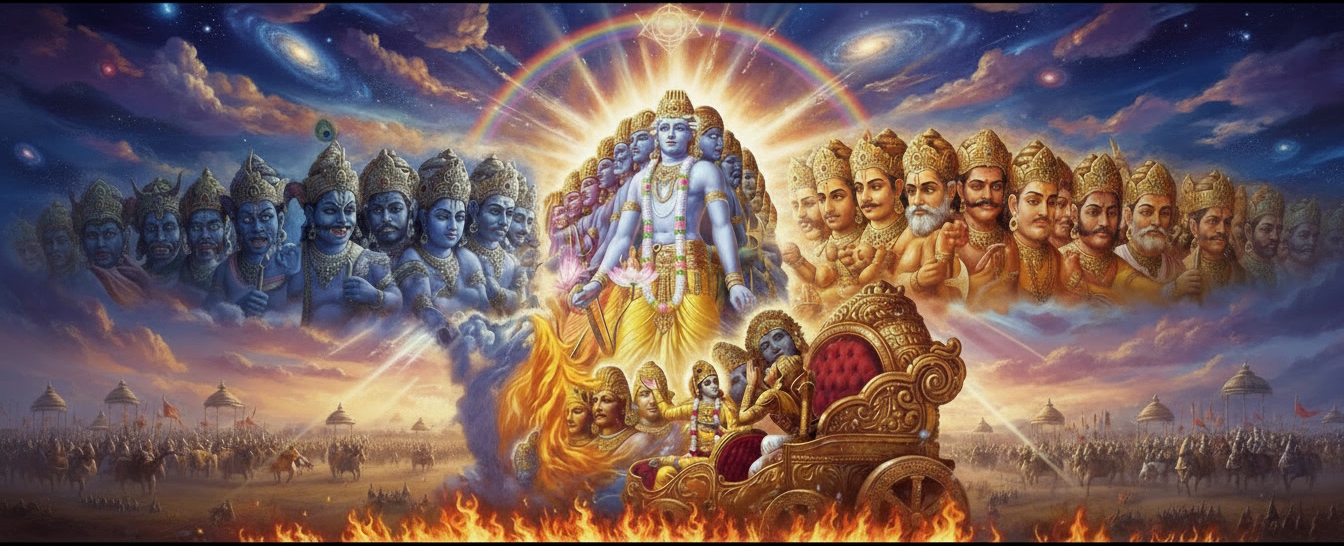
श्रेयान्स्वधर्मो विगुणः परधर्मात्स्वनुष्ठितात्।
स्वधर्मे निधनं श्रेयः परधर्मो भयावहः।।3.35।।
śreyānsvadharmo viguṇaḥ paradharmātsvanuṣṭhitāt|
svadharme nidhanaṃ śreyaḥ paradharmo bhayāvahaḥ||3.35||
Translation
Better is one's own duty, though devoid of merit than the duty of another well discharged. Better is death in one's own duty; the duty of another is fraught with fear (is productive of danger).
हिंदी अनुवाद
अच्छी तरह आचरणमें लाये हुए दूसरेके धर्मसे गुणोंकी कमीवाला अपना धर्म श्रेष्ठ है। अपने धर्ममें तो मरना भी कल्याणकारक है और दूसरेका धर्म भयको देनेवाला है।
Commentaries & Translations
Swami Ramsukhdas
व्याख्या--'श्रेयान् (टिप्पणी प0 182) स्वधर्मो विगुणः परधर्मात् स्वनुष्ठितात्'--अन्य वर्ण, आश्रम आदिका धर्म (कर्तव्य) बाहरसे देखनेमें गुणसम्पन्न हो, उसके पालनमें भी सुगमता हो, पालन करनेमें मन भी लगता हो, धन-वैभव, सुख-सुविधा, मान-बड़ाई आदि भी मिलती हो और जीवनभर सुख-आरामसे भी रह सकते हों, तो भी उस परधर्मका पालन अपने लिये विहित न होनेसे परिणाममें भय-(दुःख-) को देनेवाला है।इसके विपरीत अपने वर्ण, आश्रम आदिका धर्म बाहरसे देखनेमें गुणोंकी कमीवाला हो उसके पालनमें भी कठिनाई हो, पालन करनेमें मन भी न लगता हो, धन-वैभव, सुख-सुविधा, मान-बड़ाई आदि भी न मिलती हो और उसका पालन करनेमें जीवन-भर कष्ट भी सहना पड़ता हो, तो भी उस स्वधर्मका निष्कामभावसे पालन करना परिणाममें कल्याण करनेवाला है। इसलिये मनुष्यको किसी भी स्थितिमें अपने धर्मका त्याग नहीं करना चाहिये, प्रत्युत निष्काम, निर्मम और अनासक्त होकर स्वधर्मका ही पालन करना चाहिये।मनुष्यके लिये स्वधर्मका पालन स्वाभाविक है, सहज है। मनुष्यका 'जन्म' कर्मोंके अनुसार होता है और जन्मके अनुसार भगवान्ने 'कर्म' नियत किये हैं, (गीता 18। 41)। अतः अपने-अपने नियत कर्मोंका पालन करनेसे मनुष्य कर्म-बन्धनसे मुक्त हो जाता है अर्थात् उसका कल्याण हो जाता है (गीता 18। 45)। अतः दोषयुक्त दीखनेपर भी नियत कर्म अर्थात् स्वधर्मका त्याग नहीं करना चाहिये (गीता 18। 48)।
अर्जुन युद्ध करनेकी अपेक्षा भिक्षाका अन्न खाकर जीवननिर्वाह करनेको श्रेष्ठ समझते हैं (गीता 2। 5)। परंतु यहाँ भगवान् अर्जुनको मानो यह समझाते हैं कि भिक्षाके अन्नसे जीवननिर्वाह करना भिक्षुकके लिये स्वधर्म होते हुए भी तेरे लिये परधर्म है; क्योंकि तू गृहस्थ क्षत्रिय है, भिक्षुक नहीं। पहले अध्यायमें भी जब अर्जुनने कहा कि युद्ध करनेसे पाप ही लगेगा--'पापमेवाश्रयेत्' (1। 36) तब भी भगवान्ने कहा कि धर्ममय युद्ध न करनेसे तू स्वधर्म और कीर्तिको खोकर पापको प्राप्त होगा (2। 33)। फिर भगवान्ने बताया कि जय-पराजय, लाभ-हानि और सुख-दुःखको समान समझकर युद्ध करनेसे अर्थात् राग-द्वेषसे रहित होकर अपने कर्तव्य-(स्वधर्म-) का पालन करनेसे पाप नहीं लगता। (2। 38) आगे अठारहवें अध्यायमें भी भगवान्ने यही बात कही है कि स्वभावनियत स्वधर्मरूप कर्तव्यको करता हुआ मनुष्य पापको प्राप्त नहीं होता। (18। 47) तात्पर्य यह है कि स्वधर्मके पालनमें राग-द्वेष रहनेसे ही पाप लगता है, अन्यथा नहीं। राग-द्वेषसे रहित होकर स्वधर्मका भलीभाँति आचरण करनेसे 'समता'-(योग-) का अनुभव होता है और समताका अनुभव होनेपर दुःखोंका नाश हो जाता है (गीता 6। 23)। इसलिये भगवान् बार-बार अर्जुनको राग-द्वेषसे रहित होकर युद्धरूप स्वधर्मका पालन करनेपर जोर देते हैं।भगवान् अर्जुनको मानो यह समझाते हैं कि क्षत्रिय-कुलमें जन्म होनेके कारण क्षात्रधर्मके नाते युद्ध करना तुम्हारा स्वधर्म (कर्तव्य) है; अतः युद्धमें जय-पराजय, लाभ-हानि और सुख-दुःखको समान देखना है; और युद्धरूप क्रियाका सम्बन्ध अपने साथ नहीं है-- ऐसा समझकर केवल कर्मोंकी आसक्ति मिटानेके लिये कर्म करना है। शरीर, इन्द्रियाँ, मन, बुद्धि, पदार्थ आदि अपने कर्तव्यका पालन करनेके लिये ही हैं।वर्ण, आश्रम आदिके अनुसार अपने-अपने कर्तव्यका निःस्वार्थभावसे पालन करना ही 'स्वधर्म' है। आस्तिकजन जिसे 'धर्म' कहते हैं, उसीका नाम कर्तव्य' है। स्वधर्मका पालन करना अथवा अपने कर्तव्यका पालन करना एक ही बात है।
कर्तव्य उसे कहते हैं, जिसको सुगमतापूर्वक कर सकते हैं, जो अवश्य करनेयोग्य है और जिसको करनेपर प्राप्तव्यकी प्राप्ति अवश्य होती है। धर्मका पालन करना सुगम होता है; क्योंकि वह कर्तव्य होता है। यह नियम है कि केवल अपने धर्मका ठीक-ठीक पालन करनेसे मनुष्यको वैराग्य हो जाता है--'धर्म तें बिरति' ৷৷. (मानस 3। 16। 1)। केवल कर्तव्यमात्र समझकर धर्मका पालन करनेसे कर्मोंका प्रवाह प्रकृतिमें चला जाता है और इस तरह अपने साथ कर्मोंका सम्बन्ध नहीं रहता।वर्ण, आश्रम आदिके अनुसार सभी मनुष्योंका अपना-अपना कर्तव्य (स्वधर्म) कल्याणप्रद है। परन्तु दूसरे वर्ण, आश्रम आदिका कर्तव्य देखनेसे अपना कर्तव्य अपेक्षाकृत कम गुणोंवाला दीखता है; जैसे--ब्राह्मणके कर्तव्य--(शम, दम, तप, क्षमा आदि-) की अपेक्षा क्षत्रियके कर्तव्य-(युद्ध करना आदि-) में अहिंसादि गुणोंकी कमी दीखती है। इसलिये यहाँ 'विगुणः' पद देनेका भाव यह है कि दूसरोंके कर्तव्यसे अपने कर्तव्यमें गुणोंकीकमी दीखनेपर भी अपना कर्तव्य ही कल्याण करनेवाला है। अतः किसी भी अवस्थामें अपने कर्तव्यका त्यगा नहीं करना चाहिये।वर्ण, आश्रम आदिके अनुसार बाहरसे तो कर्म अलग-अलग (घोर या सौम्य) प्रतीत होते हैं, पर परमात्मप्राप्तिरूप उद्देश्य एक ही होता है। परमात्मप्राप्तिका उद्देश्य न रहनेसे तथा अन्तःकरणमें प्राकृत पदार्थोंका महत्त्व रहनेसे ही कर्म घोर या सौम्य प्रतीत होते हैं।
Sri Harikrishnadas Goenka
रागद्वेषयुक्त मनुष्य तो शास्त्रके अर्थको भी उलटा मान लेता है और परधर्मको भी धर्म होनेके नाते अनुष्ठान करनेयोग्य मान बैठता है। परंतु उसका ऐसा मानना भूल है अच्छी प्रकार अनुष्ठान किये गये अर्थात् अंगप्रत्यंगोंसहित सम्पादन किये गये भी परधर्मकी अपेक्षा गुणरहित भी अनुष्ठान किया हुआ अपना धर्म कल्याणकर है अर्थात् अधिक प्रशंसनीय है। परधर्ममें स्थित पुरुषके जीवनकी अपेक्षा स्वधर्ममें स्थित पुरुषका मरण भी श्रेष्ठ है क्योंकि दूसरेका धर्म भयदायक है नरक आदि रूप भयका देनेवाला है।
Sri Anandgiri
To reveal that attachment and aversion are adversaries of the path of the highest good, he introduces the immediately following verse through the presentation of an opposing view, with "Tatra" (Therein) etc.
The meaning of the locative case (in 'Tatra') is the sphere of worldly conduct.
He conveys the misconception of the scriptural meaning with "Paradharmo'pi" (Even another's duty).
The meaning of "Api" (also) is "like one's own duty."
Faulting this inference, he raises the verse as a reply with "Sadasat" etc.
Anticipating the doubt that compared to the Kshatriya duty of war—which is difficult to perform—the duty of a wandering mendicant (Parivrajaka), characterized by eating alms etc., obtains the status of duty because it is easily performable, He explains with "Shreyan" (Better...) etc.
Regarding the stated meaning, asking a question, he states the reason with "Kasmat" (Why...) etc.
For one who abandons his own duty and performs another's duty, the fault created by the transgression of his own duty is difficult to avoid; therefore, its abandonment is not proper—this is the meaning.
Sri Dhanpati
[Objection:] "If only scriptural action is to be performed, then why should 'another's duty' (Paradharma) not be performed if it is easier, given that it is also duty?" If this is asked, He answers with "Shreyan" (Better...).
Better than another's duty well-performed is one's own duty, even if performed devoid of merit (imperfectly); it is more praiseworthy. Death while situated in one's own duty is better; it brings fame in this world and heaven in the next. Another's duty, however, being the opposite, brings fear.
Alternatively: [Objection] "Even if attachment and aversion situated in respective sense-objects act as obstacles in 'Atma-dharma' (duty of the Self) which leads to the Self, they are not so in 'Indriya-dharma' (duty of the senses) which is active and generates material pleasure; therefore, only the duty of the senses should be performed. What is the use of practicing Atma-dharma which is beset with obstacles?" If this is asked, He says "Shreyan".
Better than the duty of the "Others" (Para)—i.e., the senses—which is active and can be well-performed due to being easy—is "Swadharma," the duty of the Self, which is of the nature of spiritual realization. Even if "Viguna"—meaning devoid of material qualities (or modes of Prakriti)—it is more praiseworthy because it is the cause of liberation. Death therein is better, because it leads to non-return (no rebirth). The duty of the other (senses) brings fear, because being of the nature of ignorance, it is the cause of falling into Samsara.
Sri Madhavacharya
“Even so, the act of war is terrible”—anticipating this [objection], He says "Shreyan" (Better...).
Sri Neelkanth
Since this is so, therefore "Svadharma" (one's own duty) is "Shreyan"—more praiseworthy; because it is ordained by the Lord in accordance with one's own Varna and Ashrama. Although "Viguna"—meaning mixed with violence etc., or even slightly defective in its parts—it is better than "Paradharma"—than the duty of another which is free from faults like violence—even if that (other's duty) is "Svanushthita"—meaning performed perfectly with the completion of all its parts.
In one's own duty—such as war etc.—"Nidhanam," meaning even death, is better; because it is prescribed.
The duty of another—such as living on alms etc.—is "Bhayavaha" (fraught with fear/danger); because for you, a Kshatriya, it is prohibited.
Therefore, being independent (having the right), you should perform only your own duty; this is the sentiment.
Sri Ramanuja
Therefore, Karma Yoga, which is "Svadharma" (one's own duty) because it is easy to perform, even if "Viguna" (lacking merit/defective)—being free from negligence—is "Shreyan" (better) than Jnana Yoga, which is "Paradharma" (another's duty) for one associated with Prakriti because it is difficult to perform, even if the latter is "Saguna" (meritorious) and performed for some time, because it is fraught with negligence.
For one situated in Karma Yoga, which is "Svadharma" because it is fit to be adopted by oneself, even "Nidhanam" (death) due to not attaining the fruit in a single birth is better; because, being unaffected by obstacles, the commencement of undisturbed Karma Yoga is possible even in the next birth.
However, Jnana Yoga, which is "Paradharma" for one associated with Prakriti because it is impossible to be adopted by him, is "Bhayavaha" (dangerous) as it is fraught with negligence.
Sri Sridhara Swami
So thus, it has been stated that abandoning the natural instinct which is similar to that of animals etc., one should engage in one's own duty. [Objection:] Then, since one's own duty—such as war etc.—being of the nature of suffering, is impossible to perform perfectly, and another's duty—such as non-violence etc.—is easy to perform, and since there is no difference in the fact of their being 'Dharma'; to one wishing to engage in that [other's duty], He says "Shreyan" (Better...).
Even if slightly lacking in parts (imperfect), one's own duty is "Shreyan"—more praiseworthy—compared to "another's duty" even if "Svanushthita"—performed with the completion of all parts.
The reason for this is: "Nidhanam"—death—while engaged in one's own duty, such as war, is better; because it leads to the attainment of heaven etc. But another's duty is "Bhayavaha" (dangerous) for oneself; because, being prohibited, it leads to the attainment of hell.
Sri Vedantadeshikacharya Venkatanatha
Regarding the verse "Shreyan" etc.: The words 'Svadharma' (own duty) and 'Paradharma' (other's duty) are not used here in reference to Varna (caste) and Ashrama (stage of life); because the performance of duties belonging to another Varna or Ashrama is absolutely devoid of essence (i.e., strictly prohibited), so prohibiting it here is logically inappropriate (as it implies a possibility), and there is no context for it here. Furthermore, if it is said that "One's own duty, though defective, is Shreyan (better) than another's duty well-performed," then since the word Shreyas means "more praiseworthy," it would imply that another's duty performed well is also "praiseworthy" (merely less so). And that is not tenable, because performing another's duty—whether well or poorly—is despicable as it is 'Adharma' (unrighteousness).
If it is argued that this is a praise of war (Arjuna's Kshatriya duty) and a condemnation of abandoning it for the Brahmin's duty (which Arjuna desires), then: let there be a context of prohibition to that extent, but the objection that it implies the praiseworthiness of the prohibited act is not resolved. Nor is Arjuna's intention here "I shall abandon my duty and perform another's duty"; for right now his understanding is that this (war) is indeed his duty, but he is confused about it being his duty, so "other's duty" is being made known here—if this is argued, that too is incorrect. Because the statement "than another's duty well-performed" (svanushthitat paradharmat) would be inappropriate as a restatement. Such a designation is only appropriate if the act is accepted as being a "dharma of another"; and there, making known that it is "another's duty" is purposeless; only making known that it is "Adharma" would be relevant.
Therefore, here the words 'Svadharma' and 'Paradharma' refer to the topics of Karma Yoga and Jnana Yoga under discussion, based on their being "praiseworthy" (for the qualified) and "to be disregarded" (difficult/dangerous for the unqualified). In this case, even if the implication arises that Jnana Yoga is "praiseworthy," it is not a fault (since Jnana Yoga is indeed a valid path, just not for Arjuna). And this interpretation connects well with the "following of Vasana" (impressions) mentioned in the previous two verses. Furthermore, the question in the next verse, "Atha kena" (By what then...), is justified only in this way. There, the question is "What is the cause of committing sin even when unwilling?" This question fits only with the statement of the difficulty of Jnana Yoga. If it is argued that the question means "By what am I being made to abandon Kshatriya duty even unwillingly?", that is not correct, because there is no "unwillingness" in that regard (Arjuna wants to leave the war); and the subsequent answer "This is Lust, this is Anger" (3.37) would be inappropriate. For Arjuna is not abandoning war due to lust and anger, but due to compassion etc., as stated in the introduction. Therefore, 'Svadharma' and 'Paradharma' refer to "dharma possible for oneself" and "dharma possible for another." Keeping all this in mind, he (Ramanuja) says "Atah sushakataya" (Therefore, being easy to do...). The meaning is: this conclusion is drawn due to the "following of Vasana" mentioned in the two verses.
"Viguno'pi" means even if possessing a deficiency in its limbs/parts. How can something defective be better? To this, it is said "Apramada-garbhah" (Free from negligence). The idea is that mere deficiency (in quality) is better than a complete break in the nature of the act. "Svanushthitat" (Well-performed) is intended to show the counter-correlate to "deficiency," so the prefix "Su" implies "excellence/merit"—he says "Sagunadapi" (Even if meritorious...). Since the word "Anushthita" ends with a suffix denoting the past tense, and pastness implies "having passed away," it indicates "performance done previously and then broken later"—with this intention he says "Kinchit kalam anushthitat sapramadat" (Performed for some time and fraught with negligence...). Thus, if the "break" (viccheda) is not intended, then the statement that "Defective Karma Yoga is better than well-performed Jnana Yoga" would be inconsistent; because a meritorious and uninterrupted path is invariably connected with the fruit (so Jnana Yoga would be better).
Explaining the meaning of 'Svadharma' through the explanation of the reason "Sushakataya" (being easy), and answering the doubt "How is a defective action better given the invariable connection with fruit?", he explains the third quarter with "Svenaiva" (By oneself alone...). Meaning: by the senses which are active due to association with Prakriti. Or, the idea is "by one's own will alone." "Ekasmin janmani aprapta..." (Not attaining fruit in one birth...). The intention is: Although Karma Yoga is indeed a 'Kamya-karma' (desire-prompted action) as it is prescribed for the fruit of Self-realization etc., yet this Kamya-karma has this distinction: even if performed defectively, it accomplishes the fruit through a "meritorious performance" (Saguna-anushthana) in a future birth. Its deficiency is only the cause for the delay of the fruit; it is not the cause for the absence of fruit like other Kamya-karmas—explaining the intention of "In one birth," he addresses "How is defective action the means to fruit even in another birth?" with "Anantarayahatataya" (Due to not being struck by obstacles...). Meaning: Because there is no absolute break in the nature of Karma Yoga, as the senses are offered congenial objects that have been experienced before. "Avyakulatvam" (undisturbed nature) here means "Avikalatvam" (wholeness/continuity). All this was stated briefly before in "Neha-abhikrama-nasho'sti" (2.40) and will be elaborated in "Partha naiveha namutra" (6.40). The word "Sambhavat" (possible) is used because there is no certainty of fullness in the immediately next birth; but the fruit is certainly established in the next or the one after that.
If excellence is ascribed to defective Karma Yoga based on the fruit in a future birth, then why would it not be so for Jnana Yoga as well? To this, he explains the fourth quarter with "Prakriti..." (For one associated with Prakriti...). It is called "Bhayavaha" (fearful/dangerous) with the intention that fruit is not possible even in a future birth. The sentiment is: How can there be fruit even in a future birth for that (Jnana Yoga) which is broken in its very nature? Whereas for the "unbroken but defective" (Karma Yoga), the fruit is merely delayed.
Swami Chinmayananda
धर्म शब्द अनेक अर्थों में प्रयुक्त होता है। धार्मिकता सद्व्यवहार कर्तव्य सद्गुण आदि विभिन्न अर्थों में इसका प्रयोग किया गया है। धर्म की परिभाषा हम देख चुके हैं कि जिसके कारण वस्तु का अस्तित्व सिद्ध होता है वह उस वस्तु का धर्म कहलाता है।एक व्यक्ति से दूसरे व्यक्ति का भिन्नत्व उसके विचारों द्वारा निश्चित किया जाता है। इन विचारों का स्तर गुण दिशा आदि व्यक्ति की वासनाओं पर निर्भर करते हैं। यही है मनुष्य का स्वभाव अथवा धर्म। अत मनसंयम के इस प्रकरण में धर्म से तात्पर्य प्रत्येक व्यक्ति की वासनाओं से है।स्वधर्म और परधर्म यहाँ स्वधर्म का अर्थ किसी जाति विशेष में जन्म लेने पर प्राप्त होने वाले कर्तव्य से नहीं है। स्वधर्म का सही तात्पर्य है स्वयं की वासनायें। स्वयं की सहज और स्वाभाविक वासनाओं के अनुसार कार्य करने से ही जीवन में शांति और आनन्द सफलता और सन्तोष का अनुभव होता है। अत परधर्म का अर्थ है दूसरे के स्वभाव के अनुसार व्यवहार और कर्म करना जो भयावह होता है इसमें दो मत नहीं हो सकते।गीता में अर्जुन के स्वभाव को देखते हुये भगवान् उसे युद्ध करने का स्पष्ट उपदेश देते हैं। जन्मजात राजकुमार अर्जुन ने अपने विद्यार्थी जीवन में ही साहस और शूरवीरता का प्रदर्शन किया था और धनुर्विद्या में निपुणता भी प्राप्त की थी। अत युद्ध जैसा खतरनाक कर्म उसके स्वभाव के अनुकूल ही था। प्रथम अध्याय से यह स्पष्ट हो जाता है कि अर्जुन ने संभवत अपने प्रारम्भिक शिक्षणकाल में यह सुना और समझा था कि संन्यास और त्याग का अर्थात् ब्राह्मण का जीवन उसके जीवन से श्रेष्ठतर है। इसीलिये युद्धभूमि पलायन से गुफाओं में बैठकर ध्यानाभ्यास करने की उसकी इच्छा हो रही थी। श्रीकृष्ण उसे स्मरण दिलाते हैं कि स्वधर्म पालन में कुछ कमी रहने पर भी उसी का पालन उसके आत्मविकास के लिये श्रेयष्कर है। दूसरे व्यक्ति के श्रेष्ठ और दिव्य जीवन की अनुकृति मात्र से अर्जुन को लाभ नहीं होगा।यद्यपि समस्त अनर्थों का मूल कारण पहले बताया जा चुका है तथापि उसके और अधिक स्पष्टीकरण के लिए
Sri Abhinavgupta
"How then does bondage occur?" It is stated thus—"Indriyasya" (3.34) and "Shreyan" (3.35).
The transmigrating soul (Samsari) harbors attachment and aversion regarding every object, because due to delusion, he considers actions to be performed by the Self alone. Thus, even while performing activities like eating etc. equally, there is this distinction between the Knower (Jnani) and the Samsari.
This is our doctrine: for one who is completely free from attachment and performs his own duty (Swadharma), there is no bondage of the nature of merit and sin.
Indeed, Swadharma is inseparable from the heart and deeply rooted in one's natural inclination (svarasa); no creature is born void of it; therefore, it cannot be abandoned.
Sri Jayatritha
He states the connection of the verse "Shreyan" with "Tathapi" (Even so).
In the verse "Jyayasi chet" (If it is better... 3.1), two objections were raised by Arjuna. Of those, the first was answered by "Loke'smin" (In this world... 3.3).
Now, anticipating the second objection—which was recalled to mind by the statements "Fight, free from fever" (3.30) and "One should not come under their control" (3.34)—He answers it; this is the meaning.
"Although action must be performed, still, let me not perform a 'terrible' (ugra) action in which attachment and aversion are unavoidable"—this is the implied thought (of Arjuna).
Sri Madhusudan Saraswati
[Objection:] "If one must perform only scriptural duties by abandoning the natural tendencies driven by attachment and aversion which are common to animals etc., then let that be done which is easy, such as living on alms; what is the use of war which brings terrible suffering?" To this, He answers with "Shreyan" (Better). "Shreyan" means more praiseworthy is "Svadharma" (one's own duty). Whatever action is prescribed for a particular Varna or Ashrama, that is the Svadharma for that person. Even if "Viguna"—meaning performed without the completion of all its auxiliary parts—it is better than "Paradharma" (another's duty), which is not prescribed for oneself, even if "Svanushthita"—meaning accomplished perfectly with the completion of all auxiliary parts.
For Dharma is not known by any means of proof other than the Vedas, such that the inference "Paradharma also should be performed because it is 'Dharma', just like Svadharma" could be a valid proof there. This is based on the logic that "Dharma is that purpose which is characterized by (scriptural) injunction" (Jaimini Sutra 1.1.2). Therefore, "Nidhanam"—meaning even death—of one situated in Svadharma, even if it is slightly lacking in parts, is "Shreyah"—more praiseworthy than life in Paradharma.
For death of one situated in Svadharma brings fame in this world and leads to heaven etc. in the next world. However, Paradharma is "Bhayavaha" (fraught with fear) because it causes infamy here and leads to hell in the next world. Therefore, the meaning is that just like natural activity driven by attachment and aversion, Paradharma is also certainly to be abandoned.
Thus far, the attainment of the highest good for those accepting the Lord's view, and the fallen state from the path of good for those not accepting it, has been described. Many causes have been stated—beginning with "But those who, carping at this..." (3.32)—for the deviation from the path of good and the engagement in desire-prompted actions with attachment to fruit, or the engagement in sheer sin. Regarding that, here is a summary verse: "Loss of faith, envy, wicked-mindedness, delusion, subjection to Nature, intense attachment and aversion, and a taste for another's duty—these are said to be the carriers to the evil path."
Sri Purushottamji
[Objection:] "Since the Dharma described by You is difficult in every way, how can it be successfully accomplished?" Anticipating this doubt, He says "Shreyan".
"Svadharma"—meaning Bhagavad-dharma (duty towards God)—even if "Viguna"—meaning devoid of the perfection of parts etc.—is "Shreyan" (better/superior) than "Paradharma"—meaning Mohaka-dharma (deluding duty)—even if "Svanushthita"—meaning practiced or accomplished in an excellent manner.
Because Bhagavad-dharma, even if previously performed defectively, becomes useful at the time of death by acting as a reminder of the Lord; therefore, "Nidhanam"—death—while in Svadharma is "Shreyah"—meaning it leads to liberation. This is the meaning.
Paradharma (deluding duty), even if performed previously, certainly becomes a reminder of its own (worldly) objects at the time of death. At that very moment, by causing the vision of Yamadutas (messengers of death) etc., and subsequently by being the instrument for the torments of hell etc., it is "Bhayavaha"—meaning the creator of fear.
Sri Shankaracharya
"Shreyan"—more praiseworthy is "Svo dharmah"—one's own duty; even if "Viguna"—meaning devoid of merit (or defective)—while being performed; compared to "Paradharma" (another's duty) which is "Svanushthita"—meaning accomplished with excellence. "Nidhanam"—death—of one situated in one's own duty is "Shreyah" (better) than the life of one situated in another's duty.
Why? Because Paradharma is "Bhayavaha"—it brings fear characterized by hell etc.
Although the root of evil has been stated in "Of the man thinking of objects..." (2.62) and in "Attachment and aversion are indeed his enemies" (3.34), that was stated in a scattered and undetermined manner.
Desiring to know that (root cause) in a concise and definite manner as "This is exactly it"—thinking "For only when it is known can I make an effort to destroy it"—Arjuna said: (Arjuna Uvacha).
Sri Vallabhacharya
So thus, it has been stated that due to the control of attachment and aversion, no one engages in the stated duty because of being "Prakrita" (natural/subject to Prakriti).
Therefore, abandoning those two, He teaches that even by a "Prakrita" (natural/ordinary) person, one's own duty (Svadharma) is not to be abandoned, and another's duty (Paradharma) is not to be accepted—saying "Shreyan" (Better).
"Viguna" means even if lacking parts/limbs; "Svanushthitat" means [than that performed] out of attachment (sanga).
Swami Sivananda
श्रेयान् better? स्वधर्मः ones own duty? विगुणः devoid of merit? परधर्मात् than the duty of another? स्वनुष्ठितात् than well discharged? स्वधर्मे in ones own duty? निधनम् death? श्रेयः better? परधर्मः anothers duty? भयावहः fraught with fear.Commentary It is indeed better for man to die discharging his own duty though destitute of merit than for him to live doing the duty of another though performed in a perfect manner. For the duty of another has its pitfalls. The duty of a Kshatriya is to fight in a righteous battle. Arjuna must fight. This is his duty. Even if he dies in the discharge of his own duty? it is better for him. He will go to heaven. He should not do the duty of another man. This will bring him peril. He should not stop from fighting and enter the path of renunciation. (Cf.XVIII.47).
Swami Gambirananda
Svadharmah, one's own duty; being practised even though vigunah, defective, deficient; is sreyan, superior to, more commendable than; para-dharmat, another's duty; though svanusthitat, well-performed, meritoriously performed. Even nidhanam, death; is sreyah, better; while engaged svadharme, in one's own duty, as compared with remaining alive while engaged in somody else's duty. Why? Paradharmah, another's duty; is bhayavahah, fraught with fear, since it invites dangers such as hell etc.
Although the root cause of evil was stated in, 'In the case of a person who dwells on objects' (2.62) and '৷৷৷৷.because they (attraction and repulsion) are his adversaries' (34), that was presented desultorily and vaguely. Wishing to know it briefly and definitely as, 'This is thus, to be sure', Arjuna, with the idea, 'When this indeed becomes known, I shall make effort for its eradication', said:
Swami Adidevananda
Therefore Karma Yoga is better than Jnana Yoga. For, it forms one's own duty, since it is natural to one and easy to perform, and though defective, is free from liability to interruption and fall. Jnana Yoga, on the other hand, though performed well for some time, constitutes the duty of another, as it is difficult to practise for one conjoined with Prakrti. It is therefore liable to interruption. For a person who lives practising Karma Yoga - which is his duty because he is alified for it - even death without success in one birth does not matter. For, in the next birth with the help of the experience already gained in the previous birth, it will be possible for him to perform Karma Yoga without any impediments. Jnana Yoga is fraught with fear because of the possibility of errors for anyone who is conjoined to Prakrti. It is another's duty, on account of it being not easily adoptable by him.