Bhagavad Gita - Chapter 4 - Shloka (Verse) 42
तस्मादज्ञानसंभूतं हृत्स्थं ज्ञानासिनाऽऽत्मनः।
छित्त्वैनं संशयं योगमातिष्ठोत्तिष्ठ भारत।।4.42।।
tasmādajñānasaṃbhūtaṃ hṛtsthaṃ jñānāsinā''tmanaḥ|
chittvainaṃ saṃśayaṃ yogamātiṣṭhottiṣṭha bhārata||4.42||
Translation
Therefore with the sword of the knowledge (of the Self) cut asunder the doubt of the self born of ignorance, residing in thy heart, and take refuge in Yoga. Arise, O Arjuna.
हिंदी अनुवाद
इसलिये हे भरतवंशी अर्जुन ! हृदयमें स्थित इस अज्ञानसे उत्पन्न अपने संशयका ज्ञानरूप तलवारसे छेदन करके योग -(समता-) में स्थित हो जा, (और युद्धके लिये) खड़ा हो जा।
Commentaries & Translations
Swami Ramsukhdas
व्याख्या--'तस्मादज्ञानसम्भूतं ৷৷. छित्त्वैनं संशयम्'--पूर्वश्लोकमें भगवान्ने यह सिद्धान्त बताया कि जिसने समताके द्वारा समस्त कर्मोंसे सम्बन्ध-विच्छेद कर लिया है और ज्ञानके द्वारा समस्त संशयोंको नष्ट कर दिया है, उस आत्मपरायण कर्मयोगीको कर्म नहीं बाँधते अर्थात् वह जन्म-मरणसे मुक्त हो जाता है। अब भगवान् 'तस्मात्' पदसे अर्जुनको भी वैसा ही जानकर कर्तव्य-कर्म करनेकी प्रेरणा करते हैं।अर्जुनके हृदयमें संशय था--युद्धरूप घोर कर्मसे मेरा कल्याण कैसे होगा? और कल्याणके लिये मैं कर्मयोगका अनुष्ठान करूँ अथवा ज्ञानयोगका? इस श्लोकमें भगवान् इस संशयको दूर करनेकी प्रेरणा करते हैं ;क्योंकि संशयके रहते हुए कर्तव्यका पालन ठीक तरहसे नहीं हो सकता।'अज्ञानसम्भूतम्' पदका भाव है कि सब संशय अज्ञानसे अर्थात् कर्मोंके और योगके तत्त्वको ठीक-ठीक न समझनेसे ही उत्पन्न होते हैं। क्रियाओँ और पदार्थोंको अपना और अपने लिये मानना ही अज्ञान है। यह अज्ञान जबतक रहता है, तबतक अन्तःकरणमें संशय रहते हैं; क्योंकि क्रियाएँ और पदार्थ विनाशी हैं और स्वरूप अविनाशी है।
तीसरे अध्यायमें कर्मयोगका आचरण करनेकी और इस चौथे अध्यायमें कर्मयोगको तत्त्वसे जाननेकी बात विशेषरूपसे आयी है। कारण कि कर्म करनेके साथ-साथ कर्मको जाननेकी भी बहुत आवश्यकता है। ठीक-ठीक जाने बिना कोई भी कर्म बढ़िया रीतिसे नहीं होता। इसके सिवाय अच्छी तरह जानकर कर्म करनेसे जो कर्म बाँधने-वाले होते हैं, वे ही कर्म मुक्त करनेवाले हो जाते हैं (गीता 4। 16 32)। इसलिये इसअध्यायमें भगवान्ने कर्मोंको तत्त्वसे जाननेपर विशेष जोर दिया है।पूर्वश्लोकमें भी 'ज्ञानसंछिन्नसंशयम्' पद इसी अर्थमें आया है। जो मनुष्य कर्म करनेकी विद्याको जान लेता है, उसके समस्त संशयोंका नाश हो जाता है। कर्म करनेकी विद्या है--अपने लिये कुछ करना ही नहीं है।
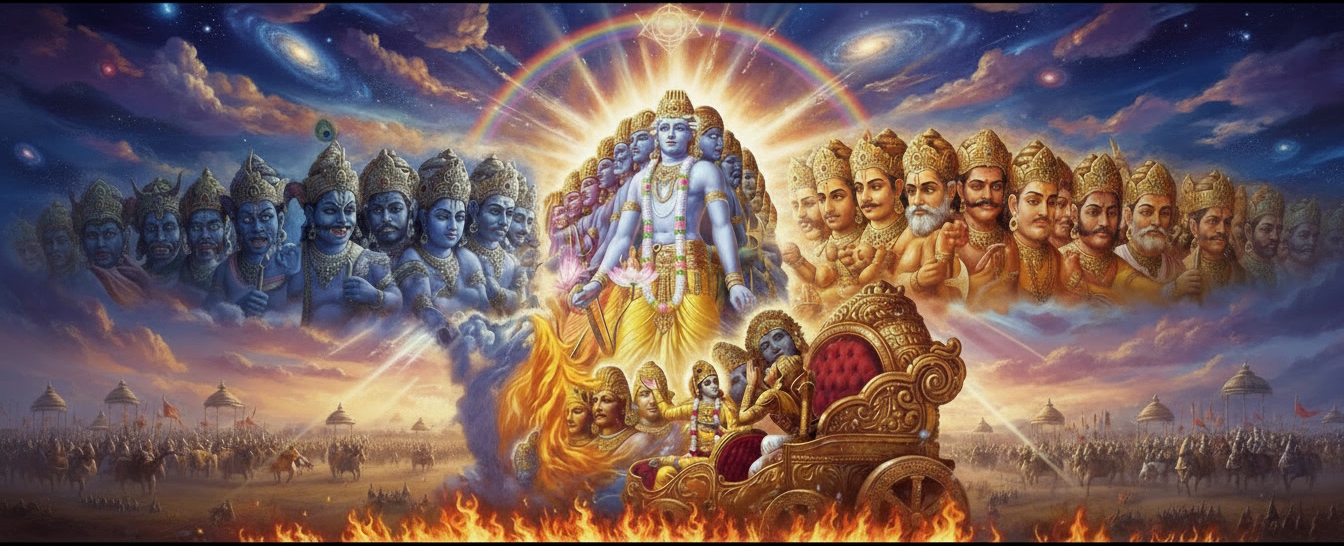
'योगमातिष्ठोत्तिष्ठ भारत'--अर्जुन अपने धनुष-बाणका त्याग करके रथके मध्यभागमें बैठ गये थे (1। 47)। उन्होंने भगवान्से साफ कह दिया था कि मैं युद्ध नहीं करूँगा'--'न योत्स्ये' (गीता 2। 9)। यहाँ भगवान् अर्जुनको योगमें स्थित होकर युद्धके लिये खड़े हो जानेकी आज्ञा देते हैं। यही बात भगवान्ने दूसरे अध्यायके अड़तालीसवें श्लोकमें योगस्थः कुरु कर्माणि (योगमें स्थित होकर कर्तव्य-कर्म कर) पदोंसे भी कही थी। योगका अर्थ 'समता' है--'समत्वं योग उच्यते' (गीता 2। 48)।
अर्जुन युद्धको पाप समझते थे (गीता 1। 36 45)। इसलिये भगवान् अर्जुनको समतामें स्थित होकर युद्ध करनेकी आज्ञा देते हैं; क्योंकि समतामें स्थित होकर युद्ध करनेसे पाप नहीं लगता (गीता 2। 38)। इसलिये समतामें स्थित होकर कर्तव्य-कर्म करना ही कर्म-बन्धनसे छूटनेका उपाय है।
Sri Harikrishnadas Goenka
क्योंकि कर्मयोगका अनुष्ठान करनेसे अन्तःकरणकी अशुद्धिका क्षय हो जानेपर उत्पन्न होनेवाले आत्मज्ञानसे जिसका संशय नष्ट हो गया है ऐसा पुरुष तो ज्ञानाग्निद्वारा उसके कर्म दग्ध हो जानेके कारण कर्मोंसे नहीं बँधता तथा ज्ञानयोग और कर्मयोगके अनुष्ठानमें संशय रखनेवाला नष्ट हो जाता है इसलिये अज्ञान यानी अविवेकसे उत्पन्न और अन्तःकरणमें रहनेवाले ( अपने नाशकके हेतुभूत ) इस अत्यन्तपापी अपने संशयको ज्ञानखड्गद्वारा अर्थात् शोकमोह आदि दोनोंका नाश करनेवाला यथार्थ दर्शरूप जो ज्ञान है वही खड्ग है उस स्वरूपज्ञानरूप खड्गद्वारा ( छेदन करके कर्मयोगमें स्थित हो )। यहाँ संशय आत्मविषयक है इसलिये ( उसके साथ आत्मनः विशेषण दिया गया है। ) क्योंकि एकका संशय दूसरेके द्वारा छेदन करनेकी शङ्का यहाँ प्राप्त नहीं होती जिससे कि ( ऐसी शङ्काको दूर करनेके उद्देश्यसे ) आत्मनः विशेषण दिया जावे अतः ( यही समझना चाहिये कि ) आत्मविषयक होनेसे भी अपना कहा जा सकता है। ( सुतरां संशयको अपना बतलाना असंगत नहीं है। ) अतः अपने नाशके कारणरूप इस संशयको ( उपर्युक्त प्रकारसे ) काटकर पूर्ण ज्ञानकी प्राप्तिके उपायरूप कर्मयोगमें स्थित हो और हे भारत अब युद्धके लिये खड़ा हो जा।
Sri Anandgiri
He explains the meaning expected by the word 'Tat' (in 'Tasmat' - Therefore) in the immediately following verse, by saying 'Yasmat' (Since/Because).
Anticipating the doubt that since existing actions are seen to originate results in people like us, their presence must be inevitable even for the wise, it was said "The fire of knowledge..." (reduces actions to ashes).
If it is objected that for a doubting person, neither the practice of Karma Yoga nor the Knowledge caused by it is possible due to obstacles—since doubt arises there too—He said "And because..." (the doubting self perishes).
Now he explains the words of the verse (4.42) beginning with "Therefore." By calling doubt 'most sinful', it is suggested that being the root of all evil, it is to be abandoned. Being born of 'non-discrimination' (aviveka), it is also to be abandoned, because non-discrimination is well-known to be the cause of evil; this is stated by "born of ignorance." One should not doubt that it is impossible to abandon doubt thinking it is inherent in the Self like consciousness; to this He says "situated in the heart" (mind). Anticipating the doubt that the destruction of doubt arising in the mind of a person overcome by sorrow and delusion can be achieved only by the absence of strong obstacles, He says "by the sword of knowledge."
Since doubt residing in one's own self can be uprooted by knowledge residing in one's own self, why is the adjective "of the self" (atmanah - in 'doubt of the self') used? To this He says "Because it is about the Self." A doubt regarding a post etc. residing in one person is not removed by knowledge regarding it residing in Devadatta (another person); but in the present context, the doubt is about the Self and resides in the Self (mind), so it is removed by knowledge of that same kind (Self-knowledge); thus the adjective is meaningful. He elaborates on this with "Not indeed...". Concluding that since the locus of doubt being the self is already established, it is not what is emphasized, but rather its subject being the Self, and its removal by that specific (Self) knowledge is what is intended—He says "Therefore."
After cutting the doubt, He instructs on the duty with "cutting this."
Anticipating the thought "I will perform rituals like Agnihotra in due order by the Lord's command, but I will certainly refrain from battle," He says "Arise" (take stand). Considering that it is inappropriate for one born in the great Kshatriya lineage of Bharata to turn away from an imminent battle, He says "O Bharata."
Thus, by this (chapter), having refuted the artificiality of Yoga and the non-lordship of the Lord; by seeing inaction etc. in action etc.; by right knowledge of the Self; and by stating the state of Brahman (Brahmabhava) through the cessation of all evil, arising from external means like prostration and internal means like faith—it is established that only one free from doubt is qualified for that highest state. And having described doubt as possessing all faults, it is established that "Karma-nishtha (devotion to action) belongs to one who, having abandoned doubt, is intent upon the supreme Jnana-nishtha (devotion to knowledge)." (End of the Fourth Chapter in the Gita Bhashya Tika by Anandagiri).
Sri Dhanpati
'Since' knowledge obtained by the purification of the mind is of such nature; 'since' the doubting self perishes; and 'since' one whose doubt is cut by knowledge is not bound by actions; 'therefore'—having cut this most sinful doubt of the self—which is born of ignorance (non-discrimination), situated in the intellect—with the 'sword of knowledge' (jnanasi), meaning with Right Vision which removes faults like grief and delusion; practice 'Yoga', meaning the performance of action which is the means to Self-knowledge.
And now, arise for the battle which is your Svadharma (own duty). 'O Bharata' is an address indicating qualification in this regard.
Thus, by this Fourth Chapter—having propounded that Yoga is established by tradition, and the omniscience and Lordship of Lord Vasudeva; [and describing] 'Karma-nishtha' (devotion to action) for attaining qualification and the supreme 'Jnana-nishtha' (devotion to knowledge) achievable by it; the external means for that like prostration etc., and internal means like faith etc.; its fruit being 'Brahmabhava' (state of Brahman) through the cessation of all evil; and mentioning doubt as most sinful—it is established that 'Karma-nishtha' belongs to the highly qualified aspirant who, abandoning doubt which possesses all faults, is intent upon 'Jnana-nishtha'.
(End of the Fourth Chapter in Sri Gita Bhashya Utkarsha Deepika composed by Sri Dhanpati).
Sri Neelkanth
'Tasmat' (Therefore).
'Hritstham' means situated in the heart (intellect). 'Jnanasi' means by the sword of knowledge. 'Yogam' means the means to Right Vision (Samyag-darshana), i.e., desireless action.
'Atishtha' means perform/practice.
'Uttishtha' (Arise)—'for battle' is the implied completion.
Sri Ramanuja
Therefore, having severed the doubt regarding the Self—which is born of beginningless ignorance and situated in the heart—with the sword of Self-knowledge instructed by Me,
practice the 'Karma Yoga' instructed by Me. For that purpose, arise, O Bharata.
Sri Sridhara Swami
'Therefore'. Since it is so, therefore, having severed this doubt situated in the heart—which is born of ignorance of the Self and is the cause of grief etc.—with the sword of 'discriminative knowledge between the body and the Self', practice (take refuge in) 'Karma Yoga', which is the means to the knowledge of the Supreme Self.
And therein, first of all, arise for the battle presented [before you].
By the address 'O Bharata', it is shown that battle is one's own duty (Svadharma) due to being a Kshatriya.
Sri Vedantadeshikacharya Venkatanatha
Thus, the meaning extensively propounded and concluded is now enjoined upon Arjuna as a duty via the verse starting with 'Tasmat' (Therefore).
Doubt is 'born of ignorance', because the non-comprehension of the specific nature (of truth) is the cause of doubt. 'Situated in the heart'—lodged in the heart like a shalya (thorn/stake); or, the sense of 'hritstham' is internal.
'Atmanah' (of the self)—here the genitive case is intended to culminate in the specific relationship characterized as 'subject and object'; to indicate this, it is explained as 'doubt regarding the Self'. Alternatively, since the reference to 'enam' (this) doubt establishes it as being about the Self, the word 'atmanah' is connected with 'jnanasi' (sword of knowledge) to mean 'by the sword of Self-knowledge'. Or, by the logic of the crow's eye (looking both ways), it connects to both.
By 'Maya' (by Me), the Instructor's status as the 'most trustworthy' (aptatama) due to the fullness of omniscience and compassion is implied. Since this is the conclusion of the instruction on Karma Yoga, the word 'Yoga' here does not refer to any other subject; to make this known, it is stated as 'Karma Yoga instructed by Me.'
For Arjuna, born in the Bharata clan, rising for the battle which is his Svadharma is itself rising for Karma Yoga; to imply this intent of the word 'Bharata', it is said 'Arise for that purpose, O Bharata.' By that very word, Arjuna's birth in a lineage of Yogis is also suggested to indicate his fitness for the means of liberation.
(End of the Fourth Chapter in the Tatparyachandrika, the commentary on the Gita Bhashya, composed by the Lion among poets and logicians, the master of all systems, Srimad Venkatanatha Vedantacharya).
Swami Chinmayananda
इस अन्तिम श्लोक में श्रीकृष्ण द्वारा दी गया सम्मति संक्षिप्त होते हुये भी प्रेमाग्रहपूर्ण है। यह श्लोक अर्जुन के प्रति उनकी स्नेह भावना से झंकृत हो रहा है।हिमालय की गिरिकन्दराओं के शान्त और एकान्त वातावरण मे दिये गये ऋषियों के उपदेश को यहाँ श्रीकृष्ण अपने योद्धामित्र अर्जुन को युद्ध की भाषा में ही समझाते हैं। हृदय में स्थित अज्ञान से उत्पन्न आत्मविषयक संशय को ज्ञान की तलवार द्वारा छिन्नभिन्न करने के लिये वे अर्जुन को प्रोत्साहित करते हैं।यहाँ संशय को हृदय मे स्थित कहा गया है आज के शिक्षित पुरुष को यह कुछ विचित्र जान पड़ेगा क्योंकि संशय बुद्धि से उत्पन्न होता है हृदय से नहीं।वेदान्त की धारण के अनुसार बुद्धि का निवास स्थान हृदय है। परन्तु स्थूल शरीर का अंगरूप हृदय यहां अभिप्रेत नहीं है। दर्शनशास्त्र में हृदय शब्द का मनोवैज्ञानिक अर्थ मे साहित्यिक प्रयोग किया जाता है। प्रेम सहानुभूति तथा इसी प्रकार की मनुष्य की श्रेष्ठ एवं आदर्श भावनाओं का स्रोत हृदय ही है। इस प्रेम से परिपूर्ण हृदय से जो बुद्धि कार्य करती है वही वास्तव में दर्शनशास्त्र की दृष्टि से मनुष्य की बुद्धि मानी जा सकती है। इसलिये जब यहाँ संशय को हृदय में स्थित कहा गया तब उसका तात्पर्य कुछ साधकों की विकृत बुद्धि से है जिसके कारण वे आत्मदर्शन नहीं कर पाते। अनेक प्रकार के संशयों की आत्यन्तिक निवृत्ति तभी संभव होगी जब साधक पुरुष आत्मा का साक्षात् अनुभव कर लेगा।यह योग के अभ्यास द्वारा ही संभव है। परन्तु योग का अर्थ कोई रहस्यमयी साधना नहीं जिसे कोई विरले गुरु गुप्त रूप से बतायेंगे और न ही वह ऐसी साधना है जिसका अभ्यास हिमालय की निर्जन गुफाओं में बैठकर करना पड़ेगा। योग सम्बन्धित जो भी भय उत्पन्न करने वाली मिथ्या धारणाएं है गीता में उन्हें सदा के लिये दूर करके उस शब्द को सुपरिचित और व्यावहारिक बना दिया गया है। जीवन के सभी कार्य क्षेत्रों में योग उपयोगी है। भगवान् श्रीकृष्ण के द्वारा इस अध्याय में जो बारह प्रकार के यज्ञ बताये गये हैं वे ही योग शब्द से लक्षित हैं।इस अध्याय की समाप्ति अर्जुन को उठने के आह्वान के साथ होती है उत्तिष्ठ भारत। यद्यपि गीतोपदेश के सन्दर्भ में भारत शब्द अर्जुन को ही सम्बोधित करता है तथापि अर्जुन के माध्यम से समस्त साधकों का यहाँ आह्वान किया गया है। यज्ञ साधना का आचरण करके हमको अधिकाधिक अन्तकरण शुद्धि प्राप्त करनी चाहिये जिससे कि निदिध्यासन के द्वारा हम विकास के चरम लक्ष्य परम शान्ति को प्राप्त कर सकें।Conclusionँ़ तत्सदिति श्रीमद्भगवद्गीतासूपनिषत्सु ब्रह्मविद्यायां योगशास्त्रेश्रीकृष्णार्जुनसंवादे ज्ञानकर्मसंन्यासयोगो नाम चतुर्थोऽध्याय।।
Sri Abhinavgupta
Since it is so, 'Therefore'.
Having cut the doubt, practice 'Yoga'—which is skill in actions—according to the stated order.
And then 'Arise'—perform your own task/duty merely because it ought to be done.
Sri Madhusudan Saraswati
'Since' it is so... 'Born of ignorance', meaning non-discrimination; 'situated in the heart', meaning situated in the intellect. Since an enemy can be killed easily when the instrument (cause) and the asylum (locus) are known, both are mentioned.
Having cut 'this' doubt—which is the root of all evil—with the 'sword of knowledge of the Self' (Atmanah jnanasi), meaning with the sword of determination regarding the Self; practice 'Yoga', which is desireless action, the means to Right Vision.
'Therefore', now arise for battle, 'O Bharata'—the purport is that the war-effort of one born in the Bharata lineage is not fruitless.
(Chapter Summary Verse): The non-lordship of the self having been refuted, and Bhakti (devotion) and Shraddha (faith) having been strengthened; the 'Karma-nishtha' (devotion to action), which is the cause of wisdom, has been concluded here by Hari.
Sri Purushottamji
Since the doubting self does not see, and actions do not bind the one possessing Self-knowledge, 'Therefore', abandon doubt through Self-knowledge; He says 'Therefore'.
'O Bharata'—born in a noble lineage, you are unfit for doubting. Since one perishes by doubt, therefore, cutting 'this' doubt—which is 'born of ignorance of the self' (born of ignorance of the true nature of the Self); 'situated in the heart'; which is being directly experienced and is of the nature of distrust in My words—with the 'sword of knowledge'; practice 'Yoga', which is devoted to Me (Mad-atmakam) and is for the sake of attaining Me. 'Arise'—be alert.
Sri Shankaracharya
'Therefore', having cut the most sinful doubt 'born of ignorance'—born from ignorance, that is, non-discrimination; 'situated in the heart'—situated in the heart, i.e., in the intellect; with the 'sword of knowledge'—Knowledge is Right Vision (Samyag-darshana) which removes faults like grief and delusion; that itself is the sword; with that sword of knowledge; [cut the doubt] 'of the self' (atmanah), meaning 'of one's own' (svasya). [Why 'of the self'?] Because the doubt is about the Self.
For indeed, another's doubt does not come up to be cut by another person such that it would need to be specified as 'one's own' [to distinguish it from another's]. Therefore, even though it is about the Self, it belongs to oneself alone.
Having cut 'this' doubt—which is the cause of one's own destruction—practice 'Yoga', meaning the performance of action which is the means to Right Vision. And 'Arise' now for battle, O Bharata.
(End of the Fourth Chapter in the Srimad Bhagavad Gita Bhashya composed by Srimad Shankara Bhagavat, the disciple of Srimad Govinda Bhagavatpujyapada, the teacher of Paramahamsa Parivrajakas).
Sri Vallabhacharya
'Therefore', you too, having cut the doubt—which is 'non-Self' in nature (or alien to the Self)—by the intellect of Sankhya (Knowledge), practice the stated 'Yoga', and be ready for battle, your own duty. Even then (in that action), there is freedom from bondage; this is the purport.
Swami Sivananda
तस्मात् therefore? अज्ञानसंभूतम् born out of ignorance? हृत्स्थम् residing in the heart? ज्ञानासिना by the sword of knowledge? आत्मनः of the Self? छित्त्वा having cut? एनम् this? संशयम् doubt? योगम् Yoga? आत्तिष्ठ take refuge? उत्तिष्ठ arise? भारत O Bharata.Commentary Doubt causes a great deal of mental torment. It is most sinful. It is born of ignorance. Kill it ruthlessly with the knowledge of the Self. Now stand up and fight? O Arjuna.(This chapter is known by the names Jnana Yoga? Abhyasa Yoga and jnanakarmasannyasa Yoga also.)Thus in the Upanishads of the glorious Bhagavad Gita? the science of the Eternal? the scripture of Yoga? the dialogue between Sri Krishna and Arjuna? ends the fourth discourse entitledThe Yoga of the Division of Wisdom. ,
Swami Gambirananda
Tasmat, therefore, O scion of the Bharata dynasty; atistha, take recourse to, i.e. undertake; yogam, yoga -performance of actions, which is a means to full Illumination; and now, uttistha, rise up for battle; chittva, cutting asunder; jnanasina, with the sword of Knowledge-Knowledge is full Illumination, which is a destroyer of such defects as sorrows, delusion, etc.; that itself is the sword; with that sword of Knowledge-;enam, this; samsayam, doubt; atmanah, of your own, which is a source of one's own ruin and is most sinful; hrtstham, in the heart, residing in the intellect; ajnana-sambhutam, arising from ignorance, born of non-discrimination.
The word atmanah is used because doubt concerns oneself. Indeed, another's doubt cannot be removed by someone else. Hence the word 'own' is used. So, although the doubt is with regard to the Self, it is really one's own.
Swami Adidevananda
Therefore, after sundering this doubt concerning the self, born of beginningless ignorance and present in the heart, by the sword of the knowledge of the self in the manner explained before, practise the Karma Yoga taught by Me. For that, rise up, O Arjuna.