Bhagavad Gita - Chapter 5 - Shloka (Verse) 18
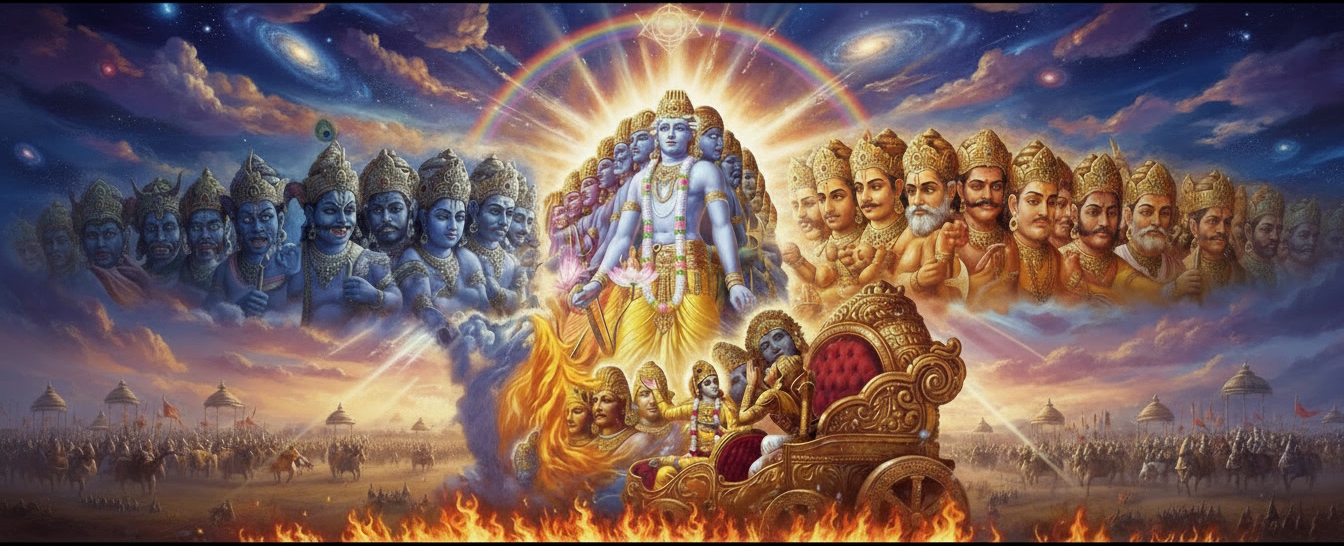
विद्याविनयसंपन्ने ब्राह्मणे गवि हस्तिनि।
शुनि चैव श्वपाके च पण्डिताः समदर्शिनः।।5.18।।
vidyāvinayasaṃpanne brāhmaṇe gavi hastini|
śuni caiva śvapāke ca paṇḍitāḥ samadarśinaḥ||5.18||
Translation
Sages look with an eal eye on a Brahmana endowed with learning and humility, on a cow, on an elephant, and even on a dog and an outcaste.
हिंदी अनुवाद
ज्ञानी महापुरुष विद्या-विनययुक्त ब्राह्मणमें और चाण्डालमें तथा गाय, हाथी एवं कुत्तेमें भी समरूप परमात्माको देखनेवाले होते हैं।
Commentaries & Translations
Swami Ramsukhdas
व्याख्या--विद्याविनयसम्पन्ने ৷৷. पण्डिताः समदर्शिनः यहाँ ब्राह्मणके लिये दो विशेषण दिये गये हैं विद्यायुक्त और विनययुक्त अर्थात् ऐसा ब्राह्मण जो विद्वान् भी है और विनम्र स्वभाववाला (ब्राह्मणपनेके अभिमानसे रहित) भी है। ब्राह्मण होनेसे वह जातिसे तो ऊँचा है ही साथहीसाथ विद्या और विनयसे भी सम्पन्न है यह ब्राह्मणत्वकी पूर्णता है। जहाँ पूर्णता होती है वहाँ अभिमान नहीं रहता। अभिमान वहीं रहता है जहाँ पूर्णता नहीं होती।ब्राह्मण और चाण्डालमें तथा गाय हाथी एवं कुत्तेमें व्यवहारकी विषमता अनिवार्य है। इनमें समान बर्ताव शास्त्र भी नहीं कहता उचित भी नहीं और कर सकते भी नहीं। जैसे पूजन विद्याविनययुक्त ब्राह्मणका ही हो सकता है न कि चाण्डालका दूध गायका ही पीया जाता है न कि कुतियाका सवारी हाथीकी ही हो सकती है न कि कुत्तेकी। इन पाँचों प्राणियोंका उदाहरण देकर भगवान् यह कह रहे हैं कि इनमें व्यवहारकी समता सम्भव न होनेपर भी तत्त्वतः सबमें एक ही परमात्मतत्त्व परिपूर्ण है। महापुरुषोंकी दृष्टि उस परमात्मतत्त्वपर ही सदासर्वदा रहती है। इसलिये उनकी दृष्टि कभी विषम नहीं होती।
यहाँ एक शङ्का हो सकती है कि दृष्टि विषम हुए बिना व्यवहारमें भिन्नता कैसे होगी इसका समाधान यह है कि अपने शरीरके सब अङ्गों (मस्तक पैर हाथ गुदा आदि) में हमारी दृष्टि अर्थात् अपनेपन और हितकी भावना समान रहती है फिर भी हम उनके व्यवहारमें भेद रखते हैं जैसे किसीको पैर लग जाय तो क्षमायाचना करते हैं पर किसीको हाथ लग जाय तो क्षमायाचना नहीं करते। प्रणाम मस्तक और हाथोंसे करते हैं पैरोंसे नहीं। गुदासे हाथ लगनेपर हाथ धोते हैं हाथसे हाथ लगनेपर नहीं। इतना ही नहीं एक हाथकी अँगुलियोंमें भी व्यवहारमें भेद रहता है। किसीको तर्जनी अँगुली दिखाने और अँगूठा दिखानेका तो भेद तो सब जानते ही हैं। इस प्रकार शरीरके भिन्नभिन्न अङ्गोंके व्यवहारमें तो भेद होता है पर आत्मीयतामें भेद नहीं होता। इसलिये शरीरके किसी भी पीड़ित अङ्गकी उपेक्षा नहीं होती। व्यवहारमें भेद होनेपर भी पीड़ा मिटानेमें हम समानताका व्यवहार करते हैं। शरीरके सभी अङ्गोंके सुखदुःखमें हमारा एक ही भाव रहता है (गीता 6। 32)। इसी प्रकार प्राणियोंमें खानपान गुण आचरण जाति आदिका भेद होनेसे उनके साथ ज्ञानी महापुरुषोंके व्यवहारमें भी भेद होता है और होना भी चाहिये। परन्तु उन सब प्राणियोंमें एक ही परमात्मतत्त्व परिपूर्ण होनेके कारण महापुरुषकी दृष्टिमें भेद नहीं होता। उन प्राणियोंके प्रति महापुरुषकी आत्मीयता प्रेम हित दया आदिके भावमें कभी फरक नहीं पड़ता। उनके अन्तःकरणमें रागद्वेष ममता आसक्ति अभिमान पक्षपात विषमता आदिका सर्वथा अभाव होता है। जैसे अपने शरीरके किसी अङ्गका दुःख दूर करनेकी चेष्टा स्वाभाविक होती है ऐसे ही पता लगनेपर दूसरे प्राणीका दुःख दूर करनेकी और उसे सुख पहुँचानेकी चेष्टा भी उनके द्वारा स्वाभाविक होती है। यही कारण है कि भगवान्ने यहाँ महापुरुषोंको समदर्शी कहा है न कि समवर्ती। गीतामें दूसरी जगह भी सम देखनेकी या समबुद्धिकी ही बात आयी है जैसे समबुद्धिर्विशिष्यते (6। 9) सर्वत्र समदर्शनः (6। 29) आत्मौपम्येन सर्वत्र समं पश्यति (6। 32) सर्वत्र समबुद्धयः (12। 4) समं सर्वेषु भूतेषु ৷৷. यः पश्यति स पश्यति (13। 27) और समं पश्यन् हि सर्वत्र (13। 28)।श्रीशङ्कराचार्यजी महाराज कहते हैं भावाद्वैतं सदा कुर्यात् क्रियाद्वैतं न कुत्रचित्।
(तत्त्वोपदेश)भावमें ही सदा अद्वैत होना चाहिये क्रिया (व्यवहार) में कहीं नहीं।समतासम्बन्धी विशेष बात आजकल समतापर विशेष चर्चा चल रही है। सबके साथ समताका बर्ताव करो ऐसा प्रचार किया जा रहा है। परन्तु वास्तवमें समता किसे कहते हैं और वह कब आती है इसे समझनेकी बड़ी आवश्यकता है।
समता कोई खेलतमाशा नहीं है प्रत्युत परमात्माका साक्षात् स्वरूप है। जिनका मन समतामें स्थित हो जाता है वे यहाँ जीतेजी ही संसारपर विजय प्राप्त कर लेते हैं और परब्रह्म परमात्माका अनुभव कर लेते हैं (गीता 5। 19)। यह समता तब आती है जब दूसरोंका दुःख अपना दुःख और दूसरोंका सुख अपना सुख हो जाता है। गीतामें भगवान् कहते हैं कि हे अर्जुन जो पुरुष अपने शरीरकी तरह सब जगह सम देखता है और सुख अथवा दुःखको भी सब जगह सम देखता है वह योगी परम श्रेष्ठ माना गया है (6। 12)। जैसे शरीरके किसी भी अङ्गमें पीड़ा होनेपर उसको दूर करनेकी लगन लग जाती है ऐसे ही किसी प्राणीको दुःख सन्ताप आदि होनेपर उसको दूर करनेकी लगन लग जाय तब समता आती है। सन्तोंके लक्षणोंमें भी आया है पर दुख दुख सुख सुख देखे पर (मानस 7। 38। 1)जबतक अपने सुखकी लालसा है तबतक चाहे जितना उद्योग कर लें समता नहीं आयेगी। परन्तु जब हृदयसे यह लगन लग जायगी कि दूसरोंको सुख कैसे पहुँचे उनको आराम कैसे हो उनको लाभ कैसे हो उनका कल्याण कैसे हो तब समता स्वतः आ जायगी। इसका आरम्भ सर्वप्रथम अपने घरसे करना चाहिये। हृदयमें ऐसा भाव हो कि किसीको किञ्चिन्मात्र भी दुःख या कष्ट न पहुँचे किसीका कभी अनिष्ट न हो। चाहे मैं कितना ही कष्ट पाऊँ पर मेरे मातापिता स्त्रीपुत्र भाईभौजाई आदिको सुख होना चाहिये। घरवालोंको सुख पहुँचानेसे अपने हृदयमें शान्ति आयेगी ही। जहाँ अपने घरका भी सम्बन्ध नहीं है वहाँ सुख पहुँचायेंगे तो विशेष आनन्दकी लहरें आने लग जायँगी। परन्तु ममतापूर्वक सुख पहुँचानेसे हमारी उन्नति नहीं होगी। जहाँ हमारी ममता न हो वहाँ सुख पहुँचायें अथवा जहाँ हम ममतापूर्वक सुख पहुँचाते हैं वहाँसे अपनी ममता हटा लें दोनोंका परिणाम एक ही होगा।चित्रकूटमें लक्ष्मणजी भगवान् राम और सीताकी सेवा कैसे करते हैं यह बताते हुए गोस्वामी तुलसीदासजी कहते हैं सेवहिं लखनु सीय रघुबीरहि। जिमि अबिबेकी पुरुष सरीरहि ।।(मानस 2। 142। 1)अर्थात् लक्ष्मणजी भगवान् राम और सीताजीकी वैसे ही सेवा करते हैं जैसे अज्ञानी मनुष्य अपने शरीरकी सेवा करता है। अपने शरीरकी सेवा करना उसे सुख पहुँचाना समझदारी नहीं है। अपने शरीरकी सेवा तो पशु भी करते हैं। जैसे बँदरीकी अपने बच्चेपर इतनी ममता रहती है कि उसके मरनेके बाद भी वह उसके शरीरको पकड़े हुए चलती है छोड़ती नहीं। परन्तु जब कोई वस्तु खानेके लिये मिल जाती है तब वह स्वयं तो खा लेती है पर बच्चेको नहीं खाने देती। बच्चा खानेकी चेष्टा करता है तो उसे ऐसी घुड़की मारती है कि वह चींचीं करते भाग जाता है। अतः ममताके रहते हुए समताका आना असम्भव है।जिससे हमें कुछ लेना नहीं है जिससे हमारा कोई स्वार्थ नहीं है ऐसे व्यक्तिके साथ भी हम प्रेमपूर्वकअच्छासेअच्छा बर्ताव करें जिससे उसका हित हो। कोई व्यक्ति मार्गमें भटक गया है उसे मार्गका पता नहीं है और वह हमसे पूछता है। हम उसे बड़ी प्रसन्नतासे मार्ग बतायें अथवा कुछ दूरतक उसके साथ चलें तो हमें हृदयमें प्रत्यक्ष सुखका शान्तिका अनुभव होगा। परन्तु यदि हम जानते हुए भी उसे मार्ग नहीं बतायेंगे तो हमारे हृदयमें सुख नहीं होगा। यह अनुभवकी बात है कोई करके देख ले। किसीको प्यास लगी है तो उसे बता दे कि भाई इधर आओ इधर ठण्डा जल है। फिर हम अपना हृदय देखें। हमारे हृदयमें प्रसन्नता आयेगी सुख आयेगा। यह सुख हमारा कल्याण करनेवाला है। दूसरा दुःख पाये पर मैं सुख ले लूँ यह सुख पतन करनेवाला है। इससे न तो व्यवहारमें हमारी उन्नति होगी और न परमार्थमें। हम सत्सङ्गका आयोजन करते हैं। उसमें आनेवाले व्यक्तियोंके बैठनेकी व्यवस्था करते हैं तो उनसे प्रेमपूर्वक कहें कि आइये यहाँ बैठिये। उन्हें वहाँ बैठायें जहाँसे वे ठीक तरहसे कैसे सुन सकें। वे आरामसे कैसे बैठ सकें ठीक तरहसे कैसे सुन सकें ऐसा भाव रखकर उनसे बर्ताव करें। ऐसा करनेसे हमारे हृदयमें प्रत्यक्ष शान्ति आयेगी। पर वहीं हुक्म चलायें कि क्या करते हो इधर बैठो इधर नहीं तो बात वही होनेपर भी हृदयमें शान्ति नहीं आयेगी। भीतरमें जो अभिमान है वह दूसरोंको चुभेगा बुरा लगेगा। ऐसा बर्ताव करें और चाहें कि समता आ जाय तो वह कभी आयेगी नहीं।
सबके हितमें जिसकी प्रीति हो गयी है उन्हें भगवान् प्राप्त हो जाते हैं ते प्राप्नुवन्ति मामेव सर्वभूतहिते रताः (गीता 12। 4)। कारण कि भगवान् प्राणिमात्रके परम सुहृद् हैं (गीता 5। 29)। वे प्राणिमात्रका पालनपोषण करनेवाले हैं। आस्तिकसेआस्तिक हो अथवा नास्तिकसेनास्तिक दोनोंके लिये भगवान्का विधान बराबर है। एक व्यक्ति बड़ा आस्तिक है भगवान्को बहुत मानता है और उन्हें पानेके लिये साधनभजन करता है और एक व्यक्ति ऐसा नास्तिक है कि संसारसे भगवान्का खाता उठा देना चाहता है। भगवान्को माननेसे और भगवान्के कारण ही दुनिया दुःख पा रही है भगवान् नामकी कोई चीज है ही नहीं ऐसा उसके हृदयमें भाव है और ऐसा ही प्रचार करता है। ऐसे नास्तिकसेनास्तिक व्यक्तिकी भी प्यास जल मिटाता है और यही जल आस्तिकसेआस्तिक व्यक्तिकी भी प्यास मिटाता है। जलमें यह भेद नहीं है कि वह आस्तिककी प्यास ठीक तरहसे शान्ति करे और नास्तिककी प्यास शान्त न करे। वह समान रीतिसे सबकी प्यास मिटाता है। ऐसे ही सूर्य समान रीतिसे सबको प्रकाश देता है हवा समान रीतिसे सबको श्वास लेने देती है पृथ्वी समान रीतिसे सबको रहनेका स्थान देती है। इस प्रकार भगवान्की रची हुई प्रत्येक वस्तु सबको समान रीतिसे मिलती है।
समताका अर्थ यह नहीं है कि समान रीतिसे सबके साथ रोटीबेटी (भोजन और विवाह) का बर्ताव करें। व्यवहारमें समता तो महान् पतन करनेवाली चीज है। समान बर्ताव यमराजका मौतका नाम है क्योंकि उसके बर्तावमें विषमता नहीं होती। चाहे महात्मा हो चाहे गृहस्थ हो चाहे साधु हो चाहे पशु हो चाहे देवता हो मौत सबकी बराबर होती है। इसलिये यमराजको समवर्ती (समान बर्ताव करनेवाला) कहा गया है (टिप्पणी प0 307)। अतः जो समान बर्ताव करते हैं वे भी यमराज हैं।पशुओंमें भी समान बर्ताव पाया जाता है। कुत्ता ब्राह्मणकी रसोईमें जाता है तो पैर धोकर नहीं जाता। ब्राह्मणकी रसोई हो अथवा हरिजनकी वह तो जैसा है वैसा ही चला जाता है क्योंकि यह उसकी समता है। पर मनुष्यके लिये यह समता नहीं है प्रत्युत महान् पशुता है। समता तो यह है कि दूसरेका दुःख कैसे मिटे दूसरेको सुख कैसे हो आराम कैसे हो ऐसी समता रखते हुए बर्तावमें पवित्रता निर्मलता रखनी चाहिये। बर्तावमें पवित्रता रखनेसे अन्तःकरण पवित्र निर्मल होता है। परन्तु बर्तावमें अपवित्रता रखनेसे खानपान आदि एक करनेसे अन्तःकरणमें अपवित्रता आती है जिससे अशान्ति बढ़ती है। केवल बाहरका बर्ताव समान रखना शास्त्र और समाजकी मर्यादाके विरुद्ध है। इससे समाजमें संघर्ष पैदा होता है।वर्णोंमें ब्राह्मण ऊँचे हैं और शूद्र नीचे हैं ऐसा शास्त्रोंका सिद्धान्त नहीं है। ब्राह्मण उपदेशके द्वारा क्षत्रिय रक्षाके द्वारा वैश्य धनसम्पत्ति आवश्यक वस्तुओँके द्वारा और शूद्र शरीरसे परिश्रम करके सभी वर्णोंकी सेवाकरे। इसका अर्थ यह नहीं है कि दूसरे अपने कर्तव्यपालनमें परिश्रम न करें प्रत्युत अपने कर्तव्यपालनमें समान रीतिसे सभी परिश्रम करें। जिसके पास जिस प्रकारकी शक्ति विद्या वस्तु कला आदि है उसके द्वारा चारों ही वर्ण चारों वर्णोंकी सेवा करें उनके कार्योंमें सहायक बनें। परन्तु चारों वर्णोंकी सेवा करनेमें भेदभाव न रखें।आजकल वर्णाश्रमको मिटाकर पार्टीबाजी हो रही है। आज वर्णाश्रममें इतनी लड़ाई नहीं है जितनी लड़ाई पार्टीबाजीमें हो रही है यह प्रत्यक्ष बात है। पहले लोग चारों वर्णों और आश्रमोंकी मर्यादामें चलते थे और सुखशान्तिपूर्वक रहते थे। आज वर्णाश्रमकी मर्यादाको मिटाकर अनेक पार्टियाँ बनायी जा रही हैं जिससे संघर्षको बढ़ावा मिल रहा है। गाँवोंमें सब लोगोंको पानी मिलना कठिन हो रहा है। जिनके अधिकारमें कुआँ है वे कहते हैं कि तुमने उस पार्टीको वोट दिया है इसलिये तुम यहाँसे पानी नहीं भर सकते। माँ बाप और बेटा तीनों अलगअलग पार्टियोंको वोट देते हैं और घरमें लड़ते हैं। भीतरमें वैर बाँध लिया कि तुम उस पार्टीके और हम इस पार्टीके। कितना महान् अनर्थ हो रहा हैयदि समता लानी हो तो दूसरा व्यक्ति किसी भी वर्ण आश्रम धर्म सम्प्रदाय मत आदिका क्यों न हो उसे सुख देना है उसका दुःख दूर करना है और उसका वास्तविक हित करना है। उनमें यह भेद हो सकता है कि आप रामराम कहते हैं हम कृष्णकृष्ण कहेंगे आप वैष्णव हैं हम शैव हैं आप मुसलमान हैं हम हिन्दू हैं इत्यादि। परन्तु इससे कोई बाधा नहीं आती है। बाधा तब आती है जब यह भाव रहता है कि वे हमारी पार्टीके नहीं हैं इसलिये उनको चाहे दुःख होता रहे पर हमें और हमारी पार्टीवालोंको सुख हो जाय। यह भाव महान् पतन करनेवाला है। इसलिये कभी किसी वर्ण आदिके मनुष्योंको कष्ट हो तो उनके हितकी चिन्ता समान रीतिसे होनी चाहिये और उन्हें सुख हो तो उससे प्रसन्नता समान रीतिसे होनी चाहिये। जैसे ब्राह्मणों और हरिजनोंमें संघर्ष हुआ। उसमें हरिजनोंकी हार और ब्राह्मणोंकी जीत होनेपर हमारे मनमें प्रसन्नता हो अथवा ब्राह्मणोंकी हार और हरिजनोंकी जीत होनेपर हमारे मनमें दुःख हो तो यह विषमता है जो बहुत हानिकारक है। ब्राह्मणों और हरिजनों दोनोंके प्रति ही हमारे मनमें हितकी समान भावना होनी चाहिये। किसीका भी अहित हमें सहन न हो। किसीका भी दुःख हमें समान रीतिसे खटकना चाहिये। यदि ब्राह्मण दुःखी है तो उसे सुख पहुँचायें और यदि हरिजन दुःखी है तो उसे सुख न पहुँचायें ऐसा पक्षपात नहीं होना चाहिये प्रत्युत हरिजनको सुख पहुँचानेकी विशेष चेष्टा होनी चाहिये। हरिजनोंको सुख पहुँचानेकी चेष्टा करते हुए भी ब्राह्मणोंके दुःखकी उपेक्षा नहीं होनी चाहिये। इस प्रकार किसी भी वर्ण आश्रम धर्म सम्प्रदाय आदिको लेकर पक्षपात नहीं होना चाहिये। सभीके प्रति समान रीतिसे हितका बर्ताव होना चाहिये। यदि कोई निम्नवर्ग है और उसे हम ऊँचा उठाना चाहते हों तो उस वर्गके लोगोंके भावों और आचरणोंको शुद्ध और श्रेष्ठ बनाना चाहिये उनके पास वस्तुओंकी कमी हो तो उसकी पूर्ति करनी चाहिये परन्तु उन्हें उकसाकर उनके हृदयोंमें दूसरे वर्गके प्रति ईर्ष्या और द्वेषके भाव भर देना अत्यन्त ही अहितकर घातक है तथा लोकपरलोकमें पतन करनेवाला है। कारण कि ईर्ष्या द्वेष अभिमान आदि मनुष्यका महान् पतन करनेवाले हैं। यदि ऐसे भाव ब्राह्मणोंमें हैं तो उनका भी पतन होगा और हरिजनोंमें हैं तो उनका भी पतन होगा। उत्थान तो सद्भावों सद्गुणों सदाचारोंसे ही होता है।
भोजन वस्त्र मकान आदि निर्वाहकी वस्तुओंकी जिनके पास कमी है उन्हें ये वस्तुएँ विशेषतासे देनी चाहिये चाहे वे किसी भी वर्ण आश्रम धर्म सम्प्रदाय आदिके क्यों न हों। सबका जीवनयापन सुखपूर्वक होना चाहिये। सभी सुखी हों सभी नीरोग हों सभीका हित हो कभी किसीको किञ्चिन्मात्र भी दुःख न हो (टिप्पणी प0 308) ऐसा भाव रखते हुए यथायोग्य बर्ताव करना ही समता है जो सम्पूर्ण मनुष्योंके लिये हितकर है।
सम्बन्ध अब भगवान् पूर्वश्लोकमें वर्णित समताकी विशेष महिमा कहते हैं।
Sri Harikrishnadas Goenka
जिनके आत्माका अज्ञान ज्ञानद्वारा नष्ट हो चुका है वे पण्डितजन परमार्थतत्त्वको कैसे देखते हैं सो कहते हैं विद्या और विनययुक्त ब्राह्मणमें अर्थात् विद्याआत्मबोध और विनयउपरामता इन दोनों गुणोंसे सम्पन्न जो विद्वान् और विनीत ब्राह्मण है उस ब्राह्मणमें गौमें हाथीमें कुत्ते और चाण्डालमें भी पण्डितजन समभावसे देखनेवाले ( होते हैं )। अभिप्राय यह कि उत्तम प्राणी संस्कारयुक्त विद्याविनयसम्पन्न सात्त्विक ब्राह्मणमें मध्यम प्राणीसंस्काररहित रजोगुणयुक्त गौमें और ( कनिष्ठ प्राणी ) अतिशय मूढ़ केवल तमोगुणयुक्त हाथी आदिमें सत्त्वादि गुणोंसे और उनके संस्कारोंसे तथा राजस और तामस संस्कारोंसे सर्वथा ही निर्लेप रहनेवाले सम एक निर्विकार ब्रह्मको देखना ही जिनका स्वभाव है वे पण्डित समदर्शी हैं। पू0 वे ( इस प्रकार देखनेवाले ) दोषयुक्त हैं उनका अन्न भोजन करने योग्य नहीं क्योंकि यह स्मृतिका प्रमाण है कि समान गुणशीलवालोंकी विषम पूजा करनेसे और विषम गुणशीलवालोंकी सम पूजा करनेसे ( यजमान दोषी होता है )।
Sri Anandgiri
That 'knowledge of Reality' (tattvajñāna) which is the means to 'non-return'—He expounds that very thing through a question (raised by the commentator at the end of the previous verse) with 'of those' (yeṣām), etc.
Accepting 'knowledge' (vidyā) as 'specific knowledge of the meaning of the Vedas,' he explains 'humility' (vinaya) with 'humility,' etc. Upashama means absence of egoism and absence of haughtiness.
Having thus stated the meaning of the words, he shows the meaning of the sentence with 'the wise one' (vidvān), etc. Repeating 'in a cow' (gavi) etc., he states the sentence meaning with 'knowledge' (vidyā), etc. The connection with the later word is that the wise are 'seers of the same' (samadarśinaḥ) regarding the elephant, etc.
(Objection): In those various distinct living beings, due to the possibility of being touched by their respective qualities (gunas) and the impressions (samskaras) caused by them, Brahman cannot be equal/same? Anticipating this, he says 'Sattva etc.' (sattvādi). In the phrase 'and born of that' (tajjaiśca), by the word 'that' (tat), Sattva alone is grasped.
Just as by Sattvic impressions, so too Brahman is completely untouched by Rajasic impressions; this he states with 'similarly' (tathā). Just as by Rajasic, Brahman is absolutely untouched by Tamasic impressions too; this he states with 'similarly by Tamasic' (tathā tāmasaiḥ).
Considering that Brahman's non-duality, immutability, and unattachedness are the reasons for the stated meaning, he explains the meaning of the word 'Same' (samam) as 'One' (samam).
'Panditya' (wisdom) is indeed 'seeing the same'; he explains that with 'Brahman' etc.
Sri Dhanpati
"How do those Pundits (wise ones) going towards liberation, whose ignorance of the Self has been destroyed by knowledge, see the Reality of the Self?" To this, He answers with "Knowledge" (vidyā), etc. Vidyā means Self-knowledge. Vinaya means tranquility (upaśama), i.e., absence of haughtiness, etc. The word Vidyā is used to prevent wretchedness/meekness, and the word Vinaya is to prevent haughtiness etc. In a "Brahmin" endowed—united—with both of these, possessing excellent impressions (samskaras) and being Sattvic; in a "cow" which is intermediate, Rajasic, and devoid of (scriptural) samskaras; in an "elephant" which is low and purely Tamasic; in a "dog"; and in a "dog-eater" (śvapāka / outcaste). The mention of many Tamasic beings (elephant, dog, outcaste) is to indicate their abundance relative to the Sattvic and Rajasic. "Same" (samam)—meaning untouched by the qualities of Sattva etc. and the impressions generated by them, One, Unchanging Brahman—just as the sky remains undivided/unbroken in Ganges water, pond water, and urine etc.; those whose nature is to see (Brahman) in this way are "Pundits," i.e., "Seers of the Same" (samadarśinaḥ); this is the meaning.
As for what others explain—raising the doubt: "What is this excellence named 'unity with the Supreme' in a Jiva endowed with knowledge and renunciation? Do not humans, dealt with as high and middle in the world, or animals of such nature, have a soul? Or do they not attain unity with the Supreme?"—and answering with Vidyā etc.; (arguing that) here, in the cow, elephant, and dog, the limiting adjuncts (upādhis) in the form of bodies which are the locus of species like 'cowness' are mentioned; and since high, middle, and low are mentioned, a similar discrimination of the Self's limiting adjuncts for human bodies should be understood (because the excellent Brahmin is mentioned separately). The remaining Kshatriya and Vaishya bodies are implied by "endowed with knowledge" (vidyā context). The Shudra body, whose duty is only service to the three castes, is implied by "endowed with humility" (vinaya context). The singular number is used with the intention of the collection of bodies. Thus, the Brahmin is high, Kshatriya and Vaishya are middle, the Shudra is slightly lower than them, and the dog-eater is completely lowest. In these human and animal, high, middle, and low bodies—which exist as limiting adjuncts of the Self—the Pundits see the unconditioned Brahman alone, entered into each equally because It is without distinction everywhere; but they do not see the Self itself as consisting of Brahman (in the Advaitic sense of absolute identity)—
That (explanation) is dull/weak (mandam). Because the intended meaning is established simply by (the phrase) "Seers of Brahman who has become the Self of all beings," and (accepting the other view) would lead to the contingency of the word "Same" (sama) becoming futile, and the demonstration of distinctions of limiting adjuncts not mentioned in the root text would be a forced/tortuous imagination (kliṣṭa-kalpanā).
Sri Madhavacharya
With the intention that "seeing the equality" (sāmyadarśana) of the forms of the Supreme Lord everywhere is also a means to direct realization (aparokṣa jñāna), He says "Knowledge" (vidyā), etc.
Sri Neelkanth
He describes the vision of these (knowers) regarding the world with "Knowledge" (vidyā), etc.
Those whose nature is to see the "Same" (samam) Brahman alone—appearing as "Existence" (sat) and as "Manifestation/Consciousness" (sphuraṇa)—whether in an excellent Brahmin or in an outcaste (chaṇḍāla) etc., are "Seers of the Same" (samadarśinaḥ).
As it is said: "Exists (asti), Shines (bhāti), Dear (priyam), Form (rūpam), and Name (nāma)—these are the five parts. The first three are the nature of Brahman, the latter two are the nature of the world."
The meaning is that they view the moving and unmoving world solely with the vision of Brahman.
Sri Ramanuja
In a Brahmin endowed with learning and humility, and in a cow, elephant, dog-eater, etc.—in the Selves (atmas) which appear to have extremely disparate forms—the "Pundits," i.e., the knowers of the true nature of the Self, are "Seers of the Same" everywhere because of the (Self's) sole nature of Knowledge (jñāna-eka-ākāratayā).
The meaning is that they see that the disparate form belongs to Nature (prakṛti), not to the Self;
the Self, however, is equal everywhere as being of the sole form of Knowledge.
Sri Sridhara Swami
"Of what nature are those knowers who attain non-return?"—in anticipation of this (question), He says "Endowed with learning and humility" (vidyā-vinaya-saṃpanna), etc.
Those whose nature is to see the "Same" Brahman alone even in the "Unequal/Disparate" (viṣama). "Pundits" means Knowers.
There, between the Brahmin endowed with learning and humility and the "dog-eater" (śvapāka)—one who cooks a dog—inequality based on 'action' (karma) is shown.
Between the cow, the elephant, and the dog, inequality based on 'species' (jāti) is shown.
Sri Vedantadeshikacharya Venkatanatha
Of what nature is this direct realization of the Self?"—Responding to this inquiry, He clarifies what was previously stated in "By which you will see all beings without exception in yourself, and then in Me" (4.35) with the verse "Endowed with learning and humility" (vidyāvinaya...).
The two words "endowed with learning and humility" (vidyāvinayasampanne) and "in a Brahmin" (brāhmaṇe) are not in syntactic apposition (samānādhikaraṇam), because they are read together with a group (of other terms like cow, elephant) that lack adjectives, and because corresponding adjectives (counter-headings) are not mentioned for the others. By the two terms "cow and elephant," inequality of "form" (ākāra) is shown. By the words "dog and dog-eater," inequality of "livelihood/conduct" (vṛtti) is shown. Similarly, regarding the first two (Brahmin and cow), mutual inequality is indeed intended. Therefore, regarding "in a Brahmin," only the state of being characterized by the Brahmin-caste (jāti) is intended—this He shows with "mere Brahmin" (kevalabrāhmaṇe).
What is intended by the multiple examples of Sattvic, Rajasic, and Tamasic natures, He explains as "extremely unequal" (atyantaviṣame). "In the Selves" (ātmasu)—the idea is that it is impossible to negate the mutual inequality of the bodies. Here, to show that "Punditry" (paṇḍitatvam) is the capacity for reasoning (ūha) and elimination (apoha) suitable for equal-vision, it is stated "knowers of the true nature of the Self" (ātmayāthātmyavidaḥ). Those whose nature is to see the "Same" are "Same-Seers" (samadarśinaḥ).
(Objection): "The inequality of bodies is established by perception, and the inequality of knowledge etc., created by the embodied beings being qualified by those respective (bodies), is undeniable. Therefore, amidst 'extremely unequal' things, a 'gross commonality' (sthūla-sāmānya)—like merely saying 'they are all objects'—is of no use?" To this He says "The unequal form, however" (viṣamākārastu).
"Of Nature" (prakṛteḥ)—this is the genitive case in the sense of general relationship. By that, the divinity etc. directly belonging to Nature (prakṛti) and the happiness etc. caused by that—because of merely some relation (to the Self)—is said to be "of Nature." The inequality belonging to the body is not being negated; rather, that very thing is being pointed out here. Nor is the inequality characterized by being qualified by those respective bodies, or characterized by the contraction of knowledge rooted in that, being denied; rather, its status as being "caused by limiting adjuncts" (aupādhikatva) is stated. And being qualified by bodies etc. is not opposed (to equal vision), because the purport is only on the "equality of the natural essential nature." And this is not something extremely gross (obvious), because the difference in the essential nature of pure selves is difficult to distinguish due to the absence of any other clear specific form; this is the purport.
(Objection): "Even so, if there is an idea of equality regarding 'worthiness of worship' etc. in a Brahmin and others, faults like eating prohibited food would arise (according to Smriti)?" To this He says "The Self, however" (ātmā tu).
Swami Chinmayananda
अपने ज्ञानानुसार ही हमारी जगत् को देखने की दृष्टि होती है। आत्मज्ञानी पुरुष सर्वत्र समरूप विद्यमान दिव्य आत्मतत्त्व का ही दर्शन करता है। समुद्र मंे उठती हुई असंख्य लहरों के प्रति समुद्र की अलगअलग भावना नहीं हो सकती। मिट्टी की दृष्टि से मिट्टी से निर्मित सभी घट एक समान ही हैं। इसी प्रकार जिस अहंकार रहित पुरुष ने अपने ब्रह्मस्वरूप को पहचान लिया है उसकी नामरूपमय सृष्टि की ओर देखने की दृष्टि सम बन जाती है। दृष्टिगोचर सभी प्रकार के भेद केवल उपाधियों में ही हैं। मनुष्यमनुष्य में भेद शरीर के रूप और रंग में हो सकता है अथवा मन के स्वभाव या बुद्धि की प्रखरता में। परन्तु जीवन तत्त्व तो सबमें सदा एक ही होता है।इसलिए इस श्लोक में कहा गया है कि विद्याविनययुक्त ब्राह्मण गाय हाथी श्वान और चाण्डाल इन सबकी ओर आत्मप्रज्ञा प्राप्त पण्डित पुरुष समदृष्टि से देखता है। सब उपाधियों में एक ही परम सत्य विराजमान है।आत्मसाक्षात्कार का मुख्य लक्षण है समदर्शन। ज्ञानी पुरुष अपने व्यक्तिगत रागद्वेष के आधार पर भेद नहीं करता। आत्मरूप से अनुभव किये परम सत्य को ही विभिन्न नामरूपों में व्यक्त देखता है।इस श्लोक के सन्दर्भ में श्री शंकराचार्य गौतमस्मृति को उद्धृत करते हुए एक शंका उठाते हैं जिसका निराकरण अगले श्लोक में किया गया है। उस स्मृति ग्रन्थ के अनुसार जैसे पूजनीय व्यक्ति का अनादर करना दोषयुक्त है वैसे ही अनादरणीय व्यक्ति का सम्मान करने में भी उतना ही दोष है। स्मृति के इस कथन की दृष्टि से ब्राह्मण के असमान ही श्वान को आदर देना अथवा जो अनादर श्वान का किया जाता है उतना ही असम्मान एक श्रेष्ठ ब्राह्मण का करना ये दोनों ही पापपूर्ण कर्म होंगे। परन्तु समदर्शी पुरुष इस दोष से सर्वथा मुक्त होते हैं। उसका कारण यह है कि
Sri Abhinavgupta
Here too, by the term "contemplating" (bhāvayann) [referring to the context of the previous verses], this very stream of knowledge is stated.
Sri Jayatritha
How is "Endowed with learning and humility" etc., which seems unsuited and improper to the context, being stated? To this He answers "Supreme Lord" (parameśvara) etc.
"Sameness" (sāmyam) means the lack of gradation (hierarchy) in the attributes, or in the absence of defects, of the forms of the Supreme Lord situated everywhere—in Brahmins, etc. The word 'cha' (and) [implied in the gloss] is to conjoin this with the state of "having the intellect in That" (tadbuddhitva) etc. (from the previous verse).
Since "objectification of the Supreme Lord" is understood from the subsequent statement "For Brahman is flawless and the same" (5.19), and "being a means to direct realization" is understood from the context (prakaraṇa), therefore it is said "having the intention" (āśayavān).
The word "Pundit" here, however, refers to indirect knowledge (parokṣa-jñāna), because of the statement "Punditry is knowledge of the scriptures."
Sri Madhusudan Saraswati
Having stated the fruit of knowledge as "disembodied liberation" (videha-kaivalya) after the fall of the body, He now states that fruit as "liberation while living" (jīvanmukti) while the body still exists due to the force of Prarabdha karma—with "Knowledge" (vidyā).
Vidyā means complete knowledge of the meaning of the Vedas, or knowledge of Brahman. Vinaya means absence of egoism, i.e., absence of haughtiness. In a "Brahmin" "endowed" with both—a knower of Brahman and humble—who is Sattvic and the best of all. Similarly, in a "cow" which is devoid of sacraments (samskaras), Rajasic, and intermediate. And in an "elephant," a "dog," and a "dog-eater" (śvapāka)—who are extremely Tamasic and the lowest of all. Those whose nature is to see the "Same" Brahman—which is indeed untouched by the qualities of Sattva etc. and the impressions born of them—in all of these, are "Same-Seers" (samadarśinaḥ), i.e., Pundits (Knowers).
Just as the sun reflected in Ganges water, a pond, wine, or urine has no connection with the qualities or defects of those (liquids), so too Brahman, reflected through the "reflection of consciousness" (cidābhāsa), has no connection with the qualities or defects belonging to the limiting adjuncts (upādhis). Contemplating this, with equal vision everywhere, devoid of attachment and aversion, and with the manifestation of supreme bliss, they experience Jivanmukti; this is the meaning.
Sri Purushottamji
He states their characteristic with "Knowledge" (vidyā), etc.
In a Brahmin endowed with learning and humility, in a "dog-eater" (śvapāka)—and in one who cooks a dog—and in a cow, an elephant, and a dog, they are "Seers of the Same" (samadarśinaḥ). Meaning: by the knowledge of the Self as being My part (mad-aṃśa), they are to be known as "Pundits," i.e., Knowers.
Sri Shankaracharya
"Endowed with learning and humility" (vidyāvinayasampanne) — Knowledge (vidyā) and Humility (vinaya); Vidyā means knowledge of the Self, Vinaya means tranquility (upaśama); one endowed with both Vidya and Vinaya is Vidyāvinayasampannaḥ; meaning, in a Brahmin who is learned and humble. In that Brahmin, in a cow, in an elephant, in a dog, and indeed in a dog-eater (śvapāka), the "Pundits" are "Seers of the Same" (samadarśinaḥ).
In a Brahmin endowed with learning and humility—who possesses excellent impressions (samskaras) and is Sattvic; in a cow which is intermediate, Rajasic and devoid of samskaras; and in the elephant etc. which are purely Tamasic—(in all these) those whose nature is to see "That Brahman" which is absolutely "untouched" by the qualities of Sattva etc. and the impressions born of them, as well as by Rajasic and Tamasic impressions, and which is "Same" (samam), "One" (ekam), and "Unchanging" (avikriyam)—they are "Pundits," i.e., "Seers of the Same."
(Objection): "Surely, being those whose food is not to be eaten (due to social transgression), they are faulty? For the Smriti says: 'Because of worshiping equals and unequals unevenly and evenly (respectively) [one incurs sin]' (Gautama Smriti 17.20)." (Answer): They are not faulty. (Question): How?
Sri Vallabhacharya
Upon the inquiry "Of what nature are they?", He describes their nature with "Knowledge" (vidyā), etc.
Those whose nature is to see the "Same" (samam) Brahman even in these "Unequal" (viṣama) things like cows etc., are the "Pundits" possessing the mentioned characteristics.
Swami Sivananda
विद्याविनयसंपन्ने upon one endowed with learning and humility? ब्राह्मणे on a Brahmana? गवि on a cow? हस्तिनि on an elephant? शुनि on a dog? च and? एव even? श्वपाके on an outcaste? च and? पण्डिताः sages? समदर्शिनः eal seeing.Commentary The liberated sage or Jivanmukta or a Brahmana has eal vision as he beholds the Self only everywhere. This magnificent vision of a Jnani is beyond description. Atman or Brahman is not at all affected by the Upadhis or limiting adjuncts as He is extremely subtle? pure? formless and attributeless. The suns reflection falls on the river Ganga? on the ocean or on a dirty stream. The sun is not at all affected in any way. This makes no difference to the sun. So is the case with the Supreme Self. The Upadhis (limiting adjuncts) cannot affect Him. Just as the ether is not affected by the limiting adjuncts? viz.? a pot? the walls of a room? cloud? etc.? so also the Self is not affected by the Upadhis.The Brahmana is Sattvic. The cow is Rajasic. The elephant? the dog and the outcaste are Tamasic. The sge sees in all of them the one homogeneous immortal Self Who is not affected by the three Gunas and their tendencies. (Cf.VI.8?32XIV.24)
Swami Gambirananda
Panditah, the learned ones; sama-darsinah, look with equanimity; brahmane, on a Brahmana; vidya-vinayasampanne, endowed with learning and humility-vidya means knowledge of the Self, and vinaya means pridelessness-, on a Brahmana who has Self-knowledge and modesty; gavi, on a cow; hastini, on an elephant; ca eva, and even; suni, on a dog; ca, as well as; svapake, on an eater of dog's meat.Those learned ones who are habituated to see (equally) the unchanging, same and one Brahman, absolutely untouched by the qualities of sattva etc. and the tendencies created by it, as also by the tendencies born of rajas and tamas, in a Brahmana, who is endowed with Knowledge and tranquillity, who is possessed of good tendencies and the quality of sattva; in a cow, which is possessed of the middling quality of rajas and is not spiritually refined; and in an elephant etc., which are wholly and absolutely imbued with the quality of tamas-they are seers of equality.Objection: On the strength of the text, 'A sacrificer incurs sin by not adoring equally one who is an equal, and by adoring equally one who is an equal, to himself' (Gau. Sm. 17.20), are not they sinful, whose food should not be eaten?Reply: They are not open to the charge.Objection: How?
Swami Adidevananda
The sages are those who know the real nature of the self in all beings. They see the selves to be of the same nature, though they are perceived in extremely dissimlar embodiments such as those of one endowed with learning and humility, a mere Brahmana, a cow, an elephant, a dog, a dog-eater etc., because they all have the same form of knowledge in their nature as the Atman. The dissimilarity of the forms observed is due to Prakrti (body) and not to any dissimilarity in the self; conseently they, the wise, perceive the self as the same everywhere, because all selves, though distinct, have the same form of knowledge.