Bhagavad Gita - Chapter 6 - Shloka (Verse) 34
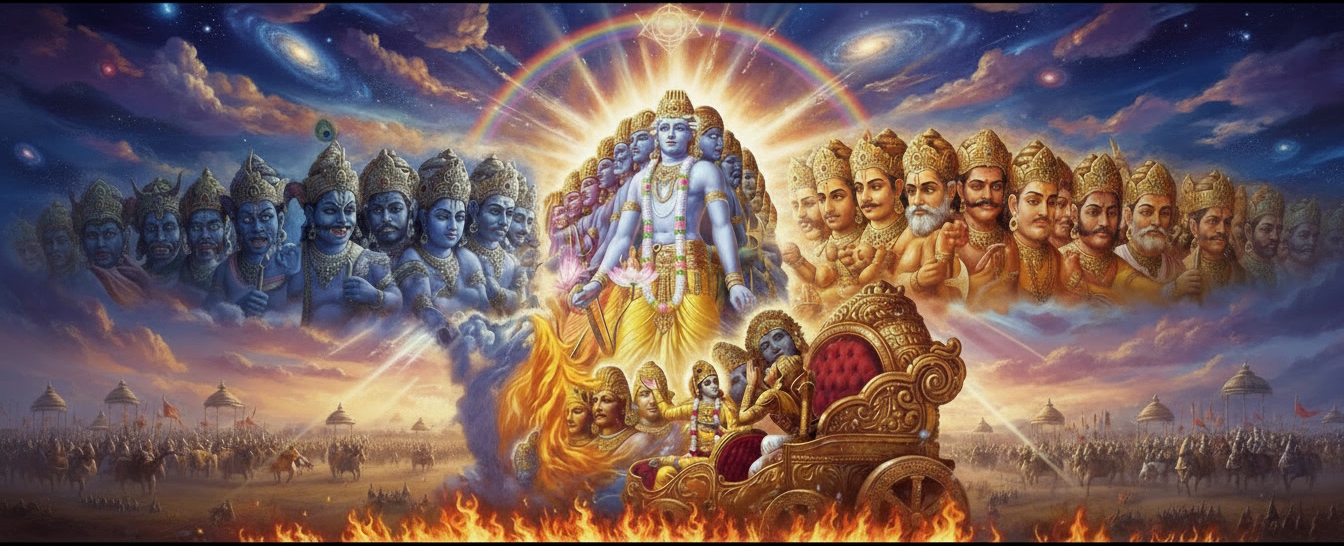
चञ्चलं हि मनः कृष्ण प्रमाथि बलवद्दृढम्।
तस्याहं निग्रहं मन्ये वायोरिव सुदुष्करम्।।6.34।।
cañcalaṃ hi manaḥ kṛṣṇa pramāthi balavaddṛḍham|
tasyāhaṃ nigrahaṃ manye vāyoriva suduṣkaram||6.34||
Translation
The mind verily is restless, turbulent, strong and unyielding, O Krishna: I deem it as difficult to control it as to control the wind.
हिंदी अनुवाद
क्योंकि हे कृष्ण ! मन बड़ा ही चञ्चल, प्रमथनशील, दृढ़ (जिद्दी) और बलवान् है। उसका निग्रह करना मैं वायुकी तरह अत्यन्त कठिन मानता हूँ।
Commentaries & Translations
Swami Ramsukhdas
व्याख्या--'चञ्चलं हि मनः कृष्ण प्रमाथि बलवद्दृढम्'--यहाँ भगवान्को 'कृष्ण' सम्बोधन देकर अर्जुन मानो यह कहे रहे हैं कि हे नाथ! आप ही कृपा करके इस मनको खींचकर अपनेमें लगा लें, तो यह मन लग सकता है। मेरेसे तो इसका वशमें होना बड़ा कठिन है! क्योंकि यह मन बड़ा ही चञ्चल है। चञ्चलताके साथ-साथ यह 'प्रमाथि' भी है अर्थात् यह साधकको अपनी स्थितिसे विचलित कर देता है। यह बड़ा जिद्दी और बलवान् भी है।
भगवान्ने 'काम'-(कामना-) के रहनेके पाँच स्थान बताये हैं--इन्द्रियाँ, मन, बुद्धि विषय और स्वयं (गीता 3। 40 3। 34 2। 59)। वास्तवमें काम स्वयंमें अर्थात् चिज्जड़ग्रन्थिमें रहता है और इन्द्रियाँ मन बुद्धि तथा विषयोंमें इसकी प्रतीति होती है। काम जबतक स्वयंसे निवृत्त नहीं होता, तबतक यह काम समय-समयपर इन्द्रियों आदिमें प्रतीत होता रहता है। पर जब यह स्वयंसे निवृत्त हो जाता है, तब इन्द्रियों आदिमें भी यह नहीं रहता। इससे यह सिद्ध होता है कि जबतक स्वयंमें काम रहता है, तबतक मन साधकको व्यथित करता रहता है। अतः यहाँ मनको 'प्रमाथि' बताया गया है। ऐसे ही स्वयंमें काम रहनेके कारण इन्द्रियाँ साधकके मनको व्यथित करती रहती हैं। इसलिये दूसरे अध्यायके साठवें श्लोकमें इन्द्रियोंको भी प्रमाथि बताया गया है--'इन्द्रियाणि प्रमाथीनि हरन्ति प्रसभं मनः'। तात्पर्य यह हुआ कि जब कामना मन और इन्द्रियोंमें आती है, तब वह साधकको महान् व्यथित कर देती है, जिससे साधक अपनी स्थितिपर नहीं रह पाता।उस कामके स्वयंमें रहनेके कारण मनका पदार्थोंके प्रति गाढ़ खिंचाव रहता है। इससे मन किसी तरह भी उनकी ओर जानेको छोड़ता नहीं, हठ कर लेता है; अतः मनको दृढ़ कहा है। मनकी यह दृढ़ता बहुत बलवती होती है; अतः मनको 'बलवत्' कहा है। तात्पर्य है कि मन बड़ा बलवान् है, जो कि साधकको जबर्दस्ती विषयोंमें ले जाता है। शास्त्रोंने तो यहाँतक कह दिया है कि मन ही मनष्योंके मोक्ष और बन्धनमें कारण है--'मन एव मनुष्याणां कारणं बन्धमोक्षयोः।'परन्तु मनमें यह प्रमथनशीलता, दृढ़ता और बलवत्ता तभीतक रहती है, जबतक साधक अपनेमेंसे कामको सर्वथा निकाल नहीं देता। जब साधक स्वयं कामरहित हो जाता है, तब पदार्थोंका, विषयोंका कितना ही संसर्ग होनेपर साधकपर उनका कुछ भी असर नहीं पड़ता। फिर मनकी प्रमथनशीलता आदि नष्ट हो जाती है।मनकी चञ्चलता भी तभीतक बाधक होती है, जबतक स्वयंमें कुछ भी कामका अंश रहता है। कामका अंश सर्वथा निवृत्त होनेपर मनकी चञ्चलता किञ्चिन्मात्र भी बाधक नहीं होती। शास्त्रकारोंने कहा है--
Sri Harikrishnadas Goenka
क्योंकि हे कृष्ण यह मन बड़ा ही चञ्चल है। विलेखनके अर्थमें जो कृष धातु है उसका रूप कृष्ण है। भक्तजनोंके पापादि दोषोंको निवृत्त करनेवाले होनेके कारण भगवान्का नाम कृष्ण है। यह मन केवल अत्यन्त चञ्चल है इतना ही नही किंतु प्रमथनशील भी है अर्थात् शरीरको क्षुब्ध और इन्द्रियोंको विक्षिप्त यानी परवश कर देता है। तथा बड़ा बलवान् है किसीसे भी वशमें किया जाना अशक्य है। साथ ही यह बड़ा दृढ़ भी है। अर्थात् तन्तुनाग ( गोह ) नामक जलचर जीवकी भाँति अच्छेद्य है। ऐसे लक्षणोंवाले इस मनका विरोध करना मैं वायुकी भाँति दुष्कर मानता हूँ। अभिप्राय यह कि जैसे वायुका रोकना दुष्कर है उससे भी अधिक दुष्कर मैं मनका रोकना मानता हूँ।
Sri Anandgiri
[The commentator] indicates the mode of derivation of the word "Krishna"—with "Krishna" etc. Anticipating the doubt "How is the quality of 'attracting/drawing' (Karshakatva) possible in the Lord whose desires are already fulfilled (Aptakama)?", he says "Bhakta" etc. (It implies drawing the devotees). It should also be understood that He is Krishna because He has the nature of drawing away (removing) all wealth of this world and the next [from the devotee to grant liberation].
"Pramathnati" means it agitates. He reveals that very quality of agitation with "Vikshipati" (it distracts/throws about).
"Durnivaram" (Hard to restrain)—meaning it is impossible to draw it away from a desired object; he explains this other adjective with "Kincha" (Moreover). It is "Acchedyam" (uncuttable/unbreakable); he explains this other adjective with "Kincha Dridham."
"Tantunaga"—also called by the word "Varunapasha" (Varuna's noose)—is an aquatic entity intended here, which is well-known for being impossible to cut due to its extreme firmness. He explains the statement "Vayoh" (of the wind) with "Yatha" (Just as), etc.
Sri Dhanpati
He states that the fickleness of the mind is well-known. "Chanchalam"—the well-known mind; he indicates that [Arjuna addresses the Lord as] "Krishna" because He draws/attracts the devotees and Maya. Not only is the mind extremely fickle, but it is also "Pramathi"—"Pramathnati," meaning it distracts and renders the body and senses helpless (dependent on others); thus it is "Pramathi," meaning having the nature of churning/agitating.
Moreover, it is "Balavattaram" (Stronger)—impossible to be controlled by anyone. Moreover, it is "Dridham" (Obstinate/Firm)—uncuttable like the "Nagapasha" (serpent-noose/Varuna's noose). The control of such a mind, I consider—I know through my intellect—to be extremely difficult, exceedingly hard, like the control of the wind.
By the adjective "Chanchala" (Fickle), it is stated that the mind is unfit to maintain the "stable state" of Yoga characterized by equality. Anticipating the suggestion "One should achieve steadiness by not controlling the senses [forcefully, but by other means?]," the word "Pramathi" is used [to show it churns the senses too]. By "Balavat" (Strong), the mind's capacity to churn/agitate is demonstrated. "Dridham" (Firm)—the distinction is that it is impossible to cut [detachment from it] due to "Vishayalampatya" (greed/addiction to sense objects).
Sri Madhavacharya
And it is stated in the "Vyasayoga": "Due to the fickleness of the mind, the state of Yoga is indeed [rarely] stable;
without practice (Abhyasa) or detachment (Vairagya), it would not be possible. There is no doubt about this."
Sri Neelkanth
He explains this very point with "Chanchalam Hi" (For [the mind] is fickle).
"Pramathi" (Agitating) means having the nature of churning [tormenting] a single person, like many robbers [attacking one].
Sri Ramanuja
"Tatha hi" (For indeed)—The mind, which is fickle by its very nature even regarding objects to which it is incessantly habituated, and which is impossible for a person to fix in one place, forcefully agitates the person and firmly moves elsewhere.
I consider the restraint of that mind—which has a fickle nature even regarding its accustomed objects—for the purpose of establishing it in the Self (which is of a contrary nature to objects), to be extremely difficult; just like [stopping] a great wind blowing in the opposite direction using a fan, etc.
The intention is that the means of controlling the mind should be stated.
Sri Sridhara Swami
He clarifies this with "Chanchalam" etc. "Chanchalam" means fickle by its very nature.
Moreover, "Pramathi" means having an agitating nature; the meaning is that it disturbs the body and senses. Moreover, "Balavat" (Strong)—impossible to conquer even by reasoning (Vichara). Moreover, "Dridham" (Firm/Obstinate)—difficult to pierce/break because it is bound by desires for sense objects.
Therefore, just as the confinement of the wind blowing violently in the sky is impossible within a pot, etc., similarly, I consider the control—restraint—of that mind to be "Sudushkaram," i.e., absolutely impossible to accomplish.
Sri Vedantadeshikacharya Venkatanatha
Thus, in the four verses (6.29-32), "Samya" (equality) was described in terms of being of the single form of Knowledge, being free from defects, being related to Brahman and His attributes, and being unrelated to anything else. Some say that in the first two verses here, the contemplation of equality is stated, and in the third and fourth verses (31, 32), the two stages (parva) of the result—namely firmer and firmest contemplation of equality—are described.
The method of Yoga practice in four ways and the Yogi have been described. Now, to know clearly the very means of Yoga described before, Arjuna speaks again with "Yo'yam" etc.
The section starting from "Deva..." and ending with "...anubhuteshu" is to demonstrate the impossibility of contemplating equality due to the firmly rooted contrary latent impressions (vasanas) accumulated without beginning.
"Mutual difference" refers to distinctions like gods, humans, etc. "Difference between Jiva and Ishvara" refers to distinctions like being subject to Karma versus not being subject to Karma.
"Atyantabhinnataya"—The purport is that here it is not merely a differentiating attribute like "broken-horned" vs "hornless" (in cows), but rather a contradictory nature is observed.
"Etavantam kalam" (For such a long time)—Here the second case ending is used according to the rule "Kaladhvanor-atyanta-samyoge" (Panini 2.3.5 - denoting duration).
In "Akarmavashyataya cha Ishvarasamyena," the particle "cha" (and) is for the conjunction of the two equalities (mutual equality of selves and equality with Ishvara). Some read it as "Akarmavashyataya cha Ishvarasamyena cha"; in that case, the first "cha" would include "being of the single form of Knowledge" even within the equality with Ishvara. The second "cha" is as before.
Since the difference in knowledge and goals (Purushartha) is the result of the difference in Karma, the mention of "Akarmavashyata" (freedom from Karma) implies the cessation of those differences as well, so they are not separately mentioned.
"Tvaya proktah" (Spoken by You)—The purport is: "Since You are inherently Omniscient, it is possible only for You to contemplate and expound this [Yoga]." "Aham na pashyami" (I do not see)—The purport is: "I, who am possessed of beginningless contemplation of difference and whose mind is uncontrolled, do not see it."
"Sthiram sthitim" means long-lasting continuity. "Madhusudana"—The purport of the address is: "You, who are habituated to destroying the powerful enemies in the form of Rajas and Tamas, You alone should teach the means of controlling the mind."
"Chanchalam hi manah" (For the mind is fickle)—By considering this subsequent statement, the word "Manasah" (of the mind) is supplied [in verse 33]. The particle "Hi," although interpreted by Yadavaprakasha as an adjective for the non-sentient (Achit), is more clearly and appropriately used here in the sense of "Hetu" (reason); thus [the commentator] says "Tatha hi."
And the "fickleness" which is the reason must be demonstrated in a generally accepted context. Therefore, to show that the meaning of the word "Chanchala" here is "having a fickle nature," the phrase "Anavarata..." (Incessant...) is used.
He states the result of fickleness with "Purushena." "Pramathi" means having the nature of churning/agitating. "Pramathya" means having agitated/bewildered. The word "Balavat" (strong) is either an adjective to the action of churning or indicates the cause (it churns because it is strong); with this intention, he says "Balat pramathya" (Having churned by force).
He states that it is firm in opposition with "Dridham anyatra." He explains the intended meaning of the pronoun "Tasya" (its) with "Svabhyasta" (habituated to oneself). "Tadviparitakara" means that which was not practiced before. "Sthapayitum" means for the purpose of establishing.
To show that the fickleness etc. displayed in the "mind" (the subject of comparison) is also intended in the "illustration," he uses the phrase "Pratikula" etc. To indicate the weakness (difficulty) of the means of mind-control, and to show the impossibility of controlling the "wind" by feeble means, he uses the example "Vyajanadineva" (like by a fan, etc.). Thus, the statement of difficulty is not to reject [Yoga], but to inquire about the means; this he states with "Manah" etc.
Swami Chinmayananda
आधुनिक विचारधारा का मनुष्य सभी पवित्र शास्त्रों की केवल निन्दा करता है जबकि एक जिज्ञासु साधक भी प्रत्येक शास्त्रोक्त कथन को अन्धविश्वास से स्वीकार नहीं कर लेता वरन् वह प्रश्न भी पूछता है। परन्तु आधुनिक व्यक्ति की निन्दा और जिज्ञासु द्वारा किये गये प्रश्न में जमीन आसमान का अन्तर है। जिज्ञासु का प्रयत्न होता है कि शास्त्र के तात्पर्य को पूर्ण रूप से समझे। अर्जुन अपने मन को सम्यक् प्रकार से जानता है कि वह अति चंचल प्रमथनधर्मी बलवान् और दृढ़ है।प्रमाथि बलवान् और दृढ़ ये तीन शब्द अत्यन्त महत्वपूर्ण और अर्थ गर्भित हैं। प्रमाथि शब्द से वृत्तिप्रवाह की द्रुत गति तथा उसके द्वारा उत्पन्न विक्षेपों की लहराती लहरें भी दर्शायी गयी हैं। अर्जुन कहता है कि यह मन प्रमाथि होने के साथसाथ बलवान् भी है। द्रुत गति का वृत्तिप्रवाह इष्ट विषय की ओर अग्रसर होते हुए उसे प्राप्त होने पर उस विषय के साथ दृढ़ आसक्ति से बंधकर इतना बलवान् हो जाता है कि उसे उस विषय से विलग करना दुष्कर कार्य हो जाता है। उसका तीसरा लक्षण है दृढ़ता अर्थात् एक बार यह स्वेच्छाचारी मन किसी विषय का चिन्तन प्रारम्भ कर दे तो उसे उससे परावृत्त करना सरल कार्य नहीं होता। इन लक्षणों से युक्त मन को किस प्रकार विषय पराङ्मुख करके आत्मा में स्थिर कर सकते हैं जैसा कि ध्यान विधि में बताया गया हैमन की शक्ति और गति भेदकता और व्यापकता को यहाँ प्रयुक्त वायु की उपमा से अधिक सुन्दर तथा प्रभावशाली शैली में व्यक्त नहीं किया जा सकता था। अर्जुन यहाँ श्रीकृष्ण से उन उपायों को जानना चाहता है जिनके द्वारा प्रचण्ड वायु के समान वेग वाले मन को पूर्णतया वश में किया जा सकता है। अर्जुन भगवान् को उनके अत्यन्त सुपरिचित नाम कृष्ण के द्वारा सम्बोधित करता है जो अत्यन्त उपयुक्त है क्योंकि कृष् धातु से कृष्ण शब्द बनता है जिसका अर्थ है जो आत्मानुभवी भक्तों के समस्त दोषों अर्थात् वासनाओं का कर्षण कर लेता है नष्ट कर देता है।स्वप्न में किसी की हत्या करने वाला स्वप्नद्रष्टा जैसे ही जाग्रत् अवस्था में आता है उसके रक्तरंजित हाथ और कलंक की कालिमा तत्काल ही स्वच्छ हो जाती हैं। इसी प्रकार जब आत्मा के वास्तविक रूप की पहचान हो जाती है तब मन और उसकी आक्रामक प्रवृत्तियाँ वासनाएं और उनकी दुष्टता बुद्धि और उसकी खोज की प्रवृत्ति शरीर और उसके भोग ये सभी नष्ट हो जाते हैं। इसके लिए दार्शनिक कवि महर्षि व्यासजी ने महाभारत में इस अन्तरात्मा का चित्रण वृन्दावन के मुरली मनोहर श्याम कृष्ण के रूप में किया है। प्रकरण के सन्दर्भ में किसी विशेष गुण को दर्शाने के लिए व्यक्ति को एक विशेष संज्ञा प्रदान करने की कला संस्कृत भाषा की अपनी विशेषता है जो विश्व की अन्य भाषाओं में नहीं मिलती।अर्जुन के तर्क को स्वीकार करते हुए भगवान् कहते हैं
Sri Abhinavgupta
By the words 'yah' (that/which) and 'ayam' (this), indicating the remote (indirect) and the immediate (direct) respectively, this is suggested: Although Brahman is clear through the succession of means described immediately before by the Lord, and although It is directly pointed out, It remains very far away due to the wickedness of the mind's restlessness, thus acting like something remote.
'Pramathi' means it churns up the seen (visible results) and the unseen (invisible results). 'Balavat' means it is powerful.
'Dridham' means it is impossible to restrain it from its corrupt activity.
Sri Jayatritha
Here regarding this, he also states the scriptural authority (Agama)—'uktam cha' (and it is said).
By this, the remedial statement (refutation of doubt) starting with 'asamshayam...' (Chapter 6, Verse 35) is also explained.
Sri Madhusudan Saraswati
He explains that very unsteadiness through its universality. 'Chanchalam'—meaning excessively moving; the mind is 'hi' (indeed) well-known to be always unsteady by nature.
'Krishna'—He who 'krishati' (draws away/destroys) the sins and defects of devotees which are otherwise impossible to remove, or He who 'akarshati' (draws/bestows) the goals of human life (purusharthas) to them which are otherwise impossible to attain—is Krishna. By addressing Him in this form, Arjuna implies: "You alone are capable of removing the difficult-to-restrain restlessness of the mind and bestowing the difficult-to-attain bliss of Samadhi."
Not only is the mind excessively unsteady, but it is also 'Pramathi'—meaning its nature is to churn or agitate the body and the senses. By being an agitator, it is the cause of the helplessness of the aggregate of the body and senses. Moreover, it is 'Balavat' (strong)—meaning it is impossible to turn it away from a desired object by any means. Further, it is 'Dridham' (firm/tough)—meaning it is impossible to pierce (cut through) because it is interwoven with thousands of threads of impressions (vasanas) of objects. In the commentary, it is called uncuttable like a 'Tantunaga'. 'Tantunaga' means a rope-snare (nagapasha), or a specific creature living in large lakes known in regions like Gujarat.
Because of its inherent firmness, it is strong; being strong, it is agitating (pramathi); and being agitating, it is excessively unsteady. I consider the restraint (nigraha)—meaning the control or establishing it in a state without modifications—of such a mind, which is like a great intoxicated wild elephant, to be 'sudushkaram' (exceedingly difficult, totally impossible to do), just like controlling the wind. Just as it is impossible to create stillness in the wind blowing violently in the sky and confine it, so it is with the mind.
The purport is this: Even when knowledge of Reality (Tattvajñana) has arisen, for a person living to experience Prarabdha karma (karma that has begun to bear fruit), the attributes of the mind—characterized by doership, enjoyership, pleasure, pain, attachment, aversion, etc.—continue to persist (even though sublated/contradicted by knowledge) because they are causes of affliction, and thus become a cause of bondage. The removal of this through Yoga, which is the cessation of mental modifications, is called Jivanmukti (liberation while living). Regarding the statement that by achieving this, a Yogi is considered supreme, the following is said: Is this bondage removed from the Witness (Sakshi) or from the Mind (Chitta)?
It cannot be the first, because the bondage of the Witness has already been removed by Tattvajñana. It cannot be the second, because the reversal of one's essential nature is impossible and because of the presence of an opposing force. Wetness cannot be removed from water nor heat from fire. According to the maxim "Except for the power of Consciousness, all entities change every moment," the mind is by nature subject to momentary change. Furthermore, Prarabdha karma, which obstructs even Tattvajñana (which is engaged in destroying all ignorance and its effects) to yield its own results, has established the body, senses, etc. And the experience of fruits like pleasure and pain by karma cannot be accomplished without mental modifications. Therefore, although natural mental modifications can somehow be suppressed by Yoga, I consider from my own realization that due to the superior strength of Prarabdha karma (compared even to Yoga, like Tattvajñana), the restraint of the inevitable restlessness of the mind by Yoga is impossible.
Therefore, Arjuna's objection is that the statement "The Yogi who sees with equality everywhere... is considered supreme" is unreasonable.
Sri Purushottamji
He speaks of the very unsteadiness of the mind—'chanchalam hi', etc. O Krishna (Sadananda - Eternal Bliss)! The mind is 'hi'—undoubtedly—'chanchalam', meaning fickle by its very nature. Otherwise, while words of Sadananda (You, the Eternal Bliss) are present, why would I be prepared to question again? This is indicated by the address 'Krishna'.
Moreover, it is 'Pramathi'—excessively churning, an agitator of the senses. Moreover, it is 'Balavat'—very powerful, unmanageable (incurable) by words of knowledge, etc. Moreover, it is 'Dridham'—having a nature of not abandoning attachment to its objects.
I consider the restraint (subjugation) of that mind to be 'sudushkaram'—totally impossible to do—just like the blocking (confining) of the wind blowing violently in the sky inside a house etc., for one's own comfort or to remove heat. Or, the meaning is: I consider the stopping of the moving Prana-Vayu (vital air) to be impossible.
Sri Shankaracharya
The word 'Krishna' comes from the root 'Krish' meaning 'vilekhana' (ploughing or scraping). He is 'Krishna' because of the drawing away (destruction) of the sins and defects of the devotees; 'O Krishna' is the address to Him.
'Hi' means 'because' the mind is 'chanchalam' (unsteady). Not only is it excessively unsteady, but it is also 'Pramathi'—of an agitating nature; becoming distracting, it churns the body and senses and renders them helpless (dependent on it). Moreover, it is 'Balavat'—powerful; it cannot be controlled by anyone because it is difficult to restrain. Moreover, it is 'Dridham'—uncuttable like a 'Tantunaga' (a shark/crocodile or a strong rope snare).
Of such a mind, I consider the restraint—control—to be like that of the wind. The meaning is: just as the restraint of the wind is difficult to do, I consider this (mind control) even more difficult than that.
'Sri Bhagavan Uvacha'—It is exactly as you say, the Blessed Lord said.
Sri Vallabhacharya
Considering the Yoga characterized by the aforementioned attributes to be impossible, Arjuna spoke in two verses starting with 'yo'yam yogah'. The restraint of the mind through that equality which has been described is itself harder to perform, because the mind is 'chanchalam' (unsteady).
By the word 'hi' (indeed), the well-known nature (of the mind's unsteadiness) is stated, because the destruction of the state (of Yoga) of sages like Agnidhra and Saubhari has been seen.
Just as the confinement of the wind blowing violently in the sky inside pots etc., is difficult to do, so is this (restraint of the mind).
Swami Sivananda
चञ्चलम् restless? हि verily? मनः the mind? कृष्ण O Krishna? प्रमाथि turbulent? बलवत् strong? दृढम् unyielding? तस्य of it? अहम् I? निग्रहम् control? मन्ये think? वायोः of the wind? इव as? सुदुष्करम् difficult to do.Commentary The mind constantly changes its objects and so it is ever restless.Krishna is derived from Krish which means to scrape. He scrapes all the sins? evils? and the causes of evil from the hearts of His devotees. Therefore He is called Krishna.The mind is not only restless but also turbulent or impetuous? strong and obstinate. It produces violent agitation in the body and the senses. The mind is drawn by the objects in all directions. It works always in conjunction with the five senses. It is drawn by them to the five kinds of objects. Therefore it is ever restless. It enjoys the five kinds of sensobjects with the help of these senses and the body. Therefore it makes them subject to external influences. It is even more difficult to control it than to control the wind. The mind is born of Vayutanmatra (wind rootelement). That is the reason why it is as restless as the wind.
Swami Gambirananda
Hi, for, O Krsna-the word krsna is derived from the root krs [Another derivative meaning may be-'the capacity to draw towards Himself all glorious things of this and the other world'.], in the sense of 'uprooting'; He is Krsna because He uproots the defects such as sin etc. of devotees-; manah, the mind; is cancalam, unsteady. Not only is it very unsteady, it is also pramathi, turbulent. It torments, agitates, the body and the organs. It brings them under extraneous control. Besides, it is balavat, strong, not amenable ot anybody's restraint. Again, it is drdham, obstinate, hard as the (large shark called) Tantu-naga (also known as Varjuna-pasa).
Aham, I; manye, consider; tasya, its-of the mind which is of this kind; nigrahah, control, restraint; to be (suduskaram, greatly difficult;) vayoh iva, as of the wind. Control of the wind is difficult. I consider the control of the mind to be even more difficult than that. This is the idea.
'This is just as you say.'
Swami Adidevananda
For the mind, which is found to be fickle even in matters incessantly practised, cannot be firmly fixed by a person in one place. It agitates that person violently and flies away stubbornly elsewhere. Regarding such a mind, which by nature is fickle even in matters practised, I regard that its restraint and fixing in the self, which is of ite opposite nature, is as difficult as restraining a strong contrary gale with such things as a fragile fan etc. The meaning is that the means for the restraint of the mind should be explained.