Bhagavad Gita - Chapter 7 - Shloka (Verse) 10
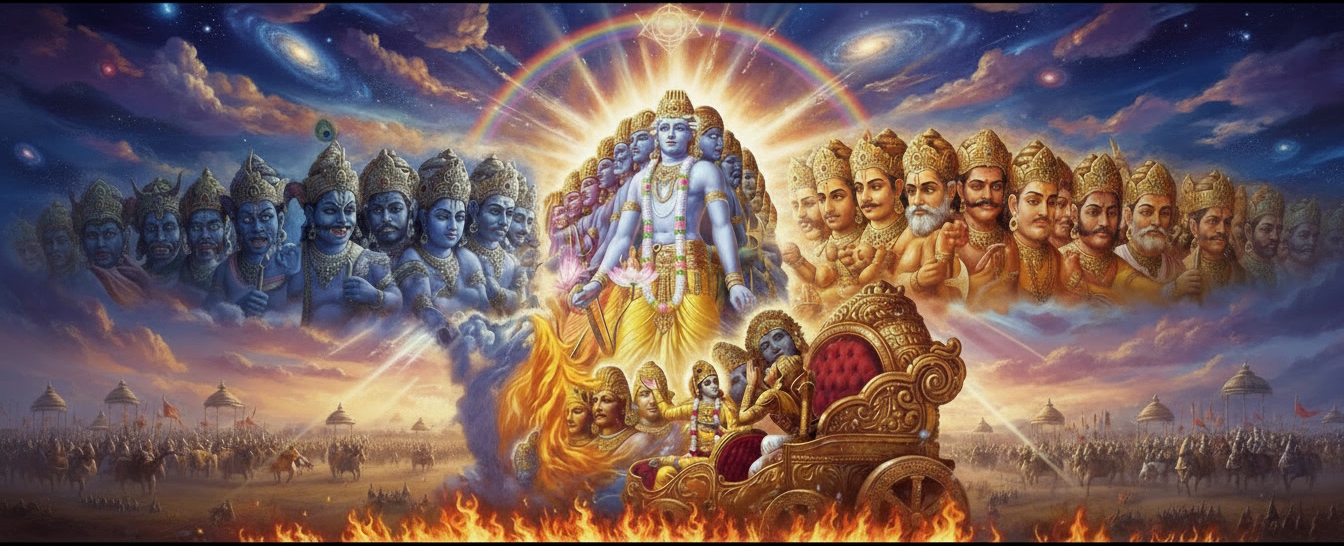
बीजं मां सर्वभूतानां विद्धि पार्थ सनातनम्।
बुद्धिर्बुद्धिमतामस्मि तेजस्तेजस्विनामहम्।।7.10।।
bījaṃ māṃ sarvabhūtānāṃ viddhi pārtha sanātanam|
buddhirbuddhimatāmasmi tejastejasvināmaham||7.10||
Translation
Know Me, O Arjuna, as the eternal seed of all beings; I am the intelligence of the intelligent; the splendour of the splendid objects am I.
हिंदी अनुवाद
हे पृथानन्दन ! सम्पूर्ण प्राणियोंका अनादि बीज मुझे जान। बुद्धिमानोंमें बुद्धि और तेजस्वियोंमें तेज मैं हूँ।
Commentaries & Translations
Swami Ramsukhdas
व्याख्या--'बीजं मां सर्वभूतानां विद्धि (टिप्पणी प0 405) पार्थ सनातनम्'--हे पार्थ ! सम्पूर्ण प्राणियोंका सनातन (अविनाशी) बीज मैं हूँ अर्थात् सबका कारण मैं ही हूँ। सम्पूर्ण प्राणी बीजरूप मेरेसे उत्पन्न होते हैं, मेरेमें ही रहते हैं और अन्तमें मेरेमें ही लीन होते हैं। मेरे बिना प्राणीकी स्वतन्त्र सत्ता नहीं है।जितने बीज होते हैं, वे सब वृक्षसे उत्पन्न होते हैं और वृक्ष पैदा करके नष्ट हो जाते हैं। परन्तु यहाँ जिस बीजका वर्णन है, वह बीज 'सनातन' है अर्थात् आदि-अन्तसे रहित (अनादि एवं अनन्त) है। इसीको नवें अध्यायके अठारहवें श्लोकमें 'अव्यय बीज' कहा गया है। यह चेतन-तत्त्व अव्यय अर्थात् अविनाशी है। यह स्वयं विकार-रहित रहते हुए ही सम्पूर्ण जगत्का उत्पादक, आश्रय और प्रकाशक है तथा जगत्का कारण है।गीतामें 'बीज' शब्द कहीं भगवान् और कहीं जीवात्मा--दोनोंके लिये आया है। यहाँ जो 'बीज' शब्द आया है, वह भगवान्का वाचक है; क्योंकि यहाँ कारणरूपसे विभूतियोंका वर्णन है। दसवें अध्यायके उन्तालसीवें श्लोकमें विभूतिरूपसे आया बीज शब्द भी भगवान्का ही वाचक है; क्योंकि वहाँ उनको सम्पूर्ण प्राणियोंका कारण कहा गया है। नवें अध्यायके अठारहवें श्लोकमें 'बीज' शब्द भगवान्के लिये आया है; क्योंकि उसी अध्यायके उन्नीसवें श्लोकमें 'सदसच्चाहमर्जुन' पदमें कहा गया है कि कार्य और कारण सब मैं ही हूँ। सब कुछ भगवान् ही होनेसे 'बीज' शब्द भगवान्का वाचक है। चौदहवें अध्यायके चौथे श्लोकमें 'अहं बीजप्रदः पिता' 'मैं बीज प्रदान करनेवाला पिता हूँ'--ऐसा होनेसे वहाँ 'बीज' शब्द जीवात्माका वाचक है। 'बीज' शब्द जीवात्माका वाचक तभी होता है, जब यह जडके साथ अपना सम्बन्ध मान लेता है, नहीं तो यह भगवान्का स्वरूप ही है।
Sri Harikrishnadas Goenka
हे पार्थ मुझे तू सब भूतोंका सनातन पुरातन बीज अर्थात् उनकी उत्पत्तिका मूल कारण जान। तथा मैं ही बुद्धिमानोंकी बुद्धि अर्थात् विवेकशक्ति और तेजस्वियों अर्थात् प्रभावशाली पुरुषोंका तेज प्रभाव हूँ।
Sri Anandgiri
Question: All beings are strung in their own cause, so how is it possible for them to be strung in You? To this, He says: 'Bījam iti' (Seed). He prevents the infinite regress (anavasthā) that would arise from depending on another seed (bījāntara): 'Sanātanam iti' (Eternal).
The power of determining the truth (tattvaniścayasāmarthya), which is the Intellect (buddhiḥ), which is the manifester (abhivyañjaka) of Consciousness (caitanya); all intelligent beings are strung in Me, who am the form of that Intellect (tadbūte mayi), He says: 'Kiñ ca iti' (And further).
The boldness (prāgalbhya) that belongs to the bold ones; those possessing that boldness are strung in Me, who am the form of that boldness, He says: 'Tejaḥ iti' (Splendor). That boldness is indeed the power to conquer others (parābhibhavasāmarthyam) and invincibility by others (paraiś cāpradhṛṣyatvam).
Sri Dhanpati
Question: Since all beings are strung in their respective causes, how is it possible for them to be strung in You? Anticipating this doubt, He says: 'Bījaṁ janmādikāraṇam' (The seed is the cause of birth, etc.). Know Me to be the seed of all beings.
Hinting that just as the immediate seed of all Pāṇḍavas (you) is through the gift of the mantra by My mother (mādyā), and by tradition, it is separate, He says: 'He Pārtha iti' (O Pārtha!). He prevents the infinite regress (anavasthā) that would arise from depending on another seed: 'Sanātanam cirantaranam' (Eternal, existing for a long time).
Buddhi (Intellect) is the power of discrimination (vivekaśaktiḥ) of the inner sense, the capacity to discern (vivecanasāmarthyam) that 'the external is real, the world is unreal'; intelligent people are strung in Me, who am that form. Similarly, splendid people (tejasvinaḥ) are strung in Me, who am the splendor (tejas) in the form of boldness (prāgalbhya).
Sri Madhavacharya
'Idaṁ jñānam' (This knowledge). The realization 'Raso’ham' (I am the taste), etc. Water, etc., are also from Him (the Supreme Self). Still, this (verse) shows that He alone is the regulator (niyamākaḥ) specifically in the matter of the nature and the essence (sāratva) of taste, etc., and the groups (sāgaṇāṁ), and that taste, etc., and their essentiality are not bound by the regulation of water, etc. This is shown by the specific words like 'apsu rasaḥ' (taste in waters), etc. And enjoyment (bhoga) is also specifically of the taste, etc., and it is also for the sake of worship (upāsanā).
It is also said in the Gītā Kalpa: 'He is the cause specifically in the matter of taste, etc., being taste, etc., their nature, and their essence in all qualities. And because He is the enjoyer of the essence everywhere, He is the Lord of the world. He is settled everywhere in the bodies of those who honor taste, etc. Water, etc., are like His attendants (pārṣadāḥ), and Hari is the object of meditation for the knowers (jñāninām). For others (common people), Vāsudeva is the Lord of the world through the richness of taste, etc.'
'Svabhāvo jīva eva ca' (Nature is the living being itself). 'Sarva-svabhāvo niyataḥ tenaiva kim utāparam' (The nature of all is regulated by Him alone, so what about others?) 'Na tad asti vinā yat syān mayā bhūtaṁ carācaram' (There is nothing moving or non-moving that exists without Me).
'Dharmāviruddhaḥ kāmaḥ' (Desire not contrary to Dharma), 'rāga-vivarjitam' (devoid of attachment), etc., are for the sake of worship. It is also said in the Gītā Kalpa: 'He is the object of worship for one who desires Dharma-consistent desire (kāma). He is the object of worship in the form of strength (bala) for one who desires strength devoid of desire and attachment (kāma-rāgādeḥ). And when meditated upon by those who do not desire (anything), He gives knowledge alone.'
'Puṇyo gandhaḥ' (Pure fragrance) is from the perspective of enjoyment. For there is also the Śruti: 'Puṇyam evāmuṁ gacchati na ha vai devān pāpaṁ gacchati' (Bṛ. U. 1.5.20) (Only merit goes to him; sin certainly does not go to the gods), 'Ṛtaṁ pibantau sukṛtasya loke' (Kaṭha U. 3.1) (Those two drink Ṛta in the world of good deeds). And Ṛta is merit, as it is stated: 'Ṛtam, truth, and Dharma, are also called Sukṛta (good deed).' And 'The Ṛta is the mental duty, truth is associated with speech/action.'
And there is no contradiction with Śrutis like 'Na ca anaśnan anyo abhicākaśīti' (Śv. U. 4.6; Muṇḍ. U. 3.1.1; Ṛk 2.3.17.5) (The other one, not eating, merely looks), because this (verse) refers to the non-eating of gross food. And (the Acharya) also speaks of subtle eating: 'Praviviktāhāratara ivai’va bhavati asmāt śārīrād ātmanaḥ' (He is as if a more refined eater than this embodied Self). And the living being (jīva) is not mentioned here, because a distinction is made by saying 'asmāt śārīrād ātmanaḥ' (than this embodied Self).
Dream, etc., are also 'embodied' (śārīra), as it is said in the Garuḍa Purāṇa: 'The embodied one is threefold, due to its presence in the waking, etc., states.' The word 'asmāt' (this) is for the purpose of distinguishing the Lord. The Nāradīya Purāṇa also mentions a difference: 'The two embodied ones are to be known: the Jīva (soul) and the one designated Īśvara (Lord). One is bound from beginningless time, and the other is eternally free.' When there is another logical possibility, the difference in the person (puruṣa) should be assumed, not the difference in the state (avasthā).
It is also said in the Gītā Kalpa: 'Because the Supreme Person (Purṣottama) eats subtle food (praviviktabhuk) than this embodied one, therefore He is both the non-enjoyer and the enjoyer due to the non-enjoyment of gross food.'
'Na tv ahaṁ teṣu' (But I am not in them) states the non-dependence (anādhāratva) of the world on Him. It is also said in the Gītā Kalpa: 'The entire world is dependent on Him, but He is not dependent on anything.'
Sri Neelkanth
'Bījam' (Seed) is the cause (kāraṇam). The seed of all beings, which are of the nature of the individual body (piṇḍa) and the Cosmos (brahmāṇḍa); the individual bodies, etc., are strung in Me, who is that seed. Like an earring, etc., in gold.
'Sanātanam' (Eternal) is everlasting (nityam), which is not produced from any other seed (bījāntarād anutpannam).
Intelligent beings are strung in Me, who is the form of the Intellect (buddhirūpe mayi).
'Tejaḥ' (Splendor) is boldness (prāgalbhya). Bold ones are strung in Me, who is that form.
Sri Ramanuja
All these distinct entities (vilakṣaṇa bhāvāḥ) are originated from Me alone, are subordinate to Me (maccheṣabhūtāḥ), and are abiding in Me alone as My body. Therefore, I alone am established as their mode (tatprakāraḥ).
Sri Sridhara Swami
Furthermore, 'Bījam iti' (Seed). The capacity to produce homogeneous effects (sajātīyakāryotpādanasāmarthyaṁ) of all moving and non-moving beings (carācarāṇāṁ bhūtānāṁ) is eternal (sanātanaṁ), pervasive in all successive effects (uttarottarasarvakāryeṣv anūsūtaṁ); know that very seed to be My glory (vibhūtiṁ), not the seed that is destroyed with each individual entity.
Similarly, the Intellect (buddhiḥ), meaning wisdom (prajñā), of the intelligent ones (buddhimatāṁ) I am. The splendor (tejaḥ), meaning boldness (prāgalbhya), of the splendid ones (tejasvināṁ) I am.
Sri Vedantadeshikacharya Venkatanatha
In this way, the meaning of the difference Śruti (bhedaśruti) was supported by 'Bhūmir āpaḥ' (7.4), etc., and 'Mayi sarvam' (7.7) is the meaning of the connecting Śruti (ghaṭakaśruti). Now, the meaning of the non-difference Śruti (abhedaśruti), established by both of these, is supported, with this intention He says: 'Ataḥ iti' (Therefore).
Some (Acharyas) interpret 'Mayi sarvam idam' (All this in Me) as 'strung in Me, who is distinguished by qualities like taste, etc.,' and 'Raso’ham' (I am the taste) etc., is its elaboration. To refute this view, He says: 'Sarvasya paramapuruṣa-śarīratvena' (Because all is the body of the Supreme Person). The sense is that the opponent's view suffers from faults like the inversion of the container-contained relationship (ādhārādheya-bhāva vaiparītya).
The adoption of mode-hood (prakāratva) is to show that the final reference (paryavasāna) of mode-denoting words (prakāravāci-śabdānām) in the substance qualified by them (prakāriṇi) is natural, a point generally established even in words denoting genus and quality. 'Abhidhānam' (denotation) means primary signification (mukhyavṛttyā) by the word.
Although words like taste, etc., are used in common parlance as distinguishers (niṣkarṣaka), and the taking of substances like water here occurs in a different substrate (vyadhikaraṇatā), one must accept that there is no distinguishing function here, because taste, etc., are modes (prakāra) of the substance which is the body of the Supreme Self, and the Supreme Self is the qualified substance (prakāri), and words like taste, etc., are used here in co-ordinate predication (sāmānādhikaraṇatā) with Him. The adoption of the substance, however, is to indicate that I am the mode of the principal taste, fragrance, etc., in those respective substances.
And the fact that the modes of a substance have that substance as their qualified whole is used in scriptures like 'Kāṭhinyavān yo bibharti' (Vi. Pu. 1.14.28) (He who sustains by hardness), this is the idea.
Even though taste is present in earth, and other qualities like form exist in water, the specific mention 'Raso’ham apsu' (I am the taste in the waters) is because the transformation into water from the Tejas (light) element is dominated by taste not produced from the preceding elements. Elsewhere, the dependence of earth, etc., on fragrance, taste, etc., is stated by texts like 'Āttagandhā tadā bhūmiḥ pralayāyā kalpate' (Vi. Pu. 6.4.14) (Then the earth, having absorbed fragrance, becomes fit for dissolution). Similarly, in subsequent specific mentions of predominance, it should be explained appropriately.
'Prabhā' (Light) is a specific substance of light (tejas) that extends beyond its own substrate. Since the moon and sun are the cause of benefit to the world only through light, they are predominant in that.
Praṇava (Om) is the predominant among all Vedas due to its being their seed (bījatva), etc. 'Pauruṣam' (Manhood) is the nature of man. According to some, it is that from which the intellect of man arises (puruṣa-buddhiḥ), and according to others, it is the seed (retas) that is the cause of the continuation of the lineage. Alternatively, 'pauruṣam' means capacity (sāmarthya), the power of agency (kartṛtvaśaktiḥ). By this, the agent (Self) is predominant over other means of action (kārakāntarebhyaḥ).
'Nṛṣu' (In men) means in the living beings (jīveṣu). Alternatively, 'pauruṣam' is manhood (puṁstvam), a specific nature like sattva which is distinct from female and neuter. The word 'nṛ' is a synonym for puruṣa.
'Puṇyo gandhaḥ' (Pure fragrance) is the fragrance of Tulasi, etc., or merely a sweet fragrance (surabhigandhamātram). Through its connection, the earth becomes the cause of the manifestation of sattva or happiness.
'Vibhāvasuḥ' here is Fire. The 'tejas' (splendor) in it is the power to burn (dāhakatvaśaktiḥ).
'Bhūta' words are used here for embodied beings (śarīriṇaḥ). The word 'sarva' here includes even Brahmā and Śiva. 'Jīvanam' (life) in them is breathing (prāṇanam), or the cause of the sustenance of breath (prāṇasthiti-hetuḥ). It is the form by which all beings live, or that which is essential for the sustenance of beings (upajīvanīyam).
'Sanātanaṁ bījam' (Eternal seed) of all beings is the principle of Prakṛti. Alternatively, since this is the context for specifying primary qualities, the word 'bīja' here refers to the nature of being the material cause (upādānatva). The meaning is the capacity of all transforming substances to result in their effects. Or, 'bījam' is the cause of sprouting (prarohakāraṇam), the respective material substance (upādānadravyam) of moving and non-moving beings.
'Buddhiḥ' (Intellect) is determination (adhyavasāya), or mere knowledge (jñānamātram).
'Tejasvinaḥ' (Splendid ones) are those possessing glory (pratāpaśīlāḥ). Their 'tejas' (splendor) is invincibility (anabhibhavanīyatvam) or the power to conquer others (parābhibhavasāmarthyam). Some call it the pride of tejas, others boldness (prāgalbhya).
'Balam' (Strength) is the power of sustaining, etc. Since the strength that acts due to desire and passion (kāmarāgavaśāt) can cause harm to others (parapīḍā), 'kāmarāgavivarjitam' (devoid of desire and passion) is said to limit it to the subject of merely sustaining the body, etc., which is appropriate for Dharma.
'Kāma' (Desire) is the highest stage of wishing. 'Rāga' (Passion) is the desire. Alternatively, the word 'kāma' refers to the object of desire (kāmya), and the passion (rāga) for that object is kāmarāga. 'Bhūteṣu' (In beings) means in creatures situated as gods, men, etc. 'Dharmāviruddhaḥ kāmaḥ' (Desire not contrary to Dharma) is affection for one's own wife, etc.
Now, He establishes the co-ordinate predication (sāmānādhikaraṇyam) of 'Raso’ham,' etc., with reason: 'Ete iti' (These). The sense is that this is not a figurative attribution (āropaḥ) intended to show dependence, like 'Rājā rāṣṭram' (The king is the kingdom), because where the primary meaning is possible, another mode of signification is inadmissible.
By 'ete' (these), it is implied that these acts are impossible to be performed by anyone other than Īśvara. By 'sarva' (all), it is recalled that even the acts done by Brahmā, Rudra, and others were created under the control of the Supreme Self, whose body is Brahmā, etc., as stated earlier in 'Ahaṁ kṛtsnasya' (7.6).
'Vilakṣaṇāḥ' (Distinct) is said to distinguish them from the rājas and tāmas natures to be mentioned later. 'Matta eva pṛthagvidhāḥ' (Of different kinds, from Me alone) will also be stated later (10.5). By this, the meaning of the adhikaraṇa 'Na vilakṣaṇatvād asya' (Brahma Sūtra 2.1.4) (Not because of its difference in nature) is also recalled.
'Matta evotpannāḥ' (Originated from Me alone), etc., is the reason for co-ordinate predication, as far as possible, according to the nature of the respective things. To show that the reason for co-ordinate predication, which pervades quality, genus, and body, is inseparability (apṛthaksiddhi), He says: 'Mayi eva avasthitāḥ' (They abide in Me alone).
Swami Chinmayananda
परिपक्व बुद्धि के जिज्ञासुओं के लिये पूर्व के दो श्लोकों में दिये गये उदाहरण तत्त्व को समझने के लिए पर्याप्त हैं किन्तु मन्द बुद्धि के पुरुषों के लिए नहीं। अत यहाँ भगवान् श्रीकृष्ण कुछ और उदाहरण देते हैं। समस्त भूतों का सनातन कारण मैं हूँ। जैसे एक चित्रकार अपने चित्र को और अधिक स्पष्ट और सुन्दर बनाने के लिये नयेनये रंगों का प्रयोग करता है वैसे ही मानो अपने संक्षिप्त कथन से संतुष्ट न होकर भगवान् श्रीकृष्ण और भी अनेक दृष्टान्त देते हैं जिनके द्वारा हम दृश्य जड़ जगत् तथा अदृश्य चेतन आत्मतत्त्व के सम्बन्ध को समझ सकें।बुद्धिमानों की बुद्धि मैं हूँ एक बुद्धिमान व्यक्ति अपने आदर्शों तथा विचारों के माध्यम से अपने दिव्य स्वरूप को व्यक्त कर पाता है। उस बुद्धिमान् पुरुष के बुद्धि की वास्तविक सार्मथ्य आत्मा के कारण ही संभव है। उसी प्रकार तेजस्वियों का तेज भी आत्मा ही है।दूसरे शब्दों में कहा जा सकता है कि आत्मा ही बुद्धि उपाधि के द्वारा बुद्धिमान व्यक्ति के रूप में प्रकट होता है। जैसे विद्युत ही बल्ब में प्रकाश हीटर में उष्णता और रेडियो में संगीत के रूप में व्यक्त होती है।आगे कहते हैं
Sri Abhinavgupta
'Bījam iti' (Seed). 'Balam iti' (Strength). Bījam (Seed) is the subtle, primary cause (sūkṣmādi-kāraṇam). 'Kāmarāgavivarjitaṁ balam' (Strength devoid of desire and passion) is the form of energy (ūjorūpaṁ) capable of sustaining all things.
Kāma (Desire) is wish (icchā), which is of the nature of pure consciousness (saṁvinmātrarūpā), and which has no contradiction with the forms of qualities (dharmarūpaiḥ) like pot, cloth, etc. Desire, being the power of the omniscient Lord, is obedient (anuyāyinī) and never contradicts anything, but it is differentiated (bhidyate) by adventitious qualities (āgantukaiḥ) like pot, cloth, etc. Therefore, the nature of the knower who worships that (pure consciousness) is the nature of pure consciousness (śuddhasaṁvitsvabhāvatvaṁ).
It is also said in the Śivopaniṣad: 'Icchāyām athavā jñāne jāte cittaṁ niveśayet' (One should fix the mind on the desire or knowledge when it arises). The meaning is only when it arises, not when it is externally extended.
Those who abandon this kind of explanation and interpret the verse with the intention that one should pursue the three aims of life (trivarga - dharma, artha, kāma) that do not mutually conflict, they are indeed worthy of reverence (namaskāryā eva) as they are expounding the secret of the Lord, even though they do not know the traditional sequence of teachings.
Sri Jayatritha
Bījam (Seed) know Me to be the cause of sprouting (prarohakāraṇam) of all beings. O Pārtha!
'Sanātanam' is ancient (cirantanam).
Furthermore, Buddhi (Intellect) is the power of discrimination (vivekaśaktiḥ) of the inner sense;
I am of those possessing the power of discrimination (buddhimatām).
Tejaḥ (Splendor) is boldness (prāgalbhya);
I am of those possessing it (tadvatāṁ), that is, the splendid ones (tejasvinām).
Sri Madhusudan Saraswati
If it is doubted that 'All beings are strung in their own respective seeds, not in You,' He says No: 'Yat sarvabhūtānāṁ' (That which is of all beings), moving and non-moving, the one seed, the cause, which is eternal (sanātanaṁ), not dependent on another seed, and is not different in each individual (prativyakti-bhinnam) or non-eternal (anityam); know that unmanifest entity, the all-seed, to be Me alone, and not something different from Me. O Pārtha! Therefore, it is appropriate that all are strung in Me alone, who am the all-seed.
Furthermore, Buddhi (Intellect) is the power to discriminate between reality and non-reality (tattvā-atattvavivekasāmarthyaṁ); I am of those endowed with such intellect. Intelligent beings are strung in Me, who is the form of the Intellect, because the absence of the qualified entity in the absence of the attribute has been stated.
Similarly, Tejaḥ (Splendor) is boldness (prāgalbhya), the power to conquer others, and invincibility by others (anabhibhāvayatvam); that which belongs to the splendid ones endowed with such boldness, that I am. The meaning is that splendid beings are strung in Me, who is the form of splendor.
Sri Purushottamji
Furthermore, 'Bījam iti' (Seed). O Pārtha! You, who are dependent on My grace, know Me to be the eternal seed (sanātanaṁ bījam) of all beings.
The purport here is: The souls residing in the līlā (divine sport) of the Supreme Person (Puruṣottama) are of His very nature (tadātmakā eva), and only parts of Him are manifested here; otherwise, they could not be useful for the līlā. Therefore, these beings, being born from Him as the seed, are also fit for service. Thus, know Me to be the seed of all, the idea being that knowledge of that (seed) is the cause of knowledge of the essential nature (svarūpajñāna-prayojakam).
Likewise, the Intellect (buddhiḥ) of the intelligent ones (buddhimatāṁ), who are skillful and striving for the knowledge of My nature, I am that skill (kauśalam). The splendor (tejaḥ) of the splendid ones (tejasvināṁ), who are invincible (durādharṣiṇāṁ), I am that invincibility (durādharṣatā).
Sri Shankaracharya
'Bījam' (Seed) know Me to be the cause of sprouting (prarohakāraṇam) of all beings. O Pārtha! 'Sanātanam' is ancient (cirantanam).
Furthermore, Buddhi (Intellect) is the power of discrimination (vivekaśaktiḥ) of the inner sense; I am of those possessing the power of discrimination (buddhimatām). Tejaḥ (Splendor) is boldness (prāgalbhya); I am of those possessing it (tadvatāṁ), that is, the splendid ones (tejasvinām).
Sri Vallabhacharya
Know Me to be the eternal seed, the causal consciousness, of all living beings; this describes the combined form as one.
Among the intelligent, I am that intellect which is of the nature of pure consciousness.
And among the brilliant, I am that splendor which is of the nature of the Self; this is the meaning.
Swami Sivananda
बीजम् seed? माम् Me? सर्वभूतानाम् of all beings? विद्धि know? पार्थ O Partha? सनातनम् eternal? बुद्धिः intelligence? बुद्धिमताम् of the intelligent? अस्मि am (I)? तेजः splendour? तेजस्विनाम् of the splendid? अहम् I.Commentary Seed means cause.Tejas also means heroism or bravery.Had Arjuna asked? Who is the seed for Thee? the Lord would have replied? There is no seed for Me. There is no cause for Me. I am the source of everything. I am the causeless Cause. I am the primeval Being.
Swami Gambirananda
O Partha, viddhi, know, mam, Me; to be the sanatanam, eternal; bijam, seed, the source of growth; sarva-bhutanam, of all beings. Besides, I am the buddhih, intellect, the power of discrimination of the mind; buddhimatam, of the intelligent, of people having the power of discrimination. I am the tejah, courage; tejasvinam, of the courageous, of those possessed of that.
Swami Adidevananda
All these entities with their peculiar characteristic are born from Me alone. They depend on Me; inasmuch as they constitute My body, they exist in Me alone. Thus I alone exist while all of them are only My modes.