Bhagavad Gita - Chapter 8 - Shloka (Verse) 15
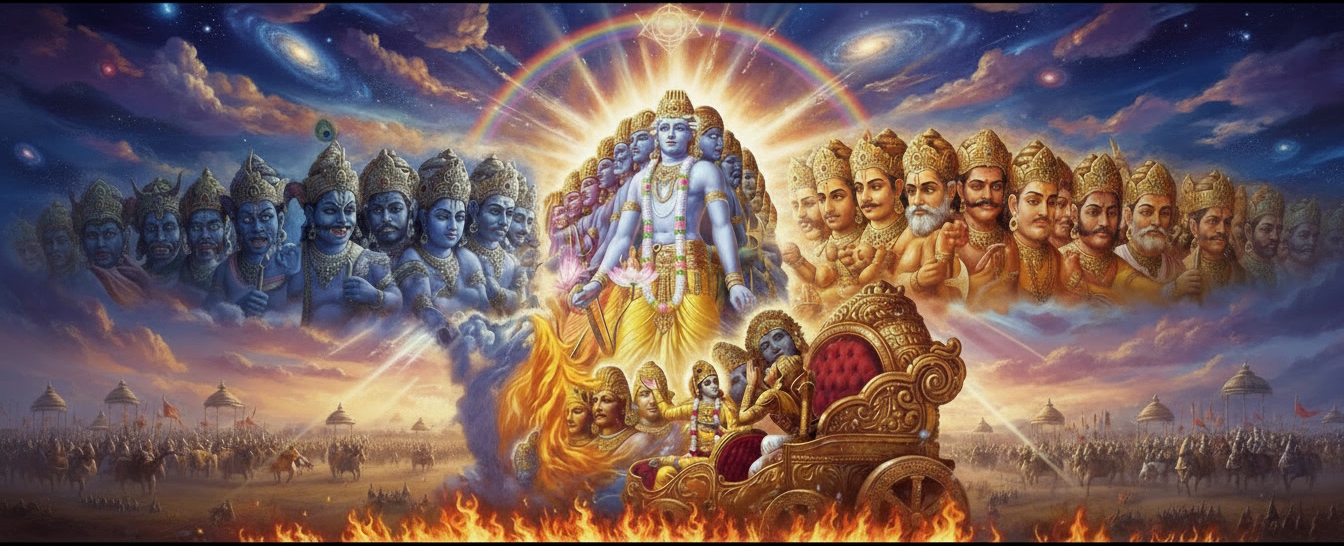
मामुपेत्य पुनर्जन्म दुःखालयमशाश्वतम्।
नाप्नुवन्ति महात्मानः संसिद्धिं परमां गताः।।8.15।।
māmupetya punarjanma duḥkhālayamaśāśvatam|
nāpnuvanti mahātmānaḥ saṃsiddhiṃ paramāṃ gatāḥ||8.15||
Translation
Having attained Me these great souls do not again take birth (here) which is the place of pain
and is non-eternal: they have reached the highest perfection (liberation).
हिंदी अनुवाद
महात्मालोग मुझे प्राप्त करके दुःखालय और अशाश्वत पुनर्जन्मको प्राप्त नहीं होते; क्योंकि वे परमसिद्धिको प्राप्त हो गये हैं अर्थात् उनको परम प्रेमकी प्राप्ति हो गयी है।
Commentaries & Translations
Swami Ramsukhdas
व्याख्या--'मामुपेत्य पुनर्जन्म ৷৷. संसिद्धिं परमां गताः'--'मामुपेत्य' का तात्पर्य है कि भगवान्के दर्शन कर ले, भगवान्को तत्त्वसे जान ले अथवा भगवान्में प्रविष्ट हो जाय तो फिर पुनर्जन्म नहीं होता। पुनर्जन्मका अर्थ है--फिर शरीर धारण करना। वह शरीर चाहे मनुष्यका हो, चाहे पशु-पक्षी आदि किसी प्राणीका हो, पर उसे धारण करनेमें दुःख-ही-दुःख है। इसलिये पुनर्जन्मको दुःखालय अर्थात् दुःखोंका घर कहा गया है।मरनेके बाद यह प्राणी अपने कर्मोंके अनुसार जिस योनिमें जन्म लेता है, वहाँ जन्म-कालमें जेरसे बाहर आते समय उसको वैसा कष्ट होता है जैसा कष्ट मनुष्यको शरीरकी चमड़ी उतारते समय होता है। परन्तु उस समय वह अपना कष्ट, दुःख किसीको बता नहीं सकता, क्योंकि वह उस अवस्थामें महान् असमर्थ होता है। जन्मके बाद बालक सर्वथा परतन्त्र होता है। कोई भी कष्ट होनेपर वह रोता रहता है,-- पर बता नहीं सकता। थोड़ा बड़ा होनेपर उसको खाने-पीनेकी चीजें, खिलौने आदिकी इच्छा होती है और उनकी पूर्ति न होनेपर बड़ा दुःख होता है। पढ़ाईके समय शासनमें रहना पड़ता है। रातों जागकर अभ्यास करना पड़ता है तो कष्ट होता है। विद्या भूल जाती है तथा पूछनेपर उत्तर नहीं आता तो दुःख होता है। आपसमें ईर्ष्या, द्वेष, डाह, अभिमान आदिके कारण हृदयमें जलन होती है। परीक्षामें फेल हो जाय तो मूर्खताके कारण उसका इतना दुःख होता है कि कई आत्महत्यातक कर लेते हैं।जवान होनेपर अपनी इच्छाके अनुसार विवाह आदि न होनेसे दुःख होता है। विवाह हो जाता है तो पत्नी अथवा पति अनुकूल न मिलनेसे दुःख होता है। बाल-बच्चे हो जाते हैं तो उनका पालन-पोषण करनेमें कष्ट होता है। लड़कियाँ बड़ी हो जाती हैं तो उनका जल्दी विवाह न होनेपर माँ-बापकी नींद उड़ जाती है, खाना-पीना अच्छा नहीं लगता, हरदम बेचैनी रहती है।वृद्धावस्था आनेपर शरीरमें असमर्थता आ जाती है। अनेक प्रकारके रोगोंका आक्रमण होने लगता है। सुखसे उठना-बैठना, चलना-फिरना, खाना-पीना आदि भी कठिन हो जाता है। घरवालोंके द्वारा तिरस्कार होने लगता है। उनके अपशब्द सुनने पड़ते हैं। रातमें खाँसी आती है। नींद नहीं आती। मरनेके समय भी बड़े भयंकर कष्ट होते हैं। ऐसे दुःख कहाँतक कहें? उनका कोई अन्त नहीं।मनुष्य-जैसा ही कष्ट पशु-पक्षी आदिको भी होता है। उनको शीत-घाम, वर्षा-हवा आदिसे कष्ट होता है। बहुत-से जंगली जानवर उनके छोटे बच्चोंको खा जाते हैं तो उनको बड़ा दुःख होता है। इस प्रकार सभी योनियोंमें अनेक तरहके दुःख होते हैं। ऐसे ही नरकोंमें और चौरासी लाख योनियोंमें दुःख भोगने पड़ते हैं। इसलिये पुनर्जन्मको 'दुःखालय' कहा गया है।
Sri Harikrishnadas Goenka
आपके सुलभ हो जानेसे क्या होगा इसपर कहते हैं कि मेरी सुलभ प्राप्तिसे जो होता है वह सुन --, मुझ ईश्वरको पाकर अर्थात् मेरे भावको प्राप्त करके फिर ( वे महापुरुष ) पुनर्जन्मको नहीं पाते। किस प्रकारके पुनर्जन्मको नहीं पाते यह स्पष्ट करनेके लिये उसके विशेषण बतलाते हैं -- आध्यात्मिक आदि तीनों प्रकारके दुःखोंका जो स्थान -- आधार है अर्थात् समस्त दुःख जिसमें रहते हैं केवल दुःखोंका स्थान ही नहीं जो अशाश्वत भी है अर्थात् जिसका स्वरूप स्थिर नहीं है ऐसे पुनर्जन्मको मोक्षरूप परम श्रेष्ठ सिद्धिको प्राप्त हुए महात्मा -- संन्यासीगण नहीं पाते। परंतु जो मुझे प्राप्त नहीं होते वे फिर संसारमें आते हैं।
Sri Anandgiri
Do those who have attained You remain in You alone, or do they return again like those from the region of the moon (Chandraloka)? Asking out of this doubt—[the word] 'tava' (Yours) [is implied].
There, by the answering verse, the certainty is shown—'uchyate' (it is said). Attaining the Lord is not merely proximity; he explains this as—'madbhāvam' (My being/nature).
He clarifies the undesirable nature of rebirth through the question—with 'kim' etc. 'Mahātmatva' (being a great soul) means the distinction of possessing excellent Sattva (purity). The ascetics, having generated right knowledge regarding that very Lord, [remain therein]—this is the ellipsis to be supplied.
While there is non-return for those who have approached the Lord, the return of those who are averse to Him and in whom right understanding has not arisen is established by implication; thus he says—'ye punaḥ' (those who again).
Sri Dhanpati
To the one doubting whether those who attain You return again like those from Chandraloka or not, He speaks—'mām' (Me). Having attained 'mām' (Me, the Lord), and obtaining 'madbhāvam' (My nature/likeness), they do not attain rebirth—meaning re-arising, or return. What kind of rebirth do they not attain? He states the qualification for that. 'Duḥkhālayam'—the abode of miseries, namely Adhyatmika (internal), Adhibhautika (external), and Adhidaivika (divine/supernatural) miseries; that in which miseries merge is 'duḥkhālayam'. It means the repository of pain.
Therein, Adhyatmika is twofold: physical and mental. That caused by the imbalance of wind (vata), bile (pitta), and phlegm (kapha) is physical. That caused by lust, anger, greed, delusion, fear, envy, and the non-attainment of specific objects is mental. All this is called Adhyatmika because it is amenable to internal remedies. Miseries caused by humans, beasts, deer, birds, reptiles, and stationary life forms are Adhibhautika. Miseries caused by the influence of Yakshas, Rakshasas, Vinayakas, planetary spirits (grahas), etc., are Adhidaivika. Adhibhautika and Adhidaivika miseries are amenable to external remedies. Rebirth is the alayam (place/home) of miseries.
[Note on interpretation]: "In this view, the conformity with the subsequent statement 'But having attained Me, O Kaunteya, there is no rebirth' is lost, and faults such as the necessity of supplying a subject arise; therefore, the teachers have ignored this specific view." The miseries of dwelling in the womb and exiting through the vaginal passage should be understood as included within these three types of misery. Not only is it an abode of misery, but they also do not attain such a rebirth which is 'aśāśvatam'—not eternal, of an unstable nature.
Because they are 'mahātmānaḥ' (great souls)—of pure minds, in whom right vision regarding that Supreme Lord has arisen; they have 'gatāḥ' (gone to/attained) 'saṃsiddhiṃ'—the supreme, excellent perfection named Liberation. Those who have attained supreme perfection (Moksha), even if not yet departed (from the body), are indeed 'gone' (liberated) because of their extreme proximity (to the Lord).
As is remembered in the Smriti regarding those who have gone to Brahmaloka: "Together with Brahma, all of them, when the universal dissolution (pratisanchara) arrives; at the end of the High One (Para), having become self-fulfilled, they enter the Supreme Abode." Here, 'pratisanchara' means the dissolution of Brahma. Others interpret "at the end of Para" as the destruction of the four-faced Brahma. In this view (of gradual liberation via Brahmaloka), one must understand there is a contradiction with the subsequent verse "Up to the world of Brahma..." and an abandonment of the primary meaning.
Sri Madhavacharya
He praises the attainment of That—with 'mām' (Me).
"Having attained supreme perfection"—this is indeed the cause therein.
Sri Neelkanth
Even on attaining You what happens? To this He says—'Mam' (Me). Having attained Me, they do not attain birth again a second time. 'Yat'—which birth is the abode of miseries; though appearing as an abode of some happiness to the deluded view, it is impermanent, perishable. Meaning trivial.
Who do not attain? 'Mahatmanah' (Great souls)—those whose minds are conquered by Yoga. Therefore indeed, attained to the supreme perfection, Liberation. Even if not attained (yet), due to being proximate, they are indeed attained.
And referring to those gone to Brahma-loka, it is remembered in Smriti: "Along with Brahma, they all, when the dissolution (pratisanchara) arrives; at the end of the Supreme (Para), having purified selves, enter the Supreme Abode." In 'Pratisanchara' means in the dissolution of Brahma. In the 'Anta' (end) of the Supreme (Para) means in the destruction of the Four-faced (Brahma).
Sri Ramanuja
Having attained Me, they do not again attain birth, which is the abode of all miseries and is unstable/transient. [This is] because these Mahatmas—meaning those of great minds, knowers of My true nature as it really is, who, due to My being excessively dear to them, are unable to sustain their own existence without Me, having minds attached to Me and being dependent on Me—having worshipped Me, have attained Me, who am the form of supreme perfection.
He immediately states the reason for the return and non-return of those who attain the path of power/wealth versus those who attain the Lord—
Sri Sridhara Swami
Even if You are easily accessible in this way, then what of it? Regarding this, He says—'mām' (Me).
The Mahatmas (great souls) possessing the described characteristics—My devotees—having attained Me, do not again attain birth, which is the shelter of misery and is transient.
Because they have attained the supreme, perfect perfection, namely Liberation (Moksha) itself. Or [alternatively], having attained Me, they do not attain rebirth, which is the abode, i.e., the place, of miseries.
Sri Vedantadeshikacharya Venkatanatha
Prior to this, certain distinctions regarding what is to be known and what is to be adopted for the three types of qualified aspirants were propounded. Now, He speaks to show the specific characteristic of stability and instability of the fruit (result) which must necessarily be known as it is useful for qualification—'ataḥ param' (hereafter).
Here, the non-return of the Jnani (Knower) is stated by the verse 'māmupetya'. Since the endlessness of misery is established by all proofs, and it is inappropriate to restrict the unqualified word 'misery' (duhkha), the word 'nikhila' (all/entire) is used [in the commentary]. Regarding birth, the instability indicated by the word 'aśāśvatam' implies the instability of the body, enjoyments, etc., which are inseparable from birth. Or, the word 'janma' (birth) here refers to the body which possesses birth.
With the intention that the 'greatness' implied by 'mahātmānaḥ' is not merely praise but is the cause of perfection (samsiddhi) here, he [Ramanuja] says 'yatah' (because). He shows that the 'high-mindedness' (mahamanastvam) of the Jnanis, which was elaborated earlier, is restated here, using [the phrase] 'yathāvasthita' etc.
Because it is appropriate to designate the desired fruit as 'siddhi' (perfection), and due to the inherent force of the word 'parama' (supreme), it is stated: "Me, who am of the nature of Supreme Perfection." 'Paramasaṃsiddhirūpaṃ' means of the nature of the Supreme Goal of human life (Parama-purushartha). 'Saṃsiddhi' means excellent perfection.
Swami Chinmayananda
आत्मानुभूति के द्वारा ज्ञानी पुरुष को प्राप्त लाभ का मूल्यांकन करते हुए यहाँ कहा गया है कि मुझे प्राप्त कर महात्मा जन पुनर्जन्म को नहीं प्राप्त होते। तत्त्व चिन्तक दार्शनिकों के अनुसार समस्त दुःखों का मूल है पुनर्जन्म। श्रीकृष्ण भी यहाँ पुनर्जन्म को दुःखालय और अशाश्वत कहते हैं।भारतीय दर्शन के इतिहास में एक बात ध्यान देने योग्य है कि प्रारम्भ में अमृतत्त्व को जीवन का लक्ष्य माना जाता था परन्तु बाद में पुनर्जन्म के अभाव को लक्ष्य स्वीकार किया गया। मनुष्य को सब अनुभवों में मृत्यु का अनुभव सर्वाधिक भयानक प्रतीत होता है। यही कारण है कि प्रारम्भ में साधक का समस्त प्रयत्न और व्याकुलता इस अपरिहार्य मृत्यु से मुक्ति पाने के लिए थी। जीवन की घटनाओं का सम्यक् अवलोकन और मूल्यांकन करने पर जैसेजैसे उसके ज्ञान में वृद्धि हुई और विचारों में परिपक्वता आयी तब शीघ्र ही अध्यात्म के विचारक ऋषियों ने यह पाया कि जो लोग यह समझ लेते हैं कि जीवन के अनुभवों में मृत्यु भी एक है तो उनके लिए मृत्यु की भयंकरता समाप्त हो जाती है। जीवन के अखण्ड अस्तित्व को मृत्यु काट नहीं सकती। सत्य के विषय में अत्यन्त निष्पक्ष एवं निर्मम भाव से विचार करने वाले ऋषिगण तर्क एवं अनुभव के द्वारा इस निष्कर्ष पर पहुँचे कि समस्त दुःख जन्म के साथ प्रारम्भ होते हैं। अतः जीवन का लक्ष्य पुनर्जन्म का अभाव होना चाहिए।पुनर्जन्म का स्वप्न और उसके अपरिहार्य कष्ट मिथ्या अहंकार अथवा जीव को ही होते हैं। अजन्मा आत्मा ही जड़ उपाधियों के साथ तादात्म्य से जीवभाव को प्राप्त होता है। बल्ब उपाधि में व्यक्त विद्युत् ही प्रकाश है उस बल्ब के फूट जाने पर कार्यरूप प्रकाश अपने कारणरूप विद्युत् में लीन हो जाता है जबकि विद्युत् एकमेव अद्वितीय सर्वत्र समान रूप से विश्व के सभी बल्बों में प्रकाशित होती है। इसी प्रकार अन्तःकरण की उपाधि से विशिष्ट अथवा परिच्छिन्न आत्मा ही जीव कहलाता है उसको ही जन्म वृद्धि व्याधि क्षय और मृत्यु के सम्पूर्ण दुःख और कष्ट सहने होते हैं। उपाधि के लय होने पर अर्थात् उससे हुए तादात्म्य के निवृत्त होने पर जीव अनुभव करता है कि वह स्वयं ही चैतन्य स्वरूप आत्मा है।आत्मज्ञानी पुरुष जानता है कि उसका मन और बुद्धि से कोई वास्तविक सम्बन्ध नहीं है। जैसै जाग्रत् पुरुष का स्वप्न में देखे हुए पत्नी और पुत्रों से कोई सम्बन्ध नहीं होता ठीक वैसे ही आत्मस्वरूप के प्रति जाग्रत् होने पर अहंकार (जीव) अपने दुःखपूर्ण परिच्छिन्न जीवन के साथ ही समाप्त हो जाता है। ऐसे महात्मा जनों को इस जगत् में पुनर्जन्म लेकर दुःखों को भोगने की कोई आवश्यकता नहीं रह जाती।जिस पुरुष ने जीवन पर्यन्त सतत आत्मानुसंधान की साधना से इन्द्रियों का संयम करना सीख लिया हो और मन को हृदय में तथा प्राण को बुद्धि में स्थापित कर लिया हो ऐसा पुरुष अनन्त नित्य स्वरूप को साक्षात् आत्मभाव से अनुभव करता है। तत्पश्चात् वह पुनः किसी देह विशेष में जन्म लेकर परिच्छिन्न विषयों में अनन्त सुख की व्यर्थ खोज नहीं करता।तब क्या ऐसे लोग हैं जो परा गति को प्राप्त न होकर पुनः जगत् को लौटते हैं इस पर कहते हैं --
Sri Abhinavgupta
[Objection/Doubt]: It was stated, "He attains My being." So, is there a return even after attaining that? Anticipating this doubt, He says—'māmupetya' (having attained Me).
That there is indeed a return from everywhere else will be propounded in the immediately following verse.
However, having attained Me, the Yogis do not again encounter the terror of birth, etc.
Sri Jayatritha
"He goes to the supreme goal" [8.13] and "I am easily accessible to him" [8.14]—due to this twofold statement, it should not be thought that the 'Supreme Goal' and the 'Attainment of the Lord' are separate. This is because in the subsequent text, the attainment of the Lord alone is praised. Otherwise, there would be the contingency of praising both [separately]. With this intention, he [Madhvacharya] says—'tatprāptim' (the attainment of That).
Then, how is it that having said "Having attained Me" (māmupetya), there is a separate statement "Gone to supreme perfection" (saṃsiddhiṃ paramāṃ gatāḥ)? To this, he says—'paramām'. Those who have attained Me have indeed attained the supreme perfection characterized as Liberation (Moksha). And since a seedless birth is not possible for the liberated, this is stated as the cause for the absence of birth for those who have attained Him themselves. The meaning is that the attainment of supreme perfection is not different from the attainment of the Lord.
Sri Madhusudan Saraswati
Regarding the doubt whether those who have attained the Lord return or not, He says that they do not return — having attained Me, the Controller (Ishvara), they do not attain rebirth, which is a connection with bodies such as human, etc. Of what nature is [rebirth]? It is the abode of misery (the place of various miseries like residence in the womb, exiting through the birth canal, etc.) and it is ephemeral (unstable, vanishing almost as soon as seen). The meaning is that they do not return again.
Because those great souls (Mahātmas) — whose inner organs are free from the impurities of Rajas and Tamas, who are of pure Sattva, and in whom right vision has arisen — have gone to supreme (most excellent) perfection (Mukti) at the end of the enjoyment of My world.
Here, by saying "having attained Me, they have gone to perfection," the gradual liberation (Krama-mukti) of the worshipers is indicated.
Sri Purushottamji
"Now, in this very way, worshippers of respective deities attain respective Sayujya (union)—thus it is stated in respective scriptures; so what is the distinction in attaining You?"—Upon this expectation, He states the distinction of attaining Him—with "Mamupetya" (Having attained Me).
Great souls—devotees of great mind; having attained supreme perfection—in the form of Bhava (love); having attained "Upetya"—nearness—to Me, the one Supreme Person; do not attain again the birth which is the abode of misery, of the nature of Samsara, impermanent, transient, worldly; this is the meaning.
Sri Shankaracharya
Having attained Me — having attained Me, the Lord (Ishvara), and having entered into My Being — they do not attain rebirth (re-origination).
What specific kind of rebirth do they not attain? Regarding this, He states the qualifying attribute — Duḥkhālayam, the abode (refuge) of miseries (spiritual, etc.); that in which miseries reside is the abode of misery, i.e., birth. Not only is it the abode of misery, but it is also Aśāśvatam (of unstable nature).
Such a rebirth is not attained by the great souls (Mahātmas or ascetics/Yatis) who have gone to (attained) the supreme (highest) perfection known as Moksha. However, those who do not attain Me return again.
(Question:) Do those who have attained something other than You return? This is answered [as follows] —
Sri Vallabhacharya
He demonstrates the non-return upon attaining Himself through right conduct — with the verse beginning with 'Mam'.
Having attained Me — the Supreme Person (Parama-puruṣa), the Inner Controller (Antaryāmin), the Imperishable (Akṣara), the Supreme Purushottama — the great souls (Mahātmas) do not attain rebirth; rather, they have gone to the supreme perfection, the Liberation (Mukti) that is Nirguṇa (beyond the modes of nature).
Swami Sivananda
माम् to Me? उपेत्य having attained? पुनर्जन्म rirth? दुःखालयम् the place of pain? अशाश्वतम् noneternal? न not? आप्नुवन्ति get? महात्मानः Mahatmas or the great souls? संसिद्धिम् to perfection? परमाम् highest? गताः having reached.Commentary Birth is the home of pain or seat of sorrow arising from the body. Study the Garbhopanishad. There the nature of pain? i.e.? how the child is confined in the womb? and how it is pressed during its passage along the vaginal canal and the neck of the womb or uterus? is described. Further it is much affected by the PrasutiVayu (the vital air which is responsible for the delivery of the child).Mahatmas (great souls) are free from Rajas and Tamas.Having attained Me This denotes KramaMukti or gradual liberation. The devotees who pass along the Devayana through the force of their Upasana? attain to Brahmaloka (the world of Brahma the Creator) or Satyaloka (the world of truth? the highest of the seven worlds) and there enjoy all the divine wealth and glory of the Lord and then attain to Kaivalya Moksha (final liberation) through the knowledge of Brahman? along with Brahma during the cosmic dissolution.Mahatmas or great souls who have attained Moksha do not come again to birth. Those who have not attained Me? take birth again in this world.
Swami Gambirananda
Upetya mam, as a result of reaching Me who am God-as a result of realizing My nature; mahatmanah, the exalted ones, the monks; gatah, who have attained; the paramam, highest; samsiddhim, perfection, called Liberation; na, do not; apnuvanti, get; this kind of punarjanama, rirth. As to what kind of rirth they do not get, the Lord states its characteristics-duhkhalayam, which is an abode of sorrows, a resort of physical and other sorrows, i.e. a birth to which sorrows adhere. It is not merely an abode of sorrows, but also asavatam, impermanent, having no fixity of nature.
On the other hand, those who do not reach Me, they come again.
Again, 'Is it that those who attain someone other than You return?' This is being answered:
Swami Adidevananda
Having attained Me, they are not subject to rirth, which leads to a condition that is transient and an abode of sorrow. These great souls, i.e., men of noble minds, worship and attains Me as the sorrow object of attainment; because they possess knowledge of My essential nature as it really is; they are unable to maintain or sustain themselves without Me, as I am exceedingly dear to them. With their minds deeply attached to Me and completely dependent on Me, they reach Me as the supreme goal.
Sri Krsna next teaches the reason for the return to Samsara of those aspirants for Aisvarya (prosperity) and for the non-return to Samsara of those who have reached the Lord: