Bhagavad Gita - Chapter 9 - Shloka (Verse) 32
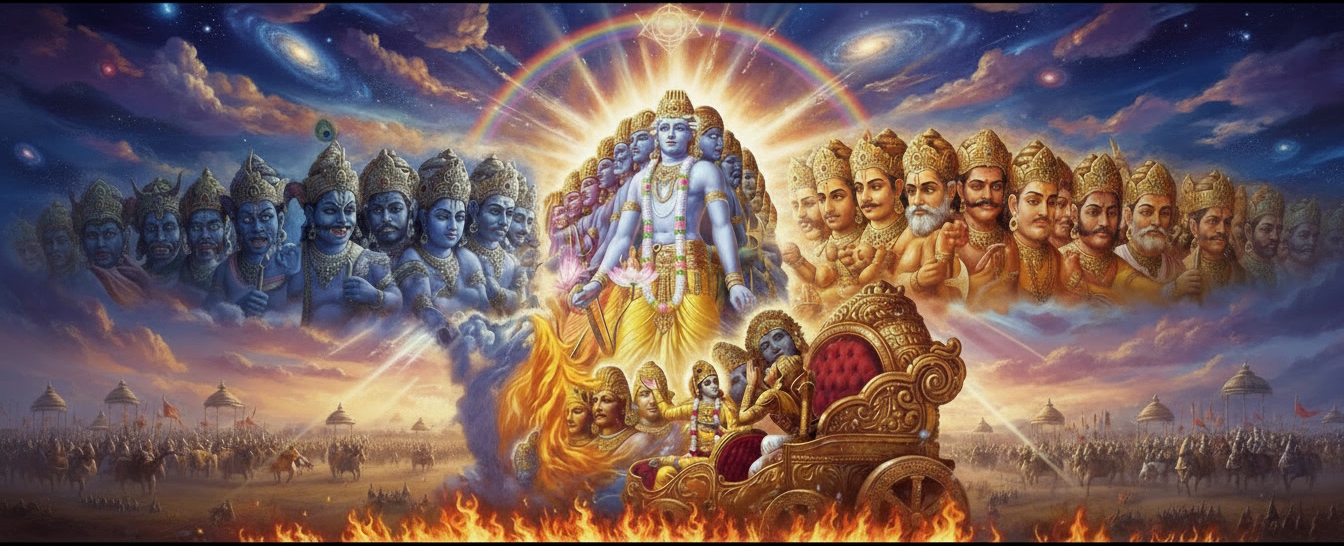
मां हि पार्थ व्यपाश्रित्य येऽपि स्युः पापयोनयः।
स्त्रियो वैश्यास्तथा शूद्रास्तेऽपि यान्ति परां गतिम्।।9.32।।
māṃ hi pārtha vyapāśritya ye'pi syuḥ pāpayonayaḥ|
striyo vaiśyāstathā śūdrāste'pi yānti parāṃ gatim||9.32||
Translation
For, taking refuge in Me, they also who, O Arjuna, may be of a sinful birth women, Vaisyas as well as Sudras attain the Supreme Goal.
हिंदी अनुवाद
हे पृथानन्दन ! जो भी पापयोनिवाले हों तथा जो भी स्त्रियाँ, वैश्य और शूद्र हों, वे भी सर्वथा मेरे शरण होकर निःसन्देह परमगतिको प्राप्त हो जाते हैं।
Commentaries & Translations
Swami Ramsukhdas
व्याख्या--'मां हि पार्थ व्यपाश्रित्य ৷৷. यान्ति परां गतिम्'-- जिनके इस जन्ममें आचरण खराब हैं अर्थात् जो इस जन्मका पापी है, उसको भगवान्ने तीसवें श्लोकमें 'दुराचारी' कहा है। जिनके पूर्वजन्ममें आचरण खराब थे अर्थात् जो पूर्वजन्मके पापी हैं और अपने पुराने पापोंका फल भोगनेके लिये नीच योनियोंमें पैदा हुए हैं, उनको भगवान्ने यहाँ 'पापयोनि' कहा है।
यहाँ 'पापयोनि' शब्द ऐसा व्यापक है, जिसमें असुर, राक्षस, पशु, पक्षी आदि सभी लिये जा सकते हैं (टिप्पणी प0 526) और ये सभी भगवद्भक्तिके अधिकारी माने जाते हैं। शाण्डिल्य ऋषिने कहा है --'आनिन्द्ययोन्यधिक्रियते पारम्पर्यात् सामान्यवत्।' (शाण्डिल्य-भक्तिसूत्र 78) अर्थात् जैसे दया, क्षमा, उदारता आदि सामान्य धर्मोंके मात्र मनुष्य अधिकारी हैं, ऐसे ही भगवद्भक्तिके नीची-से-नीची योनिसे लेकर ऊँची-से-उँची योनितकके सब प्राणी अधिकारी हैं। इसका कारण यह है कि मात्र जीव भगवान्के अंश होनेसे भगवान्की तरफ चलनेमें, भगवान्की भक्ति करनेमें, भगवान्के सम्मुख होनेमें अनधिकारी नहीं हैं। प्राणियोंकी योग्यताअयोग्यता आदि तो सांसारिक कार्योंमें हैं क्योंकि ये योग्यता आदि बाह्य हैं और मिली हुई हैं तथा बिछुड़नेवाली हैं। इसलिये भगवान्के साथ सम्बन्ध जोड़नेमें योग्यताअयोग्यता कोई कारण नहीं है अर्थात् जिसमें योग्यता है, वह भगवान्में लग सकता है और जिसमें अयोग्यता है, वह भगवान्में नहीं लग सकता -- यह कोई कारण नहीं है। प्राणी स्वयं भगवान्के हैं अतः सभी भगवान्के सम्मुख हो सकते हैं। तात्पर्य हुआ कि जो हृदयसे भगवान्को चाहते हैं, वे सभी भगवद्भक्तिके अधिकारी हैं। ऐसे पापयोनिवाले भी भगवान्के शरण होकर परमगतिको प्राप्त हो जाते हैं, परम पवित्र हो जाते हैं।
Sri Harikrishnadas Goenka
तथा --, क्योंकि हे पार्थ जो कोई पापयोनिवाले हैं अर्थात् जिनके जन्मका कारण पाप है ऐसे प्राणी हैं -- वे कौन हैं सो कहते हैं -- वे स्त्री? वैश्य और शूद्र भी मेरी शरणमें आकर -- मुझे ही अपना अवलम्बन बनाकर परम -- उत्तम गतिको ही पाते हैं।
Sri Anandgiri
For this reason also, devotion to the Lord should be performed; He says 'Kincha' (Moreover) etc.
Stating the reason why 'My devotee does not perish,' and asserting that there is no restriction of caste regarding the eligibility for devotion, He says 'Mam hi' (For, taking refuge in Me).
Sri Dhanpati
Moreover, O Partha! Even those who are 'papayonayah'—meaning those whose birth is sinful—even they, 'vyapashritya' (taking refuge) in Me, Vasudeva—accepting Me as the Refuge with the thought 'The Lord alone, pleased by devotion, is our Deliverer'—attain the 'param' (supreme/exalted) goal.
Who are those of sinful birth? To this He says — 'Women, Vaishyas, and Shudras'. Among them, for women and Shudras, being unauthorized for Vedic study etc., and having obtained a female birth due to an abundance of sin, the state of sinful birth is evident. Vaishyas also are to be understood as those who were Brahmins or Kshatriyas in previous births and attained the Vaishya womb due to sinful deeds, being engaged in agriculture etc.
Objection: Why did the Acharyas not interpret it as: 'Whoever may be of sinful birth—outcastes or animals corrupted by caste defect—AND women, Vaishyas, and Shudras, they too attain the supreme goal'? Answer: It is said—The meaning intended here is: 'Even the inferior attain the supreme goal by taking refuge in Me, what then to speak of the superior?' (a fortiori argument). There, inferiority is caused by sin, and superiority is caused by merit. Thus, since women etc. are inferior, their being 'papayonayah' is necessary; therefore, this very term 'papayonayah' is connected to women etc. Otherwise, if it were managed merely by saying 'even those who are sinful births like outcastes attain the supreme goal,' then the separate mention of women etc. would be futile; this is the direction.
Addressing him as 'Partha', He suggests: 'You, being the son of My father's sister (Pritha), are extremely superior.'
Sri Neelkanth
Moreover, O Partha! 'Hi' means it is well-known; 'vyapashritya'—taking refuge in Me; even those who are of extremely sinful birth—women and others—attain the supreme goal.
Sri Ramanuja
Women, Vaishyas, and Shudras, and even those of sinful birth, taking complete refuge in Me, attain the supreme goal.
Sri Sridhara Swami
That My devotion purifies one fallen from good conduct—what is surprising in this? Since My devotion liberates even those of bad lineage and those ineligible (for Vedic rites) from Samsara, He says 'Mam hi'.
Even those who may be 'papayonayah'—of low birth like outcastes etc.; even Vaishyas engaged only in agriculture etc.; women; and Shudras etc. devoid of Vedic study—they too, 'vyapashritya'—taking refuge in Me and serving Me—attain the supreme goal. 'Hi' means certainly.
Sri Vedantadeshikacharya Venkatanatha
'Api chet suduracharah' [9.30] referred to adventitious sin. Now, regarding those sinful from birth itself, having expanded on the attainment of the fruit merely by taking refuge in Him despite inferiority of caste etc., which was introduced earlier; and from that very fact, stating the Kaimutika Nyaya (a fortiori argument) regarding superiority of caste etc. and abundance of devotion, saying 'You who are superior by caste etc., being free of doubt regarding the fruit, stand firm in the means'—this is stated by the two verses beginning 'Mam hi'.
The word 'papayoni' is used to restate the form suspected of being an obstacle to the supreme goal for women, Vaishyas, and Shudras. There, the syntax is 'even those who may be of sinful birth.' Even the Vaishya, who belongs to the three upper castes and possesses knowledge etc., is counted along with Shudras as 'papayoni' because of ineligibility for 'Sattra' sacrifices. For in Sattras, all priests (Ritvijs) are themselves the sacrificers (Yajamanas), and priesthood belongs to the Brahmin. And that superiority in the form of eligibility for Sattra is heard even for the Kshatriya from the scriptural text 'Therefore the performer of Vajapeya is fit to be a priest.' Because it stands as a counter-head to the word 'papayoni', the word 'punya' (in the next verse) is shown to mean 'of meritorious birth'.
The statement of effortlessness is made through the Kaimutika Nyaya beginning with 'Kim punah' (What then to speak of...).
The mention of 'Rajarshi' is to demonstrate the attainment of the fruit for Arjuna; with this intention, He says 'Atas tvam' (Therefore you) etc. By the word 'Rajarshi', capability is suggested; and by 'asthiram' (unstable) etc., the state of being a seeker (arthitva). The word 'asthira' is used to indicate the meaning of the word 'anitya' (impermanent) as being subject to the nature of decay in the manner of 'constant change'. Interpreting the word 'asukha' (joyless) through the function of exclusion (paryudasa) as meaning 'characterized by sorrow', and implying 'devoid of happiness' since even worldly happiness falls into the category of sorrow, he says 'tapatraya' (threefold miseries) etc. By 'imam' (this world), extreme pettiness is indicated. To indicate that 'prapya' (having obtained) is a restatement of fact, it is said 'prapya vartamanah' (having obtained and existing in). Thus, by contemplating the impermanence, joylessness, and pettiness, the aversion to worship is removed; this is the intention.
Swami Chinmayananda
पूर्व के श्लोकद्वय की व्याख्या और परिशिष्ट के रूप में? भगवान् आगे कहते हैं कि बाह्य जगत् की प्रतिकूल परिस्थितियों के दुष्प्रभाव के वशीभूत हुए केवल दुराचारी लोग ही ईश्वर के अखण्ड स्मरण से बन्धमुक्त हो जाते हों? ऐसी बात नहीं है। जो लोग जन्म से ही मानसिक और बौद्धिक क्षमताओं की कमी एवं आंतरिक दुर्व्यवस्था के शिकार हैं? वे ही आत्मा के अखण्ड स्मरण की इस साधना से अन्तकरण को शुद्ध एवं सुसंगठित कर सकते हैं।इसमें कोई सन्देह नहीं कि श्रुति? स्मृति और पुराणों में ऐसी उक्तियाँ हैं? जो इस श्लोक की भाषा के समान ही प्रतीत होती हैं। स्त्रियों? वैश्यों और शूद्रों को पापयोनि में जन्मे हुए कहकर उनकी निन्दा करने का अर्थ यह होगा कि धर्म का इष्ट प्रभाव समाज के केवल कुछ मुट्ठी भर लोगों पर ही है। ऐसा समझना माने प्रारम्भ से भगवान् श्रीकृष्ण जिस सिद्धांत का प्रतिपादन बारम्बार बल देकर कर रहे हैं? उस सबको नकारना हैं। इसलिए? यहाँ भगवान् श्रीकृष्ण के शब्दों के वास्तविक अभिप्राय को हमें समझना होगा।धर्म की साधना न शारीरिक विकास के लिए है और न ही शरीर के द्वारा पूर्ण करने योग्य है। विकास की जिस उन्नति को धर्म लक्ष्य के रूप में इंगित करता है? उसमें शरीर के लिंग? जाति आदि से किञ्चिन्मात्र प्रयोजन नहीं है। आध्यात्मिक साधनाओं का प्रयोजन मन और बुद्धि को सुगठित करना है? जो विकास की अपनी परिपक्व अवस्था में स्वयं स्थिर हो जाती है? और? फिर? आत्मा सर्वोपाधिविनिर्मुक्त होकर स्वमहिमा में प्रतिष्ठित रहता है। अत यहाँ प्रयुक्त स्त्रियादि शब्दों से तात्पर्य अन्तकरण के कुछ विशेष गुणों से समझना चाहिए जो समयसमय पर विभिन्न व्यक्तियों में विभिन्न तारतम्य में व्यक्त होते हैं।स्त्रियों से तात्पर्य स्त्री के समान मन से है। ऐसे मन के लोग अत्यन्त भावुक प्रवृत्ति के होते हैं तथा जगत् की वस्तुओं में उनकी अत्यधिक आसक्ति होती है।इसी प्रकार? समाज में अनेक लोग अपने विचारों एवं कर्मों में व्यापारिक वृत्ति के होते हैं। ये लोग अपने आन्तरिक मानसिक जीवन में वैश्य के समान रहते हैं वे सदा इसकी ही गणना और चिन्ता करते रहते हैं कि ईश्वर स्मरण आदि में वे मन की जो पूँजी लगा रहे हैं? उससे उन्हें क्या लाभ होगा। ऐसी गणना करने वाला और सदा अधिकाधिक लाभ की आशा लगाये रहने वाला मन ध्यानयोग के द्वारा विकसित होने योग्य नहीं होता है। मन को स्थिर करके क्षणभर के लिए सारभूत अनन्तस्वरूप में जीवन्त रहने का एकमात्र उपाय है सब कर्मों को ईश्वरार्पण कर देना। इस प्रकार? जब अध्यात्मशास्त्र में वैश्यों की निन्दा की जाती है? तो? वास्तव में? यह हमारे मन की वैश्य वृत्ति की निन्दा समझनी चाहिए। ऐसी वृत्ति का पुरुष इस दिव्य मार्ग पर प्रगति की आशा नहीं कर सकता है।अन्त में? शूद्र शब्द के द्वारा आलस्य? निद्रा और प्रमाद जैसी मन की वृत्तियों को दर्शाया गया है।भगवान् श्रीकृष्ण ने अपने युग में सर्वपरिचित शब्दों के उपयोग के द्वारा अन्तकरण के विशेष गुणों को इंगित किया है। इन शब्दों को उपर्युक्त अर्थ में जब हम समझते हैं? तभी इस श्लोक का वास्तविक तात्पर्य समझ में आता है। उनके विपरीत अर्थ करके? गीता को अपनी योग्यता के आधार पर प्राप्त मानव मात्र के धर्मशास्त्र होने की प्रतिष्ठा से नीचे गिराने की आवश्यकता नहीं है।इस श्लोक के द्वारा भगवान् वचन देते हैं कि अनन्य भक्ति तथा आत्मस्वरूप के सतत् निदिध्यासन से न केवल दुराचारी लोग? वरन् जन्म से ही किसी प्रकार की मानसिक और बौद्धिक हीनता के शिकार हुए लोग भी सफलतापूर्वक आध्यात्मिक लक्ष्य को प्राप्त कर सकते हैं।पापयोनि से जन्मे हुए वेदान्त के अनुसार? पाप मन की वह दूषित प्रवृत्ति है? जो उसके भूतकाल के नकारात्मक और दोषपूर्ण जीवन के कारण मन में उत्पन्न हो जाती है। मन की ये कुवासनायें दुर्निवार होती हैं और मनुष्य को बलपूर्वक झूठे आदर्शों का जीवन व्यतीत करने को बाध्य करती हैं। फलत उस व्यक्ति के अपने तथा अन्यों के जीवन में भी भ्रम? अशान्ति और दुर्व्यवस्था उत्पन्न हो जाती है। ये वासनायें ही उपर्युक्त स्त्री? वैश्य और शूद्र वृत्तियों का मूल स्रोत हैं। केवल एक मन्द बुद्धि पंडित में ही वह धृष्टता होगी जो शास्त्रों के वाच्यार्थ के प्रति दृढ़ निष्ठा रखते हुए इस श्लोक की व्याख्या उसी के अनुसार करने की मूर्खता करेगा। ऐसा करने में वह? स्वयं भगवान् श्रीकृष्ण द्वारा परिभाषित वर्णाश्रम धर्म के अर्थ को आराम से भूल जायेगा।संक्षेप में? जब मन इन दुष्प्रवृत्तियों से भरा होता है? तब ऐसे मन वाले व्यक्ति का वेदाध्ययन करना निर्रथक होता है। इस कारण? केवल करुणावश ऋषियों ने उनके लिए वेदाध्ययन का निषेध किया है। इसका अर्थ यह कदापि नहीं था कि ऐसे व्यक्तियों को सदा के लिए अध्ययन से वंचित रखा जाय। इस पवित्र ब्रह्मविद्या का सफल अध्ययन करने हेतु आवश्यक योग्यताओं की प्राप्ति के लिए ही आध्यात्मिक साधनाओं का विधान किया गया है। ऐसी सभी साधनाओं में सबसे अधिक प्रभावशाली साधना है उपासना अर्थात् भक्तिपूर्ण हृदय से ईश्वर का अखण्ड स्मरण करना। वेदान्त का यह घोषणा है कि उपासना के द्वारा मन की शुद्धि होती है। मन की अशुद्धियों अथवा कमजोरियों को यहाँ स्त्रियो वैश्यास्तथा शूद्रा इन शब्दों के द्वारा सूचित किया गया है।एक बार जब ये नकारात्मक प्रवृत्तियाँ समाप्त हो जाती हैं? तब मन में एकाग्रता? अनन्यता और ध्यान की ऊँची उड़ान की क्षमता आ जाती है। इस प्रकार यदि? यात्रा के लिए वाहन पूर्णरूप से तैयार हो जाय? तो गन्तव्य की प्राप्ति शीघ्र ही हो जायेगी। इसलिए भगवान् वचन देते है? वे भी परम गति को प्राप्त होते हैं।भगवान् श्रीकृष्ण अर्जुन को आत्मसाक्षात्कार के मार्ग पर चलने के लिए प्रेरित करते हैं।
Sri Abhinavgupta
From 'Mam hi' up to 'Matparayanah'. 'Papayonayah' means animals, birds, reptiles, etc. 'Women' means the ignorant. 'Vaishyas' means those engaged in agriculture and other such activities. 'Shudras' means those entirely unauthorized for Vedic rites and living by dependent occupations. Even they, taking refuge in Me, sacrifice to Me alone.
Indeed, thousands of stories like the liberation of Gajendra by the supremely compassionate Lord are heard. My dear, what then to speak of those with conduct opposite to this (i.e., the virtuous/high-born)?
Some object: "This sentence is intended to praise the Twice-born (Brahmins) and Kshatriyas, and not to signify the attainment of liberation for women etc." They (who argue thus) indeed fragment the Lord's power of gracing everyone by limiting its scope; being unable to tolerate the supreme compassion of the Supreme Lord; contradicting 'I have no hateful or dear one,' 'Even if one of very bad conduct,' and other such sentences that propound clear meanings; forcibly introducing signs of duality into the non-dual Truth of the Lord established by unsurpassed logical elaboration; and not realizing other contradictions with scripture. When questioned 'How is this? How is this?', if they (persist), they are merely possessed in their inner organs by the great demon/obsession of caste etc. hidden within; with their speech, face, and eyes marked by envy, concealment, and shame; speaking untruths—they impose upon themselves the state of being objects of laughter for all people.
The interpretation given earlier alone brings auspiciousness to all.
Sri Madhusudan Saraswati
Thus, having spoken of the deliverance through the power of devotion to the Lord for those tainted by adventitious faults (conduct), He now speaks of it for those tainted by natural faults (birth).
'Hi' means certainly, O Partha. 'Vyapashritya'—taking refuge in Me; even those who may be 'papayonayah'—outcastes or animals etc. tainted by caste defect; and women, who are inferior due to being devoid of Vedic study etc.; Vaishyas, who are engaged only in agriculture etc.; and Shudras, who are unfit for the supreme goal due to caste and lack of study—they too attain the supreme goal.
By the word 'api' (also), the previously mentioned evil-doers are also included.
Sri Purushottamji
Objection: In this way, would there be low eligibility in the devotee? To this He says 'Mam hi' etc.
'O Partha'—O form of devotion born of connection to the mother! 'Hi'—certainly; 'vyapashritya'—taking special refuge in Me, serving Me; even those who may be 'papayonayah'—of low birth, outcastes etc., and Mlecchas etc.; women—whose birth is exclusively dependent; Vaishyas—intent only on agriculture etc., belly-fillers; and Shudras—melted by sorrow (hence shudra), unfit for instruction; they too 'yanti'—attain the supreme goal, liberation, Sayujya; this is the meaning.
There, by the word 'ye' (who), it is indicated that these are 'other than those specifically created for My service.'
Sri Shankaracharya
For, O Partha! 'Vyapashritya'—taking refuge in Me, accepting Me as the shelter; even those who may be 'papayonayah'—those whose birth is sinful, they are 'papayonayah', of sinful birth.
Who are they? He says — Women, Vaishyas, and Shudras; they too go to the supreme, exalted goal.
Sri Vallabhacharya
He states indeed His nature as the Deliverer of all—'Mam hi'. Thus: 'Sinful births' like Putana etc. 'Women'—as established by Bhagavatam verses [11.12.7 and 10.23.42]: 'They have not studied the Vedas, nor worshipped the great souls... they have no initiation as twice-born, no residence with the Guru, no austerity, no enquiry into the Self, no purity, no auspicious rites'—thus being described as devoid of all means; yet 'By exclusive feeling alone, the Gopis...'—thus, though worldly, the famous women of Vraja possessed of mere feeling.
'Vaishyas'—like Tuladhara famous in the Mahabharata, or the residents of Vraja like Nanda etc. are indeed famous. 'Shudras'—those born of a Shudra woman like Vidura etc. Or those who are 'papayonayah'—low castes like Huns, Yavanas, Shabaras etc., and Pulinda women.
Taking refuge in Me—the Purushottama, the ocean of affection, the abode of mercy, the purifier of the greatly fallen, the refuge of the helpless, the protector of those who come to Vraja—by whatever sentiment, merely by taking shelter in Me who is directly realized, they attain the supreme goal.
Here, the present tense ('yanti' - they go) is used with the sense that 'some have gone and others go'.
Swami Sivananda
माम् Me? हि indeed? पार्थ O Partha? व्यपाश्रित्य taking refuge in? ये who? अपि even? स्युः may be? पापयोनयः of sinful birth? स्त्रियः women? वैश्याः Vaisyas? तथा also? शूद्राः Sudras? ते they? अपि also? यान्ति attain? पराम् the Supreme? गतिम् Goal.Commentary Chandalas or outcastes are of a sinful birth. Women and Sudras are darred by social rules from the study of the Vedas. What is wanted is devotion. There is no need for family traditions. The elephant Gajendra remembered Me with devotion and attained Me in spite of his being an animal. The lowest of the low and the vilest of the vile can attain Me if they have faith and devotion? if they sing and repeat My Name and if they think of Me always and think of no worldy object.Prahlada was a demon and yet by his devotion forced Me to incarnate as Narasimha. Birth is immaterial. Devotion is everything. The Gopis attained Me through their devotion. Kamsa and Ravana attained Me through fear. Sisupala reached Me through hatred. Narada? Dhruva? Akrura? Suka? Sanatkumara and others attined Me through their devotion. Nandan? a man of low caste but a great devotee of Lord Siva? had direct vision of the Lord in Chidambaram in South India. Raidas? a cobbler? was a great devotee. In the spiritual life or in the Adhyatmic sphere all the external distinctions of caste? colour and creed disappear altogether. Shabari? though a Bhilni (a tribe) by birth? was a great devotee of Lord Rama.Hindu scriptures are full of such instances. Hinduism does not restrict salvation to any one group or section of humanity. All can attain God if they have devotion.
Swami Gambirananda
Hi, for; O son of Prtha, ye api, even those; papayonayah syuh, who are born of sin;-as to who they are, the Lord says-striyah, women; vaisyah, Vaisyas, tatha, as also; sudrah, Sudras; te api, even they; yanti, reach, go to; the param, highest; gatim, Goal vyapasritya, by taking shelter; mam, under Me-by accepting Me as their refuge.
Swami Adidevananda
Women, Vaisyas and Sudras, and even those who are of sinful birth, can attain the supreme state by taking refuge in Me. How much more then the well-born Brahmanas and royal sages who are devoted to me! Therefore, roayl sage that you are, do worship Me, as you have come to this transient and joyless world stricken by the threefold afflictions.
Sri Krsna now describes the nature of Bhakti: