Bhagavad Gita - Chapter 13 - Shloka (Verse) 28
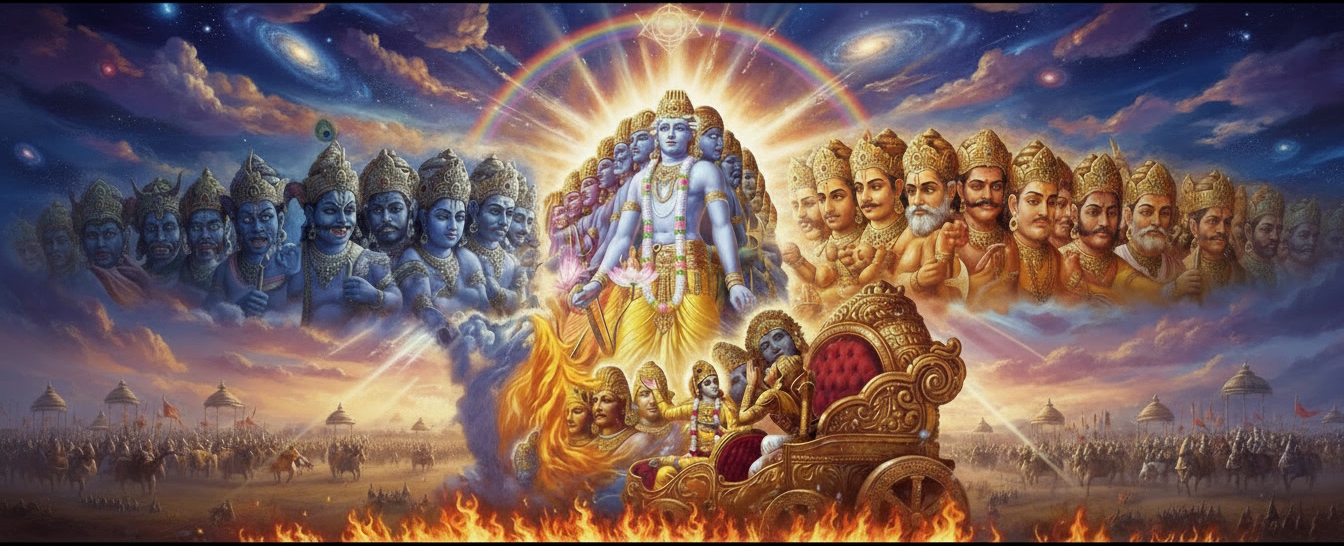
समं सर्वेषु भूतेषु तिष्ठन्तं परमेश्वरम्।
विनश्यत्स्वविनश्यन्तं यः पश्यति स पश्यति।।13.28।।
samaṃ sarveṣu bhūteṣu tiṣṭhantaṃ parameśvaram|
vinaśyatsvavinaśyantaṃ yaḥ paśyati sa paśyati||13.28||
Translation
He sees, who sees the Supreme Lord, existing eally in all beings, the unperishing within the perishing.
हिंदी अनुवाद
जो नष्ट होते हुए सम्पूर्ण प्राणियोंमें परमात्माको नाशरहित और समरूपसे स्थित देखता है, वही वास्तवमें सही देखता है।
Commentaries & Translations
Swami Ramsukhdas
व्याख्या -- समं सर्वेषु भूतेषु -- परमात्माको सम्पूर्ण प्राणियोंमें सम कहनेका तात्पर्य है कि सभी प्राणी विषम हैं अर्थात् स्थावरजङ्गम हैं? सात्त्विकराजसतामस हैं? आकृतिसे छोटेबड़े? लम्बेचौड़े हैं? नाना वर्णवाले हैं -- इस प्रकार तरहतरहके जितने भी प्राणी हैं? उन सब प्राणियोंमें परमात्मा समरूपसे स्थित हैं। वे परमात्मा किसीमें छोटेबड़े? कमज्यादा नहीं हैं।पहले इसी अध्यायके दूसरे श्लोकमें भगवान्ने क्षेत्रज्ञके साथ अपनी एकता बताते हुए कहा था कि तू सम्पूर्ण प्राणियोंमें क्षेत्रज्ञ मेरेको समझ? उसी बातको यहाँ कहते हैं कि सम्पूर्ण प्राणियोंमें परमात्मा समरूपसे स्थित हैं।तिष्ठन्तम् -- सम्पूर्ण प्राणी उत्पत्ति? स्थिति और प्रलय -- इन तीन अवस्थाओंमें जाते हैं सर्गप्रलय? महासर्गमहाप्रलयमें जाते हैं ऊँचनीच गतियोंमें? योनियोंमें जाते हैं अर्थात् सभी प्राणी किसी भी क्षण स्थिर नहीं रहते। परन्तु परमात्मा उन सब अस्थिर प्राणियोंमें नित्यनिरन्तर एकरूपसे स्थित रहते हैं।परमेश्वरम् -- सभी प्राणी अपनेको किसीनकिसीका ईश्वर अर्थात् मालिक मानते ही रहते हैं परन्तु परमात्मा उन सभी प्राणियोंके तथा सम्पूर्ण जडचेतन संसारके परम ईश्वर हैं।विनश्यत्स्वविनश्यन्तं यः पश्यति स पश्यति -- प्रतिक्षण विनाशकी तरफ जानेवाले प्राणियोंमें विनाशरहित? सदा एकरूप रहनेवाले परमात्माको जो निर्विकार देखता है? वही वास्तवमें सही देखता है। तात्पर्य है कि जो,परिवर्तनशील शरीरके साथ अपनेआपको देखता है? उसका देखना सही नहीं है किन्तु जो सदा ज्योंकेत्यों रहनेवाले परमात्माके साथ अपनेआपको अभिन्नरूपसे देखता है? उसका देखना ही सही है।पहले इसी अध्यायके दूसरे श्लोकमें भगवान्ने कहा था कि क्षेत्र और क्षेत्रज्ञका ज्ञान ही मेरे मतमें ज्ञान है? उसी बातको यहाँ कहते हैं कि जो नष्ट होनेवाले प्राणियोंमें परमात्माको नाशरहित और सम देखता है? उसका देखना (ज्ञान) ही सही है। तात्पर्य है कि जैसे क्षेत्र और क्षेत्रज्ञके संयोगमें क्षेत्रमें तो हरदम परिवर्तन होता है? पर क्षेत्रज्ञ ज्योंकात्यों ही रहता है? ऐसे ही सम्पूर्ण प्राणी उत्पन्न और नष्ट होते हैं? पर परमात्मा सब अवस्थाओंमें समानरूपसे स्थित रहते हैं।पीछेके (छब्बीसवें) श्लोकमें भगवान्ने यह बताया कि जितने भी प्राणी पैदा होते हैं? वे सभी क्षेत्र और क्षेत्रज्ञके संयोगसे ही पैदा होते हैं। परन्तु उन दोनोंमें क्षेत्र तो किसी भी क्षण स्थिर नहीं रहता और क्षेत्रज्ञ एक क्षण भी नहीं बदलता। अतः क्षेत्रज्ञसे क्षेत्रका जो निरन्तर वियोग हो रहा है? उसका अनुभव कर ले। इस (सत्ताईसवें) श्लोकमें भगवान् यह बताते हैं कि उत्पन्न और नष्ट होनेवाले सम्पूर्ण विषम प्राणियोंमें जो परमात्मा नाशरहित और समानरूपसे स्थित रहते हैं? उनके साथ अपनी एकताका अनुभव कर ले। सम्बन्ध -- अब भगवान् नष्ट होनेवाले सम्पूर्ण प्राणियोंमें अविनाशी परमात्माको देखनेका फल बताते हैं।
Sri Harikrishnadas Goenka
न स भूयोऽभिजायते इस कथनसे पूर्णज्ञानका फल? अविद्या आदि संसारके बीजोंकी निवृत्तिद्वारा पुनर्जन्मका अभाव बतलाया गया? तथा अविद्याजनित क्षेत्र और क्षेत्रज्ञके संयोगको जन्मका कारण बतलाया गया। इसलिये उस अविद्याको निवृत्ति करनेवाला पूर्ण ज्ञान? यद्यपि पहले कहा जा चुका है तो भी दूसरे शब्दोंमें फिर कहा जाता है --, ( जो पुरुष ) ब्रह्मासे लेकर स्थावरपर्यन्त समस्त प्राणियोंमें समभावसे स्थित -- ( व्याप्त ) हुए परमेश्वरको अर्थात् शरीर? इन्द्रिय? मन? बुद्धि अव्यक्त और आत्माकी अपेक्षा जो परम ईश्वर है? उस परमेश्वरको सब भूतोंमें समभावसे स्थित देखता है। यहाँ भूतोंसे परमेश्वरकी अत्यन्त विलक्षणता दिखलानेके निमित्त भूतोंके लिये विनाशशील और परमेश्वरके लिये अविनाशी विशेषण देते हैं। पू0 -- इससे परमेश्वरकी विलक्षणता कैसे सिद्ध होती है उ0 -- सभी भावविकारोंका जन्मरूप? भावविकार मूल है। अन्य सब भावविकार जन्मके पीछे होनेवाले और विनाशमें समाप्त होनेवाले हैं। भावका अभाव हो जानेके कारण विनाशके पश्चात् कोई भी भावविकार नहीं रहता क्योंकि धर्मीके रहते ही धर्म रहते हैं। इसलिये अन्तिम भावविकारके अभावका ( अविनश्यन्तम् इस पदके द्वारा ) अनुवाद करनेसे पहले होनेवाले? सभी भावविकारोंका कार्यके सहित प्रतिषेध हो जाता है। सुतरां ( उपर्युक्त वर्णनसे ) परमेश्वरकी सब भूतोंसे अत्यन्त ही विलक्षणता तथा निर्विशेषता और एकता भी सिद्ध होती है। अतः जो इस प्रकार उपर्युक्त भावसे परमेश्वरको देखता है वही देखता है। पू0 -- सभी लोग देखते हैं फिर वही देखता है इस विशेषणसे क्या प्रयोजन है उ0 -- ठीक है? ( अन्य सब भी ) देखते हैं परंतु विपरीत देखते हैं? इसलिये वह विशेषण दिया गया है कि वही देखता है। जैसे कोई तिमिररोगसे दूषित हुई दृष्टिवाला अनेक चन्द्रमाओंको देखता है? उसकी अपेक्षा एक चन्द्र देखनेवालेकी यह विशेषता बतलायी जाती है कि वही ठीक देखता है। वैसे ही यहाँ भी जो आत्माको उपर्युक्त प्रकारसे विभागरहित एक देखता है? उसकी अलगअलग अनेक आत्मा देखनेवाले विपरीतदर्शियोंकी अपेक्षा यह विशेषता बतलायी जाती है कि वही ठीकठीक देखता है। अभिप्राय यह है कि दूसरे सब अनेक चन्द्र देखनेवालेकी भाँति विपरीत भावसे देखनेवाले होनेके कारण? देखते हुए भी वास्तवमें नहीं देखते।
Sri Anandgiri
Regarding the expectation 'What comes from the relevant right knowledge?', by stating its fruit, praising it alone, to engage the person in its cause, He states another verse -- 'Of the described' etc. The connection of 'since' (yasmat) is with the word 'then' (tatah). Seeing the Lord described before, attributeless, situated equally in all beings, since he does not kill the self by the self, 'then', therefore, he attains the supreme goal named liberation -- this is the construction.
There, by the three feet (quarters), the destruction of evil through the destruction of ignorance by knowledge is stated. Upon the destruction of the coverings of ignorance and false knowledge, the wise man experiences the most excellent goal, the supreme human end, supreme bliss -- this is the meaning of the fourth foot.
Taking 'does not kill the self by the self' literally as heard, he raises an objection -- 'Objection' (Nanu). Just as in 'not on the earth' (one should pile fire), the prohibition is through possibility (established elsewhere), and in 'not in the sky, not in heaven', due to absence of possibility, this prohibition is not accepted as primary; so here too, prohibition without possibility is not logical, he says -- 'Just as'.
Since self-killing by the self is possible for the ignorant, the statement of its absence for the wise is proper, thus he resolves -- 'This is not a defect'. He explains the summary sentence -- 'For all'. The word non-Self refers to the body etc. He concludes the superimposed self-killing nature of the ignorant -- 'Thus self-killer'.
Still, since there is absence of killing of the real Self, not all of them are self-killers -- doubting this, he says -- 'But who'. He concludes that self-killing nature is established for all ignorant ones in the stated manner -- 'All'.
Self-killing by the self alone is seen in the ignorant; that can be negated here regarding the wise, he says -- 'But who is other'. 'In both ways also'. Meaning by superimposition and non-superimposition.
When the delusion of evil falls away due to knowledge, being satisfied by the attainment of the previously stated supreme bliss is proper, he says -- 'Then'.
Sri Dhanpati
'He is not born again', the fruit of right vision, namely absence of birth through the cessation of the seed of Samsara like ignorance etc., was stated; and the cause of birth, the connection between Field and Knower caused by ignorance, was stated.
Therefore, although right vision which removes ignorance, the root of all evil, has been stated in every way, thinking that repetition of the extremely subtle meaning with different words favors different qualified aspirants, He says again -- 'Equally' etc.
In all beings from Brahma down to immobile things -- in living beings having the nature of becoming, which are mutually extremely unequal and many -- standing 'equally'; maintaining the existence as 'attributeless'. The 'Supreme Lord' -- who is Supreme relative to the self identified with body, senses, etc., and whose nature is to rule -- Him. 'In the perishing' -- since all modifications of being occur after birth, by 'destruction', the six modifications of being are grasped. In those possessing all modifications of being, 'Imperishable', devoid of all modifications. And thus -- he who sees the Supreme Lord as extremely distinct from all beings and non-different from the inner Self, he alone sees; not the one seeing the contrary.
Just as the seer of one moon is distinguished relative to the seer of many moons, so also is the seer of the Self as described distinguished from those seeing the contrary divided many selves, this is the meaning.
Sri Neelkanth
He states the means for destroying that -- 'Equally'. 'Equal' means unchanging, immutable, eternal. 'In all beings' -- transformed into forms of bodies etc. -- 'standing'. By this, it is stated that the body alone is the place of attaining Him.
'The Supreme Lord' -- the Inner Controller, the doer of creation, maintenance, and end.
Therefore indeed, by inward vision, 'in the perishing' -- in those beings going to non-perception due to being imagined like a rope-snake -- 'Imperishable' -- not going to non-perception in all states, due to being all-pervading, being the Self, and being of the nature of eternal Seer -- he who sees, he alone sees; others are blind, this is the meaning.
Sri Ramanuja
Seeing the Lord, the Self, situated everywhere in bodies of gods etc. as the Master of those respectively by being the support and the controller, as distinct from the unequal forms of gods etc., as 'Equal' due to having the sole form of Knowledge; he 'does not kill', (but) protects his own self 'by the self', i.e., by the mind; releases (it) from Samsara.
'Then', from that -- from seeing the equal form everywhere as the Knower -- he 'attains the supreme goal'. 'Gati' is that which is reached; he attains the Supreme destination, the Self situated as It is.
Seeing the Self as unequal everywhere due to being associated with forms like gods etc., and endowed with birth, destruction etc., he kills the Self; throws it into the middle of the ocean of worldly existence.
Sri Sridhara Swami
Having stated the origin of Samsara created by non-discrimination, for its cessation He states the right vision regarding the distinct Self -- 'Equally'.
In beings consisting of moving and unmoving, 'attributeless' -- 'equally' in the form of Existence (Sat) so that it becomes so -- he who sees the Supreme Lord standing thus; therefore indeed, even among them perishing, he who sees the Imperishable, he alone sees rightly, not another.
Sri Vedantadeshikacharya Venkatanatha
Now, having stated the inquiry into the discrimination of the two (Prakriti and Purusha) through sameness-difference, controllership-controlledness, and eternity-noneternity, he praises that very thing as being the determination of Truth and the cause of the supreme human goal with the verse 'Equally' (Samam). Regarding 'From the conjunction of the Field and Knower of the Field' [13.27], what was said by Shankara -- 'Because of being partless like space, conjunction characterized by contact of parts is impossible; and because mutual cause-effect relationship between Field and Knower is not accepted, inherence (Samavaya) is impossible; therefore, the connection between the Object and Subject is characterized by mutual superimposition of properties; and the removal of that is right vision stated by 'Equally in all' etc.' -- this is childish talk; because conjunction is possible even for the partless; for they define it as 'Connection between two distinct things is conjunction'; and that is possible between two partless things, two things with parts, or between a partless and a thing with parts. And in his (Ramanuja's) view, the impossibility of superimposition etc. have been elaborated.
By 'In all beings', the unevenness in the form of gods, humans, etc. is intended. Just as for Ganges water taken in clay, gold, etc. pots, there is only existence there and there, not indeed the establishment of clay-nature etc.; similarly for the Self also, there is only existence in bodies of gods, humans, etc., not indeed being the locus of unevenness like god-hood, human-hood, etc. in its own nature, by the logic of wood etc. thrown into the salt-pan becoming salt. He states the intention of 'Standing' (Tishthantam) -- 'Distinct from the unequal forms of gods etc.'. Or, this is a statement of the cessation of inequality implied by the word 'Equally'; but 'Standing' is to be connected with what follows. Therefore indeed it is commented 'Situated as the Supreme Lord'.
Regarding 'How is there Supreme Lordship for the Knower of the Field who is not the Lord and has little power?', he states the restriction as before -- 'There and there, regarding the respective bodies, senses, and minds'. For those identifying the Self with the body think of the destruction of the Self due to the destruction of the body, not the destruction of the unperceived Supreme Self; therefore, the word Supreme Lord, co-ordinate with the word 'Imperishable' which is for negating the contingent destruction, refers to the subject in context (Jiva), this is the sense.
By the word 'Equal', not only the cessation of external unevenness of god-hood etc. is intended, but also -- 'Of cows of many colors, the milk is of one color. Knowledge sees like milk, but the bodied ones like cows' -- following this Sruti, the cessation of mutual unevenness in the natures of Selves also. Regarding the doubt 'Of what kind is that equality?', following the introduction 'He who knows this' [13.2], he says 'Of equal form as knowership'. This is an indication for knowledge-nature etc. also.
He reminds of the reasons for imperishability elaborated in 'By whom all this is pervaded' [18.46] etc. -- with 'By nature unworthy of destruction'. Regarding 'He who sees, he sees' -- that these two having no extraordinary meaning would be meaningless, and there would be a break in subject-predicate relation -- to this he says 'He (sees) the Self situated as It is'. But others, due to seeing contrarily like one seeing a yellow conch, even though seeing, do not see, this is the sense. The praise 'He sees' here is based on the attainment of the supreme human goal etc. And the censure by negative concomitance is implied here, with this intention he says 'But he who'.
Swami Chinmayananda
जिस अधिष्ठान पर क्षेत्र और क्षेत्रज्ञ के परस्पर मिथ्या तादात्म्य की क्रीड़ा और परिणामत दुखपूर्ण संसार की प्रतीति होती है? वह एक परमेश्वर ही है? जो भूतमात्र में समभाव से स्थित है? जैसे समस्त तरंगों में जल होता है।नश्वर भूतों में अनश्वर केवल सतही दृष्टि से निरीक्षण करने वाले पुरुष को जगत् में निरन्तर परिवर्तन होता दिखाई देगा। वस्तुएं स्वभावत परिवर्तित होती रहती हैं और उनके परस्पर के सम्बन्ध भी। परिवर्तन होना यह वैषयिक और वैचारिक दोनों ही जगतों का स्थायी धर्म है। इस जगत् की तुलना से कहा गया है कि इन सबमें वह परमेश्वर नित्य और अविकारी अधिष्ठान है? जिसके कारण ये सब परिवर्तन जाने जाते हैं।जन्म? वृद्धि? व्याधि? क्षय और मृत्यु ये वे विकार हैं? जो प्रत्येक अनित्य वस्तु को प्राप्त होते हैं। जिसकी उत्पत्ति हुई हो? उसे ही आगे के विकारों से भी गुजरना पड़ेगा। यहाँ परमेश्वर को अविनाशी कहकर उसके पूर्व के विकारों का भी अभाव सूचित किया गया है। यह अविनाशी चैतन्य ही नाश का प्रकाशक और जगत् का आधार है? जैसे रूपान्तरित होने वाले आभूषणों का आधार स्वर्ण है।वह पुरुष जो इस सम और अविनाशी परमेश्वर को समस्त विषम और विनाशी भूतों में पहचानता है? वही पुरुष वास्तव में उसे देखता है जिसे देखना चाहिए। यहाँ देखने से तात्पर्य आत्मानुभव से है।भौतिक जगत् की वस्तुएं इन्द्रियगोचर होती हैं? जब कि भावनाओं और विचारों का ज्ञान क्रमश मन और बुद्धि से होता है। इसी प्रकार आत्मबोध भी आध्यात्मिक ज्ञानचक्षु से होता है? चर्मचक्षु से नहीं। जैसे हमारे नेत्र विचारों को नहीं देख सकते वैसे ही मन और बुद्धि आत्मा को नहीं देख सकते। स्थूल के द्वारा सूक्ष्म का दर्शन नहीं हो सकता। सूक्ष्मतम आत्मा समस्त उपाधियों से अतीत है।जो (इस समतत्त्व को) देखता है? वही (वास्तव में) देखता है यह कथन वेदान्त की विशेष वाक्यशैली है? जो अत्यन्त प्रभावपूर्ण है। सभी लोग देखते हैं? परन्तु पारमार्थिक सत्य को नहीं। उनके इस विपरीत दर्शन से ही उनके प्रमाणों (ज्ञान के कारणों) में दोष का अस्तित्व सिद्ध होता है। विभ्रम और वस्तु का अन्यथा दर्शन? मिथ्या कल्पनाएं और विक्षेप ये सब वस्तु के यथार्थ स्वरूप को आच्छादित कर देते हैं। इसलिए? योगेश्वर श्रीकृष्ण विशेष बल देकर कहते हैं कि जो पुरुष इस सम सत्य को देखता है वही वास्तव में देखता है। शेष लोग तो भ्रान्ति में पड़े रहते हैं।अब यथोक्त सम्यक् दर्शन श्रेष्ठ फल को दर्शाकर उसकी स्तुति करते हैं
Sri Abhinavgupta
Therefore indeed --.
Sri Madhusudan Saraswati
Thus having stated Samsara as consisting of Avidya, to state the Knowledge (Vidya) removing that, He explains what was said before as 'He who knows the Person thus' -- with 'Equally in all'.
'In all beings' -- in living creatures having the nature of becoming, consisting of moving and unmoving, unequal due to the habit of manifold modifications like birth etc. and due to attaining the state of sub-ordinate and principal (Gunas), and therefore unstable. For entities transforming every moment are not capable of staying even for a moment without transforming. Therefore indeed, attained to the state of mutual sublated and sublater (oppressor/oppressed). Even so 'in the perishing' -- in those having the nature of being seen and destroyed, resembling magic, city of Gandharvas, etc. -- 'Equally' -- of one form everywhere, one in every body; and 'Standing' -- not transforming due to being devoid of modifications like birth etc.; 'The Supreme Lord' -- providing existence and manifestation to the entire inert group, devoid of the relation of sublated and sublater, untouched by all defects; 'Imperishable' -- uncontradicted even when all duality which is practically seen and destroyed is sublated; thus 'he who sees' the Self distinct from the inert world in every way, with discrimination, by the eye of scripture, 'he alone sees' the Self, like one sublating the dream delusion by waking consciousness.
But the ignorant one, like a dreamer, seeing the contrary due to delusion, does not see indeed. Because error is of the nature of non-seeing. For one seeing a rope as a snake is not designated as 'seeing', because the seeing of the snake consists of the non-seeing of the rope. By the vision of the pure Self not colored by anything else of such nature, there is cessation of Avidya which consists of the non-vision of That, and from that the cessation of Samsara which is its effect, this is the intention.
Here the substantive 'Self' is obtained by the force of the adjective, or indeed 'Supreme Lord'. The substantive word is obtained by implication from the difference in properties existing in the inert characterized by inequality, instability, and sublated-sublater nature, due to force of the adjectives of the Self like equality, standing, and supreme lordship. The rest is explicitly stated, this is the distinction.
Sri Purushottamji
He clarifies this very thing as the form of the fruit -- 'Equally'.
In all beings falling within the world consisting of moving and unmoving, 'standing' for the sake of enjoying various kinds of Rasas by sport; 'equally' devoid of attributes like low and high etc. for the sake of experiencing Rasa; and in them perishing, 'Imperishable' -- when they attain destruction due to lack of understanding of such sport, he who sees Him experiencing sport in the same way without anger etc. due to change; he sees the Supreme Lord.
Therefore, in the absence of such vision, he becomes guilty (of offense) indeed.
Sri Shankaracharya
'Equally' (Samam) -- without distinction; 'standing' (Tishthantam) -- maintaining existence. Where? 'In all' (Sarveshu) -- in entire; 'beings' (Bhuteshu) -- in living creatures from Brahma down to the immobile. Whom? 'The Supreme Lord' (Parameshvaram). Relative to the self consisting of body, senses, mind, intellect, and unmanifest, He is the Supreme Lord; Him standing equally in all beings. He qualifies them as 'in the perishing' (Vinashyatsu), and that Supreme Lord as 'Imperishable' (Avinashyantam); to show the extreme distinctness between beings and the Supreme Lord.
How? For of all modifications of being, the modification of being characterized by birth is the root; all other modifications of being occurring after birth end in destruction; there is no modification of being beyond destruction, because of the absence of the entity. For properties exist only when the property-possessor exists. Therefore, by restating the absence of the final modification of being, all preceding modifications of being are negated along with their effects. Therefore, the extreme distinctness of the Supreme Lord from all beings is established; (as well as His) attributelessness and oneness.
'He who sees' the Supreme Lord 'thus' as described, 'he sees'. (Objection): Well, everyone indeed sees? What is the use of the qualification? (Answer): True, he sees, but he sees contrarily. Therefore, He distinguishes -- 'He alone sees'.
Just as one with defective vision sees many moons; relative to him, the seer of one moon is distinguished -- as 'he alone sees'; so here too, he who sees the One Undivided Self as described, he is distinguished from those who see the contrary divided many selves -- as 'he alone sees'. Others, though seeing, do not see; because of seeing the contrary, like the seer of many moons, this is the meaning.
The praise of the described right vision must be done by stating its fruit, thus the (next) verse is begun --
Sri Vallabhacharya
Now, again for easy grasping, He speaks of the vision of the Self -- there the Self is threefold: Inner Controller, Person, and Unmanifest.
There, regarding the vision of the first, He states the fruit -- with two (verses) 'Equally' etc.
There, he who sees the Supreme Self, the Inner Controller, the Lord, standing equally in all beings, he is the right seer; in the bodies which are effects of true Nature (Sat-Prakriti) and are in a perishing state, he who sees the Imperishable like a genus (Jati), having the equal form of knowership, he sees.
Swami Sivananda
समम् eally? सर्वेषु (in) all? भूतेषु in beings? तिष्ठन्तम् existing? परमेश्वरम् the Supreme Lord? विनश्यस्तु among the perishing? अविनश्यन्तम् the unperishing? यः who? पश्यति sees? सः he? पश्यति sees.Commentary He who beholds the Supreme Lord through the inner eye of wisdom? Him Who is seated in all beings from the Creator down to the unmoving objects and Who is not destroyed even when all beings are destroyed? he is said to have realised the Self.In different kinds of fire? the heat is the same. Gold is the same in different forms of ornaments. The light from many lamps is the same. So also in all living being?s the soul is the same. The soul or the Self is uniform everywhere. The Self is the same in ants? elephants? kings? beggars? saints and rogues.The Self is indestructible all living beings are perishable. It is the Supreme Lord when compared to the body? senses? mind? intellect? the Unmanifested Nature and the individual soul.Birth is the root cause of the BhavaVikaras or the modifications? viz.? change? growth? decay and death. The other changes of state manifest themselves after the birth of the body.The Supreme Lord is one and changeless as He is birthless? decayless and deathless. He is the one common consciousness in all beings. He sees rightly who sees the Supreme Lord as now described. He is a Jivanmukta. He has knowledge of the knower of the field or the immortal Self. He is the real seer or a liberated sage.The sage alone sees properly on account of knowledge. The whole world sees erroneously on account of ignorance. He who is suffering from defective vision beholds many moons. He sees erroneously. But he who sees one moon only sees in the proper manner? correctly. Even so he who beholds the one immortal indivisible Self in all beings really sees the Truth. He alone sees. He who sees many distinct selves erroneously does not really see though he sees. He is like the man who beholds many moons. (Cf.VIII.20
Swami Gambirananda
Sah, he; pasyati, sees; yah, who; pasyati, sees;-whom?-parameswaram, the supreme Lord-the Lord who is supreme as compared with the body, organs, mind, intellect, the Unmanifest and the individual soul; as tisthantam, existing, having His presence; samam, eally, without distinction;-where?-sarvesu, in all; bhutesu, beings, all living things from Brahma to the non-moving;-he who sees Him existing eally in all living things. The Lord specifies them by the word vinasyatsu, among the perishable; and He also specifies Him, the supreme Lord, by the word avinasyantam, the Imperishable. This is meant for showing the absolute difference between the living things and God.
How?
For, all the modifications [See note 3 on p.38.-Tr.] of an existing thing have as their root that modification of an existing thing described as birth. All other modifications of existing things that follow birth end with destruction. After destruction there is no modification of an existing thing, because the object itself becomes nonexistent. Indeed, alities can exist so long as the thing alified exists. Therefore, by the reiteration of the absence of the last modification of an existing thing, all its preceding modifications become negated along with their effects. Hence it is established that the supreme Lord is very greatly different from all beings, and is also Unconditioned [Free from all modifications that things are subject to.] and One.
He sees who thus sees the supreme Lord as described.
Objection: Is it not that all poeple see? What is the need of specification?
Reply: True, they see; but they see contrarily! Hence the Lord specifies, 'He alone sees'. As in comparison with one who, suffering from the (eye) disease called Timira, sees many moons, the person who sees one moon is distingusihed by saying, 'He alone sees,' similarly, here as well, the man who sees the one undivided Self as described above is distinguished from those who contrarily see many and differentiated selves, by saying 'He alone sees'. Others, though seeing, do not see because they see contrarily like the person who sees many moons. This is the meaning.
The obove-described true knowledge has to be praised by stating its result. Hence the verse begins:
Swami Adidevananda
He who sees the Atman as It really is - he is the one who sees the Atman as a distinct entity in all embodied beings that are composed of Prakrti and Purusa, even in bodies of diverse nature of gods, men etc. The true seer is one who sees the Atman as the supreme ruler in all these bodies as the imperishable self, though the bodies are subject to destruction. Conversely the purport is that he who sees the Atman, only as characterised by the uneal forms of the bodies as men, gods etc., and as possessed of birth, death etc. - such a person is perpetually caught up in transmigratory existence.