Bhagavad Gita - Chapter 13 - Shloka (Verse) 29
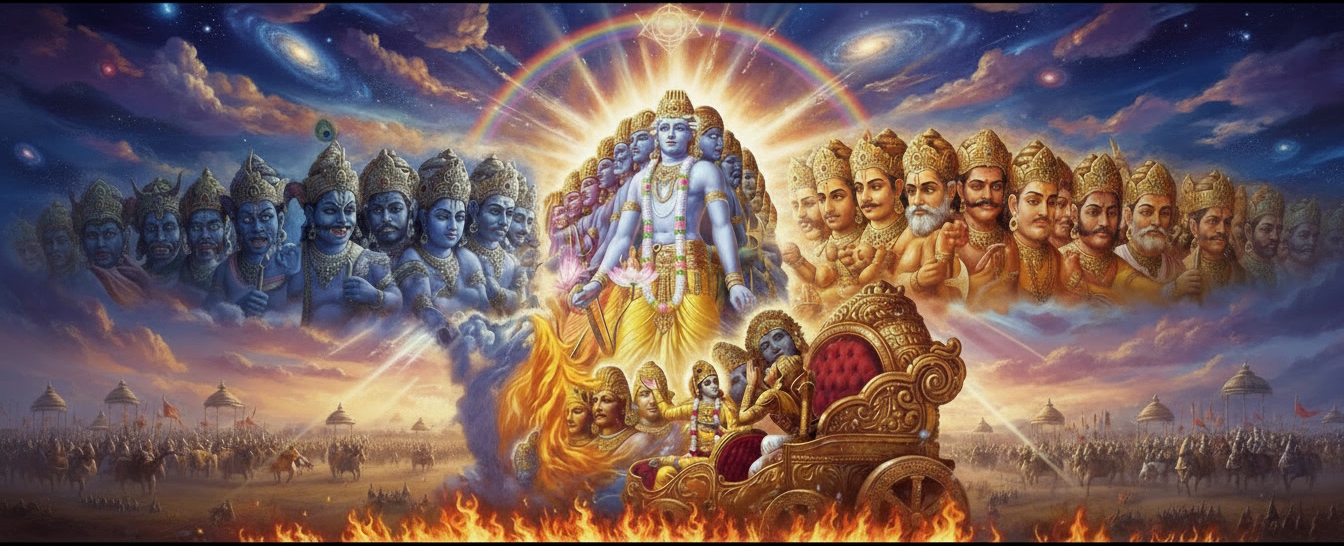
समं पश्यन्हि सर्वत्र समवस्थितमीश्वरम्।
न हिनस्त्यात्मनाऽऽत्मानं ततो याति परां गतिम्।।13.29।।
samaṃ paśyanhi sarvatra samavasthitamīśvaram|
na hinastyātmanā''tmānaṃ tato yāti parāṃ gatim||13.29||
Translation
Because he who sees the same Lord eally dwelling everywhere does not destroy the Self by the self; he goes to the highest goal.
हिंदी अनुवाद
क्योंकि सब जगह समरूपसे स्थित ईश्वरको समरूपसे देखनेवाला मनुष्य अपने-आपसे अपनी हिंसा नहीं करता, इसलिये वह परमगतिको प्राप्त हो जाता है।
Commentaries & Translations
Swami Ramsukhdas
व्याख्या -- समं पश्यन्हि ৷৷. हिनस्त्यात्मनात्मानम् -- जो मनुष्य स्थावरजङ्गम? जडचेतन प्राणियोंमें? ऊँचनीच योनियोंमें? तीनों लोकोंमें समान रीतिसे परिपूर्ण परमात्माको देखता है अर्थात् उस परमात्माके साथ अपनी अभिन्नताका अनुभव करता है? वह अपने द्वारा अपनी हत्या नहीं करता।जो शरीरके साथ तादात्म्य करके शरीरके बढ़नेसे अपना बढ़ना और शरीरके घटनेसे अपना घटना? शरीरके बीमार होनेसे अपना बीमार होना और शरीरके नीरोग होनेसे अपना नीरोग होना? शरीरके जन्मनेसे अपना जन्मना और शरीरके मरनेसे अपना मरना मानता है तथा शरीरके विकारोंको अपने विकार मानता है? वह अपनेआपसे अपनी हत्या करता है अर्थात् अपनेको जन्ममरणके चक्करमें ले जाता है। परन्तु जिसकी दृष्टि शरीरकी तरफसे हटकर केवल सर्वव्यापक? सबके शासक परमत्माकी तरफ हो जाती है? वह फिर अपनी हत्या नहीं करता अर्थात् जन्ममरणके चक्करमें नहीं जाता? अपनेमें संसार और शरीरके विकारोंका अनुभव नहीं करता।वास्तवमें अपनेआपकी (स्वरूपकी) हत्या अर्थात् अभाव कभी कोई कर ही नहीं सकता और अपना अभाव कभी हो भी नहीं सकता तथा अपना अभाव करना कोई चाहता भी नहीं। वास्तवमें नाशवान् शरीरके साथ तादात्म्य करना ही अपनी हत्या करना है? अपना पतन करना है? अपनेआपको जन्ममरणमें ले जाना है।ततो याति परां गतिम् -- शरीरके साथ तादात्म्य करके जो ऊँचनीच योनियोंमें भटकता था? बारबार जन्मतामरता था? वह जब परमात्माके साथ अपनी अभिन्नताका अनुभव कर लेता है? तब वह परमगतिको अर्थात् नित्यप्राप्त परमात्माको प्राप्त हो जाता है।मर्मिक बातपरमात्मतत्त्व सब देशमें है? सब कालमें है? सम्पूर्ण व्यक्तियोंमें है? सम्पूर्ण वस्तुओंमें है? सम्पूर्ण घटनाओंमें है? सम्पूर्ण परिस्थितियोंमें है? सम्पूर्ण क्रियाओंमें है। वह सबमें एक रूपसे? समान रीतिसे ज्योंकात्यों परिपूर्ण है। अब उसको प्राप्त करना कठिन है तो सुगम क्या होगा जहाँ चाहो? वहीं प्राप्त कर लो। वास्तवमें इस संसारका जो हैपना दीखता है? वह संसारका नहीं है। संसार तो एक क्षण भी स्थिर नहीं रहता। इसमें,केवल परिवर्तनहीपरिवर्तन है। यह केवल परिवर्तनका ही पुञ्ज है। जैसे पंखा तेजीसे घूमता है तो एक चक्र दीखता है? पर वास्तवमें वहाँ चक्र नहीं है? प्रत्युत पंखेकी ताड़ी ही चक्ररूपसे दीखती है। ऐसे ही यह संसार नहीं होते हुए भी हैरूपसे दीखता है। वास्तवमें एक परमात्मतत्त्व ही हैरूपसे विद्यमान है।विचार करें? अभी जितने शरीर आदि दीखते हैं? ये सौ वर्ष पहले थे क्या और सौ वर्ष बाद रहेंगे क्या ये पहले भी नहीं थे और अन्तमें भी नहीं रहेंगे अतः ये बीचमें भी नहीं हैं। परन्तु परमात्मा सृष्टिके पैदा होनेसे पहले भी था? सृष्टिके लीन होनेके बाद भी रहेगा? अतः परमात्मा सृष्टिके समय भी ज्योंकात्यों परिपूर्ण है। जो पहले भी नहीं था? बादमें भी नहीं रहेगा? वह अभी भी नहीं है और जो पहले भी था? बादमें भी रहेगा? वह अभी भी है। अतः संसारका जो हैपन दीखता है? यह गलती है। परमात्मतत्त्व ही हैरूपसे दीखता है उस परमात्मतत्त्वकी सत्यतासे ही यह असत् संसार मोह(मूर्खता) के कारण सत्यकी तरह दीखता है -- जासु सत्यता तें जड़ माया। भास सत्य इव मोह सहाया।।(मानस 1। 117। 4)यदि मोह नहीं होगा? तो यह संसार नहीं दीखेगा? प्रत्युत एक परमात्मतत्त्व ही दीखेगा -- वासुदेवः सर्वम् (गीता 7। 19)। कारण कि परमात्मा ही था? परमात्मा ही रहेगा? बीचमें दूसरा कहाँसे आयेगा सोनेके जितने गहने हैं? उनमें पहले सोना ही था फिर सोना ही रहेगा अतः बीचमें सोनेके सिवाय दूसरा कहाँसे आयेगा गहना तो केवल (रूप? आकृति? उपयोग आदिको लेकर) कहनेके लिये है? तत्त्वतः तो सोना ही है। ऐसे ही संसार केवल कहनेके लिये है? तत्त्वतः तो परमात्मा ही है। उस परमात्माका अनुभव करनेमें ही मनुष्यजन्मकी सफलता है।है(परमात्मा) का अनुभव न करके नहीं(संसार) में उलझ जाना मनुष्यता नहीं है? प्रत्युत पशुता है। इस पशुताका त्याग करना है -- पशुबुद्धिमिमां जहि (श्रीमद्भा0 12। 5। 2)। इसलिये भगवान् कहते हैं कि जो नष्ट होनेवाले प्राणियोंमें नष्ट न होनेवाले परमात्माको देखता है? उसका देखना सही है। परन्तु जो नष्ट होनेवालेको देखता है और नष्ट न होनेवालेको नहीं देखता? वह आत्मघाती है -- योऽन्यथा सन्तमात्मानमन्यथा प्रतिपद्यते। किं तेन न कृतं पापं चौरेणात्मापहारिणा।।(महाभारत? उद्योग0 42। 37) जो अन्य प्रकारका (अविनाशी) होते हुए भी आत्माको अन्य प्रकारका (विनाशी) मानता है? उस आत्मघाती चोरने कौनसा पाप नहीं किया ,जो नाशवान् संसारको न देखकर सब जगह समानरूपसे परिपूर्ण परमात्मतत्त्वको देखता है? वह आत्मघाती नहीं होता अर्थात् वह अपने द्वारा अपनी हत्या नहीं करता? इसलिये वह परमगतिको प्राप्त हो जाता है। परन्तु जो सब जगह परिपूर्ण परमात्मतत्त्वको न देखकर संसारशरीरको देखता है? वह आत्मघाती परमगतिको न प्राप्त होकर बारबार जन्मतामरता रहता है? दुःख पाता रहता है। इसलिये मनुष्य अपने द्वारा अपना उद्धार करे? अपना पतन न करे (गीता 6। 5)।जैसे दर्पणमें मुख नहीं होनेपर भी मुख दीखता है और स्वप्नमें हाथी नहीं होनेपर भी हाथी दीखता है? ऐसे ही संसार नहीं होनेपर भी संसार दीखता है। अगर संसारकी तरफ दृष्टि न रहे तो संसार हैरूपसे नहीं दीखेगा। परमात्मा ही हैरूपसे दीख रहा है -- इस बातको साधक दृढ़तासे मान ले? फिर चाहे वह,अभी न दीखे? पर बादमें दीखने लग जायगा। जैसे अभी साधक वृन्दावनमें बैठा है? तो उसे वृन्दावनको याद नहीं करना पड़ता। सोते समय? भोजन करते समय? हरेक कार्य करते समय वह वृन्दावनको याद नहीं करता परन्तु मैं वृन्दावनमें हूँ -- इस बातमें उसको सन्देह नहीं होता। वह बिना याद किये याद रहता है। ऐसे ही अभी भले ही परमात्मा न दीखे? पर साधक ऐसा दृढ़तासे मान ले कि हैरूपसे तो केवल परमात्मा ही है? संसार नहीं है? तो बादमें उसको ऐसा अनुभव होने लग जायगा। कारण कि मिथ्या वस्तु कबतक टिकी रहेगी और सत्य वस्तु कबतक छिपी रहेगी सम्बन्ध -- इसी अध्यायके छब्बीसवें श्लोकमें भगवान्ने क्षेत्रक्षेत्रज्ञके संयोगकी बात बतायी। इस संयोगसे छूटनेके दो उपाय हैं -- परमात्माके साथ अपने स्वतःसिद्ध सम्बन्धको पहचानना और प्रकृति(शरीर) से अपने माने हुए सम्बन्धको तोड़ना। सत्ताईसवेंअट्ठाईसवें श्लोकोंमें परमात्माके साथ सम्बन्धको पहचाननेकी बात बता दी। अब आगेके दो श्लोकोंमें प्रकृतिसे सम्बन्ध तोड़नेकी बात बताते हैं।
Sri Harikrishnadas Goenka
उपर्युक्त यथार्थ ज्ञानका फल बतलाकर उसकी स्तुति करनी चाहिये। इसलिये यह श्लोक आरम्भ किया जाता है --, क्योंकि सर्वत्र -- सब भूतोंमें समभावसे स्थित हुए ईश्वरको अर्थात् ऊपरके श्लोकमें जिसके लक्षण बतलाये गये हैं? उस ( परमेश्वर ) को सर्वत्र समान भावसे देखनेवाला पुरुष स्वयं -- अपने आप अपनी हिंसा नहीं करता? इसलिये अर्थात् अपनी हिंसा न करनेके कारण वह मोक्षरूप परम उत्तम गतिको प्राप्त होता है। पू0 -- कोई भी प्राणी स्वयं अपनी हिंसा नहीं करता फिर यह अप्राप्तका निषेध क्यों किया जाता है कि वह अपनी हिंसा नहीं करता जैसे कोई कहे कि पृथ्वीपर और अन्तरिक्षमें अग्नि नहीं जलानी चाहिये। उ0 -- यह दोष नहीं है क्योंकि अज्ञानियोंसे स्वयं अपना तिरस्कार करना बन सकता है। सभी अज्ञानी अत्यन्त प्रसिद्ध साक्षात् -- प्रत्यक्ष आत्माका तिरस्कार करके अनात्मा शरीरादिको आत्मा मानकर? फिर धर्म और अधर्मका आचरण कर? उस प्राप्त किये हुए ( शरीररूप ) आत्माका नाश करके दूसरे नये ( शरीररूप ) आत्माको प्राप्त करते हैं। फिर उसका भी इसी प्रकार नाश करके अन्यको और उसका भी वैसे ही नाश करके ( पुनः ) अन्यको पाते रहते हैं। इस प्रकार बारंबार शरीररूप आत्माको प्राप्त करके उसकी हिंसा करते जाते हैं? अतः सभी अज्ञानी आत्महत्यारे हैं। जो वास्तवमें आत्मा है वह भी अविद्याद्वारा ( अज्ञात होनेके कारण ) सदा मारा हुआसा ही रहता है क्योंकि उनके लिये उसका विद्यमान फल भी नहीं होता। सुतरां अभी अविद्वान् आत्माकी हिंसा करनेवाले ही हैं। परंतु जो इनसे अन्य उपर्युक्त आत्मस्वरूपको जाननेवाला है? वह दोनों प्रकारसे ही अपनेद्वारा अपना नाश नहीं करता है। इसलिये वह परमगति प्राप्त कर लेता है अर्थात् उसे पहले बताया हुआ ( परम गतिरूप ) फल प्राप्त होता है।
Sri Anandgiri
To introduce the next verse as an answer to a doubt, he translates (restates) -- 'All'. Doubting that since difference of Self appears in every body due to possessing Dharma and Adharma etc., it is not right vision, he says -- 'That'. Due to distinction by own qualities like pleasure, pain etc. and own actions named Dharma and Adharma, if there is difference in every body, how is the vision by equality possible in Selves qualified by those? -- doubting this, He refutes it, he says -- 'This'.
He excludes the word 'Prakriti' denoting 'nature' (svabhava) -- 'Prakriti'. He refutes the word 'Maya' being a synonym for Consciousness (Samvit) -- 'Three Gunas'. Regarding Maya being stated as the power of the Supreme, he states the agreement of Sruti -- 'Maya indeed'.
Actions are not performed by anyone else -- he states the meaning of the word 'Eva' (alone) thus -- 'Not by other'. When asked what is that 'other' to be negated, he says it is the Prakriti named Pradhana intended by Sankhyas -- 'Mahat etc.'.
'In all ways' means abundance of modes like being desire-prompted, prohibited, etc.; "he who sees the Self qualified as described" -- this is the connection with the previous. Doubting that 'He sees' is improper due to repetition, he says -- 'He truly'.
If Selves are different in each body, equal vision regarding them is improper -- doubting what is the solution to this statement, he says -- 'Of the attributeless'.
Sri Dhanpati
To stimulate the listener, He praises the right vision as described by stating the fruit -- 'Equally'. 'Seeing', perceiving, the Lord described as 'Equally', i.e., situated equally, 'everywhere'. 'Hi' (For) because 'by the self' -- by one's own self -- he 'does not kill' -- does not perform violence to -- 'the Self'; 'then', from that, he 'attains' the 'Supreme', excellent 'Goal' named liberation. Meaning he is liberated.
This is the meaning -- For every ignorant person, ignoring the Self which is extremely well-known and directly immediate, accepting the non-Self as the Self, performing Dharma and Adharma for that (non-Self), killing the assumed self (body), he takes another self (body); having killed that too, (he takes) another; thus he kills the assumed selves repeatedly, so he is called 'Self-killer'.
From Sruti and Smriti like "Sunless are those worlds covered by blinding darkness. To them they go who are self-killers", "He who understands the Self, which is otherwise, as otherwise, what sin is not committed by him, the thief stealing the Self?", the Real Self is also as if killed by the ignorant through ignorance. Therefore, all ignorant ones are indeed called self-killers.
But 'who is other', the seer of the Self as described, he 'in both ways' (by not superimposing) 'does not kill the Self by the self', 'then he attains the Supreme Goal'. By this, the doubt "No living being kills his own self by himself, so why is the killing which is not obtained negated?" is refuted. Because the word 'Self' is primary regarding one's own self, and due to excess of natural flow in the stated meaning, "the Self by the self" means "the Self by the body etc." (?).
Or, "Due to seeing the One Self, he does not kill another self like his own self, he becomes compassionate everywhere" -- this explanation was not shown by the Teachers (Shankara).
Sri Neelkanth
He states the fruit of vision -- 'Equally'.
Seeing the Lord 'Equally', with equality, 'situated' -- well situated -- everywhere in the body alone as in one's own body; 'Hi' (For) because he, the seer of non-difference of all, 'does not kill the Self', the Lord, 'by the self', i.e., by the body etc.; meaning he does not pain Him by throwing Him into the straits of various wombs; but 'attains the Supreme Goal', liberation, from that.
Or, due to seeing oneness of Self, he does not kill another also like his own self. Meaning he becomes compassionate everywhere. 'And then' he attains the Supreme Goal.
Sri Ramanuja
All actions -- "Nature is said to be the cause in the agency of effect and instrument" (Gita 13.20) -- by this previously stated manner, 'are being performed by Nature', he who sees thus;
similarly, 'the Self' as 'non-doer' and of the form of knowledge, he who sees;
and that his connection with Nature, presidency over that, and experience of pleasure and pain generated by that are created by ignorance in the form of Karma -- he who sees this also, he sees the Self situated as It is.
Sri Sridhara Swami
'Why?' to this He says -- 'Equally'. Seeing the Supreme Self situated 'equally' -- properly, with un-deviating nature -- 'everywhere' in mere beings; 'for' (hi) because; he 'does not kill the Self by the self' -- by one's own self; he does not destroy the Self, which is of the nature of Existence-Consciousness-Bliss, by rejecting It through ignorance. 'And then' he attains the 'Supreme Goal', liberation.
But he who does not see thus, he is indeed a seer of the body as Self, he kills the Self along with the body. And so the Sruti: "Sunless are those worlds covered by blinding darkness. To them they go after death who are self-killers."
Sri Vedantadeshikacharya Venkatanatha
He justifies what was said with the verse "Seeing equally". 'Hi' is in the sense of reason. The relevant equal vision is indeed praised here through its fruit; looking at "Situated everywhere in the body" [13.33] to be stated later, he states the intended meaning of the word 'everywhere' as 'in bodies of gods etc.'.
Following "Supporter, Enjoyer, Great Lord" [13.23] stated before, he manifests the specific nature of existence obtained by the force of the prefix in 'Samavasthitam' (well situated) with 'By being the Master of respective ones' etc. Therefore indeed 'Situated' is indicated by dividing that much. Though mastership and rulership are established by the word 'Lord' (Ishvara) also. Here too, the word 'Lord' should be considered as having a limited subject (Jiva) by the logic stated before.
The word 'Equal' (Sama) here is for the purpose of negating the inequality of gods etc. contingent upon the pride of body-as-self -- with this intention he says 'distinct from the unequal forms of gods etc.'. From references before and after like "From the conjunction of Field and Knower" [13.27] and "When the separate existence of beings" [13.31], the cessation of inequality established by connection with the body is intended, this is the sense.
The word 'Atma' ending in the third case (instrumental), being an instrumental ending and due to propriety, refers to the mind; but the one ending in the second case (accusative), due to the force of being the object of killing, refers to the transmigratory self -- thus he makes known 'by the mind, one's own self'. Regarding "the equal-seer has no killing nature", if it meant merely being non-obstructive like an agent of neither prescribed nor prohibited acts, that would be meaningless. Moreover, even for the unequal-seer, the Self is not capable of being killed due to eternity. Therefore, by "does not kill" here, something desired by man achievable by equal vision is intended -- he says 'Protects'. From context and remainder of the sentence, he qualifies the protection as 'from Samsara'.
The word 'Tatah' (then) here does not refer to the sentence meaning etc.; because cessation of the undesired is itself a fruit, so designating it as a cause for attaining the desired is inappropriate; therefore, 'equal vision' itself, which is the cause of both, is referred to -- he says 'Therefore' etc. Regarding 'Supreme Goal' (Param Gatim), since a specific object to be attained is intended, if it referred merely to the verbal action (going) that would not be established, so he states the derivation appropriate for that -- 'That which is reached'. He qualifies that very thing -- 'As It is'. For this context has been established as regarding the Jiva; and the word 'Supreme Goal' (Para Gati) has been used for the Jiva also in "Unmanifest, Imperishable thus called, they call that the Supreme Goal" [8.21] etc., this is the sense.
"But he who sees inequality in the Self kills his own self" -- that this is established by the logic "Specific negation is for permitting the remainder", he says 'Forms of gods etc.'. Since the eternal nature of Self has the nature of uncleavability etc., regarding "Whom does he cause to kill, whom does he kill" [2.21], what is this killing? -- to this he says 'Ocean of worldly existence'. By this verse also, the discrimination of Nature and Person through being the cause of Samsara and cause of Moksha via seeing their own forms is stated, this is the intention.
Swami Chinmayananda
वेदान्त हमें जगत् से पलायन नहीं सिखाता? बल्कि वह इस दृश्यमान जगत् का पुनर्मूल्यांकन करने का उपदेश देता है। सामान्यत जगत् की ओर देखने की हमारी दृष्टि हमारे प्रिय विचारों एवं भावनाओं से रंजित होती है। स्पष्ट है कि उस स्थिति में हम जगत् को यथार्थ रूप में नहीं देखते। इस अज्ञान की दृष्टि का त्यागकर ज्ञान की दृष्टि से विश्व को देखने का अर्थ वर्तमान काल के सुस्त और उदास? दुखी कुरूप जगत् में ही पूर्णता और आनन्द? दिव्यता और पवित्रता का दर्शन करना है। दुर्व्यवस्थित प्रमाणों के द्वारा परमार्थ सत्य का विपरीत दर्शन ही यह जगत् है? जो द्रष्टा जीव को ही पीड़ित करता रहता है।उपाधियों के साथ तादात्म्य करके जीवभाव को प्राप्त आत्मा जब देखता है? तब उसे नानाविध सृष्टि दिखाई देती है। भ्रान्तिजनित यह जगत् कभी उसे खिसियाते और नृत्य करते हुए तो कभी चीखते और हुंकारते हुए प्रतीत होता है। इन सब दुखपूर्ण परिवर्तनों के मध्य ही पारमार्थिक सत्य स्वरूप को पहचानने से ही सभी विक्षेपों? अर्थहीन लक्ष्यों और परिश्रमों की समाप्ति हो सकती है? क्योंकि वह परमेश्वर ही सर्वत्र समान रूप से स्थित देखता है। ज्ञान के अपने इस अनुभव के कारण फिर ज्ञानी पुरुष को कोई दुख अथवा भय नहीं होता। मिथ्या प्रेत के अधिष्ठान स्तम्भ को पहचान लेने पर पूर्व का भय और दुख समाप्त हो जाता है।वह अपने द्वारा अपना नाश नहीं करता है पूर्व में भी भगवान् श्रीकृष्ण ने स्पष्ट वर्णन किया है कि किस प्रकार हम अपने शत्रु या मित्र बन जाते हैं। जब हमारा निम्नस्तर का अहंकारकेन्द्रित व्यक्तित्व या मन हमारी उच्चतर ज्ञानवती बुद्धि के मार्गदर्शनानुसार कार्य करने के लिए उपलब्ध नहीं होता? तब वह मन हमारा शत्रु बन जाता है। यदि वाहन के ऊपर हमारा नियन्त्रण न रहे? तो वह वाहन हमारी सेवा करने के स्थान पर हमारे नाश का ही कारण बन जाता है। जिस पुरुष ने सर्वत्र रमण कर रहे परमात्मा का दर्शन कर लिया है? उसका मन कभी भी अपनी दुष्ट छाया से परमात्मा के वैभव को आच्छादित नहीं कर सकता।इससे वह परम गति को प्राप्त होता है आत्मअज्ञान तथा तज्जनित मिथ्याज्ञान के कारण हमारे शुद्ध आत्मस्वरूप पर आवरण पड़ा रहता है। इस अविद्या के कारण मनुष्य न केवल अपने स्वरूप को नहीं जानता? वरन् स्वरूप से सर्वथा भिन्न देहादि अनात्म उपाधियों को ही अपना स्वरूप मान लेता है। परिणामत उसका व्यवहार अनुचित और जीवन का लक्ष्य अधिकाधिक विषयोपभोग के अतिरिक्त और कुछ नहीं होता। इस लक्ष्य को पाने के लिये वह ऐसे हीन कर्म करता है? जो स्वयं के लिये और समाज के लिये भी दुखकारक और हानिकारक होते हैं। वह किसी भी स्थान पर परमात्मा की महानता और कीर्ति का दर्शन नहीं कर सकता। परन्तु? जब वह विवेक वैराग्यादि साधनों से सम्पन्न होकर आत्मबोध प्राप्त करता है? तब अज्ञानसहित मिथ्याज्ञान की सर्वथा निवृत्ति हो जाती है? और वह परम गति को प्राप्त होता है।सभी जीवों के गुण और कर्मों में भेद दिखाई देने के कारण यह मानना होगा कि आत्माएं अनेक हैं? एक नहीं। इस मत का खण्डन करते हुये भगवान् कहते हैं
Sri Abhinavgupta
'Equally'.
The Yogi having equal intellect everywhere indeed 'does not kill the Self' -- does not throw (it) into the difficult-to-cross ocean of Samsara.
Sri Madhusudan Saraswati
He introduces this very vision of the Self through its fruit to generate interest — with 'seeing equally' (samam pashyan), etc. 'Established equally' (samavasthitam) means situated perfectly due to the absence of modifications ranging from birth to destruction; thus, the quality of imperishability is attained. The rest has been explained before. Thus, seeing the Self characterized by the aforementioned attributes, directly realizing 'I am This' through the vision of the scriptures, he 'does not destroy the Self by the Self'.
For indeed, every ignorant person — by the capacity to generate the perception 'it does not exist, it does not shine' regarding the Self which is ultimately Existent, One, Non-doer, Non-enjoyer, and of the nature of Supreme Bliss, due to Avidya (ignorance), even though the Reality exists and shines — obscures it himself and makes it as if non-existent; thus, he certainly destroys it. And having destroyed that old self which was accepted as the Self due to Avidya — which is merely the aggregate of the body and senses — he assumes a new one under the control of karma; thus, he certainly destroys it.
Therefore, in both ways, every ignorant person is indeed a killer of the Self; regarding whom there is this Smriti in the form of Shakuntala's words: 'He who understands the Self, which exists in one way, to be otherwise — what sin has that thief, who steals the Self, not committed?' And the Sruti also says: 'Those worlds are called Asurya (demoniac), covered by blinding darkness. To them, after passing away, go those people who are slayers of the Self.'
'Asurya' means belonging to the Asura, i.e., possessions/wealth. The meaning is they are objects of enjoyment (material worlds). 'Slayers of the Self' means those who maintain the pride of Self in the non-Self.
Therefore, he who is a Knower of the Self negates the pride of Self in the non-Self through the vision of the pure Self. Hence, due to the attainment of his true nature, he 'does not destroy the Self by the Self'; 'then' (tatah) he goes to the Supreme Goal. The meaning is that, due to the absence of that killing of the Self, he attains liberation characterized by the cessation of Avidya and its effects.
Sri Purushottamji
'Seeing', one becomes liberated, He says -- 'Equally'. 'Everywhere' in mere worldly objects, 'situated' -- situated properly for the sake of such sport -- 'the Lord' endowed with all capacities, 'seeing equally'; 'by the self' -- by his own playful form -- 'the Self' -- the unchanging nature of the Self -- 'he indeed' (hi) with certainty 'does not kill', otherwise does not attain; knowing in the true form, he surrenders.
'Then' he attains the 'Supreme', excellent 'Goal' named Vaikuntha.
'Hi' indicates propriety, because surrendering otherwise is prohibited. Therefore indeed "He who understands the Self, which is otherwise, as otherwise; what sin is not committed by him, the thief stealing the Self" [MB 1.74.27] is read.
Sri Shankaracharya
Seeing equally, perceiving; 'Hi' (for) because; everywhere, in all beings; 'situated equally', situated in a like manner; the 'Lord' -- meaning Him having the characteristics described in the immediately preceding verse. Seeing equally, what (does he do)? 'He does not kill', does not perform violence to; 'by the self', by one's own self indeed; 'to the Self', to one's own Self. 'Then', from that non-violence; he 'goes' to the 'Supreme', excellent; 'Goal', named liberation.
(Objection): Well, no living being indeed kills his own self by himself. How is it said 'does not kill' regarding what is not obtained (impossible)? Like 'fire should not be piled on earth, nor in the sky' etc. (where prohibition implies possibility). (Answer): This is not a defect; because for the ignorant, the rejection (ignoring) of the Self is possible. For every ignorant person, having rejected the Self which is extremely well-known and directly immediate, and having accepted the non-Self as the Self, and performing dharma and adharma for that also, having killed the assumed self, takes another new self; and having killed that too in this way, takes another; and having killed that too, another; thus he kills the assumed self repeatedly; therefore, every ignorant person is a 'self-killer'. But as for the real Self, He is also always as if killed by ignorance, due to the absence of existing fruit (manifestation); thus all ignorant people are 'self-killers' indeed. But he who is other, the seer of the Self as described, he in both ways also 'does not kill the Self by the self', does not kill. 'Then', he 'goes to the supreme goal'; meaning the described fruit belongs to him.
Sri Vallabhacharya
'Seeing equally', 'he does not kill the Self by the self', does not understand (It) otherwise; but knows in reality. 'Hi' (Indeed) this is proper -- because of the authority of the Sruti (Smriti) "He who understands the Self, which is otherwise, as otherwise; what sin is not committed by him, the thief stealing the Self?" [MB 1.74.27].
Rather, he protects, "transcends Samsara", "goes beyond death" [Yajur Sam. 31.18; Sve. U. 3.8, 6.15] -- this is the meaning propounded by Sruti.
'Then', due to seeing the equal form everywhere as the Knower, he 'attains the supreme goal', which consists of Existence-Consciousness-Bliss, is of the nature of the Lord's Abode, and is of the nature of the Imperishable.
Swami Sivananda
समम् eally? पश्यन् seeing? हि indeed? सर्वत्र everywhere? समवस्थितम् eally dwelling? ईश्वरम् the Lord? न not? हिनस्ति destroys? आत्मना by the self? आत्मानम् the Self? ततः then? याति goes? पराम् the highest? गतिम् the goal.Commentary This is the vision of a liberated sage. The Supreme Self abides in all forms. There is nothing apart from It.An ignorant man destroyes the Self by identifying himself with the body and the modifications of the mind and by not seeing the one Self in all beings. He has a blurred vision. His mind is very gross. He cannot think of the subtle Self. He is swayed by the force of ignorance. He mistakes the impure body for the pure Self. He has false knowledge. But the sage has knowledge of the Self or true knowledge and so he beholds the one Self in all beings. An ignorant man is the slayer of his Self. He destroys this body and takes another body and so on. But he who beholds the one Self in all beings does not destroy the Self by the self. Therefore he attains the Supreme Goal? i.e.? he attains release from the round of birth and death. Knowledge of the Self leads to liberation or salvation. Knowledge of the Absolute annihilates the ignorance in toto. If the ignorance is destroyed and false knowledge is also destroyed? all evils are simultaneously destroyed.Those who have realised that unity of the Self in all these diverse forms are never caught in the meshes of birth and death. They attain the state of Turiya (the fourth state beyond waking? dreaming and deep sleep) where form and sound do not exist.The self is everybodys friend and also his enemy as well. The idea first expressed in chapter VI? verses 5 and 6 is repeated here. (Cf.XVIII.20)
Swami Gambirananda
Hi, since; pasyan, by seeing, by realizing; samam, eally; isvaram, God, i.e., (by realizing Him) as described in the immediately preceding verse; who is samavasthitam, present alike; sarvatra, everywhere, in all beings;-what follows from seeing eally?-he na, does not; hinasti, injure; his own atmanam, Self; atmana, by the Self, by his own Self; tatah, therefore, as a result of that non-injuring; yati, he attains; the param, supreme; gatim, Goal, called Liberation.
Objection: Is it not that no creature whatsoever injures himself by himself? Why do you refer to an irrelevant thing by saying, 'He does not injure৷৷.,which is like saying, 'Fire should neither be lit on the earth nor in the sky,' etc.?
Reply: This defect does not arise, because it is logical with reference to an unenlightened person's ignoring the Self. For, all unillumined people ignore the very wellknown Self which is manifest and directly perceptible, and regard the non-Self as the Self. By performing righteous and unrighteous acts they destroy even that self which has been accepted, and adopt another new self. And destroying even that, they take up another. Similarly, destroying even that, they adopt another. In this way they destroy the self that had been accepted successively. Thus, all unillumined persons are destroyers of the Self. But that which is the Self in reality, even that remains as though destroyed for ever by ignorance, because of the absence of any benefit from Its presence. So, all unenlightened persons are, verily, destroyers of the Self.
On the contrary, the other person who has realized the Self as described does not injure in either way [i.e. either through superimposition or through non-super-imposition.] the Self by his own Self. Therefore he attains the supreme Goal, i.e., the result stated above comes to him.
Lest it be doubted that what was said in, 'seeing eally God who is present in all beings, he does not injure the Self by the Self, is improper with regard to the selves which are diverse according to the differences created by the variety in their own alities and actions, the Lord says:
Swami Adidevananda
'The ruler' (the self) abides in the bodies of divinities and the rest as their supporter, controller and as their Sesin (principal). He who sees the self free from dissimilar shapes of divinities etc., and as being of the same form of knowledge, he does not injure himself by 'himself', namely, by his mind. Therefore, as a result of seeing the sameness of the nature of the self in every place as a knower, he attains the 'highest goal.' What is to be reached is called 'goal'. He attains the supreme, namely, the self in its pure form. On the contrary, if he should view the self as dissimilar in every place, i.e., identifies It with the bodies, then he 'injure the self, namely, hurls It into the middle of the ocean of Samsara.