Bhagavad Gita - Chapter 17 - Shloka (Verse) 4
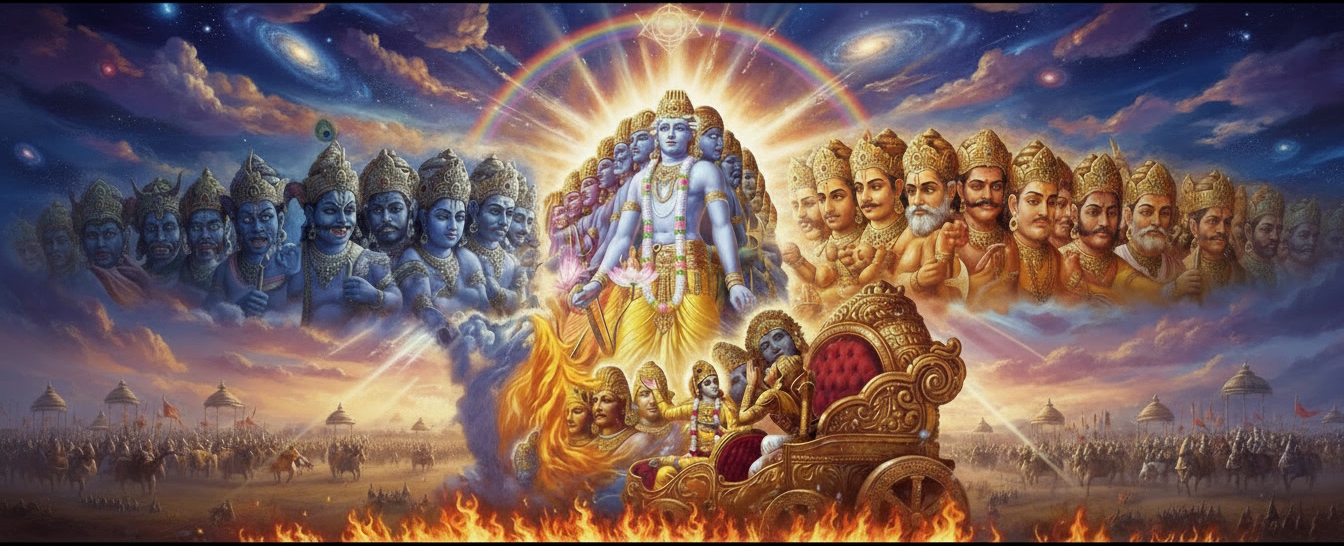
यजन्ते सात्त्विका देवान्यक्षरक्षांसि राजसाः।
प्रेतान्भूतगणांश्चान्ये यजन्ते तामसा जनाः।।17.4।।
yajante sāttvikā devānyakṣarakṣāṃsi rājasāḥ|
pretānbhūtagaṇāṃścānye yajante tāmasā janāḥ||17.4||
Translation
The Sattvic or the pure men worship the gods; the Rajasic or the passionate worship the Yakshas and the Rakshasas; the others (the Tamasic or the deluded people) worship the ghosts and the hosts of the nature-spirits.
हिंदी अनुवाद
सात्त्विक मनुष्य देवताओंका पूजन करते हैं, राजस मनुष्य यक्षों और राक्षसोंका और दूसरे जो तामस मनुष्य हैं, वे प्रेतों और भूतगणोंका पूजन करते हैं।
Commentaries & Translations
Swami Ramsukhdas
व्याख्या -- यजन्ते सात्त्विका देवान् -- सात्त्विक अर्थात् दैवीसम्पत्तिवाले मनुष्य देवोंका पूजन करते हैं। यहाँ देवान् शब्दसे विष्णु? शंकर? गणेश? शक्ति और सूर्य -- ये पाँच ईश्वरकोटिके देवता लेने चाहिये क्योंकि दैवीसम्पत्तिमें देव शब्द ईश्वरका वाचक है और उसकी सम्पत्ति अर्थात् दैवीसम्पत्ति मुक्ति देनेवाली है -- दैवी सम्पद्विमोक्षाय (16। 5)। वह दैवीसम्पत्ति जिनमें प्रकट होती है? उन (दैवीसम्पत्तिवाले) साधकोंकी स्वाभाविक श्रद्धाकी पहचान बतानेके लिये यहाँ यजन्ते सात्त्विका देवान् पद आये हैं।ईश्वरकोटिके देवताओंमें भी साधकोंकी श्रद्धा अलगअलग होती है। किसीकी श्रद्धा भगवान् विष्णु(राम? कृष्ण? आदि) में होती है? किसीकी भगवान् शंकरमें होती है? किसीकी भगवान् गणेशमें होती है? किसीकी भगवती शक्तिमें होती है और किसीकी भगवान् सूर्यमें होती है। ईश्वरके जिस रूपमें उनकी स्वाभाविक श्रद्धा होती है? उसीका वे विशेषतासे यजनपूजन करते हैं।बारह आदित्य? आठ वसु? ग्यारह रुद्र और दो अश्विनीकुमार -- इन तैंतीस प्रकारके शास्त्रोक्त देवताओंका निष्कामभावसे पूजन करना भी यजन्ते सात्त्विका देवान् के अन्तर्गत मानना चाहिये।यक्षरक्षांसि राजसाः -- राजस मनुष्य यक्षों और राक्षसोंका पूजन करते हैं। यक्षराक्षस भी देवयोनिमें हैं। यक्षोंमें धनके संग्रहकी मुख्यता होती है और राक्षसोंमें दूसरोंका नाश करनेकी मुख्यता होती है। अपनी कामनापूर्तिके लिये और दूसरोंका विनाश करनेके लिये राजस मनुष्योंमें यक्षों और राक्षसोंका पूजन करनेकी प्रवृत्ति होती है।प्रेतान्भूतगणांश्चान्ये यजन्ते तामसा जनाः -- तामस मनुष्य प्रेतों तथा भूतोंका पूजन करते हैं। जो मर गये हैं? उन्हें प्रेत कहते हैं और जो भूतयोनिमें चले गये हैं? उन्हें भूत कहते हैं।यहाँ प्रेत शब्दके अन्तर्गत जो अपने पितर हैं? उनको नहीं लेना चाहिये क्योंकि जो अपना कर्तव्य समझकर निष्कामभावसे अपनेअपने पितरोंका पूजन करते हैं? वे तामस नहीं कहलायेंगे? प्रत्युत सात्त्विक ही कहलायेंगे। अपनेअपने पितरोंके पूजनका भगवान्ने निषेध नहीं किया है -- पितृ़न्यान्ति पितृव्रताः (गीता 9। 25)। तात्पर्य है कि जो पितरोंका सकामभावसे पूजन करते हैं कि पितर हमारी रक्षा करेंगे अथवा हम जैसे पितापितामह आदिके लिये श्राद्धतर्पण आदि करते हैं? ऐसे ही हमारी कुलपरम्परावाले भी हमारे लिये श्राद्धतर्पण आदि करेंगे -- ऐसे भावसे पूजन करनेवाले पितरोंको प्राप्त होते हैं। परन्तु अपने मातापिता? दादादादी आदि पितरोंका पूजन करनेसे पितरोंको प्राप्त हो जायँगे -- यह बात नहीं है। जो पितृऋणसे उऋण होना अपना कर्तव्य समझते हैं और इसीलिये (अपना कर्तव्य समझकर) निष्कामभावसे पितरोंका पूजन करते हैं? वे पुरुष सात्त्विक हैं? राजस नहीं। पितृलोकको वे ही जाते हैं? जो पितृव्रताः हैं अर्थात् जो पितरोंको सर्वोपरि और अपना इष्ट मानते हैं तथा पितरोंपर ही निष्ठा रखते हैं। ऐसे लोग पितृलोकको तो जा सकते हैं? पर उससे आगे नहीं जा सकते।कुत्ते? कौए आदिको भी जो निष्कामभावसे रोटी देते हैं (शास्त्रमें ऐसा विधान है)? उससे उनकी योनि प्राप्त नहीं होती क्योंकि वह उनका इष्ट नहीं है। वे तो शास्त्रकी आज्ञाके अनुसार चलते हैं। इसी प्रकार पितरोंका श्राद्धतर्पण आदि भी शास्त्रकी आज्ञाके अनुसार निष्कामभावपूर्वक करनेसे पितृयोनि प्राप्त नहीं हो जाती। शास्त्र या भगवान्की आज्ञा मानकर करनेसे उनका उद्धार होगा। इसलिये निष्कामभावसे किये गये शास्त्रविहित नारायणबलि? गयाश्राद्ध आदि प्रेतकर्मोंको तामस नहीं मानना चाहिये क्योंकि ये तो मृत प्राणीकी सद्गतिके लिये किये जानेवाले आवश्यक कर्म हैं? जिन्हें मरे हुए प्राणीके लिये शास्त्रके आज्ञानुसार हरेकको करना चाहिये।हम शास्त्रविहित यज्ञ आदि शुभ कर्म करते हैं? तो उनमें पहले गणेशजी? नवग्रह? षोडशमातृका आदिका पूजन शास्त्रकी आज्ञाके अनुसार निष्कामभावसे करते हैं। यह वास्तवमें नवग्रह आदिका पूजन न होकर शास्त्रका ही पूजन? आदर हुआ। जैसे? स्त्री पतिकी सेवा करती है? तो उसका कल्याण हो जाता है। विवाह तो हरेक पुरुषका हो सकता है? राक्षसका भी और असुरका भी। वे भी पति बन सकते हैं। परन्तु वास्तवमें कल्याण पतिकी सेवासे नहीं होता? प्रत्युत पतिकी सेवा करना -- पातिव्रतधर्मका पालन करना ऋषि? शास्त्र? भगवान्की आज्ञा है? इसलिये इनकी आज्ञाके पालनसे ही कल्याण होता है।देवता आदिके पूजनसे पूजक(पूजा करनेवाले) की गति वैसी ही होगी -- यह बतानेके लिये यहाँ यजन्ते पद नहीं आया है। अर्जुनने शास्त्रविधिका त्याग करके श्रद्धापूर्वक यजनपूजन करनेवालोंकी निष्ठा पूछी थी अतः अपनेअपने इष्ट(पूज्य) के अनुसार पूजकोंकी निष्ठा -- श्रद्धा होती है? इसकी पहचान बतानेके लिये ही यजन्ते पद आया है। सम्बन्ध -- अबतक उन मनुष्योंकी बात बतायी? जो शास्त्रविधिको न जाननेके कारण उसका (अज्ञतापूर्वक) त्याग करते हैं परन्तु अपने इष्ट तथा उसके यजनपूजनमें श्रद्धा रखते हैं। अब? विरोधपूर्वक शास्त्रविधिका त्याग करनेवाले श्रद्धारहित मनुष्योंकी क्रियाओंका वर्णन आगेके दो श्लोकोंमें करते हैं।
Sri Harikrishnadas Goenka
इसलिये कार्यरूप चिह्नसे अर्थात् ( उन श्रद्धाओंके कारण होनेवाली ) देवादिकी पूजासे?,सात्त्विक आदि निष्ठाओंका अनुमान कर लेना चाहिये? यह कहते हैं --, सात्त्विक निष्ठावाले पुरुष देवोंका पूजन करते हैं? राजसी पुरुष यक्ष और राक्षसोंका तथा अन्य जो तामसी मनुष हैं? वे प्रेतों और सप्तमातृकादि भूतगणोंका पूजन किया करते हैं।
Sri Anandgiri
Still, raising the doubt as to how the Sattvic or other status (Nishtha) of the aforementioned person can be known, He says—"And therefore..." The implication is that the qualified person is predominantly characterized by faith.
"Devas": Vasus, etc.; "Yakshas": Kubera, etc.; "Rakshasas": Nairrita, etc. "Pretas": Brahmins and others who have fallen from their own Dharma and attained an airy body after death.
Since these respective worshipped entities—Devas and others—grant corresponding Sattvic, Rajasic, and Tamasic desired results, it should be understood from this capacity (relation of cause and effect).
Sri Dhanpati
Thus, having described the threefold nature of persons based on the threefold nature of faith, to remove the desire to know how the Sattvic, etc., status of these persons can be known, He speaks with the intention that it is to be inferred by the sign (Lingam) of the act of worshiping Devas, etc.—"They worship..."
Sattvic people—who abound in Sattvic faith and are established in Sattva—worship the Devas (Vasus, etc.).
Rajasic people worship Yakshas and Rakshasas (Kubera, Nairrita, etc.).
Others, the Tamasic people, worship "Pretas." Pretas are Brahmins etc. fallen from duty who attain airy bodies after death and become Pretas named Ulkamukha, Kataputana, etc.; or they worship specific Pishachas mentioned by Manu, or hosts of Bhutas (spirits) and the Seven Mothers (Sapta-matrika), etc., which are Tamasic.
Thus, by the threefold nature of worship, the threefold nature of the Jivas' status should be known.
Sri Madhavacharya
Classifying who is endowed with Sattvic faith, etc., He speaks through the verse "They worship..." (Yajante), etc.
Sri Neelkanth
Why is this assumption made? Because Sattvic people and others worship only the Devas and others (respectively); therefore He says "Yajante" (They worship).
"Yajante" means they worship.
Sri Ramanuja
Those in whom the quality of Sattva abounds, being endowed with Sattvic faith, worship the Devas. It is stated that 'Sattvic' faith is that regarding the worship of Devas which becomes the cause of superior happiness unmixed with sorrow.
Rajasic people worship Yakshas and Rakshasas. Others, the Tamasic people, worship Pretas (spirits of the dead) and hosts of Bhutas (ghosts). The meaning is that Rajasic faith produces little happiness mixed with sorrow, while Tamasic faith is mostly sorrowful and produces very little happiness.
Thus, even in scriptural sacrifices and the like performed with faith, there is a distinction in the fruit due to the Gunas.
However, in non-scriptural acts of charity, austerity, and sacrifice, since they are contrary to My command, there is not even a grain of happiness, but rather only evil/calamity; expressing this sentiment held in His heart, He says...
Sri Sridhara Swami
He elaborates on the distinctions of Sattvic and others through the distinction of their actions—"They worship," etc.
Sattvic people worship only the Devas, who are of the nature of Sattva. Rajasic people worship Yakshas and Rakshasas, who are of the nature of Rajas. Others, distinct from these, the Tamasic people, worship Pretas and hosts of Bhutas, who are indeed Tamasic.
The meaning is that the Sattvic nature, etc., of the respective worshipers should be understood by their taste for worshiping those specific deities who possess Sattva and other natures.
Sri Vedantadeshikacharya Venkatanatha
With the intention that the classification of faith previously introduced as Sattvic etc., is now being demonstrated through the objects of Sattvic, Rajasic, and Tamasic faith, he says—"He elaborates on that very point." This means that specific faiths, which lead to specific results, are based on those specific types of faith.
With the intention that the increasing qualities of Sattva etc. in a person generate faith in objects corresponding to themselves, he says—"Those abundant in the quality of Sattva." Although all beings involve the three Gunas, the designation is based on the predominance of one. Here, by stating "with Sattvic faith," the mention of the person's Sattvic nature states the implied cause.
Since faith itself was pointed out in its nature with "Hear that," the intention is indeed to make known the nature of faith; with this view, he explains it as "unmixed with sorrow." Since the fruit of worship is indeed union (Sayujya) etc. with the object of worship, the description of "unmixed with sorrow" etc. is given. The same should be understood for the latter two.
The word "others" (anye) is used to indicate the extreme contrariety of the Tamasic ones from the rest. "Hosts of Bhutas" refers to the attendants of Rudra and the like.
Swami Chinmayananda
प्रत्येक मनुष्य अपने जीवन में किसी न किसी आदर्श या पूजावेदी को अपनी सम्पूर्ण भक्ति अर्पित करता है। तत्पश्चात् अपने आदर्श के आह्वान के द्वारा अपनी इच्छा की पूर्ति चाहता है। शास्त्रीय भाषा में इसे पूजा कहते हैं। इस शब्द से केवल शास्त्रोक्त विधान की षोडशोपचार पूजाविधि ही नहीं समझनी चाहिए। उपर्युक्त परिभाषा के अनुसार प्रत्येक व्यक्ति किसी न किसी की आराधना करता है फिर उसका आराध्य नाम? धन? यश? कीर्ति? देवता आदि कुछ भी हो सकता है। प्रत्येक मनुष्य का आराध्य उसकी श्रद्धा के अनुसार ही होता है? जिसका वर्णन यहाँ किया गया है।सात्त्विक स्वभाव के लोग अपने श्रेष्ठ और दिव्य संस्कारों के कारण सहज ही देवताओं की अर्थात् दिव्य और उच्च आदर्शों की पूजा करते हैं।रजोगुणप्रधान लोग अत्यन्त महत्त्वाकांक्षी और क्रियाशील स्वभाव के होते है। इसलिए? वे यक्ष? राक्षसों की ही पूजा करते हैं।तात्पर्य यह है कि आराध्य का चयन भक्त के हृदय की मौन मांग के ऊपर निर्भर करता है। कोई भी व्यक्ति वस्त्रों का क्रय करने किसी पुस्तकालय में नहीं जायेगा। इसी प्रकार? रजोगुणी लोगों को कर्मशील आदर्श ही रुचिकर प्रतीत होते हैं।तामसिक लोग अपनी निम्नस्तरीय विषय वासनाओं की पूर्ति के लिए भूतों और प्रेतात्माओं की आराधना करते हैं। जगत् में भी यह देखा जाता है कि असत् शिक्षा और अनैतिकता से युक्त लोग अपनी दुष्ट और अपकारक महत्त्वाकांक्षाओं को पूर्ण करने के लिए प्राय नीच? प्रतिशोधपूर्ण और दुराचारी लोगों की (भूत? प्रेत) सहायता लेते हैं। ये नीच लोग यद्यपि शरीर से जीवित? किन्तु जीवन की मधुरता और सुन्दरता के प्रति मृत होते हैं।इसी अभिप्राय को इसके पूर्व भी अनेक श्लोकों में प्रकट किया जा चुका है। प्राय लोगों में भूतप्रेतों के विषय में जानने की अत्यधिक उत्सुकता रहती है। क्या प्रेतात्माओं का वास्तव में अस्तित्व होता है यह सबकी जिज्ञासा होती है? परन्तु गीता के प्रस्तुत प्रकरण का अध्ययन करने के लिए इस विषय में विचार करना निरर्थक है। इतना ही जानना पर्याप्त है कि भूत व प्रेत के द्वारा कुछ विशेष प्रकार की शक्तियों की ओर इंगित किया गया है? जो इस भौतिक जगत् में भी उपलब्ध हो सकती हैं।शुद्धान्तकरण के सात्त्विक? महत्त्वाकांक्षी राजसी और प्रमादशील तामसी जन क्रमश सहृदय मित्रों से सहायता? धनवान् और समर्थ लोगों से सुरक्षा और अपराधियों से शक्ति प्राप्त करने के लिए उपयुक्त देव? यक्ष और प्रेतात्माओं की पूजा करते हैं। मनुष्य के कार्यक्षेत्र से ही कुछ सीमा तक उसकी श्रद्धा को समझा जा सकता है।समाज के सत्त्वनिष्ठ पुरुष विरले ही होते हैं। सामान्यत राजसी और तामसी जनों की संख्या अधिक होती है और उनके पूजादि के प्रयत्न भी दोषपूर्ण होते हैं। कैसे भगवान् बताते हैं
Sri Abhinavgupta
From "They worship" up to "of demoniacal resolve."
They worship the insentient because of a lack of discrimination. And they emaciate Me (the Self within) by not practicing the purport of the scriptures.
Therefore, performing penances concocted by their own intellect, they are on the contrary Tamasic.
Sri Jayatritha
The promise was "Hear that" (about faith), but that is not being stated? And "Sattvic people worship..." which seems irrelevant, is being stated? To this objection, he (Madhvacharya) says—
"Who..." (is of Sattvic faith?). "Upon such an inquiry" is to be supplied.
"Having classified the nature of faith"—meaning, the very threefold nature of faith promised is being described (through actions), so there is no inconsistency.
By this, it is expressed that terms like "Sattvic" imply "those possessing Sattvic faith," and so on.
Sri Madhusudan Saraswati
Faith, being known, will make known the 'Nishtha' (status); by what means can that (faith) be known? Regarding this expectation, He says it is to be inferred by the sign of effects like worship of gods etc. — 'Yajante' (They sacrifice/worship).
'Janah' — people devoid of scriptural discrimination; those who with natural faith worship 'Devan' — the Sattvic ones like Rudra etc., those 'anye' (others/among them) are to be known as Sattvic.
And those who worship Yakshas — Kubera etc., and Rakshamsi (Rakshasas) — the Rajasic ones like Nirriti etc., those 'anye' are to be known as Rajasic.
And those who worship 'Pretan' — Brahmins etc. fallen from their duty, having attained an aerial body after death, named Ulkamukha, Kataputana etc., thus become Pretas as stated by Manu; or specific ghosts (Pishacas); and 'Bhutaganan' — the Tamasic ones like the Seven Mothers (Sapta-matrika) etc.; those 'anye' are to be known as Tamasic.
The word 'Anye' (others) is connected in all three cases to indicate distinctness.
Sri Purushottamji
He elaborates on that very point—"They worship," etc.
Sattvic people worship the Devas—Sun, Indra, etc. Rajasic people worship Yakshas and the Rakshasas presided over by the Giver of Wealth (Kubera). Others, the Tamasic people devoid of connection with Sattva, worship Pretas and hosts of Bhutas.
The meaning is that they should be known as being of those respective natures solely by their taste for those respective worships.
Sri Shankaracharya
"Yajante" means they worship; the "Sattvic," i.e., those established in Sattva, worship the "Devas." The "Rajasic" worship "Yakshas and Rakshasas." And others, the "Tamasic" people, worship "Pretas, hosts of Bhutas, and the Seven Mothers (Sapta-matrikas), etc."
Thus, in the case of abandoning scriptural injunctions, the standing in Sattva etc. is determined by one's actions. Among them, only one in thousands is devoted to the worship of Devas and established in Sattva; for the most part, living beings are established in Rajas and Tamas. How is this so? (He explains...)
Sri Vallabhacharya
Among them, He speaks of the first group—"They worship," etc. Sattvic people, whose nature is of Sattvic faith, worship the authentic Sattvic Devas.
Similarly for the others. The same has been stated in the Bhagavata [1.2.27]: "Those of Rajasic and Tamasic nature worship those of similar character." These who worship in three ways, having set aside scriptural injunctions, are described as Divine and Demoniac.
Swami Sivananda
यजन्ते worship? सात्त्विकाः the Sattvic or pure men? देवान् the gods? यक्षरक्षांसि the Yakshas and the Rakshasas? राजसाः the Rajasic or the passionate? प्रेतान् ghosts? भूतगणान् the hosts of Bhutas or the naturespirits? च and? अन्ये the others? यजन्ते worship? तामसाः the Tamasic? जनाः people.Commentary Lord Krishna? after defining faith? tells Arjuna how this faith determines the object of worship. The nature of the faith (whether it is Sattvic? Rajasic or Tamasic) has to be inferred from its characteristic effects? viz.? the worship of the gods and the like. Each man selects his object of worship according to the ruling Guna of his being. The expression of a mans faith depends on the Guna that is predominant in him. A Sattvic man will give his faith the Sattvic expression? a Rajasic man the Rajasic expression and a Tamasic man the Tamasic expression.Sattvic persons or people with Sattvic faith who are devoted to the worship of the gods? are rare in this world.Yakshas are the brothers of Kubera? the lord of wealth gnomes? the spirits that guard wealth.Rakshasas Beings of strength and power such as Nairrita demons giants gifted with illusive powers.Bhutas Ghosts.
Swami Gambirananda
Sattvikah, those having the sattva ality, those steadfast in sattva; yajante, worship; devan, the gods; rajasah, those having rajas; (worship) yaksa-raksamsi, the demi-gods and ogres; and anye, other; janah, people; tamasah, possessed of tamas; yajante, worship; pretan, ghosts; and bhuta-ganan, the hosts of spirits-Sapta-matrkas (the Seven Mothers) and others.
Thus, in the context of abandonment of scriptural injunctions, the states of sattva etc. have been determined through their effects. As regards that, it is only one in thousands who, being established in sattva, becomes devoted to the adoration of gods.
But, to be sure, creatures are mostly rooted deeply in rajas or tamas. How?
Swami Adidevananda
'Those who have abundance of Sattva ality and are conjoined with Sattvika faith worship the gods. The meaning is this: The faith in the worship (sacrifice) of the gods which causes supreme joy unmixed with pain is of Sattvika nature. The Rajasika types worship Yaksas and Raksasas. And the others, i.e., the Tamasika types, worship the departed ancestors and hosts of Bhutas. The faith born of Rajas brings about limited joy mixed with pain, while the faith born of Tamas gives rise to extremely limited joy which verges almost on pain.
Therefore, there is difference in fruits according to the Gunas regarding sacrifices etc., which are enjoined in the Sastras and associated with faith. However, no happiness whatsoever will result from penances, sacrifices etc., not enjoined in the Sastras and therefore antagonistic to My ?ndment. On the contrary, calamity results from them. Sri Krsna proceeds to explain this more fully.