Bhagavad Gita - Chapter 18 - Shloka (Verse) 49
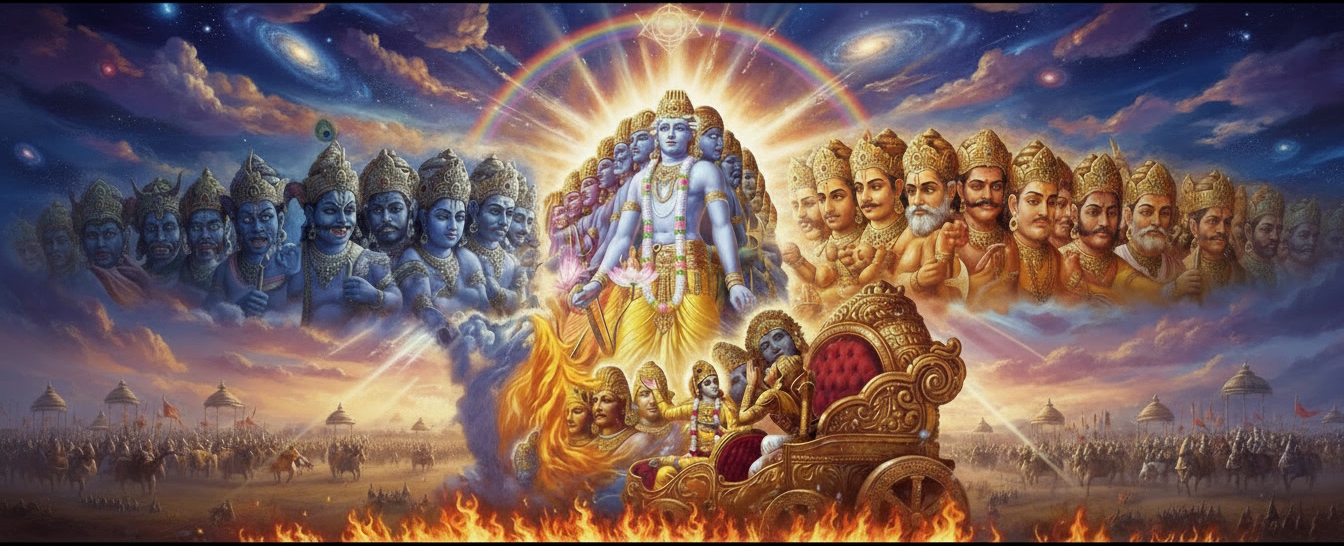
असक्तबुद्धिः सर्वत्र जितात्मा विगतस्पृहः।
नैष्कर्म्यसिद्धिं परमां संन्यासेनाधिगच्छति।।18.49।।
asaktabuddhiḥ sarvatra jitātmā vigataspṛhaḥ|
naiṣkarmyasiddhiṃ paramāṃ saṃnyāsenādhigacchati||18.49||
Translation
He whose intellect is unattached everywhere, who has subdued his self, from whom desire has fled, he by renunciation, attains the supreme state of freedom from action.
हिंदी अनुवाद
जिसकी बुद्धि सब जगह आसक्तिरहित है, जिसने शरीरको वशमें कर रखा है, जो स्पृहारहित है, वह मनुष्य सांख्ययोगके द्वारा नैष्कर्म्य-सिद्धिको प्राप्त हो जाता है।
Commentaries & Translations
Swami Ramsukhdas
संन्यास(सांख्य) योगका अधिकारी होनेसे ही सिद्धि होती है। अतः उसका अधिकारी कैसा होना चाहिये -- यह बतानेके लिये श्लोकके पूर्वार्द्धमें तीन बातें बतायी हैं --,(1) असक्तबुद्धिः सर्वत्र -- जिसकी बुद्धि सब जगह आसक्तिरहित है अर्थात् देश? काल? घटना? परिस्थिति? वस्तु? व्यक्ति? क्रिया? पदार्थ आदि किसीमें भी जिसकी बुद्धि लिप्त नहीं होती।(2) जितात्मा -- जिसने शरीरपर अधिकार कर लिया है अर्थात् जो आलस्य? प्रमाद आदिसे शरीरके वशीभूत नहीं होता? प्रत्युत इसको अपने वशीभूत रखता है। तात्पर्य है कि वह किसी कार्यको अपने सिद्धान्तपूर्वक करना चाहता है तो उस कार्यमें शरीर तत्परतासे लग जाता है और किसी क्रिया? घटना? आदिसे हटना,चाहता है तो वह वहाँसे हट जाता है। इस प्रकार जिसने शरीरपर विजय कर ली है? वह जितात्मा कहलाता है।(3) विगतस्पृहः -- जीवनधारणमात्रके लिये जिनकी विशेष जरूरत होती है? उन चीजोंकी सूक्ष्म इच्छाका नाम स्पृहा है जैसे -- सागपत्ती कुछ मिल जाय? रूखीसूखी रोटी ही मिल जाय? कुछनकुछ खाये बिना हम कैसे जी सकते हैं जल पीये बिना हम कैसे रह सकते हैं ठण्डीके दिनोंमें कपड़े बिलकुल न हों तो हम कैसे जी सकते हैं सांख्ययोगका साधक इन जीवननिर्वाहसम्बन्धी आवश्यकताओंकी भी परवाह नहीं करता।तात्पर्य यह हुआ कि सांख्ययोगमें चलनेवालेको जडताका त्याग करना पड़ता है। उस जडताका त्याग करनेमें उपर्युक्त तीन बातें आयी हैं। असक्तबुद्धि होनेसे वह जितात्मा हो जाता है? और जितात्मा होनेसे वह विगतस्पृह हो जाता है? तब वह सांख्ययोगका अधिकारी हो जाता है।नैष्कर्म्यसिद्धिं परमां संन्यासेनाधिगच्छति -- ऐसा असक्तबुद्धि? जितात्मा और विगतस्पृह पुरुष सांख्ययोगके द्वारा परम नैष्कर्म्यसिद्धिको अर्थात् नैष्कर्म्यरूप परमात्मतत्त्वको प्राप्त हो जाता है। कारण कि क्रियामात्र प्रकृतिमें होती है और जब स्वयंका उस क्रियाके साथ लेशमात्र भी सम्बन्ध नहीं रहता? तब कोई भी क्रिया और उसका फल उसपर किञ्चिन्मात्र भी लागू नहीं होता। अतः उसमें जो स्वाभाविक? स्वतःसिद्ध निष्कर्मता -- निर्लिप्तता है? वह प्रकट हो जाती है। सम्बन्ध -- अब उस परम सिद्धिको प्राप्त करनेकी विधि बतानेकी प्रतिज्ञा करते हैं।
Sri Harikrishnadas Goenka
ज्ञाननिष्ठाकी योग्यताप्राप्तिरूप जो कर्मजनित सिद्धि कही गयी है? उसकी फलभूत ज्ञाननिष्ठारूप नैष्कर्म्यसिद्धि भी कही जानी चाहिये। इसलिये अगला श्लोक आरम्भ किया जाता है --, जो सर्वत्र असक्तबुद्धि है -- पुत्र? स्त्री आदि जो आसक्तिके स्थान हैं? उन सबमें जिसका अन्तःकरण आसक्तिसे -- प्रीतिसे रहित हो चुका है। जो जितात्मा है -- जिसका आत्मा यानी अन्तःकरण जीता हुआ है अर्थात् वशमें किया हुआ है। जो स्पृहारहित है -- शरीर? जीवन और भोगोंमें भी जिसकी स्पृहा -- तृष्णा नष्ट हो गयी है। जो ऐसा आत्मज्ञानी है? वह परम नैष्कर्म्यसिद्धिको ( प्राप्त करता है )। निष्क्रिय ब्रह्म ही आत्मा है यह ज्ञान होनेके कारण जिसके सर्वकर्म निवृत्त हो गये हैं वह निष्कर्मा है। उसके भावका नाम नैष्कर्म्य है और निष्कर्मतारूप सिद्धिका नाम नैष्कर्म्यसिद्धि है। अथवा निष्क्रिय आत्मस्वरूपसे स्थित होनारूप निष्कर्मताका सिद्ध होना ही नैष्कर्म्यसिद्धि है। ऐसी जो कर्मजनित सिद्धिसे विलक्षण और सद्योमुक्तिमें स्थित होनारूप उत्तम सिद्धि है? उसको संन्यासके द्वारा? यानी यथार्थ ज्ञानसे अथवा ज्ञानपूर्वक सर्वकर्मसंन्यासके द्वारा? लाभ करता है ऐसा ही कहा भी है कि सब कर्मोंको मनसे छोड़कर न करता हुआ और न करवाता हुआ रहता है।
Sri Anandgiri
It was said that even though there is renunciation of all actions for the knower, it is not so for the ignorant? Now restating what was said, he states the purport of the subsequent verse — 'Yā ca karmajā' (And which is born of action). The word 'ca' in the sense of emphasis should be stated in a different order, it connects here.
Teaching the means, He designates the perfection of actionlessness — 'Asakta'. Even in the absence of attachment of mind in objects like son etc., doubting its lack of control, He says — 'Jitātmā' (Controlled self).
Having stated non-attachment, stating absence of desire, redundancy is desired — doubting thus he says — 'Deha'. Restating what was said, he makes him obtain its fruit — 'Ya evam' (Who thus).
He states the cause for the departure of actions — 'Niṣkriya'. Having explained the word 'Naishkarmyasiddhi' as right knowledge, he states another meaning — 'Naiṣkarmyas' (Of Naishkarmya). He manifests the excellence itself — 'Karmaja'.
Since Sannyasa is not well-known as right knowledge (Samydag-darshana) in Shruti and Smritis, its identity is improper, doubting thus he states another view — 'Tatpūrvakeṇa' (Preceded by that). Attainment of Naishkarmya from Sannyasa — here he states conformity with the beginning of the sentence — 'Tathā ca'.
Sri Dhanpati
He describes 'Naishkarmya Siddhi' (perfection of actionlessness), which is characterized by steadfastness in knowledge and is the fruit of the perfection born of action (which is characterized by fitness for steadfastness in knowledge) — with the word 'Asakta' etc.
'Asaktabuddhih' means one whose intellect (Antahkarana) is unattached, meaning free from association everywhere—in things that are causes of attachment like wife, children, etc. 'Jitatma' means he whose self (mind/Antahkarana) is conquered, meaning brought under control.
Therefore, 'Vigatasprihah' means he from whom desire or thirst for the enjoyments of the body and life has departed. He who is such a knower of the Self attains 'Naishkarmya Siddhi'. Actions have departed from whom due to the realization of the actionless Self, he is 'Nishkarma'; his state is 'Naishkarmyam'. That (state), and the perfection of that—which is perfection characterized by remaining in the nature of the actionless Self, or cessation—is Naishkarmya Siddhi. He attains that 'Parama' (supreme) perfection—which is superior to the perfection born of action and is of the nature of the state of immediate liberation—through 'Sannyasa', meaning through right vision (Samyag-darshana) or through the renunciation of all actions preceded by that.
As it has been said: 'Renouncing all actions by the mind, the self-controlled embodied one sits happily in the nine-gated city, neither acting nor causing to act.'
Sri Madhavacharya
'Naiṣkarmyasiddhim'? Yoga-perfection having actionlessness as fruit.
Sri Neelkanth
Having said that offering of one's own actions to God should be done, stating the necessity of one's own actions by the next two verses, what will be the fruit by offering them to the Supreme Lord, to this He says — 'Asakta'.
'Sannyāsena' — by the secondary Sattvic abandonment stated before as 'Whatever obligatory action is done thinking it is a duty indeed, O Arjuna. Abandoning attachment and fruit, that abandonment is considered Sattvic' [18.9].
'Asaktabuddhiḥ' — in places of attachment like son, wife etc., whose intellect is devoid of attachment, he is Asaktabuddhi, detached, this is the meaning. Therefore 'Jitātmā' — of peaceful mind.
'Vigataspṛhaḥ' — specially gone is Spriha — thirst — whose, becoming such; 'Naiṣkarmyasiddhim' — the perfection of wandering asceticism characterized by abandonment of action by nature entirely; 'Paramām' — very superior compared to the previously mentioned secondary abandonment; explained in the verse 'Does not hate inauspicious action' [18.10]; 'Adhigacchati' — obtains.
Sri Ramanuja
'Asaktabuddhiḥ' in fruits etc. everywhere; 'Jitātmā' — of conquered mind; by contemplation of agency of Supreme Person, 'Vigataspṛhaḥ' in agency of self; thus endowed with Sannyasa determined as non-different from Tyaga, performing action; 'Paramāṃ naiṣkarmyasiddhim' he attains.
He attains supreme steadfastness in meditation, which is the fruit of Jnana Yoga also, this is the meaning.
He attains the attainment of Dhyana Yoga to be described, which is of the nature of cessation of all sense-activities.
Sri Sridhara Swami
Objection: How, while action is being done, by abandoning the defect-part, the quality-part alone will be accomplished, in this expectation He says — 'Asakta'.
'Asaktā' — whose intellect is void of attachment? 'Jitātmā' — non-egoistic? 'Vigataspṛhaḥ' — gone is Spriha — desire for object of fruit — from whom, he; such a one; by 'Sannyāsena' — by Sannyasa characterized by abandonment of attachment to action and its fruit mentioned before as 'That abandonment is considered Sattvic' [18.9]; 'Naiṣkarmyasiddhim' — purity of Sattva characterized by cessation of all actions — he attains.
Although performance of action with abandonment of attachment and fruit is also 'Naishkarmya' indeed? Due to absence of adherence to agency. That has been said — 'I do nothing at all, thus the united knower of Truth should think' [5.8] etc. by four verses? Still, by this Sannyasa of stated characteristic, 'Paramāṃ naiṣkarmyasiddhim' — characterized as 'Renouncing all actions mentally he sits happily, the self-controlled one' [5.13], synonymous with Paramahamsa stage, he attains.
Sri Vedantadeshikacharya Venkatanatha
Even after saying 'Asaktabuddhiḥ everywhere', again 'Vigataspṛhaḥ' — due to propriety of concerning abandonment of agency read along with abandonment of attachment to fruit, intending the culmination of abandonment in the form of cessation of occasion for contemplation of agency in oneself even in dream etc., he says — 'Ātmakartṛtve vigataspṛhaḥ' (Free from desire in self-agency).
'Sannyāsena adhigacchati' is not referring to Jnana Yoga etc.? Because of lack of connection with the context 'Should not abandon action'? And due to propriety of concerning Sannyasa stated at the beginning of the chapter, with this intention he says — 'Evaṃ tyāgādananyatvena nirṇītena' (Thus determined as not different from Tyaga).
Here the word 'Naiṣkarmyasiddhi' is not about liberation, because duty is again enjoined by 'Siddhiṃ prāptaḥ' [18.50] etc.? Nor is it about mere Jnana Yoga? Because intention of that (Jnana Yoga) is justified by the qualification 'Paramām' and by mere word Naishkarmya.
Therefore here the commencement of result of establishment in knowledge is intended, with this intention he says — 'Paramāṃ dhyānaniṣṭhām' (Supreme steadfastness in meditation).
By force of the compound 'Naiṣkarmyasiddhim' or by power of the adjective 'Paramatva', he explains Siddhi — 'Jñānayogasyāpi phalabhūtām' (Which is the fruit of Jnana Yoga also).
He states the reference to the said meaning by conformity with subsequent text — by 'Vakṣyamāṇadhyānayogāvāptim' etc.
'Nirgat karmā' (action gone) is Nishkarma? Its state is 'Naiṣkarmya' — he clarifies this derivation — 'Sarvendriyakarmoparatirūpām' (Of the form of cessation of all sense-actions).
Swami Chinmayananda
हमको यह स्मरण रखना चाहिए कि सम्पूर्ण गीतोपदेश उस अर्जुन के लिए दिया गया था? जो युद्ध भूमि पर कर्तव्य की विशालता को देखकर संभ्रमित हो गया था। वह युद्ध से पलायन कर? जंगलों में स्वकल्पित धारणा के अनुसार संन्यास का जीवन जीना चाहता था। भगवान् श्रीकृष्ण ने गीता में इस सिद्धांत का प्रतिपादन किया है कि सांसारिक जीवन तथा उसके कर्तव्यों से दूर भागना संन्यास नहीं है। इस श्लोक में भगवान् श्री कृष्ण नैर्ष्कम्य सिद्धि की परिभाषा देते हैं? जिसका साधन संन्यास है। संन्यास का अर्थ है शरीर? मन और बुद्धि उपाधियों के साथ हुए अपने तादात्म्य का त्याग करना। अपने शुद्ध आत्मस्वरूप में निष्ठा प्राप्त करना ही नैर्ष्कम्य सिद्धि है।जब हम अपने आत्मस्वरूप को विस्मृत कर देते हैं? तब कर्तृत्व भोक्तृत्व अभिमानी जीव की उत्पत्ति होती है। तत्पश्चात् हमारा समस्त व्यवहार जीव के रूप में ही होता है। लौकिक जगत् में भी? मद्यपान से उन्मत्त पुरुष में इस प्रकार की आत्मविस्मृति देखी जाती है। वह अपने व्यक्तित्व और पद को विस्मृत कर किसी अन्य रूप में ही व्यवहार करने लगता है। इस मादक उन्मत्तता में वह अपनी शिक्षादीक्षा? सभ्यता और संस्कृति को अपमानित करता हुआ निन्दनीय व्यवहार करता है। जब तक उस मादक पेय का प्रभाव बना रहता है? तब तक वह इसी प्रकार निन्द्य व्यवहार करता रहता है।आत्म अज्ञान के कारण अभिमानी जीव की उत्पत्ति होती है। आत्मज्ञान से इस अज्ञान का नाश हो जाने पर जीव को अपने परिपूर्ण सच्चिदानन्द स्वरूप का अनुभव होता है। उस पूर्ण के पूर्ण अनुभव में अपूर्णता का भान कहाँ और अपूर्णता न हो? तो कामना की भी उत्पत्ति नहीं हो सकती। कामना के अभाव में विचारों का संचलन ही अवरुद्ध हो जाता है? और इस प्रकार सुख की प्राप्ति के लिए कर्म करने की आवश्यकता नहीं रह जाती। यह स्थिति परम नैर्ष्कम्य सिद्धि कही जा सकती है।वेदान्त दर्शन में वर्णित नैर्ष्कम्य सिद्धि परमानन्द के अनुभव की वह स्थिति है? जिसमें अज्ञान? काम? विचार और कर्म का सर्वथा अभाव है। वेदान्तरूपी अध्यात्मिकमनोविज्ञान में हम कह सकते हैं कि अज्ञान कर्म का प्रपितामह है अत यह स्पष्ट हो जाता है कि स्वस्वरूप में संस्थिति ही नैर्ष्कम्य सिद्धि है। इसे ही निर्विकल्प अथवा निष्कामत्व की स्थिति भी कहते हैं।इस श्लोक में गीताचार्य भगवान् श्रीकृष्ण यह स्पष्ट घोषणा करते हैं कि नैर्ष्कम्य की परम सिद्धि को प्राप्त होने का साधन ज्ञानलक्षण संन्यास है। जीवन संघर्षों से तुच्छ प्रकार के अशोभनीय पलायन के द्वारा इस पूर्णत्व की स्थिति को प्राप्त नहीं किया जा सकता। स्वधर्म के पालन द्वारा हमको चित्तशुद्धि प्राप्त करनी चाहिए और तदुपरान्त ही संन्यास अर्थात् आत्मबोध के द्वारा स्वस्वरूप में दृढ़स्थिति प्राप्त की जा सकती है। क्षत्रिय होने के नाते अर्जुन का युद्ध से विरत होना उपयुक्त नहीं था। अत भगवान् श्रीकृष्ण उसे उसके स्वधर्म में प्रवृत्त करते हैं।सर्वत्र असक्त बुद्धि यह सुविदित तथ्य है कि विषयों में आसक्त पुरुष को कभी मनशान्ति नहीं प्राप्त होती। आसक्ति के कारण मन क्षुब्ध रहता है और दुर्बल शरीर मन की इच्छा के अनुसार काम करते हुए थक जाता है। मुण्डन किया हुआ मस्तक अर्थात् वह बुद्धि जो समस्त प्रकार की आसक्तियों से मुक्त है? वही उस परमात्मा को प्रकट कर सकती है? जो समस्त उपाधियों को चेतना प्रदान करता है। यह वास्तविक नैर्ष्कम्य सिद्धि है और एक साधन सम्पन्न उत्तम अधिकारी ही इसे प्राप्त कर सकता है।अर्जुन की संन्यास की इच्छा बन्धुमित्र परिवार के प्रति आसक्ति के कारण उत्पन्न हुई थी? अनासक्ति से नहीं। इसलिए? वह इच्छा मिथ्या ही थी।जितात्मा और विगतस्पृह जिस पुरुष के मन में विषयभोग की किंचिन्मात्र भी लालसा नहीं रह गयी है (विगतस्पृह)? केवल वही पुरुष जितात्मा अर्थात् पूर्ण आत्मसंयमी बन सकता है।मन और बुद्धि में ही क्रमश कर्तृत्व और भोकतृत्व के अभिमान निवास करते हैं। इन दोनों अभिमानों का संयुक्त रूप ही जीव कहलाता है। संसार में इस जीव का अस्तित्व बने रहने के कारण विषयों में उसकी स्पृहा है। सम्यक् विवेचन द्वारा यह जानकर कि विषयों में सुख नहीं होता? यह स्पृहा नष्ट की जा सकती है। उसी प्रकार? आत्मा और अनात्मा के विवेक के द्वारा आत्मबोध होने पर जीवभाव का भी अन्त हो जाता है। गीता इस बात को बारम्बार दोहराते हुए कभी नहीं थकती कि आध्यात्मिक उन्नति के लिए आत्मसंयम एवं स्पृहा समाप्ति अपरिहार्य गुण हैं। यहाँ विशेष ध्यान देने योग्य बात यह है कि नैर्ष्कम्य सिद्धि कोई अप्राप्त और नवीन स्थिति की प्राप्ति नहीं है? वरन् अज्ञान जनित आसक्तियों के त्याग से अपने स्वरूप की पहचान मात्र है। यह स्वत सिद्ध साध्य की सिद्धि है।भगवान् श्रीकृष्ण आगे कहते हैं।
Sri Abhinavgupta
'Na tadasti'. Thus, of agent, action, instruments, of intellect and fortitude, and of happiness, being distinct by difference of Sattva etc., due to combination of mutual relationship of principal and subsidiary and of sublater and sublated, due to connection (difference) of sequence and simultaneity of modifications etc., due to innumerable varieties, there is capacity to produce diverse fruits. By this, the depth of actions which was briefly stated before is determined in detail with reasons.
And all these from gods down to immovable do not transcend the connection with the three Gunas. For it is said — 'From Brahma down to an insect, no one is happy in reality. Everyone desiring to live creates various modifications'. Thus, in reality happiness belongs to one whose mind has transcended Gunas, not to another, this is the intention.
Thus by this much, the threefold nature of each of the six and of Dhriti etc. has been propounded. Being in the Sattvic heap among them, having obtained divine wealth, one is fit for knowledge here; and you are such, thus Arjuna was encouraged. Now however this is said — If indeed with this wisdom of knowledge you engage in action, then by engagement in one's own duty and by being purified by special knowledge, there is no connection of action for you.
But if you do not accept this? Then surely your engagement must indeed happen, because the caste itself is situated in that state. Since everyone is bound by nature, even if having that nature concealed by some defect for some time, upon the removal of that concealer, he indeed obtains the nature which has become manifest. For such is the nature of Varnas. Thus in the inevitable engagement, there would be sharing of fruit from that.
He states that — from 'Brāhmaṇa' etc. up to 'Avaśo'pi tat' (Even helplessly that). The nature of the description of division of actions of Brahmanas etc. surely does not transgress, thus for you of Kshatriya nature, even if unwilling, Prakriti — named Svabhava — resorts to the state of impeller without deviation. Only for one impelled by that there is connection with merit and sin.
Therefore, placing the authority of special knowledge spoken by Me in front, perform actions. That being so, bondage will cease. This is the purport of preparing the equipment for this meaning of the Great Sentence. The meaning of intermediate sentences is clear. 'Samāsena' (briefly) [18.50]. Of knowledge, stated before. He states the consummation (Nishtha) as ascertained by avoiding the web of words. 'Buddhyā viśuddhayā' etc. all this is almost explained, so effort is not made again.
Sri Jayatritha
Some say that 'Naishkarmya Siddhi' means Moksha (liberation). That is 'Asat' (incorrect), because of the contradiction with the remainder of the sentence 'enters Me thereafter'. With this intent, he explains it differently—'Naishkarmya' etc.
Perfection for the sake of Naishkarmya is 'Naishkarmya Siddhi'. And that (perfection) belongs to Yoga; that is the meaning.
Sri Madhusudan Saraswati
Who then is incapable of renouncing all actions? He who, endowed with dispassion for enjoyment of objects here and hereafter born of discrimination of eternal and non-eternal things, endowed with Shama, Dama etc., attaining 'perfection born of action' through destruction of impurities, being a seeker of liberation, has attained desire to know the pure unity of Brahman and Self; he, to perform hearing etc. of Vedanta sentences which are means to knowledge of unity of Brahman and Self which is the cause of his desired liberation, for the cessation of all distractions, will indeed perform the renunciation of all actions enjoined by Shruti and Smriti which is subsidiary to that.
'Therefore, knowing thus, becoming calm, controlled, withdrawn, enduring, concentrated, one should see the Self in the Self alone' [Bri. Up. 4.4.23] — from this Shruti; 'Abandoning truth and untruth, pleasure and pain, Vedas, this world and the next, one should seek the Self' [Ap. Dh. 2.9.11.3] — from this Smriti also; 'Uparata' — having renounced all actions, one should see the Self. One should inquire into Vedanta sentences for the vision of Self, this is the meaning of Shruti.
Such a one indeed is the Paramahamsa Parivrajaka propounded as distinct from the three branches of Dharma by the Shruti 'Established in Brahman attains immortality'; approaching the Paramahamsa Parivrajaka Guru who has accomplished his purpose, he becomes capable of inquiry into Vedanta sentences — aiming at whom the four-chapter inquiry 'Now therefore inquiry into Brahman' [B.S. 1.1.1] etc. was started by Lord Badarayana.
What kind is he, thus He says — 'Asakta'. Everywhere, even in causes of attachment like son, wife etc. 'Asaktabuddhiḥ' — 'I am theirs, these are mine' — whose intellect is devoid of such clinging, he. Since 'Jitātmā' — having withdrawn from objects, one whose mind is controlled. When passion for objects exists, how withdrawal, to that He says. 'Vigataspṛhaḥ' — devoid of desire even for body, life, and enjoyments; detached from everything by seeing defects in all seen objects and by seeing the virtue of liberation which is of the nature of eternal consciousness and supreme bliss, this is the meaning.
He who thus with pure mind has attained the secondary perfection born of action propounded by the statement 'Worshipping Him by one's own action, a man attains perfection' [18.46], which is characterized by qualification for inquiry into Vedanta sentences which is means to knowledge, i.e. fitness for establishment in knowledge; he 'sannyāsena' — by the cause of renunciation of all actions including tuft, sacred thread etc., meaning by inquiry preceded by that; 'naiṣkarmyasiddhim' — actionless Brahman, knowledge regarding That accomplished by inquiry is 'Naishkarmya', perfection of that nature; 'paramām' — supreme, the fruit of the secondary perfection born of action; 'adhigacchati' — attains by ripening of means.
Or 'Sannyāsena' — third case in the sense of 'characterized by such state'. He attains 'Naishkarmyasiddhi' of the form of renunciation of all actions — perfection characterized by attributelessness which is fitness for direct realization of Brahman — 'paramām' — supreme, which is the fruit of the previous Sattvic perfection, this is the meaning.
Sri Purushottamji
Since My action even if faulty should not be abandoned? And others cause enjoyment of their own fruit and then abandon, therefore abandoning it (fruit/attachment) oneself is the duty, and by that one should attain perfection, He says — 'Asakta'.
Everywhere in all actions etc. detached intellect — whose intellect is 'asaktā' (not attached), such? 'Jitātmā' — controlled inner organ? 'Vigataspṛhaḥ' — devoid of desire for fruit; by Sannyasa attains 'paramām' — excellent Naishkarmya-siddhi — perfection of the nature of fruit of cessation of action, this is the meaning.
By stating absence from attachment up to desire — it is implied that one endowed with this does not attain perfection even by abandonment (of action), it happens only by steadfastness in action.
Sri Shankaracharya
'Asaktabuddhih'—he whose 'buddhi' (intellect/inner organ) is 'asakta', meaning unattached or free from association, is 'Asaktabuddhih'; 'sarvatra' (everywhere)—in causes of attachment like son, wife, etc.
'Jitatma'—he whose 'atma' (self/inner organ) is 'jita', meaning conquered or brought under control, is 'Jitatma'.
'Vigatasprihah'—he from whom 'spriha' (desire/thirst) in the enjoyments of the body and life has 'vigata' (departed), is 'Vigatasprihah'.
He who is such a knower of the Self attains 'Naishkarmyasiddhi'. 'Nishkarma' is he from whom actions have departed due to the realization of the actionless Brahman-Self; his state is 'Naishkarmyam' (actionlessness); and that Naishkarmyam and that Siddhi (perfection)—that is 'Naishkarmyasiddhi'. Or, it is the 'siddhi' (accomplishment) of 'nishkarmatva' (state of actionlessness), which is characterized by remaining in the nature of the actionless Self. That 'paramam' (supreme)—excellent, distinct from the perfection born of action, of the nature of the state of immediate liberation—Naishkarmyasiddhi, he 'adhigacchati' (attains) by 'Sannyasa'—by right vision (knowledge) or by the renunciation of all actions preceded by that.
And thus it has been said: 'Renouncing all actions by the mind... neither acting nor causing to act, he sits...' (Gita 5.13).
For the one who has attained the perfection characterized as before—which is produced by the performance of one's own duty in the form of worship of the Lord as previously stated—and in whom the knowledge of discrimination regarding the Self has arisen, in what order (process) the perfection characterized by actionlessness (which is of the nature of steadfastness in absolute Self-knowledge) occurs, that is to be stated; thus He says—
Sri Vallabhacharya
He reminds of the very same aforementioned mode again — 'Asaktabuddhiḥ'. Whose mind is devoid of attachment to fruits etc. of all actions, in this sense Sankhya is acceptable.
'Jitātmā vigataspṛhaḥ' — this is the essence of Yoga? Or devoid of desire in anything other than God — this Bhakti is stated as acceptable.
Thus by Sannyasa he attains supreme perfection — of the nature of actionlessness, indicated before.
Swami Sivananda
असक्तबुद्धिः whose intellect is unattached? सर्वत्र eveywhere? जितात्मा who has subdued his self? विगतस्पृहः whose desire has fled? नैष्कर्म्यसिद्धिम् the perfection consisting in freedom from action? परमाम् the supreme? संन्यासेन by renunciaion? अधिगच्छति (he) attains.Commentary The mind of one who is free from attachment to wife? son? body and property? who has controlled his senses and the mind? who has no desire for the body? for life and for sensual pleasure? turns inwards towards God or the immortal Self. It is not attracted by the sensual objects of the world. It is filled with dispassion and discrimination.He gradually gets himself established in his own Self which is of the nature of ExistenceKnowledgeBliss. Such a person who has knowledge of the Self attains to the highest perfection? to pefect freedom from action by renunciation.Ignorance is destroyed by the attainment of the knowledge of the Self. There is cessation of activity. One may perform actions for the solidarity of the world and yet he will not be bound by actions as he has attained absolute freedom from action through the knowledge of the Self. The fire of knowledge has burnt the fruitbearing effects of Karmas or actions. He has no idea of agency as he is absolutely free from egoism? as he has identified himself with the Supreme Being.Naishkarmya siddhi may also mean the attainment of the state of Naishkarmya. In this exalted? magnanimous? ineffable state of divine splendour and glory? one remains as the actionless Self. This is the state of immediate liberation of the Vedantins (Kaivalya Moksha or Sadyomukti). This marvellous state is attained by renunciation or right knowledge or by the renunciation of all actions brought about by the attainment of the knowledge of the Self. Mentally renouncing all actions and selfcontrolled? the embodied one rests happily in the ninegated? city? neither acting nor causing others to act. (Cf.V.13)Now the Lord teaches in the next verse how a man who? having attained perfection as described above in verse 46? by doing his duty in the service of the Lord can attain perfect freedom from action. He gets discrimination? practises constant meditation and rests in the knowledge of the immutable Self.,(Cf.III.4and19)
Swami Gambirananda
Asakta-buddhih, he whose intellect, the internal organ, remains unattached; sarvatra, to everything, with regard to son, wife and others who are the cuases of attachment; jitatma, who has conered his internal organs; and vigata-sprhah, who is desireless, whose thirst for his body, life and objects of enjoyment have been eradicated;-he who is such a knower of the Self, adhigaccahti, attains; sannyasena, through monasticism, through perfect knowledge or through renunciation of all actions preceded by this knowledge; the paramam, supreme, most excellent; naiskarmya-siddhim, perfection consisting in the state of one free from duties.
One is said to be free from duties from whom duties have daparted as a result of realizing that the actionless Brahman is his Self; his state is naiskarmyam. That siddhi (perfection) which is this naiskarmya is naiskarmya-siddhi. Or, this phrase means 'achievement of naiskarmya', i.e., achievement of the state of remaining established in one's own real nature as the actionless Self-which is different from the success arising from Karma (-yoga), and is of the form of being established in the state of immediate Liberation. Accordingly has it been said, '৷৷.having given up all actions mentally,৷৷.without doing or causing (others) to do anything at all' (5.13).
The stages through which one who has attained success-which has the aforesaid characteristics and which arises from the performance of one's own duties mentioned earlier as worship of God-, and in whom has arisen discriminative knowledge, achieves perfection-in the form of exclusive adherence to Knowledge of the Self and consisting in the state of one free from duties-have to be stated. With this is view the Lord says:
Swami Adidevananda
He whose understanding is, on all sides, without attachments, concerning fruits etc., whose 'self is conered,' i.e., who has conered his mind; who, by contemplating on the agency of the Supreme Person, is free from the habit of attributing agency to the self; and who is thus eipped with Sannyasa which has been positively determined to be the same as Tyaga - such a man, performing actions, attains supreme perfection which is free from all activities. The meaning is that he attains devotion to Dhyana which is the consummation of even Jnana Yoga; he attains Dhyana Yoga (Yoga of meditation) consisting in the complete cessation of sensory activity, which is going to be described hereafter.