Bhagavad Gita - Chapter 18 - Shloka (Verse) 59
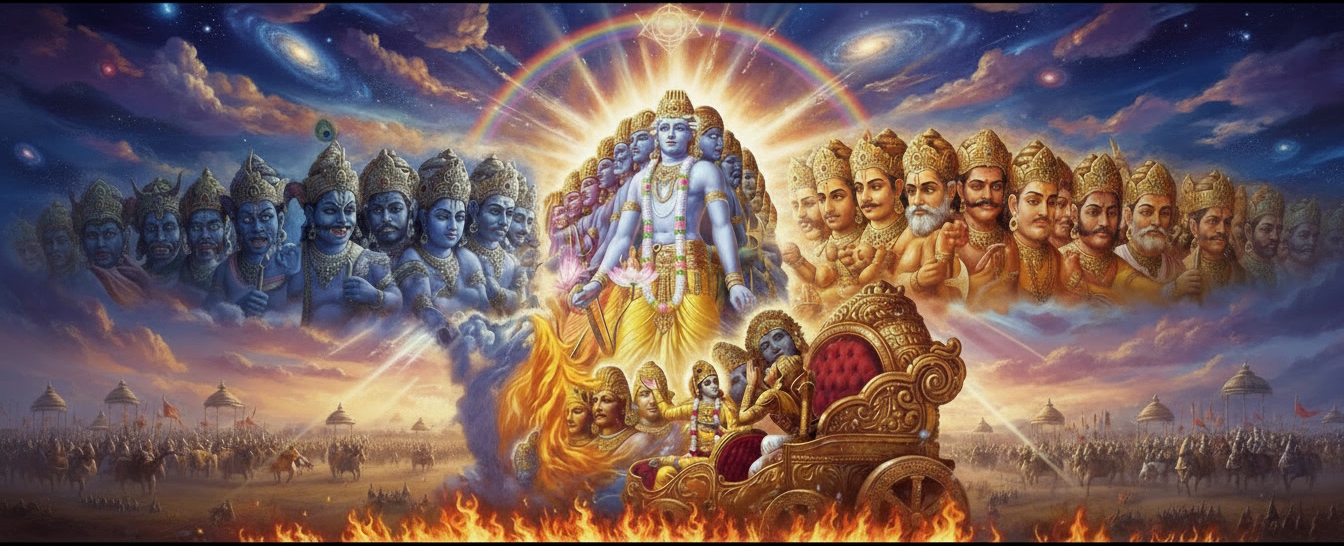
यदहङ्कारमाश्रित्य न योत्स्य इति मन्यसे।
मिथ्यैष व्यवसायस्ते प्रकृतिस्त्वां नियोक्ष्यति।।18.59।।
yadahaṅkāramāśritya na yotsya iti manyase|
mithyaiṣa vyavasāyaste prakṛtistvāṃ niyokṣyati||18.59||
Translation
If, filled with egoism, thou thinkest: "I will not fight", vain is this, thy resolve; Nature will compel thee.
हिंदी अनुवाद
अहंकारका आश्रय लेकर तू जो ऐसा मान रहा है कि मैं युद्ध नहीं करूँगा, तेरा यह निश्चय मिथ्या (झूठा) है; क्योंकि तेरी क्षात्र-प्रकृति तेरेको युद्धमें लगा देगी।
Commentaries & Translations
Swami Ramsukhdas
यदहंकारमाश्रित्य -- प्रकृतिसे ही महत्तत्त्व और महत्तत्त्वसे अहंकार पैदा हुआ है। उस अहंकारका ही एक विकृत अंश है -- मैं शरीर हूँ। इस विकृत अहंकारका आश्रय लेनेवाला पुरुष कभी भी क्रियारहित नहीं हो सकता। कारण कि प्रकृति हरदम क्रियाशील है? बदलनेवाली है? इसलिये उसके आश्रित रहनेवाला कोई भी मनुष्य कर्म किये बिना नहीं रह सकता (गीता 3। 5)।जब मनुष्य अहंकारपूर्वक क्रियाशील प्रकृतिके वशमें हो जाता है? तो फिर वह यह कैसे रह सकता है कि मैं अमक कर्म करूँगा और अमुक कर्म नहीं करूँगा अर्थात् प्रकृतिके परवश हुआ मनुष्य करना और न करना -- इन दोनोंसे छूटेगा नहीं। कारण कि प्रकृतिके परवश हुए मनुष्यका तो करना भी कर्म है और न करना भी कर्म है। परन्तु जब मनुष्य प्रकृतिके परवश नहीं रहता? उससे निर्लिप्त हो जाता है (जो कि इसका वास्तविक स्वरूप है)? तो फिर उसके लिये करना और न करना -- ऐसा कहना ही नहीं बनता। तात्पर्य यह है कि जो प्रकृतिके साथ सम्बन्ध रखे और कर्म न करना चाहे? ऐसा उसके लिये सम्भव नहीं है। परन्तु जिसने प्रकृतिसे सम्बन्धविच्छेद कर लिया है अथवा जो सर्वथा भगवान्के शरण हो गया है? उसको कर्म करनेके लिये बाध्य नहीं होना पड़ता।न योत्स्य इति मन्यसे -- दूसरे अध्यायमें अर्जुनने भगवान्के शरण होकर शिक्षाकी प्रार्थना की -- शिष्यस्तेऽहं शाधि मां त्वां प्रपन्नम् (2। 7) और उसके बाद अर्जुनने साफसाफ कह दिया कि मैं युद्ध नहीं करूँगा -- न योत्स्ये (2। 9)। यह बात भगवानको अच्छी नहीं लगी। भगवान् मनमें सोचते हैं कि यह पहले तो मेरे शरण हो गया और फिर इसने मेरे कुछ कहे बिना ही अपनी तरफसे साफसाफ कह दिया कि मैं युद्ध नहीं करूँगा? तो फिर यह मेरी शरणागति कहाँ रही यह तो अहंकारकी शरणागति हो गयी कारण कि वास्तविक शरणागत होनेपर मैं यह करूँगा? यह नहीं करूँगा ऐसा कहना ही नहीं बनता। भगवान्के शरणागत होनेपर तो भगवान् जैसा करायेंगे? वैसा ही करना होगा। इसी बातको लेकर भगवान्को हँसी आ गयी (2। 10)। परन्तु अर्जुनपर अत्यधिक कृपा और स्नेह होनेके कारण भगवान्ने उपदेश देना आरम्भ कर दिया? नहीं तो भगवान् वहींपर यह कह देते कि जैसा चाहता है? वैसा कर -- यथेच्छसि तथा कुरु (18। 63) परन्तु अर्जुनकी यह बात कि मैं युद्ध नहीं करूँगा भगवान्के भीतर खटक गयी। इसलिये भगवान्ने यहाँ अर्जुनके उन्हीं शब्दों -- न योत्स्ये का प्रयोग करके यह कहा है कि तू अहंकारके ही शरण है? मेरे शरण नहीं। अगर तू मेरे शरण हो गया होता तो युद्ध नहीं करूँगा ऐसा कहना बन ही नहीं सकता था। मेरे शरण होता तो मैं क्या करूँगा और क्या नहीं करूँगा इसकी जिम्मेवारी मेरेपर होती। इसके अलावा मेरे शरणागत होनेपर यह प्रकृति भी तुझे बाध्य नहीं कर पाती (गीता 7। 14)। यह त्रिगुणमयी माया अर्थात् प्रकृति उसीको बाध्य करती है? जो मेरे शरण नहीं हुआ है (गीता 7। 13) क्योंकि यह नियम है कि प्रकृतिके प्रवाहमें पड़ा हुआ प्राणी प्रकृतिके गुणोंके द्वारा सदा ही परवश होता है।यह एक बड़ी मार्मिक बात है कि मनुष्य जिन प्राकृत पदार्थोंको अपना मान लेते हैं? उन पदार्थोंके सदा ही परवश (पराधीन) हो जाते हैं। वे वहम तो यह रखते हैं कि हम इन पदार्थोंके मालिक हैं? पर हो जाते हैं उनके गुलाम परन्तु जिन पदार्थोंको अपना नहीं मानते? उन पदार्थोंके परवश नहीं होते। इसलिये मनुष्यको किसी भी प्राकृत पदार्थको अपना नहीं मानना चाहिये क्योंकि वे वास्तवमें अपने हैं ही नहीं। अपने तो वास्तवमें केवल भगवान् ही हैं। उन भगवान्को अपना माननेसे मनुष्यकी परवशता सदाके लिये समाप्त हो जाती है। तात्पर्य यह हुआ कि मनुष्य पदार्थों और क्रियाओँको अपनी मान्यता है तो सर्वथा परतन्त्र हो जाता है? और भगवान्को अपना मानता है और उनके अनन्य शरण होता है तो सर्वथा स्वतन्त्र हो जाता है। प्रभुके शरणागत होनेपर परतन्त्रता लेशमात्र भी नहीं रहती -- यह शरणागतिकी महिमा है। परन्तु जो प्रभुकी शरण न लेकर अहंकारकी शरण लेते हैं? वे मौतके मार्ग(संसार)में बह जाते हैं -- निवर्तन्ते मृत्युसंसारवर्त्मनि (9। 3)। इसी बातकी चेतावनी देते हुए भगवान् अर्जुनसे कह रहे हैं कि तू जो यह कहता है कि मैं युद्ध नहीं करूँगा? तो तेरा यह कहना? तेरी यह हेकड़ी चलेगी नहीं। तुझे क्षात्रप्रकृतिके परवश होकर युद्ध करना ही पड़ेगा।मिथ्यैष व्यवसायस्ते -- व्यवसाय अर्थात् निश्चय दो तरहका होता है -- वास्तविक और अवास्तविक। परमात्माके साथ अपना जो नित्य सम्बन्ध है? उसका निश्चय करना तो वास्तविक है और प्रकृतिके साथ मिलकर प्राकृत पदार्थोंका निश्चय करना अवास्तविक है। जो निश्चय परमात्माको लेकर होता है? उसमें स्वयंकी प्रधानता रहती है? और जो निश्चय प्रकृतिको लेकर होता है? उसमें अन्तःकरणकी प्रधानता रहती है। इसलिये भगवान् यहाँ अर्जुनसे कहते हैं कि अहंकारका अर्थात् प्रकृतिका आश्रय लेकर तू जो यह कह रहा है कि मैं युद्ध नहीं करूँगा? ऐसा तेरा (क्षात्रप्रकृतिके विरुद्ध) निश्चय अवास्तविक अर्थात् मिथ्या है? झूठा है। आश्रय परमात्माका ही होना चाहिये? प्रकृति और प्रकृतिके कार्य संसारका नहीं।यदि प्राणी यह निश्चय कर लेता है कि मैं परमात्माका ही हूँ और मुझे केवल परमात्माकी तरफ ही चलना है? तो उसका यह निश्चय वास्तविक अर्थात् सत्य है? नित्य है। इस निश्चयकी महिमा भगवान्ने नवें अध्यायके तीसवें श्लोकमें की है कि अगर दुराचारीसेदुराचारी मनुष्य भी अनन्यभावसे मेरा भजन करता है तो उसको दुराचारी नहीं मानना चाहिये प्रत्युत साधु ही मानना चाहिये क्योंकि वह वास्तविक निश्चय कर चुका है कि,मैं भगवान्का ही हूँ और भगवान्का ही भजन करूँगा।प्रकृतिस्त्वां नियोक्ष्यति -- इन पदोंसे भगवान् कहते हैं कि तेरा क्षात्रस्वभाव तुझे जबर्दस्ती युद्धमें लगा देगा। क्षत्रियका स्वभाव है -- शूरवीरता? युद्धमें पीठ न दिखाना (गीता 18। 43)। अतः धर्ममय युद्धका अवसर सामने आनेपर तू युद्ध किये बिना रह नहीं सकेगा। सम्बन्ध -- पूर्वश्लोकमें भगवान्ने अर्जुनसे कहा कि प्रकृति तुझे कर्ममें लगा देगी? अब आगेके श्लोकमें उसीका विवेचन करते हैं।
Sri Harikrishnadas Goenka
तुझे यह भी नहीं समझना चाहिये कि मैं स्वतन्त्र हूँ? दूसरेका कहना क्यों करूँ --, जो तू अहंकारका आश्रय लेकर यह मान रहा है -- ऐसा निश्चय कर रहा है कि मैं युद्ध नहीं करूँगा सो यह तेरा निश्चय मिथ्या है क्योंकि तेरी प्रकृति -- तेरा क्षत्रियस्वभाव तुझे युद्धमें नियुक्त कर देगा।
Sri Anandgiri
Idaṃ ca — assuming that if there were independence (in you), then there would be no room for (this) fear, He says.
Sri Dhanpati
"I am independent, I will not do what is said by another"—thus it should not be thought by you, because of your dependence—with this intention He says—"If" (yat), etc.
And this thinking of yours, resorting to egoism—false pride—that "I will not fight"—I will not do battle—(i.e.,) you make a determination; this resolve of yours—"I am independent, I will not perform the battle which is the cause of evil"—(this) determination is "vain" (mithya)—rooted in delusion (and) fruitless.
Because "nature"—the Kshatriya temperament—"will engage" you—the Kshatriya—(meaning) will impel (you) forcibly into battle.
Sri Neelkanth
Suspecting [you might think] "I am independent, I will not do what is said by you," He says—"If" (yat), etc. "Yat" [means] if; resorting to "egoism" (ahankaram), i.e., pride, you think "I will not fight" (na yotsye), i.e., "I will not do battle"—this "resolve" (vyavasaya) of "yours" (te), i.e., determination, is "vain" (mithya).
Because "nature" (prakriti), i.e., the Kshatriya temperament, "will engage" (niyokshyati) you.
And it has been said: "Beings follow nature; what will restraint do?" (Gita 3.33).
Sri Ramanuja
'Yad ahaṅkāram' — taking shelter of pride of independence in the knowledge of good and bad for oneself, disregarding My command, you think 'Na yotsye'; this your determination of independence will be false.
Because nature will employ you in battle; nature will employ you, who are ignorant, with your mind agitated by the pride of independence.
This is substantiated by --
Sri Sridhara Swami
Granted I may perish, but I will not wage war with relatives
Sri Vedantadeshikacharya Venkatanatha
Thus, the fact that abstention from war, which is the result of not listening, is the cause of destruction has been stated; now, the impossibility of that very abstention from war is stated.
Moreover, "Let it be that Karma Yoga is to be performed by me; [but] if I undertake some other Karma Yoga distinct from war, my destruction would not happen"—He removes this doubt with the verse "If... egoism" (yadyahankaram).
He qualifies 'egoism' in accordance with the abstention from war as—"[considering oneself the judge of] good and bad regarding oneself." He states the fruit of resorting to egoism as—"disregarding My command." This is indeed the meaning of "you will not listen" (na shroshyasi).
He states what is referred to by "This" (eshah) as—"the resolve of independence." The resolve pregnant with the pride of independence, or rooted in that, is the "resolve of independence." Both of those are indicated by "you think" (manyase) and by "resorting to egoism" (ahankaram ashritya).
"Nature will engage"—is this improper? Because of its insentience? And because instigation is the activity of a sentient being?—He removes this doubt with the intention of censure, [implying]—"You who are agitated by My independence." "In doing what is said by Me, the entire burden would be on Me, the Omniscient; but in transgressing My command, with Me remaining indifferent, you, dependent on Nature, will engage only in harmful things"—this is the import.
Swami Chinmayananda
सत्य के सामान्य कथन की ओर मनुष्य विशेष ध्यान नहीं देता। इस कारण सत्य के उस ज्ञान को वह आत्मसात् नहीं कर पाता। परन्तु यदि उसी सामान्य कथन को मनुष्य को अपने जीवन से सम्बन्धित अनुभवों में प्रयुक्त कर दर्शाया जाये? तो वह उस ज्ञान को अर्जित कर आत्मसात् कर लेता है। वह ज्ञान उसका अपना नित्य अनुभव बन जाता है। इसलिए? भगवान् श्रीकृष्ण पूर्वोक्त दार्शनिक सिद्धांत को अर्जुन की तात्कालिक समस्या के सन्दर्भ में उसे समझाना चाहते हैं।यदि अपने अभिमान के कारण अर्जुन यह सोचता है कि वह युद्ध नहीं करेगा? तो उसका यह निश्चय व्यर्थ है उसका क्षत्रिय स्वभाव व्यक्त होने के लिए सदैव अवसर की प्रतीक्षा करता रहेगा? और उपयुक्त अवसर पाकर वह अर्जुन को कर्म करने को बाध्य किये बिना नहीं रहेगा। प्रकृति तुम्हें प्रवृत्त करेगी। जिसने लवण भक्षण किया है? उसे शीघ्र ही प्यास लगेगी। युद्ध से निवृत्त होने में अर्जुन जो मिथ्या तर्क प्रस्तुत करता है? वह वस्तुत प्राप्त परिस्थितियों के साथ उसके द्वारा किये गये समझौते को ही दर्शाता है।यदि अर्जुन तत्कालीन अस्थायी वैराग्य अथवा पलायन की भावना के कारण युद्ध से विरत हो जाता है? तो भी प्राकृतिक नियमामुसार? कालान्तर में उसका स्वभाव ही उसे कर्म करने के लिए बाध्य करेगा और उस समय संभव है कि उसे अपने स्वभाव को व्यक्त करने के लिए उपयुक्त क्षेत्र न मिले? जिससे वह अपनी वासनाओं का क्षय कर सके।
Sri Abhinavgupta
Thus, by this much, the threefold nature of each of the six [topics], and of firmness (Dhriti) etc., has been established. Among them, one existing in the Sattvic group, having attained divine wealth, is qualified for knowledge here; and "You are of that kind"—thus Arjuna has been encouraged.
But now this is stated—If, on the one hand, you engage in action with this understanding of knowledge, then due to engagement in one's own duty and due to being purified by special knowledge, you have no connection with action [bondage]. On the other hand, if you do not accept this? Then necessarily there must be activity on your part, because the species [nature/caste] itself remains in such a state. Because everyone is controlled by nature (Variant: controlled by one's own nature); even having had that nature obscured for some time due to some fault, upon the departure of that obscurer, one indeed obtains the nature which has attained manifestation. Similarly, such is the nature of the Varnas (castes). Thus, in the inevitably occurring activity, there would be a sharing of the fruit from that.
That He says—beginning with "Brahmana" etc. ending with "even helplessly, that." Regarding the description of the division of actions of Brahmanas etc., the nature certainly does not transgress (Variant: transgresses [omitting 'not']); thus, for you who are of Kshatriya nature, even if unwilling, 'Prakriti' named 'Svabhava' (nature) resorts to the state of being the instigator without deviation. Only for one instigated by that, there is connection with merit and sin. Therefore, perform actions by placing the authority of the special knowledge spoken by Me in front. That being so, bondage will cease. This is the purport of constructing the preparation for this meaning of the Great Sentence. The meaning of the intermediate sentences is clear.
"Briefly" (samasena) (Verse 50)—[means] in brief. Of knowledge?—Of that mentioned before. "Consummation" (nishtham)—He states the ascertained [state] by avoiding the web of words. "With a pure intellect" (buddhya vishuddhaya) etc.—all this is practically explained (already), so effort is not made again (Variant: is not begun again).
Sri Madhusudan Saraswati
'Yat'. And 'yat' (that) you, resorting to egoism — false pride 'I am religious, I will not do cruel action' — 'manyase'; that 'eṣa vyavasāyaḥ' — this determination — of yours is 'mithyā'.
'Yasmat'. Because 'prakṛtiḥ' — nature — 'kṣatriyajātyārambhako rajoguṇasvabhāvaḥ' — the nature of the quality of passion, which is the cause of the Kṣatriya caste — 'tvāṁ niyokṣyati' — will impel you — in battle.
Sri Purushottamji
Moreover—"If egoism" (yadahankaram), etc. "Yat" (If/Which)—resorting to the previously stated "egoism" (ahankaram) which is in the form of unrighteousness like killing gurus etc.—[resorting to] that ignorance, by not listening to My words, you "think" (manyase), i.e., resolve, "I will not fight" (na yotsye), i.e., "I will not do battle"?
"This" (esha) "resolve" (vyavasaya), i.e., determination, of "yours" (te) is "vain" (mithya)—of an unreal nature, fruitless; this is the meaning.
Because of dependence on another, He says—"Nature" (prakriti)—which is subservient to Me—"will engage" (niyokshyati) you who are averse to My command, i.e., will impel you into battle; this is the meaning.
Here, this is the idea—For one averse to My command, being known as 'Prakrita' (subject to Prakriti), there is the state of being impelled by Nature; [but] for one acting according to My command, there is the state of not being impelled by that [Nature].
Sri Shankaracharya
'Yadi cet' — if you, taking shelter of egoism, 'na yotsye' — I will not fight — thus 'manyase'; this determination — of yours.
'Mithya' — false. 'Eshaḥ' — this. 'Vyavasāyaḥ' — undertaking. 'Nishchayaḥ' — determination. 'Te' — yours. 'Yasmāt' — because. 'Prakṛitiḥ' — nature. 'Kshatriyasvabhāvaḥ' — the Kshatriya disposition. 'Tvām' — you. 'Niyokshyati' — will engage.
'Yashmāchcha' — and because.
Sri Vallabhacharya
To explain 'Yadi'. 'I will not fight', so you think.
This determination of yours is false — indeed useless.
Then Prakriti obeying My command — the external power in the form of secondary nature — will certainly engage you.
Swami Sivananda
यत् if? अहङ्कारम् egoism? आश्रित्य having taken refuge in? न not? योत्स्ये (I) will fight? इति thus? मन्यसे (thou) thinkest? मिथ्या vain? एषः this? व्यवसायः resolve? ते thy? प्रकृतिः nature? त्वाम् thee? नियोक्ष्यति will compel.Commentary This strong determination of thy mind will be rendered utterly futile by thy inner nature thy nature will constrain thee thy nature as a warrior will compel thee to fight. It is a mere illusion to say that thou art Arjuna? that these are thy relatives and that to kill them will be a sin.
Swami Gambirananda
Yat, that; manyase, you think, resolve; this-'na yotsye, I shall not fight'; asritya, by relying; on ahankaram, egotism, mithya, vain; is esah, this; vyava-sayah, determination; te, of yours; because prakrtih, nature, your own nature of a Ksatriya; niyoksyati, will impell; ;tvam, you!
Swami Adidevananda
If, in your 'self-conceit,' i.e., under a false sense of independence that you know what is good for you and what is not - if, not heeding My ?nd, you think, 'I will not fight,' then this resolve based on your sense of independence will be in vain. For Nature will compel you to go against your resolve - you who are ignorant and who adversely react to my sovereignty.
He elucidates the same: