Bhagavad Gita - Chapter 3 - Shloka (Verse) 30
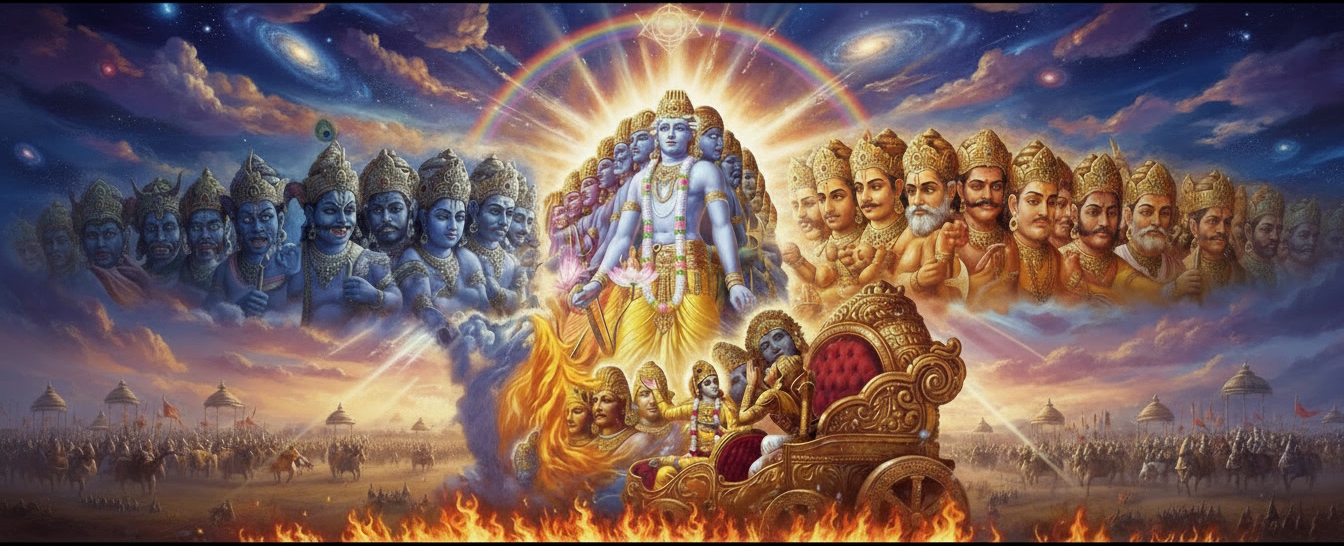
मयि सर्वाणि कर्माणि संन्यस्याध्यात्मचेतसा।
निराशीर्निर्ममो भूत्वा युध्यस्व विगतज्वरः।।3.30।।
mayi sarvāṇi karmāṇi saṃnyasyādhyātmacetasā|
nirāśīrnirmamo bhūtvā yudhyasva vigatajvaraḥ||3.30||
Translation
Renouncing all actions in Me, with the mind centred in the Self, free from hope and egoism, and from (mental) fever, do thou fight.
हिंदी अनुवाद
तू विवेकवती बुद्धिके द्वारा सम्पूर्ण कर्तव्य-कर्मोंको मेरे अर्पण करके कामना, ममता और संताप-रहित होकर युद्धरूप कर्तव्य-कर्मको कर।
Commentaries & Translations
Swami Ramsukhdas
व्याख्या--'मयि सर्वाणि कर्माणि संन्यस्याध्यात्मचेतसा'-- प्रायः साधकका यह विचार रहता है कि कर्मोंसे बन्धन होता है और कर्म किये बिना कोई रह सकता नहीं; इसलिये कर्म करनेसे तो मैं बँध जाऊँगा! अतः कर्म किस प्रकार करने चाहिये, जिससे कर्म बन्धनकारक न हों, प्रत्युत मुक्तिदायक हो जायँ-- इसके लिये भगवान् अर्जुनसे कहते हैं कि तू अध्यात्मचित्त-(विवेक-विचारयुक्त अन्तःकरण-) से सम्पूर्ण कर्तव्य-कर्मोंको मेरे अर्पण कर दे अर्थात् इनसे अपना कोई सम्बन्ध मत मान। कारण कि वास्तवमें संसार-मात्रकी सम्पूर्ण क्रियाओंमें केवल मेरी शक्ति ही काम कर रही है। शरीर, इन्द्रियाँ, पदार्थ आदि भी मेरे हैं और शक्ति भी मेरी है। इसलिये 'सब कुछ भगवान्का है और भगवान् अपने हैं'-- गम्भीरतापूर्वक ऐसा विचार करके जब तू कर्वव्य-कर्म करेगा, तब वे कर्म तेरेको बाँधनेवाले नहीं होंगे, प्रत्युत उद्धार करनेवाले हो जायँगे।
शरीर, इन्द्रियाँ, मन, बुद्धि, पदार्थ आदिपर अपना कोई अधिकार नहीं चलता-- यह मनुष्यमात्रका अनुभव है। ये सब प्रकृतिके हैं-- 'प्रकृतिस्थानि' और 'स्वयं 'परमात्माका है-- 'ममैवांशो जीवलोके' (गीता 15। 7)। अतः शरीरादि पदार्थोंमें भूलसे माने हुए अपनेपनको हटाकर इनको भगवान्का ही मानना (जो कि वास्तवमें है) 'अर्पण' कहलाता है। अतः अपने विवेकको महत्त्व देकर पदार्थों और कर्मोंसे मूर्खतावश माने हुए सम्बन्धका त्याग करना ही अर्पण करनेका तात्पर्य है।'अध्यात्मचेतसा' पदसे भगवान्का यह तात्पर्य है कि किसी भी मार्गका साधक हो, उसका उद्देश्य आध्यात्मिक होना चाहिये, लौकिक नहीं। वास्तवमें उद्देश्य या आवश्यकता सदैव नित्यतत्त्वकी (आध्यात्मिक) होती है और कामना सदैव अनित्यतत्त्व (उत्पत्ति विनाशशील वस्तु) की होती है। साधकमें उद्देश्य होना चाहिये कामना नहीं। उद्देश्यवाला अन्तःकरण विवेक-विचारयुक्त ही रहता है।दार्शनिक अथवा वैज्ञानिक, किसी भी दृष्टिसे यह सिद्ध नहीं हो सकता कि शरीरादि भौतिक पदार्थ अपने हैं। वास्तवमें ये पदार्थ अपने और अपने लिये हैं ही नहीं, प्रत्युत केवल सदुपयोग करनेके लिये मिले हुए हैं। अपने न होनेके कारण ही इनपर किसीका आधिपत्य नहीं चलता।संसारमात्र परमात्माका है; परन्तु जीव भूलसे परमात्माकी वस्तुको अपनी मान लेता है और इसीलिये बन्धनमें पड़ जाता है। अतः विवेक-विचारके द्वारा इस भूलको मिटाकर सम्पूर्ण पदार्थों और कर्मोंको अध्यात्मतत्त्व(परमात्मा) का स्वीकार कर लेना ही अध्यात्मचित्तके द्वारा उनका अर्पण करना है।इस श्लोकमें 'अध्यात्मचेतसा' पद मुख्यरूपसे आया है। तात्पर्य यह है कि अविवेकसे ही उत्पत्ति-विनाशशील शरीर (संसार) अपना दीखता है। यदि विवेक-विचार-पूर्वक देखा जाय तो शरीर या संसार अपना नहीं दीखेगा, प्रत्युत एक अविनाशी परमात्मतत्त्व ही अपना दीखेगा। संसारको अपना देखना ही पतन है और अपना न देखना ही उत्थान है--
Sri Harikrishnadas Goenka
तो फिर कर्माधिकारी अज्ञानी मुमुक्षुको किस प्रकार कर्म करना चाहिये सो कहते हैं मुझ सर्वात्मरूप सर्वज्ञ परमेश्वर वासुदेवमें विवेकबुद्धिसे सब कर्म छोड़कर अर्थात् मैं सब कर्म ईश्वरके लिये सेवककी तरह कर रहा हूँ इस बुद्धिसे सब कर्म मुझमें अर्पण करके तथा निराशी आशारहित और निर्मम यानी जिसका मेरापन सर्वथा नष्ट हो चुका हो उसे निर्मम कहते हैं ऐसा होकर तू शोकरहित हुआ युद्ध कर अर्थात् चिन्तासंतापसे रहित हुआ युद्ध कर।
Sri Anandgiri
Although the ignorant one is qualified for action, still, by one desiring liberation, action should be renounced because liberation cannot be achieved through action; nor indeed is it possible for him to perform action due to the relative contradiction of action [with knowledge]—if such a doubt arises as to "How?",
He [The Lord] answers with the verse starting with "Uchyate".
He states the cause for the dedication of all actions to the Supreme Self, as described, by using the term "Adhyatma" (spiritual).
He explains that very discriminating intellect as "I..." [implying the attitude of a servant].
He states another duty for one engaged in actions in the manner shown, with "Kincha". "Tyaktashih" means being devoid of prayer for results. Becoming "Nirmama" (devoid of mine-ness)—regarding sons, brothers, etc.—this is the implied remainder.
[Objection:] Surely, an injunction to fight is not appropriate, as it involves violence to sons and brothers and is a cause of remorse, thus it cannot be the subject of a valid command. To this, He says "Vigata" (free from fever/grief).
Sri Dhanpati
[Objection:] "I am not a knower of Truth, but an ignorant seeker of liberation; how then should action be performed by me?" If this is asked, He answers with "Mayi". In Me, the Supreme Lord, renouncing and dedicating all Vedic and worldly actions with a spiritual mind (Adhyatma-chetasa)—that is, with the discriminating intelligence "I, the doer, act for the Lord like a servant"—and becoming "Nirashih" (devoid of desire for results) and devoid of mine-ness, being "Vigata-jvara" (free from grief/fever), do you fight.
However, the view held by some that "offering to God and desirelessness are common to all actions for a seeker, whereas freedom from mine-ness and freedom from grief are relevant only to the context of war (since mine-ness and grief are not applicable elsewhere)"—this is questionable.
This is because the sense of "this is mine" (mine-ness) is applicable in all actions, and "fever" (grief/mental distress) is applicable in actions that are fruitless or difficult to accomplish. Furthermore, the Lord has stated "Having become equal in success and failure" specifically for the removal of grief and the like. This is the direction [of the logic].
Sri Madhavacharya
Therefore, renouncing all actions in Me alone—meaning, casting off onto Me alone those actions which are superimposed upon the Jiva (individual soul) due to delusion—and with the thought "The Lord alone performs all actions" and "This is my worship," the mind that is focused on Me, the indwelling Self, is "Adhyatma-chetas" (spiritual mind).
"Sannyasa" (Renunciation) here means [the understanding that] "The Lord performs [the action]."
"Nirmamatva" (freedom from mine-ness) means [the understanding] "I do not do it."
Sri Neelkanth
"Mayi" (In Me) etc. You, however, are ignorant and a seeker of liberation; (therefore), renouncing and dedicating all actions in Me, the Inner Controller of all;
with "Adhyatma-chetasa"—the scripture that proceeds regarding the Self is "Adhyatma," with a mind devoted to that. This is a "Madhyamapadalopi" compound (where the middle term is elided), like "Shaka-parthiva." The meaning is: with one possessing discrimination between the Self and non-Self.
With the understanding "Impelled by God, I act," being "Nirashih" (desireless), meaning not wishing for fruit; being "Nirmama," meaning devoid of the pride of mine-ness regarding what is obtained; and being "Vigatajvara," meaning free from grief (sorrow), do fight.
Sri Ramanuja
In Me, the Lord of all, who is the Inner Self of all beings, renouncing all actions with "Adhyatma-chetasa," being desireless, devoid of mine-ness, and free from fever, perform all prescribed actions such as war. The mind that is fixed on the Self is "Adhyatma-chetas"; meaning, with the knowledge regarding the true nature of the Self established by hundreds of Sruti texts.
"Entering within, the Ruler of people, the Self of all...", "This agent who has entered within...", "He who dwells in the Self, yet is within the Self, whom the Self does not know, whose body is the Self, who controls the Self from within, He is your Inner Controller, the Immortal Self"—these and similar Srutis declare this (individual self) to be the body of and impelled by the Supreme Person, and the Supreme Person to be the Impeller. Smritis also state: "The Ruler of all...", "And I am seated in the hearts of all," "The Lord resides in the region of the heart of all beings, O Arjuna, causing all beings mounted on the machine (of the body) to revolve by His Maya"—as will be stated later.
Therefore, with the contemplation of the nature of the self as being My body and impelled by Me, thinking "All actions are being performed by Me (God) alone," renouncing them in Me, the Supreme Person; and considering "These are merely My worship," being "Nirashih" (free from desire) regarding their fruit, and for that very reason being devoid of mine-ness in that action; become "Vigatajvara" (free from fever) and perform duties like war.
With the contemplation that "The Supreme Person, the Lord of all, the Principal (Sheshi), causes His own actions to be done by Himself, through His own agent (the individual self) and His own instruments, for the sole purpose of His own worship"—being devoid of mine-ness in actions; and "How will I be [saved] given the accumulation of infinite sins continuing from beginningless ancient time?"—being liberated from such inner fever (anxiety); remembering that "The Supreme Person alone, worshipped through actions, will liberate me from bondage," perform Karma Yoga with ease—this is the meaning.
"Him, the Supreme Great Lord of lords...", "The Lord of the universe...", "The Lord of lords..."—by such Srutis, His status as the Lord of all and the Principal of all is established. Lordship (Ishvaratvam) means Controllership; Principalship (Sheshitvam) means Mastership. This alone is the essential meaning of the Upanishads, He says.
Sri Sridhara Swami
So thus, even by the knower of Truth action should be performed; you, however, are not yet a knower of Truth, therefore perform action only—He says this with "Mayi" etc.
Renouncing and dedicating all actions to Me; with "Adhyatma-chetasa"—meaning with the vision "I act as one dependent on the Inner Controller"; being "Nirashih" (desireless); and therefore, thinking "This action is a means for My fruit (or for My sake)," becoming devoid of mine-ness; and becoming "Vigatajvara," meaning having abandoned grief, do fight.
Sri Vedantadeshikacharya Venkatanatha
Then, concerning the meaning of the section (Adhikarana) that follows 'Parattu tacchruteh' (Brahma Sutra 2.3.41: 'But the agent is the Supreme, for Scripture says so'), implying that this verse conveys that very meaning, He introduces the next verse with 'Idanim' (Now). The statement that 'being controlled' (Niyamyata) is the essential nature (Swarupa) is because it defines the essential nature. By the three words beginning with 'Bhagavati' (Mayi, Bhagavati, Purushottame), the meaning intended by the word 'Mayi' (In Me) is expressed.
'Bhagavati' thus: The idea is that He possesses a multitude of auspicious qualities suitable for being the Controller, the object of worship, and the bestower of fruits, and is opposed to all that is defiling. 'Purushottame' thus: The idea is that He is distinct in the manner to be described later in 'The Supreme Person is another' (15.17), because He is untouched by the contact of defects even through His entry (into the world) for the sake of controlling. 'Sarvatmabhute' (Being the Soul of all) and 'Gunakritam' (done by Gunas): The meaning is that He alone is indeed the Controller, being the Soul of all, including the non-sentient substance consisting of the three Gunas.
By this, it is also indicated that the equal alternative mentioned in the 'Gitartha Sangraha' verse—'Action is stated in the third chapter as to be done by attributing doership to the Gunas out of detachment for the protection of the world, or by surrendering it to the Lord of All'—is not intended (as an option of equal weight, but a progression). By 'Mayi' (In Me), the mention of 'being the Inner Soul of all beings' is the reason for the intended 'Lordship over all' (Sarveshvaratva). And 'The Lord of all beings' (18.61), which is to be stated later, is proclaimed by this.
'Sarvani' (All) means those done by oneself and those done by the Gunas. 'Yudhyasva' (Fight)—this is said with the intention that it is an indication (Upalakshana) for all scriptural duties—'Yuddhadikam' (Fighting, etc.). 'Atmani' thus—the meaning is that the compound 'Adhyatma' is in the sense of the locative case (in the Self). Here, He reveals that the word 'Chetas' (mind/consciousness) has as its object the knowledge which is the contemplation of the Reality established by hundreds of Sruti texts—'Atmasvarupa' (Nature of the Self...). He shows the mode established by hundreds of Srutis—'Antar' (Within). By being the one entered within and being the Ruler, which distinguishes Him from kings etc. and the sky etc., His being the Soul of All (Sarvatmatva) is established.
'Kartaram' (The Doer) thus—meaning the 'Impelling Agent' (Prayojaka Karta) in the activities of the Jiva; or it means the 'Agent of the act of impelling'; that is stated as 'Pravartayitaram' (The Impeller). To strengthen the purport of the cited Srutis, He mentions the support of the elaboration by Manu and others—'Smritayascha' (And Smritis). He states that this very meaning will be described later in this scripture (Gita) as well, on the basis of the mark of repetition—'Sarvasya cha' (And of all). To manifest the intention of 'Mayi sarvani' (All in Me), two statements are cited to show that the terms pointing inward (Pratyak - I) and outward (Parak - Other/He) used by the Charioteer of Partha (Krishna) refer to the one same Subject, the Lord.
Having thus propounded the nature of the meaning, He illuminates that the knowledge of that (meaning) is the cause for the 'renunciation of doership', and that the three terms 'Sannyasya' (Renouncing), 'Nirashi' (Desireless), 'Nirmama' (mine-less) refer to the abandonment of doership, abandonment of fruit, and abandonment of attachment to ownership respectively, and that each preceding one is the cause of each succeeding one, as indicated by the order of reading—'Atah' (Therefore). The meaning is: because this meaning is established by other Srutis and Smritis.
'Mayaiva kriyamanaani' (Being done by Me alone)—the idea is: like a king who is the promoter of his servants, He acts both through agents and directly. 'Even if the agency belongs to the Supreme like a priest (Ritvij), one might still have a desire for the fruit for oneself'—to refute this, 'Nirashi' is said; with this intention, he says 'Tani cha' (And those). 'Tata eva' (Therefore alone) thus—for 'mine-ness' (Mamata) in action arises through the fruit; 'This action is for my sake because it is the means to the fruit desired by me'—such a sense of lordship in action is indeed the claim of qualification; this is the idea.
Objection: 'If doership is renounced unto the Lord, then how is the Jiva directed as 'Fight', indicating him as the doer? And if he is 'Nirashi' (desireless), how would he engage even in action that is of the nature of worship of the Supreme Person? And if he is 'Nirmama' (void of mine-ness), how would he perform action understanding 'This is my action'? And if he does not contemplate his own activity, he would not consider the activity of renunciation either, and consequently, being 'Vigata-jvara' (free from fever) would also be unjustified?'—Anticipating this, He says—'Svakiyena atmana kartra' (By His own self as the agent).
Meaning: by the Jiva who is 'one to be impelled' (Prayojya-karta) and who is subservient to Him (Sva-shesha). 'Svakiyaischopakaranaih' (And by His own instruments). The idea is: just as this Jiva is subservient to the Supreme (Para-shesha), so too the oblation etc., which was previously considered subservient to oneself, is actually subservient to the Supreme. 'Svaradhanaika-prayojanaya' (For the sole purpose of worshiping Himself) thus—the idea is that the purpose of the 'Shesha' (accessory/subordinate) is only to contribute excellence to the 'Sheshi' (Principal/Master). And it is said in the Vedartha Sangraha: 'That whose essential nature is solely to be taken up with the desire of contributing excellence existing in another, is the Shesha; the other is the Sheshi'.
To indicate the authority (Pramana) in 'Svakiyena' etc., 'Sarvasheshi' (Master of all) etc. is stated. 'Svayameva' (He Himself) etc.—The idea is: Being the very object of worship, He causes the worship to be done. By the particle 'Eva' (alone), any other impeller is excluded. 'Karayati' (Causes to do) thus—The idea is: Being the Lord of all, though capable of doing everything He wishes by Himself alone, He causes them (Jivas) to act as agents in order to establish the Jivas, who are His subordinates, as being subject to scripture and being enjoyers of its fruits.
He shows the specific 'fever' (grief/agony) applicable to the context that is to be negated—with 'Prachina' (Ancient/Previous) etc. (Objection): 'Let Lordship be established by Sruti, but what does that have to do with being the Causer (of action)?' To this He says—'Ishvaratvam niyantrutvam' (Lordship is Rulership). 'Sheshitvam patitvam' (Sheshitva is Mastership) thus—the idea is that the relationship of Sheshi residing in a sentient being is indeed Mastership (Patitva). Or else, the doubt 'What is the difference between Sheshitva and Ishvaratva read in the Sruti and Bhashya?' is removed by 'Ishvaratvam niyantrutvam' etc.
Swami Chinmayananda
भगवान् का यह स्पष्ट मत था कि अर्जुन को युद्ध करना चाहिये। पाण्डव राजकुमार अर्जुन अभी उच्चस्तरीय ध्यान साधना के योग्य नहीं था। कर्म में वासना उत्पन्न करने की प्रवृत्ति होती है और फिर उस वासना से कर्म में वृद्धि होती है। श्रीकृष्ण के कर्मयोग के उपदेशानुसार कर्माचरण करने पर पुरानी वासनाओं का क्षय तो होता ही है परन्तु अन्य नयी वासनायें भी उत्पन्न नहीं होतीं। अहंकार और स्वार्थ से रहित कर्म के आचरण के उस सिद्धान्त को ही यहां दूसरे शब्दों में बताया गया है।समस्त कर्मों का संन्यास मुझमें करके जैसा कि हम देख चुके हैं यहाँ भी मुझ में शब्द से तात्पर्य शुद्ध परमात्मस्वरूप से है। श्रीकृष्ण का उपदेश है कि अर्जुन को भक्तिपूर्वक परमात्मा का स्मरण करते हुये (अध्यात्मचेतसा) समस्त कर्मों का संन्यास (अर्पण) परमात्मा में करना चाहिये। कर्मों के संन्यास का अर्थ अकर्मण्यता का जीवन नहीं समझना चाहिये। कर्मों से अहंकार और स्वार्थ का त्याग ही वास्तविक कर्मसंन्यास कहलाता है।सर्प की भयंकरता उसके विष में है। यदि उसके विषदन्त निकाल दिये जाँय तो वह भयानक सर्प किसी को हानि नहीं पहुँचा सकता। इसी प्रकार अहंकार और स्वार्थ के कारण ही कर्म बन्धन कारक होते हैं अन्यथा नहीं। यहाँ कर्मों के संन्यास से तात्पर्य उनके उत्प्रेरक दुष्प्रयोजनों के त्याग से है।आत्मस्वरूप ईश्वर के निरन्तर कीर्तिगान से उद्देश्यों की शुद्धता प्राप्त की जा सकती है। कीर्तिगान से हृदय दैवी भावनाओं से स्पन्दित हो उठता है। ऐसे व्यक्ति के कर्म सामान्य नहीं समझने चाहिये वरन् ईश्वर के संकल्प ही उस व्यक्ति के माध्यम से जगत् में व्यक्त होते हैं। परिच्छिन्न जीवभाव के स्थान पर पूर्णत्व का भाव दृढ़ होने पर वह व्यक्ति ईश्वरेच्छा को व्यक्त करने का सर्वोत्कृष्ट माध्यम बन जाता है।केवल निषिद्ध कर्मों का त्याग ही पर्याप्त नहीं है। हमको उन आन्तरिक सद्गुणों का भी विकास करना चाहिये जिससे ईश्वर के संकल्पों का प्रवाह निर्वाध रूप से हमारे द्वारा प्रवाहित हो सके। इस का संकेत यहाँ निराशी और निर्मम इन शब्दों से किया गया है।इस श्लोक के सतही अध्ययन से भ्रमित होकर कोई इस निष्कर्ष पर पहुँच सकता है कि हिन्दू धर्म गतिशील जीवन का त्याग कर निराशा का जीवन जीने की शिक्षा देता है। परन्तु सूक्ष्म अध्ययन करने पर स्पष्ट होगा कि इस श्लोक में श्रीकृष्ण जीवन के उच्चतर मनोवैज्ञानिक सत्य की ओर इंगित कर रहे हैं।निराशी आशा उस वस्तु या घटना की अपेक्षा है जो भविष्य काल में व्यक्त या प्राप्त होगी। आशा सदैव भविष्य के लिए होती है वर्तमान में नहीं।निर्मम अहंकार मूलक ममभाव और कुछ नहीं उन घटनाओं एवं उपलब्धियों की एक गठरी है जो भूतकाल में घटित हुई थीं। अत अहंकार भूतकाल की प्रतिच्छाया मात्र है और उसका अस्तित्त्व व्यतीत हुए काल के सन्दर्भ में ही है।आशा यदि अनुत्पन्न भविष्य का शिशु है तो अहंकार भूतकाल की हठीली स्मृति। आशा और अहंभाव में रहने का अर्थ है भविष्य और भूतकाल में ही जीना। दुख की बात यह है कि इन सबमें हम शक्तिशाली वर्तमान को खो देते हैं जबकि वर्तमान ही वह अवसर है जो कर्म करने आगे बढ़ने और लक्ष्य प्राप्त करने के लिये हमें प्राप्त हुआ है। श्रीकृष्ण अर्जुन को आशा और ममभाव से रहित होकर कर्म करने का उपदेश देते हैं। भूत और भविष्य के विचारों में शक्ति का अपव्यय किये बिना वर्तमान का सदुपयोग करने के सम्बन्ध में महत्त्वपूर्ण सूचना इस श्लोक में दी गयी है।विचाराधीन यह श्लोक सभी दृष्टियों से अपने आप में पूर्ण है जिसे पढ़कर आधुनिक मनोवैज्ञानिक भी आश्चर्य चकित रह जायेगा। यद्यपि अब तक के विवेचन को समझने से भूत और भविष्य के विचारों में होने वाले शक्ति के अपव्यय को हम रोक सकते हैं परन्तु वर्तमान में कार्य करते हुये अपनी क्षमता के क्षरण की संभावना रह सकती है। इसका कारण अनावश्यक रूप से व्याकुल और उत्तेजित होने का हमारा स्वभाव है। इस उत्तेजना को यहाँ ज्वर कहा गया है। भगवान् श्रीकृष्ण उपदेश देते हैं कि समस्त कर्मों का संन्यास परमात्मा में करके आशा और ममता से रहित होकर तथा मानसिक उत्तेजना का त्याग कर अर्जुन को युद्ध करना चाहिये। गीता के इस्ा सिद्धांत की परिपूर्णता इसके समस्त अध्येताओं को स्पष्ट जाती है।यहाँ युद्ध करने से तात्पर्य जीवन संघर्षों में आने वाली समस्त परिस्थितियों का सामना करने से है। अत यह उपदेश केवल अर्जुन के लिये ही नहीं बल्कि उन सभी के लिये हैं जो बुद्धिमत्तापूर्वक पूर्ण रूप से अपना जीवन जीना चाहते हैं।कर्मयोग का सीमित अर्थ समझकर जिन्होंने वेदों का अध्ययन किया है उन्हें इस श्लोक में दिया उपदेश पारम्परिक प्रतीत होगा।अपनी पीढ़ी के द्वारा इस उपदेश के स्वीकृत होने पर उसके प्रचारार्थ भगवान् कहते हैं
Sri Abhinavgupta
Therefore, being steadfast (yukta), one should perform actions—regarding this statement, "How is that done?" is clarified by Him with "Mayi" (In Me), etc.
Renouncing all actions in Me with the understanding "I am not the doer"; having ascertained that "The Supreme Lord, who is independent (Sarvatantra), alone is the doer of all; I am nothing"—
and desiring to bestow grace upon the world, perform the worldly duty consisting of war.
Sri Jayatritha
He shows the connection of the verse "Mayi sarvāṇi" with "Ataḥ" (Therefore)—since the action of a knower is of this kind, and you are not a knower (Vidvan), therefore [you must act].
[Objection:] "Sannyāsa" means relinquishment, and that applies to what belongs to oneself; but it has been stated that actions do not belong to the Jiva (individual soul); so how is their relinquishment prescribed? To this, he answers with "Bhrāntyā" (due to delusion).
Some say that renunciation of actions in the Supreme Lord means the knowledge of their identity with Him; that is false, because it is not supported by the scriptural words (ashabda) and is contrary to valid means of knowledge—with this sentiment, he states the intent of that (sannyasa) in his own view with "Bhagavān" (The Lord...). "Knowing thus" is the implied remainder.
He states another mode with "Mat..." (My worship). "Dedication thus" implies "renunciation of actions in Me"—this is the remainder.
The interpretation of "Adhyātmachetasā" as "Actions attain the nature of the Supreme Lord or are meant for His attainment" is unsupported by the text—with this idea, he explains it as "Ātmānam" (referring to Me...). By this, it is stated to be a Karmadhāraya compound containing an Avyayībhāva within it.
Its connection is with "Nirāśīḥ" (desireless). It means being "Nirāśīḥ"—devoid of expectation/hope—due to the attainment of the Supreme Self.
[Objection:] "Nirmamatva" (absence of mine-ness) is the knowledge that "actions are not mine." And that meaning is already covered by "renouncing all actions in Me"; so what is the difference between the two? To this, he says "Sannyāsastu" (As for renunciation...). In both places, after the word "iti" (thus), "knowledge" (jñānam) is the implied remainder.
Sri Madhusudan Saraswati
Thus, although the performance of action is similar, the distinction between the ignorant and the wise has been stated based on the attachment to doership and the absence thereof. Now, stating the distinction of even an ignorant seeker of liberation (Mumukshu) compared to a non-seeker—namely, offering to God and absence of desire for fruit—He confirms Arjuna's qualification for action due to his ignorance, with "Mayi" etc.
In Me, the Lord Vasudeva, the Supreme Ruler, the Omniscient, the Controller of all, the Self of all; renouncing and dedicating all actions—worldly and Vedic of all kinds—with "Adhyatma-chetasa," meaning with the understanding "I am an agent dependent on the Inner Controller, and I perform actions for that Lord just as a servant does for a king"; being "Nirashih" (desireless); being "Nirmama," meaning devoid of mine-ness regarding one's own body, sons, brothers, etc.; being "Vigatajvara"—sorrow alone is referred to here by the word 'fever' because it is the cause of burning anguish—meaning, becoming free from grief caused by reasons such as infamy in this world or falling into hell in the next; do you, the seeker of liberation, fight—meaning, perform the prescribed actions. This is the intent.
Here, it should be understood that offering to God and desirelessness are common to all actions of a seeker of liberation; however, freedom from mine-ness and freedom from grief are relevant only to the present context of war, because in other contexts, mine-ness and grief do not arise.
Sri Purushottamji
[Objection:] "While performing actions oneself for the purpose of engaging them (the ignorant) in action, the time that passes would result in the fault of wasted time for oneself"—anticipating this doubt, He says "Mayi sarvāṇi" (In Me, all...). Renouncing in Me—meaning, giving up everything in the Adhidaivika (cosmic/divine) sense—and with "Adhyatma-chetasa," meaning with the spiritual attitude that "This is in the form of My command," perform all actions; this is the meaning. The idea is that when done by My command, there will be no futility of time. By the word "all" (sarva), it is meant that you should perform worldly actions as well.
He explains the very manner of performing worldly actions with "Nirashih" etc. "Nirashih"—not desiring the fruits born of war such as heaven, etc.; "Nirmamah"—devoid of the sentiment of attaining the kingdom, etc., and devoid of the notion of "brother, guru," etc., regarding one's own side and the opposing side; "Vigatajvarah"—devoid of worldly distress; fight by My command—meaning, perform the war. Directed at you, the Kshatriya duty in the form of war is what is prescribed by Me, not any other action mentioned before. Therefore, perform war alone; this is the meaning.
Sri Shankaracharya
In Me, Vasudeva, the Supreme Lord, the Omniscient, the Self of all; renouncing, meaning depositing, all actions with "Adhyatma-chetasa," that is, with the discriminating intellect—with the understanding "I, the agent, act for the Lord like a servant."
Moreover, be "Nirashih"—one by whom desire has been abandoned; be "Nirmamah"—one from whom the sense of "mine" has departed; being such a person devoid of mine-ness, do fight. Being "Vigatajvarah" means being free from anguish and free from grief; this is the meaning.
That which was stated with authority as "This is My view, action should be performed," is exactly this.
Sri Vallabhacharya
He teaches His own view with "Mayi" etc. With a Sankhya mind (wisdom), renouncing—meaning dedicating or contemplating upon—all actions in Me, the Principal, the Direct Doer, the Supreme Deity, do fight.
In the renunciation of action (karma-tyaga), just as in the phrase "Abandon the stick-bearing man" (dandi-purusham tyaja), the abandonment applies only to the qualifier (the stick/danda) and not to the qualified object (the man); similarly, He says here "Nirashih" etc. Renunciation regarding the fruit is "Nirashih"; renunciation regarding mine-ness is "Nirmamah"; and renunciation regarding agency (doership) is "Vigatajvarah"—thus, a threefold renunciation in action is proclaimed.
As stated in the Nibandha: "Even in Sankhya, this fruit is attained only when the mind is fixed on God, not otherwise. Success comes from the dedication of actions, not otherwise."
Swami Sivananda
मयि in Me? सर्वाणि all? कर्माणि actions? संन्यस्य renouncing? अध्यात्मचेतसा with the mind centred in the Self? निराशीः free from hope? निर्ममः free from egoism? भूत्वा having become युध्यस्व fight (thou)? विगतज्वरः free from (mental) fever.Commentary Surrender all the actions to Me with the thought? I perform all actions for the sake of the Lord.Fever means grief? sorrow. (Cf.V.10XVIII.66).
Swami Gambirananda
Vigata-jvarah, devoid of the fever of the soul, i.e. being free from repentance, without remorse; yuddhyasva, engage in battle; sannyasya, by dedicating; sarvani, all; karmani, actions; mayi, to Me, who am Vasudeva, the omniscient supreme Lord, the Self of all; adhyatma-cetasa, with (your) mind intent on the Self-with discriminating wisdom, with this idea, 'I am an agent, and I work for God as a servant'; and further, bhutva, becoming; nirasih, free from expectations ['Free from expectations of results for yourself']; and nirmamah, free from egoism. You from whom has vanished the idea, '(this is) mine', are nirmamah.
Swami Adidevananda
Do all prescribed acts such as war etc., (here a duty) free from desire or selfishness and devoid of fear, with a mind focussed on the self. Surrender all acts to Me, the Lord of all, who constitutes the inner pervading Self of all beings. 'Adhyatma-cetas' is that mind which is focussed on the self by knowledge of the essential nature of the self as declared in hundreds of Vedic texts. That this individual self constitutes the body of the Supreme Self and is actuated by Him, is taught by Sruti texts like: 'He who has entered within, is the ruler of all beings and is the Self of all' (Tai. Ar., 3.11), 'Him who has entered inside and is the doer' (Ibid., 3.23), 'He who, dwelling in the self, is within the self, whom the Self does not know, whose body is the self, who controls the self from within - He is your internal ruler and Immortal Self' (Br. U., 3.7.22). Smrti texts also speak in the same manner: 'Him who is the ruler of all' (Manu, 12.122). Sri Krsna will say later on: 'And I am seated in the hearts of all; from Me are memory, knowledge and the faculty of reason' (15.15); 'The Lord, O Arjuna, lives in the heart of everything causing them to spin round and round by His power, as if set on a wheel' (18.61). Hence, dedicate to Me, the Supreme Person, all actions considering them as done by Me, by contemplating on the self as actuated by Me by reason of Its constituting My body. And do every thing, considering the actions as My worship only; becoming free from desire for fruits and therefore free from selfishness as regards actions, engage in acts like war etc., devoid of 'fever', i.e., the excitement caused by passions like anger.
Contemplate that the Supreme Person, Lord of all, Principal of all, gets done His own works only for the purpose of getting Himself worshipped with His own instruments, namely, the individual selves which belong to Him and are His agents. Become free from selfish attachment to action. Also be free from the feverish concern originating from such thoughts as 'What will become of me with an ancient, endless accumulation of evil arising from beginningless time?' Perform Karma Yoga with ease, for the Supreme Person Himself, worshipped by acts, will free you from bondage. His Lordship and Principalship over all are settled by Sruti texts like: 'Him who is the supreme and great Lord of lords, Him the Supreme Divinity of divinities' (Sve. U., 6.7), 'The Lord of the Universe' (Tai. Na., 11.3), 'The Supreme Ruler of rulers' (Sve. U., 6.6-7). Isvaratva is the same as Sesitva, which means controllership.
Sri Krsna declares that this alone is the essential meaning of the Upanisads: