Bhagavad Gita - Chapter 4 - Shloka (Verse) 18
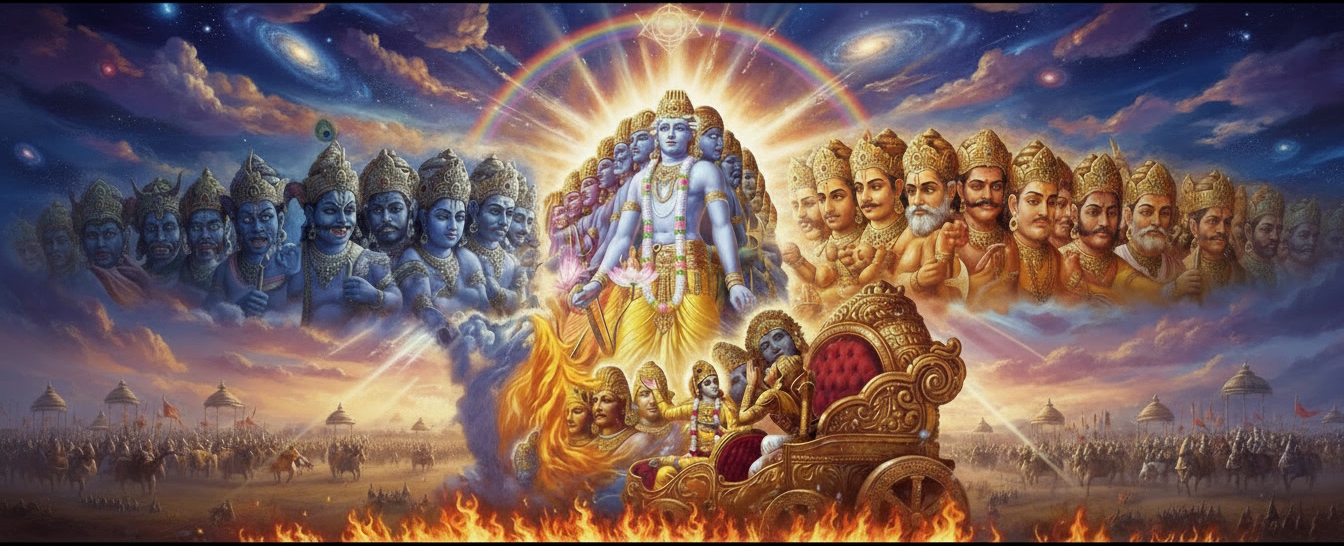
कर्मण्यकर्म यः पश्येदकर्मणि च कर्म यः।
स बुद्धिमान् मनुष्येषु स युक्तः कृत्स्नकर्मकृत्।।4.18।।
karmaṇyakarma yaḥ paśyedakarmaṇi ca karma yaḥ|
sa buddhimān manuṣyeṣu sa yuktaḥ kṛtsnakarmakṛt||4.18||
Translation
He who seeth inaction in action and action in inaction, he is wise among men; he is a Yogi and performer of all actions.
हिंदी अनुवाद
जो मनुष्य कर्ममें अकर्म देखता है और जो अकर्ममें कर्म देखता है, वह मनुष्योंमें बुद्धिमान् है, योगी है और सम्पूर्ण कर्मोंको करनेवाला है।
Commentaries & Translations
Swami Ramsukhdas
व्याख्या--'कर्मण्यकर्म यः पश्येत्'-- कर्ममें अकर्म देखनेका तात्पर्य है--कर्म करते हुए अथवा न करते हुए उससे निर्लिप्त रहना अर्थात् अपने लिये कोई भी प्रवृत्ति या निवृत्ति न करना। अमुक कर्म मैं करता हूँ, इस कर्मका अमुक फल मुझे मिले--ऐसा भाव रखकर कर्म करनेसे ही मनुष्य कर्मोंसे बँधता है। प्रत्येक कर्मका आरम्भ और अन्त होता है, इसलिये उसका फल भी आरम्भ और अन्त होनेवाला होता है। परन्तु जीव स्वयं नित्य-निरंतर रहता है। इस प्रकार यद्यपि जीव स्वयं परिवर्तनशील कर्म और उसके फलसे सर्वथा सम्बन्धरहित है, फिर भी वह फलकी इच्छाके कारण उनसे बँध जाता है। इसीलिये चौदहवें श्लोकमें भगवान्ने कहा है कि मेरेको कर्म नहीं बाँधते; क्योंकि कर्मफलमें मेरी स्पृहा नहीं है। फलकी स्पृहा या इच्छा ही बाँधनेवाली है--'फले सक्तो निबध्यते' (गीता 5। 12)।फलकी इच्छा न रखनेसे नया राग उत्पन्न नहीं होता और दूसरोंके हितके लिये कर्म करनेसे पुराना राग नष्ट हो जाता है। इस प्रकार रागरूप बन्धन न रहनेसे साधक सर्वथा वीतराग हो जाता है। वीतराग होनेसे सब कर्म अकर्म हो जाते हैं।
जीवका जन्म कर्मोंके अनुबन्धसे होता है। जैसे, जिस परिवारमें जन्म लिया है, उस परिवारके लोगोंसे ऋणानुबन्ध है अर्थात् किसीका ऋण चुकाना है और किसीसे ऋण वसूल करना है। कारण कि अनेक जन्मोंमें अनेक लोगोंसे लिया है और अनेक लोगोंको दिया है। यह लेन-देनका व्यवहार अनेक जन्मोंसे चला आ रहा है। इसको बंद किये बिना जन्म-मरणसे छुटकारा नहीं मिल सकता। इसको बंद करनेका उपाय है--आगेसे लेना बंद कर दें अर्थात् अपने अधिकारका त्याग कर दें और हमारेपर जिनका अधिकार है, उनकी सेवा करनी आरम्भ कर दें। इस प्रकार नया ऋण लें नहीं और पुराना ऋण (दूसरोंके लिये कर्म करके) चुका दें, तो ऋणानुबन्ध (लेनदेनका व्यवहार) समाप्त हो जायगा अर्थात् जन्म-मरण बंद हो जायगा (गीता 4। 23)। जैसे, कोई दूकानदार अपनी दूकान उठाना चाहता है, तो वह दो काम करेगा-- पहला ,जिसको देना है, उसको दे देगा और दूसरा, जिससे लेना है, वह ले लेगा अथवा छोड़ देगा। ऐसा करनेसे उसकी दूकान उठ जायगी। अगर वह यह विचार रखेगा कि जो लेना है, वह सब-का-सब ले लूँ, तो दूकान उठेगी नहीं। कारण कि जबतक वह लेनेकी इच्छासे वस्तुएँ देता रहेगा, तबतक दूकान चलती ही रहेगी, उठेगी नहीं।
Sri Harikrishnadas Goenka
कर्मादिका वह तत्त्व क्या है जो कि जाननेयोग्य है जिसके लिये आपने यह प्रतिज्ञा की थी कि कहूँगा। इसपर कहते हैं जो कुछ किया जाय उस चेष्टामात्रका नाम कर्म है। उस कर्ममें जो अकर्म देखता है अर्थात् कर्मका अभाव देखता है तथा अकर्ममें शरीरादिकी चेष्टाके अभावमें जो कर्म देखता है। अर्थात् कर्मका करना और न करना दोनों ही कर्ताके अधीन हैं। तथा आत्मतत्त्वकी प्राप्तिसे पूर्व अज्ञानावस्थामें ही सब क्रियाकारक आदि व्यवहार है ( इसीलिये कर्मका त्याग भी कर्म ही है ) इस प्रकार जो अकर्ममें कर्म देखता है। वह मनुष्योंमें बुद्धिमान् है वह योगी है और वह समस्त कर्मोंको करनेवाला है इस प्रकार कर्ममें अकर्म और अकर्ममें कर्म देखनेवालेकी स्तुति की जाती है। पू0 जो कर्ममें अकर्म देखता है और अकर्ममें कर्म देखता है यह विरुद्ध बात किस भावसे कही जा रही है क्योंकि कर्म तो अकर्म नहीं हो सकता और अकर्म कर्म नहीं हो सकता तब देखनेवाला विरुद्ध कैसे देखे उ0 वास्तवमें जो अकर्म है वही मूढमति लोगोंको कर्मके सदृश भास रहा है और उसी तरह कर्म अकर्मके सदृश भास रहा है उसमें यथार्थ तत्त्व देखनेके लिये भगवान्ने कर्मणि अकर्म यः पश्येत् इत्यादि वाक्य कहे हैं इसलिये ( उनका कहना ) विरुद्ध नहीं है क्योंकि बुद्धिमान् आदि विशेषण भी तभी सम्भव हो सकते हैं। इसके सिवा यथार्थ ज्ञानको ही जाननेयोग्य कहा जा सकता है ( मिथ्या ज्ञानको नहीं )। तथा जिसको जानकर अशुभसे मुक्त हो जायगा। यह भी कहा है सो विपरीत ज्ञानद्वारा ( जन्ममरणरूप ) अशुभसे मुक्ति नहीं हो सकती। सुतरां प्राणियोंने जो कर्म और अकर्मको विपरीतरूपसे समझ रक्खा है उस विपरीत ज्ञानको हटानेके लिये ही भगवान्के कर्मण्यकर्म यः इत्यादि वचन हैं। यहाँ कुण्डेमें बेरोंकी तरह कर्मका आधार अकर्म नहीं है और उसी तरह अकर्मका आधार कर्म भी नहीं है क्योंकि कर्मके अभावका नाम अकर्म है। इसलिये ( यही सिद्ध हुआ कि ) मृगतृष्णामें जलकी भाँति एवं सीपमें चाँदीकी तरह लोगोंने कर्म और अकर्मको विपरीत मान रक्खा है। पू0 कर्मको सब कर्म ही मानते हैं इसमें कभी फेरफार नहीं होता। उ0 यह बात नहीं क्योंकि नाव चलते समय नौकामें बैठे हुए पुरुषको तटके अचल वृक्षोंमें प्रतिकूल गतिदीखती है अर्थात् वे वृक्ष उलटे चलते हुए दीखते हैं और जो ( नक्षत्रादि ) पदार्थ नेत्रोंके पास नहीं होते बहुत दूर होते हैं उन चलते हुए पदार्थोंमें भी गतिका अभाव दीख पड़ता है अर्थात् वे अचल दीखते हैं। इसी तरह यहाँ भी अकर्ममें ( क्रियारहित आत्मामें ) मैं करता हूँ यह कर्मका देखना और ( त्यागरूप ) कर्ममें ( मैं कुछ नहीं करता इस ) अकर्मका देखना ऐसे विपरीत देखना होता है अतः उसका निराकरण करनेके लिये कर्मणि अकर्म यः पश्येत् इत्यादि वचन भगवान् कहते हैं। यद्यपि यह विषय अनेक बार शंकासमाधानोंद्वारा सिद्ध किया जा चुका है तो भी अत्यन्त विपरीत ज्ञानकी भावनासे अत्यन्त मोहित हुए लोग अनेक बार सुने हुए तत्त्वको भी भूलकर मिथ्या प्रसंग लालाकर शंका करने लग जाते हैं इसलिये तथा आत्मतत्त्वको दुर्विज्ञेय समझकर भगवान् पुनःपुनः उत्तर देते हैं। श्रुति स्मृति और न्यायसिद्ध जो आत्मामें कर्मोंका अभाव है वह अव्यक्तोऽयमचिन्त्योऽयम् न जायते म्रियते इत्यादि श्लोकोंसे कहा जा चुका और आगे भी कहा जायगा। उस क्रियारहित आत्मामें अर्थात् अकर्ममें कर्मका देखनारूप जो विपरीत दर्शन है यह लोगोंमें अत्यन्त स्वाभाविकसा हो गया है। क्योंकि कर्म क्या है और अकर्म क्या है इस विषयमें बुद्धिमान् भी मोहित हैं। अर्थात् देहइन्द्रियादिसे होनेवाले कर्मोंका आत्मामें अध्यारोप करके मैं कर्ता हूँ मेरा यह कर्म है मुझे इसका फल भोगना है इस प्रकार ( लोग मानते हैं। ) तथा मैं चुप होकर बैठता हूँ जिससे कि परिश्रमरहित और कर्मरहित होकर सुखी हो जाऊँ इस प्रकार देहइन्द्रियोंके व्यापारकी उपरामताका और उससे होनेवाले सुखीपनका आत्मामें अध्यारोप करके मैं कुछ भी नहीं करता हूँ चुपचाप सुखसे बैठा हूँ इस प्रकार लोग मानते हैं। लोगोंके इस विपरीत ज्ञानको हटानेके लिये कर्मणि अकर्म यः पश्येत् इत्यादि वचन भगवान्ने कहे हैं। यहाँ देहेन्द्रियादिके आश्रयसे होनेवाला कर्म यद्यपि क्रियारूप है तो भी उसका लोगोंने कर्मरहित अविक्रिय आत्मामें अध्यारोप कर रक्खा है क्योंकि शास्त्रज्ञ विद्वान् भी मैं करता हूँ ऐसा मान बैठता है। अतः नदीतीरस्थ वृक्षोंमें भ्रमसे प्रतिकूल गति प्रतीत होनेकी भाँति अज्ञानसे आत्माके नित्य सम्बन्धी माने जाकर जो लोकमें कर्म नामसे प्रसिद्ध हो रहे हैं उन कर्मोंमें वस्तुतः नदीतीरस्थ वृक्षोंमें गतिका अभाव देखनेकी भाँति जो अकर्म देखता है अर्थात् कर्माभाव देखता है तथा कर्मकी भाँति आत्मामें अज्ञानसे आरोपित किये हुए शरीर इन्द्रिय आदिकी उपरामतारूप अकर्ममें अर्थात् क्रियाके त्यागमें भी मैं कुछ न करता हुआ चुपचाप सुखपूर्वक बैठा हूँ इस अहंकारका सम्बन्ध होनेके कारण जो कर्म देखता है यानी उस त्यागको भी जो कर्म समझता है। इस प्रकार जो कर्म और अकर्मके विभागको ( तत्त्वसे ) जाननेवाला है वह मनुष्योंमें बुद्धिमान् पण्डित है वह युक्त योगी है और सम्पूर्ण कर्म करनेवाला भी वही है अर्थात् वह पुण्यपापरूप अशुभसे मुक्त हुआ कृतकृत्य है। कई टीकाकार इस श्लोककी दूसरी तरहसे ही व्याख्या करते हैं। कैसे ईश्वरके लिये किये जानेवाले जो ( पञ्च महायज्ञादि ) नित्यकर्म हैं उनका फल नहीं मिलता इस कारण वे गौणी वृत्तिसे अकर्म कहे जाते हैं ( इसी प्रकार ) उन नित्यकर्मोंके न करनेका नाम अकर्म है वह भी पापरूप फलके देनेवाला होनेके कारण गौणरूपसे ही कर्म कहा जाता है। जैसे कोई गौ ब्यायी हुई होनेपर भी यदि दूधरूप फल नहीं देती तो वह अगौ कह दी जाती है वैसे ही नित्यकर्ममें उसके फलका अभाव होनेके कारण जो अकर्म देखता है और नित्यकर्मका न करनारूप जो अकर्म है उसमें कर्म देखता है क्योंकि वह नरकादि विपरीत फल देनेवाला है। यह व्याख्या ठीक नहीं है क्योंकि इस प्रकार जाननेसे अशुभसे मुक्ति नहीं हो सकती अर्थात् जन्ममरणबन्धन नहीं टूट सकता। अतः यह अर्थ मान लेनेसे भगवान्के कहे हुए ये वचन कि जिसको जानकर तू अशुभसे मुक्त हो जायगा। कट जायँगे। क्योंकि नित्यकर्मोंके अनुष्ठानसे तो शायद अशुभसे छुटकारा हो भी जाय परंतु उन नित्यकर्मोंका फल नहीं होता इस ज्ञानसे तो मोक्ष हो ही नहीं सकता। क्योंकि नित्यकर्मोंका फल नहीं होता यह ज्ञान या नित्यकर्मोंका ज्ञान अशुभसे मुक्त कर देनेवाला है ऐसा शास्त्रोंमें कहीं नहीं कहा और न भगवान्ने ही गीताशास्त्रमें कहीं ऐसा कहा है। इसी युक्तिसे ( उनके बतलाये हुए ) अकर्ममें कर्मदर्शनका भी खण्डन हो जाता है। क्योंकि यहाँ ( गीतामें ) नित्यकर्मोंके अभावरूप अकर्ममें कर्म देखनेको कहीं कर्तव्यरूपसे विधान नहीं किया केवल नित्यकर्मकी कर्तव्यताका विधान है। इसके सिवा नित्यकर्म न करनेसे पाप होता है ऐसा जान लेनेसे ही कोई फल नहीं हो सकता। और यह नित्यकर्मका न करनारूप अकर्म शास्त्रोंमें कोई जाननेयोग्य विषय भी नहीं बताया गया है। तथा इस प्रकार दूसरे टीकाकारोंके माने हुए कर्ममें अकर्म और अकर्ममें कर्मदर्शन रूप इस मिथ्यादर्शनसे अशुभसे मुक्ति बुद्धिमत्ता युक्तता सर्वकर्मकर्तृत्व इत्यादि फल भी सम्भव नहीं और ऐसे मिथ्याज्ञानकी स्तुति भी नहीं बन सकती। जब कि मिथ्याज्ञान स्वयं ही अशुभरूप है तब वह दूसरे अशुभसे किसीको कैसे मुक्त कर सकेगा क्योंकि अन्धकार ( कभी ) अन्धकारका नाशक नहीं हो सकता। पू0 यहाँ जो कर्ममें अकर्म देखना और अकर्ममें कर्म देखना ( उन टीकाकारोंने ) बतलाया है वह मिथ्याज्ञान नहीं है किंतु फलके होने और न होनेके निमित्तसे गौणरूपसे देखना है। उ0 यह कहना भी ठीक नहीं क्योंकि गौणरूपसे कर्मको अकर्म और अकर्मको कर्म जान लेनेसे भी कोई लाभ नहीं सुना गया। इसके सिवा श्रुतिसिद्ध बातको छोड़कर श्रुतिविरुद्ध बातकी कल्पना करनेमें कोई विशेषता भी नहीं दिखलायी देती। ( भगवान्को यदि यही अभीष्ट होता तो वे ) उसी प्रकारके शब्दोंसे भी स्पष्ट कह सकते थे कि नित्यकर्मोंका कोई फल नहीं है और उनके न करनेसे नरकप्राप्ति होती है। फिर इस प्रकार कर्ममें जो अकर्म देखता है इत्यादि दूसरोंको मोहित करनेवाले मायायुक्त वचन कहनेसे क्या प्रयोजन था। इस प्रकार उपर्युक्त अर्थ करनेवालोंका तो स्पष्ट ही यह मानना हुआ कि भगवान्द्वारा कहे हुए वचन संसारको मोहित करनेके लिये हैं। इसके सिवा न तो यह कहना ही उचित है कि यह नित्यकर्मअनुष्ठानरूप विषय मायायुक्त वचनोंसे गुप्त रखनेयोग्य है और न यही कहना ठीक है कि ( यह विषय बड़ा गहन है इसलिये ) बारंबार दूसरेदूसरे शब्दोंद्वारा कहनेसे सुबोध होगा। क्योंकि कर्मण्येवाधिकारस्ते इस श्लोकमें स्पष्ट कहे हुए अर्थको फिर कहनेकी आवश्यकता नहीं होती। तथा सभी जगह जो बात करनेयोग्य होती है वही प्रशसंनीय और जाननेयोग्य बतलायी जाती है। निरर्थक बातको जाननेयोग्य है ऐसा नहीं कहा जाता। मिथ्याज्ञान या उसके द्वारा स्थापित की हुई आभासमात्र वस्तु जाननेयोग्य नहीं हो सकती। इसके सिवा नित्यकर्मोंके न करनेरूप अभावसे प्रत्यवायरूप भावकी उत्पत्ति भी नहीं हो सकती। क्योंकि नासतो विद्यते भावः इत्यादि भगवान्के वाक्य हैं तथा असत्से सत् कैसे उत्पन्न हो सकता है इत्यादि श्रुतिवाक्य भी पहले दिखलाये जा चुके हैं। इस प्रकार असत्से सत्की उत्पत्तिका निषेध कर दिया जानेपर भी जो असत्से सत्की उत्पत्ति बतलाते हैं उनका तो यह कहना हुआ कि असत् तो सत् होता है और सत् असत् होता है परंतु यह सब प्रमाणोंसे विरुद्ध होनेके कारण अयुक्त है। तथा शास्त्र भी निरर्थक कर्मोंका विधान नहीं कर सकता क्योंकि सभी कर्म ( परिश्रमकी दृष्टिसे ) दुःख रूप हैं और जानबूझकर ( बिना प्रयोजन ) किसीका भी दुःखमें प्रवृत्त होना सम्भव नहीं। तथा उन नित्यकर्मोंको न करनेसे नरकप्राप्ति होती है ऐसा शास्त्रका आशय मान लेनेपर तो यह मानना हुआ कि कर्म करने और न करनेमें दोनों प्रकारसे शास्त्र अनर्थका ही कारण है अतः व्यर्थ है। इसके सिवा नित्यकर्मोंका फल नहीं है ऐसा मानकर फिर उनको मोक्षरूप फलके देनेवाला कहनेसे उन व्याख्याकारोंके मतमें स्वचोविरोध भी होता है। सुतरां कर्मणि अकर्म यः पश्येत् इत्यादि श्लोकका अर्थ जैसा ( गुरुपरम्परासे ) सुना गया है वही ठीक है और हमने भी उसीके अनुसार इस श्लोककी व्याख्या की है।
Sri Anandgiri
He introduces the subsequent verse, preceded by the desire for the reason, with "kim punah" (what again) etc. He states the literal meaning derived from the first line with "karmani" etc. He specifies the meaning illuminated by the word 'api' (also) in the second line with "akarmani cha" (and in inaction). The connection is: "He who sees action in the absence of action."
Since activity itself is action and cessation (nivritti) is its absence, how can action be seen there? Anticipating this doubt, and assuming non-difference because both are dependent on the agent (karaka), He says "kartrutantratvat" (because it is dependent on the agent). The remaining meaning is that the seeing of action in cessation is not contradictory, just as it is not in activity.
Objection: Cessation is dependent on the object, not on the agent, so seeing action there is not justified. To this, He replies "vastu" (object) etc. Since the entire realm of activity, agency, and result operates only in the state of ignorance (avidya) and is devoid of contact with the reality (vastu), the connection is: "He who sees action in cessation, just as he sees it in activity, is wise among men."
Anticipating the question: "How is the wisdom, appropriateness, and the status of performer of all actions attributed to the one who sees inaction in action and action in inaction?" He replies "iti stuyate" (thus he is praised).
When the literal meaning of the verse is shown, due to the lack of understanding of the intended meaning, He raises the doubt of mutual contradiction with "nanu" etc.
Accepting the locative case as referring to the subject (vishaya saptami), the Siddhanti (follower of the established doctrine) refutes the objection by saying: The literal meaning is that for the ignorant person devoid of discrimination, Brahman, which is intrinsically inactive (akarma) and non-agent, appears through illusion to be accompanied by action and active.
Accepting mutual superimposition (paraspara adhyasa), He states with "tatha" (likewise): Just as the inactive Brahman is indeed perceived as action, so too the active duality (the world of action), when associated with the inactive Brahman as its substratum, appears as if it were the Brahman—this is the arrangement of the words.
[And He concludes:] The word of the Lord is appropriate for the realization of correct vision, as mutual superimposition of action and inaction is established.
Sri Dhanpati
To the expectation, "What then is the essential reality of action, etc., that must be understood?" He says "karmani" etc. Just as the illusion of movement is superimposed on stationary trees and mountains by a person seated in a boat, so too the person, superimposing action residing in the body etc., onto the Self, is under the delusion that "I am the doer, this action is mine, and its fruit must be enjoyed by me"; the Lord speaks to remove this illusion.
Karmani—is mere activity superimposed on the Self; the "akarma" (absence of action) in that, which was seen by ancient liberated ones like Janaka and by seekers of liberation as "I am not the doer, this action is not mine, the fruit of this is not desired by me,"—whoever sees that now... And just as the illusion of non-motion is perceived in the sun, etc., even while they are moving, so too the illusion of "I am inactive, I sit quietly in happiness" is perceived by delusion in the body, senses, etc., which are inherently associated with continuous activity and cessation (being products of Maya); to negate this, He says "akarmani karma yah pashyati" (He who sees action in inaction). For, cessation is also an activity.
He is praised as "buddhiman" (wise), "yuktah" (yogi), and "kritsnakarmakrit" (performer of all actions).
[He refutes the other view:] The interpretation by some—that 'action' here refers to the worship of the Supreme Lord, and seeing 'akarma' in it means seeing that it is non-binding because it leads to knowledge; and seeing 'karma' in 'akarma' (non-performance of prescribed action) because it causes sin (pratyavaya) and is thus binding—is inconsistent.
Because this knowledge would not lead to liberation from the inauspicious, thus contradicting the Lord's statement "yaj jnatva" (knowing which). Neither does liberation occur from merely knowing the non-fruitfulness of Nitya actions, which require performance. Nor is liberation from sin possible through the false knowledge that 'action is inaction and inaction is action'.
Furthermore, describing the origin of a positive entity like sin (pratyavaya) from a negative entity like non-performance (akarma) contradicts the Shruti "katham asatah sanjayate" (how can existence arise from non-existence?). This is the summary.
Sri Madhavacharya
He states the nature of action etc., with "karmani" etc. He who sees inaction in action being performed—meaning, "This action belongs only to Vishnu; I, the reflection of Consciousness, do not do anything."
Akarmani—in the state of non-performance (like sleep etc.). He who sees the action of the Supreme Lord—meaning, "This Supreme Lord always performs all creation, etc."—that person is wise, he is the Knower (Jnani), and he is truly yukta (yogi).
And although he is one who refrains from all actions, he is "kritsnakarmakrit" (performer of all actions), because he possesses the fruit of all actions.
Sri Neelkanth
He states that essential reality of action etc., which was promised, with "karmani" etc. Karmani—the activity of the body, senses, etc., which consists of action, inaction, and forbidden action, and is superimposed on the inner Self by ignorance—seeing 'akarma' (absence of action) in that is like seeing the absence of movement in the moving bank tree with the knowledge of reality, even when motion is superimposed by one sitting in a boat... And according to the principle "the operation of the Gunas is unmoving," in the body, senses, etc., composed of the three Gunas, which perform Nitya Karma, seeing 'karma' in the superimposed 'akarma' (absence of action)—which is seen as "I am sitting quietly and doing nothing," just as non-movement is seen in the moon and stars—that 'karma' is the effort called control (nigraha). He who sees this is wise among men, a Knower of Truth. The meaning is that actions must be performed while contemplating the non-doership of the Self and the doership of the composite body/senses alone. Although this has been elaborated upon in many ways in "avyakto'yam" etc., the ancients say it is repeated because the essential reality is difficult to know.
The interpretation by some—that action is performed as Nitya Karma for the sake of the Supreme Lord, and seeing 'akarma' in it because it is non-binding, and seeing 'karma' in 'akarma' (non-performance of Nitya Karma) because it causes sin and is thus binding—is inconsistent... [The rest is refutation].
Sri Ramanuja
The word 'akarma' here denotes the Atma-jnana (Knowledge of the Self), which is the subject matter presented [in context] other than action. He who sees Self-knowledge in action being performed, and he who sees action while remaining established in akarma (Self-knowledge).
What is stated? It is stated that the action being performed, by contemplation on the true nature of the Self, becomes "knowledge-formed" (jnana-akaram); and that knowledge, being included in the action, is seen as "action-formed" (karma-akaram). For, when action is being performed, both [action and knowledge] are completed through the contemplation on the true nature of the Self, the agent.
He who sees action thus impregnated with the contemplation of the true nature of the Self, he is the wise man, he is the knower of the entire meaning of the scriptures among men, he is 'yukta' (fit for liberation), and he alone is "kritsnakarmakrit" (performer of all actions/meaning of the scriptures).
[Now] He explains how the action being performed perceptibly can become "knowledge-formed."
Sri Sridhara Swami
Thus showing the difficulty in understanding action etc., He says "karmanyakarama" etc. Regarding the action characterized as the worship of the Supreme Lord, he who sees "akarma" (this is not [binding] action), because it is a cause of knowledge and thus non-binding. And akarmani (in the non-performance of prescribed action), he who sees "karma" (binding action), because it produces sin (pratyavaya) and is thus a cause of bondage. Among men who perform action, he is "buddhiman" (wise), being superior due to his resolute intellect (vyavasayatmaka buddhi). He is "yuktah" (yogi), having attained Yoga of Knowledge through that action. And he alone is the "kritsnakarmakarta" (performer of all actions), because the fruits of all actions are included in that action, just like the water in a fully surrounded reservoir.
Thus, the Karma Yoga already stated in "na karmanam anarambhat" etc., for the arurukshu (seeker ascending) stage of eligibility, is clarified. And since this section is an elaboration of that, there is no fault of repetition. By this very explanation, the non-utility of action for the arudha (one who has ascended) state, as stated in "yas tv atmaratir eva syat" etc., should also be understood as having been elucidated by implication.
Or [The second interpretation]: He who, even while engaged in karma (activity of body, senses, etc.), sees akarma (natural actionlessness) by experiencing the Self as distinct from the body, etc.; and he who sees karma in akarma (the abandonment of actions due to the notion of suffering, without knowledge), because that is hypocrisy (mithyachara) due to being an obstruction. He who is such is "buddhiman" (wise) and learned among all men. The reason for this is that even while performing all actions like eating, etc., that come spontaneously, he is indeed yukta (established in samadhi through the knowledge of the non-doer Self).
By this, it should also be understood that the tattva of vikarma (forbidden action) is determined: spontaneous actions of a Jnani like eating prohibited food (kalanjabhakshana) are not faulty, but actions done out of attachment by the ignorant are faulty.
Sri Vedantadeshikacharya Venkatanatha
Thus the introduction is established. Now the subject matter at hand is taught—with this intention, He says "of action and inaction" etc. "Karmanyakarama yah pashyet" (He who sees inaction in action) states what is to be understood regarding action. "Akarmani cha karma yah" (and he who sees action in inaction) refers to Knowledge. The word 'akarma' here, abandoning the interpretation by others that it refers to the absence of action or an independent focus on knowledge, is interpreted through a different derivation and association as "akarma" etc. The meaning is: in this context of teaching Karma Yoga. He shows the connected meaning with "karmani" etc. The emphatic statement (avadharanam) is for the sake of removing the non-connection between knowledge and action by signifying the opposition which is the cause of doubt.
[Addressing objections of impossibility:] The sentiment is that since action qualified by knowledge is prescribed as the means, they are mutually connected, and thus are not subjects of different injunctions.
In "buddhiman" (wise), the superlative intelligence is intended by the suffix matup—He states this with "kritsnashastrarthavit" (knower of the entire meaning of the scriptures). The sentiment is that since "kritsnakarmakrit" (performer of all actions) is stated immediately after, the intelligence referred to here must be appropriate to that.
Since 'buddhiman' and 'kritsnakarmakrit' indicate knowledge and performance, the resulting fitness for the fruit should be denoted here by the word 'yukta' (fit)—with this intention, He said "fit for liberation." Since a distinction of sentences is established by the two words 'tat' (in sa buddhiman sa yuktah), "kritsnakarmakrit" should also form a separate sentence, because the abundance of performance is primary in being a cause for praise—with this intention, He relates the word 'tat' to it: "sa eva kritsnakarmakrit" (he alone is the performer of all actions).
Swami Chinmayananda
वेदान्त के वर्णनानुसार दीर्घकाल तक जब मनुष्य कर्तव्य कर्मों का पालन करता है तब सभी सच्चे साधकों के मन में एक प्रश्न उठता है कि उन्हें कैसे ज्ञात हो कि उन्होंने पूर्णत्व की स्थिति प्राप्त कर ली है। इस श्लोक में श्रीकृष्ण उस स्थिति का वर्णन कर रहे हैं।शारीरिक कर्म बुद्धि में स्थित किसी ज्ञात अथवा अज्ञात इच्छा की केवल स्थूल अभिव्यक्ति है। पूर्ण नैर्ष्कम्य की स्थिति का अर्थ निष्कामत्व की स्थिति होनी चाहिए इसे ही पूर्ण ईश्वरत्व की स्थिति कहते हैं। परन्तु यहाँ बताया हुआ लक्ष्य अनन्तस्वरूप पूर्णत्व न होकर ज्ञान की तीर्थयात्रा के मध्य पड़ने वाला एक स्थान है। विवेकी पुरुष सहजता से अवलोकन कर सकता है कि शरीर से अकर्म होने पर भी उसके मन और बुद्धि पूर्ण वेग से कार्य कर रहे होते हैं। वह यह भी अनुभव करता है कि शरीर द्वारा निरन्तर कर्म करते रहने पर भी वह शान्त और स्थिर रहकर केवल द्रष्टाभाव से उन्हें स्वयं अकर्म में रहते हुए देख सकता है यह अकर्म सात्त्विक गुण की चरम्ा सीमा है।ऐसा व्यक्ति समत्व की महान् स्थिति को प्राप्त हुआ समझना चाहिये जो ध्यानाभ्यास की सफलता के लिए अनिवार्य है। जैसा कि अनेक लोगों का विश्वास है कि कर्तव्य कर्म ही हमें पूर्णत्व की प्राप्ति करा देंगे ऐसा यहाँ नहीं कहा गया है। यह सर्वथा असंभव है। कर्म स्वयं ही इच्छा का शिशु है और कर्मों के द्वारा हम वस्तुओं को उत्पन्न कर सकते हैं और कोई भी उत्पन्न की हुई वस्तु स्वभाव से ही परिच्छिन्न विनाशी होती है। इस प्रकार कर्मों के द्वारा प्राप्त किया ईश्वरत्व रविवासरीय ईश्वरत्व होगा जो आगामी सोमवार को हम से विलग हो जायेगा श्री शंकराचार्य और अन्य आचार्यवृन्द पुनपुन यह दोहराते हैं कि कर्तव्य पालन से शुद्धान्तकरण वाले व्यक्ति में वह सार्मथ्य आ जाती है कि वह स्वयं के मन में तथा बाहर होने वाली क्रियाओं को साक्षी भाव से देख सकता है। जब वह यह जान लेता है कि उसके कर्म विश्व में हो रहे कर्मों के ही भाग हैं तब उसे एक अनिर्वचनीय समता का भाव प्राप्त हो जाता है जो ध्यान के अभ्यास के लिए आवश्यक है।किसी व्यक्ति के शान्त बैठे रहने मात्र से उसे निष्क्रिय नहीं कहा जा सकता। शारीरिक निष्क्रियता (अकर्म) किसी व्यक्ति के क्रियाहीन होने का मापदण्ड नहीं हो सकता। यह एक सुविदित तथ्य है कि जब कभी हम गम्भीर निर्माणकारी विचारों में मग्न होते हैं तो हम केवल शारीरिक दृष्टि से बिल्कुल शान्त और निष्क्रिय हो जाते हैं। इसलिए जीवन के पादमार्ग (फुटपाथ) पर ही चलने वाले लोगों की दृष्टि से जो व्यक्ति क्रियाहीन कहलाता है उसके हृदय में गम्भीर विचारों की क्रिया का चलना सम्भव हो सकता है। बोधि वृक्ष के नीचे बैठे हुए बुद्ध वाद्यों के समीप एक संगीतज्ञ हाथ में लेखनी लिए एक लेखक इन सब में कभीकभी निष्क्रयता देखी जाती है परन्तु वह निष्क्रियता सत्त्वगुण की है तमोगुण की नहीं। इन शान्त क्षणों के बाद ही वे अपनी श्रेष्ठ कलाकृति प्रस्तुत करते हैं। इस प्रकार जिस पुरुष में आत्मनिरीक्षण की क्षमता है वह अकर्म में कर्म को पहचान सकता है।एक विवेकी पुरुष जब जगत् में क्रियाशील रहता है उस समय मानो अपने आपको सब उपाधियों से अलग करके साक्षीभाव से स्वयं अकर्म में रहते हुए वह सब कर्मों को होते हुए देख सकता है।जब मैं इन शब्दों को लिख रहा हूँ तब मेरा ही कोई भाग मानों द्रष्टाभाव से देख सकता है कि हाथ में पकड़ी हुई लेखनी कागज पर शब्दों को लिख रही है। इसी प्रकार सभी कर्मों में स्वयं अकर्म में रहते हुए कर्मों को देखने की क्षमता दुर्लभ नहीं है। जो कोई पुरुष इसका उपयोग करेगा वह स्पष्ट रूप से सब कर्मों में इस द्रष्टा को अकर्म रूप से पहचान सकता है।रेल चलती है वाष्प नहीं। पंखा घूमता है विद्युत नहीं। इसी प्रकार ईंधन जलता है अग्नि नहीं। शरीर मन और बुद्धि कार्य करते है परन्तु चैतन्य आत्मा नहीं।इस प्रकार कर्म में अकर्म और अकर्म में कर्म देखने वाले पुरुष को सब मनुष्यों में बुद्धिमान कहा जाता है। उसे यहाँ आत्मानुभवी नहीं कहा गया है। निसन्देह वह मनुष्यों में श्रेष्ठ है और आत्मप्राप्ति के अत्यन्त समीपस्थ है।संक्षेप में निष्कर्ष यह है कि निस्वार्थ भाव तथा अर्पण की भावना से कर्माचरण करने पर चित्त शुद्ध होता है और बुद्धि में कर्म में अकर्म और अकर्म में कर्म देखने की क्षमता आती है। यह क्षमता दैवी और श्रेष्ठ है क्योंकि इसके द्वारा ही हम अपने आप को सांसारिक बन्धनों से मुक्त कर सकते हैं।उपर्युक्त ज्ञान की प्रशंसा अगले श्लोकों में की गयी है
Sri Abhinavgupta
To cause the realization of that [Reality], He says "karmani" etc. He who sees non-doership in his own actions; and, due to the state of peace (prashantataya), he who knows his own doership in the actions performed by others, because of the nature of the fully manifested Reality—that person alone is the wisest among all. He performs action completely (in totality), so in the manifested (active) state, "By which action should the fruit be given to him?" [such is the case].
But in the state of peace, he cuts off all actions.
Thus, he either performs all actions or performs no actions—this is the secret teaching (Upanishad).
Sri Jayatritha
The word 'akarma' here denotes the Atma-jnana (Knowledge of the Self), which is the subject matter presented [in context] other than action. He who sees Self-knowledge in action being performed, and he who sees action while remaining established in akarma (Self-knowledge). What is stated?
It is stated that the action being performed, by contemplation on the true nature of the Self, becomes "knowledge-formed" (jnana-akaram); and that knowledge, being included in the action, is seen as "action-formed" (karma-akaram).
For, when action is being performed, both [action and knowledge] are completed through the contemplation on the true nature of the Self, the agent.
He who sees action thus impregnated with the contemplation of the true nature of the Self, he is the wise man, he is the knower of the entire meaning of the scriptures among men, he is 'yukta' (fit for liberation), and he alone is "kritsnakarmakrit" (performer of all actions/meaning of the scriptures).
[Now] He explains how the action being performed perceptibly can become "knowledge-formed."
Sri Madhusudan Saraswati
What then is the essential reality of action etc.? To this, He says "karmani" etc. In karma (activity of body, senses, etc., whether prescribed or prohibited), which is superimposed on the Self by the superimposition of attribute (dharmadhyasena)—"I am the doer," like the motion superimposed on stationary bank trees by one in a boat—he who sees the actual absence of action by contemplating the nature of the non-doer Self. Similarly, in akarma (non-activity) superimposed by the false pride "I sit quietly in happiness, I am non-active" on the body/senses which are always active due to being products of the three Gunas (Maya)—he who sees the actual activity, which is the effort called cessation of activity, by contemplating the true nature of the body/senses, like seeing motion in the previously non-moving men.
This kind of knower of the Supreme Reality is praised by the three qualities: wisdom, yogic discipline, and performance of all duties. Here, the reality of karma and vikarma is shown by the first line (as the word karma covers both prescribed and prohibited), and the reality of akarma by the second line.
Therefore, the intention is: having known this reality of karma, vikarma, and akarma, you should abandon vikarma and akarma and perform only prescribed action by renouncing the ego of doership and attachment to fruit.
Sri Purushottamji
Because it is difficult to know, He states its nature for the sake of knowledge with "karmani" etc.
He who sees akarma (non-duty) in karma (duty). [i.e.,] he sees vikarma (forbidden action) performed without connection to Me, without My command, as non-duty.
Similarly, he who sees karma (duty) in akarma (non-duty) by My command.
Having known thus, he who is the "kritsnakarmakarta" (performer of all actions), he is the wise man among men, he is the knower, he is yuktah (disciplined/connected). "Mama" (Mine) is understood (the remainder).
Sri Shankaracharya
Karma (action) is mere activity (vyaapara). In that action, he who sees akarma (absence of action); and in akarma (absence of action)—since both activity and cessation are dependent on the agent (kartrutantratvat), and all transactions involving action, agent, etc., are only in the realm of avidya—he who sees karma (action), he is the wise man among men, he is the yukta (yogi), and he is the kritsnakarmakrit (performer of all actions). Thus, the seer of the mutual exchange between action and inaction is praised.
Objection: How is this contradictory statement made...? [Answer:] Not so. In truth, akarma (Brahman) exists, yet appears as action to the deluded perspective of the world, and likewise action appears as inaction. Therefore, to teach the seeing of things as they really are (yathabhutadarshana), the Lord says "karmani akarma yah pashyet" etc. Therefore, there is no contradiction, and the attribution of wisdom, etc., is thereby justified. The word "boddhavyam" (to be understood) also refers to the seeing of things as they really are. Therefore, since action and inaction are grasped in the wrong way (viparyayena) by living beings, the Lord's statement "karmani akarma yah pashyet" is for the removal of that mistaken apprehension.
Sri Vallabhacharya
Revealing the true nature of that very action, He speaks of Kriya-dvaita (duality in action) with "karmanyakarma" etc. In the Vedic prescribed action, the sacrificial action... in all of this, he who, being a follower of the Sankhya or Yoga path, sees or contemplates akarma (non-binding nature) or sama Brahman (equipoised Brahman)—
this is briefly stated as the true nature of action for the supreme authority (Adhikari).
For the ordinary performer of action (Karmadhikari), in akarma—meaning prohibited action or non-performance—he sees karma (bondage).
The intention here is that for the superior and inferior authorities, who are of mutually opposite natures, there are mutually opposite actions accomplished by activity. Therefore, the action of the inferior authority is akarma (non-binding) for the superior authority, and the action of the superior authority is akarma/non-duty for the inferior authority.
He who sees the reality thus is wise among all men, yukta (devoted to Brahman and Yoga), and also "kritsnakarmakrit" (performer of all actions), because the fruits (Anandas) of all actions are included in that action, making him the doer of those.
Swami Sivananda
कर्मणि in action? अकर्म inaction? यः who? पश्येत् would see? अकर्मणि in inaction? च and? कर्म action? यः who? सः he? बुद्धिमान् wise? मनुष्येषु among men? सः he? युक्तः Yogi? कृत्स्नकर्मकृत् performer of all actions.Commentary In common parlance action means movement of the body? movement of the hands and feet? and inaction means to sit iet.It is the idea of agency? the idea I am the doer that binds man to Samsara. If this idea vanishes? action is no action at all. It will not bind one to Samsara. This is inaction in action. If you stand as s spectator or silent witness of Natures activities? feeling Nature does everything I am nondoer (Akarta)? if you identify yourself with the actionless Self? no matter what work or how much of it is done? action is no action at all. This is inaction in action. By such a practice and feeling? action loses its binding nature.A man may sit ietly. He may not do anything. But if he has the idea of agency or doership? or if he thinks that he is the doer? he is every doing action? though he is sitting ietly. This is action in inaction. The restless mind will ever be doing actions even though one sits ietly. Actions of the mind are real actions. Nor can anyone even for one moment remain really actionless? for helplessly is everyone driven to action by the alities of Nature. (Chapter III.5)Inaction also induces the feeling of egoism. The inactive man says? I sit ietly I do nothing. Inaction? like action? is wrongly attributed to the Self.He is the performer of all actions who knows this truth. He has attained the end of all actions? i.e.? freedom or knowledge or perfection.When a steamer moves? the trees on the shore which are motionless? appear to move in the opposite direction to a man who is in the steamer. Moving objects that are very far away appear to be stationary or motionless. Even so in the case of the Self inaction is mistaken for action and,action for inaction.The Self is actionless (Akarta or nondoer? Nishkriya or without work). The body and the senses perform action. The actions of the body and the senses are falsely and wrongly attributed by the ignorant to the actionless Self. Therefore the ignorant man thinks? I act. He thinks that the Self is the doer or the agent of the action. This is a mistake. This is ignorance.Just as motion does not really belong to the trees on the shore which appear to move in the opposite direction to a man on board the ship? so also action does not really pertain to the Self.This ignorance which is the cause of birth and death vanishes when you attain Selfrealisaion.
Swami Gambirananda
Since engagement and non-engagement (in action) depend on an agent, therefore, yah, he who; pasyet, ie. pasyati, finds; akarma, inaction, absence of action; karmani, in action-karma means whatever is done, action in general; in tha action-; and yah, who; finds karma, action; akarmani, in inaction, in the absence of action; sah, he; is buddhiman, a wise one; manusyesu, among men. All dealings involving an act, accessories, etc. exist certainly on the plane of ignorance, [Both engagement and non-engagement presuppose agentship and an act of some kind. This, however, holds good on the plane of ignorance, but not on that of Self-realization.] only so long as one has not attained to the Reality. He is a yogi, yuktah, engaged in yoga; and a krtsna-karma-krt, performer of all actions. One who discriminates between action and actions. One who discriminates between action and inaction is praised thus.
Objection: Well, what is meant by this contradictory statement, 'He who finds inaction in action', and 'action in inaction'? For action cannot become inaction, nor inaction action. That being so, how can a witness have (such) an incongruous perception?
Vedantin: Is it not that [Ast. reads na in place of nanu.-Tr.] to an ordinary foolsih observer, that which is reality is inaction appears as action, and similarly, action itself as inaction? That being so, in order to show things as they are the Lord says, 'He who finds inaction in action', etc. Therefore there is no incongruity. Besides, the alifications such as 'intelligent' etc. (thus) become logical. And by saying, 'there is something to be known', is implied the perception of things as they are. Moreover, freedom from evil cannot follow from an erroneous perception; whereas it has been said, 'by knowing which you will become free from evil'. Therefore, one account of action and inaction being perceived contrarily by the creatures, the Lord's utterance, 'he who finds inaction in action,' etc. is for dispelling their contrary perception.
Not that in the empirical plane inaction has action as its receptacle, like a plum in a bowl! Nor even has action inaction as its receptacle, because inaction is a negation of action. Therefore, action and inaction are actually perceived contrarily by the ordinary persons-like seeing water in a mirage, or silver in nacre.
Objection: Is it not that to every one action is action itself? Never is there an exception to this.
Vedantin: That is not so, becuase when a boat is moving, motionless trees on the bank appear to move in the opposite direction to a man on the boat; an absence of motion is noticed in distant moving things which are not near one's eyes. Similarly, here also occurs the contrary perceptions, viz seeing action in inaction under the idea, 'I am doing', [Ast. omits 'aham karomi iti, under the idea, "I am doing"'.-Tr.] and seeing, inaction in acion,-because of which it is said, 'He who finds inaction in action,' etc. in order to eliminate them. As such, although this answer has been given more than once, still a man becomes repeatedly deluded under the influence of a totally opposite perception. And forgetting the truth that has been heard again and again, he repeatedly raises false issues and estions! And therefore, observing that the subject is difficult to understand, the Lord gives His answer again and again.
The absence of action in the Self-well-known from the Vedas, Smrtis and logic, as stated in, '(It is said that) This is unmanifest; This is inconceivable' (2.25), 'Never is this One born, and never does It die' (2.20; Ka. 1.2.18), etc.-has been and will be spoken of. The contrary perception of action in that actionless Self, i.e. in inaction, is very deep-rooted, owing to which 'even the intelligent are confounded as to what is action and what is inaction.' And as a conseence of the superimposition of aciton pertaining to the body etc. on the Self, there arises such ideas as, 'I am an agent; this is my action; its result is to be enjoyed by me.' Similarly, with the idea, 'I shall remain iet, whery I shall be free from exertion, free from activity, and happy', and superimposing on the Self the cessation of activities pertaining to the body and organs and the resulting happiness, a man imagines, 'I shall not do anything; I shall sit ietly and happily.'
That being so, the Lord says, 'he who finds inaction in action,' etc. with a view to removing this contrary understanding of man. And here in this world, though action belonging to the body and organs continues to be action, still it is superimposed by everyone on the acitonless, unchanging Self, as a result of which even a learned person things, 'I act.'
Therefore, in action (karmani), which is universally considered by all people to be inherent in the Self, like the perception of motion in the (stationary) trees on the bank of a river-(in that action) he who contrariwise finds the fact of inaction, like perceiving absence of motion in those trees-.
And, in inaction (akarmani) in the cessation of the activities pertaining to the body and organs and ascribed to the Self in the same way that actions are ascribed-, in that action, he who sees action because of egoism being implicit in the idea, 'I am happily seated ietly, without doing anything'-; he who knows thus the distinction between action and inaction, is wise, is learned among men; he is engaged in yoga, he is a yogi, and a performer of all actions. And he, freed from evil, attains fulfilment. This is the meaning.
This verse is interpreted by some in another way.
How?
(Thus:) 'Since the daily obligatory duties (nityakarmas) certainly have no results when performed as a dedication to God, therefore, in a secondary sense, they are said to be inaction. Again, the non-performance of these (nitya-karmas) is inaction; since this produces an evil result, therefore it is called action, verily in a figurative sense. That being so, he who sees inaction in the daily obligatory duties (nitya-karmas) owing to the obsence of their results-in the same way as a cow that does not yield milk is said to be not a cow, though in reality it is so-so also, in the non-performance of the daily obligatory duties, i.e. in inaction, he who sees action since that yields results such as hell etc৷৷.'
This explanation is not logical, because freedom from evil as a result of such knowledge is unreasonable, and the utterance of the Lord in the sentence, '৷৷.by knowing which you will become freed from evil', will be contradicted.
How?
Even if it be that liberation from evil follows from the performance of nitya-karmas, it cannot, however, follow from the knowledge of the absence of their results. For it has not been enjoined (anywhere) that knowledge of the nityakarmas (themselves), leads to the result of freedom from evil. Nor has this been stated here by the Lord Himself.
Hery is refuted the 'seeing of action in inaction' [As explained by others.-Tr.], for (according to the opponent) 'seeing of action in inaction' has not been enjoined here [Here, in the present verse.] as a duty, but (what has been enjoined is) merely that performance of the nityakarmas is obligatory. Moreover, no result can accrue from the knowledge that evil arises from non-performance of nityakramas. Nor even has non-performance of nityakarmas. been enjoined as something that should be known. Besides, such results as freedom from evil, wisdom, engagement in yoga, and being a performer of all actions cannot reasonably follow from a false perception of action as inaction. Nor is this a eulogy of false perception. [The stated results accrue from correct knowledge, not from false perception; and correct knowledge alone is praise-worthy.] Indeed, false perception is itself an abvious form of evil! How can it bring about liberation from another evil? Surely, darkness does not become the remover of darkness!
Opponent: Well, the seeing of inaction in action, or the seeing of action in inaction-that is not a false perception.
Vadantin: What then?
Opponent: It is a figurative statement based on the existence or the non-existence of results.
Vedantin: Not so, because there is no such scriptural statement that something results from knowing action as inaction and inaction as action, even in a figurative sense. Besides, nothing particular is gained by rejecting what is heard of (in the scriptures) and imagining something that is not. Further, it was possible (for the Lord) to express in His own words that there is no result from the nityakarmas, and that by their non-performance one would have to go to hell. Under such circumstances, what was the need of the ambiguous statement, 'He who sees inaction in action,' etc., which is misleading to others?
This being the case, such an explanation by anyone will be clearly tantamount to imagining that statement of the Lord as meant for deluding people. Moreover, this subject-matter (performance of nityakarmas) is not something to be protected with mystifying words. It is not even logical to say that the subject-matter will become easy for comprehension if it is stated again and again through different words. For, the subject-matter that was stated more clearly in, 'Your right is for action alone' (2.47), does not need any repetition. And everwhere it is said that whatever is good and ought to be practised deserves to be understood; anything purposeloss does not deserve to be known. Besides, neither is false knowledge worth aciring nor is the semblance of an object presented by it worth knowing.
Nor even can any evil, which is an entity, arise from the non-performance of nityakarmas, which is a non-entity, for there is the statement, 'Of the unreal there is no being' (2.16), and (in the Upanisad) it has been pointed out, 'How can existence originate from nonexistence?' (Ch. 4.2.2). Since emergence of the existent from the nonexistent has been denied, therefore anyone's assertion that the existent originates from the nonexistent will amount to saying that a non-entity becomes an entity, and an entity becomes a non-entity! And that is not rational because it runs counter to all the means of valid knowledge.
Further, the scriptures cannot enjoin fruitless actions, they being naturally painful; and it is illogical that what is painful should be done intentionally. Also, if it is admitted that falling into hell results from their non-performance (i.e. of the nityakarmas), then that too is surely a source of evil. In either case, whether one undertakes them or not, the scriptures will be imagined to be useless. And there will be a contradiction with your own standpoint when, after holding that the nityakarmas are fruitless, you assert that they lead to Liberation.
Therefore, the meaning of 'He who finds inaction in action,' etc. is just what stands out literally. And the verse has been explained by us accordingly.
The aforesaid perception of 'inaction in action,' etc. is being praised:
Swami Adidevananda
Here by the term 'non-action', the knowledge of the self, which is distinct from action and which forms the subject under consideration, is meant. 'He who sees non-action in action and also action in non-action,' denotes him who can perceive knowledge of the self even while action is being performed and who can also perceive action while engaged in non-action, i.e., knowledge of the self. What is the import of this saying? What is taught here is this: One can perceive, by constant contemplation on the truth about the self, that the action that is being performed in itself is a form of knowledge. One can also perceive that this knowledge is also of the form of Karma because of its being contained in Karma Yoga. Both these (i.e., action in the form of knowledge and knowledge in the form of actions) are accomplished by contemplation on the true nature of the self, even while work is being performed. Thus, he who can see actions as included in contemplation on the reality of the self, is wise, i.e., he knows the full meaning of the Sastras; he is fit among men, i.e., fit to attain release. He alone has fulfilled all actions, i.e., carried out the entire purpose of the Sastras. [The purport is that no contradiction between knowledge and action is felt by one who knows the philosophy of the self].
How is the form of knowledge accomplished through works which are obviously activities that are being performed? Sri Krsna explains: