Bhagavad Gita - Chapter 4 - Shloka (Verse) 34
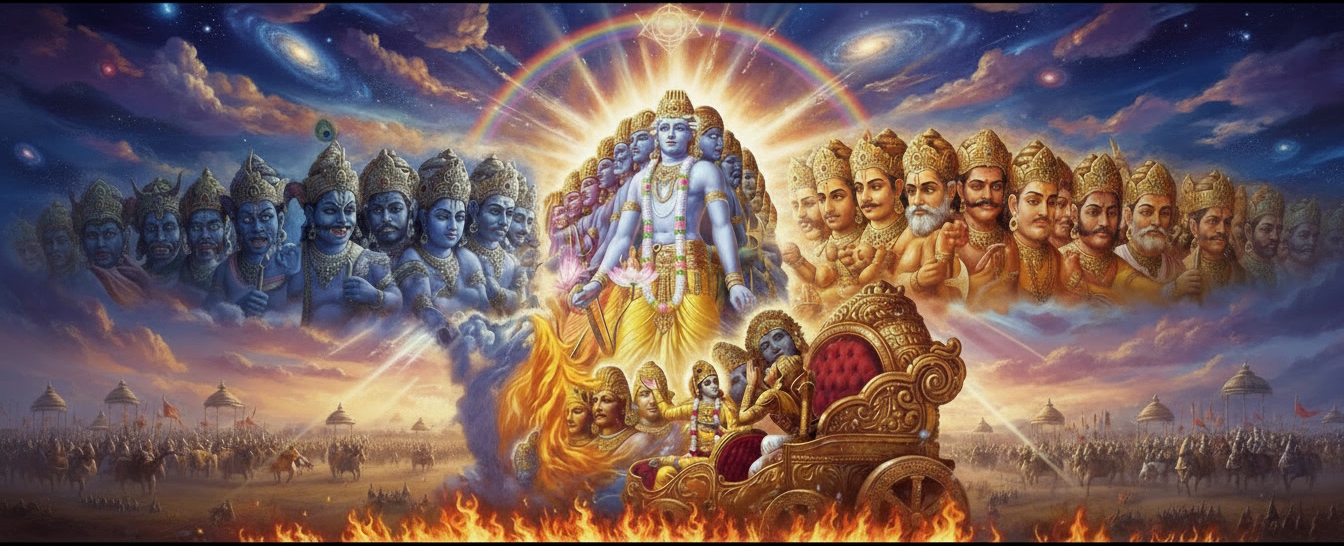
तद्विद्धि प्रणिपातेन परिप्रश्नेन सेवया।
उपदेक्ष्यन्ति ते ज्ञानं ज्ञानिनस्तत्त्वदर्शिनः।।4.34।।
tadviddhi praṇipātena paripraśnena sevayā|
upadekṣyanti te jñānaṃ jñāninastattvadarśinaḥ||4.34||
Translation
Know That by long prostration, by estion and by service; the wise who have realised the Truth will instruct thee in (that) knowledge.
हिंदी अनुवाद
उस- (तत्त्वज्ञान-) को (तत्त्वदर्शी ज्ञानी महापुरुषोंके पास जाकर) समझ। उनको साष्टाङ्ग दण्डवत् प्रणाम करनेसे, उनकी सेवा करनेसे और सरलतापूर्वक प्रश्न करनेसे वे तत्त्वदर्शी ज्ञानी महापुरुष तुझे उस तत्त्वज्ञानका उपदेश देंगे।
Commentaries & Translations
Swami Ramsukhdas
व्याख्या--'तद्विद्धि'--अर्जुनने पहले कहा था कि युद्धमें स्वजनोंको मारकर मैं हित नहीं देखता (गीता 1। 31) इन आततायियोंको मारनेसे तो पाप ही लगेगा (गीता 1। 36)। युद्ध करनेकी अपेक्षा मैं भिक्षा माँगकर जीवन-निर्वाह करना श्रेष्ठ समझता हूँ (गीता 2। 5)। इस तरह अर्जुन युद्धरूप कर्तव्य-कर्मका त्याग करना श्रेष्ठ मानते हैं; परन्तु भगवान्के मतानुसार ज्ञानप्राप्तिके लिये कर्मोंका त्याग करना आवश्यक नहीं है (गीता 3। 20 4। 15)। इसीलिये यहाँ भगवान् अर्जुनसे मानो यह कह रहे हैं कि अगर तू कर्मोंका स्वरूपसे त्याग करके ज्ञान प्राप्त करनेको ही श्रेष्ठ मानता है, तो तू किसी तत्त्वदर्शी ज्ञानी महापुरुषके पास ही जाकर विधिपूर्वक ज्ञानको प्राप्त कर; मैं तुझे ऐसा उपदेश नहीं दूँगा।
वास्तवमें यहाँ भगवान्का अभिप्राय अर्जुनको ज्ञानी महापुरुषके पास भेजनेका नहीं, प्रत्युत उन्हें चेतानेका प्रतीत होता है। जैसे कोई महापुरुष किसीको उसके कल्याणकी बात कह रहा है, पर श्रद्धाकी कमीके कारण सुननेवालेको वह बात नहीं जँचती, तो वह महापुरुष उसे कह देता है कि तू किसी दूसरे महापुरुषके पास जाकर अपने कल्याणका उपाय पूछ; ऐसे ही भगवान् मानो यह कहे रहे हैं कि अगर तूझे मेरी बात नहीं जँचती, तो तू किसी ज्ञानी महापुरुषके पास जाकर प्रचलित प्रणालीसे ज्ञान प्राप्त कर। ज्ञान प्राप्त करनेकी प्रचलित प्रणाली है--कर्मोंका स्वरूपसे त्याग करके, जिज्ञासापूर्वक श्रोत्रिय और ब्रह्मनिष्ठ गुरुके पास जाकर विधिपूर्वक ज्ञान प्राप्त करना (टिप्पणी प0 263)।आगे चलकर भगवान्ने अड़तीसवें श्लोकमें कहा है कि यही तत्त्वज्ञान तुझे अपना कर्तव्य-कर्म करते-करते (कर्मयोग सिद्ध होते ही) दूसरे किसी साधनके बिना स्वयं अपने-आपमें प्राप्त हो जायगा। उसके लिये किसी दूसरेके पास जानेकी जरूरत नहीं है।'प्रणिपातेन'-- ज्ञान-प्राप्तिके लिये गुरुके पास जाकर उन्हें साष्टाङ्ग दण्डवत् -प्रणाम करे। तात्पर्य यह है कि गुरुके पास नीच पुरुषकी तरह रहे 'नीचवत् सेवेत सद्गुरुम्' जिससे अपने शरीरसे गुरुका कभी निरादर, तिरस्कार न हो जाय। नम्रता, सरलता और जिज्ञासुभावसे उनके पास रहे और उनकी सेवा करे। अपने-आपको उनके समर्पित कर दे; उनके अधीन हो जाय। शरीर और वस्तुएँ--दोनों उनके अर्पण कर दे। साष्टाङ्ग दण्डवत्-प्रणामसे अपना शरीर और सेवासे अपनी वस्तुएँ उनके अर्पण कर दे।'सेवया'--शरीर और वस्तुओंसे गुरुकी सेवा करे। जिससे वे प्रसन्न हों, वैसा काम करे। उनकी प्रसन्नता प्राप्त करनी हो तो अपने-आपको सर्वथा उनके अधीन कर दे। उनके मनके, संकेतके, आज्ञाके अनुकूल काम करे। यही वास्तविक सेवा है।सन्त-महापुरुषकी सबसे बड़ी सेवा है--उनके सिद्धान्तोंके अनुसार अपना जीवन बनाना। कारण कि उन्हें सिद्धान्त जितने प्रिय होते हैं, उतना अपना शरीर प्रिय नहीं होता। सिद्धान्तकी रक्षाके लिये वे अपने शरीरतकका सहर्ष त्याग कर देते हैं। इसलिये सच्चा सेवक उनके सिद्धान्तोंका दृढ़तापूर्वक पालन करता है।
Sri Harikrishnadas Goenka
इस प्रकारसे श्रेष्ठ बतलाया हुआ वह ज्ञान किस उपायसे मिलता है सो कहते हैं वह ज्ञान जिस विधिसे प्राप्त होता है वह तू जान यानी सुन आचार्यके समीप जाकर भलीभाँति दण्डवत् प्रणाम करनेसे एवं किस तरह बन्धन हुआ कैसे मुक्ति होगी विद्या क्या है अविद्या क्या है इस प्रकार ( निष्कपट भावसे ) प्रश्न करनेसे और गुरुकी यथायोग्य सेवा करनेसे ( वह ज्ञान प्राप्त होता है )। अभिप्राय यह कि इस प्रकार सेवा और विनय आदिसे प्रसन्न हुए तत्त्वदर्शी ज्ञानी आचार्य तुझे उपर्युक्त विशेषणोंवाले ज्ञानका उपदेश करेंगे। ज्ञानवान् भी कोईकोई ही यथार्थ तत्त्वको जाननेवाले होते हैं सब नहीं होते। इसलिये ज्ञानीके साथ तत्त्वदर्शी यह विशेषण लगाया है। इससे भगवान्का यह अभिप्राय है कि जो यथार्थ तत्त्वको जाननेवाले होते हैं उनके द्वारा उपदेश किया हुआ ही ज्ञान अपने कार्यको सिद्ध करनेमें समर्थ होता है दूसरा नहीं।
Sri Anandgiri
"If this Knowledge is thus more praiseworthy, then by what means is it attained?"—He asks this with "Tadetat" (That this...). He teaches the proximate means for the attainment of Knowledge with "Uchyate" (It is stated).
Know that specific realization (Vijnana) from Gurus; and the Gurus, with their minds won over by means such as prostration, will speak of it—He states this with "Tadviddhi" (Know that...). "Upadeshtrutvam" means being the agent of instruction. It does not happen merely by indirect knowledge; He states this with "Upadekshyanti" (They will instruct). By "Tat" (That), the desired means of Knowledge is grasped; "by which method"—this is seen as the completion [of the sentence]. Or, by whichever mode of winning over the teacher the expected Knowledge is obtained through the force of his instruction, obtain that Knowledge from the teachers in that manner—this is the meaning.
He clarifies the very same with "Acharyah" etc. By the word "Adi" (etc.) in "Evamadina" (by this etc.), qualities like Shama (control of the mind) are grasped. "Know by this etc." is the connection with the preceding part. He explains the second half with "Prashrayena" (By humility...). "Prashraya" is a special bowing (nati-vishesha) consisting of devotion and faith, which is unsurpassed. The meaning is that the Knowledge qualified as described is most praiseworthy in the manner mentioned before.
To avoid the repetition of the adjective, he states the difference in meaning with "Jnanavanto'pi" (Even those who possess knowledge...). Having said "Jnaninah" (Knowers) and then saying "Tattvadarshinah" (Seers of the Truth)—he states the Lord's intention in doing so with "Ye samyak" (Those who properly...).
And this plural number refers to the teachers. It is for the purpose of permitting the general maxim "One should listen from many and in manifold ways"; the plurality of teachers is not intended regarding Self-knowledge itself, because the rise of that (Self-knowledge) is possible from the instruction of a mere (single) teacher, just like the direct realization of Reality.
Sri Dhanpati
Then, by what means is that best of all Knowledge obtained? To this, He says "Tat" (That). Know ("Viddhi") that Knowledge in which the fruit of all actions is included. The interpretation "Know the method by which it is obtained, i.e., acquire it" is not displayed by the teachers because 'Vid' belongs to the Adadi class meaning 'to know', and it is unjust to accept a secondary meaning when the primary one is possible.
Having approached the teachers; "Pranipata" means falling down intensely/lowly, i.e., a long prostration (full body prostration); by that; by "Pariprashna" (counter-questioning/enquiry) such as "How is bondage? How is liberation? Whose [bondage] is released and by what? What is the nature of Knowledge and Ignorance? Who am I? And what is this seen [world]?"; and by "Seva," i.e., service to the Guru devoid of deceit which brings about the favor of the Guru—by such humility etc., the Gurus who are "Jnaninah"—knowers of the meaning of the Vedas through logical enquiry—and "Tattvadarshinah"—those possessing direct realization of the Truth—being propitiated, will instruct you in Knowledge.
"The effect (success) comes from the knowledge spoken by those who know the words (grammar), sentences (logic/exegesis), and means of knowledge (epistemology) and who perceive the Truth properly, not by others"—this is the opinion of Hari. And so says the Shruti: "For the sake of that special knowledge, he should approach a Guru alone, with sacrificial fuel in hand, who is learned in scriptures (Shrotriya) and established in Brahman (Brahma-nishtha)." The plural number is to be understood as for the sake of respect.
Sri Madhavacharya
Even now, he is indeed a Knower (Jnani).
However, the delusion is due to overpowering (Abhibhava).
But let it not be said [that he is ignorant].
Sri Neelkanth
"Tadviddhi"—etc.
"Jnaninah" means knowers of the books (scriptures).
"Tattvadarshinah" means those possessing experience.
"Jnanam" means Brahman. The meaning of the verse is clear.
Sri Ramanuja
"Tat"—That knowledge regarding the Self, which was taught by Me beginning from "Know that to be imperishable..." (Gita 2.17) up to "This has been declared to you..." (Gita 2.39). You, abiding in the action described by Me, should know ("Viddhi")—acquire that [knowledge] in its clear form—from the Knowers (Jnanis) in due time, in accordance with the maturation [of works], through prostration, repeated questioning, and service.
The "Jnanis," who have directly realized the true nature of the Self, being served by prostration etc., observing your intent as you ask fully out of a desire to know Knowledge, will instruct you in Knowledge.
He states the characteristic of that [Knowledge] which is of the nature of direct realization regarding the true nature of the Self [in the next verse].
Sri Sridhara Swami
He states the means regarding such Self-knowledge with "Tadviddhi" etc. "Viddhi"—know, i.e., attain/acquire that knowledge.
By "Pranipata" to the Knowers—by prostration like a stick; then by "Pariprashna"—by questioning such as "Whence is this Samsara of mine? Or how does it cease?"; and by "Seva"—by service;
the "Jnaninah"—knowers of the scriptures, and "Tattvadarshinah"—those endowed with direct immediate experience—will impart knowledge to you through instruction.
Sri Vedantadeshikacharya Venkatanatha
That the very Knowledge which has been taught should be heard again and again from the Knowers (Jnanis) for the sake of moment-to-moment clarity (Vaishadya) during the state of maturation (Vipaka) of those respective actions—this is stated by the verse "Tadviddhi." "Tat" (That)—this indirect designation refers to the specific type mentioned in the context; to imply this, it is explained as "taught by Me beginning with 'Imperishable' (2.17) up to the end." The purport is that the hearing of some knowledge that has not been taught prior to this is not being prescribed here.
"You, abiding in action endowed with that"—this is the cause of maturation. "In time, in accordance with maturation"—"Time" means the opportunity for questioning. Or, the appropriateness of prostration etc. to the maturation [of karma] through the unseen potency (Adrishta) is intended. And this is established by injunctions like "One should approach a Guru alone..." (Mundaka 1.2.12). To imply that the mutual combination of prostration etc. is intended, the explanation is given with the compound "Pranipata-pariprashna-sevabhih."
Scriptures like "From self-study one should remain in Yoga, from Yoga one should practice self-study" (Vishnu Purana 6.6.2) are illuminated by the repetition in "Kale-kale" (from time to time). "Vishadakaram" (Of clear form)—by this, the futility of hearing again is avoided. [Objection:] Has the Lord taught unclear knowledge now, or has Arjuna known it unclearly, that this is being said? [Reply:] This is also refuted by the word "in accordance with maturation." The Lord has indeed taught clearly, and Arjuna is attentive; yet, because the door for the spreading of the Knowledge of Reality in the form of the inner instrument (Antahkarana) is blocked by the infinite gates of sin accumulated by beginningless karma, extreme clarity is not arising now. Just as "Those devoid of devotion to Your lotus feet do not get the true understanding even by these [scriptures]; just as in an eye that has not obtained the bile-destroying collyrium/medicine, the perception of whiteness in a conch does not occur even when light is present" (Vaikuntha Stava 16)—similarly, when sins are removed by the properly performed Karma Yoga, a state fit for clear knowledge will arise. And then, for the confirmation of the known part of the meaning generally understood previously, for the knowledge of the unknown part, and for the awakening of the forgotten, hearing again should be done. This meaning will become clear by the account in the Anugita.
"Jnaninah"—either Me or another—this is the purport. The adjective "Tattvadarshinah" (Seers of Truth) indicates their authority to instruct in this knowledge; to imply this, it is said "Sakshatkrita..." (Those who have directly realized the nature of the Self). Even by the Seers of Truth, the delay caused by rules like "One should not speak to one who has not dwelt for a year" and "It should not be spoken to one devoid of humility etc." cannot be transgressed; He states this with "Pranipatadibhih." Based on the Shruti "To him who had approached, the wise one spoke that Brahma-vidya in truth..." (Mundaka 1.2.13), implying the adherence to injunctions, and because they are Seers of Truth, "knowing, they will instruct properly"—this is the purport.
"Pranipata" is falling down intensely/lowly; prostration and touching the feet etc., which are the preliminary limbs of questioning, are intended. "Pariprashna" is questioning about the subject and related matters by stating what is to be directly asked, hiding the excess of one's own intelligence, like one who does not know. One should not make opposition with fallacious arguments like a debater—this is the purport. "Seva" is devotion or following/serving for a long time.
Swami Chinmayananda
जीवन के परम पुरुषार्थ को प्राप्त करने के लिए ज्ञान का उपदेश अनिवार्य है। उस ज्ञानोपदेश को देने के लिए गुरु का जिन गुणों से सम्पन्न होना आवश्यक है उन्हें इस श्लोक में बताया गया है। गुरु के उपदेश से पूर्णतया लाभान्वित होने के लिए शिष्य में जिस भावना तथा बौद्धिक क्षमता का होना आवश्यक है उसका भी यहाँ वर्णन किया गया है।प्रणिपातेन वैसे तो साष्टांग दण्डवत शरीर से किया जाता है परन्तु यहाँ प्रणिपात से शिष्य का प्रपन्नभाव और नम्रता गुरु के प्रति आदर एवं आज्ञाकारिता अभिप्रेत है। सामान्यत लोगों को अपने ही विषय में पूर्ण अज्ञान होता है। वे न तो अपने मन की प्रवृत्तियों को जानते हैं और न ही मनसंयम की साधना को। अत उनके लिए यह आवश्यक हो जाता है कि वे गुरु के समीप रहकर उनके दिये उपदेशों को समझने तथा उसके अनुसार आचरण करने में सदा तत्पर रहें।जिस प्रकार जल का प्रवाह ऊपरी धरातल से नीचे की ओर होता है उसी प्रकार ज्ञान का उपदेश भी ज्ञानी गुरु के मुख से जिज्ञासु शिष्य के लिये दिया जाता है। इसलिये शिष्य में नम्रता का भाव होना आवश्यक है जिससे कि उपदेश को यथावत् ग्रहण कर सके।परिप्रश्नेन प्रश्नों के द्वारा गुरु की बुद्धि मंजूषा में निहित ज्ञान निधि को हम खोल देते हैं। एक निष्णात गुरु शिष्य के प्रश्न से ही उसके बौद्धिक स्तर को समझ लेते हैं। शिष्य के विचारों में हुई त्रुटि को दूर करते हुए वे अनायास ही उसके विचारों को सही दिशा भी प्रदान करते हैं। प्रश्नोत्तर रूप इस संवाद के द्वारा गुरु के पूर्णत्व की आभा शिष्य को भी प्राप्त हो जाती है इसलिये हिन्दू धर्म में गुरु और शिष्य के मध्य प्रश्नोत्तर की यह प्रथा प्राचीन काल से चली आ रही है जिसे सत्संग कहते हैं। विश्व के सभी धर्मों में शिष्य को यह विशेष अधिकार प्राप्त नहीं है। वास्तव में केवल वेदान्त दर्शन ही हमारी बुद्धि को पूर्ण स्वतन्त्रता देता है। उसका व्यापार साधकों की अन्धश्रद्धा पर नहीं चलता। अन्य धर्मों में श्रद्धा का अत्याधिक महत्व होने के कारण उनके धर्मग्रन्थों में बौद्धिक दृष्टि से अनेक त्रुटियां रह गयी हैं जिनका समाधानकारक उत्तर नहीं मिलता। अत उनके धर्मगुरुओं के लिये आवश्यक है कि शास्त्र संबन्धी प्रश्नों को पूछने के अधिकार से साधकों को वंचित रखा जाय।सेवया गुरु को फल फूल और मिष्ठान आदि अर्पण करना ही सेवा नहीं कही जाती। यद्यपि आज धार्मिक संस्थानों एवं आश्रमों में इसी को ही सेवा समझा जाता है। गुरु के उपदेश को ग्रहण करके उसी के अनुसार आचरण करने का प्रयत्न ही गुरु की वास्तविक सेवा है। इससे बढ़कर और कोई सेवा नहीं हो सकती।शिष्यों को ज्ञान का उपदेश देने के लिये गुरु में मुख्यत दो गुणों का होना आवश्यक है (क) आध्यात्मिक शास्त्रों का पूर्ण ज्ञान तथा (ख) अनन्त स्वरूप परमार्थ सत्य के अनुभव में दृढ़ स्थिति। इन दो गुणों को इस श्लोक में क्रमश ज्ञानिन और तत्त्वदर्शिन शब्दों से बताया गया है। केवल पुस्तकीय ज्ञान से प्रकाण्ड पंडित बना जा सकता है लेकिन योग्य गुरु नहीं। शास्त्रों से अनभिज्ञ आत्मानुभवी पुरुष मौन हो जायेगा क्योंकि शब्दों से परे अपने निज अनुभव को वह व्यक्त ही नहीं कर पायेगा। अत गुरु का शास्त्रज्ञ तथा ब्रह्मनिष्ठ होना आवश्यक है।उपर्युक्त कथन से भगवान् का अभिप्राय यह है कि ज्ञानी और तत्त्वदर्शी आचार्य द्वारा उपादिष्ट ज्ञान ही फलदायी होता है और अन्य ज्ञान नहीं। अस्तु निम्नलिखित कथन भी सत्य ही है कि
Sri Abhinavgupta
"Tadviddhi"—Having known which... And know that Knowledge by "Pranipata"—by devotion (Bhakti); by "Pariprashna"—by reasoning (Uha), removal of doubts (Apoha), logic (Tarka), and counter-logic (Vitarka), etc.; and by "Seva"—by practice (Abhyasa). Because, for you being such, the "Jnaninah"—your very own special senses/faculties (Indriya-vishesha) graced by a special consciousness—will "Upadekshyanti"—will bring the Truth "Upa" (near). Thus indeed, since they show the Truth, they are "Tattvadarshinah" (Seers of Truth). It is said: "Yoga indeed is the teacher of Yoga." And also [Yoga Sutra 1.48]: "There, the intellect is Truth-bearing (Ritambhara)."
If interpreted as "other men who are Knowers," it would imply that what the Lord Himself has taught is untrue [or insufficient]. Or else—the purpose in saying this [if taking the external meaning] is to establish the convention (Samaya) that other people too should receive knowledge from Knowers only through prostration etc., and not haphazardly.
Regarding "Atmani" (in the Self) and "Mayi" (in Me) [in verse 35]: there is co-referentiality (Samanadhikaranya) for one who has attained the nature of the Self. The word "Atho" is for filling the meter. If there is equality of the Self with the Lord, is any distinction stated? If there is inequality, the meaning of option (Vikalpa) would be illogical.
Sri Jayatritha
Since it was said "Tadviddhi" (Know that), He prevents the understanding that "Arjuna is not a Knower (Jnani) at this time" with "Idanimapi" (Even now...) etc. The statement "Tadviddhi" is for the sake of additional knowledge—this is the purport.
[Objection:] If he is a Knower, then how is his "delusion" mentioned in "Yajjnatva" (Knowing which... 4.35)? To this, he says "Tathapi" (Even so). "Abhibhavat"—due to overpowering (of knowledge).
This holds true given that Arjuna is proven to be a Knower. [Objection:] What is the proof for that? To this, he says "Ma tu" (Do not...) etc.
Sri Madhusudan Saraswati
What is the most proximate means for the attainment of such Knowledge? It is stated: "Tat"—know, i.e., acquire, that Knowledge which is the fruit of all actions. Having approached the teachers, by "Pranipata"—falling down lowly with intensity is Pranipata, meaning a long prostration (full prostration)—by that. By "Pariprashna"—by questioning regarding many subjects such as "Who am I? How am I bound? By what means may I be liberated?". By "Seva"—by acting in accordance with them with one's whole being.
Thus, being face-to-face [with them] through a special humility preceded by excessive devotion and faith, the "Jnanis"—those expert in words (grammar), sentences (exegesis), and means of knowledge (logic)—and "Tattvadarshinah"—those who have accomplished direct realization—will "Upadekshyanti"—impart through instruction—that Knowledge to you, which concerns the Supreme Self and has direct Liberation as its fruit.
It is the Lord's opinion that Knowledge taught only by those who possess direct realization culminates in the fruit, and not that [taught] by those devoid of it, even if they are experts in words, sentences, and means of knowledge. This is in eager agreement with the Shruti: "For the sake of that specific realization, he should approach a Guru alone, with sacrificial fuel in hand, who is learned in the scriptures (Shrotriya) and established in Brahman (Brahma-nishtha)." Even there, it is interpreted that "Shrotriya" means one who has studied the Vedas, and "Brahma-nishtha" means one who has accomplished the direct realization of Brahman.
And this plural number refers to the teacher; it is for the sake of excessive respect even regarding one, not with the intention of plurality. It should be observed that when the Knowledge of Truth arises from a single teacher who possesses direct realization of Truth, going to another teacher for that purpose is inappropriate.
Sri Purushottamji
How does that Knowledge come about? To this, He says "Tat" (That) etc.
That Knowledge—by "Pranipata," i.e., humility, towards the Knower who knows My nature; by "Pariprashna," i.e., questioning with a desire to know; and by "Seva," i.e., with the attitude that he [the Guru] is God. They—the "Jnanis" (Knowers) who know My nature, and "Tattvadarshinah" (Seers of Truth)—perceiving that "I [the Lord] become pleased with the giver of instruction to the worthy ones"—will therefore instruct you in Knowledge.
Sri Shankaracharya
"Tat" (That)—know it, i.e., understand it distinctly; by which method it is attained (know that). Having approached the teachers; by "Pranipata"—falling down intensely (low) is Pranipata, i.e., prostration (long salutation); by that. By "Pariprashna"—such as 'How is bondage? How is liberation? What is knowledge? And what is ignorance?'; by "Seva"—i.e., by service to the Guru, and so on.
The teachers, won over by humility, will teach—will speak—to you "Knowledge"—possessed of the attributes mentioned before. "Jnaninah" (The wise)—
(Because) even among those possessing knowledge, some are habitual seers of the Truth exactly as it is, while others are not; therefore, He qualifies them as "Tattvadarshinah" (Seers of the Truth). The knowledge taught by those who are right-seers becomes capable of effect (effective), not that of others; this is the view of the Lord.
And this being so, this statement is also justifiable.
Sri Vallabhacharya
There, He states the means: "Tadviddhi" (Know that) etc. First by "Pranipata"—which is physical and is the means for [acquiring] humility (amanitva); then by the verbal [means]—having approached the great ones, by "Pariprashna" performed with affection; and by internal "Seva" (service).
Or, by their service performed in this manner, you attain that [Knowledge]. Thus, based on the sentence "It may happen by service to the great" (syan-mahat-sevaya), [service] is indeed a distinct, primary means.
Then they, the "Tattvadarshinah" (Seers of Truth), will impart that Knowledge to you through instruction.
Swami Sivananda
तत् That? विद्धि know? प्रणिपातेन by long prostration? परिप्रश्नेन by estion? सेवया by service? उपदेक्ष्यन्ति will instruct? ते to thee? ज्ञानम् knowledge? ज्ञानिनः the wise? तत्त्वदर्शिनः those who have realised the Truth.Commentary Go to the teachers (those who are well versed in the scriptures dealing with Brahman or Brahmasrotris? and who are established in Brahman or Brahmanishthas). Prostrate yourself before them with profound humility and perfect devotion. Ask them estions? O venerable Guru What is the cause of bondage How can I get liberation What is the nature of ignorance What is the nature of knowledge What is the AntarangaSadhana (inward spiritual practice) for attaining Selfrealisation Serve the Guru wholeheartedly. A teacher who is versed in the scriptures (Sastras) but who has no direct Selfrealisaiton will not be able to help you in the attainment of the knowledge of the Self. He who has knowledge of the scriptures and who is also established in Brahman will be able to instruct thee in that knowledge and help thee in the attainment of Selfrealisation. Mere prostrations alone will not do. They may be tinged with hypocrisy. You must have perfect faith in your Guru and his teaching. You must serve him wholeheartedly with great devotion. Now hypocrisy is not possible.
Swami Gambirananda
Viddhi, know; tat, that, the process by which It is acired; by approaching teachers pranipatena, through prostration, by lying fully streched on the ground with face downward, with prolonged salutation; pariprasnena, through iniry, as to how bondage and Liberation come, and what are Knowledge and ignorance; and sevaya, through the service of the guru. (Know it) through these and other (disciplines) [Other disciplines such as control of the mind, body, etc. Sankaracarya's own words in the Commentary are evamadina, after which Ast. puts a full stop, and agreeing with this, A.G. says that the word viddhi (know) is to be connected with evamadina. Hence this translation. Alternatively, those words have to be taken with prasrayena. Then the meaning will be, 'Being pleased with such and other forms of humility৷৷.'-Tr.]. Being pleased with humility, jnaninah, the wise ones, the teachers; tattva-darsinah, who have realized the Truth; upadeksyanti, will impart, will tell; te, you; jnanam, the Knowledge as described above.
Although people may be wise, some of them are apt to know Truth just as it is, while others may not be so. Hence the alification, 'who have realized the Truth'. The considered view of the Lord is that Knowledge imparted by those who have full enlightenment becomes effective, not any other.
That being so, the next verse also becomes appropriate:
Swami Adidevananda
This is the knowledge concerning the self that has been taught by Me in the verses beginning with 'Know that to be indestructibe' (2.17) and ending with 'this has been given to you' (2.39). So engaged in appropriate actions, you can learn, according to the maturity of your competence, this wisdom from the wise, who will explain it to you, if you attend on them through prostrating and estioning and by serving them. The wise are those who have immediate apprehension (or vision) of the true nature of the self. Having been honoured by you through prostration etc., and observing your mental disposition characterised by desire for knowledge which you have evinced by your estions, they will teach you this knowledge.
Sri Krsna now speaks of the characterisitcs of knowledge concerning the nature of the self, in the form of direct perception.