Bhagavad Gita - Chapter 6 - Shloka (Verse) 4
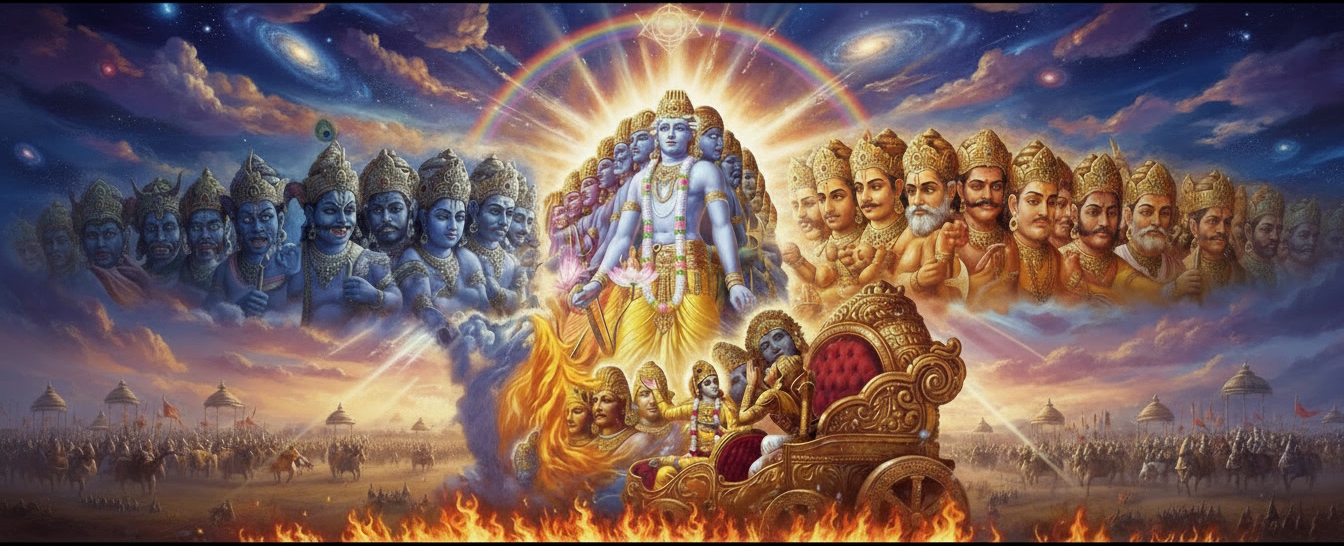
यदा हि नेन्द्रियार्थेषु न कर्मस्वनुषज्जते।
सर्वसङ्कल्पसंन्यासी योगारूढस्तदोच्यते।।6.4।।
yadā hi nendriyārtheṣu na karmasvanuṣajjate|
sarvasaṅkalpasaṃnyāsī yogārūḍhastadocyate||6.4||
Translation
When a man is not attached to the sense-objects or to actions, having renounced all thoughts, then he is said to have attained to Yoga.
हिंदी अनुवाद
जिस समय न इन्द्रियोंके भोगोंमें तथा न कर्मोंमें ही आसक्त होता है, उस समय वह सम्पूर्ण संकल्पोंका त्यागी मनुष्य योगारूढ़ कहा जाता है।
Commentaries & Translations
Swami Ramsukhdas
व्याख्या--'यदा हि नेन्द्रियार्थेषु (अनुषज्जते)'--साधक इन्द्रियोंके अर्थोंमें अर्थात् प्रारब्धके अनुसार प्राप्त होनेवाले शब्द, स्पर्श, रूप, रस और गन्ध--इन पाँचों विषयोंमें; अनुकूल पदार्थ, परिस्थिति, घटना, व्यक्ति आदिमें और शरीरके आराम, मान, बड़ाई आदिमें आसक्ति न करे, इनका भोगबुद्धिसे भोग न करे, इनमें राजी न हो, प्रत्युत यह अनुभव करे कि ये सब विषय, पदार्थ आदि आये हैं और प्रतिक्षण चले जा रहे हैं। ये आने-जानेवाले और अनित्य हैं, फिर इनमें क्या राजी हों--ऐसा अनुभव करके इनसे निर्लेप रहे।इन्द्रियोंके भोगोंमें आसक्त न होनेका साधन है--इच्छापूर्तिका सुख न लेना। जैसे, कोई मनचाही बात हो जाय; मनचाही वस्तु, व्यक्ति, परिस्थिति, घटना आदि मिल जाय और जिसको नहीं चाहता, वह न हो तो मनुष्य उसमें राजी (प्रसन्न) हो जाता है तथा उससे सुख लेता है। सुख लेनेपर इन्द्रियोंके भोगोंमें आसक्ति बढ़ती है। अतः साधकको चाहिये कि अनुकूल वस्तु, पदार्थ, व्यक्ति आदिके मिलनेकी इच्छा न करे और बिना इच्छाके अनुकूल वस्तु आदि मिल भी जाय तो उसमें राजी न हो। ऐसे होनेसे इन्द्रियोंके भोगोंमें आसक्ति नहीं होगी।दूसरी बात, मनुष्यके पास अनुकूल चीजें न होनेसे यह उन चीजोंके अभावका अनुभव करता है और उनकेमिलनेपर यह उनके अधीन हो जाता है। जिस समय इसको अभावका अनुभव होता था, उस समय भी परतन्त्रता थी और अब उन चीजोंके मिलनेपर भी 'कहीं इनका वियोग न हो जाय'--इस तरहकी परतन्त्रता होती है। अतः वस्तुके न मिलने और मिलनेमें फरक इतना ही रहा कि वस्तुके न मिलनेसे तो वस्तुकी परतन्त्रताका अनुभव होता था, पर वस्तुके मिलनेपर परतन्त्रताका अनुभव नहीं होता, प्रत्युत उसमें मनुष्यको स्वतन्त्रता दीखती है--यह उसको धोखा होता है। जैसे कोई किसीके साथ विश्वासघात करता है, ऐसे ही अनुकूल परिस्थितिमें राजी होनेसे मनुष्य अपने साथ विश्वासघात करता है। कारण कि यह मनुष्य अनुकूल परिस्थितिके अधीन हो जाता है, उसको भोगते-भोगते इसका स्वभाव बिगड़ जाता है और बार-बार सुख भोगनेकी कामना होने लगती है। यह सुखभोगकी कामना ही इसके जन्म-मरणका कारण बन जाती है। तात्पर्य यह हुआ कि अनुकूलताकी इच्छा करना, आशा करना और अनुकूल विषय आदिमें राजी होना--यह सम्पूर्ण अनर्थोंका मूल है। इससे कोई-सा भी अनर्थ, पाप बाकी नहीं रहता। अगर इसका त्याग कर दिया जाय तो मनुष्य योगारूढ़ हो जाता है।तीसरी बात, हमारे पास निर्वाहमात्रके सिवाय जितनी अनुकूल भोग्य वस्तुएँ हैं, वे अपनी नही हैं। वे किसकी हैं इसका हमें पता नहीं है; परन्तु जब कोई अभावग्रस्त प्राणी मिल जाय, तो उस सामग्रीको उसीकी समझकर उसके अर्पण कर देनी चाहिये [यह आपकी ही है--ऐसा उससे कहना नहीं है], और उसे देकर ऐसा मानना चाहिये कि निर्वाहसे अतिरिक्त जो वस्तुएँ मेरे पास पड़ी थीं, उस ऋणसे मैं मुक्त हो गया हूँ। तात्पर्य है कि निर्वाहसे अतिरिक्त वस्तुओंको अपनी और अपने लिये न माननेसे मनुष्यकी भोगोंमें आसक्ति नहीं होती।
'न कर्मस्वनुषज्जते' (टिप्पणी प0 330)--जैसे इन्द्रियोंके अर्थोंमें आसक्ति नहीं होनी चाहिये ऐसे ही कर्मोंमें भी आसक्ति नहीं होनी चाहिये, अर्थात् क्रियमाण कर्मोंकी पूर्ति-अपूर्तिमें और उन कर्मोंकी तात्कालिक फलकी प्राप्ति-अप्राप्तिमें भी आसक्ति नहीं होनी चाहिये। कारण कि कर्म करनेमें भी एक राग होता है। कर्म ठीक तरहसे हो जाता है तो उससे एक सुख मिलता है, और कर्म ठीक तरहसे नहीं होता तो मनमें एक दुःख होता है। यह सुख-दुःखका होना कर्मकी आसक्ति है। अतः साधक कर्म तो विधिपूर्वक और तत्परतासे करे पर उसमें आसक्त न होकर सावधानीपूर्वक निर्लिप्त रहे कि ये तो आने-जानेवाले हैं और हम नित्य-निरन्तर रहनेवाले हैं अतः इनके होने-न-होनेमें, आने-जानेमें हमारेमें क्या फरक पड़ता है? कर्मोंमें आसक्ति होनेकी पहचान क्या है? अगर क्रियमाण (वर्तमानमें किये जानेवाले) कर्मोंकी पूर्तिअपूर्तिमें और उनसे मिलनेवाले तात्कालिक फलकी प्राप्तिअप्राप्तिमें अर्थात् सिद्धि-असिद्धिमें मनुष्य निर्विकार नहीं रहता, प्रत्युत उसके अन्तःकरणमें हर्ष-शोकादि विकार होते हैं, तो समझना चाहिये कि उसकी कर्मोंमें और उनके तात्कालिक फलमें आसक्ति रह गयी है।इन्द्रियोंके अर्थोंमें और कर्मोंमें आसक्त न होनेका तात्पर्य यह हुआ कि स्वयं (स्वरूप) चिन्मय परमात्माका अंश होनेसे नित्य अपरिवर्तनशील है और पदार्थ तथा क्रियाएँ प्रकृतिका कार्य होनेसे नित्य-निरन्तर बदलते रहते हैं। परन्तु जब स्वयं उन परिवर्तनशील पदार्थों और क्रियाओंमें आसक्त हो जाता है, तब यह उनके अधीन हो जाता है और बार-बार जन्म-मरणरूप महान् दुःखोंका अनुभव करता रहता है। उन पदार्थों और क्रियाओंसे अर्थात् प्रकृतिसे सर्वथा मुक्त होनेके लिये भगवान्ने दो विभाग बताये हैं कि न तो इन्द्रियोंके अर्थोंमें अर्थात् पदार्थोंमें आसक्ति करे और न कर्मोंमें (क्रियाओंमें) आसक्ति करे। ऐसा करनेपर मनुष्य योगारूढ़ हो जाता है।यहाँ एक बात समझनेकी है कि क्रियाओंमें प्रियता प्रायः फलको लेकर ही होती है, और फल होता है--इन्द्रियोंके भोग। अतः इन्द्रियोंके भोगोंकी आसक्ति सर्वथा मिट जाय तो क्रियाओंकी आसक्ति भी मिट जाती है। फिर भी भगवान्ने क्रियाओंकी आसक्ति मिटानेकी बात अलग क्यों कही ? इसका कारण यह है कि क्रियाओंमें भी एक स्वतन्त्र आसक्ति होती है। फलेच्छा न होनेपर भी मनुष्यमें एक करनेका वेग होता है। यह वेग ही क्रियाओंकी आसक्ति है, जिसके कारण मनुष्यसे बिना कुछ किये रहा नहीं जाता, वह कुछ-न-कुछ काम करता ही रहता है। यह आसक्ति मिटती है केवल दूसरोंके लिये कर्म करनेसे अथवा भगवान्के लिये कर्म करनेसे। इसलिये भगवान्ने बारहवें अध्यायमें पहले अभ्यासयोग बताया। परन्तु भीतरमें करनेका वेग होनेसे अभ्यासमें मन नहीं लगता; अतः करनेका वेग मिटानेके लिये दसवें श्लोकमें बताया कि साधक मेरे लिये ही कर्म करे (12। 10)। तात्पर्य है कि पारमार्थिक अभ्यास आदि करनेमें जिसका मन नहीं लगता और भीतरमें कर्म करनेका वेग (आसक्ति) पड़ा है, तो वह भक्तियोगका साधक केवल भगवान्के लिये ही कर्म करे। इससे उसकी आसक्ति मिट जायगी। ऐसे ही कर्मयोगका साधक केवल संसारके हितके लिये ही कर्म करे, तो उसका करनेका वेग (आसक्ति) मिट जायगा।जैसे कर्म करनेकी आसक्ति होती है, ऐसे ही कर्म न करनेकी भी आसक्ति होती है। कर्म न करनेकी आसक्ति भी नहीं होनी चाहिये; क्योंकि कर्म न करनेकी आसक्ति आलस्य और प्रमाद पैदा करती है, जो कि तामसी वृत्ति है और कर्म करनेकी आसक्ति व्यर्थ चेष्टाओंमें लगाती है, जो कि राजसी वृत्ति है।वह योगारूढ़ कितने दिनोंमें, कितने महीनोंमें अथवा कितने वर्षोंमें होगा? इसके लिये भगवान् 'यदा' और 'तदा' पद देकर बताते हैं कि जिस कालमें मनुष्य इन्द्रियोंके अर्थोंमें और क्रियाओँमें सर्वथा आसक्ति-रहित हो जाता है, तभी वह योगारूढ़ हो जाता है। जैसे, किसीने यह निश्चय कर लिया कि 'मैं आजसे कभी इच्छापूर्तिका सुख नहीं लूँगा।' अगर वह अपने इस निश्चय (प्रतिज्ञा) पर दृढ़ रहे, तो वह आज ही योगारूढ़ हो जायगा। इस बातको बतानेके लिये ही भगवान्ने 'यदा' और 'तदा' पदोंके साथ 'हि' पद दिया है।पदार्थों और क्रियाओँमें आसक्ति करने और न करनेमें भगवान्ने मनुष्यमात्रको यह स्वतन्त्रता दी है कि तुम साक्षात् मेरे अंश हो और ये पदार्थ और क्रियाएँ प्रकृतिजन्य हैं। इनमें पदार्थ भी उत्पन्न और नष्ट होनेवाले हैं तथा क्रियाओंका भी आरम्भ और अन्त हो जाता है। अतः ये नित्य रहनेवाले नहीं हैं और तुम नित्य रहनेवाले हो। तुम नित्य होकर भी अनित्यमें फँस जाते हो, अनित्यमें आसक्ति, प्रियता कर लेते हो। इससे तुम्हारे हाथ कुछ नहीं लगता, केवल दुःख-ही-दुःख पाते रहते हो। अतः तुम आजसे ही यह विचार कर लो कि 'हमलोग पदार्थों और क्रियाओंमें सुख नहीं लेंगे' तो तुमलोग आज ही योगारूढ़ हो जाओगे; क्योंकि योग अर्थात् समता तुम्हारे घरकी चीज है। समता तुम्हारा स्वरूप है और स्वरूप सत् है। सत्का कभी अभाव नहीं होता और असत्का कभी भाव नहीं होता। ऐसे सत्-स्वरूप तुम असत् पदार्थों और क्रियाओंमें आसक्ति मत करो तो तुम्हें स्वतःसिद्ध योगारूढ़ अवस्थाका अनुभव हो जायगा।
Sri Harikrishnadas Goenka
साधक कब योगारूढ़ हो जाता है यह अब बतलाते हैं चित्तका समाधान कर लेनेवाला योगी जब इन्द्रियोंके अर्थोंमें अर्थात् इन्द्रियोंके विषय जो शब्दादि हैं उनमें एवं नित्य नैमित्तिक काम्य और निषिद्ध कर्मोंमें अपना कुछ भी प्रयोजन न देखकर आसक्त नहीं होता उनमें आसक्ति यानी ये मुझे करने चाहिये ऐसी बुद्धि नहीं करता। तब उस समय वह सब संकल्पोंका त्यागी अर्थात् इस लोक और परलोकके भोगोंकी कामनाके कारणरूप सब संकल्पोंका त्याग करना जिसका स्वभाव हो चुका है ऐसा पुरुष योगारूढ़ यानी योगको प्राप्त हो चुका है ऐसे कहा जाता है। सर्वसंकल्पसंन्यासी इस कथनका यह आशय है कि सब कामनाओंको और समस्त कर्मोंको छोड़ देना चाहिये। क्योंकि सब कामनाओंका मूल संकल्प ही है। स्मृतिमें भी कहा है कि कामका मूल कारण संकल्प ही है। समस्त यज्ञ संकल्पसे उत्पन्न होते हैं। हे काम मैं तेरे मूल कारणको जानता हूँ। तू निःसन्देह संकल्पसे ही उत्पन्न होता है। मैं तेरा संकल्प नहीं करूँगा अतः फिर तू मूझे प्राप्त नहीं होगा। सब कामनाओंके परित्यागसे ही सर्व कर्मोंका त्याग सिद्ध हो जाता है। यह बात वह जैसी कामनावालाहोता है वैसे ही निश्चयवाला होता है जैसे निश्चयवाला होता है वही कर्म करता है इत्यादि श्रुतिसे प्रमाणित है और जीव जोजो कर्म करता है वह सब कामकी ही चेष्टा है। इत्यादि स्मृतिसे भी प्रमाणित है। युक्तिसे भी यही बात सिद्ध होती है क्योंकि सब संकल्पोंका त्याग कर देनेपर तो कोई जरासा हिल भी नहीं सकता। सुतरां सर्वसंकल्पसंन्यासी कहकर भगवान् समस्त कामनाओंका और समस्त कर्मोंका त्याग कराते हैं।
Sri Anandgiri
After stating the cause for the attainment of Yoga, he introduces the next verse to show the time of its attainment with "Atha," etc. "When (he is in) the state of poise"—is being stated. That is why it is said "The Yogi whose mind is being collected."
Since attachment to objects like sound and to actions is an obstacle to ascending to Yoga, the absence of that (attachment) is the means to it; to indicate that this is well-known, the word "Hi" (Indeed) is used. Intending that all resolves (sankalpas) are obstacles to ascending to Yoga, regarding "Sarvasankalpasannyasi" (renouncer of all resolves), he states the intended meaning with "Sarvan," etc.
Anticipating the doubt—"Even if there is renunciation of all resolves, since all desires and actions can still be obstacles, how is the attainment of Yoga possible?"—he says "Sarva," etc. Thinking that upon the abandonment of all resolves, the practice of the aforementioned precept (abandonment of desire/action) is accomplished effortlessly, he says "Sankalpa," etc. The idea is that when the root is uprooted, the cessation of its effect is easily achieved without effort.
He cites authority for this with "Sankalpamulah" (Rooted in resolve), etc. Intending the positive and negative concomitance (anvaya-vyatireka) there, he justifies what was said with "Kama," etc. Although upon the absence of all resolves, the absence of action is established just like the absence of desire, still, since actions are the effects of desire, he mentions the cessation (of action) as being caused by the cessation of that (desire) with "Sarvakama," etc.
Regarding the statement that actions are effects of desire, he cites Sruti and Smriti as evidence with "Sa yatha," etc. "That person, not knowing his true nature, whatever fruit he desires, he holds the means for that in his intellect as something to be practiced—thus he becomes 'one of such resolve' (tat-kratu); and what he grasps as to be practiced, that very action he performs externally as well"—thus action is said to be dependent on desire; this is the meaning of the Sruti. To indicate that "action is born of desire" is established by positive and negative concomitance, the word "Hi" is used in the Smriti.
He shows the logic itself with "Na hi sarvasankalpa," etc. Meaning, because it (action) is not seen in deep sleep etc. The word "Api" (even/also) is used to say that the performance of obligatory (Nitya) and occasional (Naimittika) actions is cast far away (renounced completely). He concludes the meaning established by Sruti, Smriti, and Logic with "Tasmat," etc.
Sri Dhanpati
"When does one become Yogarudha?"—anticipating this question, He says "Yada," etc. By this, the two introductions (proposed by others)—"What kind of person is this Yogarudha for whom 'Shama' is said to be the cause?" and "Who, again, is the Yogarudha?"—are also refuted.
Because, due to the direct availability of the terms "Yada" (When) and "Tada" (Then), the introduction stated in the Bhashya alone is proper. "Yada"—at which time—the Yogi with a collected mind does not get attached to sense objects—i.e., objects like sound etc.—and to actions—i.e., obligatory duties etc.—due to the understanding of the absence of any purpose. The meaning is that he does not entertain the notion of attachment or doership etc.
Since he has the habit/nature of renouncing "Sarva-sankalpan"—meaning all resolves, which are specific mental modifications concerning objects, desires, and all actions; which are the causes of desire for objects in this world and the next—he is "Sarvasankalpasannyasi" (Renouncer of all resolves); "Tada" (then) he is said to be "Yogarudha"—one who has attained Samadhi.
Sri Madhavacharya
He states the characteristic of the Yogarudha (one ascended to Yoga) with "Yada," etc. Perfect non-attachment belongs to him alone.
And it is said: "Having seen the dissolution of defects occurring naturally [for him], but for others through effort."
Sri Neelkanth
"Nanu," by the word 'Yoga', through its primary function, 'Seedless Samadhi' (Nirbija Samadhi) is denoted. For one ascended to that, the renunciation of actions is self-evident and thus need not be enjoined—anticipating this doubt, He states the meaning of the word 'Yogarudha' in the present context with "Yada hi," etc.
Regarding sense objects—pleasant things like sound etc.—and actions—which are the means to obtain them—he does not get attached following their perception; due to the firmness of dispassion, he does not become bound. Nor does he resolve with his mind: "May this be mine; for this purpose, I shall perform this action." And when he becomes such a "renouncer of all resolves" (Sarvasankalpasannyasi), then he is said to be "Yogarudha."
Just as one possessed of intense hunger, having no passion elsewhere, abandoning other distractions, becomes truly 'intent on eating' (bhojanarudha); similarly, one having intense desire to ascend, dispassionate everywhere, having abandoned all actions, becomes truly 'Yogarudha'.
The meaning is: actions are to be performed until then; thereafter, they are to be renounced.
Sri Ramanuja
When this Yogi, due to his nature of experiencing the Self alone, does not get attached to sense-objects—i.e., material objects distinct from the Self—and to actions related to them—meaning he is no longer capable of attachment—then indeed, being a "renouncer of all resolves," he is said to be "Yogarudha."
Therefore, for the "Arurukshu" (one desiring to ascend), since he is (still) capable of experiencing objects, Karma Yoga alone, which is in the nature of the practice of non-attachment to them, is the cause of accomplishment. Hence, the Arurukshu should perform only Karma Yoga, which is the practice of non-attachment to objects.
He states that very thing (in the next verse).
Sri Sridhara Swami
"What kind of person is this Yogarudha for whom 'Shama' is said to be the cause?" To this, He says "Yada hi," etc.
Regarding sense objects—things enjoyable by the senses like sound etc.—and regarding actions which are the means to them; when he does not get attached, i.e., does not form attachment.
The cause for that is: he whose nature is to renounce—to abandon—all "resolves" (sankalpas) concerning objects of enjoyment and objects of action, which are the root of attachment.
Then he is said to be "Yogarudha."
Sri Vedantadeshikacharya Venkatanatha
He establishes the connection with "Kada" (When), etc. "This Yogi, however..."—The idea is that he remains in Karma Yoga until the vision of the Self (atmavalokana).
He states the reason established by the meaning with "Atmaikanubhava..." (Due to the nature of experiencing the Self alone). The word "Prakrita" (material) is used to indicate impermanence and rejectability.
"In actions" (karmasu)—this does not refer merely to enjoined duties, because they are not the locus of natural/instinctive attachment, so prohibiting (attachment to) them is not logical. Nor does it refer to obligatory (Nitya) and occasional (Naimittika) duties like Agnihotra according to the process stated by others (Advaitins), because for a follower of the Veda, being detached there (in the performance itself) is not appropriate. Therefore, based on the maxim "Whatever one desires, one entertains the notion of duty regarding it or its means," for those attached to sense-objects, attachment is possible regarding the actions—whether enjoined, prohibited, or mixed—which are the means to those objects; hence, the prohibition of that attachment alone is proper. With this intention, it is said "and in actions related to them."
In usages like "abandons attachment" or "turns away," the forceful removal of attachment that has already arisen is understood; but here it is said "Na anushajjate" (does not get attached). The meaning is that attachment does not arise by itself.
He states the resultant meaning with "Na sangam arhati" (he is not capable of attachment). Since the word "Hi" (Indeed) is appropriate for the connection of the sentence meaning, "Tada hi" (Then indeed) is said. The idea is that then indeed he becomes a 'Renouncer of all resolves' and 'Yogarudha', and not at the time of attachment.
He states the purport of the two verses thus explained with "Tasmat" (Therefore), etc. The instruction of the cause for the desired result is for the sake of engagement in it; with this purport, he says "Atah" (Hence), etc.
Swami Chinmayananda
स्वयं को साधनावस्था का अनुभव होने से एक साधक को आरुरुक्ष की स्थिति समझना कठिन नहीं है। साधक के लिए निष्काम कर्म साधन है। कर्मों का संन्यास तभी करना चाहिए जब मन के ऊपर पूर्ण संयम प्राप्त हो गया हो। इसके पूर्व ही कर्मों का त्यागना उतना ही हानिकारक होगा जितना कि योगारूढ़त्व की अवस्था को प्राप्त होने पर कर्मों से मन को क्षुब्ध करना। उस अवस्था में तो साधन है शम। स्वाभाविक ही योगारूढ़ के लक्षणों को जानने की उत्सुकता सभी साधकों के मन में उत्पन्न होती है।इस श्लोक में श्रीकृष्ण मन रूपी अश्व पर आरूढ़ हुए पुरुष के बाह्य एवं आन्तरिक लक्षणों को दर्शाते हैं। उस पुरुष का एक लक्षण यह है कि वह मन से न इन्द्रियों के विषयों में आसक्त होता है और न जगत् में किये जाने वाले कर्मों में। इस कथन का शाब्दिक अर्थ लेकर परमसत्य का विचित्र हास्यजनक चित्र खींचने का प्रयत्न नहीं करना चाहिए। इसका अभिप्राय केवल इतना ही है कि ध्यानाभ्यास के समय साधक का मन विषयों तथा कर्मों से पूर्णतया निवृत्त होता है जिससे वह एकाग्रचित्त से ध्यान करने में समर्थ होता है। मन के सहयोग के बिना इन्द्रियों की स्वयं ही विषयों की ओर प्रवृत्ति नहीं हो सकती। यदि मन को आनन्दस्वरूप आत्मतत्त्व के ध्यान में लगाया जाय तो उस निर्विषय आनन्द का अनुभव कर लेने के उपरान्त वह स्वयं ही विषयों के क्षणिक सुखों की खोज में नहीं भटकेगा। किसी धनवान् व्यक्ति का हष्टपुष्ट पालतू कुत्ता स्थानस्थान पर रखे कूड़ेदानों में अन्न के कणों को नहीं खोजता।इन्द्रियों के भोग तथा कर्म से परावृत्त हुआ मन आत्मचिन्तन में स्थिर हो जाता है। यहाँ न अनुषज्जते शब्द पर विशेष ध्यान देने की आवश्यकता है। सज्जते को अनु यह उपसर्ग लगाकर भगवान यहाँ दर्शाते हैं कि उस पुरुष को विषयों से रंचमात्र भी आसक्ति नहीं होती।उपर्युक्त स्थिति को प्राप्त होने पर भी संभव है कि साधक अपने मन में ही उठने वाले संकल्पोंविकल्पों से क्षुब्ध हो जाय। बाह्य जगत् के विक्षेपों की अपेक्षा इन संकल्पों से उत्पन्न विक्षेप अधिक भयंकर होते हैं । भगवान् कहते हैं कि योगारूढ़ पुरुष न केवल बाह्य विक्षेपों से मुक्त है बल्कि इस संकल्प शक्ति के विक्षेपों से भी।स्पष्ट है कि ऐसे योगारूढ़ के लिए ध्यान की गति तीव्र करने के लिए शम की आवश्यकता होती है।योगारूढ़ पुरुष अनर्थ रूप संसार से अपना उद्धार कर लेता है। इसलिए
Sri Abhinavgupta
This very meaning is illuminated with "Yada" (When), etc.
"Indriyarthah" means objects of the senses; and "actions for their sake" means acquiring objects, etc.
Sri Jayatritha
Although the purport is clear, out of compassion for the dull-witted, he says "Yoga," etc. Direct knowledge is the effect of ascending to Yoga; since it may be delayed if there is an obstruction, it is not the definition.
"Nanu," (Objection): Doesn't this (non-attachment) exist even in a practitioner (Sadhaka)?—as per "For him whose senses are under control" (Gita 2.61), etc. Therefore, it is 'too broad' (suffers from the defect of Ativyapti)? To this, he says "Samyak" (Perfectly), etc. The meaning is: without effort. "Tasyaiva"—meaning, of the Yogarudha alone.
He cites an authority here with "Uktam cha," etc. "Having seen the Supreme Self, it is attained"—this remains to be understood. The idea is that only primary (natural/effortless) non-attachment is intended here.
Sri Madhusudan Saraswati
"When does one become Yogarudha?"—this is being stated. "Yada"—at which time of mental poise—he does not get attached to "Indriyarthas"—objects like sound etc.—and to "actions"—obligatory (Nitya), occasional (Naimittika), desire-prompted (Kamya), worldly (Laukika), and prohibited (Pratishiddha).
Due to seeing their falsity, and due to seeing the Self as the non-doer, non-enjoyer, supreme bliss, and non-dual nature, and due to the understanding of the absence of any purpose, he does not form "Anushanga" (attachment) in the form of deep adherence (Abhinivesha) such as "I am the doer of these, these are to be enjoyed by me."
"Hi"—because—he is a "Sarvasankalpasannyasi"—meaning, one whose nature is to renounce all "resolves" (mental modifications of the type "This is to be done by me, this fruit is to be enjoyed by me"), and the desires which are their objects, and the actions which are the means to them.
"Tada" (Then)—due to the absence of attachment to sound etc. and actions, and the absence of resolve (sankalpa) which is the cause of that (attachment)—both of which are obstacles to ascending to Yoga—he is said to be "Yogarudha," meaning ascended to Samadhi.
Sri Purushottamji
How is that Yogarudha to be known? To this He says "Yada hi," etc.
"Yada"—when—regarding sense-objects like form etc., obtained in dreams and the like for the relief of intense suffering, "Hi"—meaning with certainty—he "Na anushajjate"—does not get attached to them as if they were the goal of human life (purushartha). Nor does he "anushajjate"—get attached—to actions which are the deeds to attain them.
He who is a "Sarvasankalpasannyasi"—a renouncer of all resolves, meaning one who has abandoned the desire for his own enjoyment which is of the nature of mental determination—and becomes unattached, "Tada" (then) he is said to be "Yogarudha"—established in the sentiment of Union (Samyogabhava). This is the meaning.
Sri Shankaracharya
When the Yogi, whose mind is being concentrated, does not get attached to "Indriyarthas"—the objects of the senses like sound, etc.—and to "actions"—obligatory (Nitya), occasional (Naimittika), desire-prompted (Kamya), and prohibited (Pratishiddha)—due to the understanding that they serve no purpose; meaning, he does not form an attachment or the notion of duty regarding them.
"Sarvasankalpasannyasi"—one whose nature is to renounce "all resolves" (sarva-sankalpan) which are the causes of desire for objects in this world and the next—he is called a "Sarvasankalpasannyasi." Then, "Tada"—at that time—he is said to be "Yogarudha"—one who has attained Yoga.
From the phrase "Sarvasankalpasannyasi," the meaning is that he should renounce all desires and all actions.
For indeed, all desires are rooted in resolve (Sankalpa). "Desire is rooted in resolve, and sacrifices are born of resolve" (Manu 2.3). "O Desire, I know your root; you are born of resolve. I shall not make a resolve for you; thereby you shall not exist for me" (Mahabharata, Shanti Parva 177.25)—according to such Smritis.
And upon the abandonment of all desires, the renunciation of all actions is established. "Whatever is his desire, so is his resolve (kratu); whatever is his resolve, so is the action he performs" (Brihadaranyaka Upanishad 4.4.5)—according to such Srutis; and "Whatever a living being does, that is indeed the activity of desire" (Manu 2.4)—according to such Smritis; and also by Logic—for when all resolves are renounced, no one is able even to move. Therefore, by the statement "Sarvasankalpasannyasi," the Lord makes one renounce all desires and all actions.
When one is thus Yogarudha, then the Self is lifted up by him from Samsara, which is a mass of evil. Therefore—
Sri Vallabhacharya
"When is he thus Yogarudha?"—to this expectation He says "Yada hi," etc.
He does not get attached even to actions which are accomplished by his own activity.
Swami Sivananda
यदा when? हि verily? न not? इन्द्रयार्थेषु in senseobjects? न not? कर्मसु in actions? अनुषज्जते is attached? सर्वसङ्कल्पसंन्यासी renouncer of all thoughts? योगारूढः one who has attained to Yoga? तदा then? उच्यते is said.Commentary Yogarudha he who is enthroned or established in Yoga. When a Yogi? by keeping the mind ite steady? by withdrawing it from the objects of the senses? has attachment neither for sensual objects such as sound? nor for the actions (Karmas? Cf. notes to V.13)? knowing that they are of no use to him when he has renounced all thoughts which generate various sorts of desires for the objects of this world and of the next? then he is said to have become a Yogarudha.Do not think of senseobjects. The desires will die by themselves. How can you free yourself from thinking of the objects Think of God or the Self. Then you can avoid thinking of the objects. Then you can free yourself from thinking of the objects of the senses.Renunciation of thoughts implies that all desires and all actions should be renounced? because all desires are born of thoughts. You think first and then act (strive) afterwards to possess the objects of your desire for enjoyment.Whatever a man desires? that he willsAnd whatever he wills? that he does. -- Brihadaranyaka Upanishad? 4.4.5Renunciation of all actions necessarily follows from the renunciation of all desires.O desire I know where thy root lies. Thou art born of Sankalpa (thought). I will not think of thee and thou shalt cease to exist along with the root. -- Mahabharata? Santi Parva? 177.25Indeed desire is born of thought (Sankalpa)? and of thought? Yajnas are born. -- Manu Smriti? II.2
Swami Gambirananda
Hi, verily; yada, when; a yogi who is concentrating his mind, sarva-sankalpa-sannyasi, who has given up thought about everything-who is apt to give up (sannyasa) all (sarva) thoughts (sankalpa) which are the causes of desire, for things here and hereafter; na anusajjate, does not become attached, i.e. does not hold the idea that they have to be done by him; indriya-arthesu, with regard to sense-objects like sound etc.; and karmasu, with regard to actions-nitya, naimittika, kamya and nisiddha (prohibited) because of the absence of the idea of their utility; tada, then, at that time; ucyate, he is said to be; yoga-arudhah, established in Yoga, i.e. he is said to have attained to Yoga.
From the expression, 'one who has given up thought about eveything', it follows that one has to renounce all desires and all actions, for all desires have thoughts as their source. This accords with such Smrti texts as:
'Verily, desire has thought as its source. Sacrifices arise from thoughts' (Ma. Sm. 2.3);
'O Desire, I know your source. You surely spring from thought. I shall not think of you. So you will not arise in me' (Mbh. Sa. 177.25).
And when one gives up all desires, renunciation of all actions becomes accomplished. This agrees with such Upanisadic texts as, '(This self is identified with desire alone.) What it desires, it resolves; what it resolves, it works out' (Br. 4.4.5); and also such Smrti texts as, 'Whatever actions a man does, all that is the effect of desire itself' (Ma. Sm. 2.4). It accords with reason also. For, when all thoughts are renounced, no one can even move a little. So, by the expression, 'one who has given up thought about everything', the Lord makes one renounced all desires and all actions.
When one is thus established in Yoga, then by that very fact one's self becomes uplifted by oneself from the worldly state which is replete with evils.
Hence,
Swami Adidevananda
When this Yogin, because of his natural disposition to the experience of the self, loses attachment, i.e., gets detached from sense-objects, i.e., things other than the self, and actions associated with them - then he has abandoned all desires and is said to have climbed the heights of Yoga. Therefore, for one wishing to climb to Yoga, but is still disposed to the experience of the sense-objects, Karma Yoga consisting of the practice of detachment to these objects, becomes the cause for success in Yoga. Therefore one who wishes to climb to Yoga must perform Karma Yoga consisting in the practice of detachment from sense-objects.
Sri Krsna further elucidates the same: