Bhagavad Gita - Chapter 6 - Shloka (Verse) 5
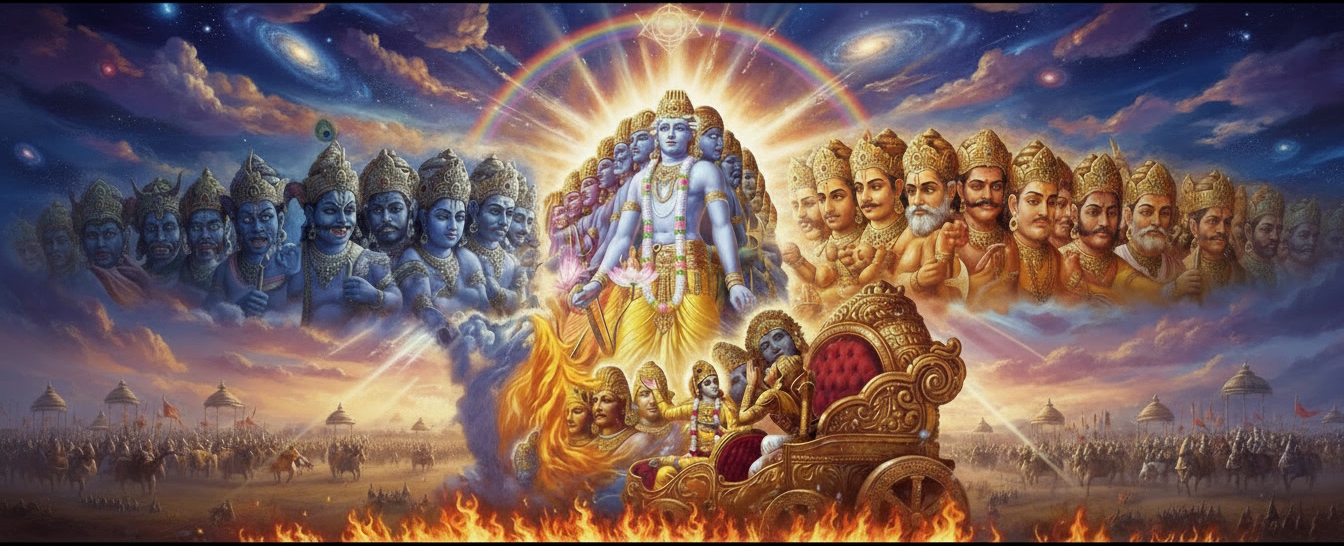
उद्धरेदात्मनाऽऽत्मानं नात्मानमवसादयेत्।
आत्मैव ह्यात्मनो बन्धुरात्मैव रिपुरात्मनः।।6.5।।
uddharedātmanā''tmānaṃ nātmānamavasādayet|
ātmaiva hyātmano bandhurātmaiva ripurātmanaḥ||6.5||
Translation
One should raise oneself by one's Self alone; let not one lower oneself; for the Self alone is the friend of oneself, and the Self alone is the enemy of oneself.
हिंदी अनुवाद
अपने द्वारा अपना उद्धार करे, अपना पतन न करे; क्योंकि आप ही अपना मित्र है और आप ही अपना शत्रु है।
Commentaries & Translations
Swami Ramsukhdas
व्याख्या-- 'उद्धरेदात्मनात्मानम्'--अपने-आपसे अपना उद्धार करे--इसका तात्पर्य है कि शरीर, इन्द्रियाँ, मन, बुद्धि, प्राण आदिसे अपने-आपको ऊँचा उठाये। अपने स्वरूपसे जो एकदेशीय 'मैं'-पन दीखता है, उससे भी अपनेको ऊँचा उठाये। कारण कि शरीर, इन्द्रियाँ आदि और 'मैं'-पन--ये सभी प्रकृतिके कार्य हैं; अपना स्वरूप नहीं है। जो अपना स्वरूप नहीं है, उससे अपनेको ऊँचा उठाये।अपना स्वरूप परमात्माके साथ एक है और शरीर, इन्द्रियाँ आदि तथा 'मैं'-पन प्रकृतिके साथ एक है। अगर यह अपना उद्धार करनेमें, अपनेको ऊँचा उठानेमें शरीर इन्द्रियाँ, मन, बुद्धि आदिकी सहायता मानेगा, इनका सहारा लेगा तो फिर जडताका त्याग कैसे होगा? क्योंकि जड वस्तुओंसे सम्बन्ध मानना, उनकीआवश्यकता समझना उनका सहारा लेना ही खास बन्धन है। जो अपने हैं, अपनेमें हैं, अभी हैं और यहाँ हैं, ऐसे परमात्माकी प्राप्तिके लिये शरीर, इन्द्रियाँ, मन, बुद्धिकी आवश्यकता नहीं है। कारण कि असत्के द्वारा सत्की प्राप्ति नहीं होती, प्रत्युत असत्के त्यागसे सत्की प्राप्ति होती है।दूसरा भाव, अभी पूर्वश्लोकमें आया है कि प्राकृत पदार्थ, क्रिया और संकल्पमें आसक्त न हो, उनमें फँसे नहीं, प्रत्युत उनसे अपने-आपको ऊपर उठाये। यह सबका प्रत्यक्ष अनुभव है कि पदार्थ, क्रिया और संकल्पका आरम्भ तथा अन्त होता है, उनका संयोग तथा वियोग होता है, पर अपने (स्वयंके) अभावका और परिवर्तनका अनुभव किसीको नहीं होता। स्वयं सदा एकरूप रहता है। अतः उत्पन्न और नष्ट होनेवाले पदार्थ आदिमें न फँसना, उनके अधीन न होना, उनसे निर्लिप्त रहना ही अपना उद्धार करना है। मनुष्यमात्रमें एक ऐसी विचारशक्ति है, जिसको काममें लानेसे वह अपना उद्धार कर सकता है। 'ज्ञानयोग'का साधक उस विचारशक्तिसे जड-चेतनका अलगाव करके चेतन (अपने स्वरूप) में स्थित हो जाता है और जड (शरीर-संसार) से सम्बन्ध-विच्छेद कर लेता है। 'भक्तियोग' का साधक उसी विचारशक्तिसे 'मैं भगवान्का हूँ और भगवान् मेरे हैं' इस प्रकार भगवान्से आत्मीयता करके अपना उद्धार कर लेता है। 'कर्मयोग' का साधक उसी विचारशक्तिसे मिले हुए शरीर, इन्द्रियाँ, मन, बुद्धि आदि पदार्थोंको संसारका ही मानते हुए संसारकी सेवामें लगाकर उन पदार्थोंमें सम्बन्ध-विच्छेद कर लेता है और अपने स्वरूपमें स्थित हो जाता है। इस दृष्टिसे मनुष्य अपनी विचारशक्तिको काममें लेकर किसी भी योग-मार्गसे अपना कल्याण कर सकता है।
Sri Harikrishnadas Goenka
जब मनुष्य इस प्रकार योगारूढ़ हो जाता है तब वह अनर्थोंके समूह इस संसारसमुद्रसे स्वयं अपना उद्धार कर लेता है इसलिये संसारसागरमें डूबे पड़े हुए अपनेआपको उस संसारसमुद्रसे आत्मबलके द्वारा ऊँचा उठा लेना चाहिये अर्थात् योगारूढ़ अवस्थाको प्राप्त कर लेना चाहिये। अपना अधःपतन नहीं करना चाहिये अर्थात् अपने आत्माको नीचे नहीं गिरने देना चाहिये। क्योंकि यह आप ही अपना बन्धु है। दूसरा कोई ( ऐसा ) बन्धु नहीं है जो संसारसे मुक्त करनेवाला हो। प्रेमादि भाव बन्धनके स्थान होनेके कारण सांसारिक बन्धु भी ( वास्तवमें ) मोक्षमार्गका तो विरोधी ही होता है। इसलिये निश्चयपूर्वक यह कहना ठीक ही है कि आप ही अपना बन्धु है। तथा आप ही अपना शत्रु है। जो कोई दूसरा अनिष्ट करनेवाला बाह्य शत्रु है वह भी अपना ही बनाया हुआ होता है इसलिये आप ही अपना शत्रु है इस प्रकार केवल अपनेको ही शत्रु बतलाना भी ठीक ही है।
Sri Anandgiri
What will happen to the Yogarudha (or what is next for him)? Anticipating this, [the Bhashya says] "Yada evam" (When thus...), etc. He demonstrates that ascending to Yoga acts as the cause of liberation—being an obligatory duty through seen and unseen means—and that the opposite of it acts as the cause of falling down, with "Atah" (Therefore), etc. There, He states the reason with "Atma eva hi" (For the Self alone...), etc. He indicates the Self's need for being lifted up with "Samsara," etc.
"What is lifting up from Samsara like?" Anticipating this, he says "Yogarudhatam" (The state of being Yogarudha), etc. One should not be indifferent regarding the attainment of Yoga; he says this with "Na atmanam" (Not the self...), etc. If the means for attaining Yoga is not practiced, then due to the absence of Yoga, avoiding Samsara is impossible, so the Self would be led downwards; this is the meaning.
"Nanu," will not his relative lift the Self immersed in Samsara from it? He says No, with "Atma eva hi," etc. "Why this restriction (that the Self alone is the friend) when other well-known relatives exist?" To that He says "Na hi" (For indeed not...), etc. He explains that even if there is another relative, he does not serve for liberation from Samsara, with "Bandhurapi" (Even a relative...), etc. From the word "Sneha" (affection) etc., being the object of activity compliant with that (affection) is understood. Anticipating the doubt that since an enemy other than oneself, who does harm, is well-known, the restriction (that the Self alone is the enemy) is improper—he says "Yo'nyah" (He who is other...), etc.
Sri Dhanpati
When one is thus Yogarudha, then by that self, the self is lifted up from the mass of evils of Samsara. Therefore, one should lift up the self, which is drowned in the ocean of Samsara, by the self; lead it upwards, make it attain the state of Yogarudha. One should not degrade the self, meaning do not lead it downwards.
'Hi'—Because—the self alone is the friend, the liberator from Samsara; not anyone else like a son, etc. On the contrary, they are adverse to liberation because they are the abodes of bonds like affection, etc. As it has been said, "Relatives are strong bonds." Similarly, the self alone is the enemy of the self; there is no other external doer of harm. Because that (harm) is instigated by the self. Therefore, the restriction (use of 'eva' - alone) in both places is proper.
"The self alone is the friend and the self alone is the enemy of the self"—this has been stated. There, what kind of self is the friend of the self and what kind is the enemy of the self? Regarding this, He explains (in the next verse) "Bandhu...", but here (he introduces it): For that self, that self is the friend by whom the self—meaning the aggregate of the body and senses—is conquered, controlled, and turned towards the highest good; meaning the one who has conquered the senses. But for the non-self—the one of uncontrolled self, whose aggregate of body and senses is unconquered—the self alone behaves in the nature of an enemy, like a foe. Just as one other than the self acts as an injurer to the self, so the self acts in injury to the self—this is the meaning.
And in accordance with this, and due to the natural flow of the repetition of the word 'Self' (Atman), even in "Uddhared-atman-atmanam" (One should lift the self by the self), the meaning is "one should lift oneself by oneself alone." 'Hi'—Because one is one's own friend and one is one's own enemy—this is the meaning.
By this, the interpretation—"By the self, meaning the mind endowed with discrimination; one should lift the self, meaning one's own Jiva... the self alone, meaning the mind endowed with discrimination alone, is the friend of the self... by whom the self is conquered by the self, meaning the mind endowed with discrimination, and not by scripture etc."—is refuted. Regarding the objection—"What is the purpose of the 'Sarvasankalpasannyasi' being unattached to sense objects?"—He says "Uddharet" (One should lift up), etc.
Here, the word 'Atma' in the second half of the verse should be connected to the first half. And the connection is thus: The 'Atma'—meaning the internal organ (antahkarana) full of the mass of merits earned in countless previous births, which is the agent—should lift up the 'Atmanam'—meaning the Inner Self (Pratyagatman), which is the object and has become the vessel of all evils by being immersed in the inert receptacle (Jadashaya), which is another name for the internal organ—by means of the 'Atmana'—meaning the (mind) endowed with discrimination and dispassion. One should separate it from the said inert receptacle, and not obscure it with one's own properties like doership etc. Because the 'Atman' (Inner Self) is the life-source of oneself (the ego) and of the existence of one's properties, since they depend on the Inner Self. And thus, for one doing such help, lifting it up and not obscuring it is indeed proper. Thus, if one were attached to sense objects, then by the maxim "like fire by ghee," due to the non-cessation of desires, and the subsequent appearance of anger etc. from that, the lifting of the Inner Self from Samsara would never happen. Therefore, the intention "unattached to sense objects" is indeed proper.
Or (Alternative view): The 'Atma'—the Inner Self, the Inner Controller—should lift the 'Antahkarana' (internal organ), which is polluted by the egoism of doership etc., by means of the 'Atmana'—the internal organ endowed with discrimination etc. One should cast it away from a distance, like removing a thorn by a thorn. Why should this be done? To this He says "Na atmanam avasadayet" (One should not degrade the self). One should not degrade the 'Atmanam'—one's own Inner Self; meaning, do not make it shattered, i.e., separated from the Supreme Self.
"Nanu," thus how can the one internal organ be both helpful and harmful to the self? Anticipating this doubt—just as poison can be the cause of death or life depending on nature and auxiliaries—indicating the difference through the repeated use of the word 'Atma', He says: The self alone—meaning the internal organ itself—when endowed with discrimination etc., is the friend of the self (Jiva), the cause of the destruction of bondage. And the internal organ itself, when not endowed with discrimination etc., is the enemy, because it is the cause of bondage in the form of all evils for the Jiva naturally—this is the meaning.
Sri Madhavacharya
And that ascent to Yoga must be performed with effort; He states this with "Uddharet," etc.
Sri Neelkanth
"Uddharet" (One should lift up)—In this order, having accomplished the purification of the mind through action, the Yogarudha should lift up the self by the strength of practice and dispassion.
"Hi"—Because—the self alone is the friend of the self; sons and others are not capable of lifting [one] up.
The self alone is the enemy of the self; other enemies are not capable of drowning him in Samsara—this is the meaning.
Sri Ramanuja
By the "Atmana"—meaning by the mind, by the mind unattached to sense-objects—one should lift up "Atmanam" (the self).
By the mind contrary to that, one should not degrade the self.
The self alone—indeed the mind alone—is the friend of the self; that alone is the enemy of the self.
Sri Sridhara Swami
Therefore, having considered that liberation lies in the abandonment of attachment to objects and bondage lies in attachment to them, one should abandon the nature of attachment, etc.—He says this with "Uddharet," etc.
By the "Atmana"—by the self endowed with discrimination—one should lift up "Atmanam"—oneself—from Samsara; one should not degrade it, i.e., lead it downwards.
"Hi"—Because—the self alone (when detached from mental attachment) is the friend—the benefactor—of oneself, and the enemy—the doer of harm.
Sri Vedantadeshikacharya Venkatanatha
He explains the meaning intended by the two verses; thus he (Ramanuja) said "Tadeva aha," etc.
Since "Atmana" is appropriate in the instrumental sense, it is explained as "by the mind." "By the (mind) unattached to objects" and "by the (mind) contrary to that"—both are stated based on the force of the two verbs (lift up/degrade) and by considering the preceding and succeeding context. "Uddharet"—one should take [the self] across the ocean of Samsara by bringing about the state of being Yogarudha; one should not lead it downwards again—this is the meaning.
That the mind is the cause of both self-elevation and self-degradation is elaborated with "Atma eva," etc.
Other relatives are "non-relatives" because they are opposed to liberation. And other enemies are rooted in one's own activity—this is the intention behind the restriction (using 'eva').
Swami Chinmayananda
शास्त्र के रूप में गीता का प्रयोजन सत्य का और केवल सत्य का ही प्रतिपादन करना है। यह बात और है कि किसी काल विशेष में लोगों की धारणाएं कुछ अन्य प्रकार की बन गयीं हों परन्तु सत्य के प्रतिपादन में समाज में प्रचलित मान्यताओं का कोई महत्व नहीं होता। यह प्रचलित मान्यता कि किसी बाह्य स्रोत जैसे ईश्वर की कृपा साधक की निरन्तर सहायता करके उसे साधन मार्ग में आगे बढ़ाती है हानिकारक नहीं है परन्तु इस मान्यता के साथ ही स्वयं का पुरुषार्थ भी होना पूर्ण सफलता के लिये आवश्यक है। मनुष्य को आत्मोद्धार अपने द्वारा ही करना चाहिये यह स्पष्ट घोषणा स्वयं भगवान् श्रीकृष्ण की है। यह कोई यमुना तट पर गोपियों के साथ रासलीला करते हुये आनन्दपूर्ण क्षणों में किया हुआ श्रीकृष्ण का मधुर विनोद नहीं वरन् समरांगण के चरम तनावपूर्ण क्षणों में अर्जुन को किया हुआ आह्वान है और अपने अवतार कार्य की परिपूर्णता भी है। यदि मनुष्य सांस्कृतिक एवं आध्यात्मिक उन्नति चाहता है तो उसको अपनी सुप्त आन्तरिक शक्तियों को वर्तमान की हीन स्थिति से ऊँचा उठाना होगा और अपने शुद्ध स्वरूप को पहचानना होगा।प्रत्येक मनुष्य के मन में एक आदर्श की कल्पना होती है। यद्यपि बौद्धिक स्तर पर वह उस आदर्श को स्पष्ट देखता है परन्तु दुर्भाग्य से वह आदर्श हमेशा कल्पना में ही बना रहता है और व्यवहारिक जगत् में वास्तविकता का रूप नहीं ले पाता। हो सकता है हम अपनी बुद्धि से यह जानते हों कि हमें क्या होना चाहिये परन्तु व्यवहार में हम अपने ही आदर्श के सर्वथा विपरीत आचरण करते हैं। आदर्शमैं और वास्तविकमैंके बीच की खाई ही मनुष्य के पूर्णत्व से पतन का मापदण्ड है।अधिकांश लोग अपने दोहरे व्यक्तित्व के विषय में अनभिज्ञ ही होते हैं। सामान्यत हम अपने को आदर्श व्यक्ति समझते हैं जबकि वास्तव में हम अनेक दोषों से युक्त रहते हैं किन्तु इसे हम स्वीकार नहीं करते। समाज में हम ऐसे व्यक्ति को भी देखते हैं जो स्वयं अत्यन्त स्वार्थी होते हुए अपने पड़ोसी की अल्पसी स्वार्थपरता की भी कटु आलोचना करता है दर्पण विहीन देश में संभव है कि एक वक्रदृष्टि का पुरुष दूसरे वक्रदृष्टि वाले पुरुष की खिल्ली उड़ाये क्योंकि वह स्वयं नहीं जानता कि उसकी अपनी आंखे एक दूसरे के साथ कौन सा कोण बना रही हैं।ध्यानपूर्वक आत्मनिरीक्षण करने पर ज्ञात होता है कि बौद्धिक स्तर पर हमारा आदर्श एक नैतिक स्नेहपूर्ण और अनुशासित व्यक्ति का होता है जो हम बनना भी चाहते हैं किन्तु मन के भावनात्मक जगत् में हम अपनी ही आसक्तियों राग और द्वेष प्रेम और घृणा काम और क्रोध के विकारों से पीडित होते हैं और फिर हम एक गली के सामान्य कुत्ते के समान व्यवहार करने लगते हैं जो मांसमज्जा रहित शुष्क हड्डी के लिए अपनी ही जाति के कुत्ते के साथ लड़ाईझगड़ा करता रहता है जब तक मनुष्य अपने इस दोहरे व्यक्तित्त्व के प्रति सजग नहीं होता तब तक उसके लिये धर्म का कोई अर्थ या प्रयोजन नहीं होता। आदर्श और वास्तविकता के बीच की खाई को जिसने पहचान लिया और जो स्वयं का उद्धार करना चाहता है उसके लिये जो साधन बताया जाता है उसे धर्म कहते हैं।हमारा मन ही विनाशक है जो हमें विषय सुखों की ओर लुभाकर उनका दास बना देता है। मन ही है जो आदर्श को भुलाकर निम्न प्रवृत्तियों को बढ़ावा देता है। ऐसे ही मन को बुद्धि के नियन्त्रण में लाना है जो आत्मा को व्यक्त करने की सर्वश्रेष्ठ उपाधि है। संक्षेप में जब बुद्धि की विवेक सार्मथ्य के प्रभाव का उपयोग चंचल स्वभाव के विषयाभिमुख मन को संयमित करने में किया जाता है तब वही मन श्रेष्ठ और दिव्य स्वरूप के साथ युक्त हो जाता है। जिस प्रक्रिया के द्वारा इस कार्य को सम्पन्न किया जाता है उसे आध्यात्मिक साधन कहते हैं।आत्मोद्धार का यह कार्य किसी को ठेका देकर नहीं कराया जा सकता प्रत्येक साधक को यह कार्य स्वयं ही करना होगा यह अकेले नितान्त अकेले चलने का मार्ग है।कोई भी गुरु इसका उत्तरदायित्व अपने ऊपर नहीं ले सकता और न कोई शास्त्र इस मुक्ति का वचन दे सकता है पूजा की कोई वेदी अपने आशीर्वाद मात्र से निकृष्ट को उत्कृष्ट नहीं बना सकती। यह सत्य है कि आत्मविकास के मार्ग में गुरु शास्त्र और मन्दिर का अपना स्थान है प्रयोजन है और प्रभाव भी है तथापि अपने अवगुणों एवं मिथ्या धारणाओं से स्वयं को मुक्त करने का मुख्य कार्य तो हमें स्वयं ही करना होगा।अब तक भगवान् ने जो उपचार बताया वह कुछ अंशों में आधुनिक मनोविज्ञान में कहा जाने वाला आत्मनिरीक्षण का मार्ग है जिसमें यह प्रयत्न किया जाता है कि अपने दोषों को समझें मिथ्या का त्याग करें जहाँ तक सम्भव हो सके श्रेष्ठ जीवन व्यतीत करें आदि। परन्तु यह आंशिक उपचार ही है सम्पूर्ण नहीं।यहाँ श्रीकृष्ण पूर्ण उपचार का वर्णन करते हैं। आत्मनिरीक्षण में निर्दिष्ट साधना को करना मात्र पर्याप्त नहीं है वरन् हमारा प्रयत्न यह होना चाहिये कि आन्तरिक राक्षस के राज्य पर जो कुछ विजय हम पाते हैं उसे सुरक्षित रखें न कि उसे पुन लौटा दें। इस एक ही वाक्य में भगवान् हमें सावधान करते हैं आत्मा का पुन अधपतन न होने दें।इस श्लोक की दूसरी पंक्ति में एक महान् विचार को सुन्दर शैली में व्यक्त किया गया है जिसने व्यासजी को अमर बना दिया है। हम स्वयं ही अपने मित्र हैं और शत्रु भी। कोई भी बुद्धिमान व्यक्ति अपने जीवन के अनुभवों पर विचार करके उक्त कथन की सत्यता को प्रमाणित कर सकता है। दर्शनशास्त्र की दृष्टि से इसका अभिप्राय गम्भीर है।निम्नस्तर के मन का उत्थान संभव है यदि वह श्रेष्ठ गुणों के प्रभाव मे आने के लिए तत्पर है। जिस मात्रा में वह सहयोग करेगा उसी मात्रा में ही उसका उत्थान भी होगा। चैतन्य आत्मा तो नित्य उपलब्ध है जिससे चेतना पाकर मनुष्य अपना उत्थान अथवा पतन कर सकता है। दोनों विकल्प मनुष्य के समक्ष प्रस्तुत हैं। इनमें से वह किसे चुनता है यह उसकी इच्छा पर निर्भर करता है।यहाँ एक प्रश्न मन में आ सकता है कि कौन सा पुरुष स्वयं का ही मित्र है और कौन सा पुरुष स्वयं का ही शत्रु उत्तर है
Sri Abhinavgupta
And one must necessarily pay attention to this understanding; He says this with "Uddharet," etc.
"Bandhuh," etc. And here there is no other means, but the "Self alone"—meaning the mind alone—this is the meaning.
For the conquered mind is a friend that brings about the lifting up from the terrible Samsara; but the unconquered mind acts as an enemy by causing a fall into intense hell.
Sri Jayatritha
"Nanu" (Objection): Having stated what is useful for the injunction, when Samadhi Yoga is to be prescribed, why is the duty of "lifting up the self" stated? To this, he says that by this figure of speech, Yoga alone is being prescribed with "Sa cha" (And that...), etc.
Its eligibility etc. have been stated; instead of saying "And that alone is Yoga," when the term "ascent" (aroha) is used, it is indicated by that that Yoga must be performed up to that point (attainment), and not abandoned in the middle.
"Prayatnena"—meaning with diligent effort.
Sri Madhusudan Saraswati
When one becomes established in Yoga (Yogarudha) in this manner, then by that self alone, the self is lifted up from the multitude of evils of Samsara. Therefore, "by the Self"—meaning by the mind endowed with discrimination—one should "lift up"—raise upwards—"the Self"—meaning one's own Jiva which is drowned in the ocean of Samsara.
The meaning is that one should bring about the state of being established in Yoga by abandoning attachment to sense-objects. One should not "degrade" the self, meaning drown it in the ocean of Samsara, by attachment to sense-objects.
"Hi"—Because—the self alone is the friend—the benefactor—of the self, the cause of liberation from the bondage of Samsara; and no one else. For even a worldly relative is a cause of bondage due to the association of affection.
The self alone—and no other—is the "enemy"; because of entering the prison of harmful sense-objects, like a silkworm (koshakara) [traps itself in its cocoon], it is the enemy of the self. Since even an external enemy is instigated by oneself, the restriction that "the self alone is the enemy of the self" is indeed proper.
Sri Purushottamji
"Nanu" (Objection): In actions which are in the nature of imitating the Lord's divine play (Lila) and whose sole nature is to captivate the mind, how can there be no attachment? Anticipating this query, He says "Uddharet" (One should lift up), etc. By the "Atmana"—meaning by the form of the Supreme Person (Purushottama)—one should lift up "Atmanam"—the Jiva (individual soul)—from actions. One should not degrade the self; meaning, do not make it attached right there.
"Hi"—this meaning is indeed proper. For the "Atma"—the Jiva—is indeed the friend, the benefactor, of the "Atma"—the Jiva. The "Atma"—the self alone—is the "Ripuh" (enemy) of the "Atma" (Jiva). Here, one should lift up the self by the self with the attitude of a friend, and not degrade it with the attitude of an enemy.
Sri Shankaracharya
"Uddharet"—One should lift up the self immersed in the ocean of Samsara by the self; one should take it "ut"—upwards—lift it up; meaning, one should cause it to attain the state of being established in Yoga (Yogarudhatam). One should not "degrade" (avasadayet) the self; meaning, do not lead it downwards, do not let it go down.
"Hi"—Because—the self alone is the friend of the self. Indeed, there is no other friend who serves for liberation from Samsara. Even a relative is actually adverse to liberation, because he is the abode of bonds like affection etc. Therefore, the restriction "The self alone is the friend of the self" is proper.
The self alone is the "Ripuh" (enemy). Whatever other external enemy exists who causes harm, he is also instigated by oneself alone; thus the restriction "The self alone is the enemy of the self" is indeed proper.
"The self alone is the friend, the self alone is the enemy of the self"—this has been stated. There (in the next verse), it is stated what kind of self is the friend of the self, and what kind of self is the enemy of the self.
Sri Vallabhacharya
Therefore, only by performing action characterized by non-attachment to objects, one should lift up the self by the self—by oneself—and should not degrade it.
The advice of others serves only as an instigator (to action), and nothing else (i.e., they cannot do it for you)—with this intention, it is stated "one should lift up the self by the self."
To explain: The self alone is the agent; no other relative etc. becomes the agent (of one's deliverance).
And it is stated in the Bhagavata (5.5.18): "He should not be a Guru, he should not be a kinsman... who does not deliver the one who has approached death (Samsara)."
Swami Sivananda
उद्धरेत् should raise? आत्मना by the Self? आत्मानम् the self? न not? आत्मानम् the self? अवसादयेत् let (him) lower? आत्मा the Self? एव only? हि verily? आत्मनः of the self? बन्धुः friend? आत्मा the Self? एव only? रिपुः the enemy? आत्मनः of the self.Commentary Practise Yog. Discipline the senses and the mind. Elevate yourself and become a Yogarudha. Attain to Yoga. Shine gloriously as a dynamic Yogi. Do not sink into the ocean of Samsara (transmigration). Do not become a wordlyminded man. Do not become a slave of lust? greed and anger. Rise above worldliness? become divine and attain Godhead.You alone are your friend you alone are your enemy. The socalled worldly friend is not your real friend? because he gets attached to you? wastes your time and puts obstacles on your path of Yoga. He is very selfish and keeps friendship with you only to extract something. If he is not able to get from you the object of his selfish interest? he forsakes you. Therefore he is your enemy in reality. If you are attached to your friend on account of delusion or affection? this will become a cause of your bondage to Samsara.Friends and enemies are not outside. They exist in the mind only. It is the mind that makes a friend an enemy and an enemy a friend. Therefore the Self alone is the friend of oneself? and the Self alone is the enemy of oneself. The lower mind or the Asuddha Manas (impure mind) is your real enemy because it binds you to the Samsara? and the higher mind or the Sattvic mind (Suddha Manas or the pure mind) is your real friend? because it helps you in the attainment of Moksha.
Swami Gambirananda
Uddharet, one should save; atmanam, oneself sunk in the sea of the world; atmana, by oneself; one should save, ut-haret, should uplift (oneself) from that, i.e. make it attain the state of being established in Yoga. Na avasadayet, one should not lower, dase; atmanam, oneself. Hi, for; atma eva, oneself is verily; atmanah one's own; bandhuh, friend. Centainly there is no other friend who can bring about liberation from this world. In fact, even a friend is an obstacle to Liberation, he being the source of such bondages as love etc. Therefore the emphatic statement, 'For one is one's own friend, is justifiable.
Atma eva, oneself verily; is atmanah, one's own: ripuh, enemy. Anyone else who is an external harmful enemy, even he is of one's own making! Therefore the firm conclusion, 'oneself verily is one's own enemy's is reasonable.
It has been said that 'oneself is verily one's own friend, oneself verily is one's own enemy.' As to that, (the self) [Ast. has this additional word, atma, self.-Tr.] of what kind is one's own friend, or (the self) of what kind is one's own enemy? This is being answered:
Swami Adidevananda
By the self (Atman), i.e., by the mind, which is unattached to sense-objects, one should raise the self. One should not allow the self to sink by a mind which is of the contrary kind. 'For the self alone,' i.e., the mind alone is the friend of the self; and it alone is the foe of the self. [The figure of speech here is of Samsara as the ocean in which the individual self is like an object with liability to sink. What causes its sinking is the lingering attachments of the mind to some objects, though in the discipline of Jnana Yoga one may keep aloof from such objects. A mind with such attachments is the foe and without them, the friend.]