Bhagavad Gita - Chapter 9 - Shloka (Verse) 26
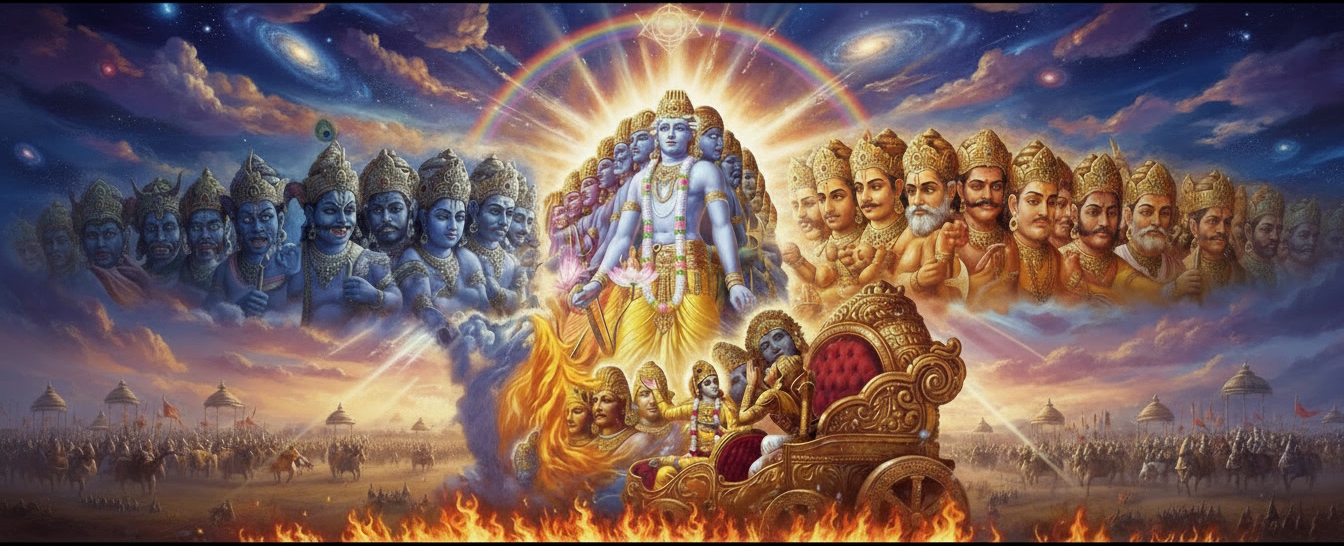
पत्रं पुष्पं फलं तोयं यो मे भक्त्या प्रयच्छति।
तदहं भक्त्युपहृतमश्नामि प्रयतात्मनः।।9.26।।
patraṃ puṣpaṃ phalaṃ toyaṃ yo me bhaktyā prayacchati|
tadahaṃ bhaktyupahṛtamaśnāmi prayatātmanaḥ||9.26||
Translation
Whoever offers Me with devotion a leaf, a flower, a fruit or a little water that, so offered devotedly by the pure-minded, I accept.
हिंदी अनुवाद
जो भक्त पत्र, पुष्प, फल, जल आदि (यथासाध्य प्राप्त वस्तु) को भक्तिपूर्वक मेरे अर्पण करता है, उस मेरेमें तल्लीन हुए अन्तःकरणवाले भक्तके द्वारा भक्तिपूर्वक दिये हुए उपहार-(भेंट-) को मैं खा लेता हूँ।
Commentaries & Translations
Swami Ramsukhdas
व्याख्या--[भगवान्की अपरा प्रकृतिके दो कार्य हैं--पदार्थ और क्रिया। इन दोनोंके साथ अपनी एकता मानकर ही यह जीव अपनेको उनका भोक्ता और मालिक मानने लग जाता है और इन पदार्थों और क्रियाओंके भोक्ता एवं मालिक भगवान् हैं -- इस बातको वह भूल जाता है। इस भूलको दूर करनेके लिये ही भगवान् यहाँ कहते हैं कि पत्र, पुष्प, फल आदि जो कुछ पदार्थ हैं और जो कुछ क्रियाएँ हैं (9। 27), उन सबको मेरे अर्पण कर दो, तो तुम सदासदाके लिये आफतसे छूट जाओगे (9। 28)।दूसरी बात, देवताओंके पूजनमें विधि-विधानक, मन्त्रों आदिकी आवश्यकता है। परन्तु मेरा तो जीवके साथ स्वतः-स्वाभाविक अपनेपनका सम्बन्ध है, इसलिये मेरी प्राप्तिमें विधियोंकी मुख्यता नहीं है। जैसे, बालक माँकी गोदीमें जाय, तो उसके लिये किसी विधिकी जरूरत नहीं है। वह तो अपनेपनके सम्बन्धसे ही माँकी गोदीमें जाता है। ऐसे ही मेरी प्राप्तिके लिये विधि, मन्त्र आदिकी आवश्यकता नहीं है, केवल अपनेपनके दृढ़ भावकी आवश्यकता है।]
'पत्रं पुष्पं फलं तोयं यो मे भक्त्या प्रयच्छति'-- जो भक्त अनायास यथासाध्य प्राप्त पत्र (तुलसीदल आदि), पुष्प, फल, जल आदि भी प्रेमपूर्वक भगवान्के अर्पण करता है, तो भगवान् उसको खा जाते हैं। जैसे, द्रोपदीसे पत्ता लेकर भगवान्ने खा लिया और त्रिलोकीको तृप्त कर दिया। गजेन्द्रने सरोवरका एक पुष्प भगवान्के अर्पण करके नमस्कार किया, तो भगवान्ने गजेन्द्रका उद्धार कर दिया। शबरीके दिये हुए फल पाकर भगवान् इतने प्रसन्न हुए कि जहाँ कहीं भोजन करनेका अवसर आया, वहाँ शबरीके फलोंकी प्रशंसा करते रहे (टिप्पणी प0 514.1)। रन्तिदेवने अन्त्यजरूपसे आये भगवान्को जल पिलाया तो उनको,भगवान्के साक्षात् दर्शन हो गये।
जब भक्तका भगवान्को देनेका भाव बहुत अधिक बढ़ जाता है, तब वह अपने-आपको भूल जाता है। भगवान् भी भक्तके प्रेममें इतने मस्त हो जाते हैं कि अपने-आपको भूल जाते हैं। प्रेमकी अधिकतामें भक्तको इसका खयाल नहीं रहता कि मैं क्या दे रहा हूँ, तो भगवान्को भी यह खयाल नहीं रहता कि मैं क्या खा रहा हूँ! जैसे, विदुरानी प्रेमके आवेशमें भगवान्को केलोंकी गिरी न देकर छिलके देती है, तो भगवान् उन छिलकोंको भी गिरीकी तरह ही खा लेते हैं! (टिप्पणी0 514.2)।
Sri Harikrishnadas Goenka
मेरे भक्तोंको केवल अपुनरावृत्तिरूप अनन्त फल मिलता है इतना ही नहीं? किंतु मेरी आराधना भी सुखपूर्वक की जा सकता है। कैसे ( सो कहते हैं -- ) जो भक्त मुझे पत्र? पुष्प? फल और जल आदि कुछ भी वस्तु भक्तिपूर्वक देता है? उस प्रयतात्मा -- शुद्धबुद्धि भक्तके द्वारा भक्तिपूर्वक अर्पण किये हुए वे पत्र पुष्पादि मैं ( स्वयं ) खाता हूँ अर्थात् ग्रहण करता हूँ।
Sri Anandgiri
Since the fruit is infinite, worship of the Lord alone should be performed—this has been stated; and because it is easy to do, He says the same with 'Na kevalam' etc.
He expands on the very ease of worshipping the Lord, preceded by a question—'Katham' (How) etc.
Whatever flower, etc., is offered for My sake with devotion, by that "this pure-minded ascetic worships Me"—thus I determine; He says this with 'Patram' etc.
Sri Dhanpati
Not only is there the infinite fruit characterized by non-return in the form of attaining Me for My worshippers, but also because of the extreme ease of the means of My worship, My sacrifice is extremely easy; He says this.
A leaf—Tulsi leaf, a flower, a fruit, water—water; whoever gives to Me—for Me—with devotion (not by force of others), offers it.
'Prayatatmanah'—that leaf etc. of his, offered as a gift with devotion, dedicated, I 'ashnami'—meaning I accept and become satisfied. Or, I eat it like the rice brought as a gift by Sudama.
Therefore, abandoning the worship of other deities etc., one should perform My sacrifice, which is accomplishable with objects obtained with little effort and yields infinite fruit, with extreme devotion; this is the intention.
Sri Madhavacharya
"Because of Your greatness, You are impossible to be worshipped by the weak"—anticipating this doubt, He says 'Patram' etc. However, not unordained (forbidden) leaves etc., because that is stated to be an offense in the Varaha Purana etc. The idea is that I am satisfied by devotion alone.
"Dear to the devotees and bowed to by all worlds"—in the Mahabharata.
"In this world, this alone is considered the supreme self-interest of man: exclusive devotion to Govinda, by which one sees the Self everywhere" [Bhagavatam 7.7.55].
Sri Neelkanth
"Devotion to Me is extremely easy to do, whereas devotion to other deities is accomplishable with the expenditure of much wealth and effort"—with this intention, He says 'Patram' etc.
The idea is that only devotion is expected by Me, nothing else.
'Bhaktyupahritam' — offered with devotion.
Sri Ramanuja
A leaf, or a flower, or a fruit, or water, which is easily available to all—whoever offers it to Me with devotion; meaning, due to extreme love for Me, being unable to sustain himself without offering it, having that as his sole purpose, whoever gives Me a leaf etc.; of that 'prayatātmanah'—of the one whose mind is endowed with purity in the form of having that offering as the sole purpose; that object, offered with such devotion,
I—who am the Lord of all, for whom the origin, glory, and dissolution of the entire universe is sport, whose desires are all fulfilled, whose will is true, who possesses a multitude of infinite, surpassing, innumerable auspicious qualities, and who exists in the experience of natural, infinite, surpassing bliss—I 'eat' it as if obtaining a beloved object situated far beyond the path of desire/hope.
As stated in the Mokshadharma: "Whatever actions are performed by those with single-minded intelligence, the Lord Himself accepts them all with His head" (Mahabharata, Shanti Parva 340.64).
Since this distinction of the Knowers (Jnanis) and Mahatmas is beyond speech and mind, therefore, you too, becoming a Jnani, with your self bowed down by the weight of devotion characterized as above, being My own, constantly performing singing (kirtana), effort, worship, prostration, etc., perform worldly, Vedic, daily, and occasional duties in this manner; He says —
Sri Sridhara Swami
Thus, the imperishable nature of the fruit for His devotees was stated. Now He shows the effortlessness of devotion to Him — 'Patram' etc. Whoever offers Me even just a leaf, flower, etc., with devotion—with love; of that 'prayatātmanah'—of the pure-minded, desireless devotee—that leaf, flower, etc., offered by him with devotion, dedicated, I 'eat'—I accept with love.
Indeed, for Me, the Supreme Lord and Master of great opulences, there is no satisfaction through sacrifices etc. accomplished with much wealth, as there is for petty deities, but rather (satisfaction comes) by devotion alone.
Therefore, whatever little leaf etc. is offered by the devotee, I eat that solely for the sake of gracing him; this is the idea.
Sri Vedantadeshikacharya Venkatanatha
"Even though the effort is equal, the difference in the goal (fruit) was stated. Now, the difference in the means is being stated"—thus he explains 'Madyajinam' (of My worshippers). 'Ayamapi' (This too) means the nature of the means being easy due to the extreme accessibility of the object of worship.
'Leaf, flower, fruit' are listed in order due to the cause-and-effect relationship generally found among them. The idea is that whatever is available among them according to the respective season is acceptable. By not compounding 'leaf etc.' and not aggregating them (using 'or'), mutual independence is indicated; to illuminate that, the option 'a leaf OR...' is made. It is indeed said that the Lord is satisfied with each one individually.
"Apart from a full pot of water, apart from washing the feet, apart from inquiring about welfare, Janardana does not wish for (anything else)" [Mahabharata 5.87.13] — with the idea that even in the absence of all else, water is available, it is mentioned last. "It is totally accessible to all" is said with the intention that since it is not accomplished by expenditure of wealth etc., it is not difficult for the poor to obtain. Elsewhere too they say: "When leaves, flowers, fruits, and water are available without purchase and always exist, and when the Ancient Person is attainable by devotion alone, why is effort not made for liberation?" [Garuda Purana 2.219.34 / Narada Purana 62.19].
By the general designation 'Yah' (Whoever), it is implied that "I do not see the division of offender, non-offender, ignorant, wise, etc." He will indeed say — "Even those who may be of sinful birth... women, Vaishyas..." [9.32].
'Bhaktya' (With devotion): By 'devotion', the causality of other fruits like the removal of seen and unseen obstacles is excluded; he suggests that with 'Atyartham' (Excessively).
He explains the word 'Prayatatmanah' with 'Tatpradana' (Offering that) etc. Just as in "O dear, His copper-palmed, well-established feet, adorned with well-born, soft, reddish fingers, were held by me with effort on my head and saluted," the meaning of 'Prayatatva' (being pure-minded/striving) is the absence of impurity in the form of attachment to other purposes. Indeed, even in meritorious acts, the desire for fruit is the impurity of the mind. That too they say: "Austerity is not impurity, study is not impurity... only those tainted by (selfish) intent are impurity" [Mahabharata].
The repetition of 'Bhaktyupahritam' (offered with devotion) is to inform that this alone is the cause for being honored by the Lord. And He Himself has said: "Even an atom offered by devotees becomes for My enjoyment; even a mountain offered by a non-devotee does not become for My enjoyment." Since even those desiring fruits have some devotion, the word 'tat' (that) is used to exclude that; with this intention, it is said 'tathavidha...' (offered with such devotion).
To show that the aspects contrary to accepting trivial objects like leaves are intended by the word 'Aham' (I), the adjectives 'Sarveshwara' (Lord of all) etc. are used. The word 'api' (even/though) should be connected with each. 'Sarveshwara': Just as Indra etc. accept oblations to increase their own power, I am not like that; because I am endowed with eternal controlling power over all; this is the idea. 'Nikhilajagat...' (Origin of the whole world...): It is not that a leaf etc. which is outside the instruments of My sport is given to Me (everything is Mine). 'Avaptasamastakama' (All desires fulfilled): It is not that I have some unfulfilled desire that needs to be fulfilled. 'Satyasankalpa' (True Will): It is not that something impossible for Me is accepted when offered by another. 'Anavadhika...' (Infinite...): For Me, who am satiated with unsurpassed bliss in quality and nature, what is this little leaf etc.? This is the purport.
By the word 'Svabhavika' (Natural), independence from causes is intended; and by 'Vartamana' (Existing), non-cessation is intended. "Though complete/full, the Lord accepts whatever little is offered by devotees like one in need, and pleased by that, He gives abundantly" [Mahabharata 12.35.64] — intending the meaning of this, he says 'Manoratha' (Desire/Beloved object) etc.
'Ashnami' (I eat) indicates mere enjoyment; by this, it is suggested that in the absence of (food) Naivedya, even a leaf etc. can be Naivedya. For those desiring other fruits, "All that reaches the feet of the God knowable by the Vedas" [Mahabharata] — thus having stated the approach to the Lord's feet, for those given by the supreme exclusive devotees, the acceptance by the Lord with great respect with His head is stated in the Mokshadharma; thus he says 'Yathoktam' etc.
Swami Chinmayananda
विश्व में कोई ऐसा धर्म नहीं है? जो भक्तों द्वारा ईश्वर को उपहार देने को मान्यता और प्रोत्साहन न देता हो। आधुनिक शिक्षित पुरुष को वास्तव में आश्चर्य होता है कि आखिर अनन्त परमात्मा को अपने दीपक के लिए तेल या एक मोमबत्ती या रहने के लिए मन्दिर या मस्जिद के रूप में एक घर जैसी क्षुद्र वस्तुओं की आवश्यकता क्यों होती है विपरीत धारणाओं के विष से विषाक्त हुई शुष्क व आनन्दहीन बुद्धि के लोग निर्लज्जतापूर्वक इसका भी आग्रह करने लगे हैं कि ईश्वर के इन घरों को अस्पताल? विद्यालय? मानसिक चिकित्सालय और प्रसूति गृहों में परिवर्तित कर देना चाहिए।परन्तु मेरा विश्वास है कि मैं ऐसे समाज को सम्बोधित कर रहा हूँ? जो कमसेकम अभी तो नैतिक पतन के अधोबिन्दु तक नहीं पहुँचा है। जिस समाज में अभी भी भावनापूर्ण स्वस्थ हृदय के विवेकशील लोग रहते हैं? वहाँ निश्चय ही मन्दिरों और पूजा की आवश्यकता है। यह भी ध्यान में रखने की बात है कि इन मन्दिरों में उनकी कलाकौशल पूर्ण रचना? कर्मकाण्ड का आडम्बर या स्वर्णाभूषणों की चमक और धन का प्रदर्शन उनकी सफलता के मूल कारण नहीं हैं। यहाँ तक कि प्रतिदिन वहाँ आने वाले दर्शनार्थियों की संख्या पर भी उनकी सफलता निर्भर नहीं करती।इस श्लोक की प्रत्यक्ष भाषा और शैली ही यह स्पष्ट करती है कि विश्वपति भगवान् को इन भौतिक वस्तुओं का कोई मूल्य और महत्व नहीं है। वे अपने भक्त का वह प्रेम और भक्ति स्वीकार करते हैं जिससे प्रेरित होकर वह अल्प उपहार भगवान् को अर्पण करता है फिर अर्पित की हुई वस्तु चाहे पत्र? पुष्प? फल? या स्वर्ण मन्दिर हो? उसका महत्त्व नहीं भगवान् कहते हैं? शुद्धचित्त के उस भक्त के द्वारा भक्तिपूर्वक अर्पित वह उपहार मैं स्वीकार करता हूँ।इस श्लोक में विशेष रूप से चुनकर कुछ शब्दों का प्रयोग किया गया है जो त्याग और अर्पण के उस सिद्धांत को स्पष्ट करता है? जिस पर सभी धर्मों का आग्रह होता है। इसमें सन्देह नहीं है कि परमात्मा को अपना पूर्णत्व पूर्ण करने के लिए अथवा अनन्त वैभव को बनाये रखने के लिए भक्तों के उपहारों की आवश्यकता नहीं होती। भक्तगण अपने इष्ट देवता को कुछनकुछ अर्पण करना चाहते हैं? जो वास्तव में भगवान् के द्वारा निर्मित जगत् रूप उपवन की ही एक वस्तु होती है? जिसका भक्तजन उपयोग कर रहे थे। एक सार्वजनिक उपवन में भी कोई प्रेमी वहीं से फूल तोड़कर अपनी प्रेमिका को भेंट देता है। इसी प्रकार? भक्त भी भगवान् के ही उपवन से वस्तु चुराकर उन्हें ही पुन अर्पित करता है। विचार करने से ज्ञात होता है कि वास्तव में? भगवान् को कुछ भेंट देने का हमारा अभिमान कितना वृथा और खोखला है।फिर भी? ईश्वर की सब प्रकार की पूजाओं में उन्हें कुछ अर्पण करने का महत्त्वपूर्ण विधान है? जिसके पालन पर विशेष बल दिया जाता है। पत्रपुष्पादि अर्पण करते समय यदि भक्त यह समझता है कि वह उन वस्तुओं को ही समर्पित कर रहा है? तो वह इस विधान का ही दुरुपयोग कर रहा है। वह अर्पण के सिद्धांत को नहीं जानता है। यहाँ पुष्प आदि का प्रयोजन एक चम्मच के समान है। भोजन के समय हम चम्मच का उपयोग किसी खाद्य पदार्थ को मुँह तक ले जाने में करते हैं परन्तु भोजनोपरान्त चम्मच थाली में ही रखा रहता है। बगीचे में या मन्दिर में फूलफल आदि रहते ही हैं परन्तु जब एक भक्त उन्हें तोड़कर भगवान् को अर्पण करता है तब वे उसके प्रेम और समर्पण को व्यक्त करने के माध्यम बन जाते हैं।यही बात भगवान यहाँ स्पष्ट करते हैं कि? शुद्ध बुद्धि के भक्त द्वारा भक्तिपूर्वक अर्पित वस्तु को मैं स्वीकार करता हूँ।इसलिए भगवान को कुछ अर्पण करने की क्रिया प्रभावपूर्ण होने के लिए दो बातों की आवश्यकता है (क) वह उपहार भक्तिपूर्वक अर्पण किया गया हो तथा (ख) वह शुद्ध बुद्धि के भक्त द्वारा अर्पण किया गया हो। इन दोनों बातों के बिना अर्पण केवल आर्थिक अपव्यय है और अन्धश्रद्धा तथा मिथ्याविश्वास है। यदि उसका उचित अनुसरण किया जाय तो आत्मविकास के आध्यात्मिक मार्ग के लिए उपयुक्त वाहन बन जाता है।इसलिए --
Sri Jayatritha
Since the connection of 'Patram' etc. was not apparent, he says — 'Durbalaih' (By the weak) etc. "Therefore, even though worship of Him yields great fruit, abandoning that, I worship small gods, even if the fruit is small, because it is easy to do" — this is the remaining incidental doubt.
Since disregard for (complex) means has been stated, one should not think "just any random leaf etc."; to this he says — 'Na tu' (But not) etc. That whatever (is proper) must be offered to the Lord—this rule is intended here; to this he says — 'Bhaktyaiva' (By devotion alone).
Why? To this he says — 'Bhakta...' (Devotee...) etc.
'Svarthah' (Self-interest) means the means to accomplish one's self-interest.
Sri Madhusudan Saraswati
Thus, abandoning other deities, one should worship the Lord alone because the fruit is infinite and because it is extremely easy to do; He says this — A leaf, a flower, a fruit, water, or whatever other object is easily obtainable; whichever man gives to Me—to the Supreme Lord, the Master of infinite great opulences—with devotion, with love preceded by the understanding that "there is nothing higher than Vasudeva," and prepares it for the Lord like a servant.
(Since) there is no object that is not My property, because the entire world is acquired by Me alone; therefore, people offer to Me what is already Mine.
Of him who gives with love, the 'prayatātmanah'—of pure intellect—I, the Lord of all, 'eat' that leaf, flower, etc., even if it is trivial—meaning I accept it with love like food and become satisfied. Here, since the literal meaning (of eating) is not completely discarded, a special kind of acceptance implying a cause for excessive love is suggested. The Shruti says: "Indeed, the gods do not eat nor do they drink; seeing this very nectar, they are satisfied."
Why do I eat even that trivial thing? Because it is 'bhaktyupahritam'—offered with devotion, with love. It means that offering with love is the cause of My acceptance.
Here, having said "gives with devotion," saying "offered with devotion" again indicates the exclusion (parisankhya) that the Brahminhood, asceticism, etc., of a non-devotee are not causes for My acceptance. Like eating the particles of rice brought by the Brahmin Sridama (Sudama), or like a child whose discrimination between edible and inedible is blocked by special love (for the mother) eating the leaf, flower, etc. offered by the mother, I directly eat what is offered by the devotee; or (this is the sense). Therefore, devotion alone is the cause of My satisfaction, and not, as with other deities, offerings of sacrifice etc. accomplished with expenditure of much wealth and effort; so, abandoning other deities, one should worship Me alone; this is the intention.
Sri Purushottamji
He states the distinction among devotees — 'Patram' etc. Leaf—like Tulsi etc., which is dear. Flower—decorative in nature. Fruit—as ingredients/materials. Water—a type of ingredient. Whoever gives to Me—for Me—with devotion—with affection, not merely because it is ordained; 'prayacchati'—offers excellently with emotional sentiment; all that aforementioned 'bhaktyupahritam'—offered with affection; of the 'prayatātmanah'—of the one whose mind is controlled by exclusive focus on Me; I, Purushottama, 'eat'—I enjoy; this is the meaning.
Leaf etc. are mentioned for effortless acquisition. By the mention of 'eating' (ashana), it is suggested that by accepting that, He subsequently arranges all materials suitable for His own enjoyment.
That is why, for the sake of giving His own wealth to Sudama, He accepted a handful of beaten rice (prithuka).
Sri Shankaracharya
A leaf, a flower, a fruit, toyam—water; whoever gives to 'Me'—to Me with devotion; 'tat'—that leaf etc., offered with devotion—presented with devotion—'bhaktyupahritam'; I 'eat'—I accept; of the 'prayatātmanah'—of the pure-minded one.
Since it is so, therefore —
Sri Vallabhacharya
Thus, having stated the mode of attaining Him for His devotees, He now shows the supremacy of devotion to Him and its distinctiveness from others due to being effortless — 'Patram Pushpam' etc. This has been explained in the Bhagavata Subodhini, so it is not elaborated here.
Indeed, for Me, the Supreme Soul possessing great opulence, there is no satisfaction through the pomp of many services/offerings as there is for petty deities—because it is said, "What seat (can be offered) to You who have Garuda as a seat?"—but rather, even just a leaf etc. offered by a mere devotee; like Vidura, of that devotee, of the pure-minded one, of the one whose self is connected to Me, or of the self-surrenderer, (whatever is) offered with devotion, I 'eat' for the sake of strengthening his faith.
This distinction from them (other gods) is shown. Even with mere small services, great satisfaction is obtained through devotion, because of the statement: "The Lord who does not eat (as per Vedas) has the attribute of eating when there is devotion."
Swami Sivananda
पत्रम् a leaf? पुष्पम् a flower? फलम् a fruit? तोयम् water? यः who? मे to Me? भक्त्या with devotion? प्रयच्छति,offers? तत् that? अहम् I? भक्त्युपहृतम् offered with devotion? अश्नामि eat (accept)? प्रयतात्मनः of the pureminded.Commentary A gift? however small? is accepted by the Lord? when it is offered with profound faith. The Lord is ite satisfied even with a leaf? a flower? a fruit or water? when it is offered with singleminded devotion and pure heart. Was He not satisfied with the little parched rice from the bundle of Sudama and the small berries offered by Sabari You need not build a golden temple for Him. Build a golden temple in your heart. Enthrone Him there. He wants only your devoted heart. But it is difficult to please Indra. You wll have to offer valuable (material) objects to him.A leaf? a flower of a fruit are merely symbols. The true means of attaining the Lord is pure unflinching devotion. All the objects of the state belong to the king. If the servants of the state offer with devotion some objects to the king he is highly satisfied. Even so all the objects of the whole world belong to Him. Yet? He is highly pleased if you offer even a little thing with devotion.Asnami? literally means eat. The indicative meaning or Lakshana Vritti is accept.
Swami Gambirananda
Yah, whoever; prayaccati, offers; me, Me; bhaktya, with devotion; patram, a leaf; puspam, a flower phalam, a fruit; or toyam, water; asnami, I accept; tat, that (gift)-leaf etc.; prayata-atmanah, of the pure-hearted man; which has been bhakti-upahrtam devotionally presented.
Since this is so, therefore-
Swami Adidevananda
Whoever offers to Me with true devotion a leaf, or a flower, or a fruit or water, which can be easily obtained, I accept it. That true devotion is love of such an exalted kind that the devotee cannot sustain himself without making such offering; the devotee has no extraneous purpose other than serving Me. Such an offering coming from a heart rendered pure with that singleness of purpose of considering the offering as an end in itself - I, the Lord of the universe, whose sport consists in the origin, maintenance and dissolution of the entire world, who has all desires fulfilled, whose will is always accomplished, whose auspicious attributes are unlimited and unsurpassed, who is enjoying the infinite and unsurpassed bliss that is in Myself - I accept and enjoy the aforesaid type of offering, as if I was obtaining a desired object far beyond the range of My hopes. Thus it is declared in the Moksa-dharma: "Whatever acts are consecrated by those whose intellects are concentrated in single-pointed devotion, all these, the Lord Himself accepts on His head." (Ma. Bha. Sa., 340.64)
Sri Krsna proceeds to say: As there is this distinctive excellence, incomprehensible by speech and mind in respect of these great men called the Jnanins, you also, following them, become a Jnanin, i.e., have your self and all your belongings 'bent down,' i.e., dedicated, under the weight of Bhakti as prescribed earlier. Be always singing My praises, doing My services, worshipping Me and prostrating before Me; also perform your secular and Vedic duties, periodical and occasional, in this manner.'