Srimad Valmiki Ramayana
राजपुत्रेति वादिन्यो हा नाथेति च सर्वशः ।
परिपेतुः कबन्धाङ्कां महीं शोणितकर्दमाम् ॥६-११३-४॥
rājaputreti vādinyo hā nātheti ca sarvaśaḥ |
paripetuḥ kabandhāṅkāṃ mahīṃ śoṇitakardamām ॥6-113-4॥
Translation
Crying out 'O Prince!' and 'O Lord!' in every direction, they rushed across the earth which was marked with headless trunks and turned into a mire of blood.
हिंदी अनुवाद
वे सब 'हा राजपुत्र!' और 'हा नाथ!' चिल्लाती हुई, बिना सिर के धड़ों (कबन्धों) से भरी हुई और रक्त की कीचड़ वाली भूमि पर इधर-उधर दौड़ने लगीं।
English Commentary
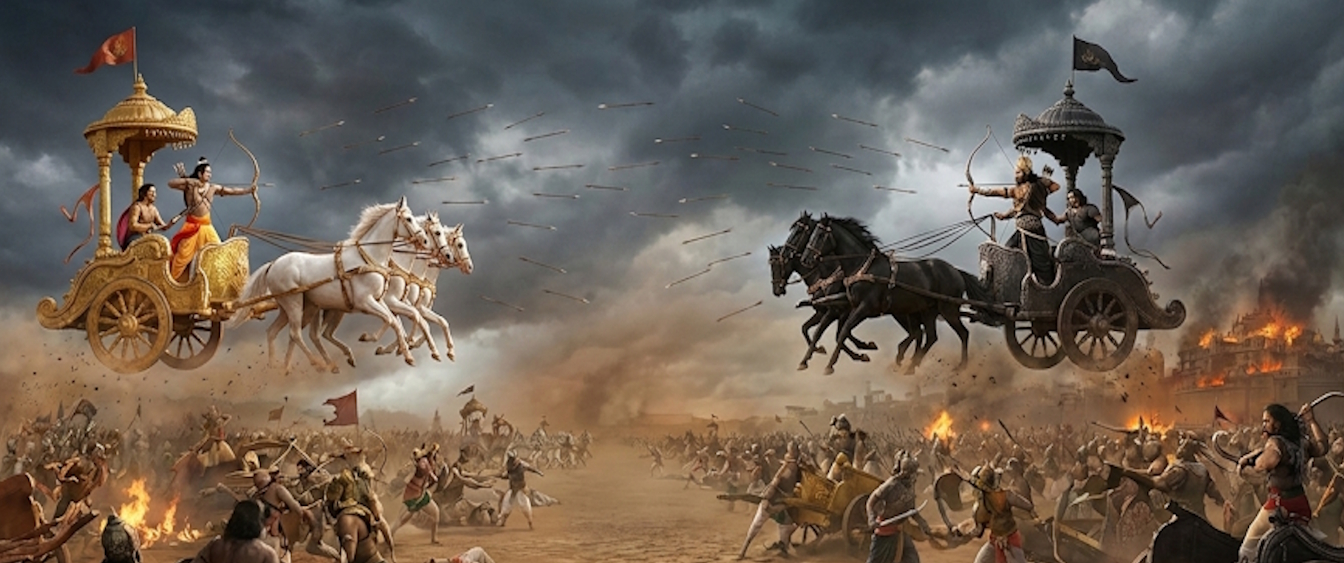
The 'Vibhatsa Rasa' (ghastly sentiment) of the battlefield is evident here. 'Shonita-kardamam' (mud of blood) and 'Kabandha' (headless trunks) signify the horrific results of the war. The women's cries of 'O Lord' represent the requiem for Lanka's collective fortune. Oblivious to the gruesome surroundings, they were solely possessed by the search for their beloved.
हिंदी टीका
युद्धभूमि का वीभत्स रस यहाँ स्पष्ट है। 'शोणित-कर्दमाम्' (रक्त की कीचड़) और 'कबन्ध' (धड़) युद्ध के परिणामों की भयंकरता को सूचित करते हैं। स्त्रियों का 'हा नाथ' पुकारना लंका के सामूहिक सौभाग्य के अंत की ध्वनि है। वे उस वीभत्स वातावरण से बेखबर केवल अपने प्रिय की तलाश में व्याकुल थीं।