Srimad Valmiki Ramayana
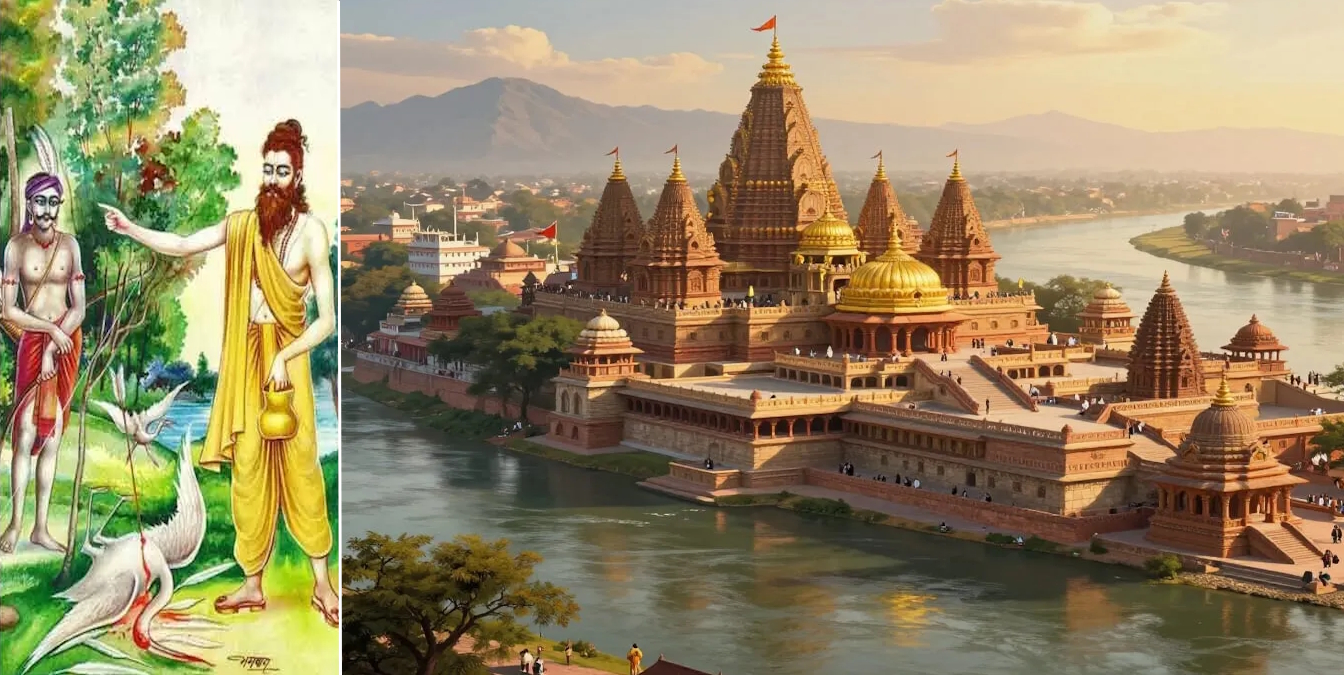
तथा विधिम् द्विजम् दृष्ट्वा निषादेन निपातितम् ।
ऋशेः धर्मात्मानः तस्य कारुण्यम् समपद्यत ॥१-२-१३॥
Tathā vidhim dvijam dṛṣṭvā niṣādena nipātitam |
ṛśeḥ dharmātmānaḥ tasya kāruṇyam samapadyata ॥1-2-13॥
Translation
Seeing the bird (dvija) of that kind struck down (killed) by the Niṣāda (hunter), compassion arose in that Dharmātmā (righteous, pious) Sage (Valmiki).
हिंदी अनुवाद
धर्मात्मा (धर्म में स्थित) उन ऋषि (वाल्मीकि) को उस प्रकार के पक्षी (द्विज) को निषाद (शिकारी) द्वारा गिराया हुआ (मारा हुआ) देखकर करुणा उत्पन्न हुई।
English Commentary
The Awakening of Compassion in the Sage
This verse describes the pivotal moment in the process of Maharishi Valmiki becoming the Ādi Kavi (First Poet). In the preceding two verses, the Sage witnessed the cruel killing of the Krouncha bird and the heart-wrenching lament of its mate. This śloka narrates the direct emotional consequence of that tragic sight upon the Sage's inner self. Valmiki is specifically designated here as Dharmātmā (one whose soul is rooted in Dharma, or righteousness).
This epithet is crucial, as the arising of his Kāruṇya (compassion) stems directly from his profound piety and sensitivity towards all creatures. When he saw the innocent bird (dvija) unjustly struck down by the Niṣāda, the sentiment of sorrow and pity overwhelmed him. This very compassion was the prime inspiration that spontaneously brought forth the famous Anuṣṭup meter ('Mā niṣāda...') from his lips. This verse clearly establishes that the origin of the Rāmāyaṇa was not a mere literary ambition, but a sublime human emotion—compassion—aroused in defense of Dharma. Thus, the very foundation of the epic becomes the indissoluble bond between compassion and righteousness.
हिंदी टीका
ऋषि में करुणा का उदय
यह श्लोक महर्षि वाल्मीकि के आदि कवि बनने की प्रक्रिया में चरम बिंदु का वर्णन करता है। पिछले दो श्लोकों में, ऋषि ने क्रौंच पक्षी की क्रूर हत्या और उसकी पत्नी का हृदय विदारक विलाप देखा। इस श्लोक में, उस दुखद दृश्य का सीधा भावनात्मक प्रभाव ऋषि के आंतरिक स्वरूप पर बताया गया है। वाल्मीकि को यहाँ 'धर्मात्मा' (धर्म में स्थित) कहा गया है। यह विशेषण महत्वपूर्ण है, क्योंकि उनकी करुणा (दया) की उत्पत्ति उनकी गहरी धार्मिकता और प्राणी मात्र के प्रति संवेदनशीलता में निहित है।
जब उन्होंने उस निर्दोष पक्षी (द्विज) को निषाद द्वारा अन्यायपूर्वक गिराया हुआ देखा, तो उनके भीतर शोक और दया का भाव उमड़ पड़ा। यह करुणा ही वह मूल प्रेरणा थी जिसने उनके मुख से अनायास ही 'मा निषाद...' (अगला श्लोक) के रूप में प्रसिद्ध अनुष्टुप छंद को जन्म दिया। यह श्लोक स्पष्ट करता है कि राम कथा का उद्गम किसी साहित्यिक इच्छा से नहीं, बल्कि करुणा नामक एक उदात्त मानवीय भावना से हुआ था, जो धर्म की रक्षा के लिए जागृत हुई। इस प्रकार, रामायण का मूल आधार करुणा और धर्म का अटूट बंधन बन जाता है।