Srimad Valmiki Ramayana
वासम् चक्रुर् मुनि गणाः शोणा कूले समाहिताः ।
ते अस्तम् गये दिनकरे स्नात्वा हुत हुताशनाः ॥ ॥१-३१-२०॥
Vāsam cakrur muni gaṇāḥ śoṇā kūle samāhitāḥ । Te astam gate dinakare snātvā huta hutāśanāḥ ॥ ॥1-31-20॥
Translation
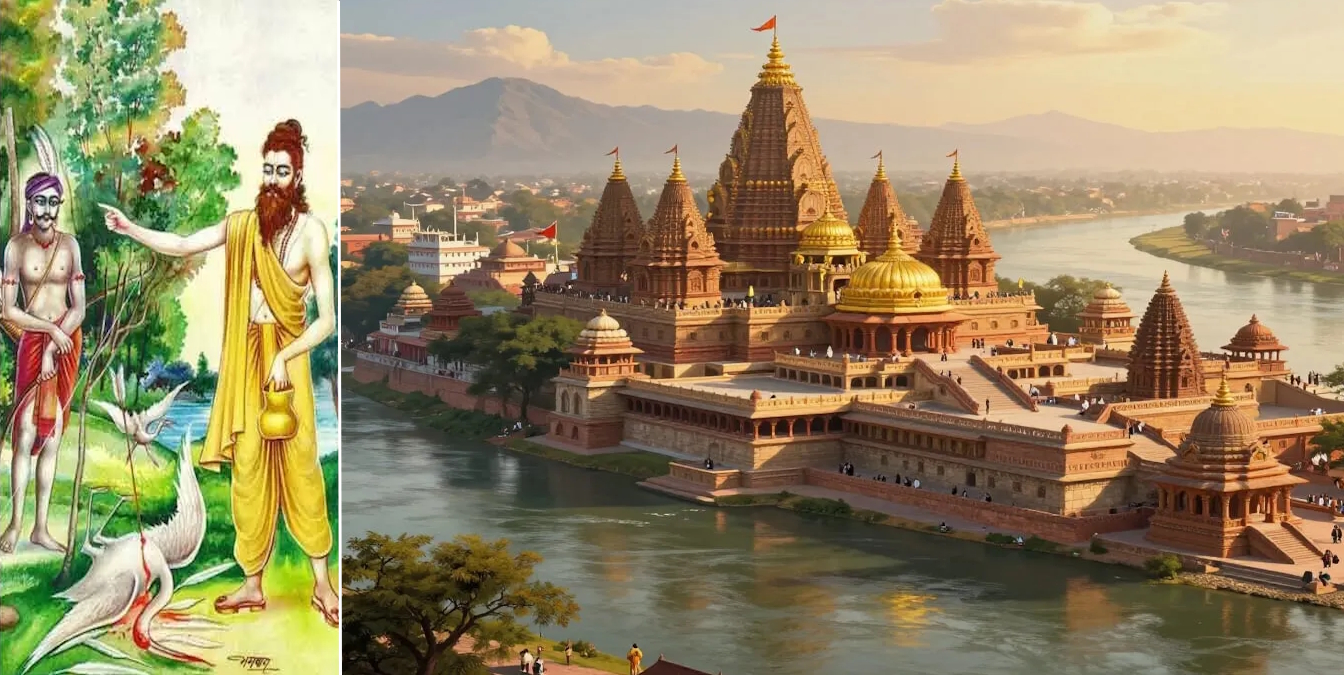
...the groups of sages made camp on the banks of the Shona river. At sunset, being self-composed, they bathed and offered oblations into the sacred fire.
हिंदी अनुवाद
...तब उन मुनिगणों ने शोण नदी के तट पर पड़ाव (वास) डाला। सूर्य के अस्त होने पर, एकाग्रचित्त होकर उन्होंने स्नान किया और अग्नि में आहुति दी (अग्निहोत्र किया)।
English Commentary
The geographical marker here is the Shona (Sone) river, a major tributary of the Ganges. Despite the rigors of travel, the discipline of the sages remains unbreakable. As soon as the sun sets, they establish camp and perform their obligatory rituals: bathing and the Agnihotra (fire sacrifice). The term Samāhitāḥ (collected/composed) indicates their mental state—calm and meditative, unaffected by the travel. This verse showcases the rhythm of Vedic life, where time is regulated not just by the sun but by the rituals associated with it. It sets a serene atmosphere by the riverbank, preparing the stage for the nightly storytelling.
हिंदी टीका
यात्रा का पहला पड़ाव 'शोण नद' (Sone River) का तट है। यहाँ वैदिक जीवनचर्या की निरंतरता दर्शनीय है। यात्रा में होने के बावजूद, 'अस्तम् गये दिनकरे' (सूर्यास्त होने पर) ऋषिगण अपने नित्य कर्म नहीं छोड़ते। वे स्नान करते हैं और 'हुत हुताशनाः' (अग्निहोत्र/हवन) करते हैं। 'समाहिताः' शब्द महत्वपूर्ण है, जिसका अर्थ है 'एकाग्रचित्त' या 'संयमित'। थकावट के बावजूद उनकी आध्यात्मिक निष्ठा में कमी नहीं आई है। यह राम के लिए एक और शिक्षा है—परिस्थिति चाहे जो हो, धर्म और अनुशासन का पालन सर्वोपरि है। शोण भद्रा नदी का उल्लेख भौगोलिक यथार्थता (geographical realism) जोड़ता है।