Srimad Valmiki Ramayana
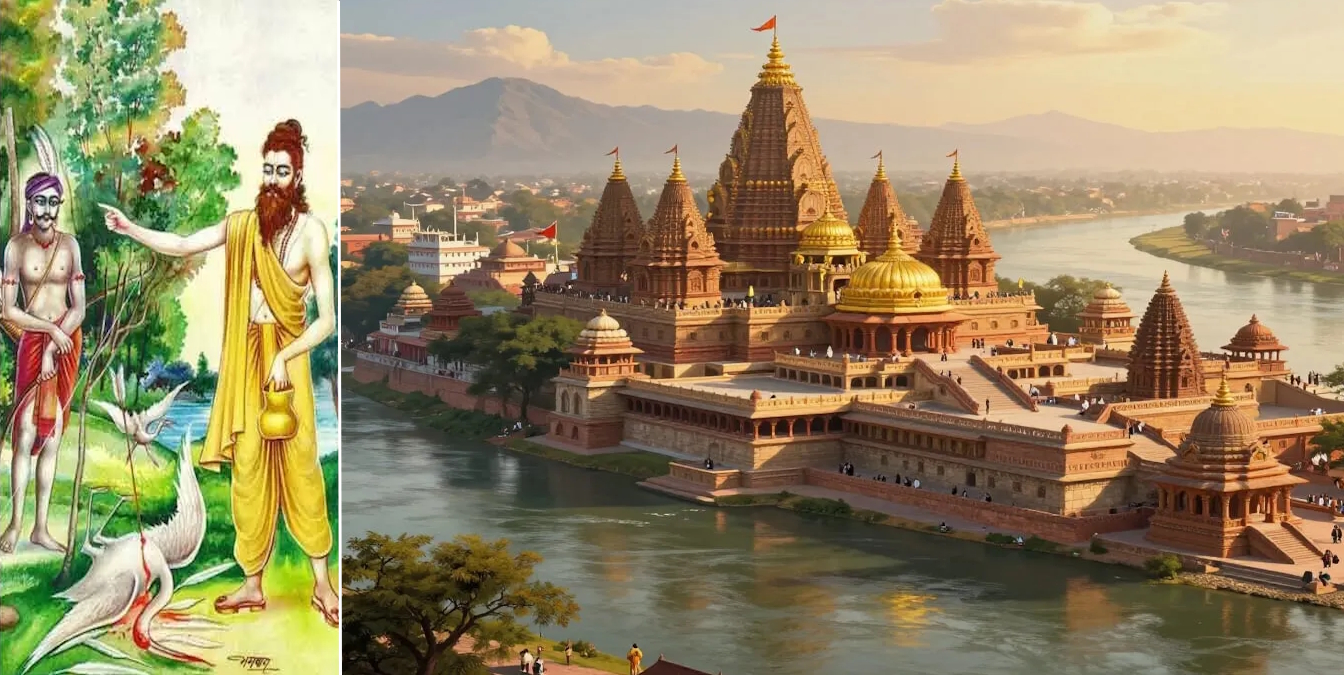
त्रिषु लोकेषु धर्मज्ञ कर्मभिः कैः समन्विता ।
तथा ब्रुवति काकुत्स्थे विश्वामित्रः तपोधनः ॥१-३६-४॥
triṣu lokeṣu dharmajña karmabhiḥ kaiḥ samanvitā |
tathā bruvati kākutsthe viśvāmitraḥ tapodhanaḥ ॥1-36-4॥
Translation
(Rama asked further) "O Knower of Dharma! What deeds are associated with her in the three worlds?" When the scion of Kakutstha spoke thus, Vishwamitra, whose wealth is asceticism, replied.
हिंदी अनुवाद
(राम ने पूछा) "हे धर्मज्ञ! तीनों लोकों में उन्होंने कौन-कौन से कर्म किये हैं?" काकुत्स्थ (राम) के ऐसा कहने पर, तपोधन विश्वामित्र ने उत्तर दिया।
English Commentary
This verse concludes Rama's interrogation and transitions to Vishwamitra's response. Rama addresses the sage as "Dharmajña" (Knower of Righteousness), implying that the story of Ganga is not just history but a lesson in Dharma. He specifically asks about her "Karmabhih"—her activities or achievements in the three worlds. The narrator (Valmiki) describes Vishwamitra as "Tapodhana" (One whose wealth is austerity), emphasizing that the knowledge he is about to impart is gained through spiritual penance. The use of the patronymic "Kakutstha" for Rama connects him to his illustrious lineage, reminding us of the royal duty to protect and understand Dharma.
हिंदी टीका
राम का प्रश्न यहाँ पूर्ण होता है। वे विश्वामित्र को 'धर्मज्ञ' कहकर संबोधित करते हैं, यह मानते हुए कि गंगा के कार्यों (कर्मभिः) में धर्म का गूढ़ रहस्य छिपा है। वे जानना चाहते हैं कि तीनों लोकों में गंगा का व्यवहार या कार्य क्या रहा है। श्लोक के उत्तरार्ध में वर्णन है कि राम (काकुत्स्थ) के प्रश्न सुनकर 'तपोधन' (तपस्या ही जिनका धन है) विश्वामित्र उत्तर देने को उद्यत हुए। यहाँ वक्ता और श्रोता दोनों के लिए प्रयुक्त विशेषण (काकुत्स्थ और तपोधन) उनके कुल और गुण की महत्ता को स्थापित करते हैं।