Srimad Valmiki Ramayana
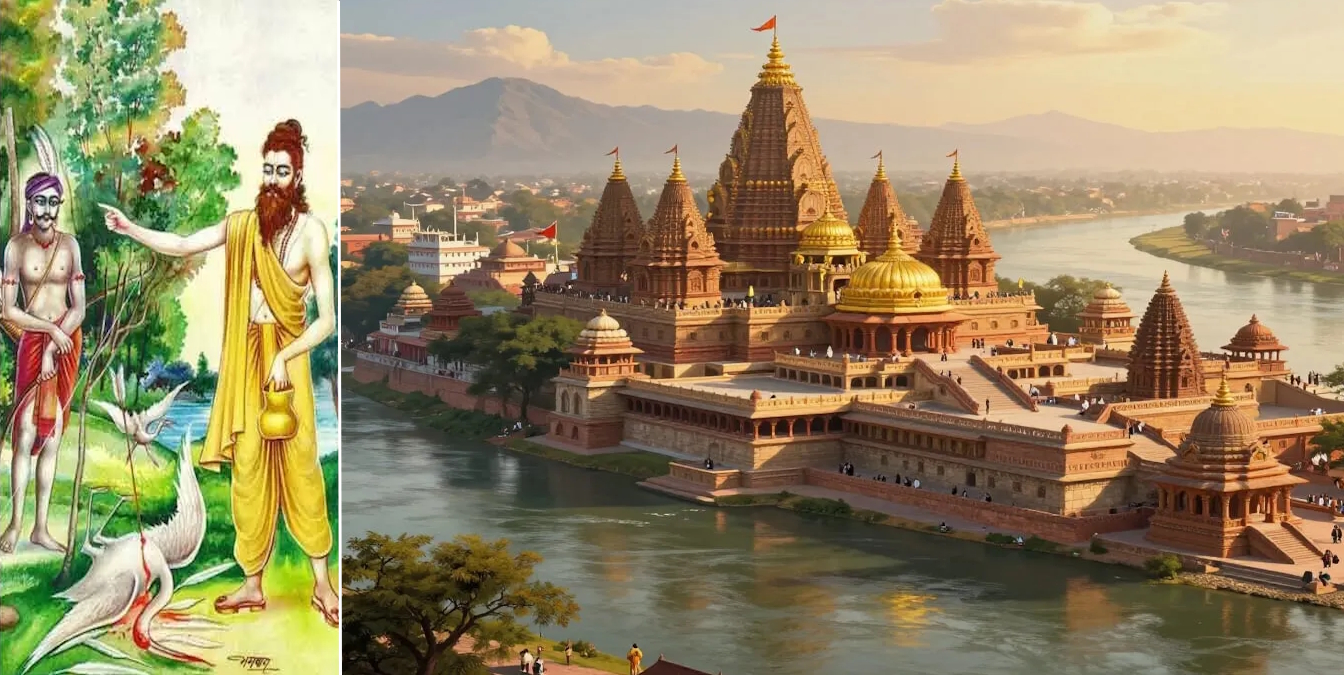
मिथिल उपवने तत्र आश्रमम् दृश्य राघवः ।
पुराणम् निर्जनम् रम्यम् पप्रच्छ मुनि पुंगवम् ॥ ॥१-४८-१२॥
Mithila upavane tatra aashramam drishya raaghavah |
Puraanam nirjanam ramyam papraccha muni pungavam ॥1-48-12॥
Translation
Seeing an ancient, uninhabited, yet beautiful hermitage in a grove near Mithila, Raghava asked the pre-eminent sage (Vishvamitra).
हिंदी अनुवाद
वहाँ मिथिला के उपवन में एक पुराने, जनशून्य (निर्जन) किन्तु रमणीय आश्रम को देखकर रघुनंदन (श्री राम) ने मुनिपुंगव (विश्वामित्र) से पूछा।
English Commentary
Entering the outskirts of Mithila, Rama spots a hermitage that creates a visual paradox: it is puranam (ancient) and nirjanam (devoid of people), yet remarkably ramyam (beautiful/pleasing). Usually, abandoned places fall into decay, but this location retains a spiritual charm. Rama, addressed here as Raghava, directs his inquiry to the Muni Pungava (Bull among Munis, i.e., the best sage), Vishvamitra. This observation demonstrates Rama's keen awareness and sets the stage for one of the most poignant episodes in the Ramayana—the redemption of Ahalya. He senses that the silence of this beautiful place holds a significant history.
हिंदी टीका
श्री राम की दृष्टि अत्यंत सूक्ष्म है। मिथिला के उपवन में उन्हें एक ऐसा आश्रम दिखाई देता है जो विरोधाभासी विशेषताओं से युक्त है: वह 'पुराणम्' (प्राचीन) है और 'निर्जनम्' (सुनसान) है, फिर भी 'रम्यम्' (सुंदर और मनमोहक) है। सामान्यतः निर्जन स्थान खंडहर बन जाते हैं, परन्तु इस आश्रम की दैवीय सुंदरता अभी भी बनी हुई है। श्री राम का कौतूहल जागृत होता है और वे अपने गुरु विश्वामित्र (मुनिपुंगव) से प्रश्न करते हैं। यह प्रश्न अहल्या-उद्धार की कथा की भूमिका तैयार करता है। राम जी का प्रश्न पूछना यह दर्शाता है कि वे अपने आस-पास के वातावरण के प्रति कितने सजग और जिज्ञासु हैं।