Srimad Valmiki Ramayana
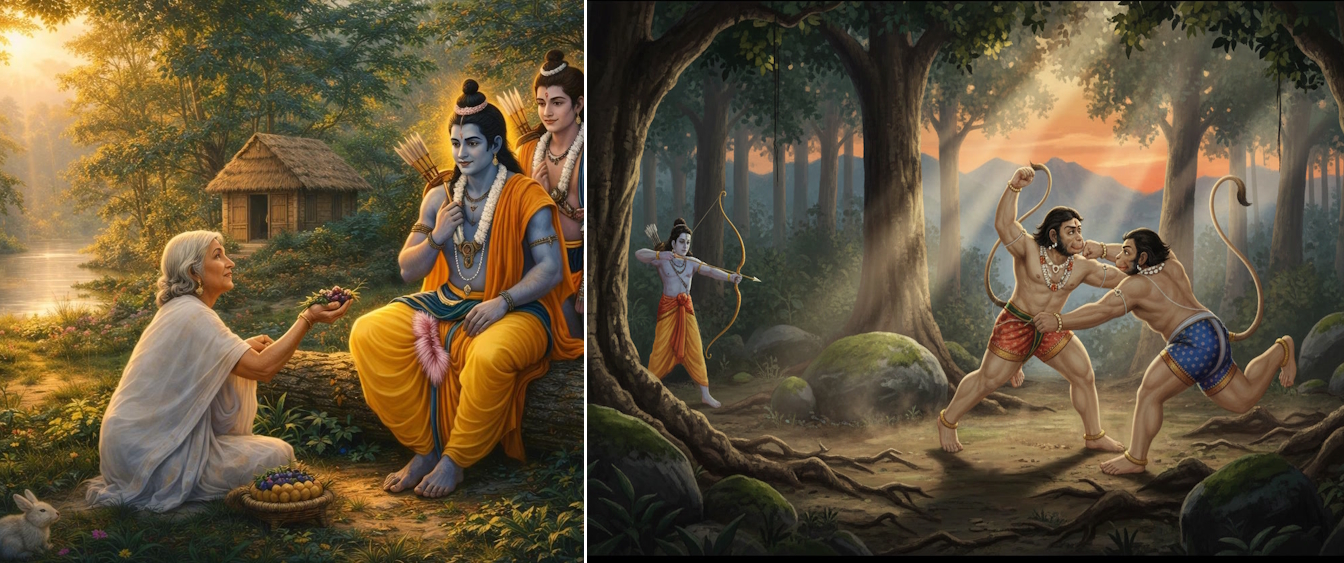
पम्पा तीर रुहाः च इमे संसक्ता मधु गन्धिनः ।
मालती मल्लिका पद्म करवीराः च पुष्पिताः ॥ ॥४-१-७६॥
Pampā tīra ruhāḥ ca ime saṃsaktā madhu gandhinaḥ । Mālatī mallikā padma karavīrāḥ ca puṣpitāḥ ॥ ॥4-1-76॥
Translation
These plants growing on the banks of Pampa are densely clustered and fragrant with the scent of honey. Malati, Mallika, lotuses, and Karavira are all in bloom.
हिंदी अनुवाद
पम्पा सरोवर के तट पर उगने वाले ये पौधे एक-दूसरे से सटे हुए (घने) हैं और मधु की गंध से सुवासित हैं। यहाँ मालती, मल्लिका, कमल और कनेर के फूल खिले हुए हैं।
English Commentary
Focusing on the banks of Pampa, Rama describes the lush vegetation. The plants are described as "samsakta," meaning they are growing close together or intertwined, indicating a dense, fertile thicket. The sensory experience moves from visual to olfactory, as Rama notes the air is "madhu gandhinah"—filled with the scent of honey/nectar. He catalogues specific flora: Malati (jasmine variety), Mallika (another jasmine), Padma (lotus), and Karavira (oleander). The juxtaposition of water-born flowers like the lotus with land-based shrubs creates a picture of a complete, thriving ecosystem. For a separated lover, such a fragrant and dense bower is traditionally a place of torment, as it is perfectly suited for union, highlighting his current isolation.
हिंदी टीका
इस श्लोक में पम्पा सरोवर के तट की वनस्पति का सूक्ष्म वर्णन है। राम बताते हैं कि यहाँ लताओं और पौधों का घनत्व बहुत अधिक है ('संसक्ता' - एक दूसरे से सटे हुए)। यहाँ केवल दृश्य ही नहीं, बल्कि घ्राण (सूंघने की) शक्ति का भी आह्वान किया गया है—वातावरण 'मधु गन्धिनः' (शहद या मकरंद की गंध) से भरा है। राम विभिन्न फूलों की प्रजातियों को पहचानते हैं—मालती और मल्लिका जैसी सुगंधित लताएँ, जल में कमल (पद्म), और स्थल पर कनेर (करवीर)। यह विविधता पम्पा क्षेत्र की उर्वरता और वसंत के प्रभाव को दर्शाती है। फूलों की यह मादक सुगंध राम की इंद्रियों को झकझोर रही है, जो उन्हें सीता के साथ बिताए सुखद क्षणों की याद दिलाती है।