Srimad Valmiki Ramayana
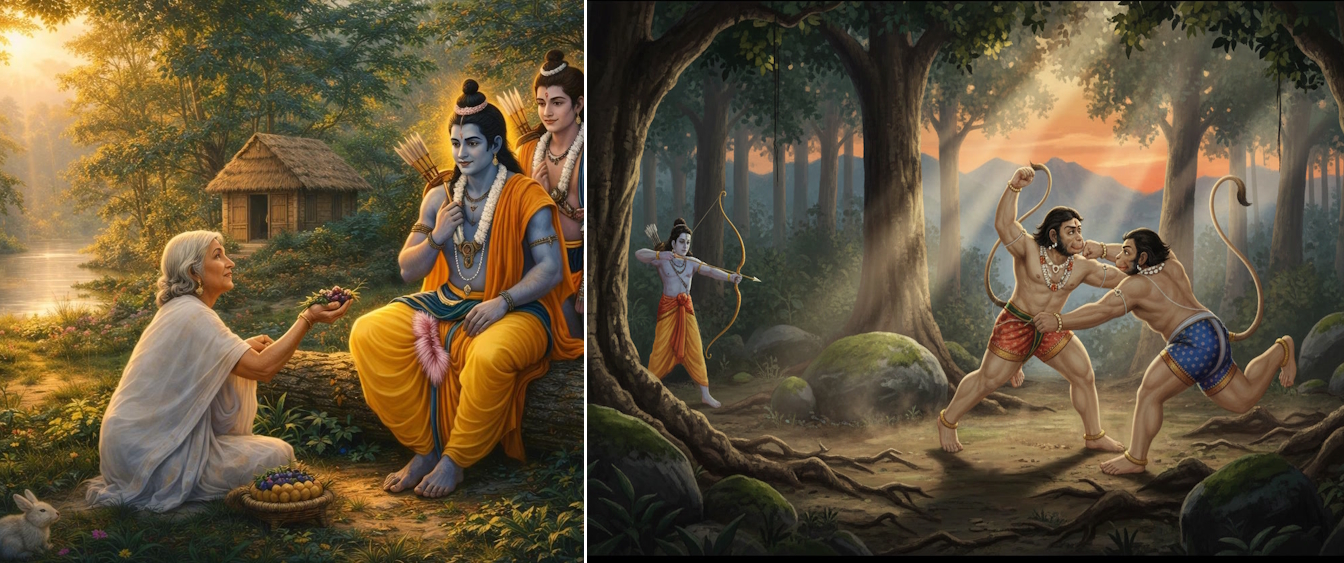
येन् सप्त महा साला गिरिर् भूमिः च दारिताः ।
बाणेन एकेन काकुत्स्थ स्थाता ते को रण अग्रतः ॥४-१२-९॥
Yena sapta mahā sālā girir bhūmiḥ ca dāritāḥ । Bāṇena ekena kākutstha sthātā te ko raṇa agrataḥ ॥4-12-9॥
Translation
O Kakutstha! By whom seven great Sala trees, the mountain, and the earth were torn asunder with a single arrow—who can stand before you in the forefront of battle?
हिंदी अनुवाद
हे काकुत्स्थ! जिसने एक ही बाण से सात विशाल साल वृक्षों, पर्वत और पृथ्वी को विदीर्ण कर दिया, आपके आगे युद्ध में कौन टिक सकता है?
English Commentary
Sugriva reiterates the physical evidence to reinforce his conclusion. He lists the targets destroyed: the mahā sālā (great Sala trees), the giri (mountain), and the bhūmi (earth)—all dāritāḥ (torn/pierced) by bāṇena ekena (one arrow). The logic is irrefutable: if solid rock and earth yield to Rama, no living armor can resist him. The rhetorical question "Who can stand before you?" implies that resistance is futile. Sugriva is now fully ready to march on Kishkindha.
हिंदी टीका
सुग्रीव यहाँ पुनः उस चमत्कार को याद करते हैं। 'बाणेन एकेन' (एक ही बाण से) - यह बार-बार दोहराया जा रहा है क्योंकि यही आश्चर्य का मुख्य कारण है। 'दारिताः' का अर्थ है फाड़ दिया या विदीर्ण कर दिया। सुग्रीव प्रश्न करते हैं, 'स्थाता ते को रण अग्रतः' - युद्ध के मैदान में आपके सामने कौन खड़ा हो सकता है? यह एक अलंकारिक प्रश्न है जिसका उत्तर है 'कोई नहीं'। 'काकुत्स्थ' संबोधन श्रीराम के महान वंश (इक्ष्वाकु/ककुत्स्थ) को याद दिलाता है, जो अपनी वीरता के लिए प्रसिद्ध थे।