Srimad Valmiki Ramayana
ततस्तु रामानुज राम वानराः प्रगृह्य शस्त्राणि उदित उग्र तेजसा ।
पुरीम् सुरेश आत्मज वीर्य पालिताम् वधाय शत्रोः पुनर् आगताः इह ॥ ॥४-१३-३०॥
tatastu rāmānuja rāma vānarāḥ pragṛhya śastrāṇi udita ugra tejasā । purīm sureśa ātmaja vīrya pālitām vadhāya śatroḥ punar āgatāḥ iha ॥ ॥4-13-30॥
Translation
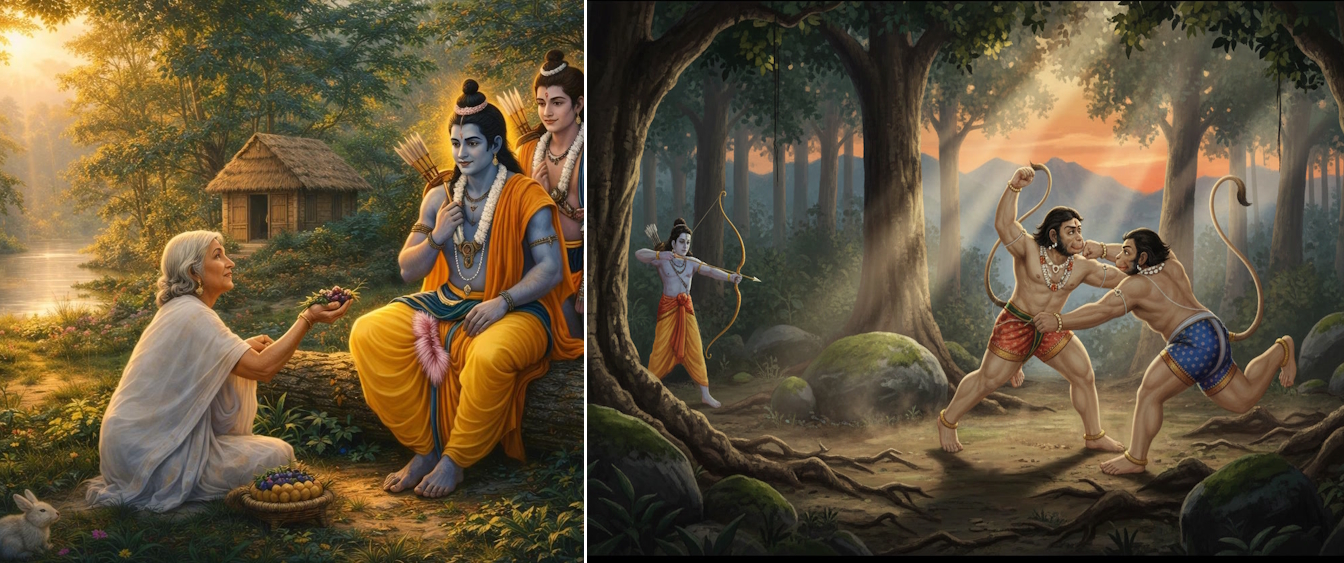
Then, Lakshmana, Rama, and the monkeys, seizing their weapons and manifesting fierce energy, returned there for the destruction of the enemy, to the city protected by the valor of the son of the King of Gods (Vali).
हिंदी अनुवाद
तदनन्तर, लक्ष्मण, राम और वानरों ने अपने अस्त्र-शस्त्र संभाले और उग्र तेज धारण करके, इंद्र-पुत्र (वालि) के पराक्रम से सुरक्षित उस नगरी के पास, शत्रु (वालि) के वध के लिए पुनः लौट आए।
English Commentary
This concluding verse of the canto employs a change in meter to heighten the dramatic tension. The warriors are depicted 'pragṛhya śastrāṇi' (holding weapons), signaling readiness for combat. The phrase 'punar āgatāḥ' (returned again) is pivotal—it references the failed first attempt at the duel, adding weight to this second encounter. By referring to Vali as 'sureśa ātmaja' (son of Indra), the text acknowledges the antagonist's divine pedigree, thereby elevating the stature of the impending conflict. The group stands at the gates, fueled by 'ugra tejas' (fierce energy), poised to alter the destiny of the Vanara kingdom.
हिंदी टीका
सर्ग 13 का यह अंतिम श्लोक युद्ध की तैयारी (सन्नद्धता) का वर्णन करता है। छंद में परिवर्तन (संभवतः उपजाति या वंशस्थ का मिश्रण) काव्य की गति को बढ़ाता है। 'पुनर् आगताः' (पुनः आए) याद दिलाता है कि यह सुग्रीव का दूसरा प्रयास है; पहला प्रयास असफल रहा था क्योंकि राम उन्हें पहचान नहीं पाए थे। 'सुरेश आत्मज' (इंद्र के पुत्र वालि) का उल्लेख करके कवि प्रतिद्वंद्वी की दिव्यता और शक्ति को रेखांकित कर रहे हैं, जिससे राम की चुनौती का महत्व बढ़ता है। 'उदित उग्र तेजसा' वीरों के भीतर जागृत क्रोध और संकल्प को दर्शाता है।