Srimad Valmiki Ramayana
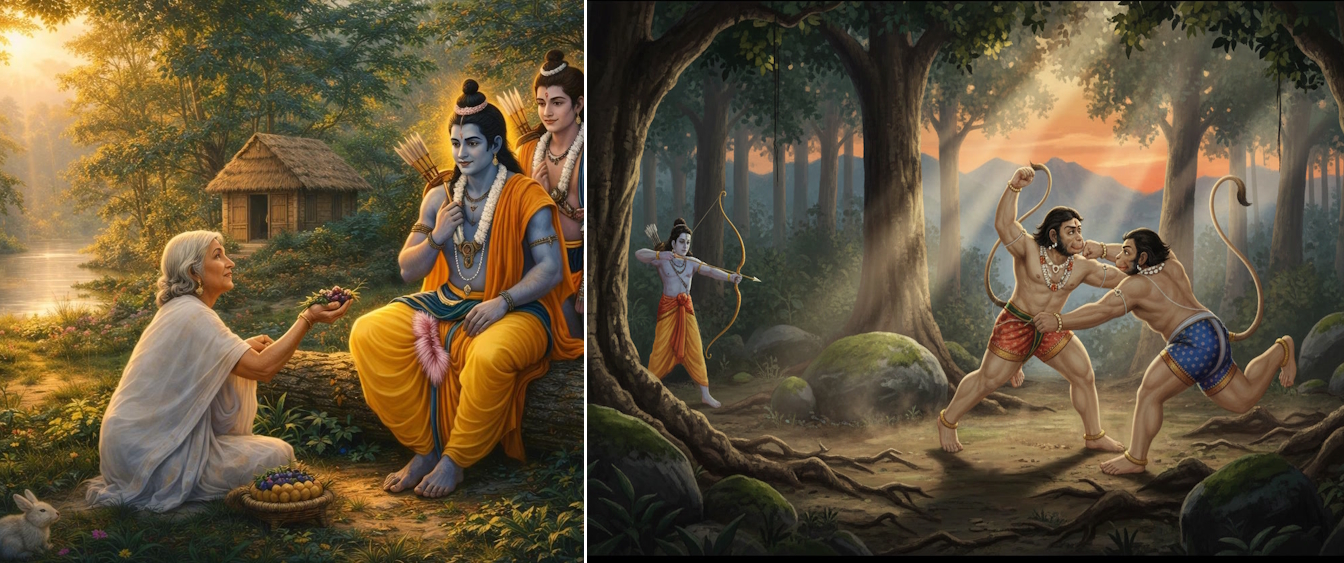
प्रसूतम् कलमक्षेत्रे वर्षेण इव शतक्रतुः ।
तद् आह्वान निमित्तम् च वालिनो हेममालिनः ॥४-१४-१६॥
prasūtam kalamakṣetre varṣeṇa iva śatakratuḥ । tad āhvāna nimittam ca vālino hemamālinaḥ ॥ ॥4-14-16॥
Translation
Just as Indra (Shatakratu) makes the field of rice crops fruitful through rain, so shall I fulfill my promise. Therefore, call out for battle Vali, the one wearing the golden garland.
हिंदी अनुवाद
जैसे इंद्र (शतक्रतु) वर्षा के द्वारा धान के खेत को फलदायी बनाते हैं, वैसे ही मैं तुम्हारी कामना पूरी करूँगा। इसलिए, उस सुवर्ण माला धारी वाली को युद्ध के लिए आह्वान करो।
English Commentary
Rama uses an agricultural metaphor: he equates his intervention to Indra sending rain to a rice field (kalamakṣetre). Just as rain is essential for the crop to flourish, Rama's action is essential for Sugriva's restoration. This imagery suggests nourishment and life, portraying the killing of Vali not as an act of violence, but of restoration of order. The reference to Vali as hemamālinaḥ (garlanded with gold) acknowledges Vali's divine protection but implies it is no deterrent to Rama's arrows.
हिंदी टीका
यहाँ एक सुंदर उपमा (Simile) का प्रयोग किया गया है। जैसे वर्षा धान (कलम) को जीवन देती है, वैसे ही राम का पौरुष सुग्रीव के जीवन को फलदायी बनाएगा। इंद्र 'शतक्रतु' हैं, और राम यहाँ स्वयं को उसी रक्षक और पालनहार की भूमिका में रख रहे हैं। 'हेममालिनः' (स्वर्ण माला धारी) विशेषण का प्रयोग जानबूझकर किया गया है—यह वाली की उस विशेष शक्ति (इंद्रदत्त माला) की ओर संकेत करता है, फिर भी राम उसे ललकारने का आदेश दे रहे हैं, जो दर्शाता है कि राम उस माला की शक्ति से भयभीत नहीं हैं।