Srimad Valmiki Ramayana
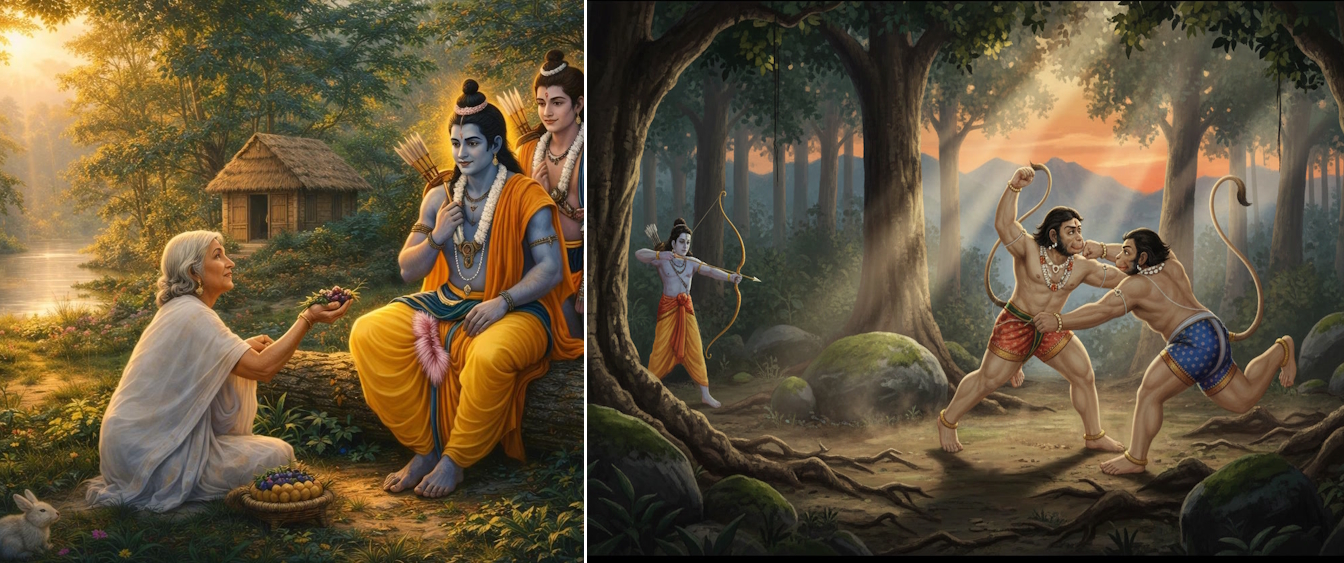
वालिनम् प्रति सामर्षो दर्शयामास राघवम् ।
वृक्षैः स शाखैः शिखरैः वज्र कोटि nibhैः नखैः ॥ ॥४-१६-२८॥
vālinam prati sāmarṣo darśayāmāsa rāghavam । vṛkṣaiḥ sa śākhaiḥ śikharaiḥ vajra koṭi nibhaiḥ nakhaiḥ ॥ ॥4-16-28॥
Translation
Filled with indignation towards Vali, he (Sugriva) looked towards Raghava (signaling for help). (He was fighting) with trees having branches, mountain peaks, and claws hard like the tips of thunderbolts.
हिंदी अनुवाद
वाली के प्रति क्रोध (सामर्ष) से भरे हुए सुग्रीव ने राघव (राम) की ओर देखा (संकेत किया)। (उस समय वह) शाखाओं सहित वृक्षों, पर्वत-शिखरों और वज्र की नोक के समान कठोर नाखूनों से (लड़ रहा था)।
English Commentary
Note on Text: The provided text reads darśayāmāsa rāghavam (he looked to/showed Raghava). In the context of Sugriva losing (Verse 27), this is interpreted as him looking towards Rama in desperation and anger (sāmarṣo) at Vali, signaling that he can no longer hold on. The second line describes his arsenal—trees (vṛkṣaiḥ), peaks (śikharaiḥ), and diamond-hard claws (nakhaiḥ)—which he uses in a frenzy. (A common variant reads lāghavam instead of rāghavam, meaning he showed his 'skill/dexterity' with these weapons, but we adhere to the provided text which emphasizes his reliance on Rama).
हिंदी टीका
विशेष टिप्पणी: यहाँ 'दर्शयामास राघवम्' (राघव को देखा/दिखाया) पाठ है, जो सुग्रीव द्वारा अपनी हार और क्रोध के क्षण में राम को सहायता के लिए देखने या संकेत करने का अर्थ देता है। (कुछ संस्करणों में यहाँ 'दर्शयामास लाघवम्' पाठ मिलता है, जिसका अर्थ है 'हस्त-कौशल/फुर्ती दिखाई', जो दूसरी पंक्ति में वर्णित वृक्षों और नाखूनों के प्रयोग के साथ अधिक सटीक बैठता है)। परन्तु उपलब्ध पाठ के अनुसार, सुग्रीव हताश होकर राम की ओर देखता है जबकि वह वृक्षों और नाखूनों से संघर्ष जारी रखे हुए है। यह उसकी अंतिम उम्मीद है।