Srimad Valmiki Ramayana
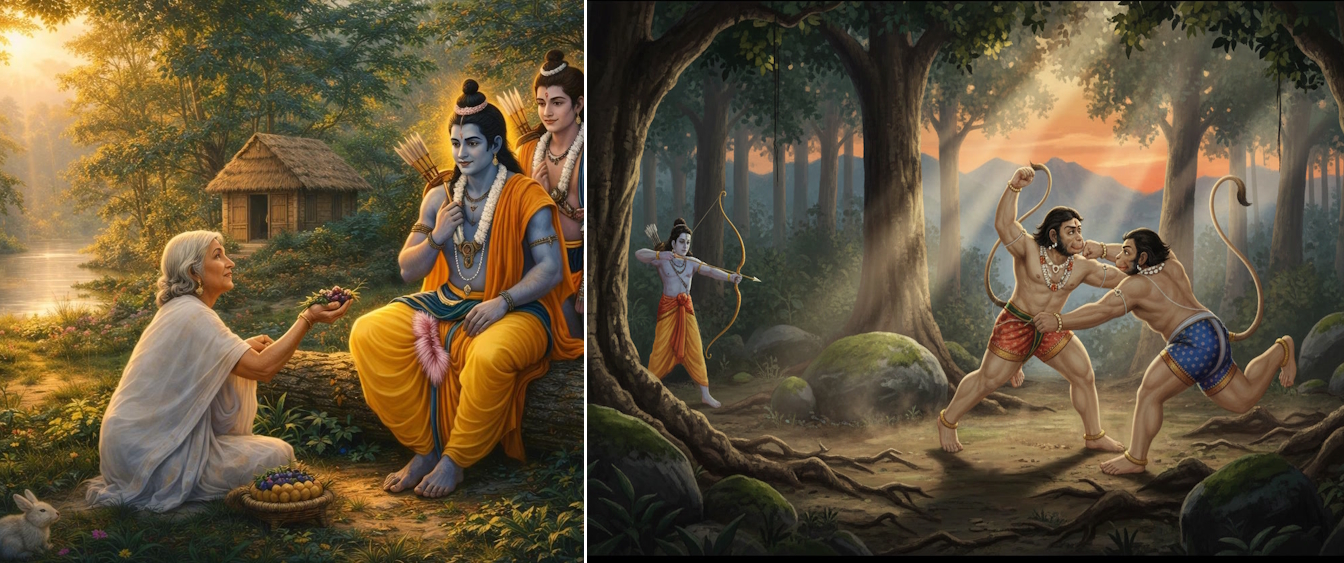
मुष्टिभिः जानुभिः पद्भिः बाहुभिः च पुनः पुनः ।
तयोः युद्द्धम् अभूत् घोरम् वृत्र वासवोः इव ॥ ॥४-१६-२९॥
muṣṭibhiḥ jānubhiḥ padbhiḥ bāhubhiḥ ca punaḥ punaḥ । tayoḥ yuddham abhūt ghoram vṛtra vāsavoḥ iva ॥ ॥4-16-29॥
Translation
With fists, knees, feet, and arms striking again and again, the battle between them became terrible, like the battle between Vritra and Vasava (Indra).
हिंदी अनुवाद
मुक्कों, घुटनों, पैरों और भुजाओं से बार-बार प्रहार करते हुए, उन दोनों का युद्ध वृत्रासुर और वासव (इंद्र) के युद्ध के समान भयानक हो गया।
English Commentary
The combat devolves into a brutal brawl involving every limb—fists (muṣṭibhiḥ), knees (jānubhiḥ), feet, and arms. The repetition punaḥ punaḥ conveys the relentless nature of the assault. The comparison to Vṛtra and Vāsava (Indra) invokes the archetype of the ultimate duel in Vedic mythology. It signifies a fight to the death between evenly matched elemental forces, setting the scene for the final intervention that ends the deadlock.
हिंदी टीका
यह द्वंद्व अब पूर्णतः हिंसक हाथापाई में बदल चुका है। कोई नियम नहीं, केवल मारना उद्देश्य है—मुक्के, घुटने, लात, और बाहुबल का प्रयोग हो रहा है ('पुनः पुनः' - बार-बार)। उपमा 'वृत्र वासवोः इव' (इंद्र और वृत्रासुर के समान) बहुत सटीक है। वृत्रासुर एक भयानक असुर था जिसे मारने के लिए इंद्र को वज्र का प्रयोग करना पड़ा था। यहाँ वाली इंद्र (वासव) की भूमिका में है और सुग्रीव वृत्र की तरह संघर्ष कर रहा है, या दोनों की तीव्रता समान है। युद्ध अब अपने चरम (climax) पर है।