Srimad Valmiki Ramayana
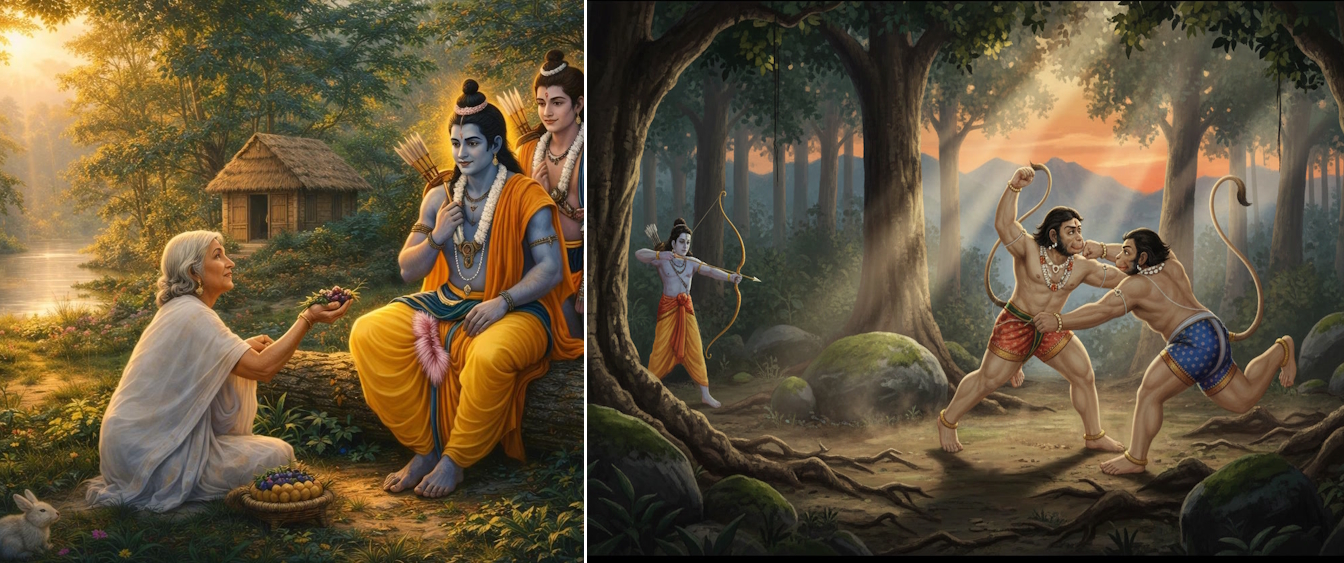
ततो रामो महातेजा आर्तम् दृष्ट्वा हरीश्वरम् ।
स शरम् वीक्षते वीरो वालिनो वध कांक्षया ॥ ॥४-१६-३२॥
Tato rāmo mahātejā ārtam dṛṣṭvā harīśvaram |
Sa śaram vīkṣate vīro vālino vadha kāṃkṣayā ॥4-16-32॥
Translation
Then, the greatly radiant hero Rama, seeing the monkey lord in distress, looked at his arrow with the resolve to kill Vali.
हिंदी अनुवाद
तब महातेजस्वी वीर राम ने वानरराज (सुग्रीव) को पीड़ित देखकर, वाली के वध की इच्छा से अपने बाण की ओर देखा।
English Commentary
Rama is described here as 'mahātejā' (of great radiance) and a hero. Upon seeing Sugriva in an 'ārta' (distressed) state, Rama's protective instinct is triggered. The act of looking at his arrow ('śaram vīkṣate') symbolizes the crystallization of his intent. It is a moment of deliberate focus where compassion for a friend translates into the resolve ('kāṃkṣayā') to eliminate the threat. The verse captures the transition from observation to lethal action.
हिंदी टीका
यहाँ श्री राम के चरित्र को 'महातेजा' और 'वीर' विशेषणों से अलंकृत किया गया है। सुग्रीव को 'आर्त' (दुखी/पीड़ित) देखकर राम का क्षत्रिय धर्म जागृत होता है। 'शरम् वीक्षते' (बाण को देखना) केवल एक क्रिया नहीं, बल्कि एक संकल्प है। यह दर्शाता है कि राम ने स्थिति का आकलन कर लिया है और अब वे मित्र के दुख का निवारण करने के लिए कठोर कदम उठाने के लिए तत्पर हैं। यह शरणागत वत्सलता का प्रत्यक्ष प्रमाण है।