Srimad Valmiki Ramayana
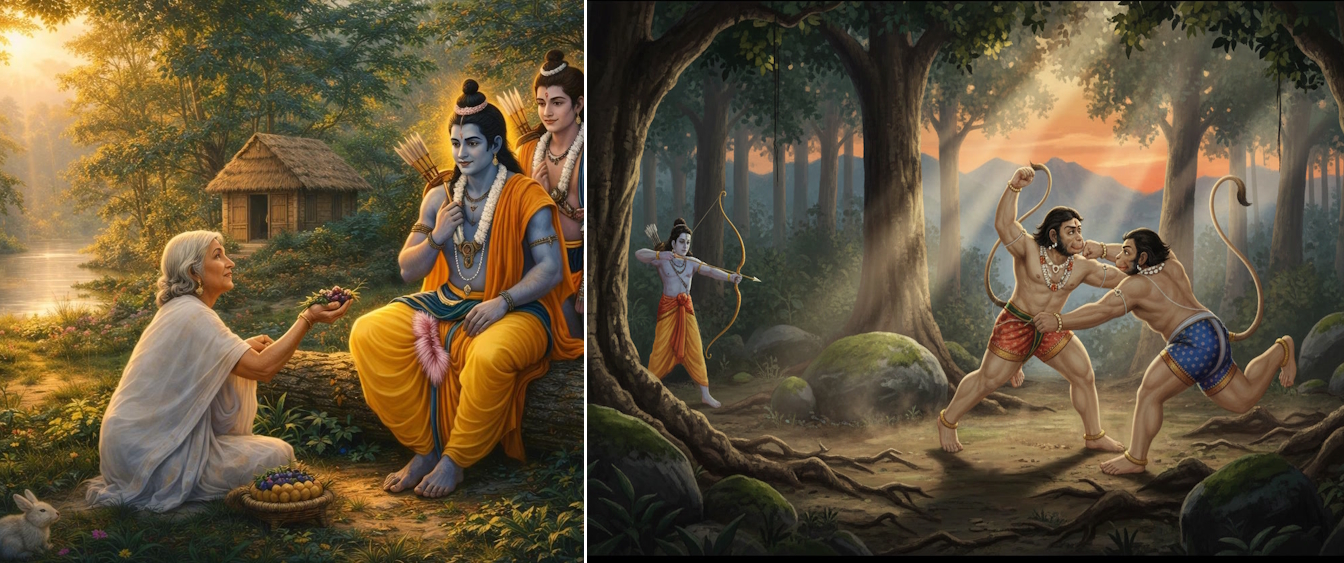
तारया वाक्यम् उक्तो अहम् सत्यम् सर्वज्ञया हितम् ।
तद् अतिक्रम्य मोहेन कालस्य वशम् आगतः ॥ ॥४-१७-४१॥
tārayā vākyam ukto aham satyam sarvajñayā hitam । tad atikramya mohena kālasya vaśam āgataḥ ॥ ॥4-17-41॥
Translation
I was told truthful and beneficial words by Tara, who knows all. But ignoring that due to delusion, I have fallen under the sway of Time (Death).
हिंदी अनुवाद
सर्वज्ञा (विदुषी) तारा ने मुझसे सत्य और हितकारी वचन कहे थे। किन्तु मोह के कारण मैंने उसकी बात का उल्लंघन किया और मैं काल के वश में आ गया।
English Commentary
Amidst his diatribe, Vali experiences a moment of tragic realization. He acknowledges the wisdom of his wife, Tara, referring to her as Sarvajnaya (all-knowing/insightful). Tara had warned him of Rama’s alliance with Sugriva, but Vali’s Moha (delusion/pride) blinded him. By admitting he ignored her beneficial counsel (Hitam), Vali accepts a degree of responsibility for his fate, attributing his end ultimately to the inescapable power of Kala (Time/Destiny), acting through his own poor judgment.
हिंदी टीका
अपने क्रोध के बीच, वाली एक पल के लिए आत्म-चिंतन करता है और अपनी पत्नी तारा की बुद्धिमत्ता को स्वीकार करता है। युद्ध से पहले तारा ने उसे चेतावनी दी थी कि सुग्रीव को श्रीराम का समर्थन प्राप्त है, अतः संधि कर लेनी चाहिए। वाली ने उसे 'सर्वज्ञा' (सब कुछ जानने वाली) कहा है, जो तारा की राजनीतिक समझ और दूरदर्शिता का सम्मान है। वह स्वीकार करता है कि उसका विनाश राम के बाण से अधिक उसके अपने 'मोह' (अहंकार और क्रोध) और 'काल' (प्रारब्ध) के कारण हुआ है। यह वाली के चरित्र की परिपक्वता को दर्शाता है।