Srimad Valmiki Ramayana
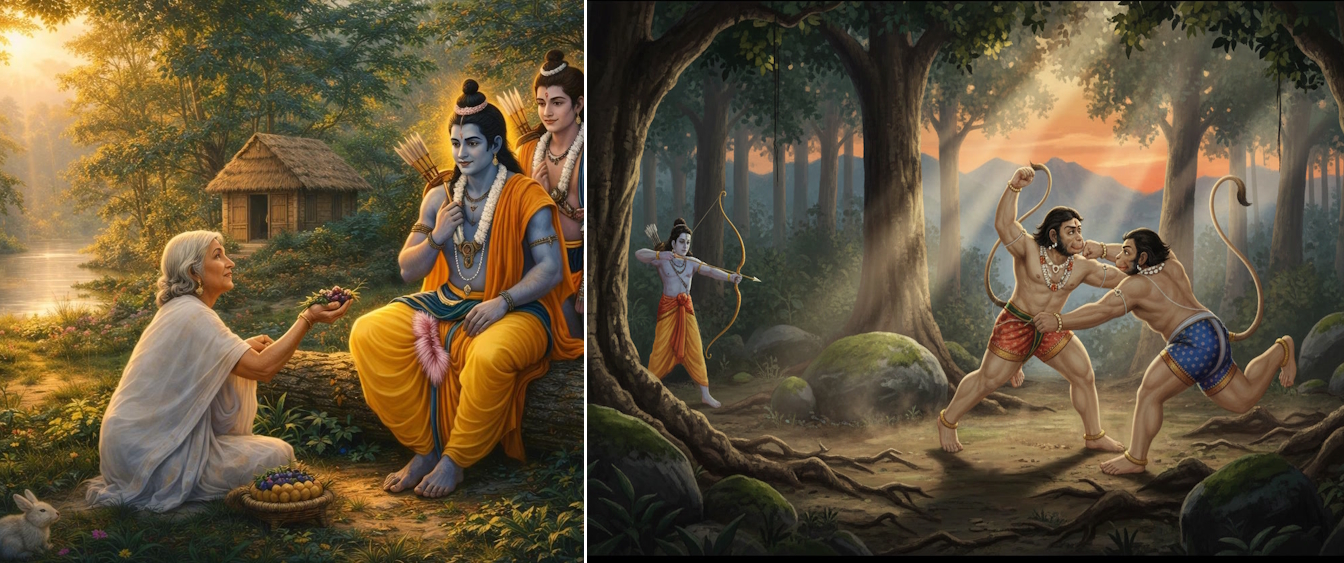
त्वम् च धर्मात् अतिक्रान्तः कथम् शक्यम् उपेक्षितुम् ।
गुरु धर्म व्यतिक्रान्तम् प्राज्ञो धर्मेण पालयन् ॥४-१८-२४॥
tvam ca dharmāt atikrāntaḥ katham śakyam upekṣitum |
guru dharma vyatikrāntam prājño dharmeṇa pālayan ॥4-18-24॥
Translation
You have transgressed the bounds of Dharma; how then can you be ignored? Which wise ruler, protecting his subjects according to Dharma, would ignore one who has gravely violated the moral law?
हिंदी अनुवाद
तुम धर्म की मर्यादा का उल्लंघन कर चुके हो, अत: तुम्हारी उपेक्षा कैसे की जा सकती है? धर्मपूर्वक प्रजा का पालन करने वाला कौन सा बुद्धिमान राजा धर्म का भारी उल्लंघन करने वाले को छोड़ देगा?
English Commentary
Vali likely assumed Rama would not interfere as this was not strictly his immediate kingdom. Rama uses the word 'upekṣitum' (to ignore/neglect) to state that for a Kshatriya, witnessing a crime and ignoring it is a sin. 'Guru dharma vyatikrāntam' refers to a grave or heavy transgression of Dharma. Rama argues that it is the duty of a 'prājñaḥ' (wise/discerning) ruler to root out Adharma. Had Rama spared Vali, it would have been a failure of Rama's own administrative and moral duty. This verse champions the principle of active intervention over passive negligence in the face of injustice.
हिंदी टीका
वाली ने संभवतः यह सोचा था कि राम उसके मामलों में हस्तक्षेप नहीं करेंगे क्योंकि यह उनका राज्य नहीं है। राम यहाँ 'उपेक्षितुम्' (अनदेखा करना) शब्द का प्रयोग कर कहते हैं कि एक क्षत्रिय के लिए अपराध को देखकर भी उसे अनदेखा करना पाप है। 'गुरु धर्म व्यतिक्रान्तम्' का अर्थ है धर्म का भारी या गंभीर उल्लंघन। राम का तर्क है कि 'प्राज्ञः' (बुद्धिमान/विवेकी) शासक का यह कर्तव्य है कि वह अधर्म को जड़ से मिटाए। यदि राम वाली को छोड़ देते, तो यह राम की अपनी शासकीय और नैतिक विफलता होती। यह श्लोक निष्क्रियता (inaction) के विरुद्ध कर्म (action) के सिद्धांत को प्रतिपादित करता है।