Srimad Valmiki Ramayana
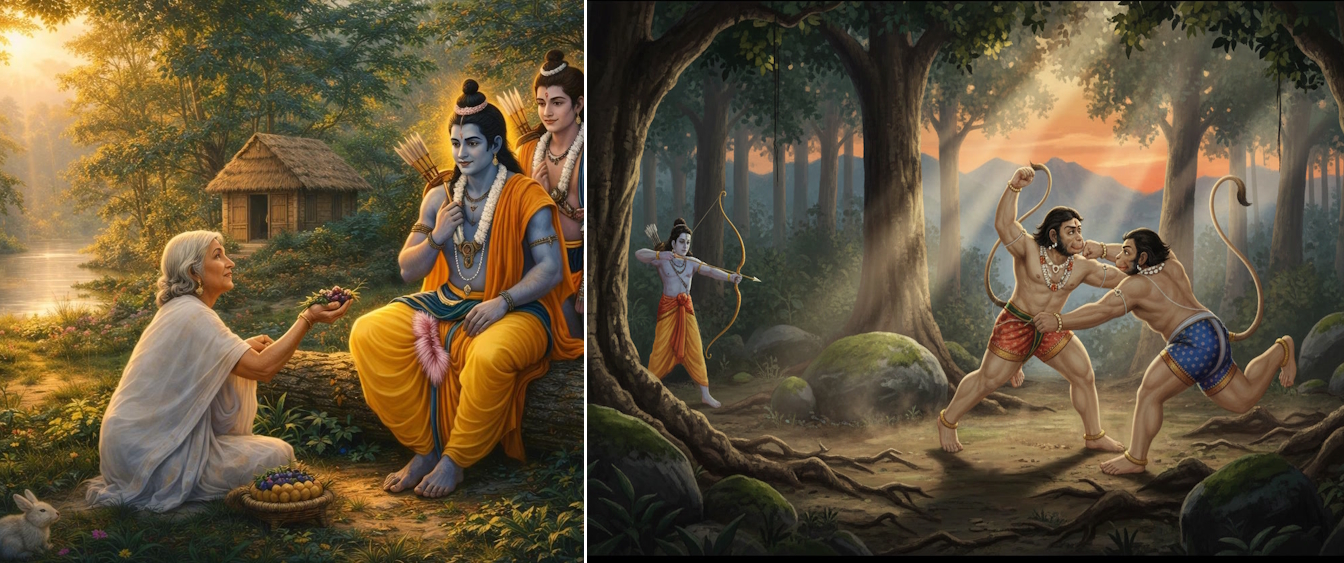
प्रतिवक्तुम् प्रकृष्टे हि न अपकृष्टः तु शक्नुयात् ।
यत् अयुक्तम् मया पूर्वम् प्रमादात् वाक्यम् अप्रियम् ॥४-१८-४६॥
prativaktum prakṛṣṭe hi na apakṛṣṭaḥ tu shaknuyāt । yat ayuktam mayā pūrvam pramādāt vākyam apriyam ॥ ॥4-18-46॥
Translation
"Indeed, an inferior one like me cannot refute a superior one like you. Whatever improper and unpleasant words I spoke earlier out of negligence, please forgive them."
हिंदी अनुवाद
"मुझ जैसा हीन व्यक्ति आप जैसे श्रेष्ठ पुरुष को उत्तर देने में समर्थ नहीं हो सकता। पहले मैंने प्रमादवश (लापरवाही और अज्ञान से) जो अनुचित और अप्रिय वचन कहे थे, उन्हें आप क्षमा करें।"
English Commentary
Vali offers a humble apology, categorizing himself as 'apakrishta' (inferior) and Rama as 'prakrishta' (superior). He realizes that debating Rama on nuances of Dharma is futile because his own perspective was clouded by animal instincts and arrogance. He attributes his earlier harsh accusations to 'pramada'—negligence or error in judgment caused by pain and ignorance. This admission cleanses the relationship between the slayer and the slain, transforming the execution into a moment of redemption. Vali seeks to leave the world without carrying the burden of having insulted a righteous soul.
हिंदी टीका
इस श्लोक में वाली अपनी हीनता और राम की महानता के बीच के अंतर को स्पष्ट रूप से स्वीकार करता है। 'प्रकृष्ट' (श्रेष्ठ) और 'अपकृष्ट' (हीन) शब्दों का प्रयोग करके वह यह मानता है कि नैतिक और आध्यात्मिक स्तर पर वह राम की बराबरी नहीं कर सकता। वह अपने पूर्व के कटु वचनों के लिए 'प्रमाद' (गफलत या नशा) को कारण बताता है, यह स्वीकारते हुए कि बाण की पीड़ा और क्रोध ने उसकी बुद्धि को ढक लिया था। यह एक मरणासन्न वीर का अंतिम विनय है, जो अपनी मृत्यु को शांत मन से स्वीकार करना चाहता है।