Srimad Valmiki Ramayana
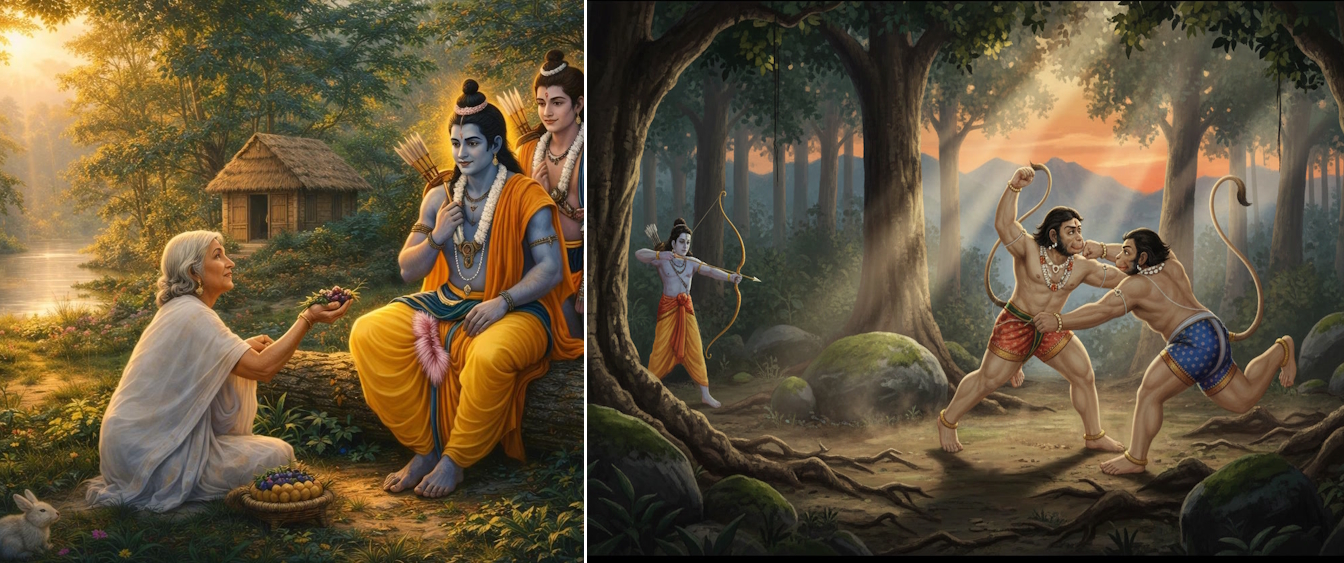
अपृष्ट्वा बुद्धि संपन्नान् वृद्धान् आचार्य संमतान् ।
सौम्य वानर चापल्यात् त्वम् माम् वक्तुम् इह इच्छसि ॥ ॥४-१८-५॥
apṛṣṭvā buddhi saṃpannān vṛddhān ācārya saṃmatān । saumya vānara cāpalyāt tvam mām vaktum iha icchasi ॥ ॥4-18-5॥
Translation
O Gentle one, having not consulted the wise, the elders, or those respected as teachers, you wish to speak to me out of sheer monkey-like fickleness.
हिंदी अनुवाद
हे सौम्य! तुमने बुद्धिमानों, वृद्धों और आचार्यों से (धर्म का तत्त्व) नहीं पूछा है। तुम्हान अपनी स्वाभाविक 'वानर चपलता' के कारण ही मुझसे ये बातें कहना चाहते हो।
English Commentary
Rama attributes Vali’s flawed arguments to his inherent nature (Vanara chapalya - monkey fickleness) and his failure to consult the wise (Vrrddhan). This is a crucial counter-argument: Dharma is subtle and cannot be understood by instinct alone; it requires the guidance of Acharyas (preceptors). Rama implies that Vali’s definition of Dharma is crude and self-serving because he relied on his own raw power rather than established wisdom.
हिंदी टीका
राम वाली को 'वानर चापल्यात्' (बंदरों वाली चंचलता) का दोषी ठहराते हैं। उनका तर्क है कि धर्म का निर्णय केवल अपनी बुद्धि से नहीं, बल्कि 'वृद्धान्' (बुजुर्गों) और 'आचार्यों' (गुरुओं) के परामर्श से होता है। चूंकि वाली ने शास्त्रों का गहरा अध्ययन नहीं किया या ज्ञानी जनों से विमर्श नहीं किया (जैसे उसने तारा की बात अनसुनी कर दी), इसलिए उसका दृष्टिकोण अधूरा है। राम यहाँ वाली की 'जातिगत प्रकृति' (Species nature) को उसके तर्कों की कमजोरी का कारण बताते हैं।