Srimad Valmiki Ramayana
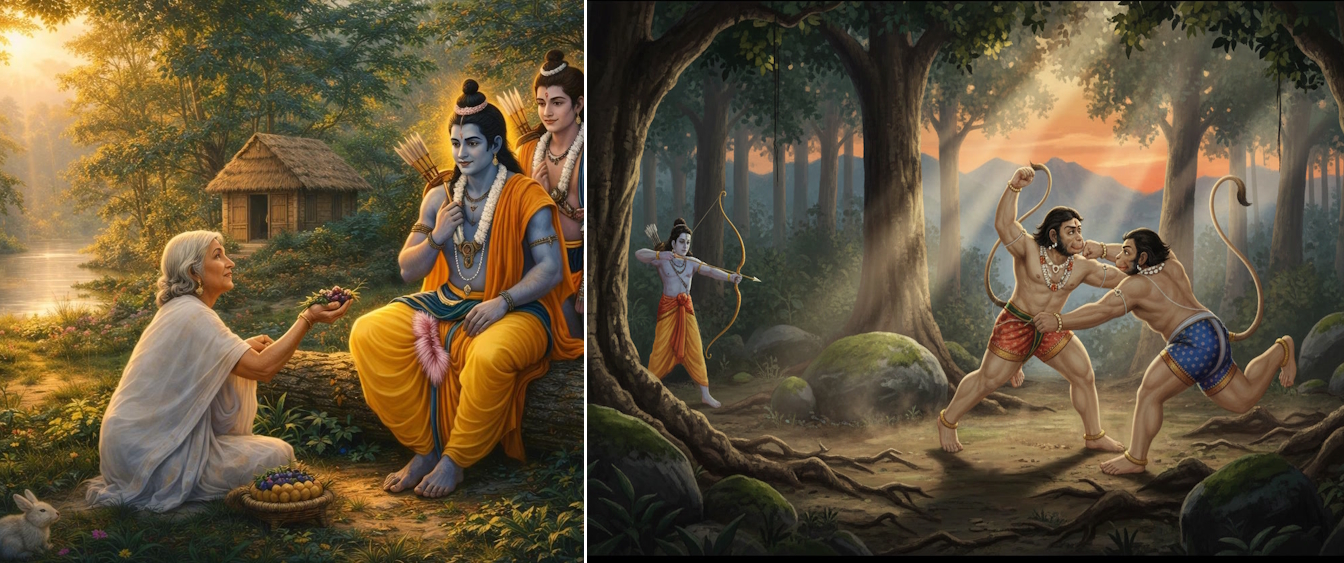
इक्ष्वाकूणाम् इयम् भूमिः स शैल वन कानना ।
मृग पक्षि मनुष्याणाम् निग्रह अनुग्रहेषु अपि ॥ ॥४-१८-६॥
ikṣvākūṇām iyam bhūmiḥ sa śaila vana kānanā । mṛga pakṣi manuṣyāṇām nigraha anugraheṣu api ॥ ॥4-18-6॥
Translation
This entire earth, along with its mountains, forests, and groves, belongs to the Ikshvakus. They alone have the authority to punish or reward the beasts, birds, and humans residing here.
हिंदी अनुवाद
यह समस्त पृथ्वी, पर्वतों, वनों और काननों सहित, इक्ष्वाकु वंश के राजाओं की है। यहाँ के मृग, पक्षी और मनुष्यों को दंड (निग्रह) देने और अनुग्रह (कृपा) करने का अधिकार जिन्हीं को है।
English Commentary
This is the cornerstone of Rama's legal defense: Jurisdiction. Rama asserts that the entire globe, including the wild forests (Vana Kanana) of Kishkindha, falls under the dominion of the Ikshvaku dynasty. He rejects the idea that the forest is a lawless zone or an independent kingdom outside Aryan law. As the sovereigns of the earth, the Ikshvakus hold the power of Nigraha (punishment) and Anugraha (reward) over all beings, including animals (Mriga Pakshi) and humans. Thus, Rama acted not as a stranger, but as the rightful ruler enforcing law in his territory.
हिंदी टीका
यह राम का 'न्यायिक अधिकार क्षेत्र' (Jurisdiction) का तर्क है। वाली ने पूछा था कि राम को किष्किन्धा के मामले में बोलने का क्या हक है? राम उत्तर देते हैं कि किष्किन्धा कोई स्वतंत्र राष्ट्र नहीं है, बल्कि 'इक्ष्वाकूणाम् इयम् भूमिः'—पूरी धरती इक्ष्वाकु वंश के अधीन है। इसलिए, चाहे वन हो या नगर, मनुष्य हो या जानवर, न्याय करने का अधिकार इक्ष्वाकु राजा का है। राम ने स्वयं को एक बाहरी आक्रमणकारी नहीं, बल्कि 'पुलिसिंग अथॉरिटी' (Policing Authority) के रूप में प्रस्तुत किया है।