Srimad Valmiki Ramayana
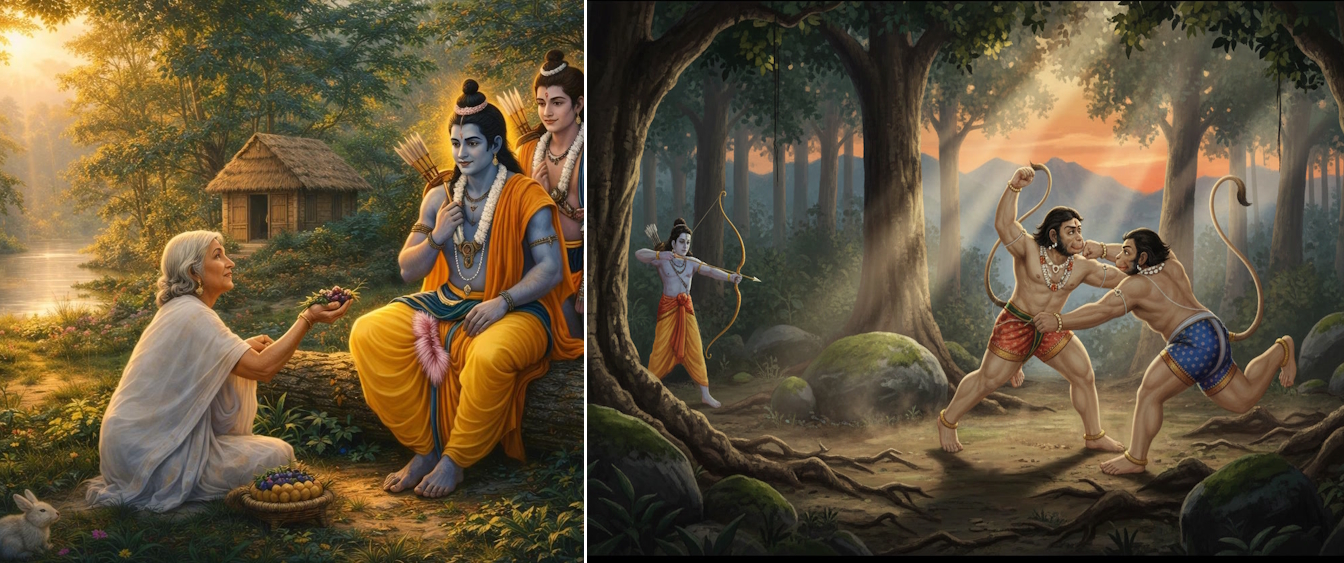
इति एवम् कपिराजेन संदिष्टो मारुतात्मजः ।
चकार गमने बुद्धिम् यत्र तौ राम लक्ष्मणौ ॥ ॥४-२-२८॥
Iti evam kapirājena saṃdiṣṭo mārutātmajaḥ । Cakāra gamane buddhim yatra tau rāma lakṣmaṇau ॥ ॥4-2-28॥
Translation
Thus commanded by the King of Monkeys (Sugriva), the son of the Wind God (Hanuman) set his mind upon going to the place where those two, Rama and Lakshmana, were present.
हिंदी अनुवाद
कपिराज सुग्रीव द्वारा इस प्रकार आदेश दिए जाने पर, पवनपुत्र हनुमान ने वहां जाने का निश्चय किया जहां वे दोनों, राम और लक्ष्मण, विद्यमान थे।
English Commentary
This verse highlights the immediate compliance and loyalty of Hanuman. The phrase Cakara gamane buddhim (made up his mind to go) signifies resolute action. There is no hesitation in Hanuman despite the potential danger of approaching armed warriors who terrified Sugriva. It marks the transition from Sugriva’s fearful planning to Hanuman’s confident execution. As the son of the Wind God (Marutatmaja), speed and purpose are inherent in his nature, and he immediately directs his intellect and energy toward the historic encounter with Rama and Lakshmana.
हिंदी टीका
यह श्लोक सेवक और स्वामी के आदर्श संबंध को दर्शाता है। हनुमान जी की तत्परता यहाँ स्पष्ट है। जैसे ही सुग्रीव ने अपनी आशंका और आदेश व्यक्त किया, हनुमान जी ने बिना किसी प्रश्न या विलंब के 'गमने बुद्धिम् चकार' (जाने का मन बना लिया)। यह वाक्यांश केवल शारीरिक क्रिया नहीं, बल्कि मानसिक संकल्प को दर्शाता है। हनुमान जी जानते हैं कि सुग्रीव की सुरक्षा और वानर राज्य का भविष्य इस मुलाकात पर निर्भर करता है। यह श्लोक विचार से क्रिया की ओर संक्रमण का प्रतीक है।