Srimad Valmiki Ramayana
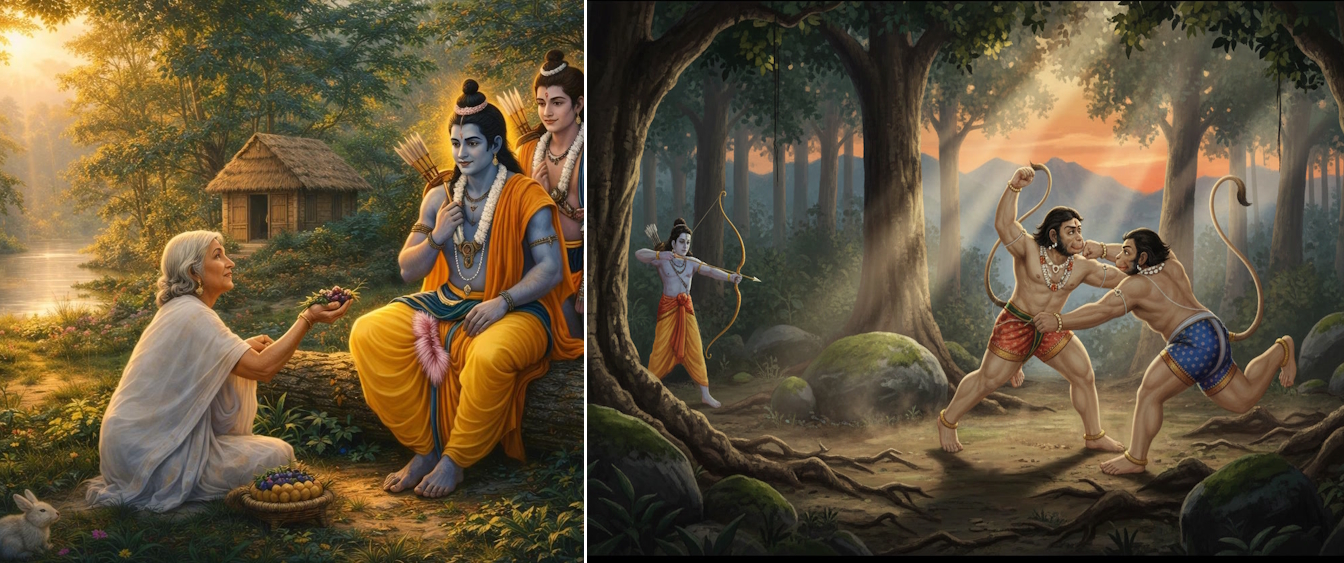
निःश्रेयस परा मोहात् त्वया च अहम् विगर्हिता ।
या एषा अब्रुवम् हितम् वाक्यम् वानरेन्द्र हित एषिणी ॥ ॥४-२०-१२॥
Niḥśreyasa parā mohāt tvayā ca aham vigarhitā । Yā eṣā abruvam hitam vākyam vānarendra hita eṣiṇī ॥ ॥4-20-12॥
Translation
O King of Monkeys! I, desiring your welfare, spoke words for your ultimate good, but out of delusion, you disregarded me and scolded me instead.
हिंदी अनुवाद
हे वानरेन्द्र! आपके हित की कामना करने वाली मैंने, आपके कल्याण के लिए जो बात कही थी, मोहवश आपने उसका तिरस्कार कर दिया और मुझे ही धिक्कारा।
English Commentary
Tara recalls her futile attempt to save Vali before he stepped out for the duel. She had rightly warned him about Sugriva’s alliance with Rama, advising prudence over aggression. However, blinded by Moha (delusion/pride) and confidence in his own strength, Vali had dismissed her wise counsel. Tara emphasizes that she was a hita-eṣiṇī (well-wisher) seeking his niḥśreyasa (ultimate good). This verse underscores the tragedy of arrogance; Vali’s refusal to listen to reason and his dismissal of his wife’s political and strategic foresight ultimately sealed his fate. It serves as a somber reminder that ignoring wise counsel often precedes a downfall.
हिंदी टीका
तारा यहाँ उस क्षण को याद कर रही हैं जब वाली युद्ध के लिए निकल रहे थे। तारा ने उन्हें चेतावनी दी थी कि सुग्रीव को राम का समर्थन प्राप्त है और उनसे बैर लेना उचित नहीं है। किन्तु, अपने बल के अहंकार और क्रोध (मोह) के कारण वाली ने तारा की सलाह को अनसुना कर दिया था। यहाँ 'निःश्रेयस' शब्द का प्रयोग महत्वपूर्ण है, जो केवल सामान्य लाभ नहीं, बल्कि 'परम कल्याण' का सूचक है। तारा का विलाप यह शिक्षा देता है कि जब विनाश काल निकट होता है, तो बुद्धि भ्रमित हो जाती है और मनुष्य अपने शुभचिंतकों की सही सलाह को भी अपमानित कर देता है।