Srimad Valmiki Ramayana
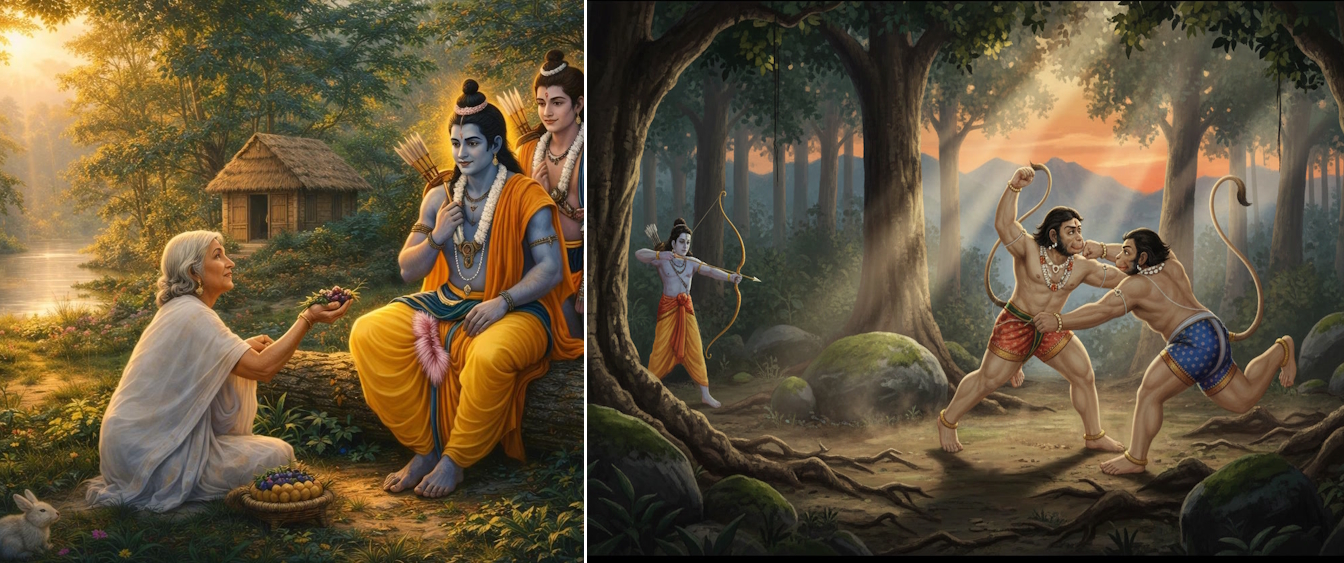
एन एव बाणेन हतः प्रियो मे तेन एव बाणेन हि माम् जहि हि ।
हता गमिष्यामि समीपम् अस्य न माम् विना वीर रमेत वाली ॥४-२४-३३॥
Ena eva bāṇena hataḥ priyo me tena eva bāṇena hi mām jahi hi । Hatā gamiṣyāmi samīpam asya na mām vinā vīra rameta vālī ॥ ॥4-24-33॥
Translation
With the very same arrow by which my beloved was killed, kill me too. Being slain, I shall go to his presence, for without me, O Hero, Vali will not find delight.
हिंदी अनुवाद
जिस बाण से मेरे प्रिय (वाली) मारे गए हैं, उसी बाण से मुझे भी मार डालिए। मारी जाने पर मैं उनके पास जाऊंगी, क्योंकि हे वीर! वाली मेरे बिना (स्वर्ग में भी) प्रसन्न नहीं रहेंगे।
English Commentary
This is one of the most poignant verses in the Kishkindha Kanda. Tara pleads for death using the specific arrow that killed her husband. Her request is driven by the logic of reunion. Her argument shifts the focus from her own suffering to Vali's potential unhappiness in the afterlife. She asserts, "Vali will not find delight without me." This reflects the deep bond they shared and her conviction that even heaven would be insufficient for Vali if she were absent. By addressing Rama as 'Vira' (Hero), she challenges his code of chivalry to perform this "act of mercy" to complete his task.
हिंदी टीका
यह श्लोक तारा के पातिव्रत्य और प्रेम की पराकाष्ठा है। वह राम से जीवनदान नहीं, मृत्युदान मांग रही है। 'तेन एव बाणेन' (उसी बाण से)—यह वाक्यांश महत्वपूर्ण है; वह उसी अस्त्र से मुक्ति चाहती है जिससे उसके पति को मुक्ति मिली, ताकि उनका भाग्य एक जैसा हो। उसका तर्क यह नहीं है कि वह वाली के बिना जी नहीं सकती (जो कि सत्य है), बल्कि यह है कि वाली उसके बिना खुश नहीं रहेंगे। यह एक निस्वार्थ प्रेम है—वह अपनी पीड़ा से ज्यादा वाली की खुशी के लिए चिंतित है। वह मानती है कि मृत्यु अलगाव नहीं, बल्कि पुनर्मिलन का द्वार है।