Srimad Valmiki Ramayana
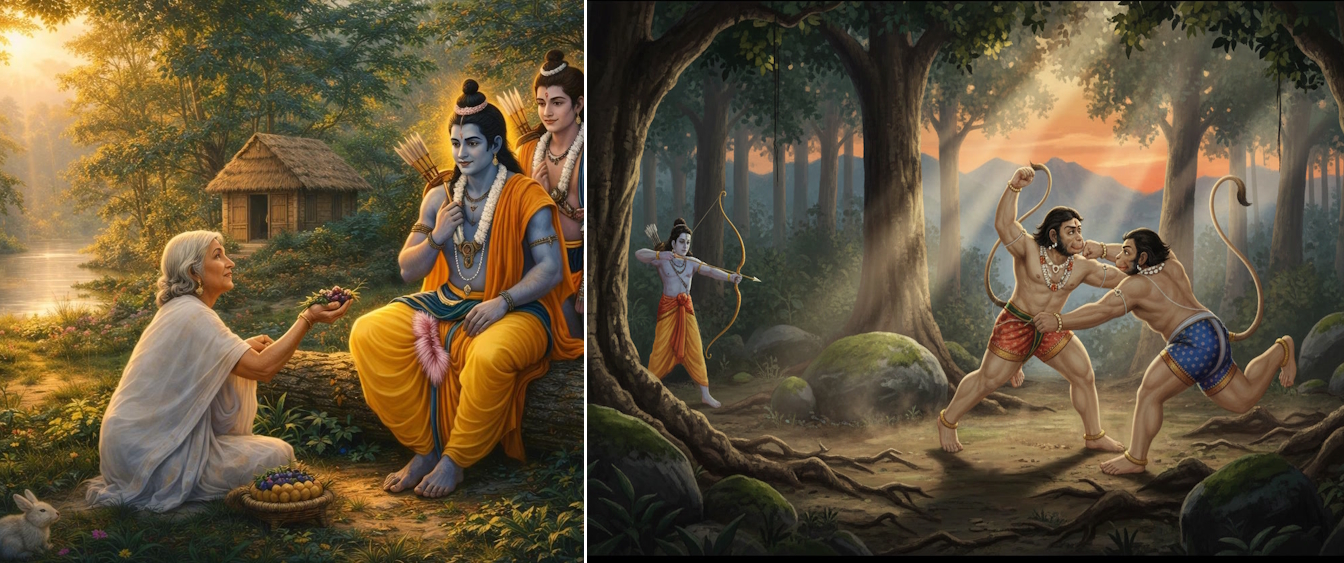
विविधैः वृक्ष षण्डैः च चारु चित्र लता युतम् ।
नाना विहग संघुष्टम् मयूर वर नादितम् ॥ ॥४-२७-९॥
Vividhaiḥ vṛkṣa ṣaṇḍaiḥ ca cāru citra latā yutam । Nānā vihaga saṃghuṣṭam mayūra vara nāditam ॥ ॥4-27-9॥
Translation
"It is endowed with clumps of various trees and beautiful, variegated creepers. It resounds with the calls of many birds and the cries of excellent peacocks."
हिंदी अनुवाद
"यह स्थान अनेक प्रकार के वृक्षों के समूहों और सुंदर विचित्र लताओं से युक्त है। यहाँ नाना प्रकार के पक्षियों का कलरव और श्रेष्ठ मोरों की आवाजें गूंज रही हैं।"
English Commentary
The verse paints a lush picture of the flora and fauna. Vṛkṣa ṣaṇḍaiḥ refers to thickets or clumps of trees, interlaced with citra latā (variegated/colorful creepers), indicating a vibrant ecosystem. The auditory experience is dominated by nānā vihaga (various birds) and specifically mayūra (peacocks). In Sanskrit literature, the cry of the peacock is the quintessential symbol of the rainy season, often evoking longing in separated lovers. Here, Rama notes the environment that will be their home, acknowledging the vibrant life that thrives in the monsoon rains.
हिंदी टीका
वर्षा ऋतु में वन की शोभा अपने चरम पर होती है। 'वृक्ष षण्डैः' का अर्थ है वृक्षों के झुंड, जो सघनता दर्शाते हैं। लताएं 'चारु' (सुंदर) और 'चित्र' (विचित्र/रंग-बिरंगी) हैं। सबसे महत्वपूर्ण ध्वनि 'मयूर वर नादितम्' है—मोरों की पुकार। भारतीय साहित्य में वर्षा ऋतु और मोरों का गहरा संबंध है; बादलों को देखकर मोर नृत्य और कूक करते हैं। यह ध्वनि राम को सीता की याद भी दिलाती है (जो आगे के सर्गों में स्पष्ट होगा), क्योंकि वर्षा ऋतु विरह को बढ़ाती है, फिर भी वे यहाँ प्रकृति के सौंदर्य का वस्तुपरक वर्णन कर रहे हैं।