Srimad Valmiki Ramayana
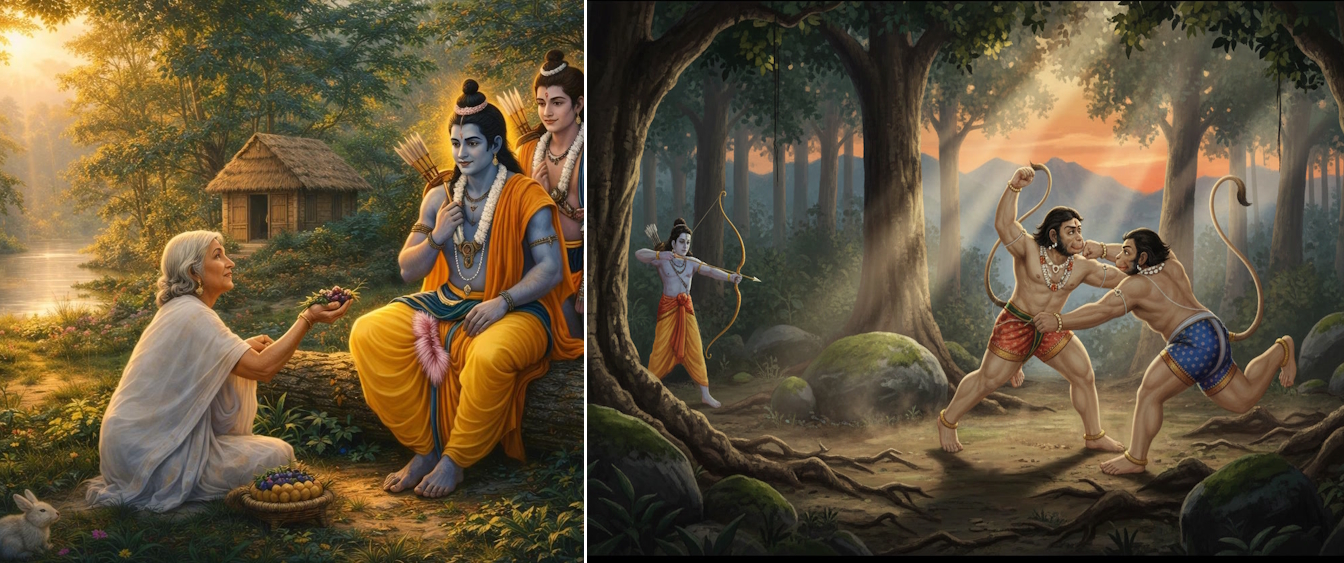
स तदा वालिनम् हत्वा सुग्रीवम् अभिषिच्य च ।
वसन् माल्यवतः पृष्टे रामो लक्ष्मणम् अब्रवीत् ॥ ॥४-२८-१॥
sa tadā vālinam hatvā sugrīvam abhiṣicya ca । vasan mālyavataḥ pṛṣṭe rāmo lakṣmaṇam abravīt ॥ ॥4-28-1॥
Translation
At that time, having killed Vali and consecrated Sugriva, Rama, residing on the plateau of Mount Malyavan, spoke to Lakshmana.
हिंदी अनुवाद
उस समय, बाली का वध करने और सुग्रीव का अभिषेक करने के पश्चात, माल्यवान पर्वत के पृष्ठ भाग (शिखर) पर निवास करते हुए श्री राम ने लक्ष्मण से कहा।
English Commentary
This verse marks a transition in the narrative, setting the scene for the description of the rainy season. Having fulfilled his promise to Sugriva by eliminating Vali and reinstalling Sugriva on the throne, Rama now enters a period of enforced waiting. The rainy season (Chaturmas) made travel and military campaigns impossible in ancient times. Rama and Lakshmana have taken residence on Mount Malyavan (also referred to as Prasravana). The structure of the verse highlights Rama's completed duties toward his ally ("having killed," "having consecrated") contrasting silently with his own unfulfilled quest to find Sita. Rama addressing Lakshmana indicates the beginning of a dialogue where Rama projects his inner emotional state onto the changing landscape. It sets a contemplative tone, moving away from the high-octane action of the Vali-vadha to the somber, poignant atmosphere of the monsoon, which traditionally exacerbates the grief of separated lovers in Sanskrit literature.
हिंदी टीका
यह श्लोक किष्किन्धाकाण्ड में एक नए प्रसंग का आरम्भ करता है। वर्षा ऋतु के आगमन का वर्णन करने से पूर्व वाल्मीकि जी पृष्ठभूमि तैयार करते हैं। यहाँ श्री राम और लक्ष्मण प्रस्त्रवण पर्वत (जिसे माल्यवान भी कहा गया है) पर निवास कर रहे हैं। बाली वध और सुग्रीव के राज्याभिषेक के उपरांत, यह प्रतीक्षा का समय है। वर्षा ऋतु में यात्रा और युद्ध संभव नहीं थे, अतः चातुर्मास व्यतीत करने के लिए एक सुरक्षित स्थान की आवश्यकता थी। "हत्वा" (मारकर) और "अभिषिच्य" (अभिषेक करके) शब्दों का प्रयोग यह दर्शाता है कि राम ने अपने मित्र के लिए कर्तव्य पूरा कर दिया है, किन्तु अपना कार्य (सीता की खोज) अभी शेष है। राम का लक्ष्मण से बात करना उनकी मानसिक स्थिति को दर्शाता है; वे प्रकृति के परिवर्तन को देख रहे हैं, परन्तु उनका मन सीता के विरह में व्याकुल है। यह श्लोक कथा के प्रवाह को राजनीति और युद्ध से हटाकर पुनः व्यक्तिगत भावना और प्रकृति चित्रण की ओर मोड़ता है।