Srimad Valmiki Ramayana
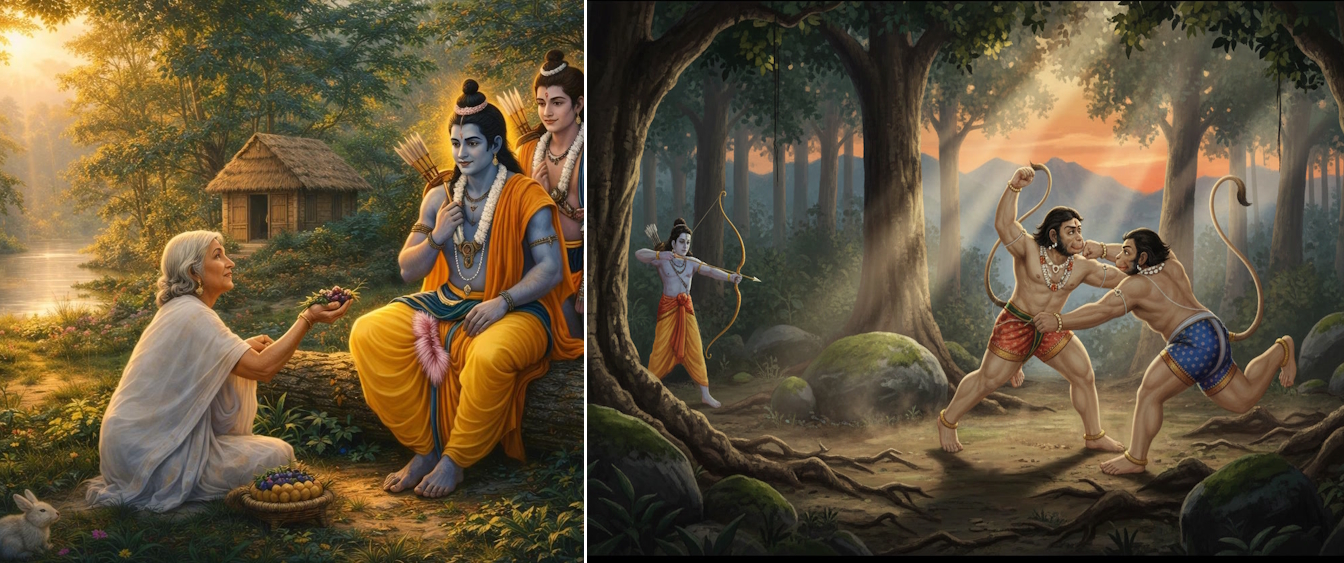
तस्य तद् वचनम् श्रुत्वा लक्ष्मणो राम चोदितः ।
आचचक्षे महात्मानम् रामम् दशरथात्मजम् ॥ ॥४-४-५॥
Tasya tad vacanam śrutvā lakṣmaṇo rāma coditaḥ । Ācacakṣe mahātmānam rāmam daśarathātmajam ॥ ॥4-4-5॥
Translation
Hearing those words of his (Hanuman), and prompted by Rama, Lakshmana began to describe the high-souled Rama, the son of Dasharatha.
हिंदी अनुवाद
हनुमान के उन वचनों को सुनकर, राम की प्रेरणा (इशारे) से लक्ष्मण ने महात्मा दशरथपुत्र राम का परिचय देना आरम्भ किया।
English Commentary
This verse exemplifies the decorum of Indian culture. Self-praise is not considered noble; thus, Rama does not answer himself but prompts Lakshmana (rāma coditaḥ) to speak. It is befitting a senior person's dignity to be introduced by a younger brother or subordinate. Lakshmana begins the introduction by referencing Rama as 'Mahātmā' and 'Dasharathātmaja' (son of Dasharatha), grounding Rama’s identity in his lineage and his character. This scene beautifully captures Rama's humility and Lakshmana's obedience.
हिंदी टीका
यहाँ भारतीय संस्कृति की मर्यादा का दर्शन होता है। स्वयं अपनी प्रशंसा करना बड़प्पन नहीं माना जाता, इसलिए राम स्वयं उत्तर न देकर लक्ष्मण को इशारे (राम चोदितः) से उत्तर देने को कहते हैं। छोटे भाई या सेवक द्वारा परिचय दिया जाना वरिष्ठ व्यक्ति की गरिमा के अनुकूल होता है। लक्ष्मण 'महात्मा' और 'दशरथात्मज' कहकर परिचय शुरू करते हैं, जो बताता है कि राम का परिचय उनके कुल और उनके चरित्र से है। यह दृश्य राम की विनम्रता और लक्ष्मण की आज्ञाकारिता का सुंदर उदाहरण है।