Srimad Valmiki Ramayana
मुमोच च शिलाः शैलो विशालाः समनःशिलाः ।
मध्यमेनार्चिषा जुष्टो धूमराजीरिवानलः ॥५-१-१६॥
mumoca ca śilāḥ śailo viśālāḥ samanaḥśilāḥ |
madhyamenārciṣā juṣṭo dhūmarājīrivānalaḥ ॥5-1-16॥
Translation
The mountain dislodged huge rocks containing realgar (red arsenic); appearing like a fire possessing flames in the center and surrounded by columns of smoke.
हिंदी अनुवाद
उस पर्वत ने मनःशिला (गेरुआ/लाल आर्सेनिक) युक्त विशाल चट्टानों को छोड़ दिया (गिरा दिया), जिससे वह (पर्वत) मध्य भाग में लपटों से युक्त और धुएं की राशि से घिरे हुए अग्नि के समान प्रतीत हुआ।
English Commentary
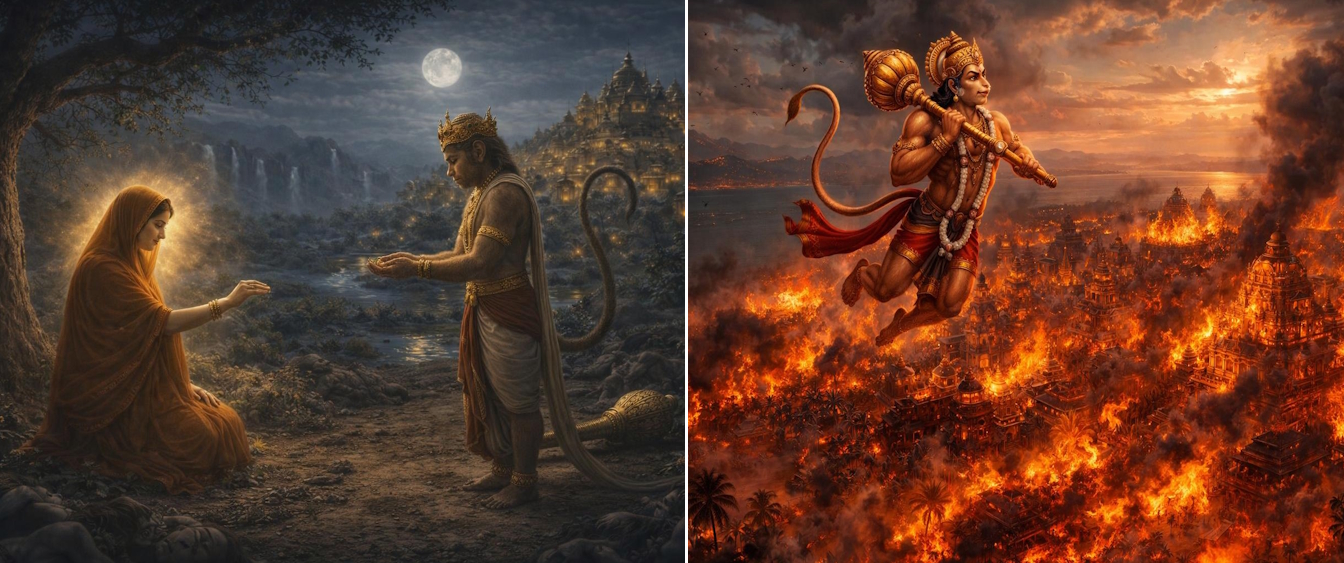
The visual intensity of the scene is heightened here. 'Manahshila' refers to realgar, a red-orange mineral. As massive boulders containing this mineral break off and fall, they resemble tongues of flame ('Archisha'). The dust clouds generated by the landslide are compared to smoke ('Dhumaraji'). Thus, the static mountain is transformed into the dynamic image of a raging fire. This metaphor of fire is significant in the Ramayana, representing purification, energy, and destruction. Hanuman, often associated with Agni (fire) due to his lineage (Vayu is Agni's friend) and future burning of Lanka, is the catalyst for this fiery transformation.
हिंदी टीका
यह एक अद्भुत दृश्य-बिंब (visual imagery) है। जब विशाल चट्टानें गिरीं, तो उनके साथ 'मनःशिला' (लाल रंग की धातु) भी थी। गिरती हुई लाल चट्टानें ऐसी लग रही थीं मानो आग की लपटें हों। और उनके गिरने से जो धूल उड़ी, वह धुएं ('धूमराजी') जैसी प्रतीत हुई। इस प्रकार, पूरा पर्वत एक ज्वालामुखी या विशाल अग्निकुंड जैसा दिखने लगा। हनुमान जी का तेज और उनके द्वारा उत्पन्न घर्षण पर्वत को भी अग्नि-समान रूप दे रहा है। यह उपमा विनाश और ऊर्जा दोनों का मिश्रण है, जो हनुमान जी के 'तेजस' स्वरूप के अनुकूल है।