Srimad Valmiki Ramayana
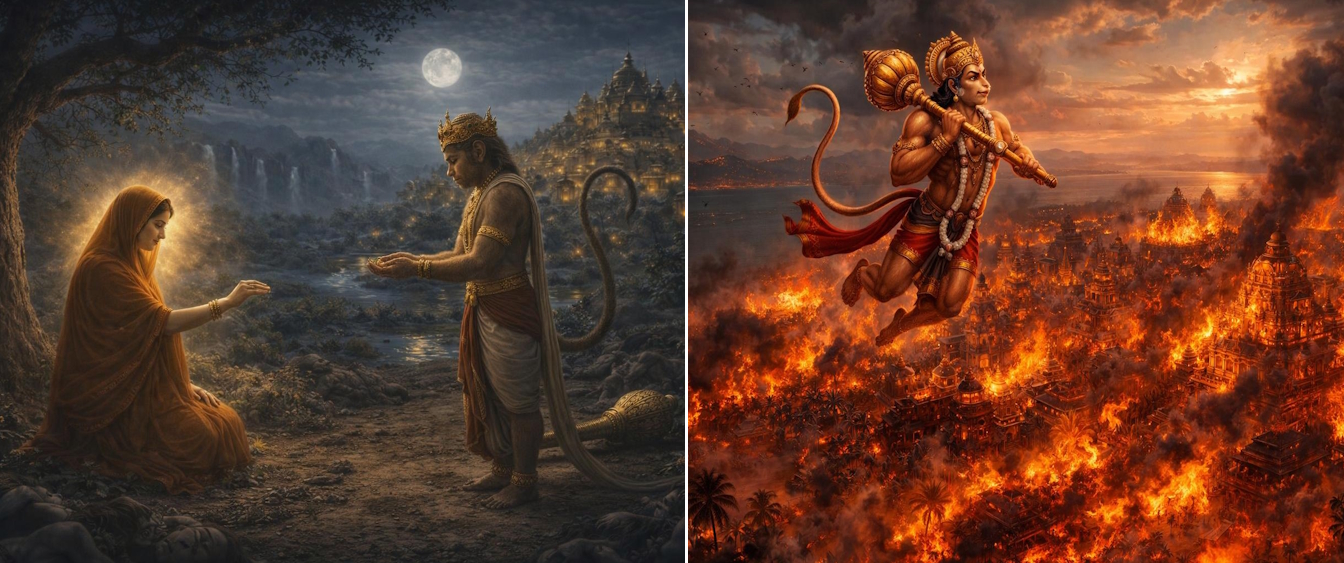
अबन्धुर् भक्षिता सीता रावणेन तपस्विनी ।
अथवा राक्षस इन्द्रस्य पत्नीभिर् असित ईक्षणा ॥ ॥५-१३-१२॥
Abandhur bhakṣitā Sītā Rāvaṇena tapasvinī । Athavā Rākṣasa-indrasya patnībhir asita-īkṣaṇā ॥ ॥5-13-12॥
Translation
Was the helpless ascetic Sita eaten by Ravana? Or was the dark-eyed one eaten by the wives of the King of Rakshasas?
हिंदी अनुवाद
उस बंधु-विहीन तपस्विनी सीता को रावण ने खा लिया होगा? अथवा उस काले नेत्रों वाली को राक्षसराज की पत्नियों ने (खा लिया होगा)?
English Commentary
The speculation turns gruesome, reflecting the monstrous nature of the Rakshasas. Hanuman fears that Sita, being abandhu (without kin or protector) and a tapasvini (ascetic/helpless lady), might have been devoured by Ravana himself. Alternatively, he imagines the wives of Ravana, driven by jealousy or their inherent demoniac nature, might have eaten the asita-ikshana (dark-eyed) Sita. This thought represents the nadir of Hanuman's despair, where the holy is consumed by the unholy.
हिंदी टीका
हनुमान जी की कल्पना अब अत्यंत भयानक दिशा (Cannibalism) में जा रही है। चूँकि राक्षस मांसाहारी और क्रूर होते हैं, हनुमान जी को यह भय सता रहा है कि 'अबन्धु' (जिसका कोई रक्षक पास न हो) सीता को रावण ने मार कर खा लिया होगा। 'तपस्विनी' शब्द का प्रयोग उनकी निर्दोषता और सात्विकता को दर्शाता है, जो इस क्रूर कृत्य की वीभत्सता को बढ़ा देता है। वे यह भी सोचते हैं कि रावण ने नहीं, तो शायद उसकी पत्नियों ने सौतिया डाह (jealousy) या राक्षसी वृत्ति के कारण सीता का भक्षण कर लिया हो।